From Campus to Capital: BUPT Senior Secures 30 Million Investment in 10 Days

比推Published on 2026-03-16Last updated on 2026-03-16

Abstract

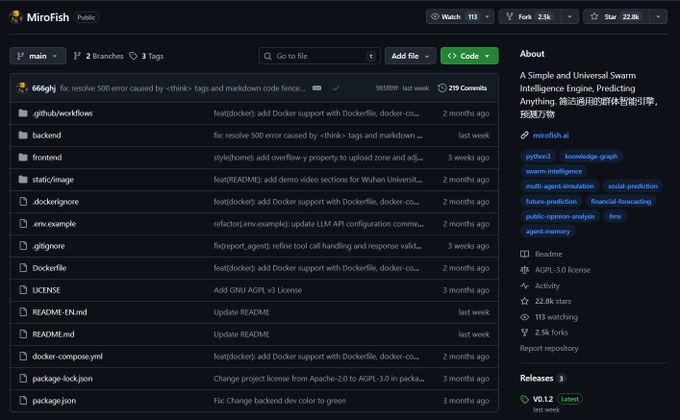
Based on the provided text, here is the English summary: Guo Hangjiang, a 20-year-old senior student at Beijing University of Posts and Telecommunications, developed an AI engine called MiroFish in just 10 days. The project, which generates thousands of unique digital agents with distinct personalities, memories, and behaviors to simulate and predict outcomes in virtual worlds, quickly gained massive attention. It topped GitHub's global trending chart, amassing over 22,000 stars. His work caught the eye of Chinese billionaire Chen Tianqiao, former founder of Shanda Group and an advocate of the "super individual" theory. Impressed by a simple demo video, Chen committed 30 million RMB (approximately $4.1 million USD) to incubate the project, transforming Guo from an intern into a CEO overnight. MiroFish's core functionality involves processing a document (e.g., news, policy draft, novel) to extract entities and relationships into a knowledge graph using GraphRAG. It then spawns autonomous AI agents that can form groups, develop opinions, and exhibit herd mentality. A key feature is the "God's Perspective," allowing users to inject new variables (e.g., "Fed cuts rates by 50 basis points") and observe the simulated world recalibrate in real-time, enabling controlled experiments impossible in reality. The open-source framework, released under AGPL-3.0, utilizes the OASIS simulation engine, Zep Cloud for long-term memory, and is deployable via Docker. Demonstrated use cases inc...

Original: @k1rallik

Compiled: Big Pliers | PANews Lobster

Original Title: BUPT Senior Guo Hangjiang: 10 Days and an AI Engine Persuaded Billionaire Chen Tianqiao to Invest 30 Million


A Chinese developer built an AI engine capable of generating thousands of digital humans—each with unique personalities, memories, and behaviors—placing them into a virtual world, and observing them to predict the future.

This is MiroFish. It topped the global GitHub trending chart. The creator is 20 years old.
The Creator

His name is Guo Hangjiang, online alias "Baifu". A senior at Beijing University of Posts and Telecommunications. Codes in Python, obsessed with agent architecture and graph computing.

At the end of 2025, his first project—BettaFish (a multi-agent public opinion analyzer)—topped the GitHub trending chart, gaining 20,000 stars within a week.

That's when a Chinese billionaire took notice of him.

The Billionaire

Chen Tianqiao. Founder of Shanda Group. Once China's richest person. Built a gaming empire in the early 2000s, later retired successfully, moved to the US, and quietly transformed Shanda into a tech investment platform.

He has been promoting a theory he calls the "Super Individual"—in the AI era, one person can accomplish what used to require an entire company.

Guo Hangjiang is the living proof of this theory.
The 10-Day Development Journey

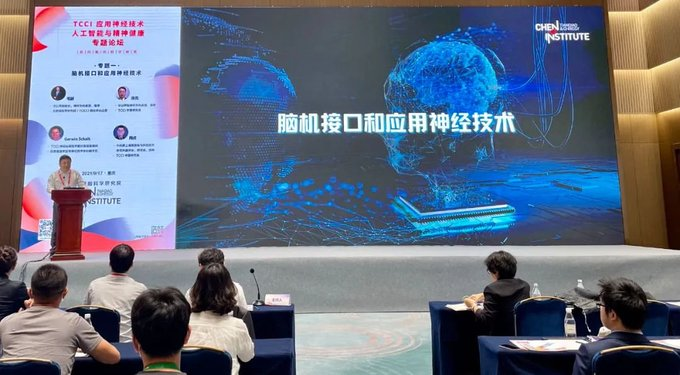
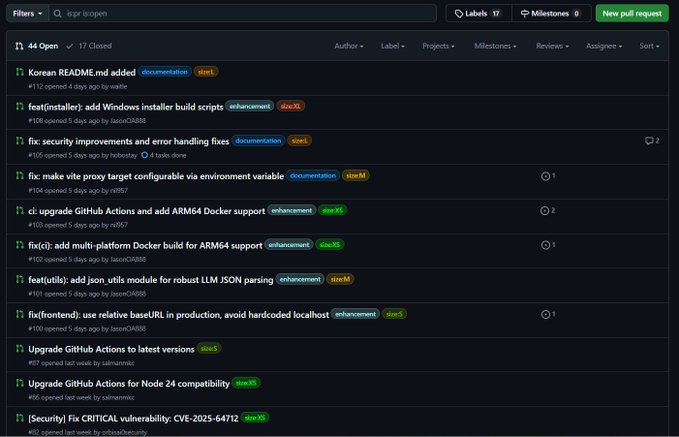
Chen Tianqiao invited Guo Hangjiang for an internship, giving him complete freedom. Here's what happened next:

Guo Hangjiang built MiroFish in 10 days using what he calls "Vibe coding"—fast, intuition-driven, without over-engineering.

On the night of completion, he recorded a simple demo video and sent it directly to Chen Tianqiao's desk. In less than 24 hours, Chen committed 30 million RMB (approx. $4.1 million USD) to incubate the project.

Guo Hangjiang went from intern to CEO overnight.
What It Actually Does

Here are MiroFish's core functions, concise and to the point:

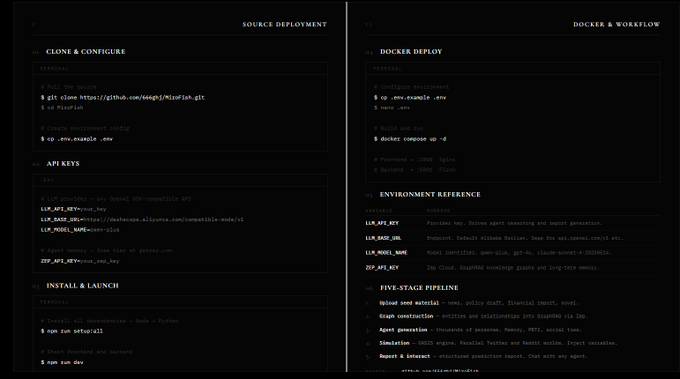
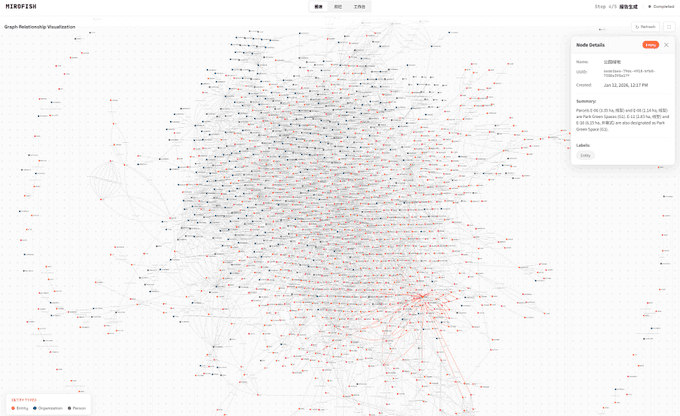
You input a document—a news article, policy draft, financial report, even a novel. The system reads the content, extracts all entities and relationships into a knowledge graph via GraphRAG, then generates thousands of autonomous AI agents. Each agent has a unique backstory, personality type, social relationships, and behavioral logic.

The core feature: "God's Perspective".

You can inject new variables into the simulation at any time:

  • "The Fed suddenly cuts rates by 50 basis points"

  • "The CEO resigns"

  • "A competitor launches a new product"

Then observe in real-time how the entire digital world reorganizes. This is a controlled experiment impossible in reality.

Simulation Engine

The simulation runs on OASIS—an open-source framework developed by CAMEL-AI. The agents don't just "talk"; they form groups, produce opinion leaders, create herd effects, and change stances over time. Long-term memory is maintained via Zep Cloud.

Core feature: "God's Perspective". Inject new variables at any moment—interest rate hikes, CEO resignation, product launch—the whole world recalibrates in real-time.

This is a controlled experiment impossible in the real world.

Technical architecture:

  • Simulation Engine: OASIS (developed by CAMEL-AI)

  • Memory System: Zep Cloud (long-term agent memory)

  • Knowledge Graph: GraphRAG

  • Open Source License: AGPL-3.0 (fully open source)

  • Deployment: Docker Compose one-click deployment

This is not a toy, but a serious multi-agent simulation framework.
Real Demonstrations

Two demo cases have been shown:

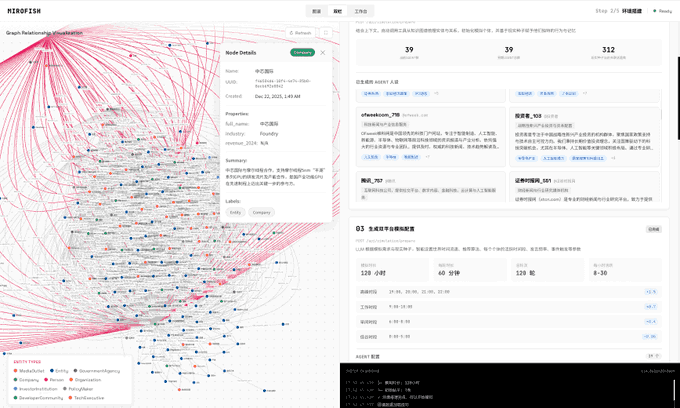
First—They input the first 80 chapters of "Dream of the Red Chamber", a classic Chinese novel famous for its lost ending. MiroFish generated character agents with authentic personalities and relationships, ran the simulation, and produced multiple narrative branches predicting the missing ending.

Second—A Fed rate hike scenario. The system simulated the respective reactions of retail investors, institutional participants, and analysts, tracked convergence points of group sentiment, and mapped the complete trajectory of public opinion evolution.
Objective Evaluation

It's worth clarifying what this project is not:

MiroFish has not released any benchmarks comparing prediction results with real-world outcomes. The demos are showcases of the methodology, not proof of accuracy. Running thousands of agents implies massive LLM API costs. The agents' personalities inherit any biases present in the training data. And, no matter how complex and sophisticated, simulated humans are ultimately not real humans.

An objective positioning: It can reveal scenarios and dynamics you might have missed, but it cannot provide definitive answers.
Broader Significance

On March 7, 2026, MiroFish topped the global GitHub trending chart—surpassing projects from OpenAI, Google, and Microsoft. It gained 18,000 stars and 1,900 forks within days, currently exceeding 22,000 stars.

An undergraduate. Ten days of programming. A simulation engine that can build parallel digital societies from a single document.

Chen Tianqiao is betting not on this software, but on this theory: the era of the super individual has already begun, most just haven't realized it yet.
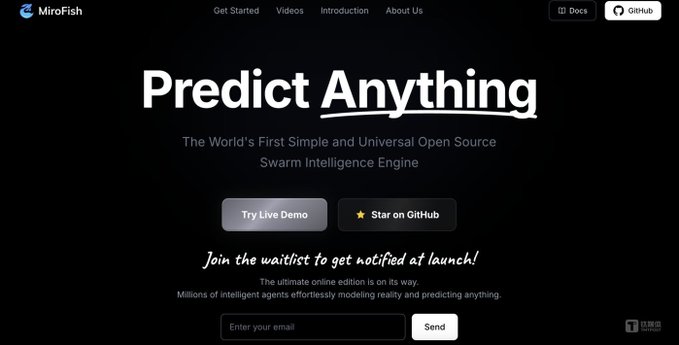
Open Source License: AGPL-3.0, supports one-click Docker deployment.

github.com/666ghj/MiroFish


Twitter:https://twitter.com/BitpushNewsCN

Bitpush TG Discussion Group:https://t.me/BitPushCommunity

Bitpush TG Subscription: https://t.me/bitpush

Original link:https://www.bitpush.news/articles/7620006

Related Questions

QWho is the creator of MiroFish and what is his background?

AThe creator of MiroFish is Guo Hangjiang, also known by his online name 'Baifu'. He is a 20-year-old fourth-year student at Beijing University of Posts and Telecommunications, skilled in Python programming and passionate about intelligent agent architecture and graph computing.

QWhat is the core function of the MiroFish AI engine?

AThe core function of MiroFish is to ingest a document, extract entities and relationships into a knowledge graph using GraphRAG, and generate thousands of autonomous AI agents, each with unique backgrounds, personalities, and behaviors. Its most critical feature is the 'God's Perspective,' which allows users to inject new variables and observe the entire digital world reorganize in real-time.

QHow did Guo Hangjiang secure 30 million RMB in investment?

AGuo Hangjiang secured a 30 million RMB (approximately $4.1 million USD) investment from Chinese billionaire Chen Tianqiao. After being invited for an internship, Guo built MiroFish prototype in just 10 days. He sent a demo video to Chen, who committed the investment within 24 hours, turning Guo from an intern into a CEO.

QWhat underlying technologies and frameworks power the MiroFish simulation?

AMiroFish is powered by several technologies: the OASIS simulation engine (developed by CAMEL-AI), the Zep Cloud system for long-term agent memory, GraphRAG for knowledge graph construction, and it is fully open-source under the AGPL-3.0 license. It can be deployed with a single command using Docker Compose.

QWhat are some demonstrated use cases for MiroFish mentioned in the article?

AThe article mentions two demo cases: First, inputting the first 80 chapters of the classic Chinese novel 'Dream of the Red Chamber' to generate agent-based characters and predict multiple narrative branches for the missing ending. Second, simulating a U.S. Federal Reserve interest rate hike scenario to model the reactions of retail investors, institutional players, and analysts, tracking the evolution of group sentiment.

Related Reads

Dialogue with Morgan Stanley Executive: Wall Street Isn't Rejecting Bitcoin, It's Just Waiting for the Right Time

In a podcast interview, Amy Oldenburg, Head of Digital Asset Strategy at Morgan Stanley, discusses Wall Street's evolving stance on Bitcoin, explaining the bank's measured approach and the road ahead. Oldenburg, with 26 years at Morgan Stanley, traces her perspective to witnessing transformative tech cycles and her experience in emerging markets, where she observed the need for alternative financial systems like mobile money (e.g., M-Pesa). This background informs her view of Bitcoin's value proposition. She clarifies that Morgan Stanley is "client-driven." Regulatory hurdles, particularly as a bank holding company under Federal Reserve oversight, initially slowed their entry. While the firm couldn't act as quickly as independent asset managers, persistent client demand and a changing regulatory environment led to offerings like their low-fee Bitcoin ETP (MSBT). They are now gradually rolling out spot Bitcoin trading on their E*Trade platform. Regarding advisor adoption, Oldenburg cites a "lack of education" as the primary barrier. Morgan Stanley recommends a 0-2% allocation for more conservative portfolios and 2-4% for aggressive ones, but price volatility and confusion about its place in asset allocation persist. She notes competition for investor attention from AI and commodities. Addressing Bitcoin's price stagnation despite institutional buying, Oldenburg points to a confluence of factors: competing investment narratives (AI, quantum computing) and the complex financial landscape. She suggests a catalyst for Bitcoin as a neutral reserve asset might require a "slow-burn crisis" that exposes fragility in traditional systems. For wider bank adoption, including holding Bitcoin on balance sheets, she identifies the need for regulatory clarity to reduce punitive capital treatment and for the asset to be usable as collateral within financial ecosystems. Looking ahead, Oldenburg predicts steady, moderate adoption growth through 2030 rather than an explosive "J-curve." She emphasizes the importance of differentiating Bitcoin from other crypto assets and expresses concern that the core cypherpunk ethos of self-custody is being diluted as traditional finance enters the space. She concludes that the digital asset field remains in its early stages with significant innovation, like AI agents and micropayments, still to come.

marsbit20m ago

Dialogue with Morgan Stanley Executive: Wall Street Isn't Rejecting Bitcoin, It's Just Waiting for the Right Time

marsbit20m ago

10% Position Limit Proposed: UK Retail Authorized Funds to Gain Indirect Exposure to Crypto Assets

The UK Financial Conduct Authority (FCA) is consulting on a proposal (CP26/17) that would allow retail funds, including UCITS and most Non-UCITS Retail Schemes (NURS), to invest up to 10% of their total assets in cryptoasset exchange-traded notes (crypto ETNs). This would enable indirect exposure to cryptoassets for mainstream investors through regulated funds. The rule maintains the existing prohibition on funds holding underlying cryptocurrencies like Bitcoin or Ethereum directly. The proposal introduces a strict 10% cap, positioning crypto ETNs as a potential satellite holding within diversified portfolios. Funds must ensure these investments align with their stated objectives and risk profiles. Notably, the cap does not apply to Qualified Investor Schemes (QIS) for professional clients, while Long-Term Asset Funds (LTAFs) would be prohibited from holding crypto ETNs. This move builds on the FCA's 2025 decision to permit retail trading of crypto ETNs on UK regulated exchanges. However, significant compliance burdens fall on fund managers, who must conduct thorough due diligence, assess liquidity, and provide clear risk disclosures to investors. The FCA emphasizes that even a small allocation can significantly impact a fund's risk profile. The policy's practical impact remains uncertain. Widespread adoption depends on whether asset managers deem the potential benefits worth the operational costs, disclosure requirements, and reputational risks. The consultation is open for feedback until July 13, 2026. Ultimately, the proposal represents a cautious, incremental step toward integrating cryptoassets into the regulated fund landscape, rather than a broad opening.

Foresight News48m ago

10% Position Limit Proposed: UK Retail Authorized Funds to Gain Indirect Exposure to Crypto Assets

Foresight News48m ago

Public Version of Mythos Officially Launched: Analyzing the Advantages and Limitations of AI Smart Contract Auditing

Publicly available Mythos, Anthropic's AI model, has officially launched, demonstrating both significant potential and limitations in smart contract security auditing. The article analyzes its capabilities through real-world cases. AI excels in identifying subtle, low-level vulnerabilities through pattern recognition and large-scale code screening. A key example is detecting a storage slot collision between a custom rewards mapping and a third-party library's ReentrancyGuard, a vulnerability easily missed in manual audits. In the recent Zcash incident, AI also rapidly discovered a critical soundness bug that had remained hidden for years. However, AI currently struggles with complex, interconnected scenarios. When tested on the Curve LlamaLend sDOLA exploit, which involved manipulating prices across multiple protocols (Curve pools, lending markets) to trigger liquidations, Fable 5 failed to identify the core cross-protocol attack vector. These scenarios require a deep understanding of DeFi economic models and multi-contract interactions. In conclusion, while AI tools like Mythos significantly boost efficiency in finding standardized, syntactic vulnerabilities, they cannot yet replace expert analysis for complex, business-logic, and cross-protocol attacks. An effective audit workflow combines AI's speed for initial screening with human expertise for in-depth, holistic analysis.

marsbit53m ago

Public Version of Mythos Officially Launched: Analyzing the Advantages and Limitations of AI Smart Contract Auditing

marsbit53m ago

Trade.xyz's Rebase Refusal Sparks Controversy, On-Chain Pre-IPO Market Faces Major Pricing Test

The debate surrounding Trade.xyz's refusal to adjust its SPCX (SpaceX pre-IPO) perpetual contract pricing amid updated share count revelations highlights a key challenge for on-chain pre-IPO markets. While several centralized exchanges (CEXs) paused and repriced their contracts after SpaceX's filing showed a ~10% increase in total shares, Trade.xyz maintained its market-driven pricing logic, which tracks expected per-share price sentiment rather than fundamental valuation metrics like market cap. This discrepancy triggered cross-platform arbitrage and caused leveraged long positions on Trade.xyz to suffer significant losses, as the platform's HIP-3 architecture lacks a native "Rebase" mechanism to neutrally adjust all user positions following such corporate actions. The incident underscores the difficulty for decentralized perpetual exchanges (Perp DEXs) to implement Rebase—a process CEXs handle by centrally pausing markets and adjusting ledger data. On-chain, this requires complex smart contract modifications, increasing gas costs, complexity, and potential attack surfaces. While some DEXs have managed similar adjustments, Trade.xyz's current design does not natively support it, though the team is reportedly exploring solutions for future events like stock splits. Ultimately, the controversy serves as a critical case study for the nascent on-chain pre-IPO sector, raising questions about price discovery reliability, transparent rule disclosure, and the readiness of DeFi infrastructures to handle traditional corporate actions as real-world assets (RWAs) gain traction.

marsbit1h ago

Trade.xyz's Rebase Refusal Sparks Controversy, On-Chain Pre-IPO Market Faces Major Pricing Test

marsbit1h ago

Trading

Spot
Futures

Hot Articles

Discussions

Welcome to the HTX Community. Here, you can stay informed about the latest platform developments and gain access to professional market insights. Users' opinions on the price of S (S) are presented below.

活动图片















