# Simulation Related Articles

HTX News Center provides the latest articles and in-depth analysis on "Simulation", covering market trends, project updates, tech developments, and regulatory policies in the crypto industry.

The Year of Physical AI: A Trillion-Dollar Gamble on 'How the World Works'

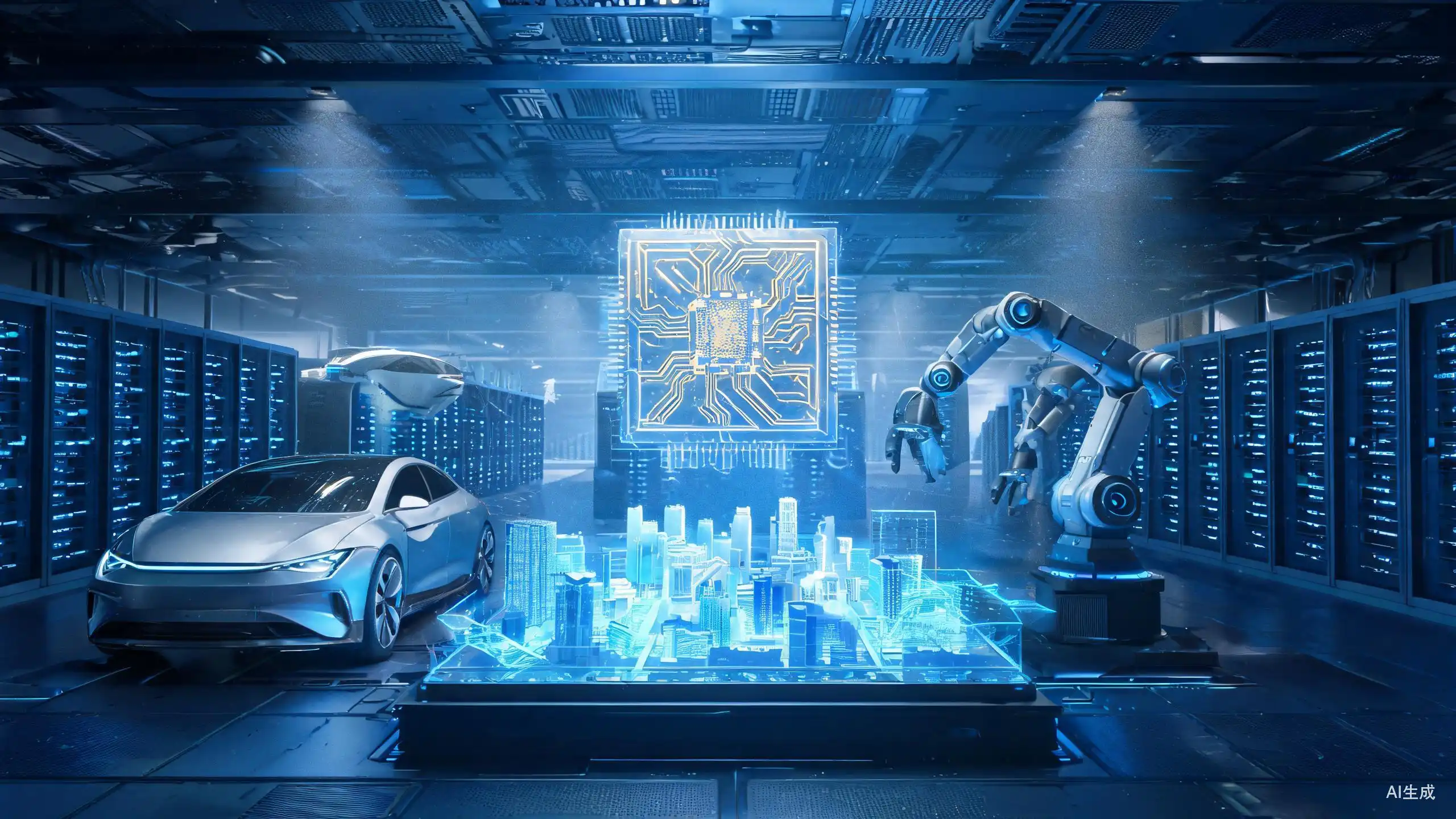
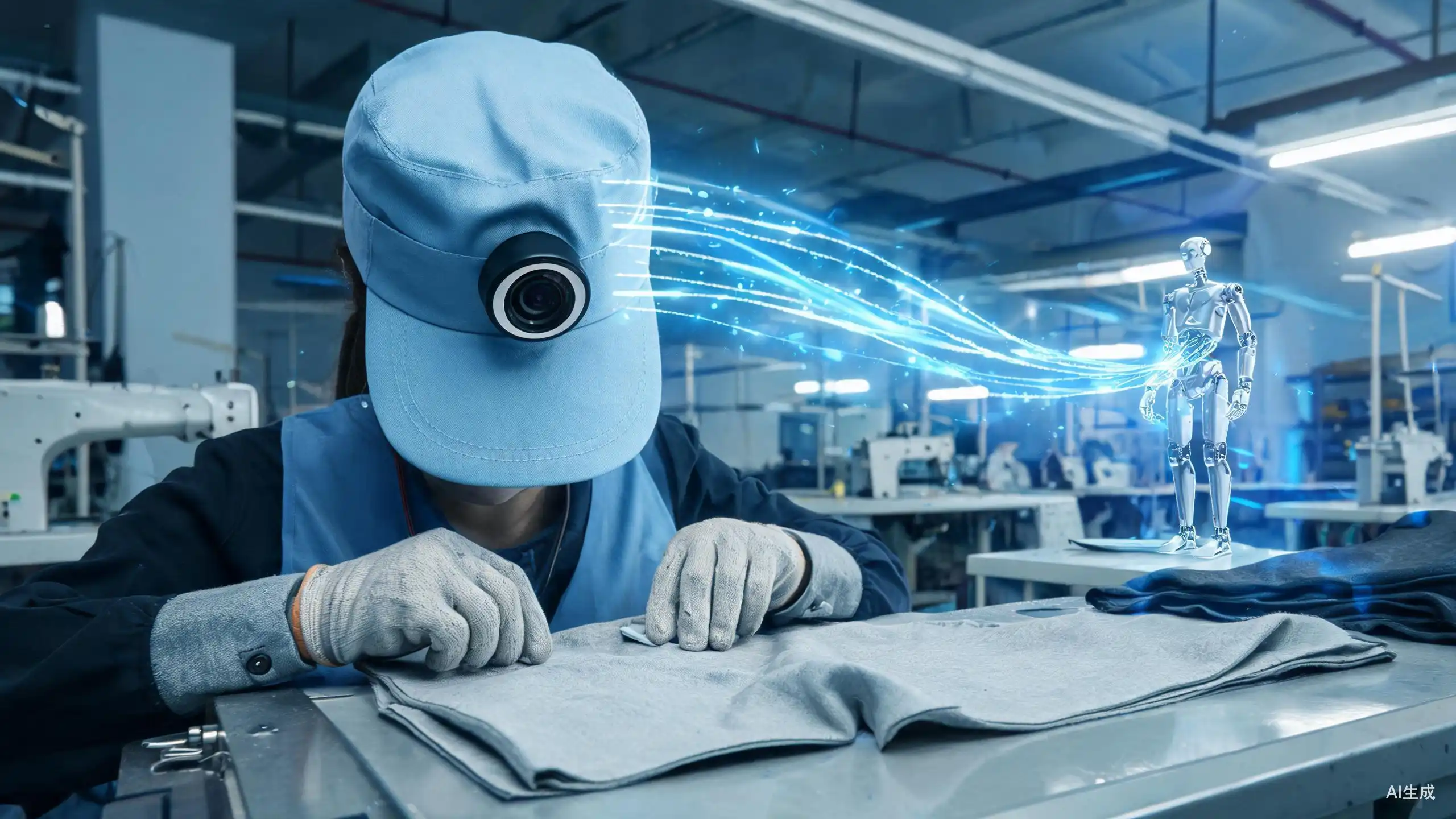
The year 2026 is being positioned as the dawn of the "Physical AI" era, marked by major funding rounds and technological breakthroughs. This shift signifies AI's evolution from understanding the digital world to perceiving and acting within the physical world. Key events include Yann LeCun's AMI Labs raising $1.03 billion to develop "world models," Fei-Fei Li's World Labs securing funding, and companies like Tesla deploying humanoid robots (Optimus) in factories. This transition expands the AI model competition into a broader infrastructure battle encompassing hardware, data, simulation, and real-world integration. The core debate is between two AI paths: the established LLM (Large Language Model) approach focused on text prediction and the emerging "world model" approach, which aims to understand physical states for action-oriented tasks. Hardware, particularly dexterous robotic hands, is a critical and expensive challenge. Companies are racing to build capable robotic bodies, with Tesla, Boston Dynamics, and Figure AI making significant progress. NVIDIA is positioning itself as the essential infrastructure provider for this new era, offering a full suite of development tools and platforms. A major bottleneck is the scarcity of high-quality physical world interaction data, with companies exploring solutions through real-world data collection, synthetic data generation, and human teleoperation. Substantial investments in Q1 2026, exceeding $6.4 billion, signal strong belief in Physical AI's potential, moving beyond concept validation into infrastructure building. While challenges like the sim-to-real gap, unproven business models, and safety regulations remain, the tangible engineering progress suggests this is a genuine technological inflection point, not merely a bubble. For the global Chinese community, this shift represents a significant structural opportunity to leverage their strengths in technology, engineering, hardware manufacturing, and cross-border collaboration to become key players in building the foundational layers of the Physical AI ecosystem.

marsbit04/03 09:39

The Year of Physical AI: A Trillion-Dollar Gamble on 'How the World Works'

marsbit04/03 09:39

From Campus to Capital: BUPT Senior Secures 30 Million Investment in 10 Days

Based on the provided text, here is the English summary: Guo Hangjiang, a 20-year-old senior student at Beijing University of Posts and Telecommunications, developed an AI engine called MiroFish in just 10 days. The project, which generates thousands of unique digital agents with distinct personalities, memories, and behaviors to simulate and predict outcomes in virtual worlds, quickly gained massive attention. It topped GitHub's global trending chart, amassing over 22,000 stars. His work caught the eye of Chinese billionaire Chen Tianqiao, former founder of Shanda Group and an advocate of the "super individual" theory. Impressed by a simple demo video, Chen committed 30 million RMB (approximately $4.1 million USD) to incubate the project, transforming Guo from an intern into a CEO overnight. MiroFish's core functionality involves processing a document (e.g., news, policy draft, novel) to extract entities and relationships into a knowledge graph using GraphRAG. It then spawns autonomous AI agents that can form groups, develop opinions, and exhibit herd mentality. A key feature is the "God's Perspective," allowing users to inject new variables (e.g., "Fed cuts rates by 50 basis points") and observe the simulated world recalibrate in real-time, enabling controlled experiments impossible in reality. The open-source framework, released under AGPL-3.0, utilizes the OASIS simulation engine, Zep Cloud for long-term memory, and is deployable via Docker. Demonstrated use cases include predicting the lost ending of the classic novel "Dream of the Red Chamber" and simulating market reactions to a Federal Reserve interest rate hike. The article notes that while MiroFish is a sophisticated multi-agent framework capable of revealing unforeseen scenarios, it has not published benchmark tests against real-world outcomes, inherits potential biases, and its simulated humans are not real. Chen Tianqio's investment is ultimately a bet on the emerging era of the "super individual."

比推03/16 06:45

From Campus to Capital: BUPT Senior Secures 30 Million Investment in 10 Days

比推03/16 06:45

I Finally Understand Why Musk Is Convinced We Live in a 'Simulated World'

The author, an investor and entrepreneur, describes their initial skepticism towards Elon Musk's simulation theory—the idea that the probability we live in base reality is only one in a billion. Their perspective shifted after two personal experiences with seemingly inexplicable accuracy in predictions. First, a fortune-teller using traditional Chinese astrology consistently and accurately predicted investment outcomes and obstacles over more than a dozen instances. Second, a close friend, a highly educated Tarot card reader, provided remarkably precise and consistent readings across different methods. The friend explained that Tarot practice is like having "database access permissions" to a vast informational field—a metaphor that resonated deeply with the author. This led the author to reexamine the world through a programmer’s lens. They note several “coincidences” that align with the simulation hypothesis: - **Junk DNA**: The 98% of non-coding DNA resembles legacy code or commented-out functions in software. - **The Great Flood Myths**: Shared global flood narratives and the sharp drop in human lifespans afterward mirror a system reset or version update. - **Cosmic Limits**: The Big Bang resembles a system boot-up, the speed of light a CPU frequency limit, and déjà vu a caching error. The author concludes that viewing reality as a simulation makes these phenomena coherent. Rather than leading to nihilism, this perspective is liberating: although one’s “character settings” may be predetermined, the subjective experience of love, joy, and achievement remains real. The goal is to live fully within one’s own version, striving to reach one’s potential. The essay ends on an optimistic note: with tools like Web3 and AI, humanity may be transitioning from passive “players” to active “advanced players” capable of exploring and even altering the rules of the simulated world. The emphasis is not on proving the theory but on engaging meaningfully within the system.

marsbit02/24 10:28

I Finally Understand Why Musk Is Convinced We Live in a 'Simulated World'

marsbit02/24 10:28

活动图片