# Regulation Related Articles

HTX News Center provides the latest articles and in-depth analysis on "Regulation", covering market trends, project updates, tech developments, and regulatory policies in the crypto industry.

Eight-Year Industry Retrospective: The Crypto Revolution Has Already Occurred, Just Not as Envisioned

Eight Years in Crypto: A Different Revolution Unfolds After eight years across four crypto companies, my initial vision of decentralized apps and currencies replacing traditional systems largely failed to materialize. Instead, the industry has forged a distinct, perhaps more significant, path centered on rebuilding the global financial system from the ground up. My journey began in the 2017 ICO frenzy, a bubble reminiscent of the dot-com era, where fundraising outpaced usable technology. The subsequent crash led to a quiet rebuilding phase focused on financial primitives. From the ashes emerged stablecoins and DeFi, which gained explosive traction during the 2020 pandemic and the "DeFi Summer" of yield farming and speculative games. This was followed by the 2021 NFT mania, another cycle of exuberance. The 2022 crash was crypto's "Lehman Moment," triggered by the collapse of Terra's UST, hedge funds like Three Arrows Capital, and ultimately FTX, which misused customer funds. The aftermath saw aggressive U.S. regulatory actions under the SEC, which paradoxically fueled the rise of "legal-safe" memecoins, turning parts of the ecosystem into a massive casino by 2024-2025. A pivotal shift occurred with the 2024 U.S. election. A perceived pro-crypto administration led to key legislation like the GENIUS Act, clear stablecoin rules, and institutional adoption. Stablecoins, now a strategic U.S. priority, process trillions in transaction volume, and asset tokenization is gaining Wall Street traction. Today's reality isn't the cypherpunk dream of replacing fiat but a pragmatic revolution: upgrading the dollar system for the internet age and creating a globally accessible, 24/7 financial infrastructure. The next convergence is with AI, where crypto wallets and stablecoins will enable autonomous AI agents to transact in the global economy. The industry's future lies not in颠覆ing traditional finance but in integrating with it, replacing outdated backend systems with blockchain while maintaining familiar frontends. The goal is a seamless, borderless financial system. While my predictions may prove as flawed as my 2017 article, I remain committed to building within this ongoing transformation.

marsbit05/08 15:27

Eight-Year Industry Retrospective: The Crypto Revolution Has Already Occurred, Just Not as Envisioned

marsbit05/08 15:27

Why Coinbase Will Be the Biggest Winner in the AI Financial Era?

Coinbase is poised to be a major winner in the AI finance era, transforming from a cyclical crypto exchange into a foundational layer for AI-native finance. The market undervalues its exposure to two key secular trends: the rise of stablecoins and the emergence of agentic commerce. Firstly, with the global stablecoin supply projected to reach $3 trillion by 2030, Coinbase benefits as the dominant, most compliant distributor of USDC. Its revenue-sharing agreement with Circle is structurally advantageous and durable, positioning Coinbase to capture significant value from stablecoin growth independent of crypto trading volumes. Secondly, in agentic commerce—where AI agents autonomously transact—Coinbase's technology stack is already dominant. Over 92% of real agent payments occur on its Base network, settled primarily in USDC via the x402 protocol it helped develop. This stack creates a powerful, self-reinforcing ecosystem across four layers: USDC for settlement, Base for execution, developer tools (CDP/AgentKit), and service discovery (Agentic.Market). Key revenue streams include USDC reserve interest, Base sequencer fees, and platform fees from its infrastructure and marketplace. By 2030, agent-related revenue could contribute billions annually. Supported by favorable regulatory tailwinds like the CLARITY Act, Coinbase's valuation should reflect its role as critical financial infrastructure, not just a brokerage, with a clear path to becoming a $300 billion company.

链捕手05/08 14:51

Why Coinbase Will Be the Biggest Winner in the AI Financial Era?

链捕手05/08 14:51

South Korea's Crypto Tax Countdown Begins: Escalating Three-Way Game Between CEXs, Retail Investors, and Regulators

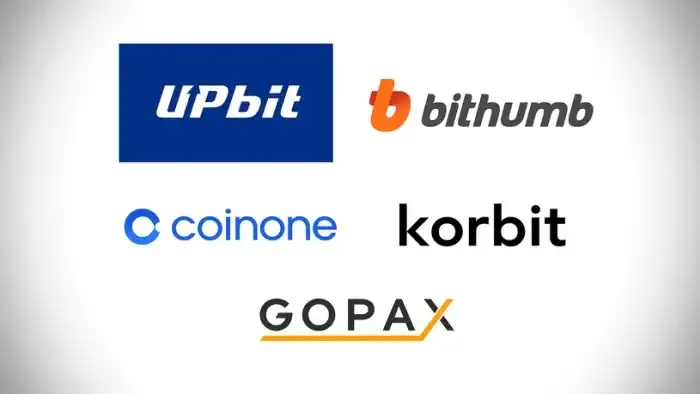
South Korea's National Tax Service has initiated final preparations to implement a virtual asset tax starting January 2027, with reporting for comprehensive income tax due by May 2028. The tax applies a 22% rate on annual profits exceeding 2.5 million KRW from transfers and leasing, affecting an estimated 13.26 million people. To enforce this, authorities plan to collect data from major domestic exchanges like Upbit and Bithumb and launch a comprehensive virtual asset analysis system. This move follows two previous postponements and signifies a shift towards institutionalized management. The plan also involves international data sharing under the OECD's CARF framework from next year to curb capital flight. However, tensions exist between regulators and exchanges over data sharing and new anti-money laundering rules. The industry, represented by DAXA, opposes proposed regulations requiring the reporting of all cross-border transfers over $6,800 as suspicious, arguing it renders AI risk systems useless and creates an impractical administrative burden. Given Korea's market—comprising 30% of global volume with 85% in altcoins and dominated by retail speculation—the tax could reduce short-term speculative trading and stabilize the domestic market by limiting capital outflows. Its implementation may also influence global crypto regulatory and taxation models, serving as a significant case study for other jurisdictions.

marsbit05/08 14:32

South Korea's Crypto Tax Countdown Begins: Escalating Three-Way Game Between CEXs, Retail Investors, and Regulators

marsbit05/08 14:32

Banking's Breaking Point: Structural Reshaping of Global Bitcoin Adoption from Michael Saylor's Prophecy

Banking's Breaking Point: Structural Reshaping of Global Bitcoin Adoption Through Michael Saylor's Lens In a recent statement, MicroStrategy founder Michael Saylor predicted a wave of imminent adoption announcements regarding Bitcoin from major traditional banks. This forecast is seen as a recognition of the deep, structural shifts occurring within global financial plumbing, rather than mere market hype. The long-standing barriers between crypto and traditional finance are rapidly eroding, propelled initially by the approval of US spot Bitcoin ETFs, which unleashed hundreds of billions in institutional capital. This movement is now spreading globally from North America to Europe, the Middle East, and Asia. In the US, the catalyst is an "assets under management" anxiety. Giants like BlackRock and Fidelity, via their ETFs, have made crypto accessible to traditional brokerage accounts, forcing major banks to build behind-the-scenes infrastructure—as authorized participants, prime brokers, and OTC liquidity providers—or risk losing high-net-worth clients and AUM. Europe's adoption, driven by the clarity of the Markets in Crypto-Assets (MiCA) regulation, focuses on compliance and infrastructure building. Banks like Standard Chartered (with Zodia Custody), BNP Paribas, and Societe Generale are moving into custody, trading, and tokenization, aiming to leverage their established trust and settlement networks for the coming tokenized era. In the Middle East, adoption carries geopolitical and strategic hedging motives. Sovereign wealth funds and local banks in jurisdictions like the UAE are building integrated ecosystems, using Bitcoin as "digital gold" to diversify away from traditional dollar-centric systems amid de-globalization trends. Asia is undergoing a top-down institutional overhaul. Hong Kong approved the region's first spot crypto ETFs, with banks like ZA Bank facilitating fiat rails. Singapore's DBS Bank runs a digital exchange attracting institutional funds, while Japanese giants like SBI Holdings expand through mergers, responding to high retail crypto penetration. Saylor's prediction reflects an irreversible, structural convergence. Global banking's embrace of Bitcoin is being driven by a combination of competitive pressure in the US, regulatory clarity in Europe, sovereign strategy in the Middle East, and institutionalization in Asia, painting a clear picture of widespread, imminent adoption.

marsbit05/08 12:53
Banking's Breaking Point: Structural Reshaping of Global Bitcoin Adoption from Michael Saylor's Prophecy

marsbit05/08 12:53

活动图片