Author: Max.S
In a recent interview, Michael Saylor, founder of MicroStrategy, put forward a highly forward-looking assertion: major traditional banks will soon issue a dense wave of announcements regarding Bitcoin and cryptocurrency adoption. In the crypto market, Saylor is known as a 'Bitcoin maximalist' evangelist, but this statement is far from mere emotional market chatter; it is a precise insight into the structural reshaping occurring in the underlying financial plumbing.

For a long time, a 'moat' built by compliance, trust, and technical barriers has stood between the cryptocurrency market and the traditional banking sector. However, with the approval of U.S. spot Bitcoin ETFs and the influx of tens of billions of dollars, this moat is being thoroughly breached. More importantly, this Wall Street-led transformation has not stopped at North America; it is spreading across the Atlantic at an astonishing speed, rapidly moving into Europe, the Middle East, and Asia. The global banking sector's adoption of Bitcoin has evolved from localized, marginal experimentation into an irreversible, holistic phenomenon.
Wall Street's Forcing Mechanism: Anxiety Over Asset Outflows and the Catalyst of Spot ETFs
To understand this impending 'wave of dense announcements,' one must first grasp the deep-seated anxiety within the U.S. banking industry. Over the past year, asset management giants like BlackRock and Fidelity, by launching spot Bitcoin ETFs, have successfully packaged crypto assets into financial products that meet traditional compliance standards. While bringing massive liquidity to the market, this move has also directly constituted a 'dimensional reduction attack' on the wealth management businesses of traditional banks.

For large financial institutions like Morgan Stanley, Bank of America, and Wells Fargo, high-net-worth clients' demand for exposure to crypto assets has shifted from an 'optional extra' to a 'necessity.' When clients can easily purchase IBIT or FBTC through their brokerage accounts, banks that still refuse to offer related services face not only the loss of potential fee income but also a hard outflow of core assets under management (AUM).
This market-demand-driven structural change has forced the U.S. banking industry to accelerate infrastructure development behind the scenes. Superficially, regulatory stipulations like the SEC's SAB 121 accounting bulletin still impose extremely high capital requirements on banks holding crypto assets on their balance sheets. However, in practice, banks are substantively entering the core trading chain of the crypto market by acting as Authorized Participants (APs) for ETFs, providing Prime Brokerage services, and building over-the-counter (OTC) liquidity pools. The announcements Saylor predicts are essentially the inevitable result of these banks translating their behind-the-scenes operations into overt strategy after completing infrastructure construction within the compliance framework.
MiCA's Implementation and the Infrastructure Awakening of Legacy Investment Banks
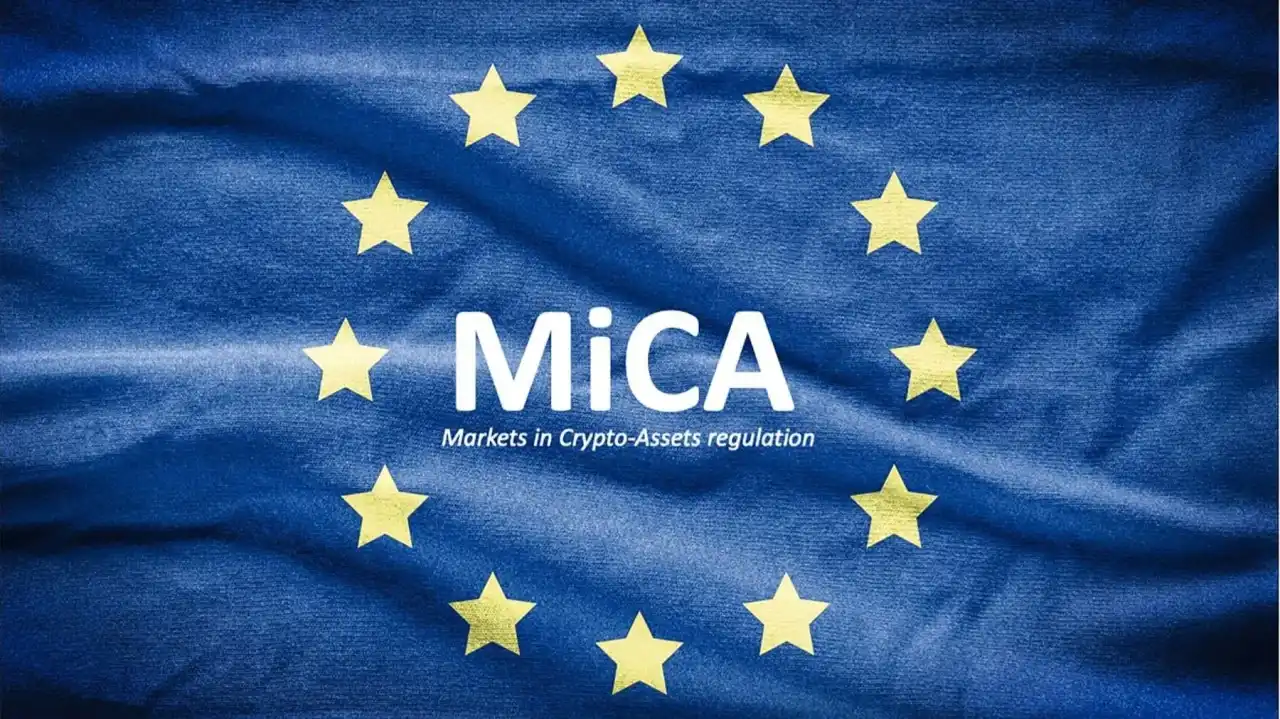
While the U.S. banking sector is still engaged in complex regulatory games with the SEC, Europe has taken the lead through clear legislation. The full implementation of the Markets in Crypto-Assets (MiCA) regulation provides European financial institutions with a highly predictable operational guide. For traditional banks, which are extremely averse to compliance risk, 'certainty' itself is the most powerful catalyst.
In this context, Bitcoin adoption by European banks exhibits a driving model distinctly different from that of the U.S.: U.S. adoption is liquidity-driven, whereas Europe's is based on an infrastructure awakening fueled by compliance dividends. Standard Chartered not only established the crypto asset custody platform Zodia Custody but has also begun to venture into spot Bitcoin and Ethereum trading desks; BNP Paribas and Societe Generale are deeply involved in digital asset custody and tokenized bond issuance. Even within the notoriously conservative Swiss private banking sector, institutions like Julius Baer have long included cryptocurrency investments in their standardized service menu for high-net-worth clients.
The entry of European banks fills the gap in the crypto market for institutional-grade custody and clearing. They do not merely view Bitcoin as a speculative asset but are attempting to seize pricing power in the financial infrastructure of the impending tokenization era. When traditional investment banks begin leveraging their century-old settlement networks and credit systems to handle Bitcoin, the original trust centers of the crypto market are shifting towards the traditional financial system.
Sovereign Wealth and Geopolitical Financial Strategic Hedging
Unlike the actions of European and American banks, which are based on commercial market logic, the adoption of cryptocurrencies by Middle Eastern 'big spenders' carries strong national will and geopolitical financial strategy. In digital asset-friendly jurisdictions like Dubai and Bahrain, the lines between government and the banking sector are highly blurred in the promotion of cryptocurrency.
The Middle East has accumulated vast sovereign wealth. Against the macro backdrop of deglobalization trends and the weaponization of the U.S. dollar, seeking non-correlated asset hedges has become a core imperative. Bitcoin, as a decentralized 'digital gold' not controlled by any single sovereign nation, perfectly aligns with the strategic hedging needs of Middle Eastern capital.
We are seeing large local banks in the UAE (such as Abu Dhabi Commercial Bank ADCB, First Abu Dhabi Bank FAB) working closely with regulators to establish a closed-loop ecosystem covering fiat gateways, crypto asset custody, and wealth management. Announcements of adoption by Middle Eastern banks are often accompanied by the entry of sovereign wealth funds and the release of national-level blockchain strategies. Banks here are not just channels for crypto assets; they are the forward positions for national sovereign capital's global digital asset allocation.
From Retail Frenzy to Institutional Restructuring
Turning the gaze to Asia, its crypto market was long dominated by highly leveraged retail trading and the rise of rough-and-ready crypto-native exchanges. However, since 2023, Asia's financial hubs have been undergoing a top-down institutional restructuring.
Hong Kong is riding the crest of this wave, not only approving Asia's first batch of spot Bitcoin and Ethereum ETFs but, more significantly, aiming to reshape the banking sector's ability to handle crypto assets. Institutions like ZA Bank actively provide fiat settlement services for Web3 enterprises, addressing the long-standing bottleneck of on/off ramps that has plagued the crypto industry. Simultaneously, traditional brokerages and commercial banks are accelerating their applications for licenses to provide virtual asset trading services.
In Singapore, the Monetary Authority of Singapore (MAS) has promoted asset tokenization through Project Guardian, with DBS Bank being the biggest beneficiary and promoter of this process. The DBS Digital Exchange (DDEx), launched by DBS, not only provides Bitcoin trading for institutions and accredited investors but, through its compliant banking background, has also absorbed a large amount of institutional capital seeking safe harbor following the FTX collapse. In the Japanese and South Korean markets, extremely high retail penetration is prompting traditional financial groups (like Japan's SBI Holdings) to build vast crypto asset empires through mergers, acquisitions, and deep collaborations.

The pragmatism of Asian banks lies in their keen recognition of the immense potential of the Web3 economy. They are attempting to solidify their position as global wealth management hubs by incorporating core crypto assets like Bitcoin into the service systems of traditional banks.
Michael Saylor's prophecy is by no means baseless. When we piece together the asset management pressure from U.S. ETFs, the infrastructure dividends from Europe's MiCA, the strategic allocation by Middle Eastern sovereign capital, and the institutional restructuring of Asian financial hubs, a panoramic picture of the global banking sector fully embracing Bitcoin becomes clearly visible.
Michael Saylor's latest remarks are not an isolated prediction but a profound summary based on bank announcements and trends that have already occurred globally. He repeatedly emphasizes that 'we have crossed the event horizon,' indicating that Bitcoin adoption has become an irreversible structural shift. For professional financial practitioners, understanding and adapting to this new paradigm will be key to seizing future opportunities.