# Compliance Related Articles

HTX News Center provides the latest articles and in-depth analysis on "Compliance", covering market trends, project updates, tech developments, and regulatory policies in the crypto industry.

Kalshi and Polymarket Founders at Odds? This Business War Is Far More Brutal Than You Imagine

The New York Times details the fierce, personal rivalry between Kalshi CEO Tarek Mansour and Polymarket founder Shayne Coplan, which has escalated beyond typical business competition into a conflict marked by legal complaints, regulatory battles, and public hostilities. The feud intensified in late 2024 when FBI agents raided Coplan's New York apartment. While Coplan publicly blamed political motives, sources indicate his team privately suspected Mansour, noting that Kalshi's lawyers had previously reported Polymarket's operational model to federal prosecutors, highlighting that U.S. users could still access its offshore platform despite a ban. The animosity extends through their companies' operations. Kalshi positions itself as a compliance-focused, fully licensed U.S. operator, while Polymarket has historically operated its core platform offshore without a U.S. license, offering more anonymity and controversial betting markets. Mansour has publicly called Polymarket's model "illegal and immoral," while Coplan privately dismisses Kalshi as a copycat. Their competition has played out in Washington lobbying, attempts to sabotage each other's major deals (such as Kalshi's efforts to dissuade Intercontinental Exchange from investing in Polymarket), competing sponsorships, and poaching staff. The rivalry continues as both platforms experience massive growth, with Kalshi currently holding a valuation and trading volume edge, but facing ongoing regulatory scrutiny alongside Polymarket.

Foresight News3h ago

Kalshi and Polymarket Founders at Odds? This Business War Is Far More Brutal Than You Imagine

Foresight News3h ago

Starknet Launches Privacy-First Bitcoin strkBTC, Targeting Institutional On-Chain Finance

Starknet introduces strkBTC, a privacy-focused version of Bitcoin designed for institutional on-chain finance. As digital assets face increased scrutiny, two major challenges emerge: the public visibility of all transactions and the looming threat of quantum computing to current cryptographic signatures. Bitcoin, representing over 56% of the crypto market, highlights these issues most clearly. strkBTC, built on Starknet’s STRK20 privacy framework, allows Bitcoin to be used privately on-chain while maintaining compliance. It operates in two modes: a public mode like standard ERC-20 tokens, and a shielded mode that hides balances and transactions from public view. This addresses the need for confidentiality in institutional finance, similar to traditional markets’ private trading venues. A third-party auditor, Financial Privacy Inc, holds view keys for regulatory access when necessary. Additionally, Starknet is positioned ahead in quantum resistance. Its STARK-based proof system relies on hash functions rather than elliptic-curve cryptography, making it less vulnerable to quantum attacks. Starknet’s native account abstraction also allows easier migration to quantum-resistant signatures without protocol-level forks. The team has outlined a roadmap to achieve end-to-end quantum security before “Q-day,” though dependencies on Ethereum’s own migration remain. While strkBTC currently uses a trusted bridge consortium, Starknet plans to transition toward more trustless, Bitcoin-native verification over time. The initiative underscores a shift in on-chain finance beyond yield—prioritizing privacy, compliance, and long-term security for institutional adoption.

marsbit4h ago

Starknet Launches Privacy-First Bitcoin strkBTC, Targeting Institutional On-Chain Finance

marsbit4h ago

Circle's Stock Price Plunges 76%, Hong Kong Dollar Stablecoin Set to Launch Within Two Weeks

Circle's stock price has plunged approximately 76% from its 2023 peak, reflecting a major market revaluation. Despite this, Circle President Heath Tarbert emphasized the company's focus on long-term execution and its dominant position with USDC's $73 billion circulation across 34 blockchains. The competitive landscape is intensifying. A new consortium-backed stablecoin, Open USD, is attempting to challenge incumbents by sharing reserve yields with partners. More significantly, Visa's new stablecoin platform, initially supporting Open USD while also being compatible with USDC, could erode Circle's network effects. In response, Circle is expanding into real-world payments through partnerships like the one with Japan's JCB. Separately, Tether (USDT) faces a two-year compliance window under new U.S. regulations, requiring it to adjust its reserve composition away from assets like Bitcoin and loans towards cash and U.S. Treasuries. Meanwhile, in Hong Kong, Standard Chartered-backed fintech firm Dian Dian is poised to launch a licensed HKD-pegged stablecoin (HKDAP), moving the industry into a phase where the real test is integrating licensed stablecoins into actual payment flows and corporate treasury systems. The sharp decline in Circle's stock underscores a broader shift: the stablecoin market is moving from a winner-takes-all dynamic to a multi-player competitive arena where execution, compliance, and real-world utility are becoming paramount.

marsbit7h ago

Circle's Stock Price Plunges 76%, Hong Kong Dollar Stablecoin Set to Launch Within Two Weeks

marsbit7h ago

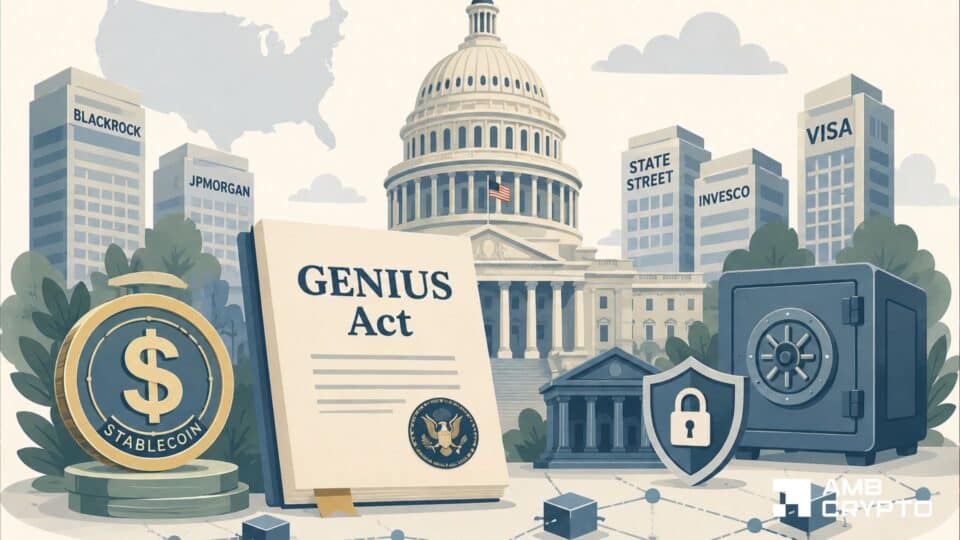
Visa Joins the Stablecoin Arena: Not to Eliminate Stablecoins, but to 'Collect Rent' from Them

Visa is entering the stablecoin arena by launching a stablecoin platform, aiming not to eliminate existing stablecoins but to facilitate and profit from their broader adoption. The platform will enable banks, financial institutions, and fintech companies to more easily issue, manage, and integrate stablecoins into Visa's existing global payment network, which spans over 200 million merchants and 15,000 financial institutions. This move is expected to expand the overall stablecoin market by creating more use cases. For USDC (Circle), it presents a short-term benefit due to likely direct integration and its compliance advantages, though long-term competition may increase from bank-issued or consortium stablecoins. For USDT (Tether), the impact could be more significant in traditional payment and settlement areas, as Visa's platform may favor more transparent, compliant options, though USDT is expected to remain strong in pure crypto trading contexts. Regarding Ethereum, Visa's initiative is seen as neutral to slightly positive. It could drive more traditional capital into the Ethereum ecosystem in the form of stablecoins, increasing network activity and demand for Ethereum as a settlement layer, especially with Layer-2 scaling solutions. While the platform will support multiple blockchains, Ethereum's maturity and decentralization make it a likely primary choice for compliant stablecoins. In essence, Visa's strategy is to embrace stablecoins, collect fees from increased transaction volume on its network, and grow the overall market, rather than displace major incumbents like USDC and USDT directly.

marsbit14h ago

Visa Joins the Stablecoin Arena: Not to Eliminate Stablecoins, but to 'Collect Rent' from Them

marsbit14h ago

Three Years of 'Decentralization' Promises Unfulfilled: Is Base Still at a Standstill?

**Summary: "Three Years of 'Decentralization' Promises Unfulfilled – Has Base Stagnated?"** This article critically examines Coinbase's layer-2 blockchain, Base, arguing that its three-year promise of decentralization remains unfulfilled. Originally launched in 2023 with a roadmap towards decentralization, Base has consistently been rated at "Stage 0" (fully centralized) by industry monitors like L2Beat, indicating no meaningful decentralization progress. Key points include: * **Broken Promises:** Coinbase's 2023 and 2024 decentralization roadmaps and commitments, made in partnership with Optimism, have been largely abandoned without substantial progress. In 2026, Coinbase scrapped its original plan and consolidated all administrative control (via multi-signature wallets) under its own authority. * **Centralized Reality:** The article asserts Base is effectively a centralized, inefficient distributed database run by Coinbase employees, not a decentralized network. This was highlighted by two network outages in June 2026, where Coinbase directly modified code and rolled back the blockchain to fix issues. * **Regulatory and Legal Concerns:** The author raises significant questions about compliance. Base operates without mandatory KYC/AML checks, which may conflict with Coinbase's existing financial licenses that require such oversight. The prolonged lack of progress challenges the legitimacy of continued regulatory forbearance. * **Broader Industry Problem:** The stagnation is framed as part of a wider industry failure, where most Ethereum layer-2s have made slow or no progress toward the technically challenging "Stage 2" full decentralization envisioned by figures like Vitalik Buterin. In conclusion, the article posits that Base represents a case of "decentralization theater," where marketing and complex terminology obscure a centrally-controlled service that may be operating in a regulatory gray area for an unreasonably long period without delivering on its core promise.

marsbitYesterday 09:19

Three Years of 'Decentralization' Promises Unfulfilled: Is Base Still at a Standstill?

marsbitYesterday 09:19

Three-Year 'Decentralization' Promise Falls Flat, Is Base Still Stagnating?

Three years after its launch, Coinbase's Layer-2 solution Base has failed to deliver on its decentralization promises, remaining a centrally controlled "Stage 0" network, according to industry monitor L2Beat. The article argues Base functions as a tool for Coinbase to offer unregulated fund transfers, bypassing Know Your Customer (KYC) and Anti-Money Laundering (AML) checks. Coinbase initially published a decentralization roadmap in 2023, pledging collaboration with Optimism. However, progress stalled. By February 2026, Coinbase abandoned this plan, consolidating all administrative control via two multi-signature wallets. Network outages in June 2026, requiring Coinbase to manually roll back the chain, underscored its centralized nature. The piece criticizes Base as an inefficient, unstable distributed database—a solved technical problem for decades—that adds blockchain complexity without achieving decentralization. All development and operations are handled by Coinbase employees, making Base a Coinbase product. Key questions are raised: Did Coinbase ever have a viable decentralization plan? Is full decentralization for Layer-2s feasible in the short term? How long should regulators tolerate a platform operating without required financial licenses? The author contends that after 40 months with no real decentralization progress, continued regulatory leniency is unjustified, potentially constituting unlicensed money transmission.

Foresight NewsYesterday 09:03

Three-Year 'Decentralization' Promise Falls Flat, Is Base Still Stagnating?

Foresight NewsYesterday 09:03

One On-Chain Transfer Could Lead to 14 Years in Prison? UK Crypto Compliance Faces New Risks

A blockchain transfer could now lead to a 14-year prison sentence in the UK, following the designation of Iran's Islamic Revolutionary Guard Corps (IRGC) under the National Security Act 2023. A new criminal offense (Section 17C) makes it illegal for UK-linked persons or entities to obtain, receive, or retain any valuable benefit if they know, or should reasonably know, it originates from a designated entity like the IRGC. This applies broadly to crypto assets and on-chain transfers. The key challenge lies in timing and knowledge. A transfer can settle on-chain before the recipient identifies the sending wallet, and wallet attribution to a sanctioned entity may only occur post-transaction. Liability depends on what the recipient knew about the source of funds and when they knew it. The offense follows the value, not the payment path, and can involve indirect provision through intermediaries. While the designation itself doesn't trigger automatic asset freezes under UK sanctions law, it creates a separate criminal risk. For UK crypto exchanges, custodians, payment firms, and even users, this makes maintaining clear records of wallet attribution, transaction timelines, and subsequent actions critical for evidence. The law does not impose new reporting duties but emphasizes using existing suspicious activity reporting and consent processes. The lack of ability to reject on-chain transactions makes documented internal controls and decision-making timelines vital for legal defense.

marsbitYesterday 08:26

One On-Chain Transfer Could Lead to 14 Years in Prison? UK Crypto Compliance Faces New Risks

marsbitYesterday 08:26

活动图片