Sharplink’s 15,464 ETH staking milestone sparks fresh debates: Details

ambcryptoPublished on 2026-03-19Last updated on 2026-03-19

Abstract

Sharplink has reached a significant milestone by earning 15,464 ETH (approximately $36 million) in staking rewards since launching its Ethereum treasury strategy. Unlike simply holding ETH, the firm stakes nearly all its 868,699 ETH to generate yield, creating a compounding effect. This approach differs from Bitmine, which holds a much larger amount of ETH (3.81% of total supply) but focuses on market presence rather than yield generation. The strategy has drawn criticism from some community members who argue that Sharplink is using staking to recover losses rather than attract new capital. Despite this, SharpLink’s stock has risen over 25% in the past month. Meanwhile, Ethereum’s price has seen mixed movement, with strong institutional demand through ETF inflows but conflicting on-chain signals. Ultimately, Sharplink’s model emphasizes reward accumulation over pure price appreciation, though some view it as a short-term recovery tactic rather than sustainable growth.

While much of the market focuses on Ethereum’s price swings, Sharplink is showing that institutional players are increasingly paying attention to yield generation instead.

The firm has crossed an important milestone, earning 15,464 ETH (about $36 million) in total staking rewards since launching its Ethereum [ETH] treasury strategy.

Rather than simply holding ETH, Sharplink is using staking to continuously grow its holdings. In the past week alone, its validators generated 493 ETH, worth over $1.1 million.

This approach allows the company to earn additional ETH over time, creating a compounding effect.

How is Sharplink’s strategy different from Bitmine’s?

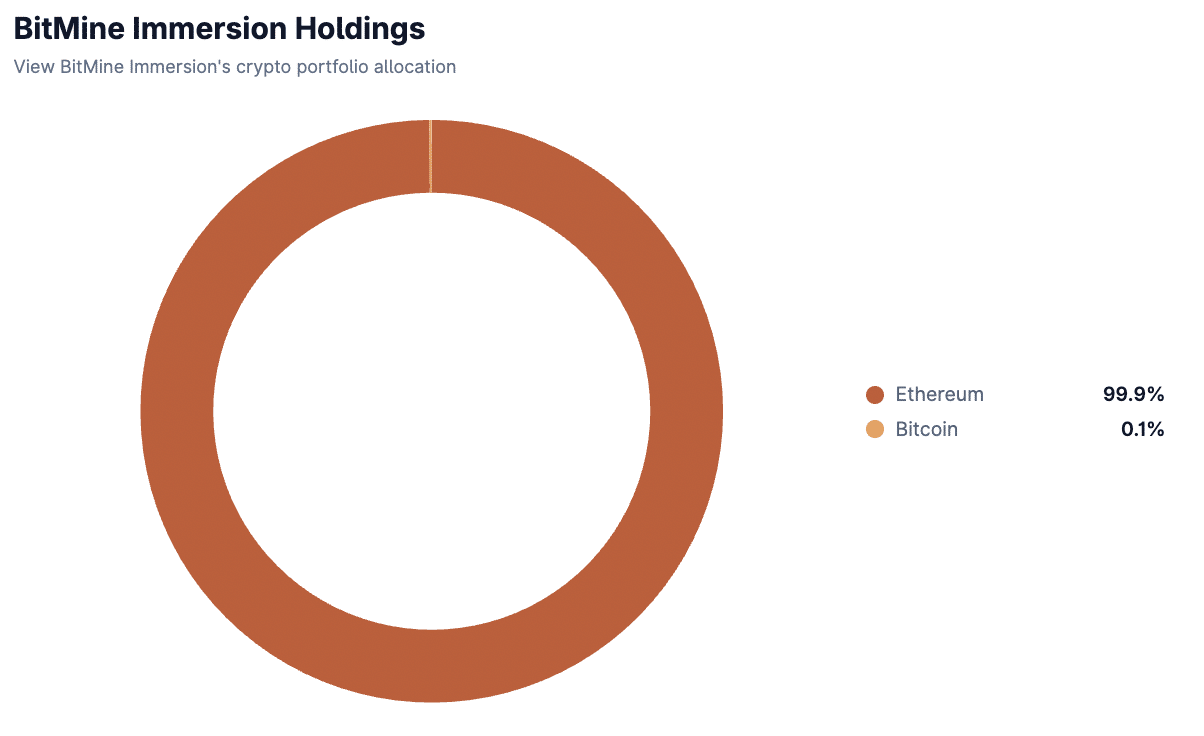
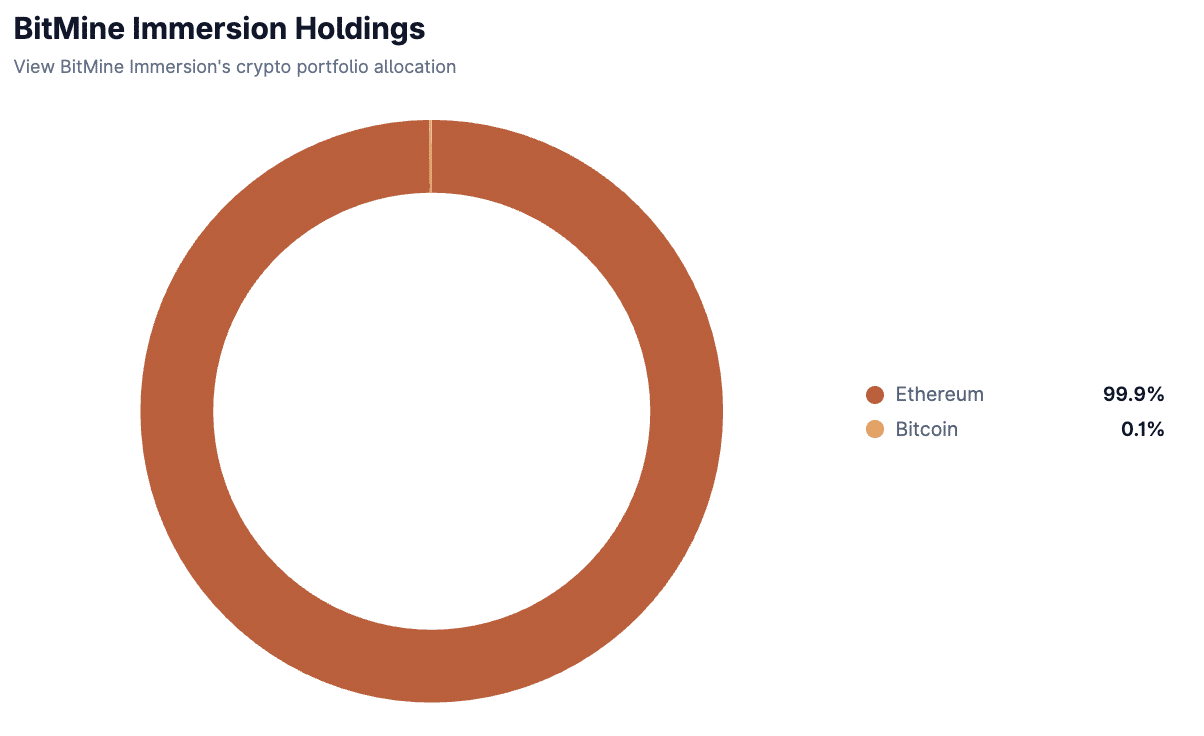
The difference in scale between the two companies is significant. Bitmine currently holds 4,595,562 ETH, which is about 3.81% of Ethereum’s total supply.

In comparison, Sharplink holds 868,699 ETH, or roughly 0.72% of the total supply, making its treasury much smaller.

However, the key difference is how they use their Ethereum. Bitmine focuses on maintaining a large presence in the market, while Sharplink follows a more aggressive strategy by staking almost all of its ETH to generate yield.

This means Sharplink tries to earn as much reward as possible from its holdings instead of simply holding them.

Community mocks Sharplink

However, this strategy has faced a lot of criticism. Some users on X argue that Sharplink is trying to recover losses through staking rewards rather than bringing in new capital.

Remarking on the same, an X user said,

At this rate, it’ll only take about ~33 years to double their total ETH. But seriously, $SBET has to start thinking out of the box or merge with $BMNR to survive.

Echoing similar sentiments, another user questioned,

Why dont you keep buying eth at these prices?

This coincides with SharpLink’s stock trading at $8.31, reflecting a 1.34% daily increase and a gain of more than 25% over the past month, according to Google Finance data.

Ethereum’s market dynamics

Meanwhile, Ethereum was currently trading around $2,331.06, showing a small 0.81% daily increase but a stronger 17% gain over the past month. At the same time, the market environment around ETH is somewhat mixed.

On the institutional side, demand remains strong. Spot Ethereum ETFs have been recording steady inflows since the 10th of March, including a large $138.2 million inflow on the 17th of March.

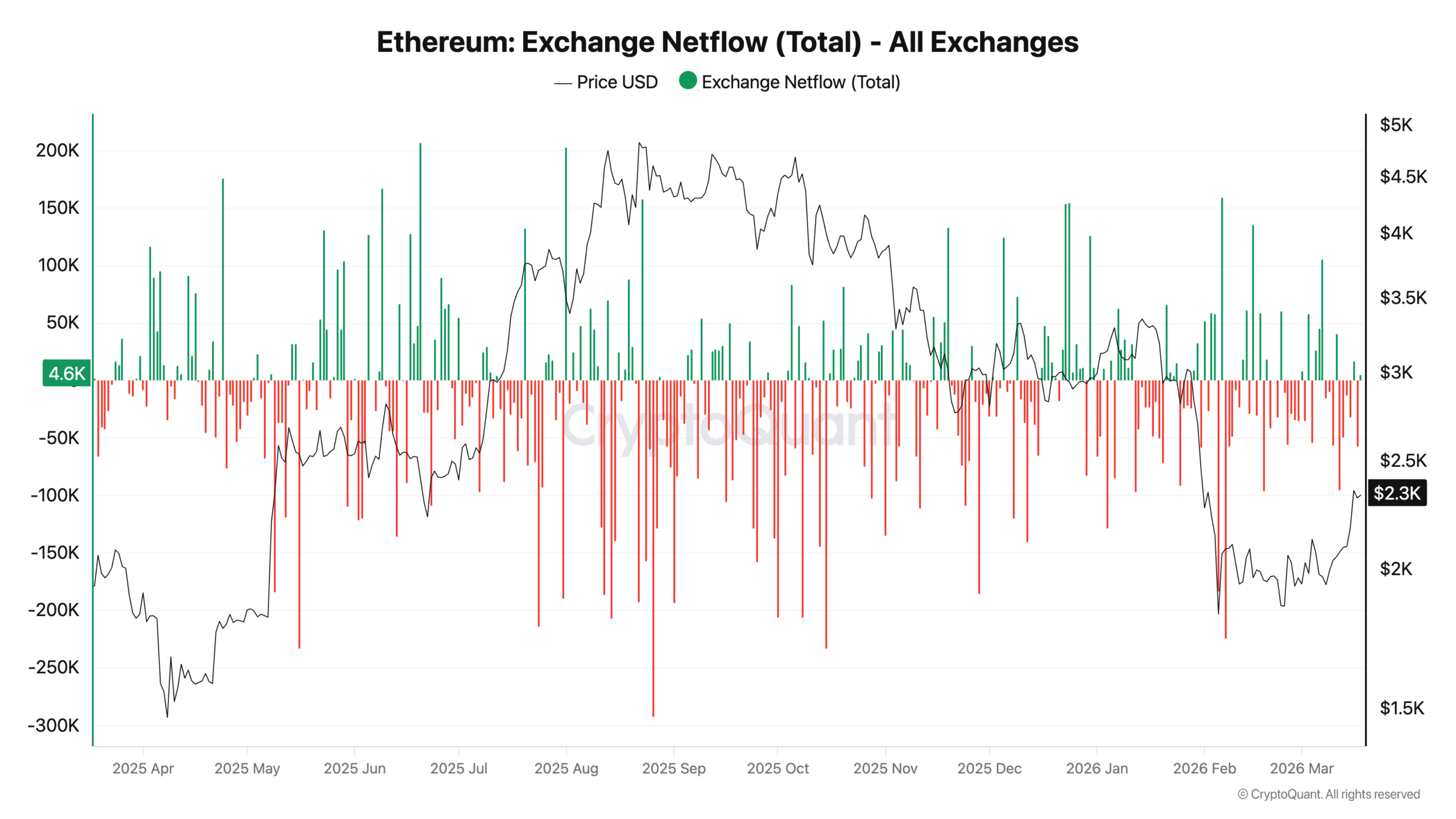
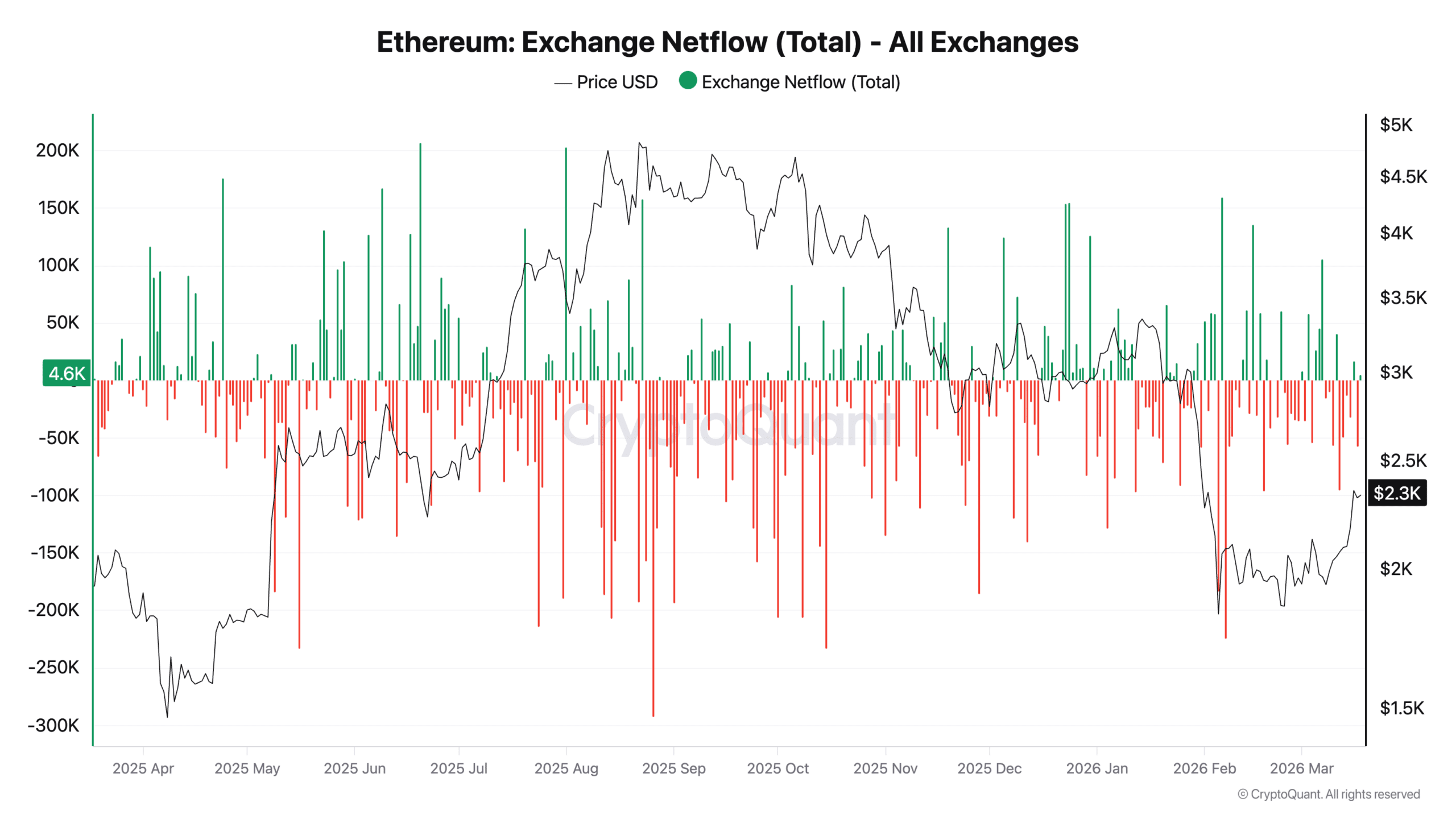
However, on-chain data tells a more confusing story. Since mid-2025, exchange netflows have mostly been negative, meaning investors are moving ETH off exchanges and into private wallets.

Normally, this is considered bullish because it reduces the amount of ETH available for selling.

But despite these large outflows, ETH’s price fell sharply in early 2026, showing that exchange supply alone is no longer driving price movements.


Final Summary

  • By staking nearly all of its ETH, the firm is trying to grow its holdings through compounding rewards rather than relying only on price appreciation.
  • Some observers believe Sharplink’s staking-heavy strategy may be an attempt to offset a high purchase price rather than a long-term growth model.

Related Questions

QWhat milestone has Sharplink recently achieved with its Ethereum staking strategy?

ASharplink has earned 15,464 ETH (approximately $36 million) in total staking rewards since launching its Ethereum treasury strategy.

QHow does Sharplink's Ethereum strategy differ from Bitmine's approach?

ASharplink follows a more aggressive strategy by staking almost all of its ETH to generate yield and earn rewards, while Bitmine focuses on maintaining a large market presence by holding a significant amount of ETH without staking it all.

QWhat is one major point of criticism from the community regarding Sharplink's strategy?

ASome users on X argue that Sharplink is trying to recover losses through staking rewards rather than bringing in new capital, with one user noting it would take about 33 years to double their total ETH at the current rate.

QWhat does the on-chain data show about Ethereum exchange netflows since mid-2025?

ASince mid-2025, exchange netflows have mostly been negative, meaning investors are moving ETH off exchanges and into private wallets, which is normally considered bullish but has not prevented price declines in early 2026.

QWhat is the current trading price of Sharplink's stock and its recent performance?

ASharplink's stock is trading at $8.31, reflecting a 1.34% daily increase and a gain of more than 25% over the past month.

Related Reads

Dalio Warns: AI Boom Shows Signs of a Bubble, Day of Reckoning Will Be the Time of Burst

Ray Dalio, founder of Bridgewater Associates, warns that the current artificial intelligence investment boom shows classic signs of a bubble, which he expects will eventually burst. In a Bloomberg Television interview, he noted that great technological revolutions often lead to capital inflows that create bubbles, making it difficult for investors and companies to calibrate their spending accurately—either overspending to capture market share or underspending and losing their competitive position. This caution comes amid significant rallies in AI-related assets, particularly chipmakers, driven by soaring demand for data centers and high-bandwidth chips, raising debates about overheating valuations. In contrast, Nvidia CEO Jensen Huang recently asserted that investors embracing the AI wave would see "crazy" returns and dismissed concerns over return on investment for data center spending as outdated. Dalio, however, focuses on the risks in the profit realization phase. He argues that bubbles tend to show signs of破裂 when markets transition from investment to the need for tangible returns, describing the burst as a process of converting paper wealth into cash. While acknowledging AI's intrinsic value, he expressed concern over the future profitability of some AI companies, suggesting the market is repeating a familiar pattern. The 76-year-old billionaire, who fully exited Bridgewater in 2025, has a net worth estimated at $21.5 billion according to the Bloomberg Billionaires Index.

marsbit12m ago

Dalio Warns: AI Boom Shows Signs of a Bubble, Day of Reckoning Will Be the Time of Burst

marsbit12m ago

Privacy Coin Crisis of Confidence! ZEC Plunges Over 56% in a Single Day

Zcash (ZEC), a leading privacy-focused cryptocurrency, experienced a severe crash on June 5th, plummeting over 56% in a single day and erasing nearly two months of gains. The flash crash was triggered by the disclosure of a critical zero-knowledge proof vulnerability within Zcash's Orchard privacy pool, which had existed since the pool's launch in May 2022. The flaw theoretically allowed an attacker to forge unlimited ZEC undetectably due to the pool's privacy features. The vulnerability was discovered on May 29th by independent security researcher Taylor Hornby during a proactive audit commissioned by Shielded Labs, utilizing AI-assisted analysis. The Zcash development team responded swiftly, implementing an emergency soft fork to disable Orchard transactions on June 2nd and executing a permanent hard fork fix (NU6.2) on June 3rd. Despite the technical fix, a major crisis of confidence emerged. The core issue is that Orchard's privacy design makes it cryptographically impossible to prove whether the vulnerability was exploited over the past four years, casting permanent doubt on the historical supply integrity of ZEC. While Shielded Labs argues exploitation was unlikely, the inability to provide definitive proof has severely damaged market trust. This sentiment was exacerbated when BitMEX co-founder Arthur Hayes, a prominent ZEC supporter, announced he was selling his entire position. He stated that privacy assets require "perfect security" rather than "probable safety." The combined effect of the disclosure and Hayes's exit ignited widespread panic selling, leading to massive liquidations and significant price decline. Analysts note the event highlights a fundamental tension within privacy coins: the conflict between verifiable supply and cryptographic privacy.

链捕手14m ago

Privacy Coin Crisis of Confidence! ZEC Plunges Over 56% in a Single Day

链捕手14m ago

Trading

Spot
Futures

Hot Articles

Discussions

Welcome to the HTX Community. Here, you can stay informed about the latest platform developments and gain access to professional market insights. Users' opinions on the price of ETH (ETH) are presented below.

活动图片