Written by: Trend Research

With the U.S.-Iran negotiation window expiring and long-term agreement prospects dimming, the three major U.S. stock indices closed lower for the second consecutive day, with the Dow hitting its lowest close in two weeks. The S&P 500 fell 0.52% to 7,745.06, the Dow Jones declined 0.51% to 53,459.78, and the Nasdaq dropped 0.32% to 26,644.911. The VIX rose 6.48% to 17.42. The "Magnificent Seven" all closed in the red, with Meta down 3.5% leading the losses. However, memory chip stocks and optical communication stocks bucked the trend and moved higher, with the Philadelphia Semiconductor Index rebounding 1.6% and re-entering a bull market. Middle East risks pushed U.S. Treasury yields higher, with the 30-year yield reaching its highest level since 2007. Prospects of a U.S.-Iran deal boosted oil prices, with Brent crude closing above the $90 mark for the first time in three weeks. Gold reached its highest closing level in over two months. The U.S. Dollar Index fell for the third straight day, while offshore USD/CNY broke through 6.74 intraday, reaching a new high in over three years. Market dynamics were clear: Geopolitical risks lifted oil prices and safe-haven assets, but the demand logic for AI chips continues to strengthen, prompting continued fund allocation to memory and optical communication sectors.
U.S.-Iran Negotiation Window Expires, Long-Term Deal Prospects Dim, Oil Prices Surpass $90
The core macro variable on Monday was geopolitics. The memorandum of understanding window for U.S.-Iran negotiations expired without an extension agreement. Trump stated he was in no hurry to end the war in Iran, did not seek to extend the U.S.-Iran MOU, said Iran "would not make the kind of deal I think is necessary," and warned of "bombing the hell" out of Oman if it obstructed negotiations. Iran was similarly firm, ruling out an extension of the MOU and stating it had set a final deadline for U.S. compliance.
With no signs of narrowing differences, oil prices surged. WTI crude for September delivery rose 2.55% to $84.50/barrel, reaching its highest level this month. Brent crude for October delivery rose 2.65% to $90.87/barrel, closing above the $90 mark for the first time in three weeks.
The "dark shipping" of Middle Eastern oil producers using transponder shutdowns to secretly transport crude through the Strait of Hormuz continues, reportedly exceeding 4 million barrels per day. However, this covert supply chain has not completely offset the geopolitical risk premium. Short-term upward momentum for oil prices remains driven by political factors rather than supply-demand fundamentals.
30-Year U.S. Treasury Yield Hits Highest Since 2007, Bond Selloff Continues
U.S. Treasury yields continued to climb. The 30-year yield briefly exceeded 5.31%, its highest since 2007. The 10-year yield rose about 3 basis points to approximately 4.72%, while the 2-year yield increased about 1 basis point to roughly 4.18%.
The core factor driving long-end yields higher is supply pressure. Companies are issuing bonds on a large scale to fund the AI boom; August's U.S. investment-grade corporate bond issuance has already reached $145.2 billion, surpassing the monthly record of $136 billion set in August 2020. Concurrently, the U.S. government's nearly $2 trillion annual fiscal deficit continues to boost Treasury supply.
Major overseas holders are also selling. U.S. Treasury Department data shows China and Japan led overseas sales of U.S. Treasuries in June, with both countries and the U.K. reducing holdings. China's holdings, after rebounding in May, fell by $25.9 billion month-over-month to $633.4 billion, their lowest level since 2008.
Bank of America's Hartnett noted in a recent report that with U.S. government debt approaching $40 trillion and the AI financing frenzy pushing corporate bond supply up 61% year-over-year, this is structurally crowding out Treasury buyers, with debt interest payments already at $1.4 trillion. Hartnett views going long on gold as the best hedge against dollar devaluation, bond market collapse, and political risk.
Chip Index Re-enters Bull Market, Memory and Optical Communication Stocks Lead Gains Against Trend
Rising Treasury yields pressured the Magnificent Seven, but the semiconductor sector, with its independent AI chip demand narrative, bucked the trend. The Philadelphia Semiconductor Index rebounded 1.6%. The preceding bear market lasted only 21 days, the shortest since March 2020.
Memory chip stocks performed strongest. SanDisk closed up nearly 9%, and Western Digital gained over 5%. Micron has risen 17.5% over the past five sessions. The market sees strong recent financial data disclosures from Anthropic and OpenAI as key catalysts, improving visibility into AI chip demand.
Optical communication stocks also advanced. Coherent closed up nearly 8%, and Lumentum gained 4.6%. Demand for high-speed optical interconnects from AI data centers continues to be validated, with funds continuing to concentrate on more certain AI hardware sub-sectors amid macro uncertainty.
SpaceX rebounded over 4%. Previously pressured by capital expenditure concerns, Monday's rebound shows market confidence in the long-term logic of AI infrastructure investment remains.
Magnificent Seven All Close Lower, Divergence Between Chips and Seven Widens
The "Magnificent Seven" all closed lower on Monday, acting as a major drag on the broader market. Meta fell 3.5%, leading the declines, with losses for the other six relatively moderate.
The collective weakness of the Seven occurred against a backdrop of persistently rising Treasury yields. Higher long-term interest rates pressure the discount rates used to value high-multiple growth stocks, prompting funds to temporarily withdraw from large-cap tech amid macro uncertainty.
However, this withdrawal is not a systematic exit. The strength in the chip index indicates funds are simply rotating within the tech sector, switching from the Seven to higher-certainty AI hardware sub-sectors.
Dollar Falls for Third Day, Yuan Hits Three-Year High, Gold Rises to Two-Month High on Safe-Haven Demand
The U.S. Dollar Index fell for the third consecutive day, hitting an intraday low not seen in over two months. Offshore USD/CNY broke through 6.74 intraday, reaching a high not seen in over three years. Gold closed at a new high of over two months, rising over 1% intraday; COMEX gold for August delivery closed up 0.85% at $4,417.8/ounce. While rising Treasury yields typically pressure gold, safe-haven demand driven by escalating geopolitical risks outweighed interest rate factors.
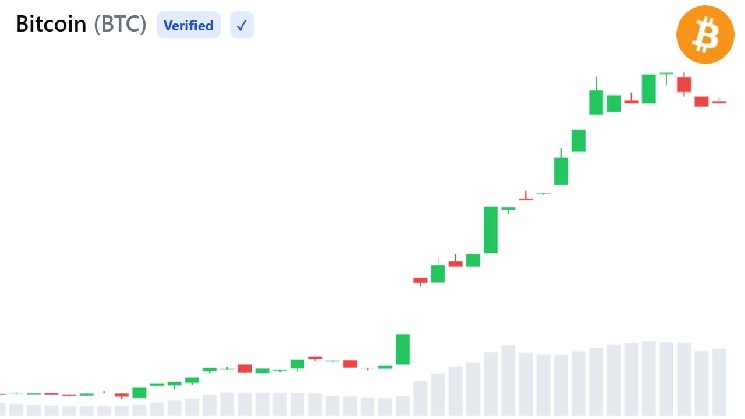
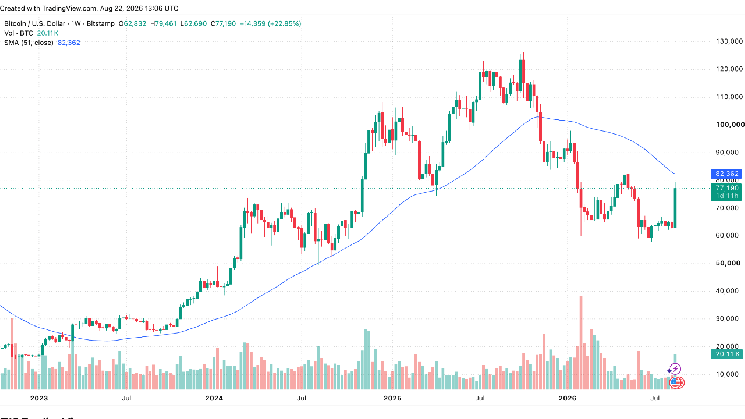
Bitcoin broke through $64,000 intraday, rising 3% from the day's low. Digital assets found support against a weaker dollar backdrop. COMEX silver for August delivery closed up 1.74% at $66.121/ounce.
What to Watch Today
Market focus on Tuesday will be in two directions.
First, subsequent developments in the U.S.-Iran situation. Following the MOU expiration, any new contacts or escalation in confrontation will directly impact oil prices and risk asset performance. Trump's "no hurry" stance suggests geopolitical risk premium will be difficult to eliminate in the short term.
Second, Baidu's earnings report and conference call. Key points will be the pulling effect of AI large models on cloud business and the recovery pace of advertising. With the Golden Dragon Index underperforming, Baidu's results will test whether global funds' stance on Chinese stocks is seeing marginal changes.