Microsoft CEO Satya Nadella's Latest Warning: Betting Entirely on a Single AI Model Hands Over a Company's Lifeblood

marsbit發佈於 2026-07-28更新於 2026-07-28

文章摘要

Microsoft CEO Satya Nadella warns that companies relying solely on a single AI model could jeopardize their survival. He argues that over-dependence leads to "vendor lock-in," where businesses risk ceding control over their core data, memory, contextual history, and AI usage patterns. This dependence essentially outsources a company's critical thinking and operational know-how to an external provider. The deeper a company integrates with one AI system—feeding it prompts, internal data, and workflows—the more it reveals its unique business methods and competitive edge. This accumulated knowledge could become accessible to the AI supplier. Furthermore, switching providers becomes extremely costly and complex, as companies would need to rebuild their entire AI-augmented workflow, memory, and tool integrations from scratch. Nadella's solution is "decoupling." Companies should separate their proprietary data, memory, and control layer (or "harness") from the underlying AI models. By retaining metadata from every AI interaction, businesses can preserve their operational "brain" or institutional knowledge. This allows them to flexibly use different AI models (e.g., from OpenAI, Anthropic, Microsoft) for specific tasks without losing their accumulated expertise. The core idea: companies can rent the smartest models available, but they must keep their own "brain" and operational control firmly in-house.

Betting the whole company on a single AI could eventually mean betting away the entire company!!

This statement might sound somewhat alarmist, but the person saying it is none other than Microsoft CEO Satya Nadella, who is currently pushing AI with all his might.

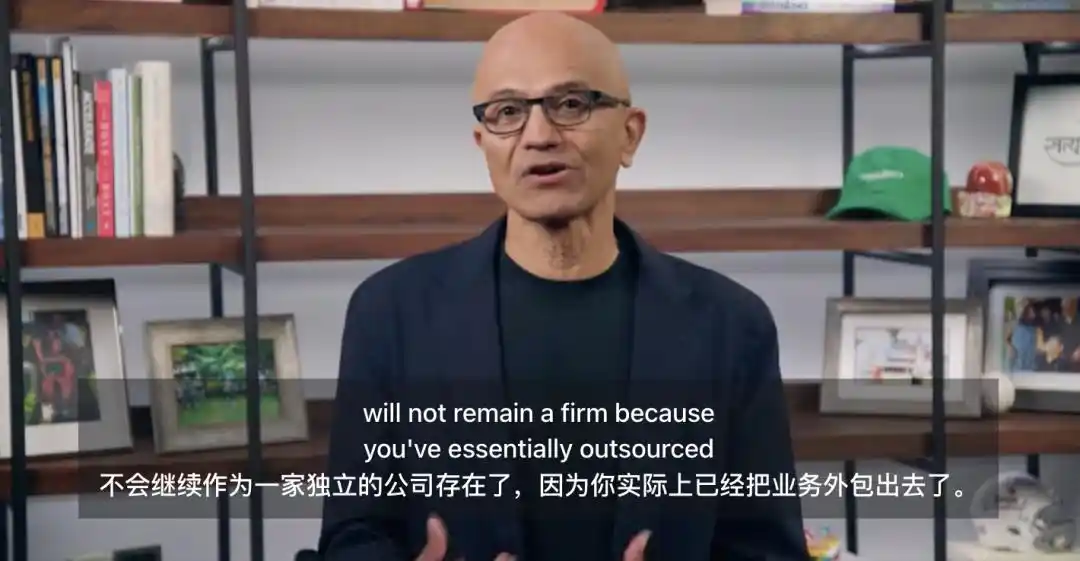
In an interview on CNN's "Fareed Zakaria GPS" program, Nadella delivered a harsh message to all companies that believe 'one AI model can handle everything':

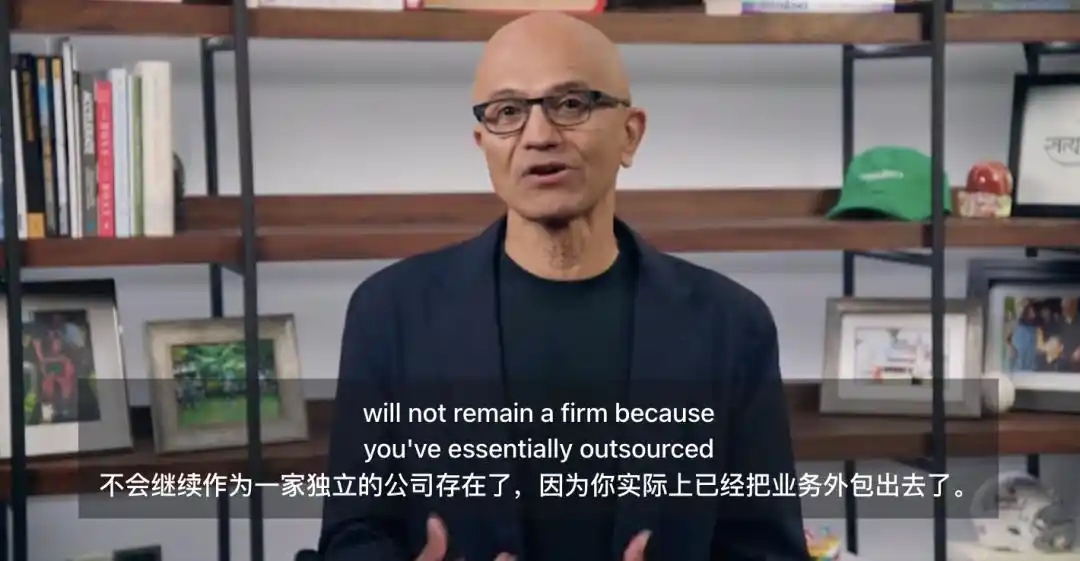
Any company that loses control of its data, memory, and AI usage records may not be able to survive because it has effectively outsourced its thinking.
And he added, the deeper a company uses AI in its daily operations, the more opportunities the AI supplier has to understand how that company truly functions.

In the end—

What the company pays might not just be the token fee, but also a set of commercial experience that competitors couldn't buy even with money.

So, what exactly is Nadella worried about?

Betting on a Single AI Could Ultimately Outsource a Company's Core Capabilities

Then, how can a company simply using a specific AI seriously risk its survival?

The core of Nadella's concern revolves around two words: "lock-in."

Today, when a company integrates AI, what employees see might just be a chat interface, but what's connected behind it is becoming increasingly complex—

Prompts, internal data, context, long-term memory, and the harness responsible for directing AI to call tools and execute tasks are all gradually being integrated.

Moreover, employees continuously feed company materials into the system to make the AI better understand the business!!

Thus, thousands of prompts, calls, and corrections layered together leave behind the real working methods of a company:

How to serve customers, how to assess risks, how to modify products, and who to listen to in special situations. (The real "secret manual")

While this system isn't fully documented in any employee handbook, it might determine why a company is better at 'doing business' than its competitors...

Leaking business know-how is just one layer of risk.

If the model, harness, corporate context, and long-term memory are all locked into a single AI company's product, another issue arises—

When the company wants to switch models, it will find that it needs to move far more than just a chat interface!!

Accumulated context, memory, tool-calling methods, and workflows may all need to be rebuilt, and that's when they'll realize they've made a huge mistake.

Furthermore, if the original model suddenly raises prices, discontinues service, falls behind in capabilities, or undergoes major changes to a feature, it becomes very difficult for the enterprise to quickly migrate to another AI.

The company either endures the high cost of migration, starting from scratch to re-train the AI, or stays on the original platform, accepting its price changes, rules, and product shifts.

Price hike by the model? Have to follow. (Wry smile)

Model capabilities fall behind? Have to follow. (Wry smile)

Model supplier changes product direction? The company's core workflow has to change too. (Wry smile)

This is the complete logic behind Nadella's warning that relying on a single AI 'may not survive'—

If a company attaches its data, memory, and working methods entirely to a single AI system, it has essentially outsourced a part of its thinking capacity.
Without that AI, the company might not even understand why it made past decisions or how to continue working.

So it seems like the AI is working for the company.

But in the end, it might turn into the company needing the AI supplier to stay alive. (Ouch)

The Smartest Models Can Be Rented, A Company's "Thought Patterns" Must Be Kept In-House

Alright, the question arises: companies can't all go train foundational models from scratch just because they're worried about lock-in, right?

Training cutting-edge models requires massive computing power, vast amounts of data, and specialized talent. Most companies neither need nor can afford this...

The solution Nadella offers is actually one word—Decouple!!!

Decouple the model from the harness, decouple the context and memory from the model.

Underlying models can come from OpenAI, Anthropic, Microsoft, or other vendors. The company's own data, usage records, context, and long-term memory, however, must always reside within its own systems.
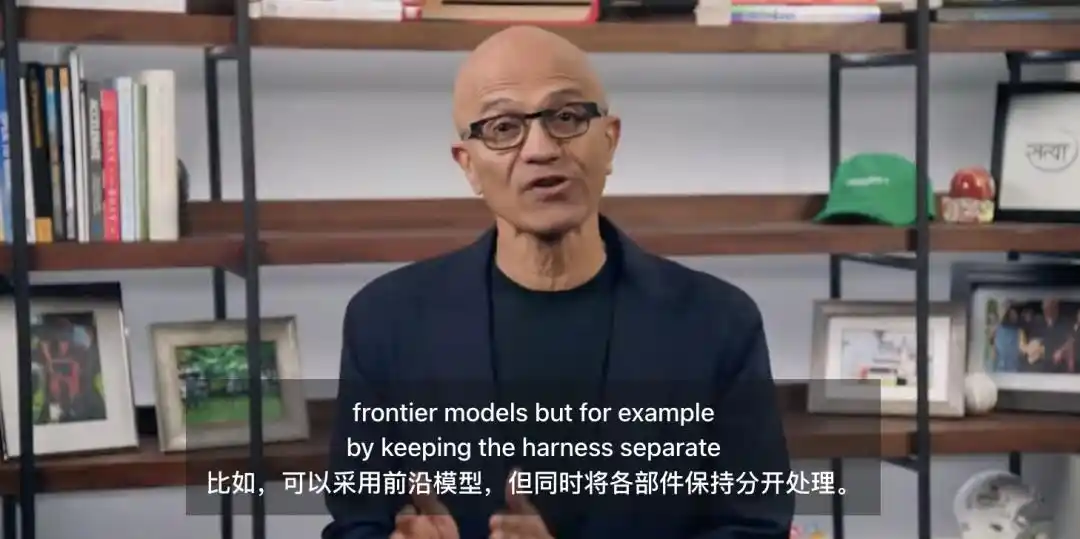
According to Nadella's vision, each time a company uses a model, the metadata generated around that call should be retained by the company itself.

This metadata can include what questions the company asked, what content the model accessed, what results it gave, and what modifications employees made afterwards.

Once these records accumulate, the company can also use them to train its own weights or models, further solidifying the process of using AI into its own capabilities.

Furthermore, the harness should also not be permanently welded to any single model.

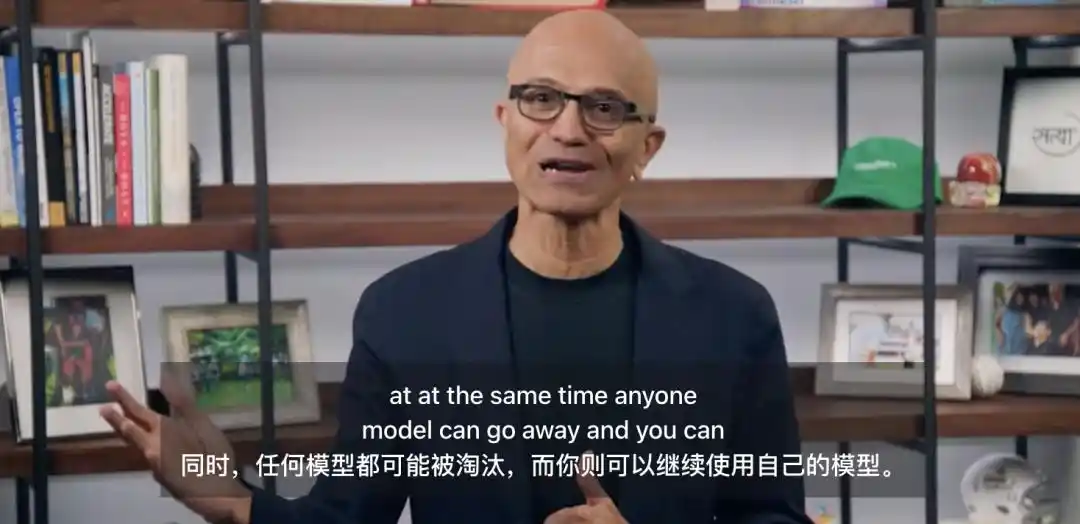
The benefit of this is that the model can evolve from being the brain, body, and memory of the entire system into a replaceable inference engine.

When writing code, you can call a model more proficient in programming.

When analyzing long documents, you can switch to a model with stronger long-context capabilities.

When handling sensitive materials, you can use open-source weight models deployed within the company.

Whichever model has better capabilities and lower costs gets the job.

As Nadella puts it, this way, even if "any single model disappears," the company can still control its own destiny.
Actually, Nadella's concern has already surfaced in the startup world.

Previously, OpenAI proposed a special investment offer to startups in the Y Combinator Spring and Summer batches.

Each company could receive up to $2 million worth of OpenAI tokens. In exchange, OpenAI would gain corresponding equity through SAFE.

Investor Jason Calacanis later publicly warned entrepreneurs that accepting these tokens meant OpenAI could potentially see what a startup was actually doing, then replicate the idea and embed similar capabilities into its own free product.

Now, Nadella extends the same warning from startups to all enterprises—

In the past, one of a company's most important assets was the experience accumulated over time by its employees and organization.

In the AI era, this experience will further transform into prompts, context, evaluation data, agent memory, and the records of countless tool calls and manual corrections.

Together, they form a company's new "neural circuitry."

This neural circuitry can operate by calling different models and can also become smarter as models upgrade.

But regardless of how many generations of external models are replaced, it must be the company itself that controls this neural circuitry.

After all, the smartest models can be rented.

A company's "brain" must stay firmly in its own head.

References:

[1]https://www.facebook.com/fareedzakaria/videos/1344036211210716/

[2]https://techcrunch.com/2026/07/27/satya-nadella-says-companies-that-trust-one-ai-for-everything-may-not-survive/

This article is from the WeChat public account "QbitAI", author: Meng Yao

熱門幣種推薦

相關問答

QWhat is the core risk that Microsoft CEO Satya Nadella warns about when companies rely on a single large AI model?

AThe core risk is 'vendor lock-in' or 'binding.' Companies risk outsourcing their core thinking and capabilities to a single AI provider, losing control over their data, memory, and AI usage records. This makes them vulnerable to the provider's pricing, service changes, or potential access to their proprietary operational knowledge.

QAccording to Nadella, what elements of a company's operations become embedded in a single AI system over time?

AOver time, a company embeds its internal data, prompts, context, long-term memory, tool-calling methods, workflows, and the specific logic behind its business decisions (e.g., how to serve clients, assess risk, modify products) into the AI system. This collectively forms the company's unique operational 'playbook.'

QWhat is Nadella's proposed solution to avoid dependency on a single AI model?

ANadella's solution is to 'decouple' or 'unbundle' the AI stack. Companies should separate their core data, memory, context, and workflow 'harness' from the underlying AI model. This allows them to retain their 'brain circuit' and use different models (from various providers) as interchangeable 'reasoning engines' based on task, cost, or performance.

QWhat does Nadella mean when he says a company's new 'brain circuit' can be rented but must be owned?

AHe means that the most advanced AI reasoning models ('brains') can be rented or accessed from external providers. However, the company's own unique system—composed of its data, workflows, prompts, and operational knowledge that directs and utilizes these models—is its 'brain circuit.' This core system must be owned and controlled by the company itself to ensure independence and survival.

QWhat parallel does the article draw between Nadella's warning and a previous concern in the startup community?

AThe article parallels Nadella's warning with a previous concern raised by investor Jason Calacanis about OpenAI's investment offers to startups. He warned that accepting OpenAI's tokens for equity could allow OpenAI to see a startup's operations and potentially replicate their ideas in its own free products, similar to how a single AI provider could gain insights into and leverage a company's proprietary operational knowledge.

你可能也喜歡

Coinbase副总裁:加密货币监管之战已经结束

Coinbase新任副总裁Ryan VanGrak表示,加密货币行业的监管之战已经结束。自2026年7月9日上任以来,他已将公司监管策略的重点从诉讼和对抗转向增长与创新,使得行业可以专注于发展,而非生存权之争。 VanGrak指出,《数字资产市场清晰度法案》(CLARITY法案)获得了巨大推动力。该法案旨在建立联邦监管框架,明确划分SEC与CFTC在数字资产领域的职责,以期通过明确的联邦规则确保适当监督、保护投资者并维持美国在数字资产领域的领导地位。 Coinbase前首席法务官Paul Grewal曾参与加密货币史上最重要的法律战之一,即SEC于2023年6月对Coinbase提起的诉讼(该案已被驳回)。VanGrak的任命标志着公司从“战时顾问”转向了“和平时期外交官”。 VanGrak拥有在Citadel Securities和美国SEC工作的经验,深谙监管机制和日益吸引Coinbase的机构金融世界。Coinbase正致力于超越单纯的加密货币交易所,通过拓展股票、期货、预测市场及人工智能工具等业务,成为全面的金融服务提供商。 对投资者而言,加密货币立法获得两党支持在SEC执法浪潮时期是不可想象的。CLARITY法案获得的两党支持表明,立法者已不再质疑加密货币是否应该存在,而是专注于如何监管。然而风险犹存,法案“接近通过”意味着尚未最终完成,VanGrak的足球比喻提醒人们,许多进攻可能在红区受阻。

cryptonews.ru21 分鐘前

Coinbase副总裁:加密货币监管之战已经结束

cryptonews.ru21 分鐘前

深度解读 FWA:把 NFT 变成"链上扭蛋"的有趣实验

FWA(Fake World Assets)是一个基于以太坊的创新型项目,它将NFT与“链上扭蛋机”机制结合,为闲置NFT提供了新的流动性解决方案。 **核心玩法:** 项目中有两种主要角色: 1. **存款人(庄家)**:将白名单内的NFT与一笔自选的ETH保证金(Backing)一起存入,形成一个“仓位”。保证金越高,该NFT被抽中的概率越低,但能持续分享手续费收益;保证金越低,则越容易被抽走。 2. **抽奖人(玩家)**:支付由系统实时计算的统一价格进行抽奖,必随机获得一个仓位。抽中后,玩家可选择留下NFT,或按该仓位保证金85%的“常设回购价”将NFT卖还给原主人,获得ETH或项目代币$FWA。 **关键机制与代币经济:** * **定价与概率**:抽奖价格由所有仓位保证金的调和平均数决定,这使得池中即使有高价值NFT,抽奖成本也能保持较低。被抽中的概率与保证金成反比。 * **收益分配**:抽奖费用的一部分会均分给所有活跃存款人,保证金最高的“皇冠”仓位可获得额外奖励。 * **$FWA代币**:代币主要通过参与协议获得。当抽奖人选择以$FWA结算回购款时,系统会用ETH在市场上买入$FWA,形成持续买盘,将协议活跃度与代币价值绑定。 * **协议收入**:主要来自抽奖费用抽成、NFT被留下时的结算费,以及卖回时的结算折扣。 **设计亮点:** 该项目通过“反向权重+均分收益”平衡大小额存款人利益;用“常设回购”机制降低参与风险;并通过代币的“非对称买卖”(早期只能卖出)确保$FWA主要流向真实用户,助力协议冷启动。

marsbit36 分鐘前

深度解读 FWA:把 NFT 变成"链上扭蛋"的有趣实验

marsbit36 分鐘前

三星旗下公司与Upbit运营商探讨稳定币基础设施建设

三星集团IT服务子公司三星SDS正与韩国最大加密货币交易所Upbit的运营商Dunamu探讨合作,涉及稳定币基础设施、数字资产系统及基于AI的支付模式。三星SDS首席执行官李俊熙在第二季度财报电话会议上表示,公司已通过韩国证券存管机构的代币化证券平台项目及对稳定币从发行到结算的全流程验证,积累了差异化的数字资产基础设施能力。他预计此次合作将助力三星SDS拓展数字资产基础设施市场。 此前,三星电子已宣布计划在三星钱包中增加稳定币支持。今年5月,三星证券、三星SDS和三星信用卡联合收购了Dunamu 4%的股份,加深了三星附属公司与韩国数字资产领域的联系。李俊熙强调,此次投资是战略举措而非财务投资,双方计划共同完善数字金融基础设施的潜在商业模式,结合三星SDS的IT服务、云和安全能力与Dunamu的区块链技术,以引领市场。 与此同时,三星SDS在AI和云服务领域的扩张持续推动业绩增长,第二季度收入同比增长5.9%至3.72万亿韩元(约26亿美元),其中外部云业务收入激增75%。公司还计划大幅扩展AI基础设施,从当前的110兆瓦增至2029年的230兆瓦,并在2031年超过800兆瓦,彰显其在数字金融服务之外构建AI基础设施的雄心。

cointelegraph37 分鐘前

三星旗下公司与Upbit运营商探讨稳定币基础设施建设

cointelegraph37 分鐘前

10万科学家免费用1年,OpenAI把科研流水线搬进ChatGPT

OpenAI于7月29日推出“ChatGPT for Academic Researchers”计划,旨在为10万名高校科研人员提供为期一年的免费高级模型使用权。首批名额1万个,目标在2027年达到10万。入选机构包括巴黎高师、普林斯顿高等研究院等知名学府。 获批研究者将获得包含ChatGPT、ChatGPT Work、Codex在内的一整套集成工作区,并配备扩容版Deep Research、更高使用限额和更大上下文窗口。该工作区集成了超过75个生命科学专用技能,并能连接Zotero、GitHub、公共数据库等多种科研常用工具。模型方面,GPT-5.6系列分工明确,其中旗舰型号Sol Pro在专业数学和生物数据分析基准测试中表现出色。 OpenAI数据显示,每周约有130万人使用ChatGPT进行高等科学与数学研究,相关论文致谢ChatGPT的数量亦快速增长。分析认为,该计划旨在培养科研人员的工作习惯,通过深度绑定其工作流程,在免费期结束后形成高迁移成本。 此次免费提供的是产品使用权,而非无限额度或API访问,更不包含模型权重。申请者需为高校教职或博士后,通过机构验证并提交近期学术论文。此举被指绕开了AI基础研究人员对模型权重和训练数据的核心诉求。 相比之下,Anthropic的“AI for Science”计划主要提供API额度。两者均未开放模型权重,理由是为防止滥用。最终,这份工具红利虽能显著提升科研效率,但也引发了关于用户依赖性和AI研究透明度的思考。

marsbit41 分鐘前

10万科学家免费用1年,OpenAI把科研流水线搬进ChatGPT

marsbit41 分鐘前

交易

現貨

熱門文章

什麼是 $S$

理解 SPERO:全面概述 SPERO 簡介 隨著創新領域的不斷演變,web3 技術和加密貨幣項目的出現在塑造數字未來中扮演著關鍵角色。在這個動態領域中,SPERO(標記為 SPERO,$$s$)是一個引起關注的項目。本文旨在收集並呈現有關 SPERO 的詳細信息,以幫助愛好者和投資者理解其基礎、目標和在 web3 和加密領域內的創新。 SPERO,$$s$ 是什麼? SPERO,$$s$ 是加密空間中的一個獨特項目,旨在利用去中心化和區塊鏈技術的原則,創建一個促進參與、實用性和金融包容性的生態系統。該項目旨在以新的方式促進點對點互動,為用戶提供創新的金融解決方案和服務。 SPERO,$$s$ 的核心目標是通過提供增強用戶體驗的工具和平台來賦能個人。這包括使交易方式更加靈活、促進社區驅動的倡議,以及通過去中心化應用程序(dApps)創造金融機會的途徑。SPERO,$$s$ 的基本願景圍繞包容性展開,旨在彌合傳統金融中的差距,同時利用區塊鏈技術的優勢。 誰是 SPERO,$$s$ 的創建者? SPERO,$$s$ 的創建者身份仍然有些模糊,因為公開可用的資源對其創始人提供的詳細背景信息有限。這種缺乏透明度可能源於該項目對去中心化的承諾——這是一種許多 web3 項目所共享的精神,優先考慮集體貢獻而非個人認可。 通過將討論重心放在社區及其共同目標上,SPERO,$$s$ 體現了賦能的本質,而不特別突出某些個體。因此,理解 SPERO 的精神和使命比識別單一創建者更為重要。 誰是 SPERO,$$s$ 的投資者? SPERO,$$s$ 得到了來自風險投資家到天使投資者的多樣化投資者的支持,他們致力於促進加密領域的創新。這些投資者的關注點通常與 SPERO 的使命一致——優先考慮那些承諾社會技術進步、金融包容性和去中心化治理的項目。 這些投資者通常對不僅提供創新產品,還對區塊鏈社區及其生態系統做出積極貢獻的項目感興趣。這些投資者的支持強化了 SPERO,$$s$ 作為快速發展的加密項目領域中的一個重要競爭者。 SPERO,$$s$ 如何運作? SPERO,$$s$ 採用多面向的框架,使其與傳統的加密貨幣項目區別開來。以下是一些突顯其獨特性和創新的關鍵特徵: 去中心化治理:SPERO,$$s$ 整合了去中心化治理模型,賦予用戶積極參與決策過程的權力,關於項目的未來。這種方法促進了社區成員之間的擁有感和責任感。 代幣實用性:SPERO,$$s$ 使用其自己的加密貨幣代幣,旨在在生態系統內部提供多種功能。這些代幣使交易、獎勵和平台上提供的服務得以促進,增強了整體參與度和實用性。 分層架構:SPERO,$$s$ 的技術架構支持模塊化和可擴展性,允許在項目發展過程中無縫整合額外的功能和應用。這種適應性對於在不斷變化的加密環境中保持相關性至關重要。 社區參與:該項目強調社區驅動的倡議,採用激勵合作和反饋的機制。通過培養強大的社區,SPERO,$$s$ 能夠更好地滿足用戶需求並適應市場趨勢。 專注於包容性:通過提供低交易費用和用戶友好的界面,SPERO,$$s$ 旨在吸引多樣化的用戶群體,包括那些以前可能未曾參與加密領域的個體。這種對包容性的承諾與其通過可及性賦能的總體使命相一致。 SPERO,$$s$ 的時間線 理解一個項目的歷史提供了對其發展軌跡和里程碑的關鍵見解。以下是建議的時間線,映射 SPERO,$$s$ 演變中的重要事件: 概念化和構思階段:形成 SPERO,$$s$ 基礎的初步想法被提出,與區塊鏈行業內的去中心化和社區聚焦原則密切相關。 項目白皮書的發布:在概念階段之後,發布了一份全面的白皮書,詳細說明了 SPERO,$$s$ 的願景、目標和技術基礎設施,以吸引社區的興趣和反饋。 社區建設和早期參與:積極進行外展工作,建立早期採用者和潛在投資者的社區,促進圍繞項目目標的討論並獲得支持。 代幣生成事件:SPERO,$$s$ 進行了一次代幣生成事件(TGE),向早期支持者分發其原生代幣,並在生態系統內建立初步流動性。 首次 dApp 上線:與 SPERO,$$s$ 相關的第一個去中心化應用程序(dApp)上線,允許用戶參與平台的核心功能。 持續發展和夥伴關係:對項目產品的持續更新和增強,包括與區塊鏈領域其他參與者的戰略夥伴關係,使 SPERO,$$s$ 成為加密市場中一個具有競爭力和不斷演變的參與者。 結論 SPERO,$$s$ 是 web3 和加密貨幣潛力的見證,能夠徹底改變金融系統並賦能個人。憑藉對去中心化治理、社區參與和創新設計功能的承諾,它為更具包容性的金融環境鋪平了道路。 與任何在快速發展的加密領域中的投資一樣,潛在的投資者和用戶都被鼓勵進行徹底研究,並對 SPERO,$$s$ 的持續發展進行深思熟慮的參與。該項目展示了加密行業的創新精神,邀請人們進一步探索其無數可能性。儘管 SPERO,$$s$ 的旅程仍在展開,但其基礎原則確實可能影響我們在互聯網數字生態系統中如何與技術、金融和彼此互動的未來。

328 人學過發佈於 2024.12.17更新於 2024.12.17

什麼是 $S$

什麼是 AGENT S

Agent S:Web3中自主互動的未來 介紹 在不斷演變的Web3和加密貨幣領域,創新不斷重新定義個人如何與數字平台互動。Agent S是一個開創性的項目,承諾通過其開放的代理框架徹底改變人機互動。Agent S旨在簡化複雜任務,為人工智能(AI)提供變革性的應用,鋪平自主互動的道路。本詳細探索將深入研究該項目的複雜性、其獨特特徵以及對加密貨幣領域的影響。 什麼是Agent S? Agent S是一個突破性的開放代理框架,專門設計用來解決計算機任務自動化中的三個基本挑戰: 獲取特定領域知識:該框架智能地從各種外部知識來源和內部經驗中學習。這種雙重方法使其能夠建立豐富的特定領域知識庫,提升其在任務執行中的表現。 長期任務規劃:Agent S採用經驗增強的分層規劃,這是一種戰略方法,可以有效地分解和執行複雜任務。此特徵顯著提升了其高效和有效地管理多個子任務的能力。 處理動態、不均勻的界面:該項目引入了代理-計算機界面(ACI),這是一種創新的解決方案,增強了代理和用戶之間的互動。利用多模態大型語言模型(MLLMs),Agent S能夠無縫導航和操作各種圖形用戶界面。 通過這些開創性特徵,Agent S提供了一個強大的框架,解決了自動化人機互動中涉及的複雜性,為AI及其他領域的無數應用奠定了基礎。 誰是Agent S的創建者? 儘管Agent S的概念根本上是創新的,但有關其創建者的具體信息仍然難以捉摸。創建者目前尚不清楚,這突顯了該項目的初期階段或戰略選擇將創始成員保密。無論是否匿名,重點仍然在於框架的能力和潛力。 誰是Agent S的投資者? 由於Agent S在加密生態系統中相對較新,關於其投資者和財務支持者的詳細信息並未明確記錄。缺乏對支持該項目的投資基礎或組織的公開見解,引發了對其資金結構和發展路線圖的質疑。了解其支持背景對於評估該項目的可持續性和潛在市場影響至關重要。 Agent S如何運作? Agent S的核心是尖端技術,使其能夠在多種環境中有效運作。其運營模型圍繞幾個關鍵特徵構建: 類人計算機互動:該框架提供先進的AI規劃,力求使與計算機的互動更加直觀。通過模仿人類在任務執行中的行為,承諾提升用戶體驗。 敘事記憶:用於利用高級經驗,Agent S利用敘事記憶來跟蹤任務歷史,從而增強其決策過程。 情節記憶:此特徵為用戶提供逐步指導,使框架能夠在任務展開時提供上下文支持。 支持OpenACI:Agent S能夠在本地運行,使用戶能夠控制其互動和工作流程,與Web3的去中心化理念相一致。 與外部API的輕鬆集成:其多功能性和與各種AI平台的兼容性確保了Agent S能夠無縫融入現有技術生態系統,成為開發者和組織的理想選擇。 這些功能共同促成了Agent S在加密領域的獨特地位,因為它以最小的人類干預自動化複雜的多步任務。隨著項目的發展,其在Web3中的潛在應用可能重新定義數字互動的展開方式。 Agent S的時間線 Agent S的發展和里程碑可以用一個時間線來概括,突顯其重要事件: 2024年9月27日:Agent S的概念在一篇名為《一個像人類一樣使用計算機的開放代理框架》的綜合研究論文中推出,展示了該項目的基礎工作。 2024年10月10日:該研究論文在arXiv上公開,提供了對框架及其基於OSWorld基準的性能評估的深入探索。 2024年10月12日:發布了一個視頻演示,提供了對Agent S能力和特徵的視覺洞察,進一步吸引潛在用戶和投資者。 這些時間線上的標記不僅展示了Agent S的進展,還表明了其對透明度和社區參與的承諾。 有關Agent S的要點 隨著Agent S框架的持續演變,幾個關鍵特徵脫穎而出,強調其創新性和潛力: 創新框架:旨在提供類似人類互動的直觀計算機使用,Agent S為任務自動化帶來了新穎的方法。 自主互動:通過GUI自主與計算機互動的能力標誌著向更智能和高效的計算解決方案邁進了一步。 複雜任務自動化:憑藉其強大的方法論,能夠自動化複雜的多步任務,使過程更快且更少出錯。 持續改進:學習機制使Agent S能夠從過去的經驗中改進,不斷提升其性能和效率。 多功能性:其在OSWorld和WindowsAgentArena等不同操作環境中的適應性確保了它能夠服務於廣泛的應用。 隨著Agent S在Web3和加密領域中的定位,其增強互動能力和自動化過程的潛力標誌著AI技術的一次重大進步。通過其創新框架,Agent S展現了數字互動的未來,為各行各業的用戶承諾提供更無縫和高效的體驗。 結論 Agent S代表了AI與Web3結合的一次大膽飛躍,具有重新定義我們與技術互動方式的能力。儘管仍處於早期階段,但其應用的可能性廣泛且引人入勝。通過其全面的框架解決關鍵挑戰,Agent S旨在將自主互動帶到數字體驗的最前沿。隨著我們深入加密貨幣和去中心化的領域,像Agent S這樣的項目無疑將在塑造技術和人機協作的未來中發揮關鍵作用。

1.1k 人學過發佈於 2025.01.14更新於 2025.01.14

什麼是 AGENT S

如何購買S

歡迎來到HTX.com!在這裡,購買Sonic (S)變得簡單而便捷。跟隨我們的逐步指南,放心開始您的加密貨幣之旅。第一步:創建您的HTX帳戶使用您的 Email、手機號碼在HTX註冊一個免費帳戶。體驗無憂的註冊過程並解鎖所有平台功能。立即註冊第二步:前往買幣頁面,選擇您的支付方式信用卡/金融卡購買:使用您的Visa或Mastercard即時購買Sonic (S)。餘額購買:使用您HTX帳戶餘額中的資金進行無縫交易。第三方購買:探索諸如Google Pay或Apple Pay等流行支付方式以增加便利性。C2C購買:在HTX平台上直接與其他用戶交易。HTX 場外交易 (OTC) 購買:為大量交易者提供個性化服務和競爭性匯率。第三步:存儲您的Sonic (S)購買Sonic (S)後,將其存儲在您的HTX帳戶中。您也可以透過區塊鏈轉帳將其發送到其他地址或者用於交易其他加密貨幣。第四步:交易Sonic (S)在HTX的現貨市場輕鬆交易Sonic (S)。前往您的帳戶,選擇交易對,執行交易,並即時監控。HTX為初學者和經驗豐富的交易者提供了友好的用戶體驗。

2.4k 人學過發佈於 2025.01.15更新於 2026.06.02

如何購買S

相關討論

歡迎來到 HTX 社群。在這裡,您可以了解最新的平台發展動態並獲得專業的市場意見。 以下是用戶對 S (S)幣價的意見。

活动图片