Live-action short series are now collectively setting their sights on movie theaters.
Recently, the movie adaptation of the hit short series "Good Girl" has reportedly started preliminary work, with filming expected to begin in September in Sanya. This short-form drama IP, approved as early as May, achieved 4 billion views on the Hongguo platform in 2025 and propelled Ke Chun and Yu Yin to become top stars in the short series realm. However, after the initial hype, both the web series version and the Korean adaptation of "Good Girl" have generated relatively smaller ripples.
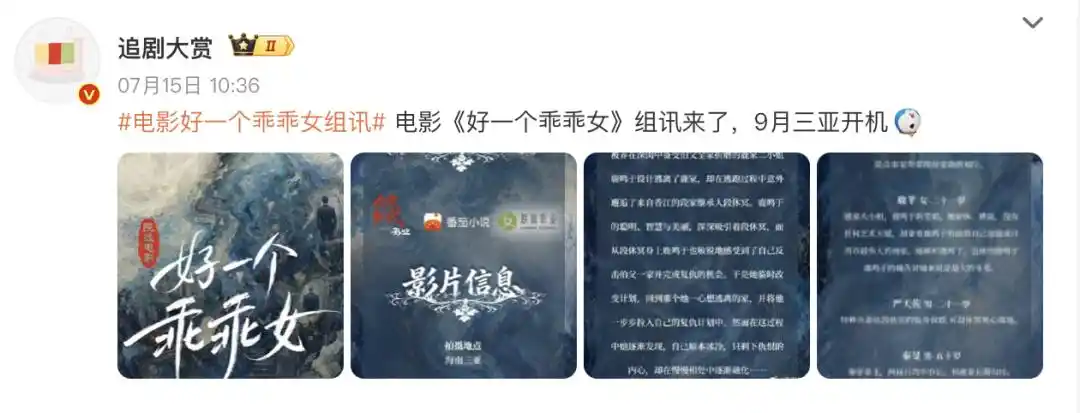
Previously, other top short series IPs like "A Family of Three in the Same Class" and "The Table Flipping" have also been approved by the National Film Administration. From web series to movies, from vertical screen to the big screen, live-action short series are attempting to step beyond their familiar content ecosystem.
This shift is not accidental.
Over the past two years, live-action short series rapidly rose by relying on frequent hits, low production costs, and platform support, becoming the fastest-growing new track in the entertainment industry. However, entering 2026, industry trends are changing: hit series are decreasing, projects are being scaled back, platform policies are adjusting, and AI-generated short series are rapidly expanding. The growth dividends that live-action short series once thrived on are beginning to fade.
Movies are becoming a brand-new attempt for live-action short series to find a second growth curve. But questions immediately arise: Can movies truly become a new outlet for live-action short series?
Short Series Start Making Movies
In the past few years, short series and movies were two barely intersecting tracks. Now, that boundary is being broken.
Including "Good Girl," other recent hit short series IPs like "A Family of Three in the Same Class" and "The Table Flipping" were approved by the National Film Administration in May this year and are expected to release movie versions. This means live-action short series are taking their first step from vertical-screen content towards theatrical films.
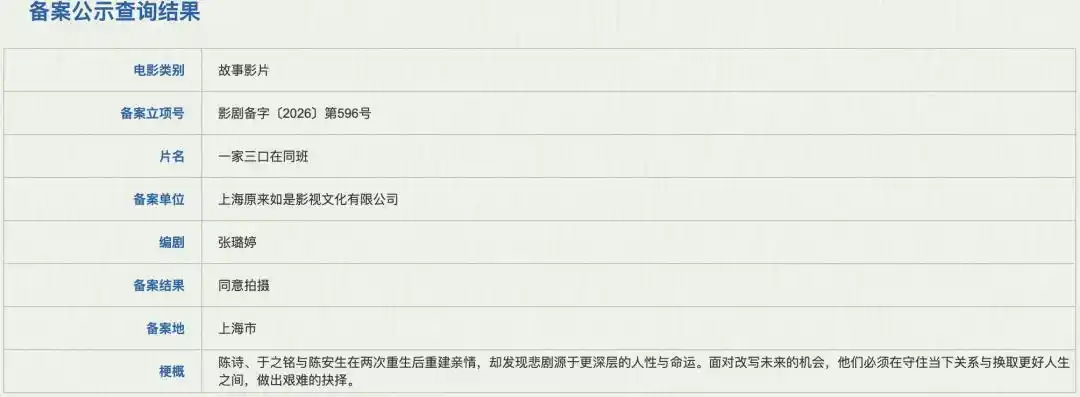
While these short series have all chosen cinematic adaptation, their paths differ.
Among them, "Good Girl" leans more towards re-creation. According to the approval information, the movie version will retain the core character relationships and emotional essence of the original but will not copy the short series plot directly. Instead, it will reconstruct the story to fit cinematic narrative pacing. This approach emphasizes the extension of IP value, hoping to attract not just the original short series audience but a broader movie-going public.
In contrast, "The Table Flipping" and "A Family of Three in the Same Class" are more akin to IP continuation, extending the world-building while preserving the original story setting and character relationships. This is closer to fan-oriented development, hoping to leverage the accumulated viewer base for cross-media conversion.
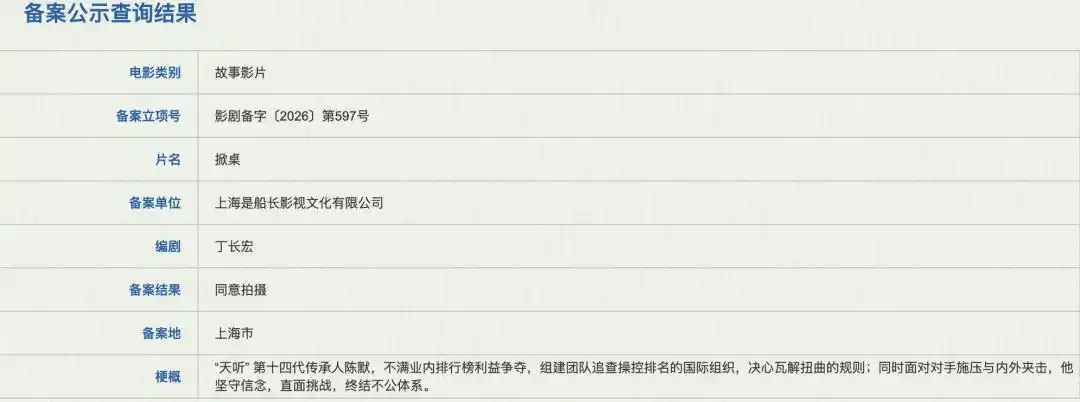
Beyond differing content development approaches, moves within the industry chain are becoming more pronounced.
In recent years, platforms like Tomato Novel and Hongguo Short Series have begun opening up their short series IPs for movie adaptation rights, encouraging mature short series IPs to enter the film market. Previously, commercial development of short series IPs mostly stayed within an internal cycle of sequels, spin-offs, and long-form series. Now, movies are becoming a new development direction, indicating that short series IPs are extending towards a more complete content industry chain.
More notably, those entering this track are no longer just short series companies.
For example, behind the movie versions of "A Family of Three in the Same Class" and "The Table Flipping" is Shanghai Yuanlai Rushi Culture. Though not long established, this company's core team has long been involved in movie promotion and IP marketing, having participated in marketing campaigns for hit films like "Ne Zha" and "Dying to Survive." Its upstream affiliate is Bukong Culture, responsible for projects like "Hi, Mom" and "YOLO," with core businesses in IP development and film/TV word-of-mouth marketing.
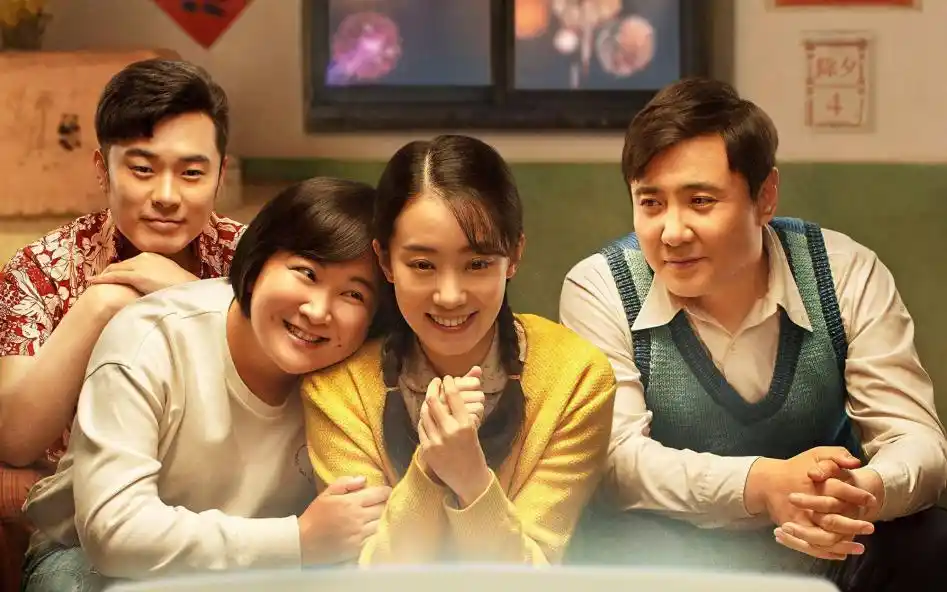
This shows that the cinematic adaptation of short series is beginning to attract participation from the traditional film industry chain, not merely a cross-border attempt by short series teams.
In fact, this isn't the first time short series have moved closer to film.
Previously, Xiaohongshu launched a short film support program, and many platforms have also explored content forms like microfilms and vertical-screen films. Meanwhile, top short series actors like Ke Chun and Yu Yin have also reportedly been planning moves into the big screen. From actors to IPs to production companies, the short series industry is probing the film market in various ways.
Observing these actions together reveals a common trend: live-action short series are proactively breaking through their original content boundaries.
However, this doesn't mean film has become the standard answer for live-action short series. Against the backdrop of rapid AI content growth and slowing live-action short series expansion, film seems more like an active exploration by the industry for a second growth curve. Its emergence is not just because the film market still has space, but because the original development model of live-action short series has reached a stage where it must find new increments.
Why Has Cinematization Become a New Choice for Live-Action Short Series?
If interpreting the increasing number of short series IPs being made into movies as proactive upgrading might not be accurate.
The live-action short series' venture into theaters is essentially an experiment born of necessity—its underlying tone is not ambition but anxiety.
Over the past two years, live-action short series almost captured the last wave of content dividends from the mobile internet. Relying on advantages like short production cycles, high投放 efficiency, and mature business models, numerous production companies quickly flooded in, frequently producing hits. "Ten days to shoot, one week to recoup costs" once became an industry myth. However, as the track shifted from an incremental to a存量 market, the original development logic of live-action short series began to falter.
Judging from the first half of this year, under the impact of AI series, live-action short series are entering a major reshuffling phase. According to China Netcasting Services Association data, about 128,000 micro-short series were launched industry-wide in Q1 2026, with AI series accounting for over 95%. Phenomena like project reductions, actors out of work, and investment withdrawal have successively shattered the prosperity dream of the live-action short series industry. Particularly, top production teams struggling to produce new hit series, the scarcity of high-quality short series, and the prevalence of last year's backlogged series being aired have fueled talk of a live-action short series decline.
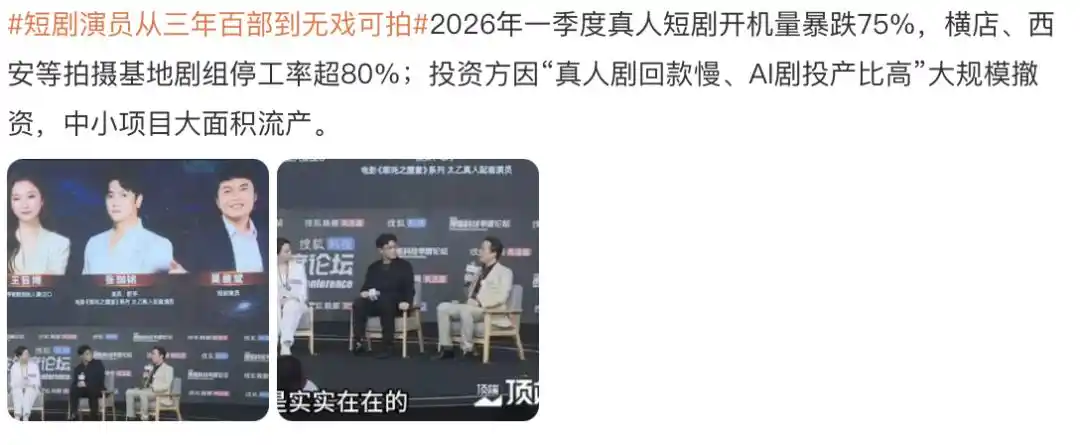
This change is also reflected among practitioners. Top short series actors like Yu Yin and Han Yutong have publicly mentioned the decrease in live-action short series productions, with many actors finding themselves unemployed. Actor Xu Peng even chose to return to his hometown to sell vegetables for a living.
Simultaneously, platform strategies are also changing.
This year, Hongguo Short Series adjusted its guaranteed底 policy, with profit-sharing for some projects decreasing. Many production teams had to reassess project收益, and some live-action short series in preparation even chose to suspend development. For many production companies relying on rolling projects to operate, fewer projects and lower guarantees mean increased cash flow pressure and收益 uncertainty, indicating that the past volume-driven development model is no longer viable.
The era when platforms bore more risk and production companies rapidly expanded is gradually ending. As platform红利 weaken, live-action short series are forced to seek new revenue streams. Cinematization has become one of the most obvious possibilities.
Secondly, what AI changes is not just efficiency, but the entire competitive rules. If platform policies affect profits, then AI alters the very competitive environment live-action short series rely on for survival.
Previously, the biggest advantage of live-action short series was being faster than long-form series and cheaper than movies. But after the emergence of AI, this advantage is rapidly eroding. Now, an AI short series—from script generation and character design to shot production—can be quickly completed with models.
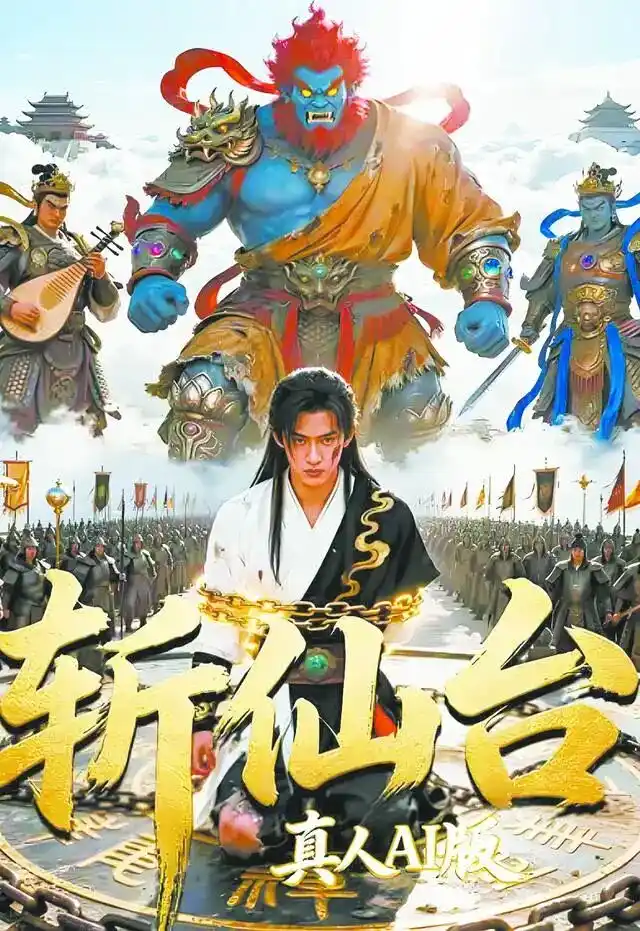
This means the competition live-action short series face is no longer just another production company, but an almost infinitely growing content supply. And the first sector AI冲击 isn't film or long-form series, but precisely the流水线 content that live-action short series excel at and depend on most. Because the more standardized and formulaic the story, the easier it is for AI to replicate.
This is also why more and more live-action short series teams are starting to consider new directions.
If they remain within the competitive logic of "faster, cheaper, higher output," live-action can almost certainly not win against AI. But if they shift towards content forms emphasizing character development, actor performance, and emotional expression, developing films based on short series IPs, live-action still possesses advantages difficult for AI to replace.
Furthermore, the excessively short IP lifecycle has always been an issue in the short series industry.
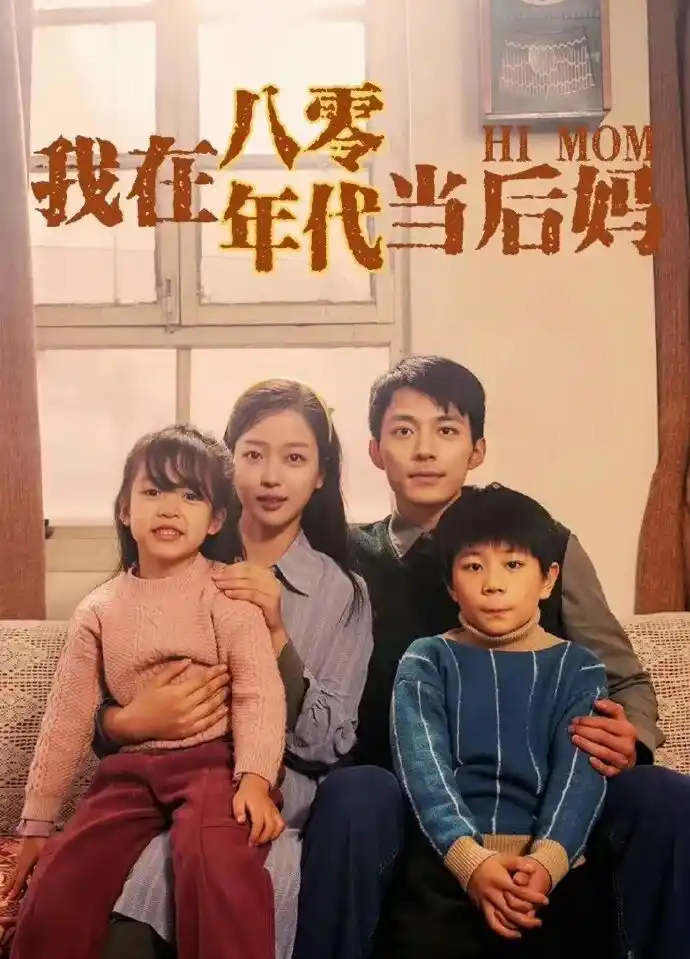
Over the past two years, live-action short series created one hit神话 after another. Works like "Good Girl," "Peerless," and "I Became a Stepmother in the 80s" achieved惊人的 view counts and讨论度 in extremely short times. But this热度 often comes and goes quickly. The entire industry始终 revolves around the高速 cycle of "produce a hit—monetize the hit—find the next hit," making it difficult to form long-term IP assets through持续运营, unlike TV dramas or films.
Cinematization恰恰 offers such a possibility.
For top短 series that have already undergone market validation, a movie doesn't just mean producing another work; it means transforming a one-time hit into a long-term asset. After the movie, further developments like long-form series, overseas adaptations, merchandise, brand collaborations, and线下 experiences can follow, forming a more complete商业 chain.
Live-action short series choosing cinematization本质上 is about expanding跨媒介 IP operational capabilities.
Will Film Become a New Outlet for Live-Action Short Series?
At this year's Shanghai International Film Festival, the production team for "A Family of Three in the Same Class" admitted that cinematization faces challenges like funding, industrial standards, and team跨越. "We genuinely love it, love it enough to set aside personal talk and first discuss whether this story deserves to be made."
There's no standard answer for whether short series IP cinematization can succeed. What's certain is that it's neither a baseless adventure nor a "cure-all" that solves every problem, but more like an industry upgrade experiment.
Objectively speaking, the most obvious advantage of "remaking" short series IPs into movies is reducing the trial-and-error cost for original films.
In recent years, the most noticeable change in the film market is increasing investment caution. Whether platforms or film companies, they prefer investing in mature IPs already market-tested rather than building original stories from scratch. From web novels and comics to hit TV series and myths, IP adaptation has become a major source for the film market.
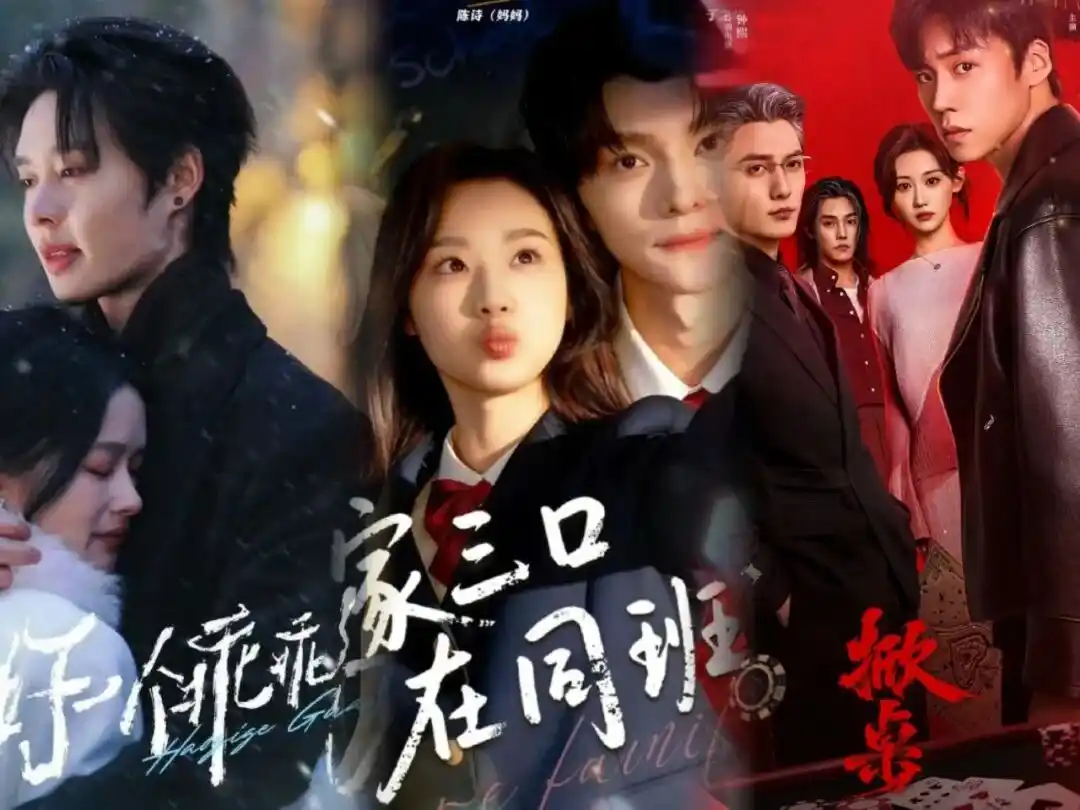
Live-action short series similarly possess this foundation. That "Good Girl" achieved over 4.2 billion views on Hongguo platform doesn't just indicate它拥有流量; it proves it has completed a round of market validation. For the film market, the greatest value of such IPs lies not in any自带票房 but in having proven the story, characters, and emotions work.
Secondly, the greatest competitive edge of live-action short series was never production scale, but emotional efficiency. Many believed the main feature of short series was "instant gratification." But what truly supports users'持续付费 isn't the twists themselves, but the ability to evoke emotions within a短时间.
Whether it's the emotional tension in "Good Girl" or the family dynamics in "A Family of Three in the Same Class," they essentially accurately hit a certain大众 emotion. And the success of works like "Hi, Mom," "YOLO," and "Letters to A-Ma" in recent years also shows audiences are willing to pay for genuine emotions and character relationships, not just grand production scenes.
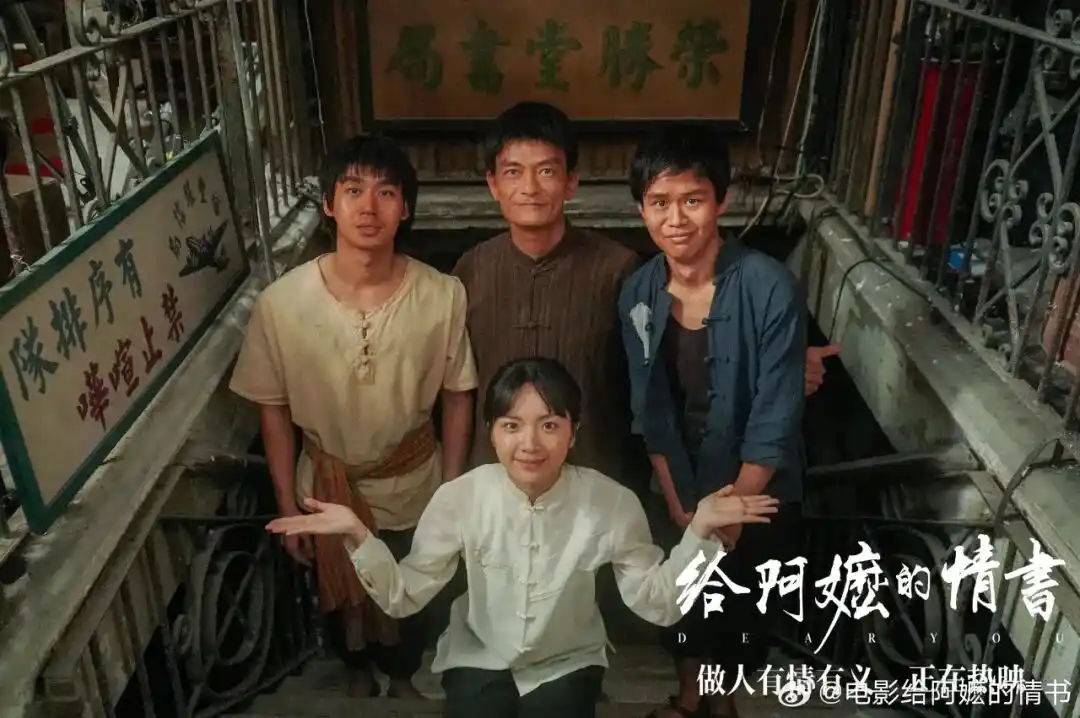
If short series IPs can move beyond simple "gratification point stacking" to further enrich character growth and完善 story structure, they might well grow into viable films.
However, it must be admitted that no matter how popular, short series IPs were essentially one-off deals in the past, lacking long-term value maintenance.
After all, short series and films, while both audiovisual content, have completely different consumption logics. Short series rely on fragmented viewing; users can unlock episodes for free, pay per episode, or exit anytime, with极低试错成本.
Film is entirely different. Audiences need to spend dozens of yuan upfront on a ticket and invest nearly two hours for a complete消费.
This消费门槛 determines that the流量 accumulated by a short series cannot be simply converted into box office. Original short series viewers won't necessarily become your movie audience.
In the past, popular variety shows and TV dramas like "Keep Running!," "Go Fighting!," and "iPartment" released movie versions hoping to leverage IP influence to attract viewers. However, due to insufficient content quality, they ultimately suffered both口碑 and票房 setbacks. These cases have proven that a成熟 IP can help a film get its first wave of viewers but cannot determine the final box office.
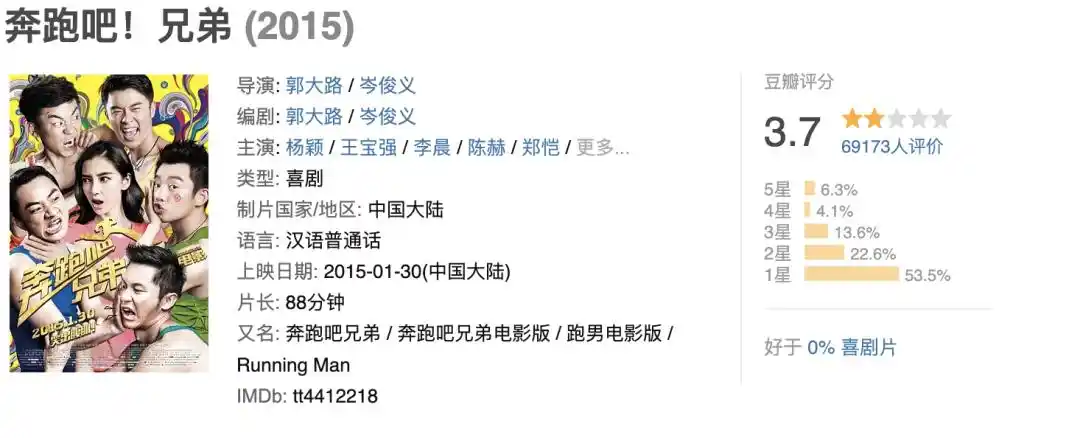
In other words, merely lengthening a short series or piling on more gratification points could easily lead to repeating the failures of past variety show movies or TV drama movies.
Moreover, this year, the domestic film market overall is under pressure, audiences are increasingly cautious, and theater scheduling relies more on word-of-mouth驱动. For short series, film standards won't lower just because an IP is hot; instead, it means entering an even more fiercely competitive content market.
What truly attracts audiences to theaters might not be the most流量的 short series, but rather the one with the most complete story, most solid characters, and most持久 emotions. This is perhaps the greatest significance of cinematization for live-action short series.
This article is from the WeChat public account "Entertainment Voice," author: Voice Editorial Department