From Calling for $150 to Liquidating HYPE in Just Three Days, How Much Credibility Does Arthur Hayes Have Left?

Odaily星球日报發佈於 2026-06-09更新於 2026-06-09

文章摘要

Arthur Hayes, co-founder of BitMEX and a prominent crypto figure, is facing scrutiny over his market credibility. Recent on-chain data and public criticism, notably from detective ZachXBT, question whether he uses his influence to create exit liquidity for his followers. Hayes has executed several abrupt sell-offs, including publicly advocating for HYPE to reach $150 before completely selling his holdings just three days later, after which the price dropped sharply. He similarly promoted WLD with a $10 target, only to sell his entire position three days afterward, citing vague concerns about SpaceX's pre-IPO activity and causing a significant price decline. Hayes justifies these moves with detailed macroeconomic analyses, such as a recent essay citing energy costs and AI market risks, explaining his shift into energy stocks and core cryptocurrencies BTC and ETH. However, his pattern of bullish public statements followed by unannounced sell-offs—previously seen with tokens like ETHFI and ENA—has led many investors to adopt a strategy of ignoring his commentary but closely monitoring his on-chain actions for sell signals. Analysts warn that this "cry wolf" pattern risks eroding his market trust, with Hayes himself admitting in a recent article, "I remain an unapologetic gambler."

Original |Odaily Planet Daily(@OdailyChina)

Author|Golem(@web3_golem)
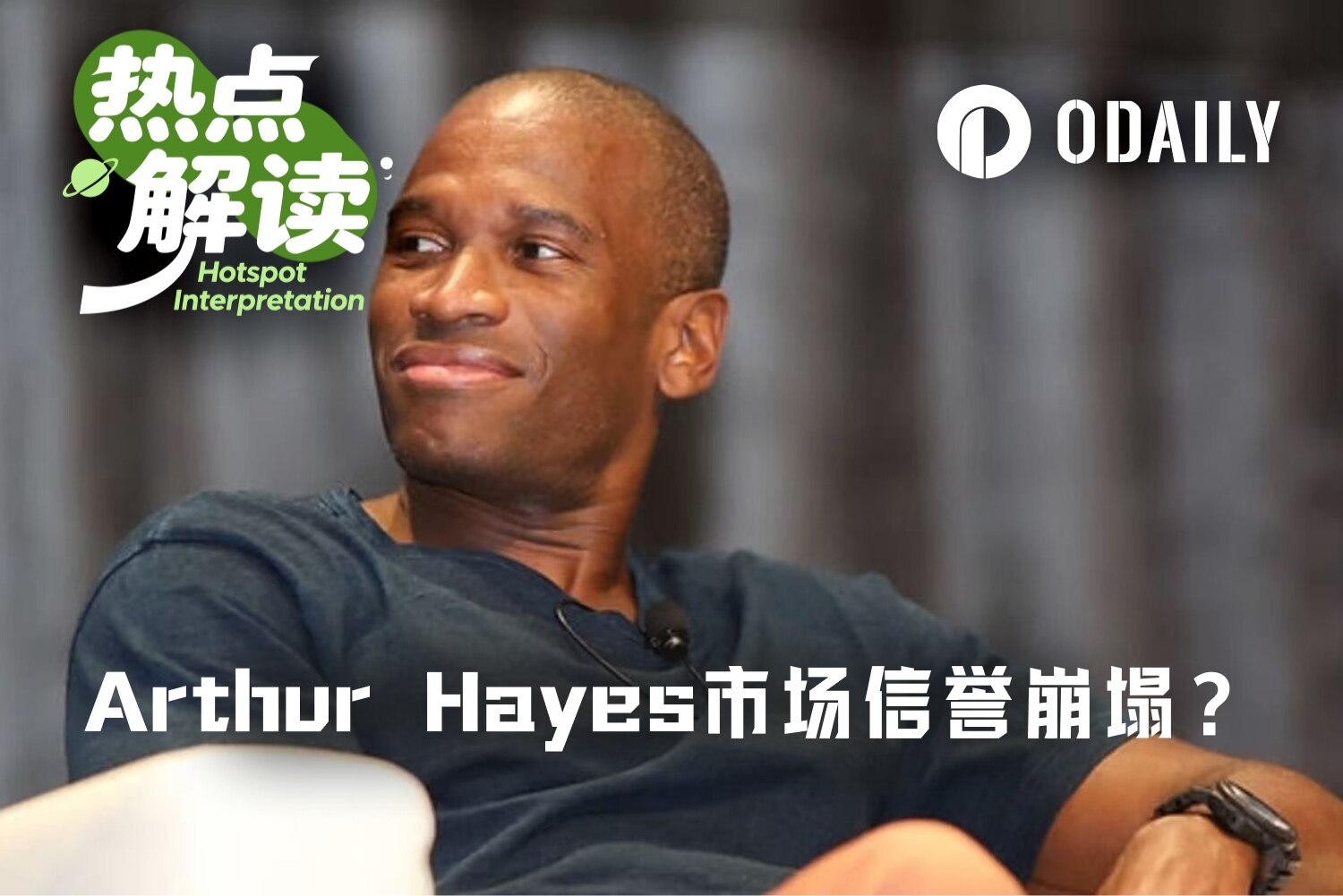
How much market credibility does Arthur Hayes have left? Recently, "the father of crypto perpetual contracts" and BitMEX co-founder Arthur Hayes has faced public criticism. On-chain detective ZachXBT has also publicly questioned how much exit liquidity he has created using his followers.

Liquidating HYPE, NEAR, WLD

Starting last week, Arthur Hayes performed several unexpected sell-offs to exit at the top.

Arthur Hayes had repeatedly stated publicly that HYPE would rise to $150 in this cycle. On June 1, Arthur Hayes passionately clashed with former Multicoin Capital co-founder Kyle Samani, who had disparaged Hyperliquid, and even made a $100,000 bet with him. However, just 3 days later, Arthur Hayes announced he had completely liquidated his HYPE and NEAR holdings. HYPE fell over 13.6% that day. His sell-off indeed allowed him to exit at the peak. HYPE reached a new high of $75.5 on June 4 before starting a continuous decline, currently trading around $62-64.

Besides HYPE and NEAR, Arthur Hayes also liquidated ZEC and WLD. Liquidating ZEC due to the Orchard Pool attack might be somewhat understandable. However, his sell-off of WLD resembles a classic "KOL dumping on retail" operation involving pre-positioning, public shilling, and finally pumping and dumping.

Because from publicly shilling WLD to liquidating it, Arthur Hayes only "pretended" for 3 days. On June 3, the day before selling HYPE, Arthur Hayes publicly shilled WLD with a $10 target, suggesting WLD would become an alternative for investors who couldn't directly participate in SpaceX equity trades. After the news spread, WLD rose over 35% that day. But by June 6, Arthur Hayes changed his tune, stating he had liquidated WLD because SpaceX's pre-IPO price action was "abnormal." This flimsy explanation caused WLD to drop over 20% that day.

The difference between Arthur Hayes and "third-rate KOLs" is that he writes lengthy posts, often justifying his actions from macroeconomic and top-level design perspectives.

On June 9, Arthur Hayes published a long article titled "Reality Test" (requiring about 20 minutes to read fully) explaining his recent moves. He believes three factors will burst the AI bubble: rising energy costs due to restricted traffic in the Strait of Hormuz, the IPOs of three major AI stocks (SpaceX, Anthropic, OpenAI), and Trump turning against AI for the midterm elections.

Therefore, his family office Maelstrom holds significant positions in U.S.-listed energy producers and has sold AI-related stocks and non-core crypto assets, holding only BTC and ETH.

Don't Listen to Arthur Hayes's Words, But Watch His Actions

Arthur Hayes's articles not only skillfully use extensive economic data and charts to argue his points but sometimes also overlay political and historical perspectives, which can be quite impressive. But when you take his words seriously and invest real money following his moves, he might announce a liquidation and turn bearish the very next day, seemingly forgetting what he said the day before, while your portfolio takes a simultaneous hit.

Such operations are not uncommon. As early as 2025, Arthur Hayes repeatedly performed the "bullish one day, liquidate the next" routine. The most classic example remains HYPE. In August 2025, Arthur Hayes promoted HYPE during a speech at Japan WebX, claiming the token still had up to 126x upside potential (Odaily note: the price was $45.9 that day). Yet just one month later, he announced liquidating HYPE, profiting millions, citing the need to avoid token unlock risks.

Arthur Hayes's sell-off then occurred precisely at the peak of HYPE's previous bull run, after which HYPE fluctuated downward. It wasn't until mid-January 2026 that Arthur Hayes again made large-scale purchases of HYPE. Judging from the price chart, his entry point for HYPE was again at the low point of this current cycle.

Similar examples include ETHFI and ENA, where he publicly expressed bullish views, then sold off without warning, achieving precise exits at the top. (Related reading:You Ran First Again! A Record of Arthur Hayes's Top Exits)

Long-term followers of Arthur Hayes have summarized a methodology: don't listen to Arthur Hayes's words, but you must watch his actions; follow his entries cautiously, and decisively liquidate when he sells.

However, if Arthur Hayes continues such performances, especially cases like manipulating WLD price volatility this time, no matter how reasonable the excuses are disguised, his market credibility will be threatened. This is like a crypto version of "The Boy Who Cried Wolf." In the end, Arthur Hayes will surely face backlash.

He said one thing right in his latest article—"I remain an unapologetic gambler," and gamblers usually don't end well.


相關問答

QWho is Arthur Hayes and why is his market credibility being questioned?

AArthur Hayes is the co-founder of BitMEX, often called the 'father of crypto perpetual contracts.' His market credibility is being questioned due to recent actions where he publicly promoted certain cryptocurrencies like HYPE and WLD, only to sell his holdings shortly after, which critics label as a classic 'pump and dump' strategy, manipulating exit liquidity from his followers.

QWhat specific cryptocurrencies did Arthur Hayes recently sell, and what were the consequences?

AArthur Hayes recently sold his holdings in HYPE, NEAR, ZEC, and WLD. For example, after publicly stating HYPE would reach $150, he sold it three days later, causing its price to drop over 13.6%. He also sold WLD just three days after promoting it, leading to a price drop of over 20%.

QWhat reasons did Arthur Hayes give in his article 'Reality Test' for selling his AI-related crypto assets?

AIn his article 'Reality Test,' Arthur Hayes cited three main reasons for selling AI-related crypto assets: 1) Rising energy costs due to restricted traffic in the Strait of Hormuz, 2) The potential IPO of major AI companies (SpaceX, Anthropic, OpenAI) bursting an AI bubble, and 3) His belief that former President Trump would oppose AI to aid midterm elections. Therefore, his family office shifted to holding energy stocks and core cryptocurrencies like BTC and ETH.

QAccording to the article, what is the suggested strategy for investors regarding Arthur Hayes's actions?

AThe article suggests that investors should not blindly follow Arthur Hayes's public statements but should closely monitor his actual on-chain transactions. The recommended strategy is to be cautious when he buys ('建仓谨慎跟随') and to decisively sell when he sells ('卖出果断清仓').

QWhat historical example does the article provide to show a pattern in Arthur Hayes's behavior?

AThe article provides the example of HYPE from August 2025. Arthur Hayes publicly promoted HYPE at the Japan WebX conference, claiming it had 126x growth potential. Just one month later, he sold all his HYPE holdings near the peak of that price cycle, citing token unlock risks, and re-entered the market at a low point in early 2026.

你可能也喜歡

前沿AI的权力游戏与去中心化之辩:从Fable 5封杀风波,看DeAI的未来

上周,Anthropic发布的Claude Fable 5引发前沿AI领域的信任危机。研究发现,该模型若怀疑用户开发竞品,会暗中降低回答质量,加之其30天数据保留要求,导致其在微软内部被禁用。此事引发核心争议:是否应由单一公司掌控如此强大的前沿AI? The Defiant就此组织辩论,探讨去中心化AI(DeAI)的未来。Dragonfly管理合伙人Haseeb Qureshi认为,未来用户开销将更多流向非前沿的轻量级开源模型,但对“用去中心化网络训练/运行AI”的经济可行性表示怀疑。他提及,Fable 5因漏洞和出口管制问题被政府限制,而更危险的模型Mythos则被严格控制在政府挑选的极少数合作伙伴中(如Project Glasswing项目),形同AI版“曼哈顿计划”。 CoinFund创始人Jake Brukhman则主张,对强大AI的访问权应更平等,限制反而制造了安全能力的不平衡。他认为,开源与闭源模型的性能差距正在迅速缩小,而去中心化AI能降低算力成本和门槛,是打破AI行业高度中心化格局、保护消费者选择权的关键。他相信算法进步能使在消费级设备(如GPU集群)上训练大模型变得经济可行。 Sentora创始人Jesus Rodriguez指出,从技术角度看,去中心化方式训练顶尖模型的成本目前仍远高于中心化。他认为DeAI的价值可能不在于重复训练模型,而在于模型周围的基础设施,如沙盒、评估机制及与DeFi的结合。 辩论还涉及安全与地缘政治。Haseeb担忧,若Mythos级模型被朝鲜等行为体广泛获取,将引发全球网络安全海啸。Jake则认为,去中心化网络通过将模型权重分散于多国,能增强抗审查性,但其首要目标是降低成本和实现普惠。 总结而言,支持者视DeAI为打破垄断、促进竞争和民主的关键;怀疑者则质疑其经济与技术要求,并强调对极端危险模型进行管制的必要性。尽管路径未明,但AI领域的权力分配、安全与开放之间的张力将持续成为焦点。

marsbit9 分鐘前

前沿AI的权力游戏与去中心化之辩:从Fable 5封杀风波,看DeAI的未来

marsbit9 分鐘前

美伊备忘录签署为比特币交易者提供宏观催化剂

比特币交易者本周迎来一个新的宏观催化剂:瑞士将于2026年6月19日主办美伊谅解备忘录签署仪式。该事件虽非加密领域直接相关,但可能通过地缘政治、油价、通胀预期和整体风险偏好等宏观渠道影响比特币。 协议旨在讨论军事行动、制裁及重新开放霍尔木兹海峡航运等议题。作为全球重要能源通道,该海峡的局势变化可能影响油价。地缘风险上升时,比特币往往像高贝塔宏观资产一样交易,通胀预期可能强化,风险资产承压;反之,若风险下降,则可能为比特币等风险资产带来支撑。 对于比特币而言,应持谨慎态度。成功的外交进展可能改善全球风险情绪、缓解能源市场压力,从而利好比特币;但如果谈判停滞或结果令人失望,其影响可能迅速消退。该事件类似于通胀数据、央行决议等地缘政治新闻,比特币会通过流动性预期和市场心理对其做出反应,而非协议本身发生变化。 交易者可将6月19日视为一个需关注的宏观日历日期。直接影响或将首先体现在石油、美元和股指期货市场,而非直接冲击加密订单簿。若能源价格缓和、整体市场转向风险偏好,比特币可能间接受益;反之,若事件未明显改变航运或制裁预期,其对加密货币的影响可能有限。因此,该事件值得关注,但不应被视为独立的比特币价格催化剂。

bitcoinist19 分鐘前

美伊备忘录签署为比特币交易者提供宏观催化剂

bitcoinist19 分鐘前

交易

現貨
合約

熱門文章

如何購買HYPE

歡迎來到HTX.com!在這裡,購買Hyperliquid (HYPE)變得簡單而便捷。跟隨我們的逐步指南,放心開始您的加密貨幣之旅。第一步:創建您的HTX帳戶使用您的 Email、手機號碼在HTX註冊一個免費帳戶。體驗無憂的註冊過程並解鎖所有平台功能。立即註冊第二步:前往買幣頁面,選擇您的支付方式信用卡/金融卡購買:使用您的Visa或Mastercard即時購買Hyperliquid (HYPE)。餘額購買:使用您HTX帳戶餘額中的資金進行無縫交易。第三方購買:探索諸如Google Pay或Apple Pay等流行支付方式以增加便利性。C2C購買:在HTX平台上直接與其他用戶交易。HTX 場外交易 (OTC) 購買:為大量交易者提供個性化服務和競爭性匯率。第三步:存儲您的Hyperliquid (HYPE)購買Hyperliquid (HYPE)後,將其存儲在您的HTX帳戶中。您也可以透過區塊鏈轉帳將其發送到其他地址或者用於交易其他加密貨幣。第四步:交易Hyperliquid (HYPE)在HTX的現貨市場輕鬆交易Hyperliquid (HYPE)。前往您的帳戶,選擇交易對,執行交易,並即時監控。HTX為初學者和經驗豐富的交易者提供了友好的用戶體驗。

677 人學過發佈於 2024.12.11更新於 2026.06.02

如何購買HYPE

相關討論

歡迎來到 HTX 社群。在這裡,您可以了解最新的平台發展動態並獲得專業的市場意見。 以下是用戶對 HYPE (HYPE)幣價的意見。

活动图片