Jupiter’s 12% surge faces a reality check: On-chain activity hits 2-year low

ambcrypto發佈於 2026-02-15更新於 2026-02-15

文章摘要

Jupiter (JUP) experienced a significant 12% price surge, driven by hundreds of millions in capital over 24 hours. However, on-chain data reveals a stark contrast, with user activity and transaction volume hitting a two-year low, indicating the rally may be speculative rather than organically driven. Despite weak network usage, Total Value Locked (TVL) increased by $166 million, suggesting genuine capital commitment and longer-term positioning. Derivatives market growth was modest, reinforcing that spot buying and capital locking were primary drivers. Short-term price movement is expected to be influenced by liquidity clusters, with potential resistance near $0.18 and support around $0.15. The sustainability remains in question due to the divergence between price and on-chain fundamentals.

Jupiter [JUP] attracted substantial inflows over the past 24 hours, with capital rising by hundreds of millions of dollars. The wave of buying pressure lifted the token by at least 12% within the same period.

Yet, JUP’s expansion has not been matched by stronger on-chain engagement.

Core network metrics show that user participation and transaction activity remain subdued, creating a widening gap between valuation and protocol fundamentals.

Weak usage undermines rally strength

On-chain data suggests that the recent rally may be driven more by positioning than by organic growth.

Artemis, which tracks daily active or transacting users, showed a sharp decline in participation. The metric has fallen to its lowest level since February 2024, marking a two-year low.

This drop in active users coincides with a contraction in total transactions executed on the protocol. Transaction volume has declined to roughly 1.5 million, a level last recorded on the 19th of January.

Although transaction counts have stabilized within a narrow range in recent sessions, overall activity remains materially below previous highs.

When network usage declines while price accelerates, the divergence often signals speculative momentum rather than sustainable demand.

In JUP’s case, the absence of strong on-chain confirmation raises the risk that the rally may lack structural support.

TVL inflows signal committed capital

Despite weak usage metrics, capital commitment to the protocol has increased.

Total value locked, which measures the amount of assets deposited in liquidity pools and other protocol mechanisms, surged by approximately $166 million over the past day.

At press time, TVL stood at $2.163 billion, according to DeFiLlama.

An increase in TVL typically reflects longer-term positioning, as locked assets reduce circulating supply and indicate investor confidence in the protocol’s yield opportunities or utility.

The sharp rise suggests that a meaningful volume of JUP has moved off the open market and into locked positions.

While it remains unclear whether institutional players or retail investors drove the inflow, the magnitude of the increase points to genuine capital allocation rather than purely short-term trading activity.

Derivatives positioning remains modest

Speculative activity in the derivatives market has also expanded. The OI-Weighted Funding Rate remains positive, indicating that long positions dominate JUP’s perpetual futures market.

However, derivatives exposure alone appears insufficient to explain the scale of the rally. Open Interest rose 13% in the past 24 hours but stood at just $50.29 million at press time, according to CoinGlass.

Compared to the $166 million surge in TVL, derivatives positioning remains relatively small. This comparison strengthens the view that spot-driven inflows and capital locking played a larger role in the recent price advance.

What comes next for JUP?

Liquidity cluster analysis outlines two near-term scenarios.

The bullish case suggests limited upside toward the $0.18 level, where a concentration of liquidity could cap gains.

The bearish scenario, by contrast, presents a broader downside path, with price potentially extending toward $0.15.

Liquidity clusters represent areas of unfilled orders that often attract price movement, as markets tend to gravitate toward zones with concentrated liquidity.

In the short term, momentum will determine direction. Sustained buying pressure could push JUP toward the upper liquidity zone before any correction unfolds.

Conversely, fading momentum may expose the asset to a deeper retracement toward lower support levels.


Final Summary

  • Weak network usage contrasts with rising demand for JUP, raising concerns about the durability of the rally.
  • A $166 million increase in total value locked (TVL) confirms that fresh capital is entering the ecosystem.


相關問答

QWhat was the percentage increase in Jupiter's (JUP) price over the past 24 hours, and what concerning on-chain trend contradicts this price surge?

AJupiter's price surged by 12% over the past 24 hours. This price increase is contradicted by on-chain activity, which has fallen to a two-year low, showing a sharp decline in user participation and transaction volume.

QAccording to the article, what does the divergence between rising price and declining network usage often signal?

AThe divergence between a rising price and declining network usage often signals that the rally is driven by speculative momentum rather than sustainable, organic demand.

QDespite weak on-chain activity, what metric showed a significant capital inflow, and how much did it increase by?

ADespite weak on-chain activity, the Total Value Locked (TVL) metric showed a significant capital inflow, surging by approximately $166 million in the past day to reach $2.163 billion.

QWhat are the two potential near-term price scenarios for JUP outlined by liquidity cluster analysis?

AThe two potential near-term price scenarios are a bullish case where the price could rise to the $0.18 level, and a bearish case where the price could retrace toward the $0.15 level.

QHow does the scale of derivatives market activity (Open Interest) compare to the TVL inflow, and what does this suggest about the rally's drivers?

AThe derivatives market Open Interest of $50.29 million is relatively small compared to the $166 million TVL inflow. This suggests that spot-driven inflows and capital locking played a larger role in the price advance than derivatives speculation.

你可能也喜歡

Cursor,为什么上了马斯克的飞船?

美国当地时间6月16日,SpaceX在完成史上最大规模IPO仅四天后,宣布以600亿美元全股票交易收购AI编程初创公司Cursor的母公司Anysphere,交易预计于2026年第三季度完成。消息公布后,SpaceX股价一度大涨,市值短暂突破2.94万亿美元。 Cursor是全球热门AI编程工具之一,支持在多家主流AI模型间切换,可自动生成、编辑和审查代码。其年化营收增长迅猛,从2025年11月的10亿美元迅速增长至2026年初的40亿美元。然而,随着其主要AI供应商Anthropic推出竞争产品Claude Code,Cursor市场占有率有所下滑,面临被核心供应商制约的风险。 Cursor的CEO迈克尔·特鲁尔年少成名,拥有出色的编程天赋。面对竞争与依赖风险,Cursor于2026年初决定自研AI模型Composer,但缺乏足够算力。今年4月,Cursor与SpaceX达成合作,后者获得了收购选择权。SpaceX完成IPO后迅速行使该权利,宣布收购。 对Cursor而言,此次收购使其能接入SpaceX强大的Colossus超算系统,解决算力瓶颈。对SpaceX而言,则能借助Cursor在顶尖开发者中的渗透力,提升其AI模型(如Grok)的编程能力,实现在AI竞赛中的弯道超车。 此外,收购也服务于SpaceX更宏大的AI战略,包括探索部署轨道数据中心。马斯克为SpaceX设定了2030年约1万亿美元营收的雄心目标。此次收购是双方各取所需的一场豪赌,特鲁尔将其形容为“前所未有”的特别经历。

链捕手13 分鐘前

Cursor,为什么上了马斯克的飞船?

链捕手13 分鐘前

越涨越危险?SpaceX估值狂飙背后的系统性风险

本文就SpaceX市值在盘后交易中突破3万亿美元、超越亚马逊和微软的现象,提出一个核心关切:当前资本市场机制可能已从“价格发现”异化为“制造价格”的自我强化投机机器,并埋下系统性风险。 文章指出,推动SpaceX估值狂飙的主要力量并非其基本面(公司仍处亏损),而是市场结构因素:包括有限的流通盘、即将开始的期权交易(可能引发类似特斯拉过去的“gamma squeeze”逼空循环)、做市商对冲行为、动量资金追逐以及被动资金配置。这种机制使得价格上涨本身成为看涨理由,估值与经济现实脱钩。 作者担忧,若这种趋势持续,SpaceX市值膨胀到5万亿甚至10万亿美元,它将因其巨大规模被强制纳入各类主要指数和被动投资组合(如ETF、养老金)。届时,其估值波动将直接影响整个市场表现,使单一公司的投机性泡沫转化为广泛的系统性风险——当所有人都无法避开它时,即便一次温和回调也可能冲击无数普通投资者的长期资产。 因此,本文的讨论超越了SpaceX是否值这个价钱,而是警示现代金融市场存在的结构性悖论:当叙事、杠杆和流动性能够压倒基本面时,市场是否已丧失其资本配置与价格发现的根本功能?SpaceX只是一个极端案例,但它折射的问题可能更为普遍和危险。

marsbit18 分鐘前

越涨越危险?SpaceX估值狂飙背后的系统性风险

marsbit18 分鐘前

你交给Claude的订阅费,光模块公司能拿到多少?

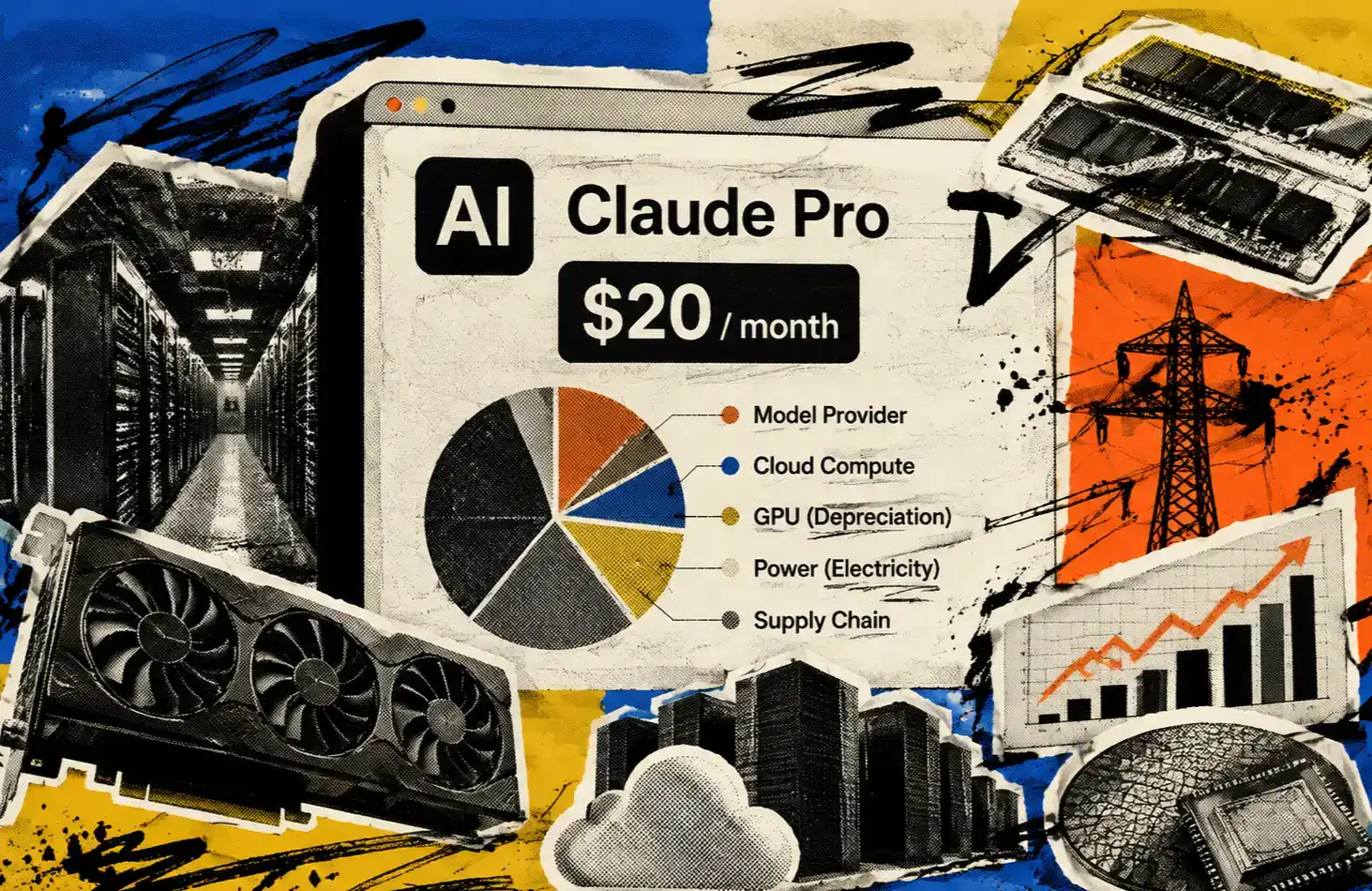
一张将Claude Pro约20美元月费拆解给模型公司、云算力、GPU折旧、电力及供应链的估算图,引发了投资者对AI应用估值逻辑的重新审视。 核心问题在于:用户为AI应用支付的订阅费,有多少能像传统SaaS(软件即服务)那样沉淀为高软件毛利?传统SaaS新增用户成本极低,毛利率可达70%-80%。而AI应用不同,用户每一次调用模型(推理)都会消耗GPU算力、电力和云资源,导致边际成本显著。固定月费背后是随使用量波动的成本链,重度用户的成本可能急剧上升。 因此,AI应用公司要获得高估值,不仅需证明用户付费意愿,更需证明在考虑使用量后,其毛利率能持续改善并接近传统软件公司。当前阶段,AI使用量的增长更直接地转化为对底层基础设施(如英伟达GPU、台积电芯片、HBM内存、电力及数据中心)的需求,这使得基础设施供应商的业绩和估值更早、更确定地得到验证。 支持AI应用高毛利前景的观点认为,当前推理成本高是早期现象。通过模型优化、缓存技术、使用小模型、自研芯片以及提高集群利用率,单位成本有望快速下降。行业已有案例显示,部分模型的单位成本大幅降低。 然而,挑战在于,AI应用正从简单问答转向更复杂、耗能更高的任务(如代码生成、长文档处理)。关键在于,推理成本下降的速度能否超越用户使用量和任务复杂度的增长速度。 总之,该分析图的价值在于提醒市场:在AI应用公司缺乏透明毛利率数据的情况下,不应简单将其收入等同于高毛利SaaS收入。投资者需要关注其成本结构、用户使用行为分层以及效率提升的实际证据。模型公司最终需要证明,即使在重度使用下,订阅收入也能转化为可观的利润。

marsbit28 分鐘前

你交给Claude的订阅费,光模块公司能拿到多少?

marsbit28 分鐘前

OpenAI的Hyperliquid盘前定价生意,为何只撑了半年?

文章讨论了在Hyperliquid平台上两家从事“盘前定价”业务的团队:Trade.xyz和Ventuals的不同命运。 Trade.xyz团队匿名,却成为平台上最大的盘前合约市场,成功抓住了SpaceX上市前的交易机会。其策略聪明之处在于,选择像SpaceX这样上市日期和发行价都已确定的标的,最终价格能与现实市场“锚定”,风险相对可控。 而获得顶级风投Paradigm支持的Ventuals,手握OpenAI和Anthropic这类更稀缺但无明确上市计划的标的,反而在运营九个月后关停。其失败关键在于定价机制存在缺陷:合约价格一半依赖外部非公开的老股报价,另一半则参考其自身价格的均线,形成了一个自我强化的循环。这导致价格长期虚高,缺乏真实市场流动性的支撑和纠错,最终失去市场认可。 Ventuals关停时,其定出的OpenAI(1341.80美元)和Anthropic(1618.90美元)的最终价,甚至被部分内部人士作为估值参考,凸显了未上市公司对流动定价的强烈需求,也暴露了这类定价的脆弱性。 文章指出,为未上市明星公司提供实时交易价格正成为一门热门生意,Coinbase等大机构也已入场。但Ventuals的案例表明,这门生意的核心挑战在于,缺乏一个公开、有效、能持续纠错的市场机制来形成真正公允的价格。在标的公司真正上市前,任何定价都可能面临“悬空”的风险。

marsbit44 分鐘前

OpenAI的Hyperliquid盘前定价生意,为何只撑了半年?

marsbit44 分鐘前

交易

現貨
合約

熱門文章

如何購買CHECK

歡迎來到HTX.com!在這裡,購買Checkmate (CHECK)變得簡單而便捷。跟隨我們的逐步指南,放心開始您的加密貨幣之旅。第一步:創建您的HTX帳戶使用您的 Email、手機號碼在HTX註冊一個免費帳戶。體驗無憂的註冊過程並解鎖所有平台功能。立即註冊第二步:前往買幣頁面,選擇您的支付方式信用卡/金融卡購買:使用您的Visa或Mastercard即時購買Checkmate (CHECK)。餘額購買:使用您HTX帳戶餘額中的資金進行無縫交易。第三方購買:探索諸如Google Pay或Apple Pay等流行支付方式以增加便利性。C2C購買:在HTX平台上直接與其他用戶交易。HTX 場外交易 (OTC) 購買:為大量交易者提供個性化服務和競爭性匯率。第三步:存儲您的Checkmate (CHECK)購買Checkmate (CHECK)後,將其存儲在您的HTX帳戶中。您也可以透過區塊鏈轉帳將其發送到其他地址或者用於交易其他加密貨幣。第四步:交易Checkmate (CHECK)在HTX的現貨市場輕鬆交易Checkmate (CHECK)。前往您的帳戶,選擇交易對,執行交易,並即時監控。HTX為初學者和經驗豐富的交易者提供了友好的用戶體驗。

727 人學過發佈於 2026.01.19更新於 2026.06.02

如何購買CHECK

相關討論

歡迎來到 HTX 社群。在這裡,您可以了解最新的平台發展動態並獲得專業的市場意見。 以下是用戶對 CHECK (CHECK)幣價的意見。

活动图片