Why crypto Bitcoin feels harder to break despite fading capital inflows

ambcrypto发布于2026-01-08更新于2026-01-08

文章摘要

Despite fading capital inflows, Bitcoin is becoming more resilient to sharp crashes due to changing market dynamics. According to CryptoQuant CEO Ki Young Ju, long-term institutional holders have disrupted the traditional whale-versus-retail cycle, making sudden 50% price drops less likely. While capital flows have slowed, the amount of capital locked into Bitcoin continues to show a steady uptrend even with mild price changes. The supply is increasingly concentrated among large holders. In 2025 alone, the 21 largest Bitcoin entities—including MicroStrategy, the U.S. government, miners, and funds—added roughly $40 billion worth of BTC. Their combined holdings now represent over 13% of total supply, creating scarcity and supporting prices during downturns. However, older coins (dormant for 6 months to over a year) have recently moved to exchanges, contributing to price pullbacks. This selling pressure adds friction to the market, causing Bitcoin to stall rather than crash. The result is a more patient, stability-oriented market where dramatic price flushes are increasingly rare.

Bitcoin isn’t the spring chicken it used to be. Lately, the market has been moving with a lot more patience, and the people holding Bitcoin today aren’t the same ones who panicked in past cycles.

With large players buying more and older coins moving too, Bitcoin’s behavior is changing. That will matter in the long-term.

What’s going on?

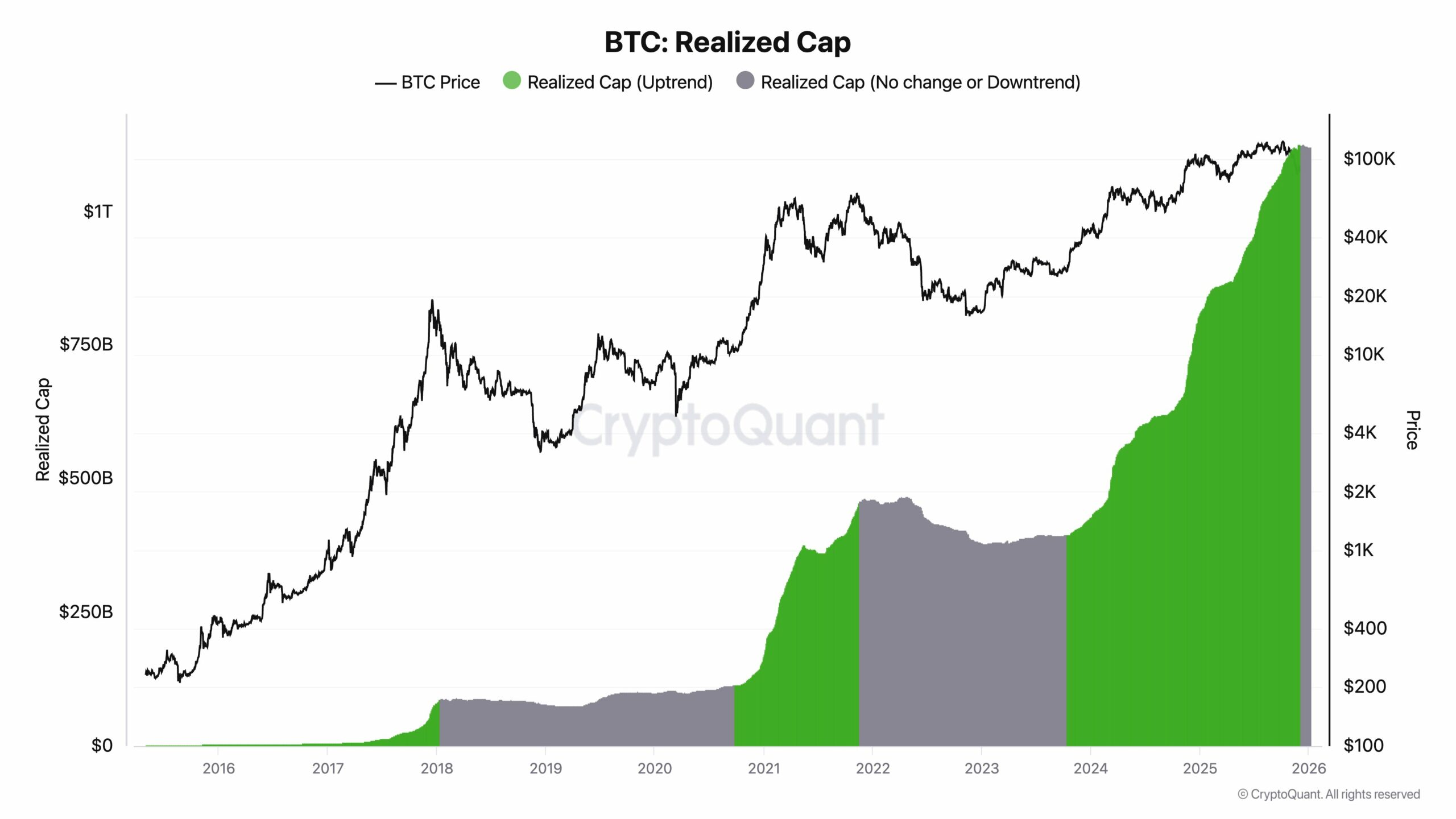
CryptoQuant CEO Ki Young Ju is of the view that capital flows into Bitcoin [BTC] have “dried up.”

Source: X

There’s a steady uptrend right now in capital actually locked into Bitcoin, even with mild price changes.

According to Ju, long-term institutional holders have broken the old whale-versus-retail cycle, making sudden 50% crashes from the top far less likely. Bitcoin is stalling right now, and for traders waiting on a dramatic flush…well, you may die of boredom first.

Where is the supply going?

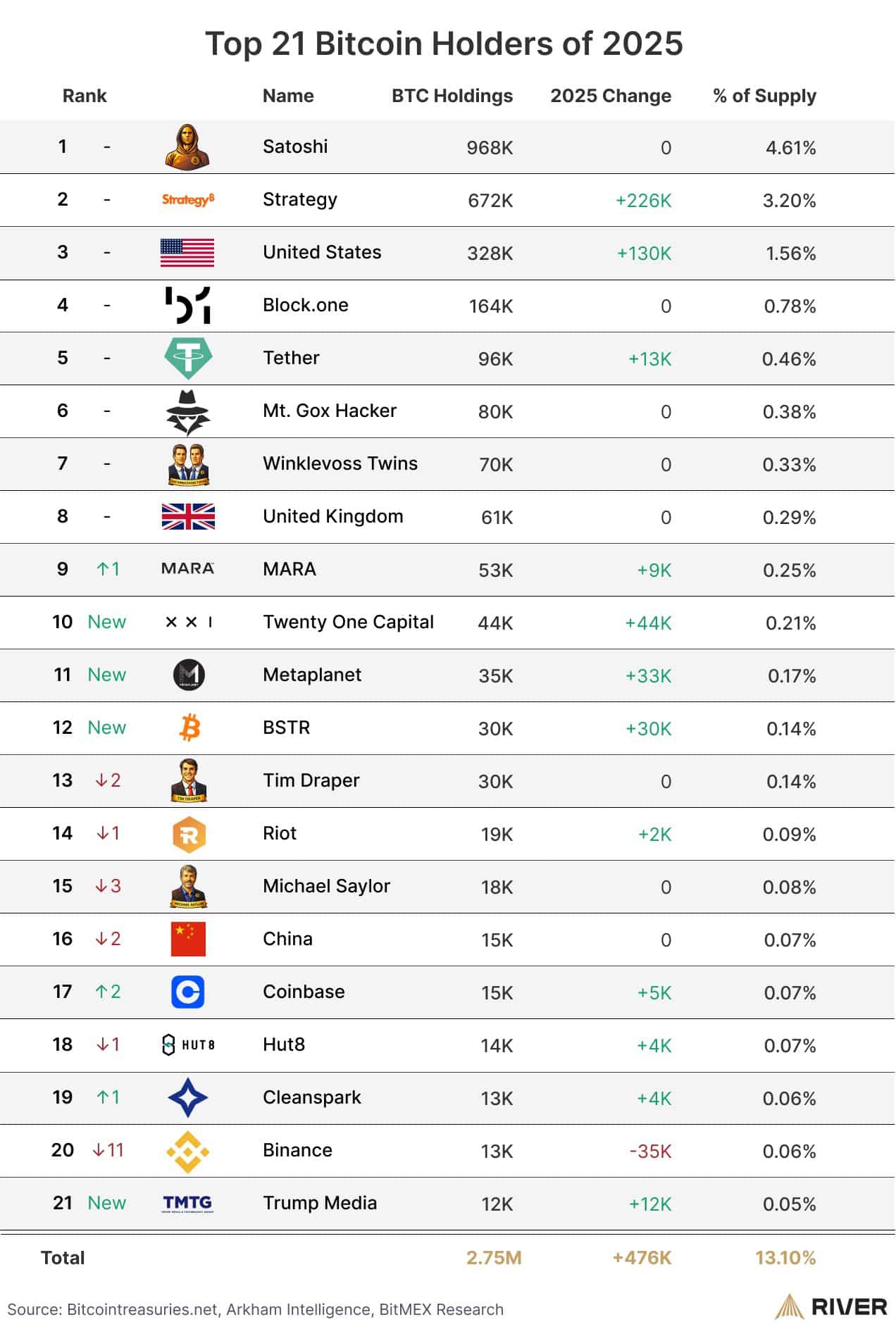
These numbers start to make more sense when you look at who’s buying. In 2025 alone, the 21 largest Bitcoin holders added roughly $40 billion worth of BTC.

Source: River

Strategy [MSTR], the U.S. Government, miners, funds, and new corporate entrants all increased holdings.

Total balances pushed to about 2.75 million BTC, or over 13% of total supply. This makes supply tight during tougher, darker days, which can help explain why Bitcoin keeps stalling rather than breaking down.

That said…

Supply isn’t completely locked away.

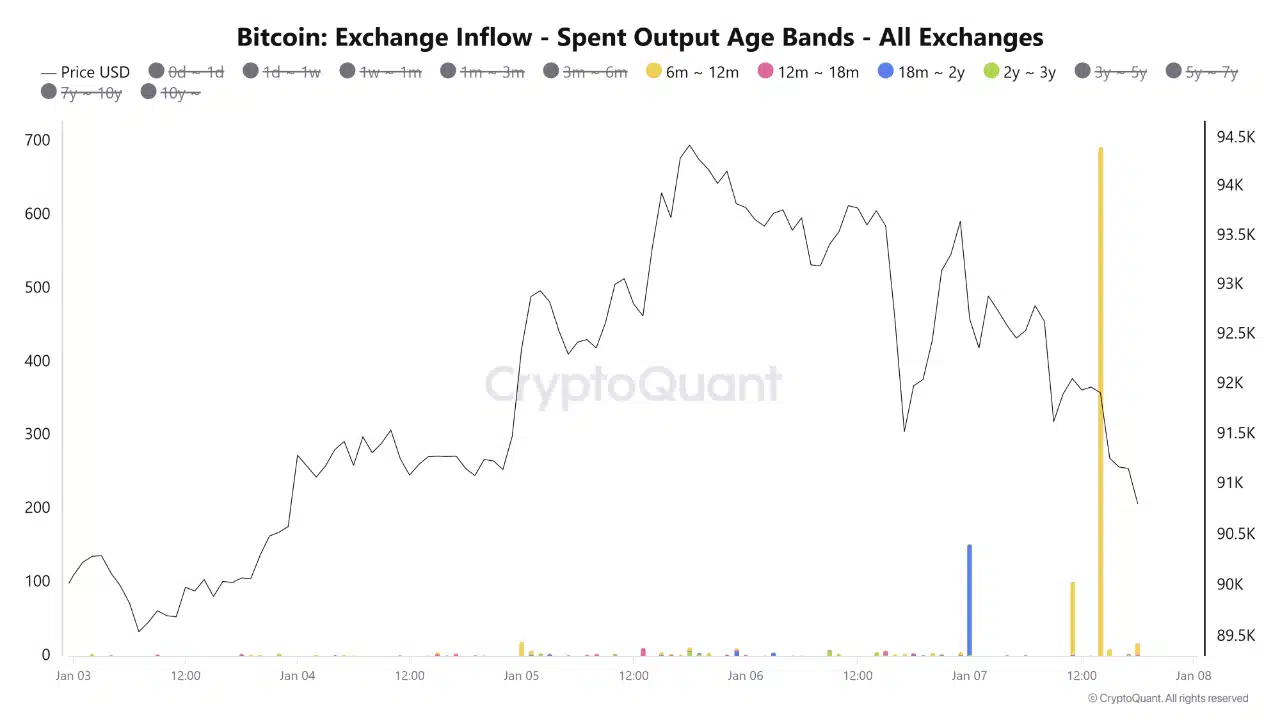
Source: CryptoQuant

There’s been a spike in Exchange Inflows from older Bitcoin cohorts, especially coins dormant for six months to over a year. These are experienced holders choosing to move coins even at elevated prices.

Importantly, this activity showed up before the recent pullback, so the correction was likely supply-driven.

This adds friction to the market. Not a full trend break, but enough selling to slow the pace, and turn Bitcoin into a more patience-testing trade.


Final Thoughts

  • Bitcoin looks harder to crash and easier to stall.
  • Older coins moving to exchanges explain the pullbacks, but not a full breakdown.
Next: Optimism proposes OP token buybacks using superchain revenue
Share
  • Share
  • Tweet

热门币种推荐

相关问答

QAccording to CryptoQuant CEO Ki Young Ju, what has happened to capital flows into Bitcoin recently?

ACapital flows into Bitcoin have 'dried up.'

QWhat key change in Bitcoin holder behavior has made sudden 50% price crashes far less likely?

ALong-term institutional holders have broken the old whale-versus-retail cycle.

QHow much Bitcoin did the 21 largest holders add in 2025, and what percentage of total supply do they now control?

AThey added roughly $40 billion worth of BTC and now control over 13% of the total supply (about 2.75 million BTC).

QWhat recent on-chain activity from older Bitcoin cohorts contributed to the market pullback?

AThere was a spike in Exchange Inflows from coins dormant for six months to over a year, indicating experienced holders were selling at elevated prices.

QWhat is the overall effect of the current market dynamics on Bitcoin's price behavior?

ABitcoin has become harder to crash but easier to stall, turning it into a more patience-testing trade with slower price movements.

你可能也喜欢

历史唯一:持有 4 年,胜率 100% 的资产

本文探讨了一个独特的资产表现现象:在主流高风险可交易资产中,只有比特币(Bitcoin)实现了“任意时点买入并持有满4年,历史名义收益率为100%”的记录。 文章首先对比了其他各类资产: * **标普500指数**:在1929-1932年、1999-2002年等周期出现过4年累计亏损。 * **纳斯达克100指数**:互联网泡沫破裂后,2000-2003年周期亏损约60%。 * **黄金**:在1981-1984年等周期出现显著下跌,甚至经历过长达12年的熊市。 * **美国房地产**:整体市场在2007-2010年周期下跌约23.3%。 * **长期国债与公司债**:受利率波动影响,例如2021-2024年长期国债亏损约19.8%。 能够实现4年名义胜率100%的资产集中在两个极端: 1. **极低风险、合同兑付类资产**:如持有到期的美国短期国债、4年期定期存款(CD)或到期日在4年内的国债。其收益由合同和主权信用保障锁定,但可能无法抵御通胀导致的购买力损失。 2. **比特币**:作为一种没有发行人、不产生现金流、无人承诺兑付的高波动性资产,其100%的胜率完全源于历史市场价格在每次深跌后(如跌幅70%-90%),都能在4年内收复失地并创新高。数据显示,在其统计的4419个滚动4年窗口中,最差收益仍为+32.6%(年化约7.3%)。 **核心结论**:比特币与低风险固收资产的“100%胜率”内涵截然不同。前者体现了其极强的价格恢复能力和长期增长特性,而后者源于信用担保。这一历史记录突显了对比特币而言,长期持有远比频繁交易更为重要。

marsbit1小时前

历史唯一:持有 4 年,胜率 100% 的资产

marsbit1小时前

交易

现货

热门文章

加密市场宏观研报:《GENIUS Act》法案取得重大进展,BTC突破历史新高,后市全新展望

2025年5月22日,比特币价格正式突破11万美元大关,创下历史新高。在政策面、宏观经济、资金面与投资者结构共同作用下,一场结构性牛市浪潮正在展开。而此轮上涨背后的核心驱动,是美国《GENIUS稳定币法案》的实质性进展以及多项利好的叠加。本文将从政策端突破、宏观环境转向、链上与ETF资金结构、交易行为演化,以及重点受益赛道五大维度,全面解析此轮BTC再创新高的深层逻辑,并前瞻下半年市场的潜在趋势。

2.0k人学过发布于 2025.05.22更新于 2025.05.22

加密市场宏观研报:《GENIUS Act》法案取得重大进展,BTC突破历史新高,后市全新展望

相关讨论

欢迎来到HTX社区。在这里,您可以了解最新的平台发展动态并获得专业的市场意见。以下是用户对BTC(BTC)币价的意见。

活动图片