# Export Control的所有文章

在 HTX 新闻中心浏览与「Export Control」相关的最新资讯与深度分析。潘盖市场趋势、项目动态、技术进展及监管政策,提供权威的加密行业洞察。

When the Competition in Chip Manufacturing Equipment Stops Being Just About Who Is More Advanced

The competition in chip manufacturing equipment is no longer solely about who has the most advanced technology. While performance, yield, and cost remain key, U.S. export controls are adding a critical new dimension: long-term supply chain reliability. Major chipmakers like Samsung and SK Hynix, despite having mature supply chains with leading American and European vendors, are reportedly evaluating etching equipment from China's AMEC for their Chinese factories. This move is not primarily about immediate replacement or AMEC's current capabilities. Instead, it's a risk mitigation strategy. Companies are concerned that future U.S. policies could disrupt their access to spare parts, software updates, and maintenance for existing equipment over its decade-long lifespan. For chipmakers investing billions in fabs with long planning cycles, this policy-induced uncertainty is a significant new risk. The U.S., through its controls, is inadvertently eroding the very reliability and certainty that were foundational strengths of its equipment suppliers. This creates a pivotal shift for Chinese semiconductor equipment. Previously seen largely as a "domestic replacement" option when foreign gear was unavailable, they are now being assessed as potential "contingency suppliers" by global players—even before a supply disruption occurs. This provides a crucial entry point for validation in real production lines, which is essential for iterative improvement. Chinese equipment, particularly in areas like etching, has progressed from prototypes to participating in mass production within China, gaining valuable experience. However, this does not signify full global competitiveness. Gaps remain in advanced lithography, metrology, and other key tools. The current evaluations are largely confined to foreign firms' China-based fabs, not their global procurement networks. The core change is in the decision-making framework. Efficiency-driven globalization favored single, optimal suppliers. An era of heightened geopolitical risk is forcing companies to value "replaceability." While technical prowess remains paramount, supply chain certainty is now being factored into a device's competitive equation. Ultimately, U.S. policies have not made Chinese equipment more advanced, but they have given global customers a compelling reason to start testing it. The competition has expanded: it's no longer just about who is more advanced, but also about who can be relied upon to stay.

marsbit2小时前

When the Competition in Chip Manufacturing Equipment Stops Being Just About Who Is More Advanced

marsbit2小时前

Anthropic Creates an AI Jailbreak 'Penal Code': Your Requests, Four Ways to Die

Anthropic has publicly detailed its security measures and a new "Cyber Jailbreak Severity" (CJS) framework following the controversial takedown of its Fable 5 model. The incident, triggered by simple user requests like counting letters or stating a profession, highlighted overzealous safety filters. Anthropic classifies cybersecurity-related prompts into four tiers: malicious activities (blocked), high-risk dual-use (like pentesting, with strict limits), low-risk dual-use (often blocked by "safety margin" errors), and harmless tasks (theoretically allowed but still frequently flagged). The company admits its classifiers are tuned for high sensitivity, leading to many false positives. The newly proposed CJS framework aims to objectively score the severity of AI "jailbreaks" (prompts that bypass safety rules) on a 0-10 scale across four dimensions: Capability Gain (does it grant new attack abilities?), Breadth (does it work across multiple attack types?), Weaponization Ease (how hard is it to turn into a real attack?), and Discoverability (how easy is it to find?). The score determines the response, from no action (CJS-0) to a potential model takedown (CJS-4). The score is context-dependent; for example, discovering a major unknown vulnerability today scores high, while asking about a well-known one scores low. The article raises concerns about Anthropic's dual role: it is both creating powerful models (like the restricted Mythos 5) and defining the rules (CJS) for judging their misuse, potentially giving it disproportionate influence. This is set against the backdrop of U.S. export controls, which for the first time directly restricted API access to a model (Fable 5), creating a "tiered" system where public models are heavily filtered and advanced ones are limited to vetted partners. The CJS framework is portrayed as potentially providing regulators with a metric to justify future API shutdowns. For users, the advice is to carefully phrase prompts, watch for signs of being downgraded to a weaker model, and wait indefinitely for promised filter improvements.

marsbit07/06 00:24

Anthropic Creates an AI Jailbreak 'Penal Code': Your Requests, Four Ways to Die

marsbit07/06 00:24

Confirmed: Claude Code Secretly Inspects Users, Time Zone and Chinese AI Labs Are Key Factors

Today was a significant day for Anthropic. The company announced the launch of Claude Sonnet 5, described as its most agentic model yet, and separately confirmed that the U.S. Department of Commerce has lifted export controls on its Claude Fable 5 and Mythos 5 models, allowing their distribution to resume. However, a separate controversy has emerged regarding its coding assistant, Claude Code. Developers have exposed that certain versions of the tool allegedly contain hidden code designed to detect specific user data. This code reportedly checks for the use of Chinese time zones (like Asia/Shanghai), the presence of custom API proxy URLs, and connections to domains associated with Chinese tech companies and AI labs. If triggered, this information is said to be encoded into the system prompt sent to the AI cloud, using subtle, nearly indistinguishable variations in characters (like different Unicode apostrophes in the "Today's date" line) as a form of steganography. The core issue is the covert nature of this data collection. While telemetry for security and abuse prevention is common, implementing it through hidden channels within the prompt—without user awareness or documented disclosure—fundamentally breaches trust. This is particularly sensitive for a coding assistant that operates with access to source code and system commands. Following the exposure, an Anthropic engineer acknowledged the code's existence and stated it would be removed in an upcoming release. The incident raises serious questions about transparency and the boundaries of data collection in AI developer tools.

marsbit07/01 03:44

Confirmed: Claude Code Secretly Inspects Users, Time Zone and Chinese AI Labs Are Key Factors

marsbit07/01 03:44

The U.S. Government Blocked the Anthropic Model. It Wasn't About 'Jailbreaking' at All.

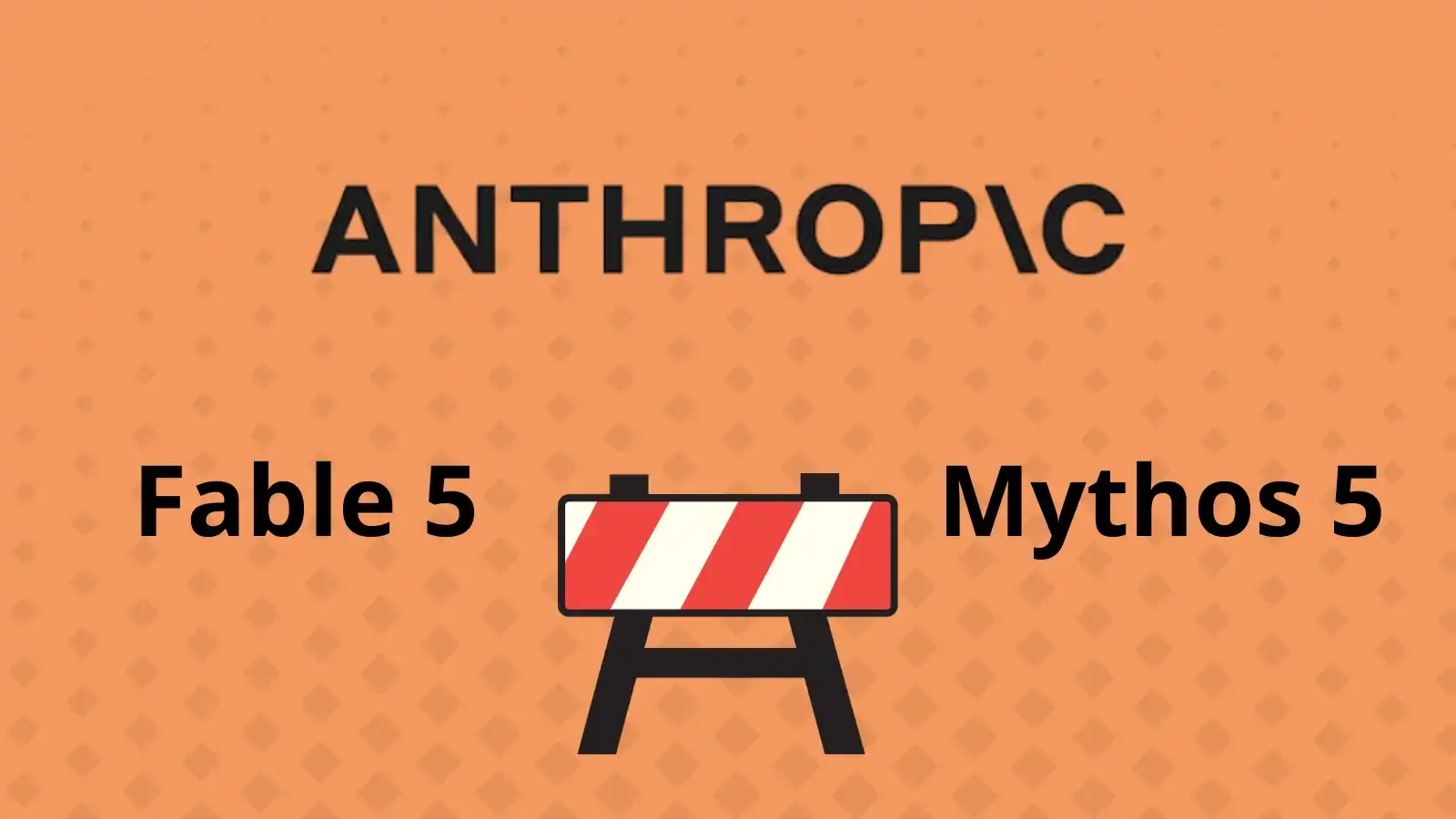
Last Friday, the U.S. Commerce Department issued an enforcement letter that forced Anthropic to take its two most advanced AI models, Fable 5 and Mythos 5, offline. The stated reason was unspecified national security concerns, initially linked to potential "jailbreaks" of the models' safeguards. However, new details suggest the action stemmed more from a deteriorating relationship between the Trump administration and Anthropic, rather than a genuine technical threat. According to reports, the government cited a little-known export control regulation, compelling Anthropic to block access for all non-U.S. persons, including its own international employees. The company complied, shutting down the models without a court order or specific technical details from the government. Cybersecurity expert Katie Moussouris revealed she was privately shown a research paper detailing a potential safeguard bypass in Fable 5. She argued the described method was minor and did not warrant an export ban, stating that attempts to "fix" it would only weaken the model's defensive capabilities. Moussouris and other experts have since called for the order to be revoked, warning it dangerously removes advanced cybersecurity tools from U.S. defenders. Analysts like Justin Hendrix suggest the move appears retaliatory and sets a dangerous precedent, signaling that the U.S. government can unilaterally shut down a tech company's products. The incident has raised concerns about the reliability of American AI and the potential for political interference in the tech industry, serving as a warning to the broader sector.

marsbit06/16 03:58

The U.S. Government Blocked the Anthropic Model. It Wasn't About 'Jailbreaking' at All.

marsbit06/16 03:58

Following US Ban on Fable 5, Zhipu AI's Stock Soars 47%

On June 15th, shares of Zhipu AI surged dramatically on the Hong Kong stock market, peaking at a 47.6% gain before closing 32.82% higher. This sharp increase was directly triggered by two recent industry events. On June 12th, Anthropic announced it was suspending global access to its latest flagship models, Claude Fable 5 and Claude Mythos 5, to comply with a U.S. government export control order. The next day, Zhipu AI announced it would open access to its latest open-source flagship model, GLM-5.2, under the permissive MIT license. The Anthropic incident highlighted a critical issue beyond raw model capability: the risk of sudden, unpredictable loss of access to advanced AI models, especially for developers and enterprises deeply integrated with them. This has shifted industry and market focus toward factors like stability, sustainable access, and controllability. Zhipu's move, promoting "frontier intelligence for all," positions its openly available model as a reliable and accessible alternative. The GLM-5.2 model emphasizes "Long Horizon Task" capabilities with a 1M context window, targeting complex, multi-step coding and engineering workflows where maintaining context is crucial. Analysts note this event exposes the risk of dependency on closed-source models subject to single jurisdictional controls, potentially accelerating a shift toward domestic base models and localized deployments. The market's reaction signals a new valuation dimension in AI: providers who can offer stable, long-term, and sustainably accessible AI capabilities are gaining strategic importance.

marsbit06/15 12:01

Following US Ban on Fable 5, Zhipu AI's Stock Soars 47%

marsbit06/15 12:01

US Government Suddenly Halts Anthropic's Strongest Model, "Quasi-IPO Stock Price" Plunges 3.7% Overnight

U.S. Government Halts Anthropic's Top AI Models, 'Pre-IPO' Price Drops 3.7% On June 12, the U.S. government ordered Anthropic to shut down access to its two most powerful AI models, Claude Fable 5 and Claude Mythos 5, citing national security concerns. The directive, issued by the Department of Commerce, required Anthropic to block access for all foreign nationals, leading the company to disable the models globally for all users. Anthropic strongly opposed the move, arguing the government's basis was a "narrow jailbreak vulnerability" and warning that applying such a standard industry-wide would effectively halt all frontier model deployments. The news impacted Anthropic's implied valuation in speculative markets. The Anthropic perpetual contract on Hyperliquid fell approximately 3.7% to around $1,627, down from highs above $1,800 following the models' release. Unauthorized tokenized products linked to Anthropic on Solana also saw significant declines. The models, launched just days earlier on June 9, represented a major capability leap for Anthropic. Fable 5 was its first public release of a "Mythos"-tier model above its flagship Claude Opus. The shutdown creates an ironic situation for Anthropic, a company founded on "AI safety" principles, and adds uncertainty to its ongoing IPO preparations. The company is actively engaging with regulators to resolve what it calls a "misunderstanding" and restore service.

marsbit06/15 02:31

US Government Suddenly Halts Anthropic's Strongest Model, "Quasi-IPO Stock Price" Plunges 3.7% Overnight

marsbit06/15 02:31

U.S. Government Bans Foreign Nationals from Using Fable 5, Anthropic Issues Rebuttal

U.S. Government Bans Foreign Access to Fable 5, Anthropic Issues Rebuttal On June 12th, the U.S. government ordered AI company Anthropic to immediately suspend all foreign access—including foreign nationals within the U.S. and Anthropic's own foreign employees—to its newly released Fable 5 and Mythos 5 AI models, citing national security concerns. This forced Anthropic to temporarily disable access to both models for all users globally, as it cannot technically differentiate user nationality at scale. The models, released just three days prior, represent Anthropic's highest public capability tier. Fable 5 is the first publicly available model from the advanced "Mythos" family, while Mythos 5 is a less-restricted version for approved cybersecurity and critical infrastructure partners. The government's directive was reportedly triggered by claims from another company that it could "jailbreak" Mythos 5, raising alarm within the Trump administration. Anthropic, in a detailed public statement, strongly challenged this rationale. The company argues the demonstrated "jailbreak" is a narrow, non-generalized technique that merely involves identifying minor, known software vulnerabilities—a capability common to other publicly available models like OpenAI's GPT-5.5 and routinely used by cybersecurity defenders. Anthropic stated it has complied with the order but disagrees with the government's standard, warning that applying it industry-wide would halt all new frontier model deployments. The company criticized the lack of a transparent, fact-based legal process and expressed confidence the situation stems from a misunderstanding. It is working to restore access and will release more technical details within 24 hours. Other Anthropic models remain unaffected.

链捕手06/13 08:04

U.S. Government Bans Foreign Nationals from Using Fable 5, Anthropic Issues Rebuttal

链捕手06/13 08:04

活动图片