Cointelegraph looks back on the best and worst-performing cryptocurrencies of 2022 among the top 100 assets by market capitalization. We used the highest and the lowest year-to-date (YTD) returns through the close of Dec. 25, 2022.
⠀
Overall, Cryptoindex.com 100 (CIX100), an index that tracks the 100 best-performing cryptocurrencies, fell nearly 68% YTD, suggesting most top coins underperformed in 2022.
⠀
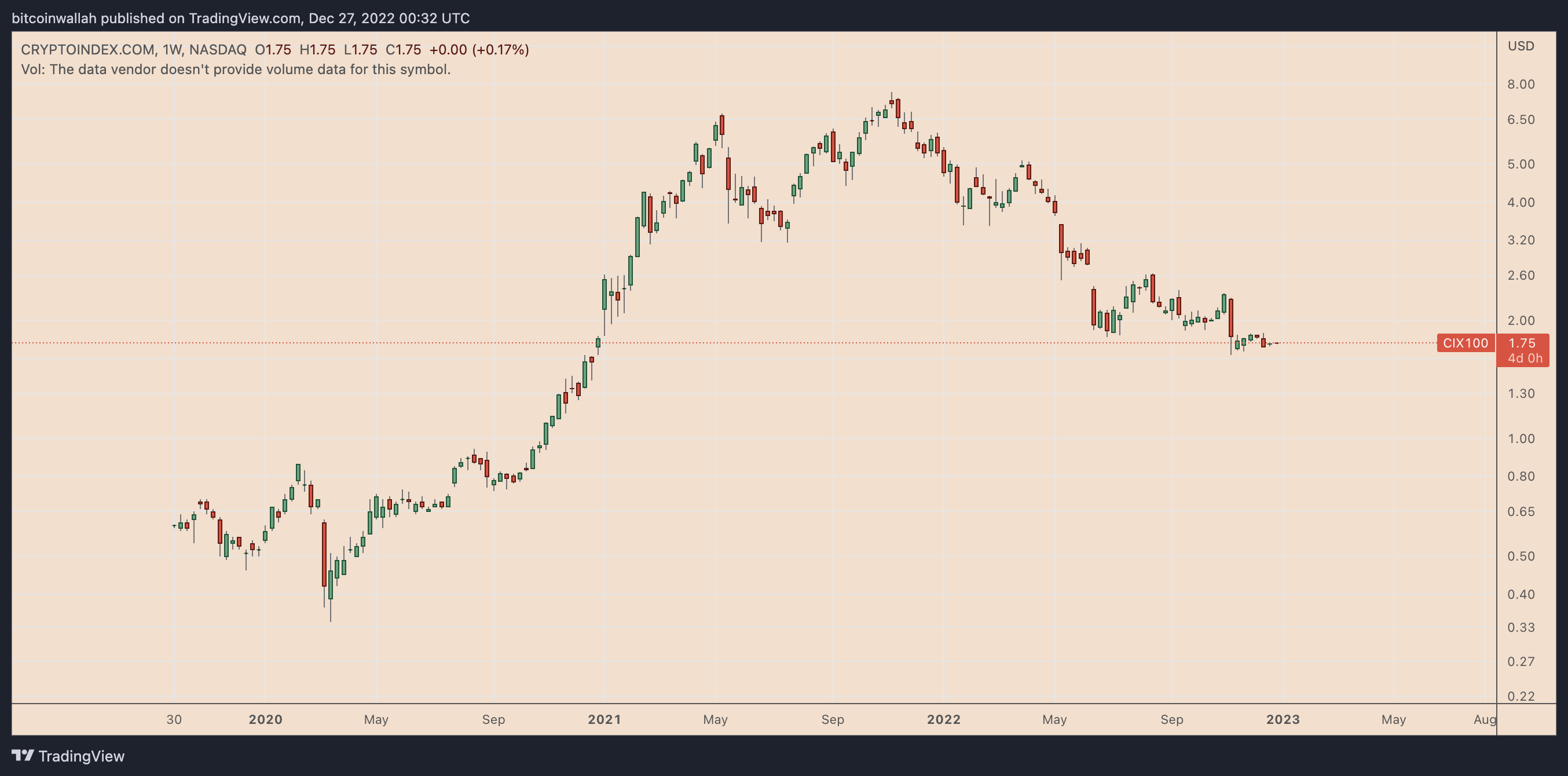
CIX100 weekly price chart. Source: TradingView
⠀
Stablecoins are naturally omitted from the list below. Similarly, coins tracking the value of gold and similar mainstream assets have also been ignored.
⠀
Instead, the coins mentioned below include decentralized currencies, smart contract tokens, exchange tokens and others.
⠀
Top five crypto of 2022
⠀
1. GMX (GMX)
⠀
YTD return: 111%
⠀
Sector: Decentralized exchange
⠀
Market Cap: $379.4 million
⠀
GMX acts as a utility and a governance token within the GMX decentralized exchange (DEX) ecosystem and is the best-performing digital asset among the top 100 coins (excluding stablecoins).
⠀
GMX’s price uptrend mostly picked its cues from the collapse of FTX, a centralized exchange, and its listing on popular trading platforms — including Binance and Huobi Global — across 2022. In addition, the token rallied impressively in late November after its platform briefly surpassed its top DEX rival, Uniwap, in daily trading fees.
⠀
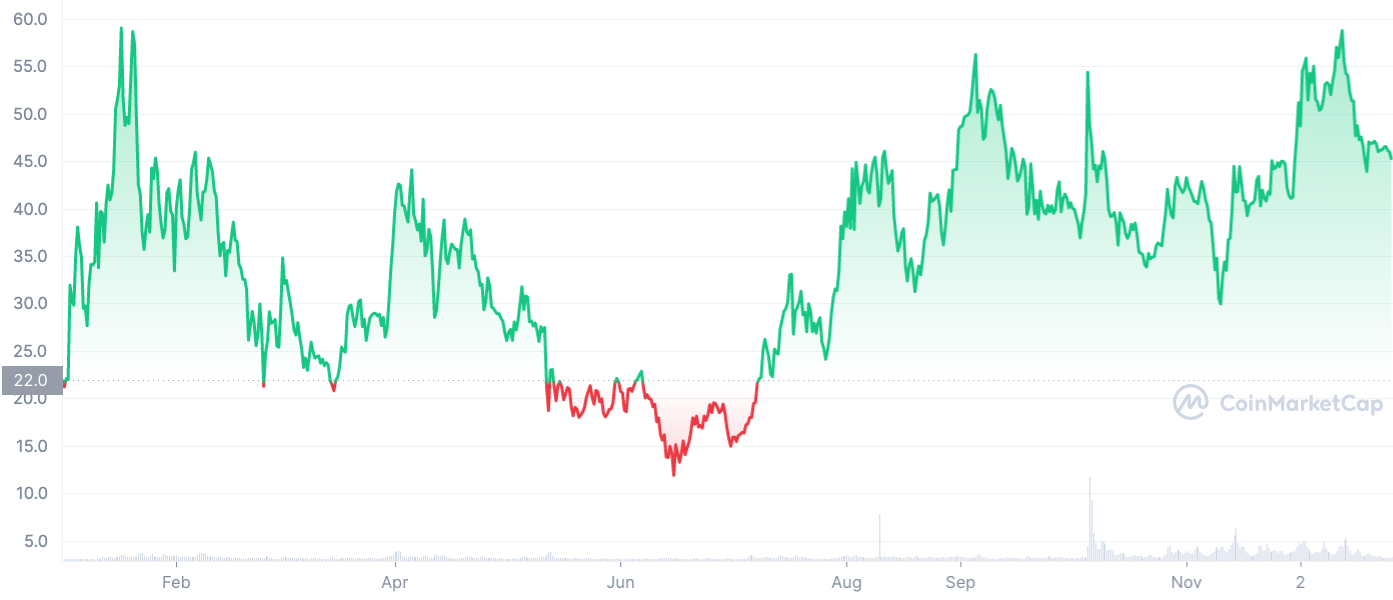
GMX price performance YTD. Source: CoinMarketCap
⠀
2. Trust Wallet Token (TWT)
⠀
YTD return: 92%
⠀
Sector: Payment platform
⠀
Market Cap: $570 million
⠀
Trust Wallet Token (TWT) serves as a utility and a governance token within the Trust Wallet ecosystem. The token moved lower in tandem with the rest of the crypto market, mostly in 2022, but like GMX, its upside momentum increased amid the collapse of the FTX exchange in November.
⠀
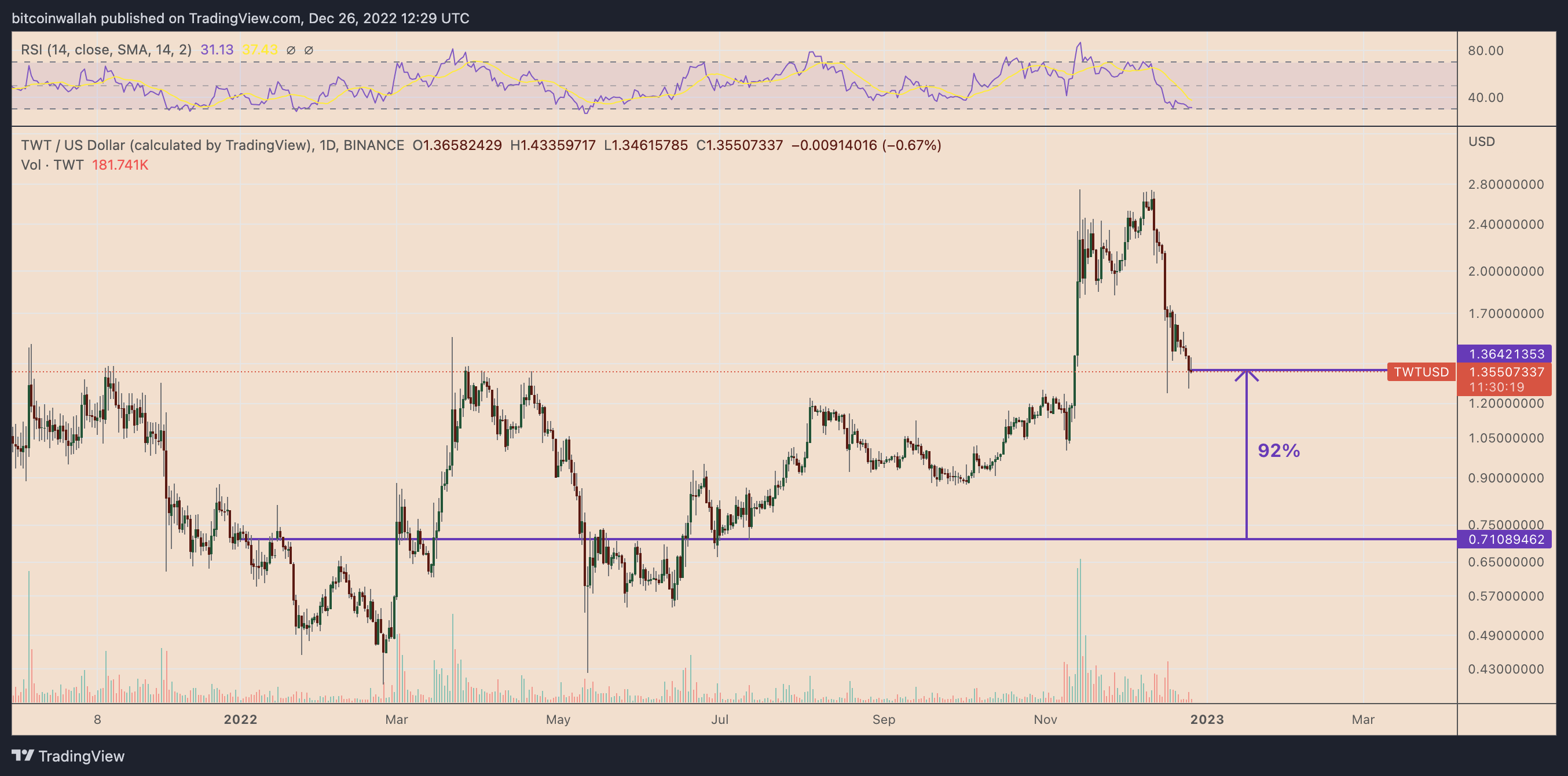
TWT/USD daily price chart. Source: TradingView
⠀
As Cointelegraph reported, the FTX’s collapse boosted mistrust for centralized exchanges, which may have prompted investors to move their funds to self-custody wallets like Trust Wallet. The speculation could have played a major role in boosting TWT’s valuation.
⠀
3. Unus Sed Leo (LEO)
⠀
YTD return: -3.5%
⠀
Sector: Centralized exchange
⠀
Market Cap: $3.44 billion
⠀
Unus Sed Leo (LEO) is native to the iFinex ecosystem. The token suffered losses in 2022, but at -3.5%, they were little compared to most top coins, including Bitcoin and Ether, which lost over 65% in the same period.
⠀
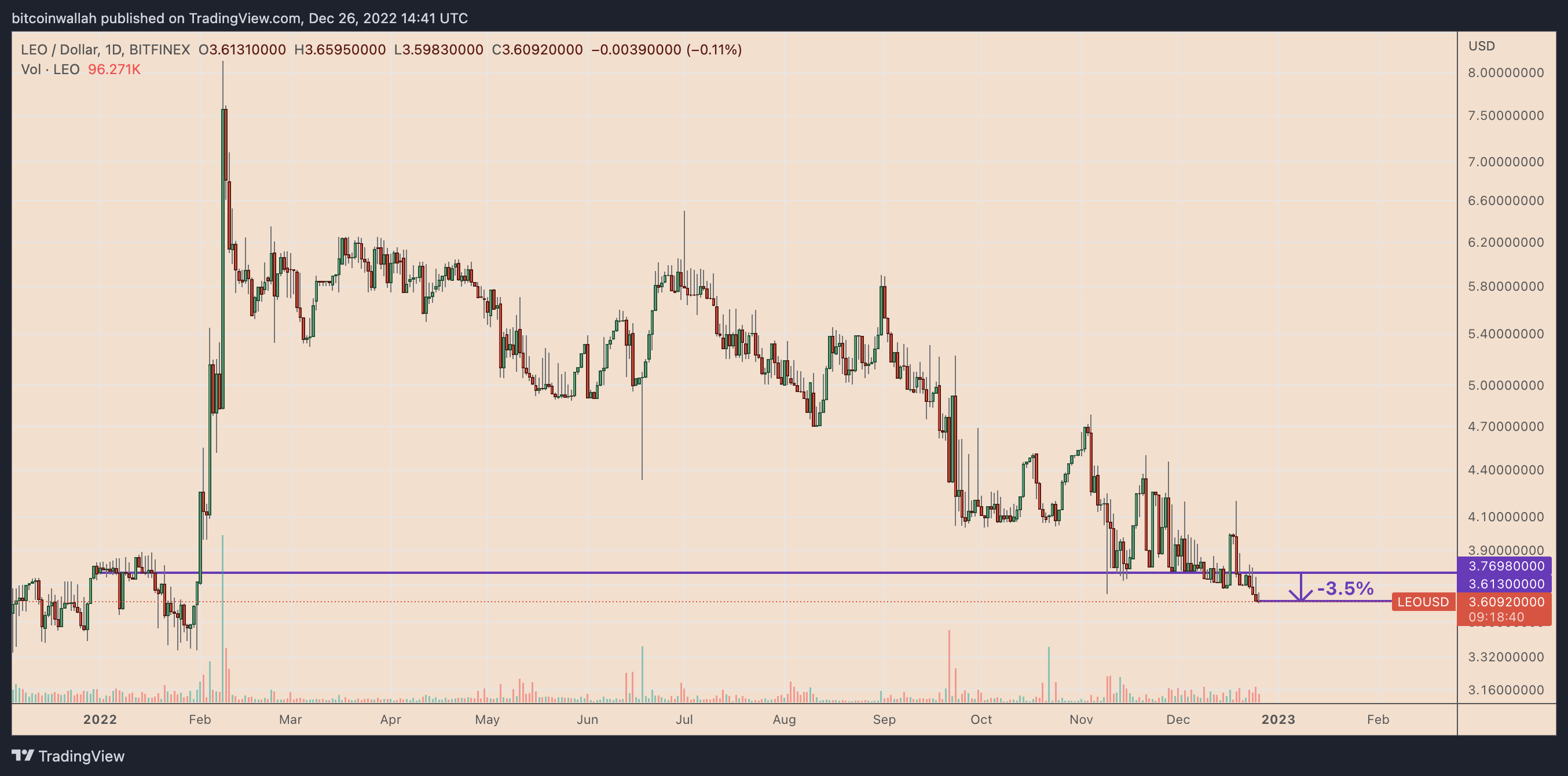
LEO/USD daily price chart. Source: TradingView
⠀
One of the reasons why LEO outperformed most top-ranking assets could be iFinex’s pledge. Notably, the firm declared at the time of LEO’s private sale in 2018 that it would employ 27% of its revenue to buy back the tokens until the entire supply of 985.24 million units was removed from circulation.
⠀
IFinex also said it would use the funds it lost during the August 2016 Bitfinex hack to purchase LEO tokens. That explains why LEO rallied by more than 100% at the start of the year, given the uptrend came after the United States Department of Justice recovered 94,000 BTC from Bitfinex hackers.
⠀
The rally took LEO’s price to a YTD high of $8.15 in February. However, the token has dropped 55% since, though still remaining one of the best performers in 2022.
⠀
⠀
4. OKB (OKB)
⠀
YTD return: -19%
⠀
Sector: Centralized exchange
⠀
Market Cap: $1.38 billion
⠀
OKB is the native token of the OKX exchange. It provides users discounts on trading fees, access to OKX's initial exchange offering (IEO) platform, and voting rights for tokens to be listed on the exchange.
⠀
OKB trended synchronously with the broader crypto market in 2022, including its 150% recovery after bottoming out at around $9.50 in June. The token’s bullish retracement occurred despite the absence of a major market-moving event, suggesting it had been mostly speculative.
⠀
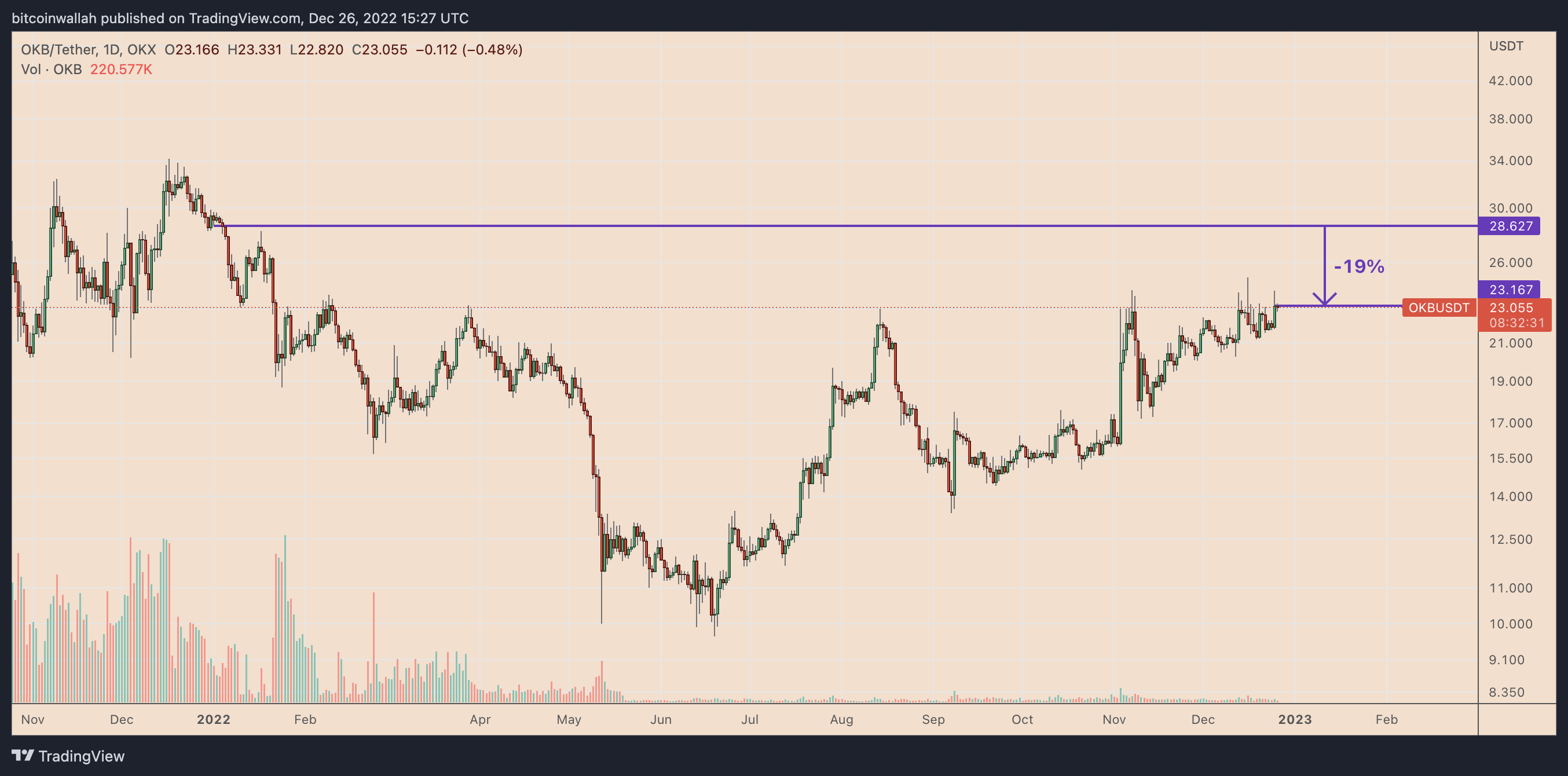
OKB/USD daily price chart. Source: TradingView
⠀
Overall, OKB’s volatile recovery helped it limit its YTD losses compared to most top-ranking assets.
⠀
5. The Open Network (TON)
⠀
YTD return: -33.5%
⠀
Sector: Smart contracts
⠀
Market Cap: $3.52 billion
⠀
The Open Network is a layer-1 blockchain ecosystem developed by the Telegram founders Nikolai Durov and Pavel Durov. Its native token, TON, trended downward in line with other top crypto assets during most of 2022 but recovered impressively ahead of the year’s close.
⠀
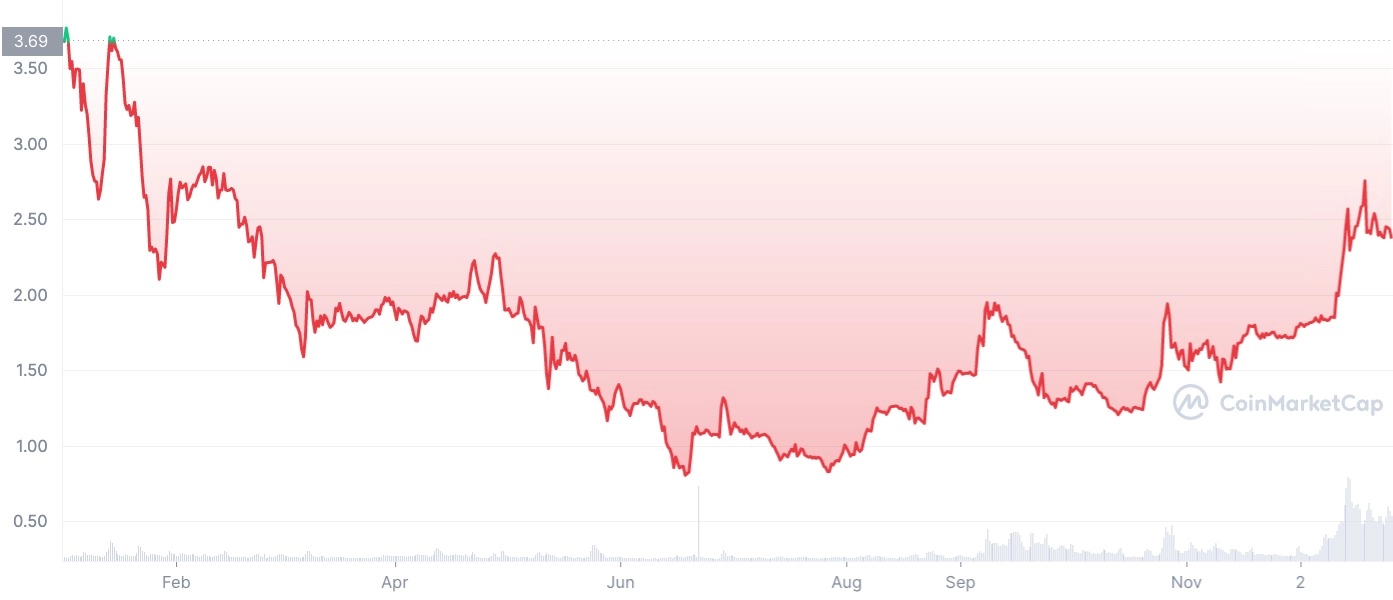
TON/USD price performance YTD. Source: CoinMarketCap
⠀
TON’s recovery period coincided with back-to-back optimistic news. For instance, in October, Telegram announced that it would employ the Open Network to auction usernames. Similarly, the Open Network built a bot the next month that allows Telegrams users to trade cryptocurrencies in-app.
⠀
Nonetheless, TON failed to recoup all of its losses, still down 33.5% YTD at $2.36.
⠀
Worst five cryptos of 2022
⠀
1. Terra (LUNA)
⠀
YTD performance: -99.99%
⠀
Sector: Smart contracts
⠀
Market Cap: $604 million
⠀
Terra became a debacle for the cryptocurrency sector after its market valuation crashed by 99.99% in May. The unraveling started with the implosion of Terra’s algorithmic stablecoin TerraUSD (UST), marking one of the biggest busts in the crypto industry’s history.
⠀
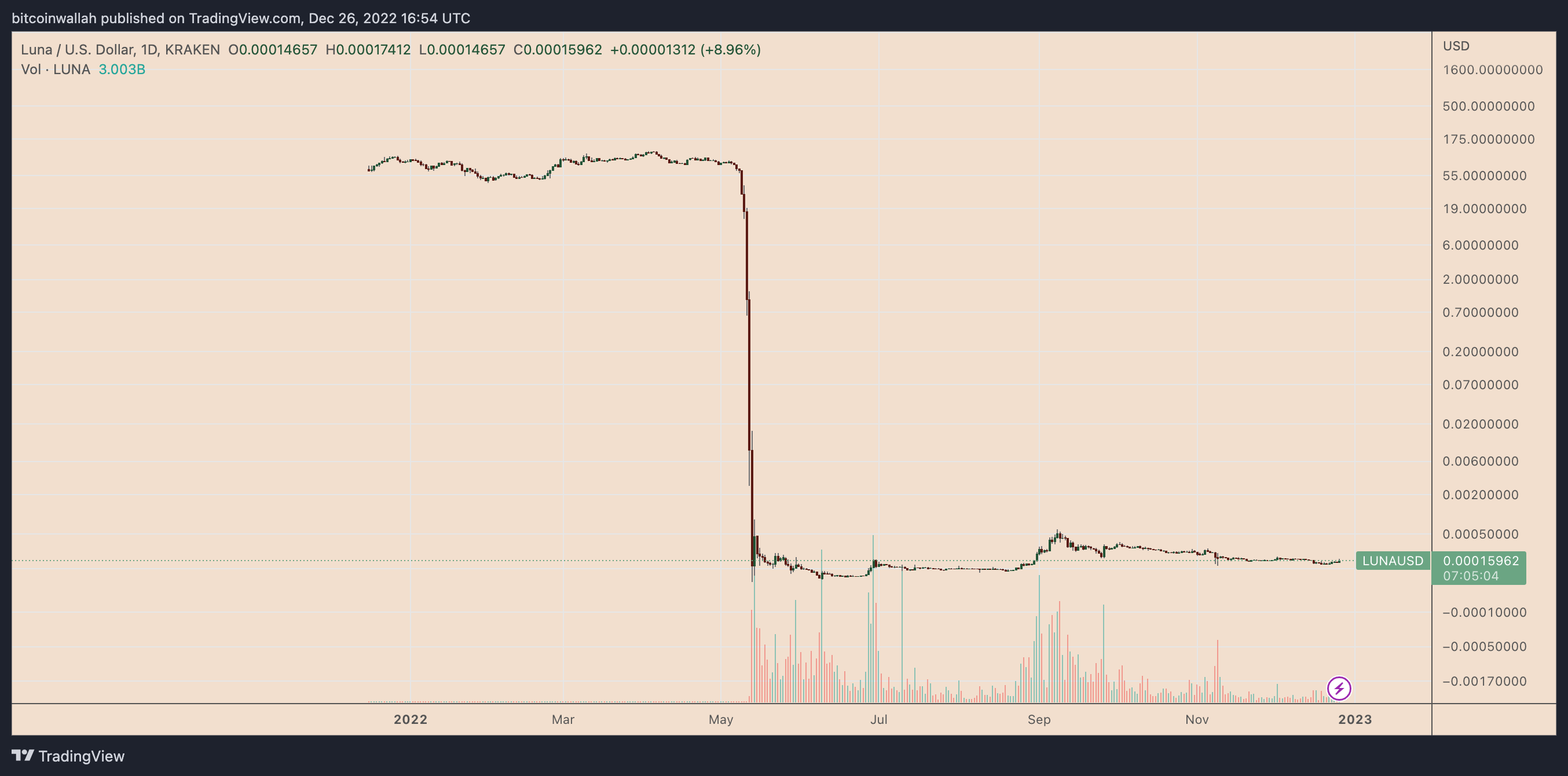
LUNA/USD daily price chart. Source: TradingView
⠀
Terra’s implosion prompted its founder Do Kwon to suggest a fork to revive the project. Eventually, Terra underwent a chain split, with the old chain existing as Terra Classic and the new chain as Terra 2.0.
⠀
Luna Classic (LUNC) jumped nearly 100% after its launch in late May 2022 while LUNA (LUNA2) dropped around 40% in the same period.
⠀
2. FTX Token (FTT)
⠀
YTD performance: -98%
⠀
Sector: Centralized exchange
⠀
Market Cap: $307 million
⠀
FTX Token served as a native token to FTX, which collapsed after facing a liquidity crisis in November.
⠀
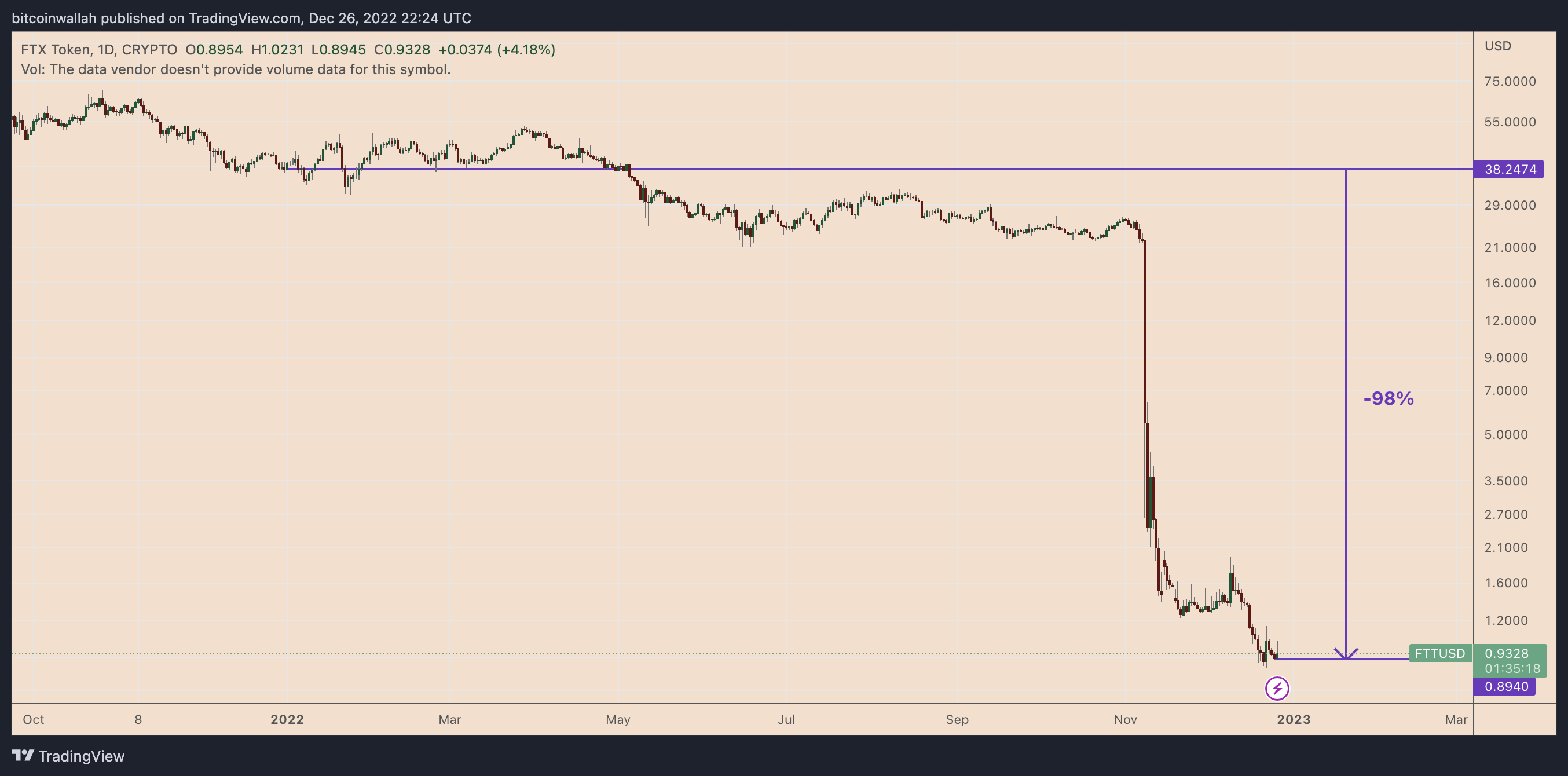
FTT/USD daily price chart. Source: TradingView
⠀
The token continues to trade across several exchanges but accompanies poor liquidity and volume. It is technically “dead” given the defunct status of FTX.
⠀
3. Solana (SOL)
⠀
YTD performance: -93.35%
⠀
Sector: Smart contracts
⠀
Market Cap: $4.11 billion
⠀
Solana, a layer-1 blockchain protocol, crashed 93.35% YTD due to a sequence of bad news all across 2022. That includes six network outages in the year, a $200 million hack on a Solana-based wallet and Solana’s association with FTX.
⠀
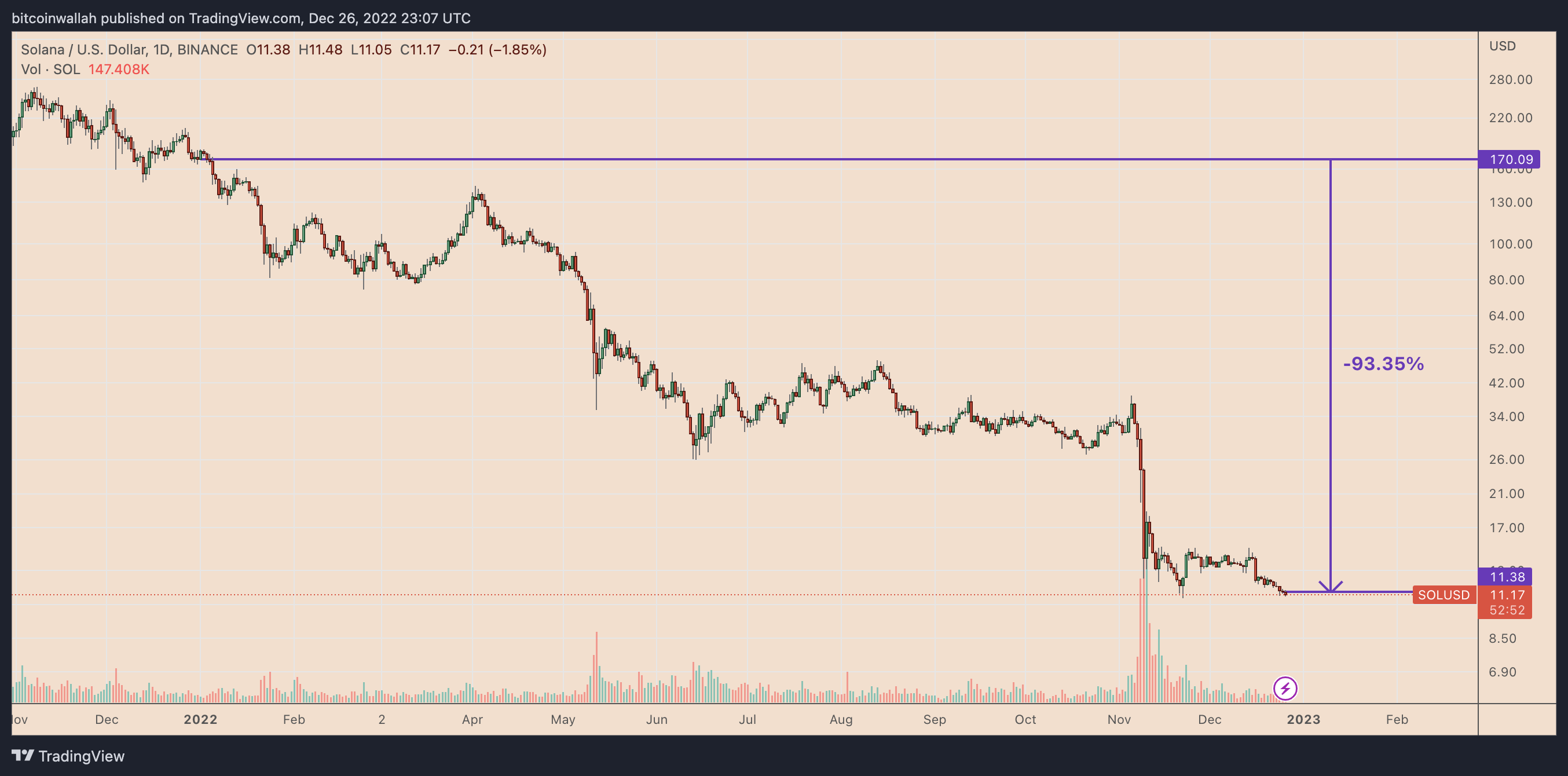
SOL/USD daily price chart. Source: TradingView
⠀
More bad coverage appeared in the form of accusations that Solana is not as decentralized as it claims to be, resulting in SOL being one of the worst-performers of 2022.
⠀
4. Axie Infinity (AXS)
⠀
YTD performance: -93%
⠀
Sector: Gaming/metaverse
⠀
Market Cap: $775 million
⠀
Axie Infinity Shard serves primarily as the governance token for Axie Infinity, a play-to-earn (P2E) gaming ecosystem. It also acts as a legal tender in the Axie Infinity marketplace, where in-game nonfungible tokens (NFT) can be purchased.
⠀
The AXS market has consistently trended lower in 2022 due to underwhelming players turnout (which lowers the demand for tokens), a $650 million hack concerning Axie Infinity’s blockchain Ronin in late March and fears surrounding the unlocking of 8% of supply in October.
⠀
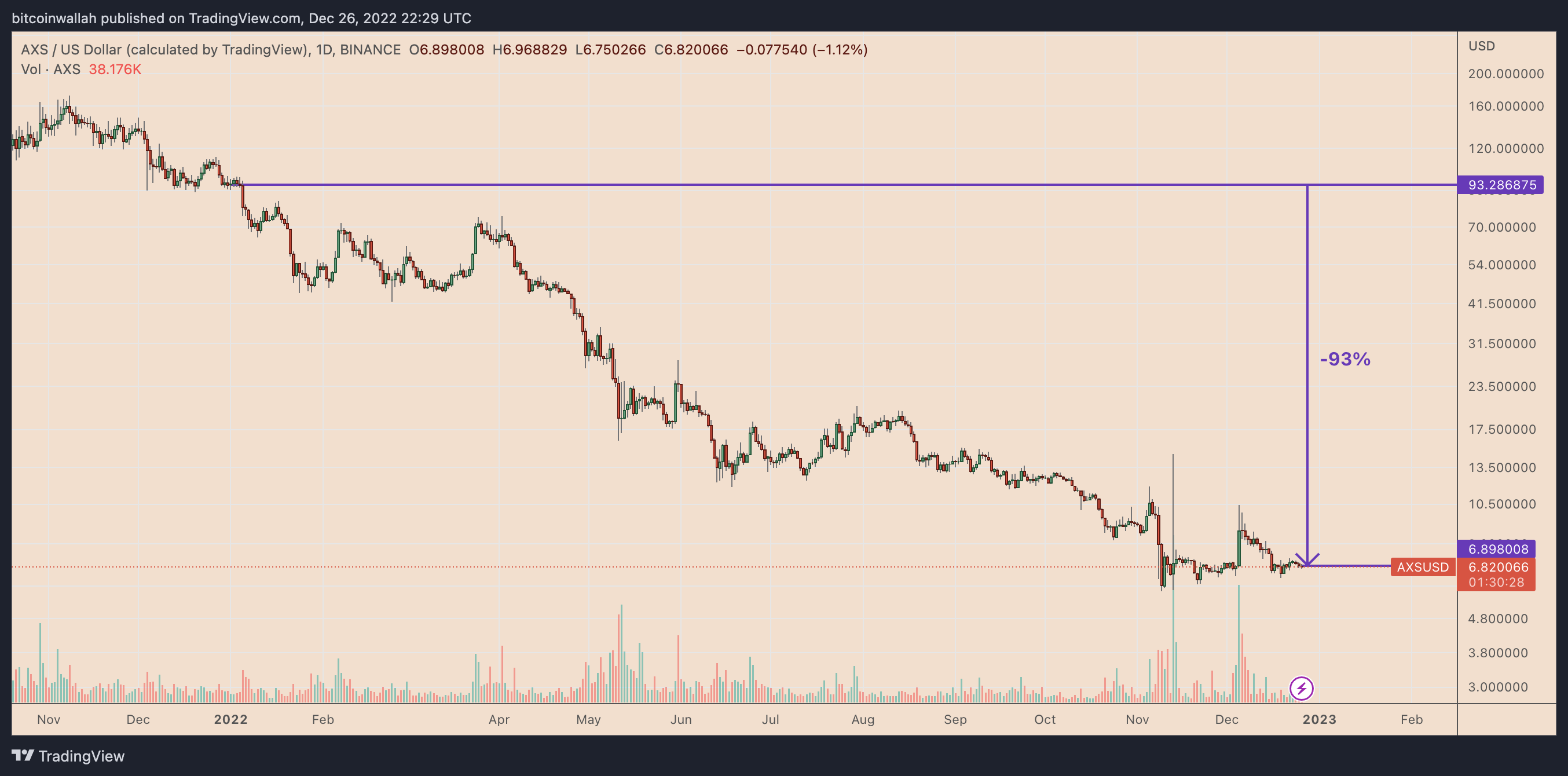
AXS/USD daily price chart. Source: TradingView
⠀
AXS is down approximately 93% YTD, becoming one of the worst-performing assets in the current bear market.
⠀
5. The Sandbox (SAND)
⠀
YTD performance: -92.50%
⠀
Sector: Gaming/metaverse
⠀
Market Cap: $690 million
⠀
Like Axie Infinity, The Sandbox is a virtual platform where users can create, own and monetize their gaming skills using NFTs and The Sandbox, the platform’s utility token. But, despite initial success, the platform now has less than 500 unique users, according to data from DappRadar.
⠀
The lower turnout has affected SAND’s demand across spot exchanges, which, in turn, has pushed its price down 93.50% YTD, as shown below. Other factors behind the declining interest include a general lack of demand for riskier assets in a higher interest rate environment.
⠀
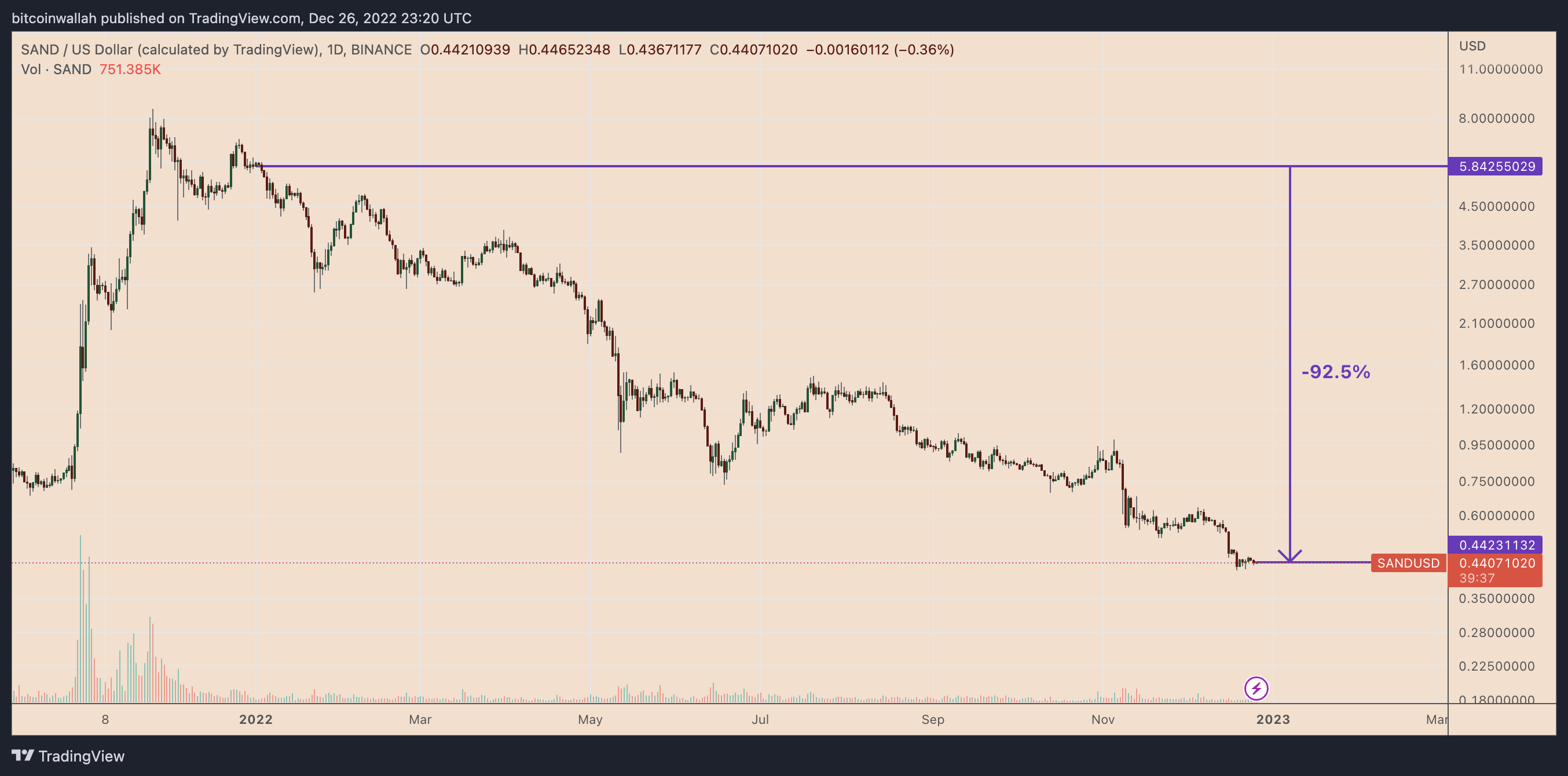
SAND/USD daily price chart. Source: TradingView
⠀
Other tokens that fell more than 90% YTD are Fantom, Avalanche, Algorand, Decentraland, BitTorrent (BTT) and others.