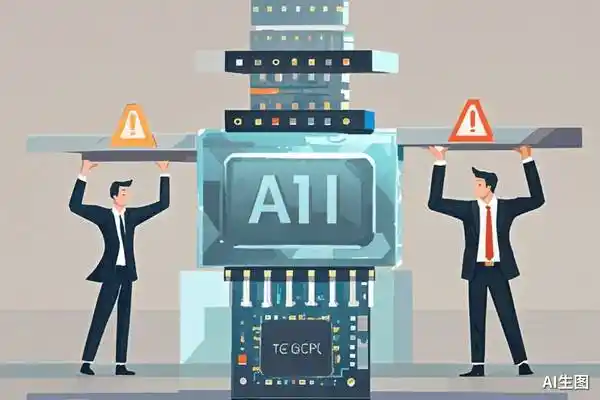
Betting the whole company on a single AI could eventually mean betting away the entire company!!
This statement might sound somewhat alarmist, but the person saying it is none other than Microsoft CEO Satya Nadella, who is currently pushing AI with all his might.
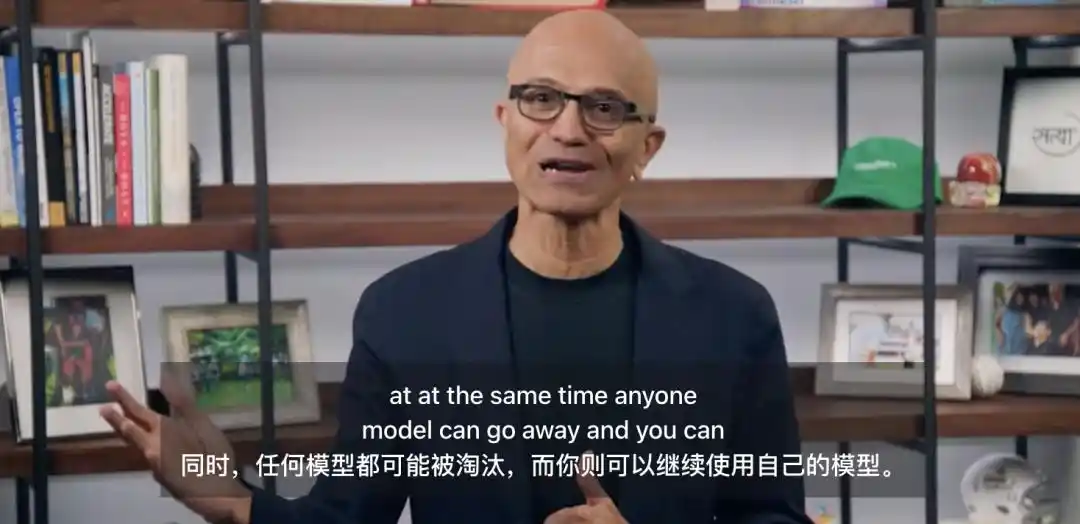
In an interview on CNN's "Fareed Zakaria GPS" program, Nadella delivered a harsh message to all companies that believe 'one AI model can handle everything':
Any company that loses control of its data, memory, and AI usage records may not be able to survive because it has effectively outsourced its thinking.
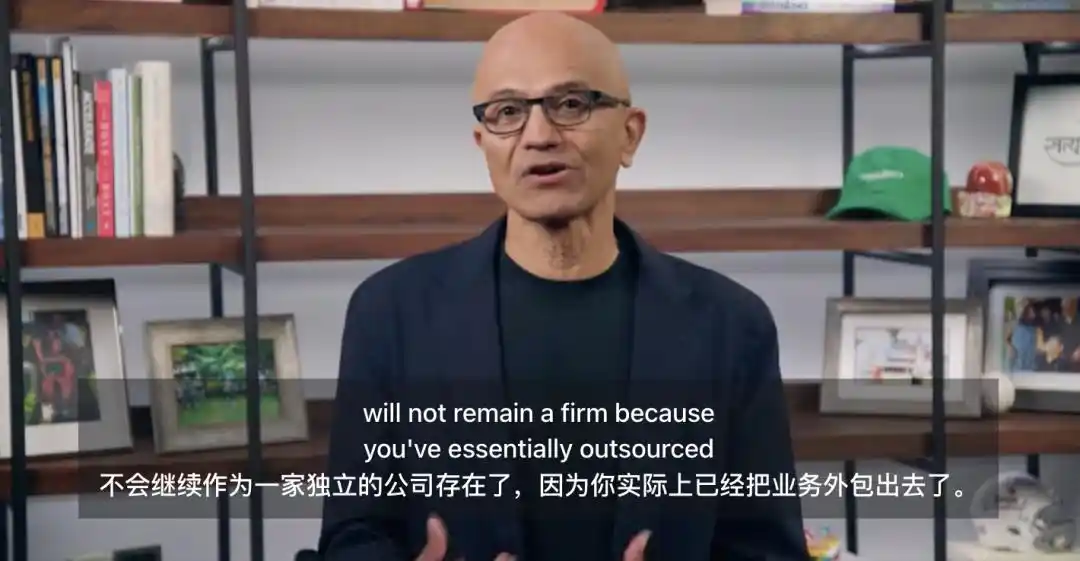
And he added, the deeper a company uses AI in its daily operations, the more opportunities the AI supplier has to understand how that company truly functions.
In the end—
What the company pays might not just be the token fee, but also a set of commercial experience that competitors couldn't buy even with money.
So, what exactly is Nadella worried about?
Betting on a Single AI Could Ultimately Outsource a Company's Core Capabilities
Then, how can a company simply using a specific AI seriously risk its survival?
The core of Nadella's concern revolves around two words: "lock-in."
Today, when a company integrates AI, what employees see might just be a chat interface, but what's connected behind it is becoming increasingly complex—
Prompts, internal data, context, long-term memory, and the harness responsible for directing AI to call tools and execute tasks are all gradually being integrated.
Moreover, employees continuously feed company materials into the system to make the AI better understand the business!!
Thus, thousands of prompts, calls, and corrections layered together leave behind the real working methods of a company:
How to serve customers, how to assess risks, how to modify products, and who to listen to in special situations. (The real "secret manual")
While this system isn't fully documented in any employee handbook, it might determine why a company is better at 'doing business' than its competitors...

Leaking business know-how is just one layer of risk.
If the model, harness, corporate context, and long-term memory are all locked into a single AI company's product, another issue arises—
When the company wants to switch models, it will find that it needs to move far more than just a chat interface!!
Accumulated context, memory, tool-calling methods, and workflows may all need to be rebuilt, and that's when they'll realize they've made a huge mistake.
Furthermore, if the original model suddenly raises prices, discontinues service, falls behind in capabilities, or undergoes major changes to a feature, it becomes very difficult for the enterprise to quickly migrate to another AI.
The company either endures the high cost of migration, starting from scratch to re-train the AI, or stays on the original platform, accepting its price changes, rules, and product shifts.
Price hike by the model? Have to follow. (Wry smile)
Model capabilities fall behind? Have to follow. (Wry smile)
Model supplier changes product direction? The company's core workflow has to change too. (Wry smile)
This is the complete logic behind Nadella's warning that relying on a single AI 'may not survive'—
If a company attaches its data, memory, and working methods entirely to a single AI system, it has essentially outsourced a part of its thinking capacity.
Without that AI, the company might not even understand why it made past decisions or how to continue working.
So it seems like the AI is working for the company.
But in the end, it might turn into the company needing the AI supplier to stay alive. (Ouch)
The Smartest Models Can Be Rented, A Company's "Thought Patterns" Must Be Kept In-House
Alright, the question arises: companies can't all go train foundational models from scratch just because they're worried about lock-in, right?
Training cutting-edge models requires massive computing power, vast amounts of data, and specialized talent. Most companies neither need nor can afford this...
The solution Nadella offers is actually one word—Decouple!!!
Decouple the model from the harness, decouple the context and memory from the model.
Underlying models can come from OpenAI, Anthropic, Microsoft, or other vendors. The company's own data, usage records, context, and long-term memory, however, must always reside within its own systems.
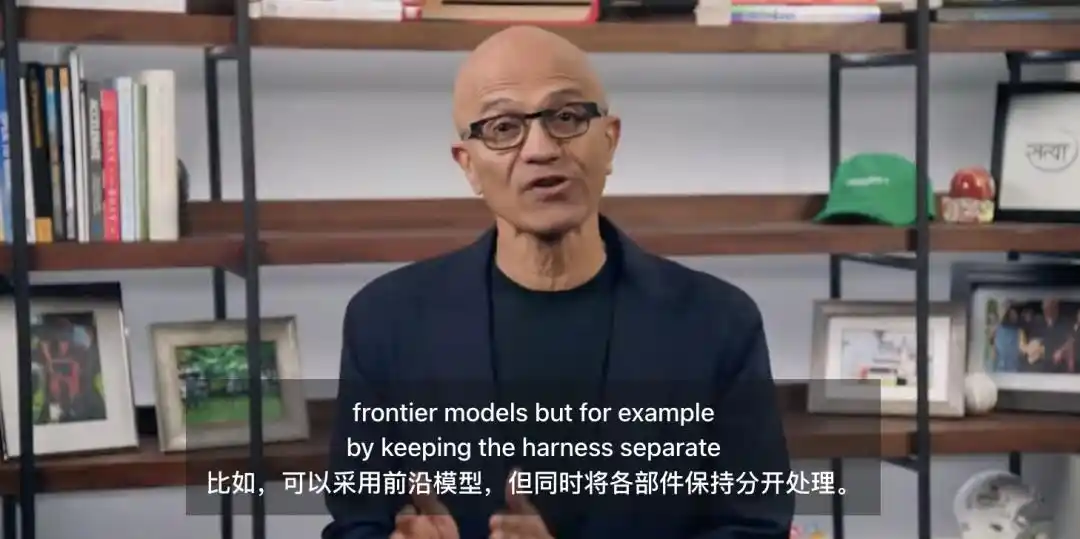
According to Nadella's vision, each time a company uses a model, the metadata generated around that call should be retained by the company itself.
This metadata can include what questions the company asked, what content the model accessed, what results it gave, and what modifications employees made afterwards.
Once these records accumulate, the company can also use them to train its own weights or models, further solidifying the process of using AI into its own capabilities.
Furthermore, the harness should also not be permanently welded to any single model.
The benefit of this is that the model can evolve from being the brain, body, and memory of the entire system into a replaceable inference engine.
When writing code, you can call a model more proficient in programming.
When analyzing long documents, you can switch to a model with stronger long-context capabilities.
When handling sensitive materials, you can use open-source weight models deployed within the company.
Whichever model has better capabilities and lower costs gets the job.
As Nadella puts it, this way, even if "any single model disappears," the company can still control its own destiny.
Actually, Nadella's concern has already surfaced in the startup world.
Previously, OpenAI proposed a special investment offer to startups in the Y Combinator Spring and Summer batches.
Each company could receive up to $2 million worth of OpenAI tokens. In exchange, OpenAI would gain corresponding equity through SAFE.
Investor Jason Calacanis later publicly warned entrepreneurs that accepting these tokens meant OpenAI could potentially see what a startup was actually doing, then replicate the idea and embed similar capabilities into its own free product.
Now, Nadella extends the same warning from startups to all enterprises—
In the past, one of a company's most important assets was the experience accumulated over time by its employees and organization.
In the AI era, this experience will further transform into prompts, context, evaluation data, agent memory, and the records of countless tool calls and manual corrections.
Together, they form a company's new "neural circuitry."
This neural circuitry can operate by calling different models and can also become smarter as models upgrade.
But regardless of how many generations of external models are replaced, it must be the company itself that controls this neural circuitry.
After all, the smartest models can be rented.
A company's "brain" must stay firmly in its own head.
References:
[1]https://www.facebook.com/fareedzakaria/videos/1344036211210716/
[2]https://techcrunch.com/2026/07/27/satya-nadella-says-companies-that-trust-one-ai-for-everything-may-not-survive/
This article is from the WeChat public account "QbitAI", author: Meng Yao