Author: Ma He, Foresight News
On July 15, Canaan Technology announced that it had received a written notification from Nasdaq, granting an additional 180-day grace period, extending the deadline to January 11, 2027. Previously, its ADS stock price had fallen below $1 for 30 consecutive trading days, triggering Nasdaq's compliance alert for the minimum bid price requirement.
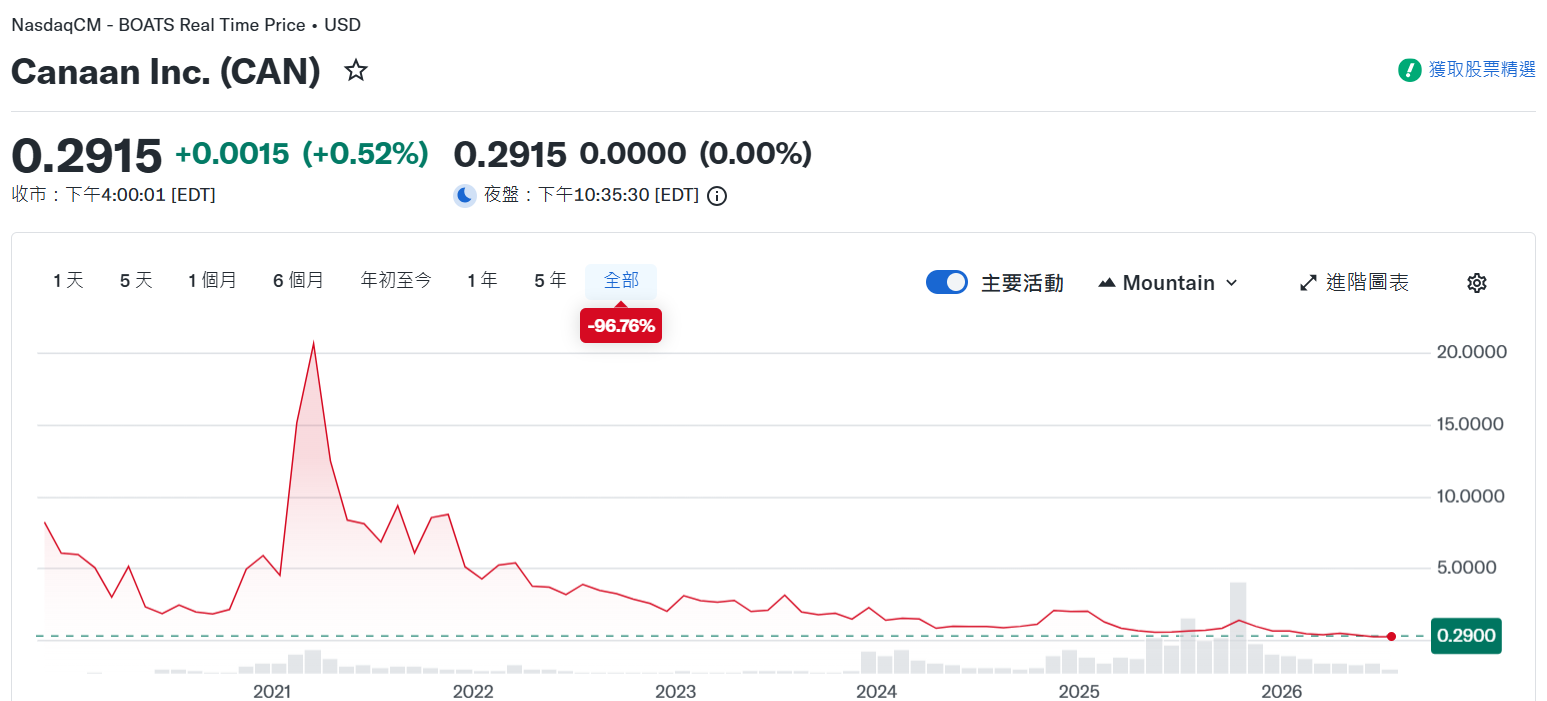
The market reaction was muted. By the close, Canaan Technology's stock was priced at $0.29, with a total market capitalization of approximately $217 million, a decline of over 90% from its peak market value following its IPO in November 2019. This company, once crowned as the "world's first blockchain stock," now stands on the edge of a delisting cliff.
The 180-Day Countdown to Delisting
Canaan Technology's tug-of-war with Nasdaq's compliance department began in May 2025. At that time, the company first received a delisting warning due to its stock price persistently staying below $1, and it temporarily resolved the crisis by riding a rebound in Bitcoin's price. However, the respite was short-lived. On January 14, 2026, Nasdaq issued another notification: Canaan's ADS closing price had been below $1 for 30 consecutive trading days. The company was required to regain compliance by July 13, meaning its closing price needed to reach or exceed $1 for 10 consecutive trading days.
July 13 arrived—the expiration of the initial grace period. Canaan Technology failed to meet the requirement. On July 1, the company urgently moved its listing from the Nasdaq Global Market to the less stringent Nasdaq Capital Market and submitted an application for an additional 180 days.
On July 15, the application was approved, setting a new survival deadline for January 11, 2027.
According to Nasdaq rules, if compliance is not restored by that time, Canaan Technology could face the final fate of delisting. The company has stated that if necessary, it will consider implementing a reverse stock split to boost the share price, although this is often viewed by the market as a sign of weakness.
2026 Q1 Financial Report: Total Revenue Down 24.3%, Net Loss of $88.7 Million
The low stock price of Canaan Technology is not without reason. Its latest financial report reveals the company is in a state of severe financial hemorrhage.
On May 19, 2026, Canaan Technology released its unaudited first-quarter financial results: total revenue was $62.7 million, a year-over-year decrease of 24.3% and a sharp quarter-over-quarter decline of 68%; the net loss was $88.7 million, widening further compared to the same period last year ($86.4 million). The company recorded a gross loss of $22.9 million, which included approximately $25 million in non-cash inventory impairment charges—indicating that Canaan had to massively write down the value of its miner inventory, reflecting a sharp contraction in market demand.
Even more severe is the company's revenue guidance for the second quarter, projected to be only $35 million to $45 million, suggesting continued pressure on performance in the near term. As of March 31, 2026, the company's cash balance was $43.5 million, significantly reduced from $80.8 million at the end of 2025; however, the company recovered approximately $42 million in customer receivables in April, providing some relief to liquidity.
Notably, despite losses in its main business, Canaan Technology's cryptocurrency reserves hit a record high: at the end of the first quarter, the company held 1,807.60 Bitcoin (valued at $142 million). These digital assets provide some hedge on the balance sheet but also tie its performance tightly to cryptocurrency price volatility.
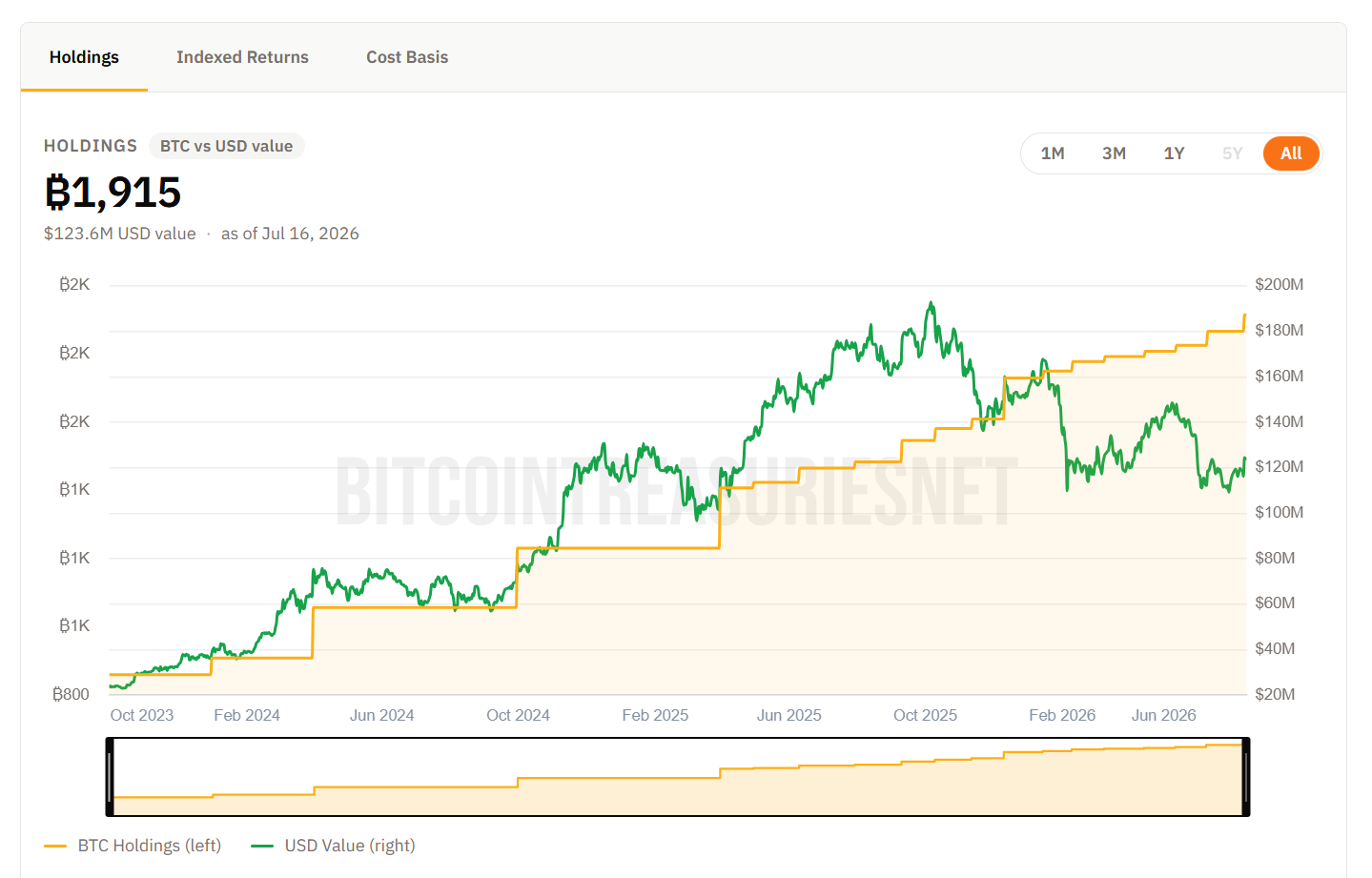
According to the latest data, Canaan Technology's Bitcoin reserves have increased to 1,915 coins, but their total value has fallen to $120 million.
AI Chip Dream Shattered and the "Selling Shovels" Dilemma
Part of Canaan Technology's predicament stems from a costly strategic miscalculation.
On June 24, 2025, the company announced the termination of its non-core AI chip business, fully returning its focus to Bitcoin mining machines and proprietary mining operations. Its years-long exploration of a "second curve" ended in failure. According to public information, Canaan Technology generated only about $900,000 in edge computing product revenue in fiscal year 2024, while the operational expenses for this related business were approximately $21.42 million, accounting for 15% of the company's total annual operating expenses. Under the pressure of a $249.8 million net loss in fiscal year 2024, this "money-burning, non-revenue-generating" business was decisively cut.
However, returning to its core business has not made things much easier for Canaan Technology. The mining machine industry is facing unprecedented competitive pressure. Compared to competitors like Bitmain, Canaan's market share continues to be squeezed. In the second quarter of 2025, the company's total sold computing power was 6.4 million TH/s, a mere 3% year-over-year increase; by the first quarter of 2026, product revenue had plummeted to $42.9 million, a cliff-like drop from $164.9 million in the fourth quarter of 2024.

Canaan Technology Founder, Zhang Nangeng
The nature of mining machine manufacturers is "selling shovels"—their fate is inextricably linked to the Bitcoin cycle. When Bitcoin prices are high and mining rewards are substantial, miners are willing to invest in capital expenditures; once prices slump and competition for network hash rate intensifies, demand for mining machines cools rapidly. Since 2025, despite some periods of strong Bitcoin price performance, the mining industry as a whole has entered a low-margin revenue stage in the "post-halving" era, severely impacting Canaan Technology's traditional business model.
Facing the dual pressures of potential delisting and ongoing losses, Canaan Technology's management is attempting to transform from a pure hardware seller into a "computing power infrastructure service provider," seeking survival through vertical integration and energy sector布局 (layout/positioning).
Proprietary mining has become a key focus. As of the end of the first quarter of 2026, Canaan Technology's total computing power in 10 joint mining projects globally reached approximately 11 EH/s, a year-over-year increase of 66% and a quarter-over-quarter increase of 10.7%. The company acquired a 49% stake in the Texas ABC Projects from Cipher Mining. Additionally, the company initiated a 3 MW pilot mining project in Canada, exploring the use of miner waste heat for greenhouse agriculture; and signed a 4.5 MW contract with a Japanese power engineering firm to participate in grid load regulation.
On the capital front, in November 2025, Canaan Technology secured a total of $72 million in strategic investment from institutions including BH Digital and Galaxy Digital, intended to strengthen the balance sheet and expand infrastructure. In December of the same year, the company's board approved a $30 million share repurchase plan in an attempt to signal confidence to the market.
However, its stock price trajectory shows that the market has not bought into this narrative.
Summary
The predicament of Canaan Technology is a microcosm of the broader crypto mining industry winter.
Since 2025, the global capital market narrative towards the crypto industry has shifted significantly. With the explosive demand for artificial intelligence computing power, a substantial amount of capital originally directed towards mining machines and mining has pivoted to AI data centers and high-performance computing (HPC) infrastructure. Miners have begun migrating computing power to AI projects, directly compressing the demand space for Bitcoin mining machines.
A deeper challenge lies in the sustainability of the business model. As an ASIC chip design company, Canaan Technology needs continuous investment in R&D to maintain product competitiveness.
From a broader perspective, Canaan Technology is undergoing a brutal baptism of deflation. When it went public in 2019, the company enjoyed high valuations based on the concept of being the first blockchain stock; today, the market no longer pays for concepts but demands tangible cash flow and profitability.
Before the arrival of Bitcoin's next bull market cycle, profitability for mining companies will remain under pressure. Canaan Technology must prove within the next 6 months that it possesses the capability to navigate through this cycle.