Why Bitcoin miners are holding 1.19M BTC despite 10% mining stock losses

ambcrypto发布于2026-07-13更新于2026-07-13

文章摘要

Bitcoin miners are continuing to accumulate and hold their BTC reserves, which have reached approximately 1.1938 million, despite a challenging market environment. Bitcoin has struggled to reclaim the $64,000 price level, and mining stocks have seen significant losses, with an aggregate 10% decline over the past month. Key metrics, however, indicate miner confidence. The Bitcoin Miners’ Position Index (MPI) reads -1.1, signaling miners are holding rather than selling, and the Miner Supply Ratio has been rising since early July. While miners control over 5% of Bitcoin's total supply—meaning any large-scale selling could pressure prices—their current accumulation is providing a supportive dynamic for the asset's price.

Bitcoin [BTC] has spent days consolidating at the time of writing and was on the edge of a decisive move. The asset has failed to reclaim the $64K level for a third consecutive time, and the momentum behind each attempt has weakened.

Bitcoin will need far stronger momentum to force a rally, and several factors will decide whether that happens. Among them, the role of miners cannot be dismissed, since their actions tend to shape market direction.

Bitcoin mining stocks stay under water

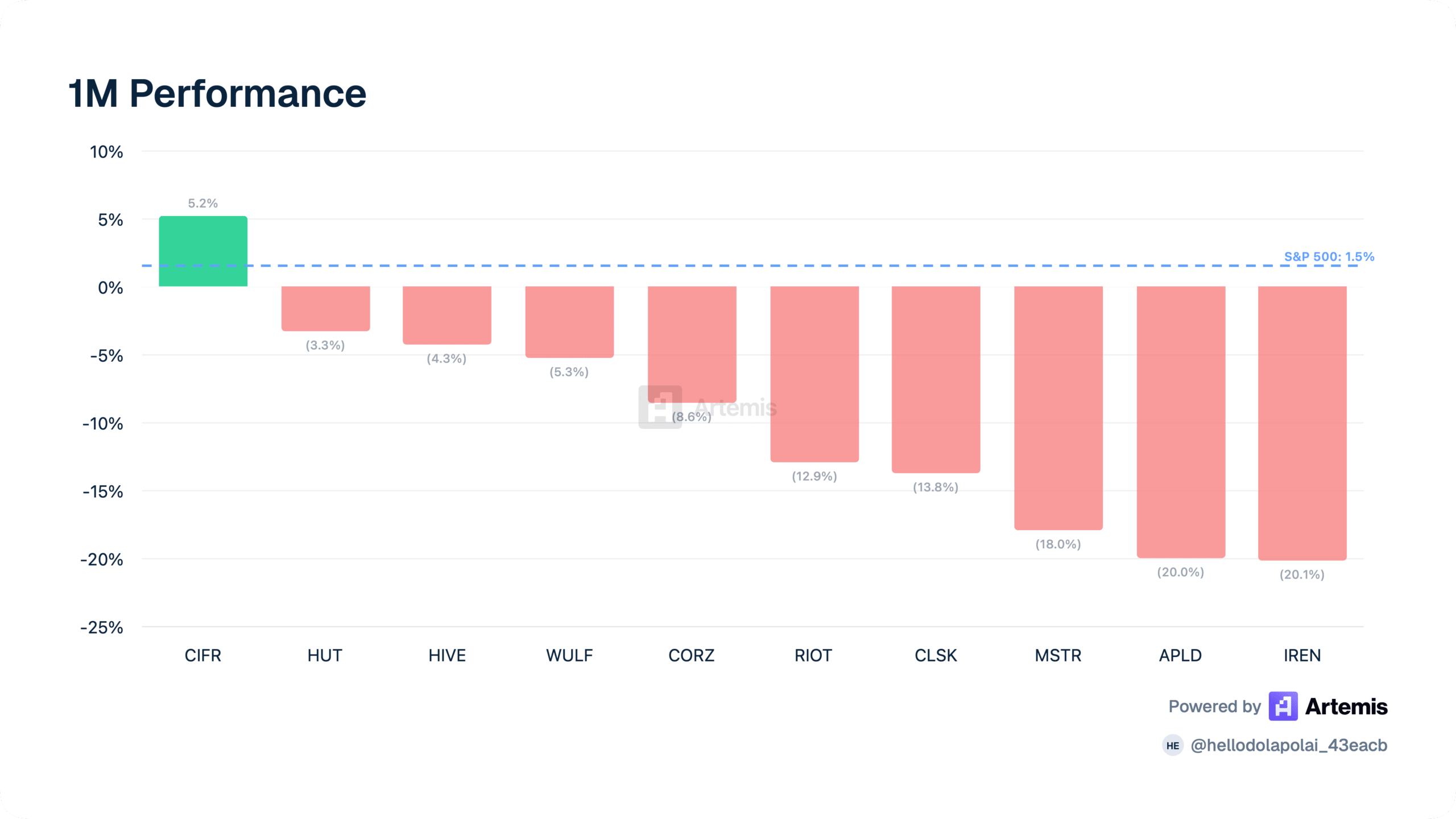
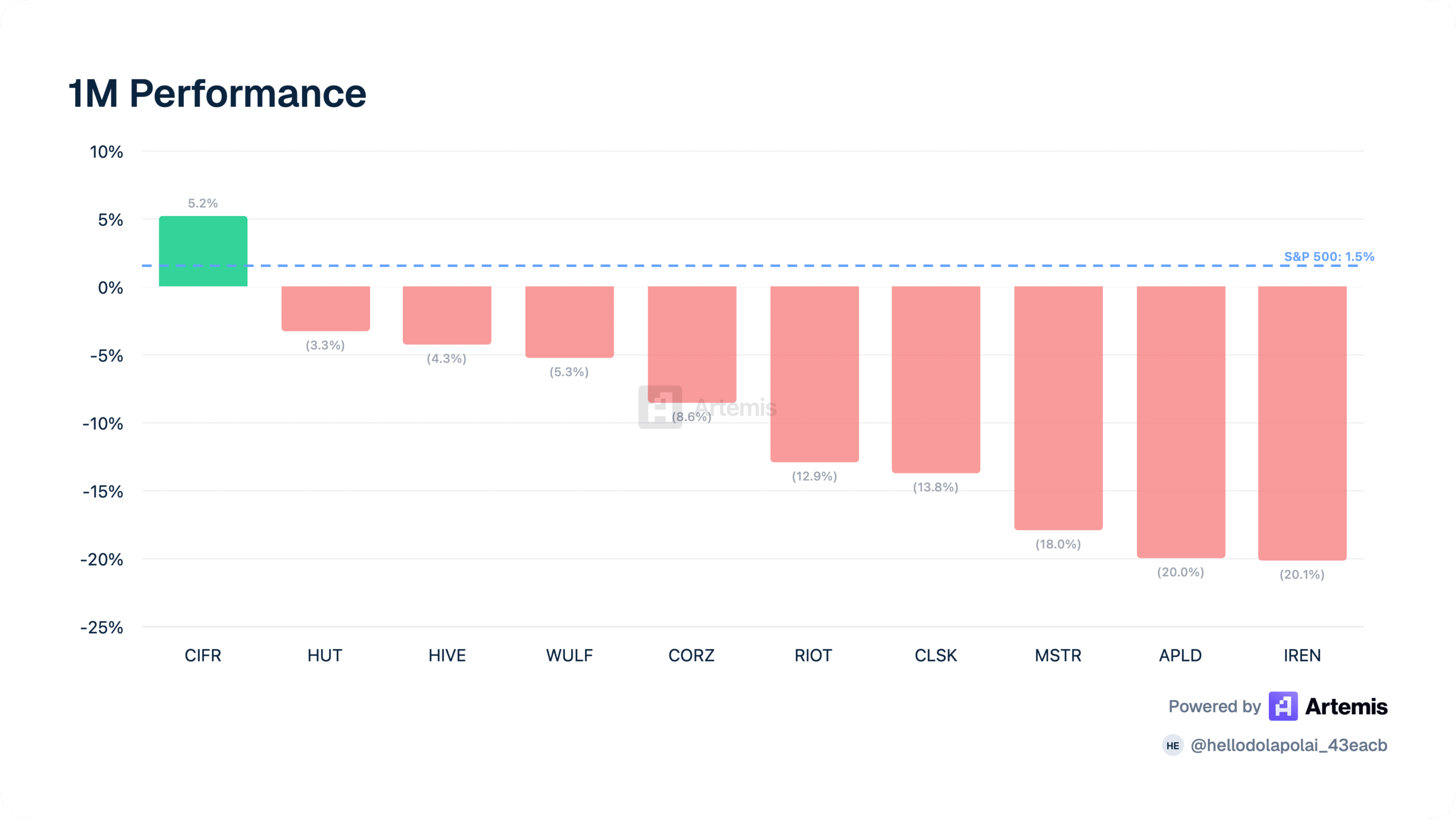
Bitcoin miners, responsible for securing the network, have traded underwater for weeks. Notably, over the past month alone, the Artemis Theme Tracker recorded a 10% decline across these Bitcoin mining stocks.
Source: Artemis

The tracker follows eleven Bitcoin mining stocks currently valued at $102.9 billion. Iris Energy [IREN] and Applied Digital [APLD] have absorbed the steepest losses over the past month, down 20.1% and 20%, respectively, while Hut 8 Mining and Hive Digital Technologies have slipped 3.3% and 4.3%.

Cipher Mining [CIFR] stood as the only name in the category to hold net positive, rising 5.2% over the same period and outperforming the S&P 500, which gained 1.5% across the month.

The question is whether miners will offload their BTC, particularly as mining costs climb; paired with Bitcoin’s underperformance, that pressure could build further.

What will Bitcoin miners do

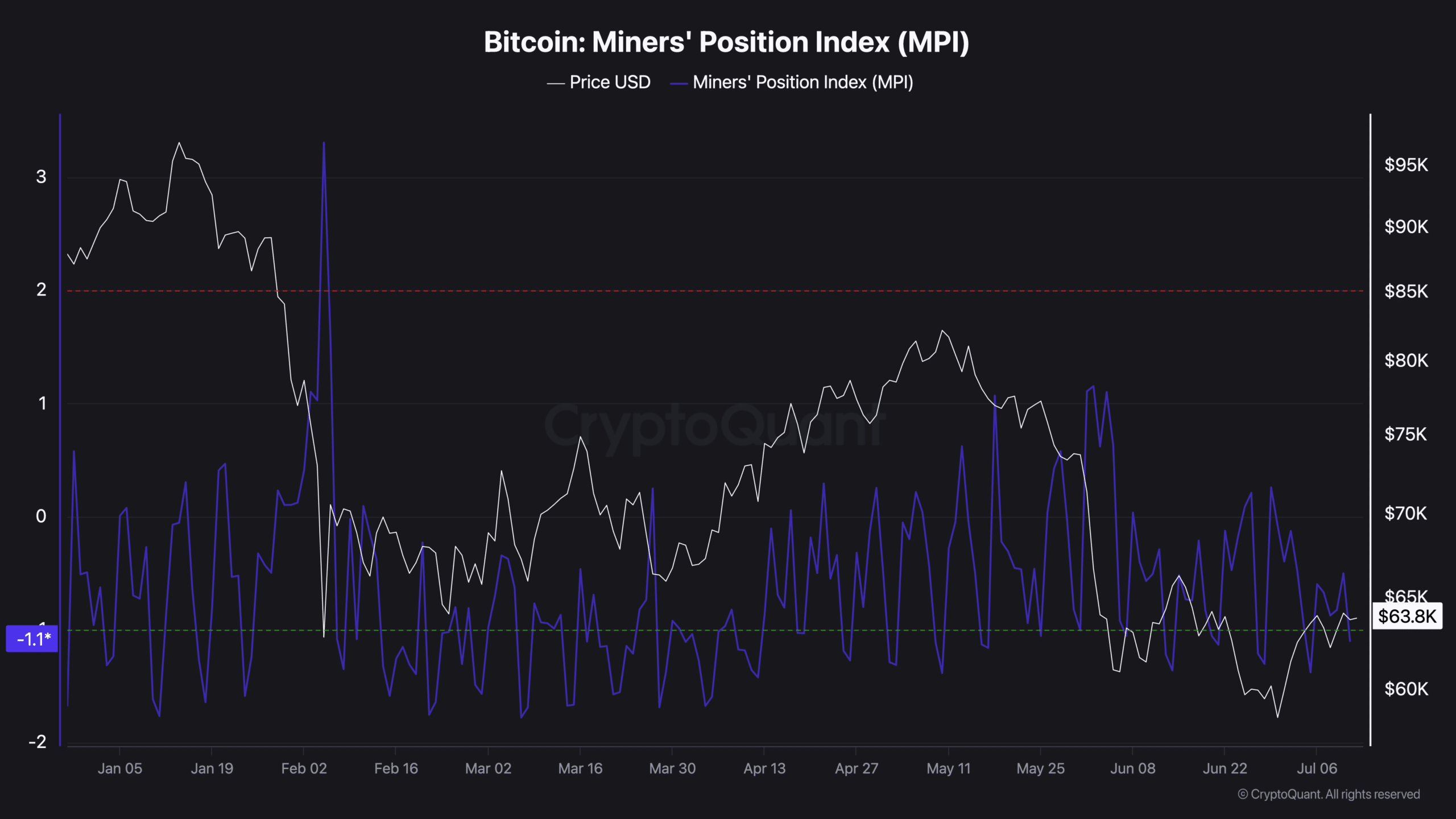
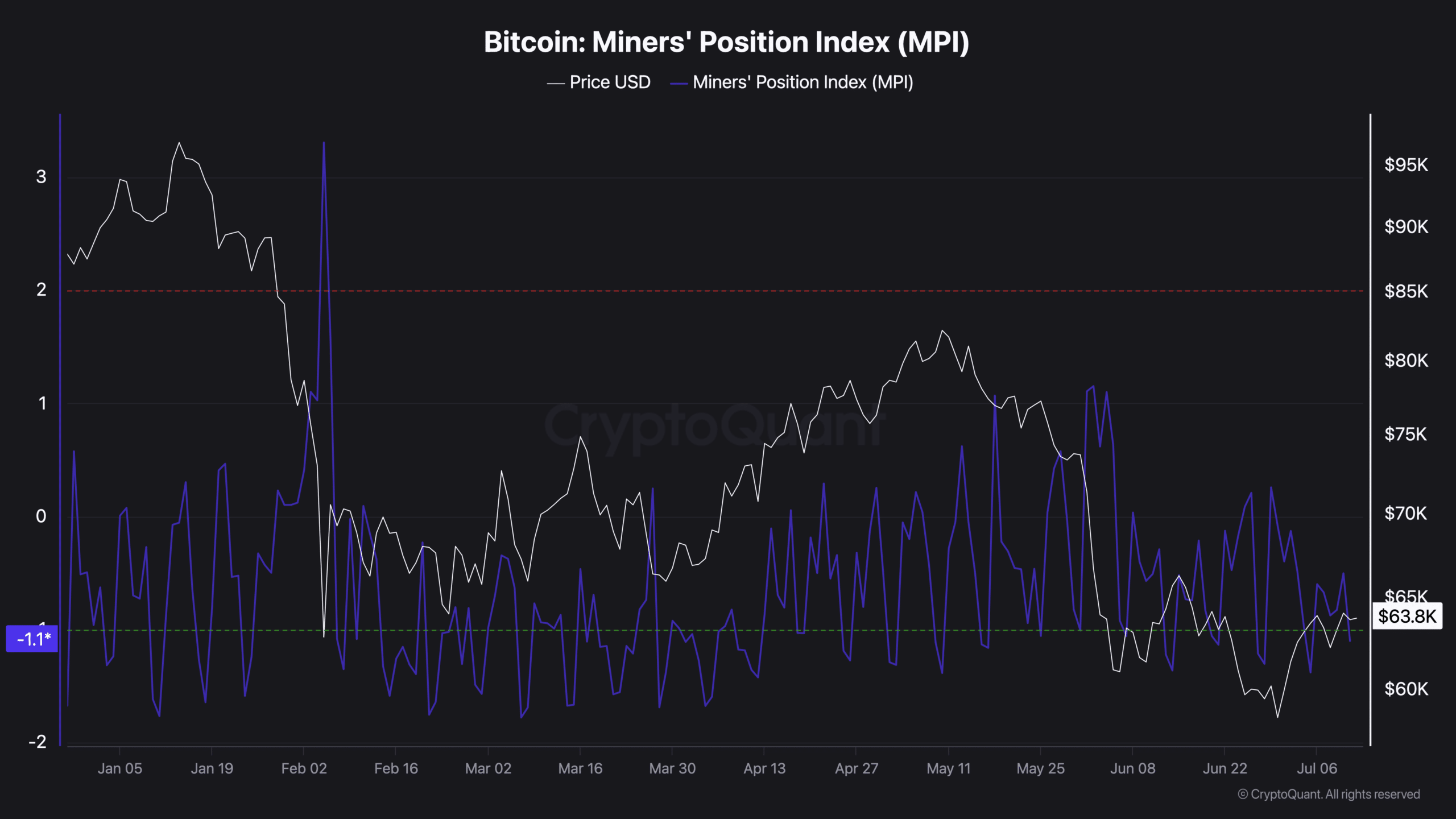
Miners have kept their Bitcoin positions steady despite the growing threat of selling in the market. At press time, the Bitcoin Miners’ Position Index (MPI) reflected near‐term confidence with a reading of -1.1, with miners continuing to accumulate.

The metric measures the ratio of total miner outflows in USD to their one-year moving average, and a reading below that average typically signals that miners are holding their assets.
Source: CryptoQuant

The Miner Supply Ratio, which tracks how much of Bitcoin’s supply miners hold, has likewise been climbing, an overall sign of accumulation.

The climb began on the 8th of July and has continued since, with the supply ratio reaching 0.05951 at press time. A sustained rise would reinforce a supportive dynamic for Bitcoin, provided miners keep their assets off the market.

Miners hold their reserves steady

Miners remain central to Bitcoin’s price performance, as their decision to sell or hold can steer direction.

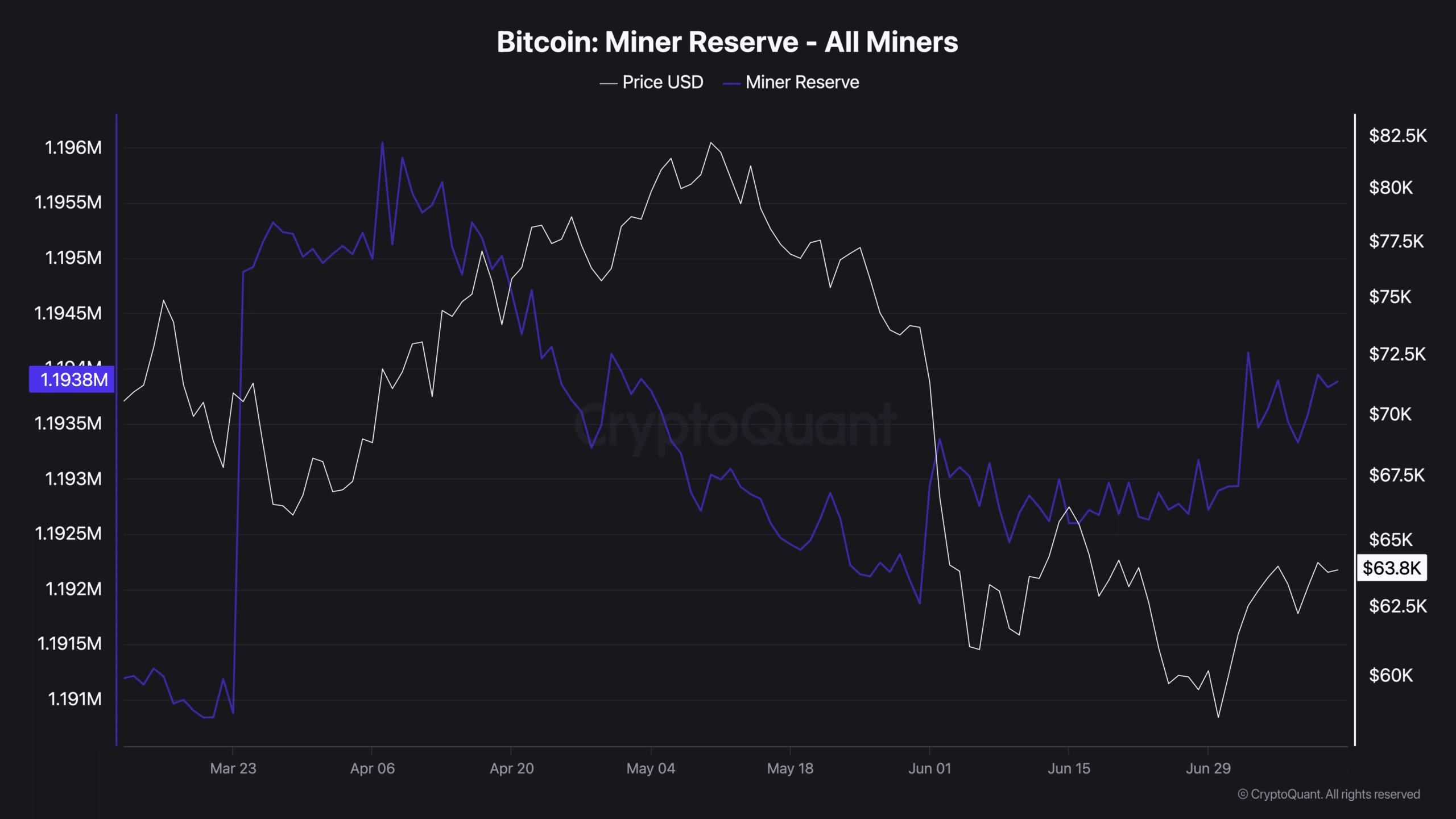
The group controls roughly 1.1933 million Bitcoin, just over 5% of the total supply in the market, and any move to sell could weigh on the asset and drag it lower.
Source: CryptoQuant

Currently, though, this group is doing the opposite despite the decline in Bitcoin’s price over the past weeks. Their holdings have edged up to 1.1938 million, one of the highest levels since early May.


Final Summary

  • Bitcoin miners are accumulating rather than selling, with holdings edging up to 1.1938 million BTC, even as mining stocks trade under water.
  • Bitcoin has failed to reclaim $64,000 for a third straight time, and with the Miners’ Position Index at -1.1, miner conviction remains one of the few supports underpinning the asset.


热门币种推荐

相关问答

QWhat is the current trend in Bitcoin miners' holdings, and how much BTC do they collectively control?

ABitcoin miners are accumulating and holding their assets rather than selling. Their collective holdings have edged up to approximately 1.1938 million BTC, which is just over 5% of the total Bitcoin supply and one of the highest levels since early May.

QWhat does the Bitcoin Miners' Position Index (MPI) reading of -1.1 indicate?

AA Bitcoin Miners' Position Index (MPI) reading of -1.1, which is below its one-year moving average, typically signals that miners are holding or accumulating their Bitcoin assets rather than selling them, reflecting near-term confidence.

QHow have Bitcoin mining stocks performed recently according to the Artemis Theme Tracker?

AAccording to the Artemis Theme Tracker, Bitcoin mining stocks have declined by 10% over the past month. Iris Energy (IREN) and Applied Digital (APLD) saw the steepest losses at around 20%, while Cipher Mining (CIFR) was the only gainer, up 5.2%.

QWhat is the significance of the rising Miner Supply Ratio mentioned in the article?

AThe rising Miner Supply Ratio, which tracks the percentage of Bitcoin's total supply held by miners, indicates a trend of accumulation. A sustained rise suggests miners are keeping Bitcoin off the market, which can be a supportive dynamic for Bitcoin's price.

QWhat key price level has Bitcoin failed to reclaim, and what does the article suggest is needed for a rally?

ABitcoin has failed to reclaim the $64,000 level for a third consecutive time. The article suggests that a far stronger momentum is needed to force a rally, and the actions of miners (whether they hold or sell) will be a key factor in deciding the market direction.

你可能也喜欢

Strategy的545亿美元比特币豪赌,是否已不再仅仅关乎BTC价格?

多年来,迈克尔·塞勒的比特币策略似乎无懈可击:通过持续融资增持比特币,其价值增长也支撑了股东权益的稀释。然而,随着其持有的比特币达到843,775枚(价值约545亿美元),但平均成本(75,482美元)高于当前市值,成功本身带来了新的挑战。模型可持续性正取代单纯的数量累积,成为焦点。 策略的核心曾是利用市场估值(mNAV)溢价发行股票,再将资金投入比特币。但随着mNAV从高点大幅回落至约1.03倍,这种“飞轮”效应已显著放缓,通过股权融资继续低成本增持比特币变得困难。公司已开始出售少量比特币以支持股息和充实现金储备。 衡量标准随之改变。投资者不再只看持仓规模,更关注关键指标如“每股比特币持有量”和“比特币收益率”是否能持续增长。尽管这些指标在过去表现强劲,但近期已出现下滑。与此同时,公司面临约17.6亿美元的年度股息等固定支出,而其软件业务年收入仅约5亿美元,存在巨大的资金缺口。 与采取低成本日元融资的Metaplanet或更为保守的Semler Scientific等同行相比,Strategy的规模虽大,但其融资模式也最为复杂且负担沉重。分析指出,坚定的资产信念并不等同于为其持续融资的能力。若比特币价格长期疲软导致mNAV持续低迷,Strategy可能不得不更多依赖现金储备或出售比特币来应对财务压力。 总而言之,Strategy的成功已不仅仅取决于比特币价格的上涨,更取决于其能否在波动的市场中构建具有韧性的资本结构,从而维持投资者信心并保障长期增长。

ambcrypto35分钟前

Strategy的545亿美元比特币豪赌,是否已不再仅仅关乎BTC价格?

ambcrypto35分钟前

代币化市场规模达23亿美元——为何效用比TVL更重要

代币化市场市值已达23亿美元——效用比总锁仓价值(TVL)更重要 随着受监管的链上金融超越早期采用阶段,代币化美国基金持续吸引机构资本。机构仍偏爱那些拥有成熟流动性和分销渠道的发行方,这种模式因此形成。在此偏好下,Arbitrum 凭借 Theo 等主要支持,以约12,500个独立持有者钱包领先,Solana 以约8,200个钱包紧随其后。Sui、HyperEVM 和 Base 也贡献了大量持有者。相比之下,尽管以太坊支持多个发行方,但持有者数量仅约2,000,这表明发行方声誉而非单纯的链可用性,是流动性和用户增长的关键驱动力。 代币化股票也在重新定义区块链效用,行业市值达到23亿美元的历史新高。以太坊以7.832亿美元(占总价值的34%)领先,主要扮演托管层角色。BNB Chain 和 Solana 分别以6.798亿美元和5.359亿美元紧随其后。值得注意的是,Solana 处理了约95%–97%的代币化股票交易,表明交易执行正日益与资产托管分离。这反映出机构开始区分托管和交易功能。 这种转变意味着区块链的竞争力评判标准正在发生全行业变化。投资者越来越关注执行质量与真实经济活动,而非仅仅看重TVL。去中心化交易所交易量、交易活动和费用生成已成为衡量网络效用的关键指标,取代了被动的流动性指标。机构投资者继续青睐那些能够以低成本快速结算、同时保持合规代币架构的平台。随着代币化发展,能提供更强资本效率和运营弹性的网络将可能吸引更多流动性,进一步巩固“效用”作为区块链主要竞争优势的地位。

ambcrypto5小时前

代币化市场规模达23亿美元——为何效用比TVL更重要

ambcrypto5小时前

交易

现货

热门文章

加密市场宏观研报:《GENIUS Act》法案取得重大进展,BTC突破历史新高,后市全新展望

2025年5月22日,比特币价格正式突破11万美元大关,创下历史新高。在政策面、宏观经济、资金面与投资者结构共同作用下,一场结构性牛市浪潮正在展开。而此轮上涨背后的核心驱动,是美国《GENIUS稳定币法案》的实质性进展以及多项利好的叠加。本文将从政策端突破、宏观环境转向、链上与ETF资金结构、交易行为演化,以及重点受益赛道五大维度,全面解析此轮BTC再创新高的深层逻辑,并前瞻下半年市场的潜在趋势。

1.8k人学过发布于 2025.05.22更新于 2025.05.22

加密市场宏观研报:《GENIUS Act》法案取得重大进展,BTC突破历史新高,后市全新展望

相关讨论

欢迎来到HTX社区。在这里,您可以了解最新的平台发展动态并获得专业的市场意见。以下是用户对BTC(BTC)币价的意见。

活动图片