Solana: How memecoins are driving the ‘SOL cycle’ narrative in H2

ambcrypto发布于2026-07-06更新于2026-07-06

文章摘要

The article discusses the growing narrative of a "Solana cycle" in the second half of the year, driven by a surge in bullish sentiment around SOL. While a predicted $1,000 price target is seen as a technical stretch, on-chain data supports optimism: the network added over 1.6 million new addresses in two weeks and saw significant SOL withdrawn from exchanges, reducing sell-side pressure. A key driver is Solana's divergence from the broader memecoin market downturn. As the overall memecoin sector weakens, activity on Solana-based memecoins like BONK is rising, with platforms like Pump.fun leading in DEX volume. This sustained, sector-specific demand and network growth bolster the "Solana cycle" thesis, making SOL a key altcoin to watch despite its current price being below $100.

Traders usually name a market cycle after an asset when bullish sentiment reaches an extreme.

Currently, that seems to be happening with Solana [SOL]. Several traders who were bearish on SOL just weeks ago have now flipped bullish. The sudden shift was so noticeable that it even fueled speculation on social media, with some users questioning whether Solana was paying analysts to push a pro-SOL narrative.

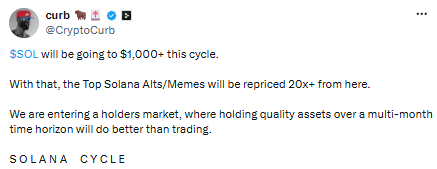
More recently, Ansem added to the buzz by calling SOL undervalued and arguing that it has the potential for a 100x move, citing the network’s ecosystem upgrades and continued growth. The biggest talking point, however, came from another analyst who predicted that SOL could hit $1,000 this cycle, calling the current market phase the “Solana cycle.”
Source: X

Technically, that target looks like a stretch.

Solana is still struggling to reclaim the $100 level, so a move to $1,000 this cycle remains a long shot. That said, the on-chain data is telling a different story. Over the past two weeks, the network has added more than 1.6 million new addresses, a sign that user activity continues to accelerate.

Meanwhile, around $120 million worth of SOL has been withdrawn from exchanges over the past week. Growing network activity combined with steady exchange outflows suggests demand is picking up while more holders are moving their tokens off trading platforms, reducing immediate sell-side pressure.

That said, Solana’s biggest growth catalyst may not be network expansion alone. Instead, the real momentum appears to be coming from sector-specific demand, making the idea of a “Solana cycle” heading into H2 less far-fetched than it first appears.

Memecoin demand strengthens Solana’s outlook

The memecoin market collapse is becoming a key driver of the 2026 cycle.

According to CoinMarketCap data, the total memecoin market cap has declined by over $10 billion so far this year and remains in the red, reflecting fading interest in meme-based tokens. Notably, this weakness is also visible in the data, with memecoin dominance falling sharply to 3.7%, its lowest level since February 2024.

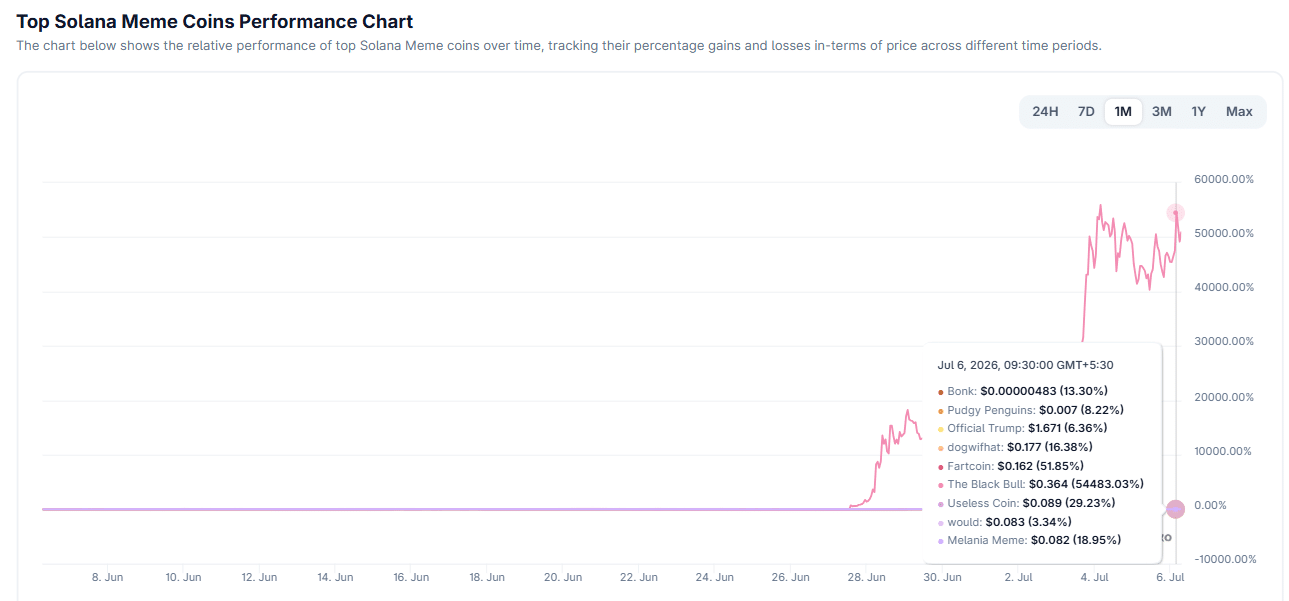
However, Solana is clearly diverging from the broader market trend. As the chart shows, Solana-based memecoins have been in a steady uptrend since June, with Bonk [BONK] leading the move with over 13%+ gains during the period. Meanwhile, Pump.fun has climbed to the top spot by 24-hour DEX volume, surpassing Uniswap, as memecoin trading activity on Solana picks up again.
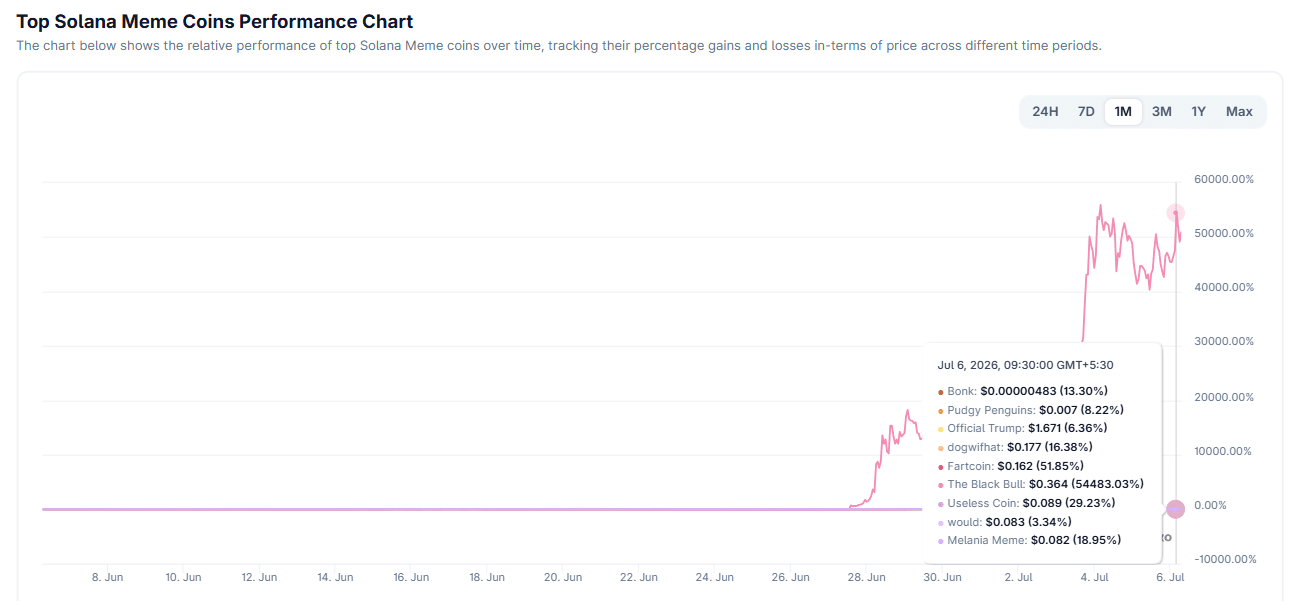
Source: CoinGecko

In simple terms, Solana network usage isn’t just driven by spot demand.

Instead, growth in new addresses has lined up with strong memecoin momentum on the network, showing that interest in Solana-based memes remains firm even as the broader memecoin market cools. That gives SOL a clear edge in the current setup.

So, while SOL may still be far from a $1,000 rally from a technical standpoint, the underlying demand and activity still support the idea of a “Solana cycle.” That keeps SOL a key altcoin to watch heading into H2.



Final Summary

热门币种推荐

相关问答

QWhat is the primary factor driving the so-called 'Solana cycle' narrative according to the article?

AAccording to the article, the primary factor driving the 'Solana cycle' narrative is the sustained demand and momentum for memecoins on the Solana network, which contrasts with the broader cooling of the overall memecoin market.

QWhat are two key on-chain metrics mentioned that suggest growing demand and reduced sell-side pressure for SOL?

ATwo key on-chain metrics mentioned are: 1) The addition of over 1.6 million new Solana network addresses in the past two weeks, indicating accelerating user activity. 2) Approximately $120 million worth of SOL withdrawn from exchanges over the past week, suggesting holders are moving tokens off trading platforms.

QHow does the performance of Solana-based memecoins differ from the overall memecoin market trend?

AWhile the total memecoin market cap has declined significantly, Solana-based memecoins have been in a steady uptrend since June, with projects like Bonk (BONK) leading gains. This shows that interest in Solana-based memes remains firm as the broader sector cools.

QWhat is the analyst Ansem's view on Solana's (SOL) potential, as cited in the article?

AAnsem called SOL undervalued and argued that it has the potential for a 100x move, citing the network's ecosystem upgrades and continued growth.

QDespite the optimistic narrative, why does the article suggest a $1,000 price target for SOL this cycle is technically a stretch?

AThe article suggests a $1,000 price target is technically a stretch because Solana is still struggling to reclaim the $100 price level, making such a massive rally appear as a long shot from a current technical standpoint.

你可能也喜欢

深究 Open USD 合伙人阵容:看谁入局,就能看清资金流向何方

《富布斯》文章分析,Open USD在推出时已汇聚超过150家合作伙伴,其阵容本身比稳定币技术更值得关注。创始伙伴包括Stripe、Coinbase、万事达卡、Visa和贝莱德等巨头,更广泛的名单涵盖纽约梅隆银行、Shopify、谷歌、IBM、Ripple、Aave等来自金融、科技、加密和商业各领域的关键企业。 文章指出,如此广泛的联盟绝非偶然。每个参与方都看到了稳定币成为未来金融基础设施的潜力,并希望抢占位置而非被排除在外。资产管理公司如贝莱德看中管理巨额储备的收益;商户如Shopify希望降低支付成本并从余额中获得收益;银行则出于防御心态,参与以保住存款和结算业务;科技公司如谷歌、IBM着眼于未来机器间可编程支付的需求;加密企业则借此寻求主流化路径。 值得注意的是,许多直接竞争对手(如Visa与万事达卡、Coinbase与Ripple)罕见地加入了同一联盟。这反映出它们共同的恐惧:被排除在稳定币体系之外的代价,已超过与对手合作的不适。卡网络虽然面临稳定币可能削弱其传统刷卡业务的威胁,但仍选择加入,旨在未来继续通过提供结算等服务留在资金流中。 这种由竞争对手构成的治理联盟也可能导致决策缓慢。然而,名单本身传递出清晰信号:稳定币正从单一公司的产品,转变为行业共享的基础设施。这对现有主要稳定币发行方如Circle和Tether构成了直接威胁,因为其潜在客户集体转向了共建的替代方案。缺席者(如Circle、Tether及美国大型零售银行)同样说明了市场格局的分化。最终,Open USD的成功与否尚待观察,但其合作伙伴名单已揭示了资金流向和行业战略重心的演变趋势。

Foresight News36分钟前

深究 Open USD 合伙人阵容:看谁入局,就能看清资金流向何方

Foresight News36分钟前

IOSG:Q-Day倒计时,量子计算会终结加密货币吗?

量子计算常被视为悬在区块链头顶的“末日之剑”。其核心威胁在于Shor算法能高效破解当前主流的公钥密码体系(如椭圆曲线密码),这直接动摇了区块链“账本公开、资产不可逆、私钥自管”的根基。一旦具备实用规模的容错量子计算机(CRQC)问世,攻击者可能从链上已暴露的公钥逆推出私钥,窃取资产。 “Q-Day”(量子计算机能实际破解密码的时点)预计可能在2035-2045年间到来。根据Mosca不等式,考虑到数据保密周期和系统迁移所需时间,抗量子迁移必须提前启动。 应对之道在于后量子密码学(PQC)。美国国家标准技术研究院(NIST)已发布基于格密码的ML-KEM、ML-DSA等核心标准。然而,迁移面临巨大挑战:PQC签名体积庞大(可达现有签名的数十倍),会显著增加链上负担;更关键的是,这需要整个生态(协议、钱包、交易平台等)协同升级,并涉及复杂的社会共识。 对于比特币,风险集中于链上公钥已暴露的遗留UTXO(如早期地址)。迁移路径可能通过软分叉引入新地址格式,但如何处理长期不迁移的“休眠币”将引发“代码即法律”与资产保护之间的价值观冲突。以太坊则正通过提升“密码敏捷性”来规划全栈迁移,包括利用账户抽象缓冲用户端风险,以及在共识层探索能压缩签名数据的方案。 结论是,量子计算不会瞬间终结加密货币,但构成了必须偿还的“安全债务”。真正的瓶颈并非技术,而是生态协调与治理博弈。行业需在仅剩的5-8年“工程舒适窗口”内,完成这场与时间赛跑的全链路升级。市场对加密资产安全模型的重新定价,可能会早于Q-Day本身。

marsbit1小时前

IOSG:Q-Day倒计时,量子计算会终结加密货币吗?

marsbit1小时前

交易

现货

热门文章

相关讨论

欢迎来到HTX社区。在这里,您可以了解最新的平台发展动态并获得专业的市场意见。以下是用户对SOL(SOL)币价的意见。

活动图片