Shiba Inu said it is partnering with Arlo, an AI security and token-analytics startup backed by the Solana Foundation, to bring Arlo’s “intelligence engine” to Shibarium, the project’s Layer-2 network. In an announcement on X, the official Shiba Inu account welcomed Arlo to the ecosystem, adding that the two teams are “teaming up to enhance the security of Shibarium through artificial intelligence.”
Shiba Inu Brings Solana Grant Winner To Shibarium
Arlo framed the collaboration as a retail-safety initiative that will extend its live beta—currently available on Solana and Base—to Shibarium. “ARLO has teamed up with Shiba Inu to launch our AI intelligence engine on Shibarium to bring retail safety to Shibarium,” the project wrote, describing a system that can “analyze 100+ data points for any Shibarium token, including on-chain analysis, whale movements, token audits & safety, market trends, risk signals, & influencer activity.”
The team also reiterated that “STAKE-TO-ACCESS [is] coming soon,” and clarified in a follow-up that Shibarium support is “not yet live” but “will be launching… soon,” while the tool remains in open beta on Solana and Base.
Arlo’s positioning as a Solana Foundation grant recipient is independently corroborated by recent press materials and its website, which highlight the project as “backed by the Solana Foundation” and identify Arlo as an AI token-analysis tool that has received Foundation support. A September press release noted Arlo as “the only AI token analysis tool to receive a Solana Foundation grant,” and the company’s site presents the same backing alongside its Solana contract address.
While neither party published technical documentation alongside the posts, the stated scope suggests Arlo intends to provide a machine-learning overlay for token due diligence on Shibarium—surfacing heuristics around liquidity quality, ownership distribution, trading anomalies, and cross-platform sentiment—areas where retail users frequently struggle to separate legitimate launches from high-risk deployments.
In response to a community question about coverage, Arlo said its “AI system will work on all tokens on Shibarium… including BONE,” the network’s gas token, indicating that the toolset is meant to be chain-wide rather than curated for a subset of assets.
The move comes as the Shibarium team has faced renewed scrutiny over security and validator resilience following the network’s bridge exploit via a flash-loan-enabled attack to the tune of roughly $2.4 million–an incident that amplified community calls for more robust risk monitoring and faster incident response.
For now, the partnership is framed as a phased rollout: open beta on Solana and Base is live, with Shibarium support “coming soon,” and access features tied to staking are on the roadmap.
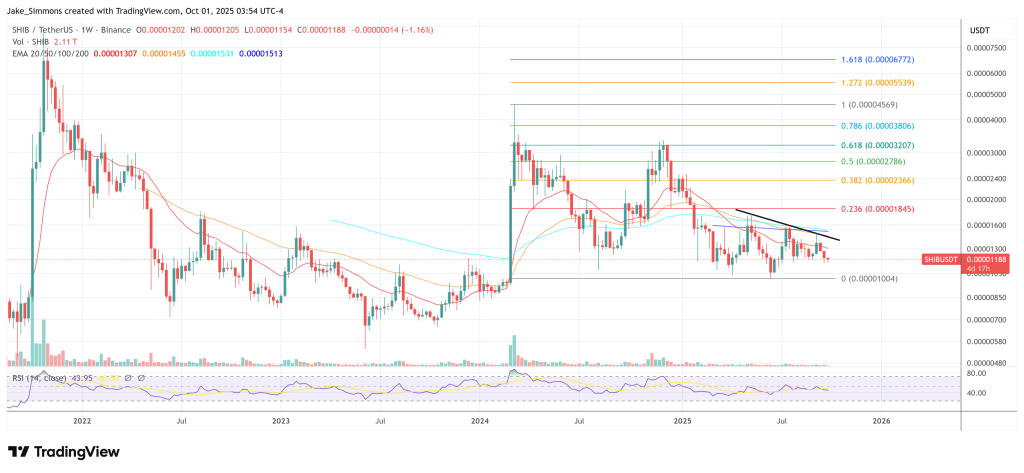
At press time, the Shiba Inu token traded at $0.00001188.

Related Posts