Автор: Ada, Shenchao TechFlow
«Новый гуру фондового рынка» Serenity, популярный на платформе X, недавно поделился системным взглядом на тайваньскую цепочку поставок ИИ. Он назвал 9 тайваньских акций, охватывающих три основных направления: CPO (совместно упакованная оптика), ASIC (специализированные интегральные схемы) и полупроводниковые соединения. CPO он определил как «крупнейшую промышленную тему следующего этапа». Goldman Sachs прогнозирует, что глобальный рынок оптических решений (Optical TAM) вырастет с $15 млрд в 2026 году до $154 млрд в 2028 году, при этом доля CPO увеличится с $164 млн до $91 млрд. Он также четко заявил: в тайваньской цепочке поставок ИИ пузыря нет, реальный риск заключается не в двусторонних отношениях по Тайваньскому проливу, а в капитальных затратах гипермасштабируемых облачных провайдеров.
Обратный отсчет до серийного производства платформы TSMC COUPE в 2026 году: 5 тайваньских акций занимают каждое звено
Жесткой временной привязкой, на которую Serenity опирается в своем суждении о CPO, является запуск серийного производства платформы TSMC COUPE (Compact Universal Photonic Engine) в 2026 году.
Согласно заявлению Хоу Шаньюя, руководителя отдела интеграции передовой упаковки TSMC, на SEMICON Taiwan, 1 апреля, на которое ссылается TrendForce, COUPE основана на технологии SoIC для гетерогенной интеграции электронных и фотонных интегральных схем и в 2026 году, по плану, выходит в серийное производство. Хоу Шаньюй также указал на три основных препятствия для масштабирования CPO: тестирование на уровне пластин, интеграция массива волоконных блоков (FAU) и сборка высокоскоростных оптических корпусов. Пять упомянутых Serenity тайваньских акций CPO соответствуют именно этим трем узким местам и сопутствующей инфраструктуре.
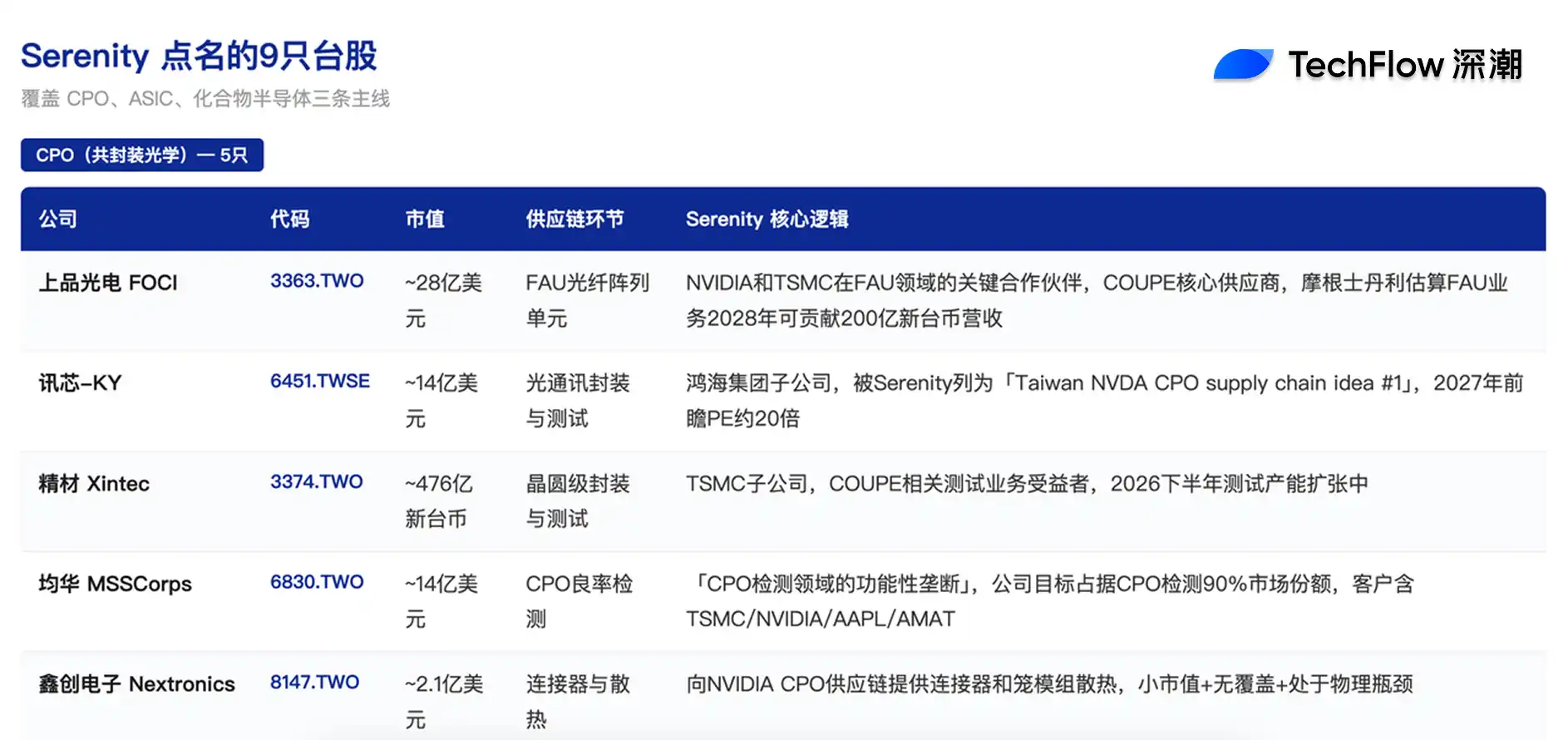
Первая — FOCI (Shangpin Optoelectronics, 3363.TWO) с рыночной капитализацией около $2,8 млрд. FOCI является ключевым партнером NVIDIA и TSMC в области FAU и основным поставщиком в архитектуре COUPE. Serenity на платформе X заявил, что текущая капитализация FOCI около $2,8 млрд «еще не в полной мере отражает ее стратегическое положение в цепочке поставок». Morgan Stanley оценивает, что бизнес FAU FOCI к 2028 году может приносить выручку около 20 млрд новых тайваньских долларов по одной только этой линии, в то время как сейчас она практически равна нулю. Hunterbrook Media и Citrini Research еще в марте, сопоставив четыре патента FOCI, Himax и TSMC, подтвердили «отпечаток пальца» соответствия между тремя компаниями в 22-канальном FAU, что является самым сильным внешним доказательством вхождения FOCI в ядро цепочки поставок COUPE.
Вторая — Shunsin Technology (6451.TWSE) с рыночной капитализацией около $1,4 млрд. Shunsin — дочерняя компания группы Foxconn по оптической связи, упаковке и тестированию. Serenity на платформе X ранее включил Shunsin в список «Taiwan NVDA CPO supply chain idea #1», аргументируя это тем, что «Foxconn является ODM-партнером NVIDIA, что эквивалентно бесплатному листингу Celestial благодаря MRVL». Его личная оценка — форвардный коэффициент P/E Shunsin к 2027 году составляет около 20.
Третья — Xintec (3374.TWO) с рыночной капитализацией около 47,6 млрд новых тайваньских долларов. Xintec — дочерняя компания TSMC по упаковке и тестированию на уровне пластин, председателем которой является CH Chen, основной бизнес — упаковка и тестирование чипов размером с кристалл на уровне пластин. Согласно отчету DIGITIMES от 29 мая 2026 года, Xintec готовится к расширению мощностей для тестового бизнеса во второй половине 2026 года. Serenity в недавнем интервью отнес Xintec к «бенефициарам тестового бизнеса, связанного с COUPE».
Четвертая — MSSCorps (6830.TWO) с рыночной капитализацией около $1,4 млрд. Serenity на платформе X четко заявил о покупке акций MSSCorps и дал сильное суждение: «Это выглядит как функциональная монополия в области инспекции CPO. Рынок может спутать ее с олигополией материалов/анализа отказов MA-tek и iST». Затем он процитировал заявление самой MSSCorps: «Цель компании — занять 90% рынка инспекции CPO». Клиентская база MSSCorps включает TSMC, NVIDIA, AAPL, AMAT и других. Среди трех узких мест CPO, указанных TSMC, «тестирование на уровне пластин» — это именно то звено, которое прочно занимает MSSCorps.
Пятая — Nextronics (8147.TWO) с рыночной капитализацией около $210 млн. Причиной покупки акций Nextronics Serenity назвал поставки «разъемов CPO и модулей терморегулирования (Cage Thermal Modules)» в цепочку поставок CPO NVIDIA. Nextronics — самая маленькая по капитализации из пяти акций CPO, что соответствует обычному профилю выбора акций Serenity: «малая капитализация + отсутствие освещения + находится на физическом узком месте».
Пять тайваньских акций, отсортированные примерно по звеньям цепочки поставок: доступ FAU (FOCI), упаковка и тестирование оптической связи (Shunsin Technology, Xintec), контроль качества/инспекция (MSSCorps), разъемы и охлаждение (Nextronics). Вся цепочка ориентирована на клиентов, в основном сосредоточенных в двух компаниях — NVIDIA и TSMC.
Три тайваньские компании ASIC связаны с чипами собственной разработки трех крупнейших гипермасштабируемых провайдеров
Помимо GPU NVIDIA, продолжающийся рост производства специализированных ASIC, разрабатываемых гипермасштабируемыми облачными провайдерами, такими как AWS Trainium, Google TPU и Microsoft Maia, составляет вторую основную линию в списке Serenity тайваньских акций.
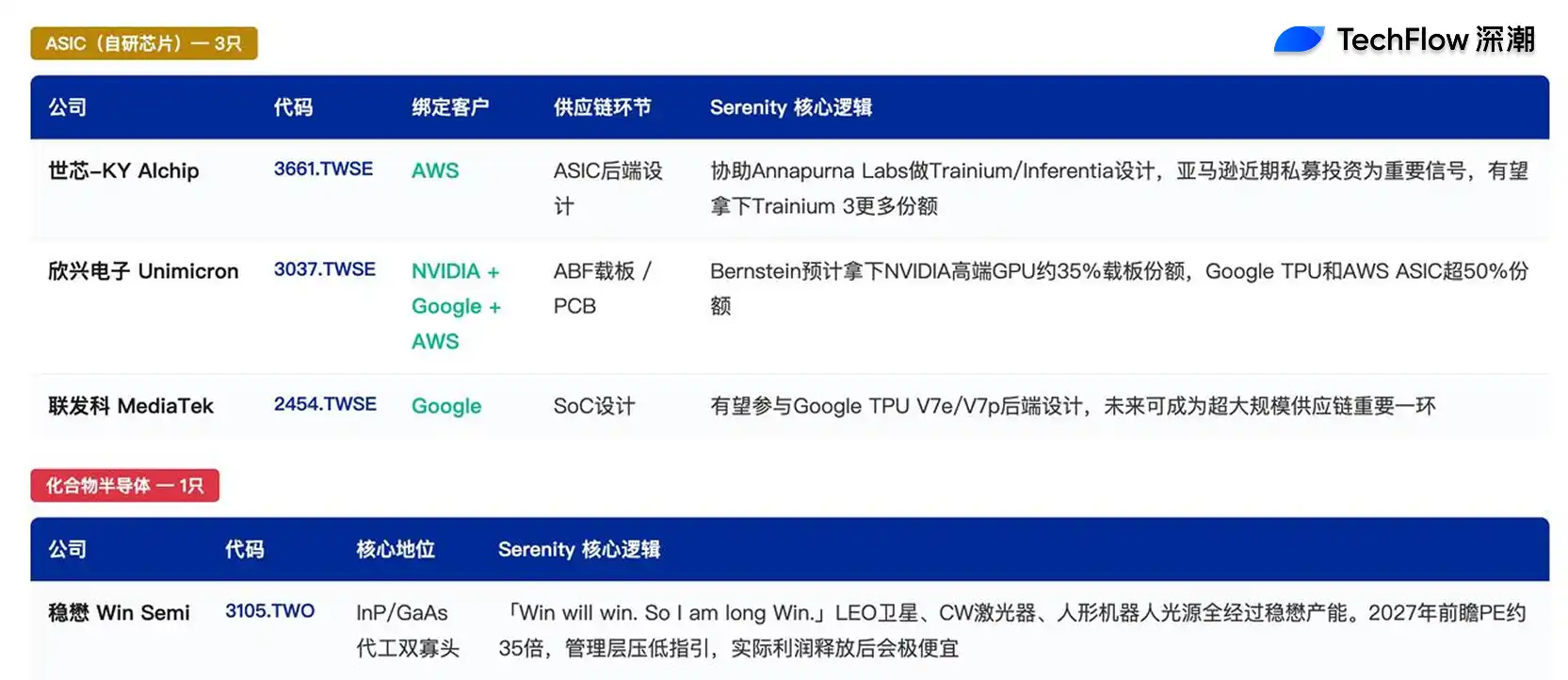
Alchip (3661.TWSE) — наиболее репрезентативная компания в этой линии. Основанная в 2003 году и базирующаяся в Тайбэе, Alchip специализируется на проектировании и производстве передовых КМОП ASIC. Согласно данным цепочки поставок, собранным Global Tech Research, Alchip в основном помогает Annapurna Labs (принадлежит Amazon) в бэкенд-дизайне чипов серий AWS Trainium и Inferentia, текущие проекты включают Trainium 1 и Inferentia 2. Serenity недавно заявил, что Alchip может получить большую долю рынка в проектировании AWS Trainium 3, особенно учитывая, что недавние частные инвестиции Amazon в Alchip рынок интерпретирует как важный сигнал. Сотрудничество Alchip с Ayar Labs в области CPO также представляет собой дальнейшее расширение потенциального рынка.
Unimicron (3037.TWSE) является бенефициаром ASIC с точки зрения подложек ABF и печатных плат. Согласно отчету Bernstein от 4 мая, на который ссылается Gotrade News, Unimicron, как ожидается, получит около 35% доли на рынке подложек ABF для высокопроизводительных GPU NVIDIA и более 50% доли для ASIC, таких как Google TPU и AWS Trainium. Bernstein назвал TSMC и Unimicron «двумя наиболее репрезентативными тайваньскими акциями в цикле капитальных затрат на ИИ на азиатском рынке». Выручка Unimicron в первом квартале 2026 года выросла на 8% по сравнению с предыдущим кварталом, валовая прибыль составила 18%.
Слухи о сотрудничестве MediaTek (2454.TWSE) с Google TPU уже широко распространены на рынке. Согласно анализу Global Tech Research, MediaTek в будущем может участвовать в поддержке бэкенд-дизайна Google TPU V7e/V7p. Serenity недавно заявил, что хотя эта положительная информация уже частично отражена в цене акций, он считает, что рост бизнеса ASIC MediaTek в будущем все еще заслуживает постоянного внимания. В ближайшие несколько лет MediaTek может стать чрезвычайно важным звеном в гипермасштабируемой цепочке поставок крупных американских облачных провайдеров.
Три тайваньские компании, соответственно, с трех разных аспектов — услуги по проектированию, упаковка на подложках, проектирование SoC — связаны с ключевыми звеньями чипов собственной разработки гипермасштабируемых облачных провайдеров.
Win Semiconductor: недооцененная дуополия InP/GaAs
Самым твердым и прямо выраженным владением Serenity на тайваньском рынке является Win Semiconductor (3105.TWO).
Win Semiconductor — одна из ведущих в мире фабрик по производству полупроводниковых соединений, наряду с GlobalFoundries образуя дуополию в области производства InP (фосфид индия) и GaAs (арсенид галлия). Традиционное восприятие рынком Win связано с ее отношениями в цепочке поставок SpaceX Starlink и Broadcom (AVGO).
Недавнее заявление Serenity на платформе X: «Win will win. So I am long Win.». Ключевое суждение Serenity заключается в том, что Win является одной из двух компаний-дуополистов в производстве InP и GaAs, и в будущем мощности производства Win будут использоваться для низкоорбитальных спутников SpaceX Starlink, непрерывных лазеров (CW laser), а также источников света для зрения и радаров человекоподобных роботов.
Его оценка стоимости: форвардный коэффициент P/E Win к 2027 году составляет около 35. Хотя это может показаться недешевым, он считает, что «руководство намеренно занижает прогнозы по прибыли, и после фактического высвобождения прибыли в будущем P/E будет выглядеть крайне дешево». Бизнес Win по оказанию помощи компаниям в области кремниевой фотоники в расширении возможностей массового производства лазеров — это будущий ключевой двигатель роста в глазах Serenity, и эта часть еще не была полностью оценена рынком.
InP — это звено, в котором Serenity ранее купил акции «в стиле Ормузского пролива» на американском рынке — AXTI. Он сравнил подложки InP с «нефтью в эпоху оптической связи ИИ». Позиция Win на тайваньском рынке — это звено производственной цепочки вниз по течению.
Звенья, не упомянутые Serenity, но необходимые для полной картины: сырье, энергетика, жидкостное охлаждение
9 тайваньских акций, названных Serenity, сосредоточены в среднем звене CPO и ASIC. Для полной картины тайваньской цепочки поставок ИИ секторы сырья (верхнее звено) и энергетики/жидкостного охлаждения (нижнее звено) также不可或缺. Serenity не затрагивал эти темы напрямую в своих публичных высказываниях, но для полного понимания тайваньской цепочки поставок ИИ их нельзя упускать.
На верхнем уровне сырья сама TSMC (TSMC, 2330.TWSE) является центральным узлом всей картины. Согласно прогнозам Bernstein, прибыль TSMC в 2026 году вырастет примерно на 40%, среднегодовой темп роста в 2027-2028 годах составит около 20%; компания установила ориентир капитальных затрат на 2026 год на высоком уровне в $52-56 млрд. В восходящей цепочке передачи капитальных затрат на ИИ TSMC является и усилителем, и регулятором; направление ее капитальных затрат напрямую определяет темпы заказов для всех тайваньских компаний в области упаковки и тестирования, подложек, инспекции, разъемов и т.д.
В сфере энергетики и жидкостного охлаждения тайваньские центры обработки данных ИИ сталкиваются с реальным давлением на поставки электроэнергии. Согласно заявлению И Сюйцюаня, начальника отдела системного планирования Taipower, на которое ссылается Reccessary в декабре 2025 года, ключевое сетевое оборудование по всему миру, такое как трансформаторы и газовые турбины, находится в дефиците, сроки поставки газовых турбин увеличились с 2-3 лет до 7-8 лет, цены удвоились, и «скорость строительства сетей просто не успевает». Это узкое место на стороне предложения создало структурные возможности для трех ключевых тайваньских акций.
Во-первых, Delta Electronics (2308.TWSE) как лидер в области управления питанием и интеграции решений жидкостного охлаждения уже проникла как в «белую» (IT-вычисления), так и в «серую» (электропитание и охлаждение) зоны центров обработки данных ИИ. Во-вторых, AVC (3017.TWSE) является мировым лидером в области решений для теплоотвода, охватывающим все технологии жидкостного охлаждения — от пластинчатых до иммерсионных систем. И, наконец, Auras Technology (3324.TWSE) специализируется на производстве модулей жидкостного охлаждения и является поставщиком первого уровня для NVIDIA. Согласно прогнозам Goldman Sachs, общий мировой рынок охлаждения серверов в 2025-2027 годах вырастет на 111%, 77% и 26% соответственно, достигнув $17,6 млрд в 2027 году. Эта кривая роста синхронизирована с кривой роста CPO в рамках цикла капитальных затрат на ИИ.
Настоящий риск заключается не в двусторонних отношениях, а в капитальных затратах гипермасштабируемых облачных провайдеров
Оценка Serenity общего риска для тайваньской цепочки поставок ИИ расходится с основным рыночным нарративом.
Он недавно заявил, что в текущей тайваньской цепочке поставок ИИ пузыря не существует, оценка многих тайваньских компаний по-прежнему низка по сравнению с аналогичными компаниями на американском Nasdaq; риски геополитики чрезмерно преувеличены рынком, поскольку Тайвань уже является неотъемлемой частью глобальной технологической цепочки поставок, и «ни одна страна не выберет разрушение цепочки поставок в стиле игры с нулевой суммой». В долгосрочной перспективе (7-10 лет) США, действительно, строят собственную цепочку поставок через такие компании, как Intel, но в ближайшие 2-3 года не существует каких-либо особенно серьезных системных рисков.
Он указал, что настоящий риск, за которым стоит следить, — это капитальные затраты гипермасштабируемых облачных провайдеров. Продолжающееся расширение инвестиций крупных облачных компаний, таких как Microsoft, Amazon, Google, Meta, Oracle, является основной движущей силой нынешнего процветания индустрии ИИ. «Пока эти компании продолжают увеличивать инвестиции в инфраструктуру ИИ, тайваньская цепочка поставок будет продолжать получать выгоду; но если гипермасштабируемые облачные провайдеры начнут сокращать капитальные затраты, может произойти значительная корректировка оценки тайваньской цепочки поставок ИИ».
Начали появляться первые признаки «стресс-теста» этого суждения.
Маржинальные изменения, появившиеся на рынке, заслуживают того, чтобы быть отслеживаемыми. 3 июня Broadcom объявила результаты за второй квартал 2026 финансового года, ориентир по выручке от чипов ИИ на третий квартал FY2026 составил $16 млрд, что примерно на $1,2 млрд ниже консенсус-прогноза аналитиков LSEG в $17,2 млрд; генеральный директор Broadcom Хок Тан на телеконференции по результатам также подтвердил годовой ориентир по выручке от полупроводников ИИ в $56 млрд, не повысив его. Рынок интерпретировал «отсутствие повышения» негативно. 5 июня индекс Philadelphia Semiconductor Index (SOX) упал на 10,26% за один день, что стало самым большим однодневным падением с марта 2020 года; в тот же день южнокорейский индекс KOSPI упал на 5,54%, а 8 июня открытие KOSPI с падением на 8,37% вызвало приостановку торгов.
Однако ключевой ориентир для наблюдения на данный момент — капитальные затраты TSMC на 2026 год, установленные на высоком уровне в $52-56 млрд, еще не подверглись существенному сокращению. Ориентиры по капитальным затратам самих гипермасштабируемых облачных провайдеров также все еще находятся в восходящем тренде. Будет ли запущен «настоящий риск», о котором говорит Serenity, зависит от ориентиров по капитальным затратам, которые Microsoft, Amazon, Google, Meta, Oracle объявят в отчетах за второй и третий кварталы 2026 года. Это ключевая предпосылка для списка тайваньских акций Serenity и самый важный маржинальный фактор для отслеживания в следующем квартале.





















