# Сопутствующие статьи по теме Wall Street

Новостной центр HTX предлагает последние статьи и углубленный анализ по "Wall Street", охватывающие рыночные тренды, новости проектов, развитие технологий и политику регулирования в криптоиндустрии.

The Year Token Economics Were Debunked

The year 2025 is portrayed as a turning point where the fundamental economic model of crypto tokens was invalidated. The passage of regulatory frameworks like the CLARITY Act in the US forced projects to choose between being classified as a security (under the SEC) or a commodity (under the CFTC), with most falling into the former category. This led to a crisis of "coin rights" (币权). A key trend emerged: traditional financial institutions began acquiring crypto companies, but only for their technology and talent, explicitly excluding the associated tokens from deals. Examples include Circle's acquisition of Interop Labs (without the AXL token) and similar moves by Kraken and Coinbase. This shattered the investor narrative that buying a project's token was equivalent to owning equity, as tokens held no legal claim to a company's assets or profits. Simultaneously, major DeFi protocols like Aave and Uniswap faced internal conflicts. Aave's developers were accused of diverting front-end fees from the community treasury, while Uniswap had to implement complex legal structures to distribute fees to token holders without attracting SEC scrutiny. This highlighted a core dilemma: providing token dividends risked being classified as a security, while avoiding regulation meant tokens remained valueless. The article concludes that the crypto industry is being assimilated into traditional finance, but this "fusion" means value is flowing toward legally recognized entities—companies, equity, and licenses—rather than to token holders. Tokens, like American Depositary Shares (ADS), may remain as tradable rights, but they lack the legal protections and claims of traditional equity, marking the end of an era for the original token economy promise.

marsbit01/21 06:06

The Year Token Economics Were Debunked

marsbit01/21 06:06

Hiring at $200K Annual Salary: Wall Street Advances into Prediction Markets

Wall Street firms are aggressively entering the prediction markets, with trading giants like DRW, Susquehanna, and Tyr Capital building specialized teams. DRW is offering up to $200,000 in base salary to hire traders who can monitor and trade on platforms like Polymarket and Kalshi. Trading volume in these markets surged from under $100 million in early 2024 to over $8 billion by December 2025, attracting institutional interest. Unlike retail traders who often bet on single events, institutions focus on cross-platform arbitrage and structural opportunities. For example, hedge funds can use prediction markets to hedge investments with greater precision by pairing positions—such as buying "no recession" contracts on Polymarket while shorting overvalued bonds in credit markets. Market makers like Susquehanna, which has privileged access to lower fees and higher limits on platforms like Kalshi, are set to reduce arbitrage opportunities and improve liquidity. This professionalization may lead to more complex products, such as multi-event combos and conditional probability contracts. The entry of well-capitalized, technologically advanced institutions signals a maturation of prediction markets, mirroring the historical pattern of散户-driven innovation eventually dominated by professional players. While retail traders may find niches in long-tail events, the era of easy profits from informational edges is likely over.

marsbit01/15 04:02

Hiring at $200K Annual Salary: Wall Street Advances into Prediction Markets

marsbit01/15 04:02

The Biggest Variable in the Post-Encryption Market: Can the CLARITY Act Pass the Senate?

The CLARITY Act (Digital Asset Market Clarity Act of 2025), a key U.S. crypto market structure bill, faces a critical Senate Banking Committee vote on January 15. The bill aims to establish a clear regulatory framework by classifying digital assets into three categories: digital commodities, investment contract assets (securities), and regulated payment stablecoins. It also delineates regulatory jurisdiction between the SEC and CFTC. Recent closed-door meetings between Wall Street representatives (including SIFMA) and crypto industry players have been "constructive," particularly on contentious issues like DeFi regulatory exemptions and yield-bearing stablecoins. However, significant disagreements remain. Wall Street opposes broad DeFi exemptions and wants to restrict yield-paying stablecoins to protect traditional banks, while the crypto industry defends these provisions. Having passed the House with strong support in July, CLARITY's Senate progress has been delayed multiple times due to these disputes. The upcoming committee vote is crucial for the bill to advance to the full Senate. Supporters warn that postponement beyond April could jeopardize its passage due to midterm election politics. The outcome will determine whether the U.S. can resolve long-standing regulatory uncertainties and provide a clearer path for crypto market growth.

Odaily星球日报01/09 09:51

The Biggest Variable in the Post-Encryption Market: Can the CLARITY Act Pass the Senate?

Odaily星球日报01/09 09:51

Web3's Failed Assumption: Ultimately Just Another Expansion of Wall Street's Balance Sheet

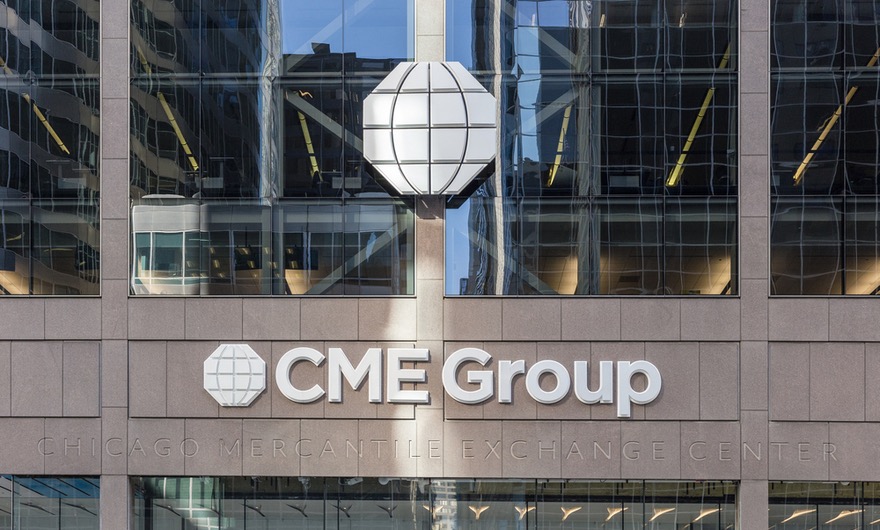
The article argues that the core assumption of Web3—that it would revolutionize finance by moving traditional assets on-chain—is failing. Instead, a one-sided absorption is occurring: Traditional Finance (TradFi) is successfully expanding into crypto, while the reverse movement of crypto into traditional assets is struggling. The pivotal moment was November 10, 2023, when CME's Bitcoin futures open interest surpassed Binance's, signaling a major shift. This is because TradFi giants like CME or BlackRock can launch crypto products with near-zero marginal cost, leveraging their existing regulatory licenses, mature risk models, and institutional networks. Conversely, crypto-native platforms face an insurmountable "compliance cost" barrier when trying to tokenize real-world assets (RWA), such as stocks. The stringent regulatory requirements for securities trading make it a prohibitively expensive endeavor. The author concludes that true liquidity comes from large, regulated institutional capital (pension funds, etc.), which prioritizes security and compliance. Products like Bitcoin ETF provide this, allowing traditional capital to enter easily. Therefore, crypto is being stripped of its ideological attributes and is becoming a pure, volatile financial asset class within the traditional system. The financial upper layers of trading and derivatives will likely remain dominated by TradFi, with Web3's role reduced to the base layer of asset generation and settlement.

比推01/09 08:43

Web3's Failed Assumption: Ultimately Just Another Expansion of Wall Street's Balance Sheet

比推01/09 08:43

The Devoured Middle Ground: Will Web3's Endgame Become Just Another Wall Street Table?

The article "The Devoured Middle Ground: Will Web3 End Up as Just Another Wall Street Table?" argues that the initial revolutionary vision of Web3—decentralizing finance and replacing traditional systems like Nasdaq with blockchain—is being overtaken by traditional finance (TradFi). A pivotal moment occurred on November 10, 2023, when CME's Bitcoin futures open interest surpassed Binance's, signaling a shift in liquidity and influence. The core issue is asymmetric "compliance cost": TradFi institutions (e.g., CME, BlackRock) can easily enter crypto by listing Bitcoin derivatives with minimal marginal cost, leveraging existing infrastructure, licenses, and regulatory relationships. In contrast, crypto-native firms face insurmountable barriers when attempting to tokenize traditional assets like stocks, due to prohibitive regulatory requirements, securities laws, and compliance risks—exemplified by FTX's failure. The approval of Bitcoin ETFs in 2024 accelerated this trend, enabling large institutional players (pension funds, hedge funds) to gain exposure without direct crypto custody concerns. Liquidity and pricing power are shifting from offshore, less-regulated exchanges to compliant TradFi venues. Crypto is being stripped of its ideological attributes and reduced to a pure, volatile financial asset within traditional portfolios. The conclusion is that Web3's financial layer, especially secondary trading, will likely be absorbed into TradFi, with blockchain remaining primarily for asset generation and settlement. The real alpha will follow liquidity, which is flowing back to Wall Street.

marsbit01/09 03:07

The Devoured Middle Ground: Will Web3's Endgame Become Just Another Wall Street Table?

marsbit01/09 03:07

活动图片