# Сопутствующие статьи по теме Monetary Policy

Новостной центр HTX предлагает последние статьи и углубленный анализ по "Monetary Policy", охватывающие рыночные тренды, новости проектов, развитие технологий и политику регулирования в криптоиндустрии.

Will the United States Use Encryption Technology to Resolve the 37 Trillion Dollar Debt Crisis?

The article explores the United States' potential use of cryptocurrency and stablecoins to manage its $37 trillion national debt, as suggested by a senior advisor to Russian President Putin. The core idea is that the U.S. could leverage its control over the global reserve currency to "export" inflation and effectively devalue its debt through digital asset systems, forcing other nations to bear the cost. This would not involve direct default but rather a strategic devaluation via monetary expansion, a historically common tactic. Stablecoins, backed by U.S. Treasury assets, could distribute this debt globally. As adoption grows, losses from dollar inflation would be shared by all stablecoin holders worldwide, not just U.S. citizens. This system offers the control of a central bank digital currency (CBDC) without the political baggage. However, trust remains a critical issue: stablecoin reserves cannot be fully independently audited, and the U.S. could unilaterally change rules, as it did when decoupling the dollar from gold in 1971. While a direct government move—like selling gold to buy Bitcoin, as proposed by MicroStrategy’s Michael Saylor—is unlikely, the U.S. may instead allow private companies to lead the adoption. Firms like MicroStrategy accumulating Bitcoin could serve as a backdoor for eventual state interest. The article concludes that some form of digital asset strategy to address the debt crisis is probable, though it may unfold gradually and discreetly.

比推12/25 14:48

Will the United States Use Encryption Technology to Resolve the 37 Trillion Dollar Debt Crisis?

比推12/25 14:48

Nominal Price vs. Real Value: The Gold Content of a $100,000 Bitcoin

A recent Galaxy study reveals that when measured in 2020 dollar purchasing power, Bitcoin's actual value is approximately $99,848—falling short of the nominal $100,000 milestone. This discrepancy highlights how inflation has quietly reshaped the significance of fiat-denominated price levels, a particularly relevant issue in the current institution-driven market cycle. Inflation has significantly eroded the dollar's purchasing power, with current nominal prices needing to be multiplied by 0.8 to reflect 2020 values. This means $100,000 in 2025 is equivalent to about $80,000 in 2020 terms. To match the 2020 purchasing power of $100,000, Bitcoin's nominal price would need to reach nearly $125,000—a level approached during this cycle's peak, fueling debate. For institutional investors like pension funds, real returns—adjusted for inflation—are the true measure of value, representing a key test for Bitcoin's maturation as a macro asset. Complicating matters, CPI data has become less reliable, with the Bureau of Labor Statistics halting releases in 2025 due to funding issues, making real-value assessments more difficult. Market reactions reflect this value divergence. After October's peak, Bitcoin fell 30%, and U.S. spot Bitcoin ETF assets under management dropped from $169.5 billion to $120.7 billion by early December. However, on-chain data shows underlying strength, with Bitcoin's realized capitalization reaching a new all-time high of $1.125 trillion, indicating strong long-term holder conviction. Future trends depend on several factors: monetary policy changes restoring nominal value, persistent inflation making new highs economically hollow, or ETF-driven demand pushing prices past inflation-adjusted resistance. Citi projects a base case of $143,000 by 2026, with an optimistic scenario above $189,000, largely dependent on ETF flows. Ultimately, inflation has turned Bitcoin's fiat milestones into moving targets. Ironically, while often hailed as an inflation hedge, Bitcoin's symbolic price achievements are themselves being rewritten by inflation. The market should focus not on nominal numbers but on the actual purchasing power behind them—the true indicator of Bitcoin entering a new era.

比推12/24 06:59

Nominal Price vs. Real Value: The Gold Content of a $100,000 Bitcoin

比推12/24 06:59

Is a $100,000 Bitcoin Fake Due to Inflation?

Recent analysis by Galaxy Research indicates that, when adjusted for inflation using 2020 U.S. dollar purchasing power, Bitcoin's actual value was approximately $99,848—falling just short of the symbolic $100,000 milestone. This discrepancy highlights how inflation has quietly redefined nominal price achievements in fiat terms, a particularly relevant issue in an institution-driven market cycle. Inflation has significantly eroded the dollar's value in recent years. To match the purchasing power of $100,000 in 2020, Bitcoin’s nominal price would need to reach nearly $125,000. The recent cycle’s peak approached this adjusted threshold, fueling debate. For institutional investors like pension funds, real returns—gains after inflation—are the true measure of success, representing a key test for Bitcoin’s it matures into a macro asset. Market reactions reflect this value divergence. After its October peak, Bitcoin’s price fell 30%, and U.S. spot Bitcoin ETFs saw assets under management drop from $169.5 billion to $120.7 billion by early December. However, on-chain data shows underlying strength, with the realized market cap reaching a new all-time high of $1.125 trillion, indicating a solidifying long-term holder base. Future trends depend on several factors: monetary policy shifts affecting nominal value, persistent inflation potentially hollowing out new highs, and ETF-driven demand potentially pushing prices past inflation-adjusted resistance. Citi projects a base case of $143,000 by 2026, with an optimistic target exceeding $189,000, largely dependent on ETF inflows. Ultimately, inflation makes Bitcoin’s fiat milestones a moving target. Ironically, while often hailed as an inflation hedge, Bitcoin’s symbolic price achievements are themselves distorted by inflation it seeks to hedge against. The focus moving forward should be less on the nominal number and more on the actual purchasing power it represents.

marsbit12/24 05:06

Is a $100,000 Bitcoin Fake Due to Inflation?

marsbit12/24 05:06

Central Banks and Bitcoin: Inside the Czech National Bank's Groundbreaking Custody Experiment

The Czech National Bank (CNB) has launched a pilot project to test the direct custody of Bitcoin, marking a significant shift from the typical skepticism of central banks toward cryptocurrency. The initiative involves a $1 million operational sandbox that includes Bitcoin, a dollar stablecoin, and tokenized bank deposits. According to Trezor analyst Lucien, the project is not about immediate adoption into national reserves but about building internal capabilities in areas like key management, compliance, accounting, and on-chain auditing. Lucien highlights Bitcoin’s role as a bearer asset—similar to gold—but with operational advantages such as greater transparency, faster settlement, and lower custody costs. He also emphasizes the unique position of the Czech Republic, which already has a mature Bitcoin ecosystem, including widespread public adoption, favorable tax policies, and a history of Bitcoin innovation. The project reflects a pragmatic, learning-by-doing approach to regulation and central banking, contrasting with the theoretical debates common in other jurisdictions. While the pilot remains small-scale, it represents a strategic move to explore Bitcoin’s potential as a non-sovereign reserve asset that offers diversification without counterparty risk. The experiment may serve as a model for other central banks considering similar steps in an evolving global monetary landscape.

marsbit12/19 07:48

Central Banks and Bitcoin: Inside the Czech National Bank's Groundbreaking Custody Experiment

marsbit12/19 07:48

Full Text of Bank of Japan Statement: 25 Basis Point Rate Hike, Further Adjustments Considered

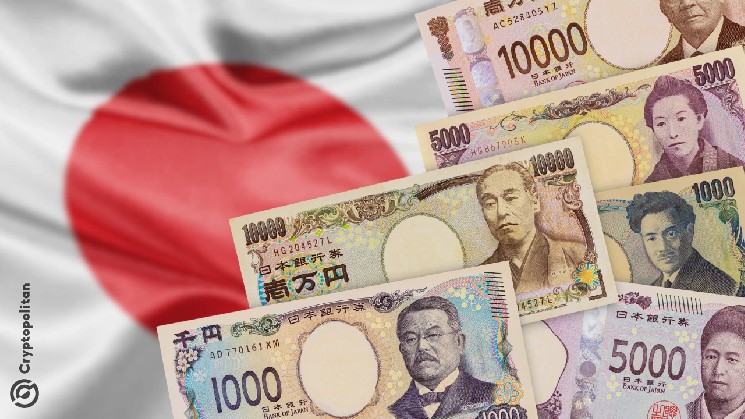
The Bank of Japan (BOJ) raised its benchmark interest rate by 25 basis points from 0.5% to 0.75% on December 19, marking the first rate hike in 11 months and bringing the rate to its highest level in 30 years. The decision was unanimously approved by the policy board. The central bank will guide the unsecured overnight call rate to around 0.75%. The rate for the complementary deposit facility was set at 0.75%, and the basic loan rate was set at 1.0%. The BOJ stated that the Japanese economy is recovering moderately, though some weaknesses remain. It expressed high confidence that companies will continue to raise wages steadily, sustaining a positive cycle of wage and price increases. Core CPI inflation continues to rise moderately as firms pass on higher labor costs. The BOJ judged that an adjustment to its monetary easing was appropriate to achieve its 2% price stability target sustainably. It noted that financial conditions remain accommodative and will continue to support economic activity. Looking ahead, the BOJ signaled it will continue to adjust the degree of monetary easing and raise policy rates further as economic activity and prices improve, provided the outlook materializes. Key risks to the outlook include the impact of overseas trade policies, domestic corporate wage and price-setting behavior, and developments in financial and foreign exchange markets.

深潮12/19 03:42

Full Text of Bank of Japan Statement: 25 Basis Point Rate Hike, Further Adjustments Considered

深潮12/19 03:42

Kevin Warsh Emerges as a Surprise Contender: How Did an Inflation Hawk Become a Top Candidate for Fed Chair?

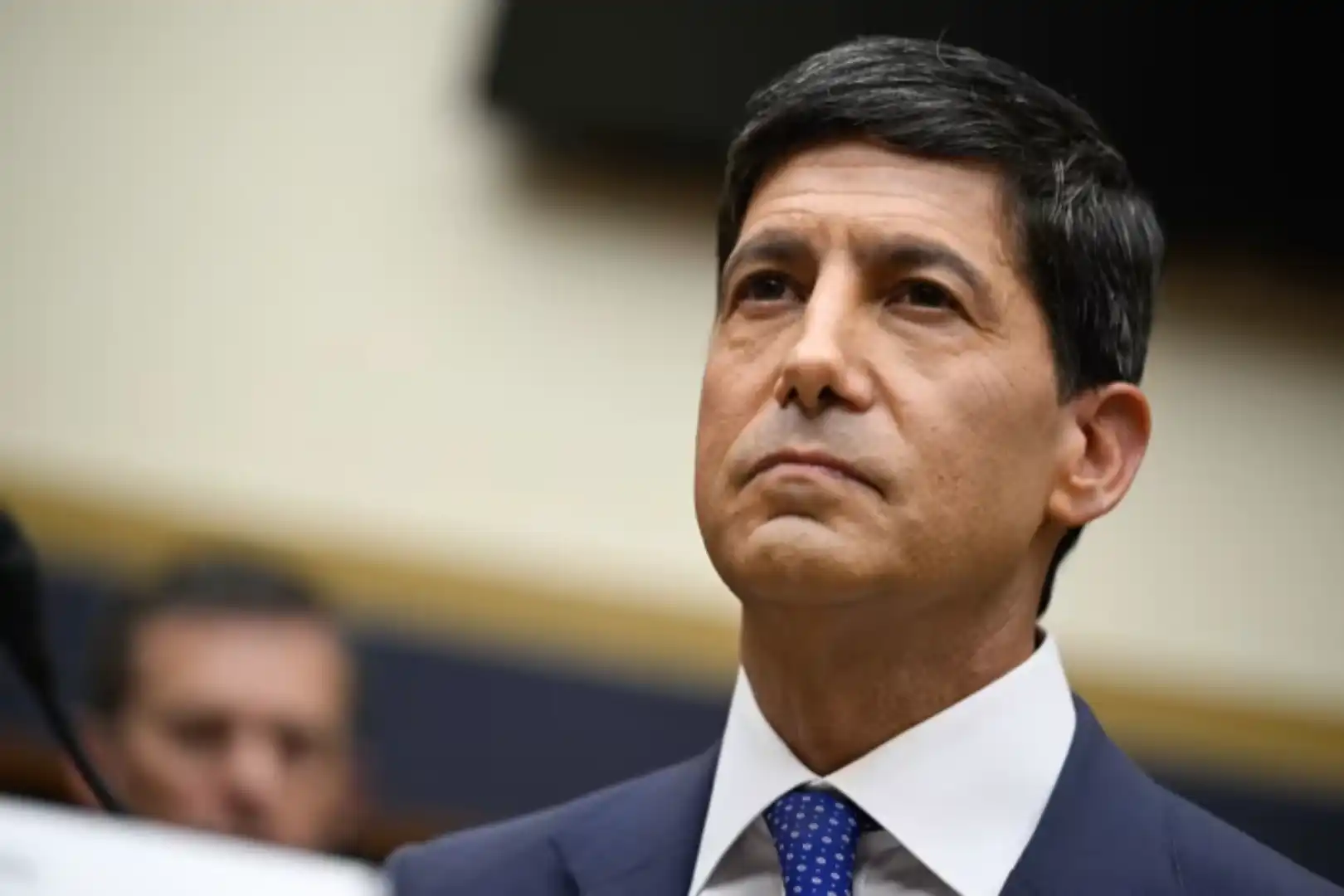
Kevin Warsh, a former Federal Reserve governor known for his hawkish stance on inflation, has unexpectedly re-emerged as a top contender for the next Fed chair, competing against Trump’s longtime economic advisor Kevin Hassett. President Trump has indicated his next Fed pick will aggressively cut interest rates, a priority for his administration. Warsh brings a blend of Wall Street experience, academic credentials, and prior Fed service during the 2008 financial crisis. Despite his historical skepticism toward quantitative easing and concerns over inflation, Warsh has recently signaled openness to rate cuts, aligning with Trump’s demands. He has proposed a “rate cuts plus balance sheet reduction” strategy to reconcile stimulus with inflation control. Hassett, by contrast, is seen as a loyalist who would more directly implement Trump’s preference for looser monetary policy. However, some within Trump’s circle question his technical competence compared to Warsh’s deeper central banking experience. The competition reflects a broader tension between professional independence and political alignment. Warsh is viewed as more institutionally cautious, while demonstrating recent flexibility, whereas Hassett advocates for a Fed more directly responsive to the White House. The outcome will significantly influence the Fed’s future direction and perceived independence.

marsbit12/18 08:43

Kevin Warsh Emerges as a Surprise Contender: How Did an Inflation Hawk Become a Top Candidate for Fed Chair?

marsbit12/18 08:43

Fed Chair Race Takes a Surprising Turn: Warsh Overtakes Hassett, Trump's Interest Rate Gambit Places a New Piece

US Federal Reserve Chair Race Shifts: Warsh Surpasses Hassett as Trump's Top Pick In a surprise turn of events, President Trump confirmed to The Wall Street Journal that former Fed Governor Kevin Warsh has become the leading candidate for the next Federal Reserve Chair, overtaking previously favored Kevin Hassett. This shift followed a 45-minute meeting where Warsh aligned with Trump’s desire for lower interest rates. Warsh’s Wall Street experience and previous role at the Fed during the 2008 financial crisis distinguished him from the more academic Hassett. Market probabilities reflected the change, with Hassett’s odds dropping from 85% to 52%, while Warsh’s rose to 38%. Trump has repeatedly criticized current Chair Jerome Powell for not cutting rates aggressively enough, and even suggested the Fed should consult the president on rate decisions—a direct challenge to the central bank’s independence. Other candidates include Fed Governors Christopher Waller and Michelle Bowman, and BlackRock’s Rick Rieder. Historical parallels were drawn to Nixon-era political pressure on the Fed, which led to high inflation. ECB President Christine Lagarde warned that political interference poses a “very serious threat” to global economic stability. Wall Street reacted cautiously, with Jamie Dimon noting both candidates' strengths but acknowledging Warsh’s potential to be an “outstanding chair.” Powell, whose term ends in May, aims to hand over a stable economy but has consistently resisted Trump’s calls for deeper rate cuts. The outcome of this selection will significantly influence global financial markets and test the Fed’s independence in the years ahead.

marsbit12/14 01:53

Fed Chair Race Takes a Surprising Turn: Warsh Overtakes Hassett, Trump's Interest Rate Gambit Places a New Piece

marsbit12/14 01:53

活动图片