Автор: Zhou, ChainCatcher
Банк Японии (BOJ) на заседании по денежно-кредитной политике, завершившемся 19 декабря 2025 года, принял решение повысить ключевую процентную ставку на 25 базисных пунктов — с 0,5% до 0,75%. Это второе повышение ставки Банком Японии с января этого года, и уровень ставки стал самым высоким с 1995 года.
Решение было принято единогласно, с результатом 9:0, что полностью соответствовало ожиданиям рынка. Все 50 опрошенных ранее экономистов единогласно прогнозировали это повышение, что также стало первым случаем единогласного ожидания повышения ставки при руководстве управляющего Кадзуо Уэда.
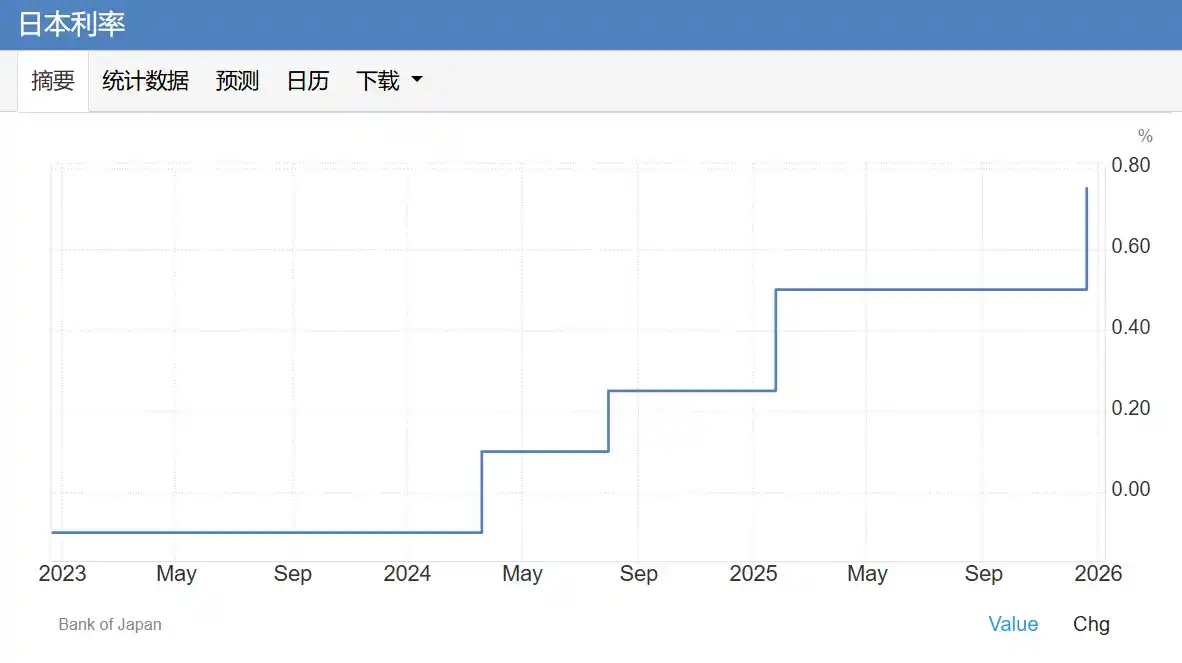
Управляющий Банком Японии Кадзуо Уэда на пресс-конференции указал, что нахождение краткосрочных процентных ставок на 30-летнем максимуме не имеет особого значения, и официальные лица будут пристально следить за влиянием изменений ставок. Он заявил, что до нижней границы диапазона нейтральной ставки всё ещё есть расстояние, и рынкам не следует ожидать, что в краткосрочной перспективе будет указан точный диапазон нейтральной ставки. Что касается дальнейших шагов по корректировке мер денежно-кредитной поддержки, они будут зависеть от экономического роста, динамики цен и условий на финансовых рынках на тот момент.
Уэда подчеркнул, что на каждом заседании будет обновляться оценка экономических перспектив, рисков для цен и вероятности достижения цели, и решения будут приниматься соответственно. Он признал, что расчётный диапазон нейтральной процентной ставки для Японии довольно широк, его трудно точно измерить, и необходимо наблюдать за фактической реакцией экономики и цен на каждое изменение ставки. Если рост заработной платы будет продолжать передаваться на цены, повышение ставок действительно возможно.
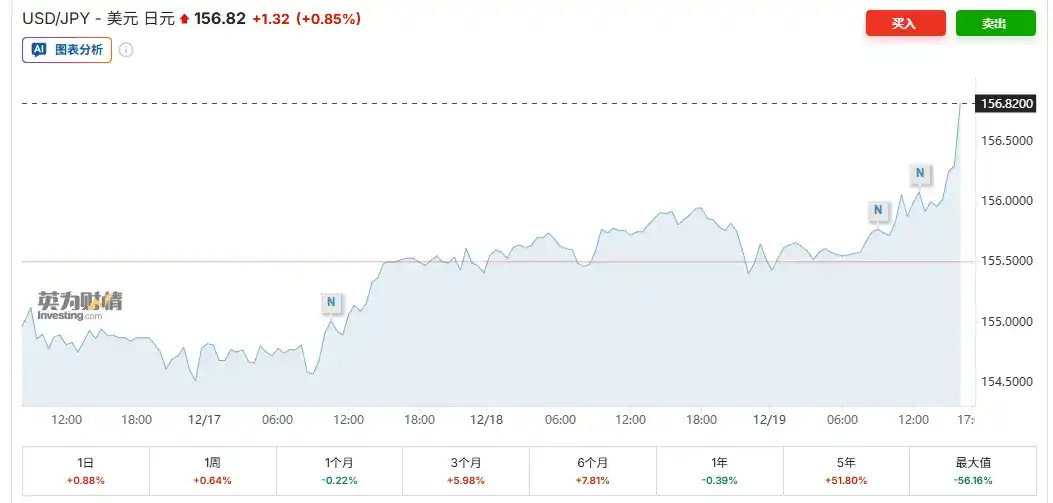
Реакция рынков капитала была относительно спокойной: курс доллара к иене slightly вырос на 0,3% до 156,06; доходность 30-летних японских гособлигаций незначительно выросла на 1 базисный пункт до 3,385%; индекс Nikkei 225 during trading вырос на 1,5% до 49 737,92 пункта; Bitcoin превысил $87 000, внутридневной рост составил 1,6%. Рисковые активы в целом временно не показали значительного давления со стороны продавцов.
Оглядываясь на базовые показатели, это повышение ставки в Японии получило полную поддержку данных. Базовый индекс потребительских цен (CPI) в ноябре вырос на 3,0% в годовом выражении, что соответствовало ожиданиям, инфляционное давление остаётся сильным, и он уже 44 месяца подряд превышает целевой показатель в 2%. Кроме того, рост заработной платы остаётся устойчивым, уверенность крупных производителей достигла четырёхлетнего максимума, и даже перед лицом тарифного давления со стороны США, корректировка цепочек поставок компаний показала значительную устойчивость, а воздействие оказалось ниже ожиданий.
В то же время, основные профсоюзы Японии в предстоящих «весенних переговорах» («сюнто») установили цели по повышению заработной платы на уровне прошлого года. Поскольку в прошлом году уже было достигнуто самое значительное повышение зарплат за десятилетия, это указывает на то, что импульс роста заработной платы продолжается.
В целом, хотя это повышение ставки незначительно, оно знаменует собой официальный отказ Японии от эпохи длительной сверхмягкой monetary policy и может стать важной turning point для ликвидности глобальных рисковых активов в конце года.
Полностью ли рынок учел ожидания?
Текущие рыночные котировки показывают, что Банк Японии может вновь повысить ставки уже в июне или июле следующего года. Тан Юйсюань из J.P. Morgan Private Bank считает, что из-за полного учёта рыночных ожиданий, влияние повышения ставки на иену будет ограниченным. Ожидается, что в 2026 году произойдет ещё одно повышение до 1%, а базовый курс доллара к иене останется на высоком уровне около 150, с потенциальным защитным диапазоном 160-162. Отрицательный carry и фискальные риски по-прежнему будут ограничивать потенциал укрепления иены.
Однако некоторые аналитики сомневаются, что этот график слишком агрессивен, считая октябрь 2026 года более реалистичным временным окном, что позволит оставить достаточный запас для оценки воздействия роста стоимости заимствований на корпоративное финансирование, банковское кредитование и потребительские расходы домашних хозяйств. Тогда результаты весенних переговоров о зарплате и курс иены будут ключевыми оценочными показателями.
Кроме того, Morgan Stanley ожидает, что после повышения ставки на 25 б.п. Банк Японии по-прежнему будет подчёркивать мягкий характер политической среды, и что ставки всё ещё ниже нейтрального уровня. Будущий путь ужесточения будет постепенным и в высокой степени зависящим от данных, без预设 агрессивного маршрута.
Аналитик Investinglive Эймонн Шеридан считает, что, поскольку реальные ставки остаются отрицательными, а политика в целом мягкая, следующее повышение ставки, как ожидается, произойдет не раньше середины-конца 2026 года, чтобы можно было наблюдать за реальным проникновением стоимости заимствований в экономику.
Долгое время сверхнизкие процентные ставки в Японии обеспечивали global markets огромной дешёвой ликвидностью. Посредством «арбитражной сделки с иеной» (yen carry trade) инвесторы занимали иену с низкой стоимостью и вкладывали её в высокодоходные активы, такие как акции США и криптовалюты. Этот механизм, имеющий огромные масштабы, был важной опорой бычьего рынка рисковых активов в течение многих лет.
Хотя последние данные TIC показывают, что японский капитал ещё не хлынул обратно с рынка казначейских облигаций США (в октябре выросли до 1,2 трлн долларов), по мере роста привлекательности местных гособлигаций Японии (JGB) эта тенденция может постепенно проявиться, что приведёт к росту доходности американских гособлигаций и глобальной стоимости фондирования в долларах, оказывая давление на рисковые активы.
В настоящее время большинство основных центральных банков находятся в цикле снижения ставок, а Банк Японии, повышая ставки против тенденции, создаёт политический раскол. Такой контраст может легко спровоцировать закрытие carry trade, а криптовалютный рынок с его высоким leverage и круглосуточной торговлей обычно первым ощущает удары по ликвидности.
Макроаналитики предупреждали, что если Банк Японии повысит ставки 19 декабря, Bitcoin может столкнуться с риском отката к $70 000. Исторические данные показывают, что после предыдущих трёх повышений ставок Bitcoin каждый раз значительно корректировался, обычно падая на 20-30% в течение 4-6 недель. Например, в марте 2024 года падение составило 23%, в июле — 26%, в январе 2025 года — 31%, и рынок ранее сильно опасался, что это повышение повторит эту историческую закономерность.
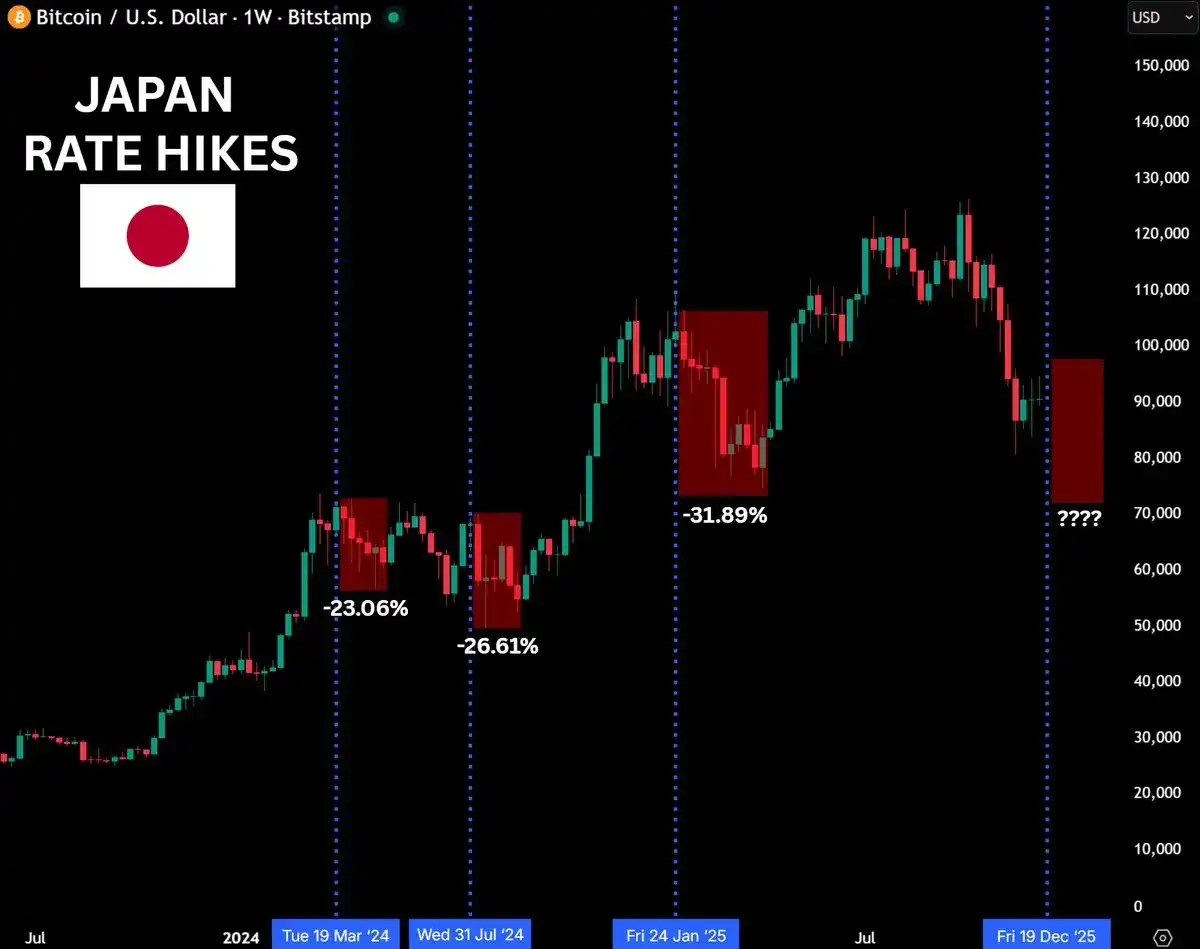
Скептики считают, что повышение ставок в Японии остаётся одной из крупнейших переменных в текущих ценах на активы, и её роль на глобальных рынках капитала недооценена, а изменение политики может вызвать широкий эффект deleveraging.
В то же время нейтральная точка зрения полагает, что простое приписывание исторических падений повышению ставок в Японии слишком упрощено, и что ожидания данного повышения были крайне полно учтены (криптовалютный рынок уже скорректировался на прошлой неделе), большая часть панических настроений уже заложена в цены. Аналитики говорят, что рынок больше боится неопределенности, а не ужесточения как такового.
Стоит отметить, что, по сообщениям Bloomberg, Банк Японии может начать постепенную распродажу активов ETF уже в январе 2026 года. По состоянию на конец сентября его портфель ETF оценивался примерно в 83 трлн иен. Если в 2026 году последует multiple повышений ставок, продажа облигаций может ускориться, continued деконструкция yen carry trade спровоцирует продажи рисковых активов и репатриацию иены, что окажет глубокое воздействие на фондовые рынки и криптовалюты.
Нажмите, чтобы узнать об открытых вакансиях в ChainCatcher