# Сопутствующие статьи по теме Inflation

Новостной центр HTX предлагает последние статьи и углубленный анализ по "Inflation", охватывающие рыночные тренды, новости проектов, развитие технологий и политику регулирования в криптоиндустрии.

Senior Analyst Dialogue: What Powell's Departure and Warsh's Appointment Mean for Crypto?

The podcast episode "Powell Is Out, Warsh Is In: What It Means for Crypto" features an analysis by Noelle Acheson on the macro-economic landscape and its implications for crypto. Key discussion points include: * **Equity-Bond Divergence:** Acheson highlights a significant and growing disconnect between stock and bond markets. While bond yields rise globally, signaling tighter financial conditions, equities are driven by AI-related hype and speculation, reminiscent of the 1999 dot-com bubble. * **'Bliss Trade' and Systemic Fragility:** The discussion explores the concept of a structural, cross-party government expectation to provide fiscal support ("Bliss Trade"), which underpins risk asset valuations and carries its own systemic vulnerabilities. * **Inflation Outlook:** Acheson argues that inflation is not meaningfully declining, citing core CPI stagnation and attributing the trend to de-globalization, tariffs, and geopolitical tensions like the Strait of Hormuz crisis. * **Powell's Legacy:** Powell's tenure receives mixed marks. While his defense of Fed independence is noted, he is also criticized for overseeing the "de-banking" of crypto firms in 2023 and initially misjudging inflation. * **Outlook for Warsh:** Expectations for the incoming Fed Chair, Kevin Warsh, are measured. While he may aim to reduce Fed balance sheet size and forward guidance, market realities and the FOMC will likely constrain his ability to enact significant policy shifts, particularly rate cuts. * **Crypto as a Macro Asset:** Bitcoin's role is framed as a hedge against currency debasement, benefiting from expectations of monetary stimulus. However, its maturation as a macro asset means it now competes with other high-volatility investments like AI stocks, potentially limiting near-term price catalysts. * **Market Structure & Tokenization:** The potential Clarity Act is seen as more beneficial for assets like Ethereum than Bitcoin, which already has relative regulatory clarity. Concerns are raised about "innovation exemptions" for tokenization if they enable third-party derivatives that encourage pure speculation over capital formation. In conclusion, the analysis suggests crypto markets lack a near-term positive catalyst and are caught between competing macro narratives, with significant underlying fragilities in traditional markets.

marsbit7 ч. назад

Senior Analyst Dialogue: What Powell's Departure and Warsh's Appointment Mean for Crypto?

marsbit7 ч. назад

BIT Research: After U.S.-China Summit, Markets Begin Repricing "Long-Term Competition"

The market is undergoing a macro repricing driven by geopolitics and policy expectations. Initial interpretations of the recent U.S.-China summit as a signal of eased tensions triggered a risk-on rally, boosting tech stocks and Bitcoin while weakening the dollar. However, as details emerged, this optimism faded due to a lack of concrete progress on tariffs, AI export controls, or key geopolitical issues like Taiwan and Iran. Inflation concerns have resurfaced, renewing selling pressure on bonds and precious metals. Longer-term, the summit underscored ongoing strategic competition: a marginal decline in dollar dominance, a push for diversified global reserve assets, AI and semiconductor supply chain restructuring, and intensified rivalry in frontier tech like low-earth orbit satellites. Bitcoin's price action mirrored high-beta tech stocks more than a structural hedge, highlighting its continued sensitivity to risk appetite and liquidity over traditional safe-haven characteristics. While the meeting yielded modest outcomes like a U.S. agricultural purchase pledge and continued dialogue mechanisms, it primarily reflects "managed competition." Structural tensions remain unresolved in areas like tech and geopolitics, affirming trends toward strategic decoupling and prolonged geopolitical risk. The key for markets is the broader repricing of global liquidity, real yields, and this enduring competitive landscape.

marsbit13 ч. назад

BIT Research: After U.S.-China Summit, Markets Begin Repricing "Long-Term Competition"

marsbit13 ч. назад

Will Warsh Compromise with Trump? A Look at the 70-Year Power Struggle Between the President and the Fed

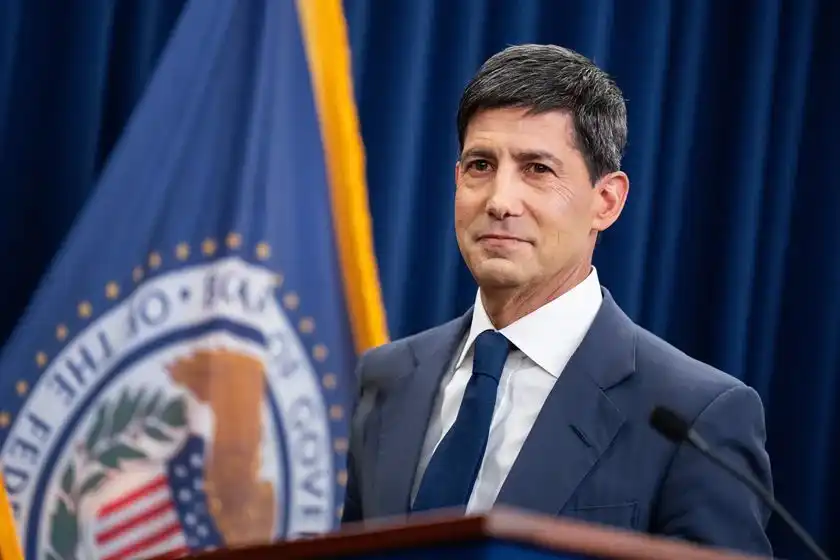
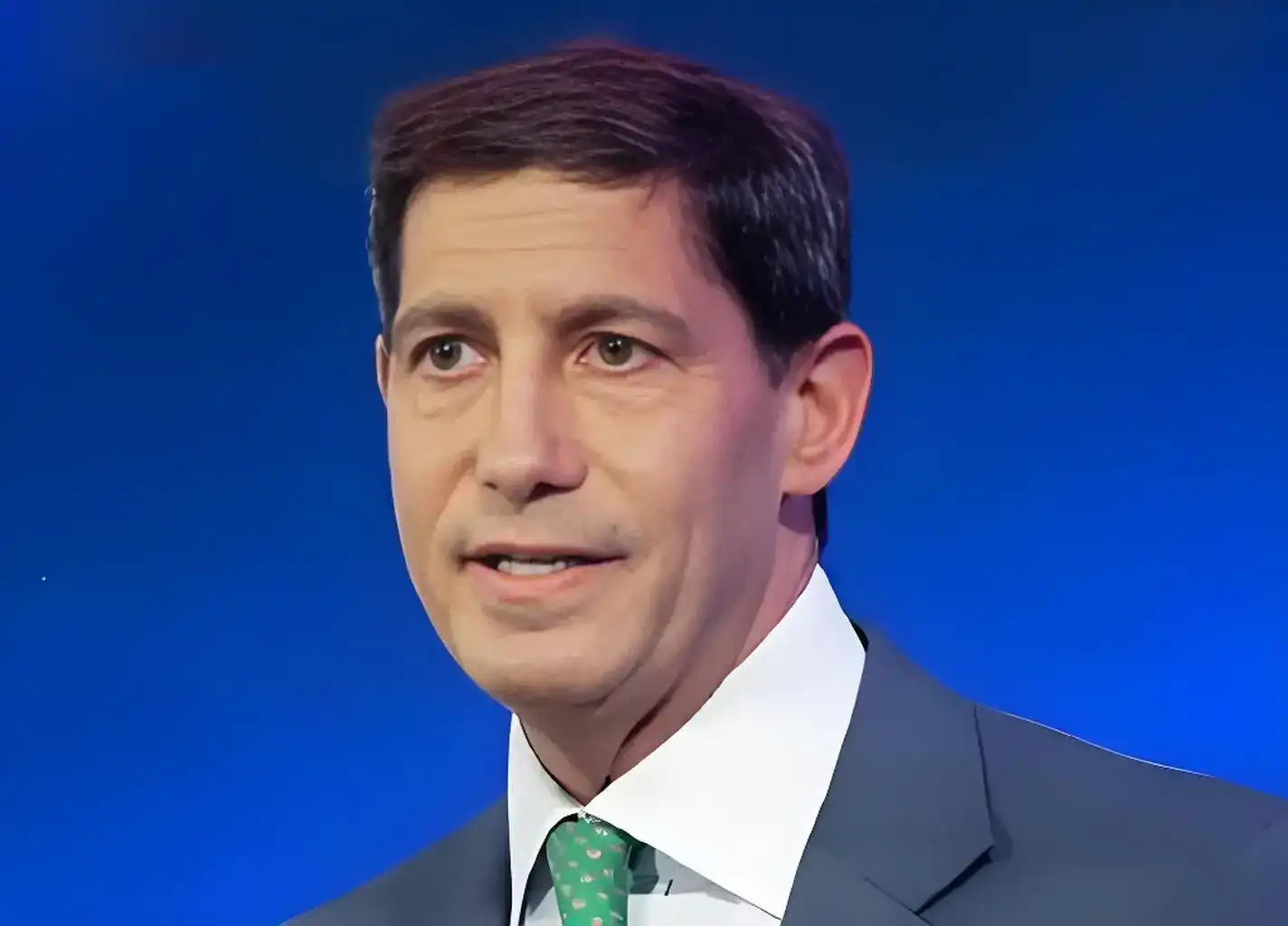
Will the Fed's new chair, Kevin Warsh, yield to pressure from President Trump? A White House-administered oath ceremony for Warsh breaks recent precedent, spotlighting a seven-decade power struggle between the presidency and the Federal Reserve. Historically, each Fed chair has balanced political pressure with policy independence. Warsh's situation, however, is uniquely complex, inheriting a divided Federal Open Market Committee (FOMC) with some members opposing even hints of rate cuts, while Trump expects easing. The report from Caitong Securities reviews this history: from William Martin establishing independence, to Arthur Burns compromising under Nixon, Paul Volcker building institutional credibility, Alan Greenspan navigating political waters, and Jerome Powell facing severe pressure from Trump, ultimately hardening the Fed's defensive stance. Warsh, a former Fed governor known for questioning quantitative easing, is not a traditional dove. His recent statements emphasize a nuanced view of Fed independence, skepticism of forward guidance, serious concern over inflation (contradicting Trump's "fake inflation" claims), and the potential for AI-driven productivity gains to allow rate cuts. The analysis concludes Warsh's policy will likely feature a clear direction but cautious pace. Rate cuts are probable but constrained by persistent inflation above target; if Trump pressures heavily, Warsh may delay cuts to defend Fed independence. Balance sheet reduction is seen as necessary but will be gradual to avoid premature conflict. Ultimately, Warsh's path will depend more on macroeconomic trends—inflation, growth, oil prices—than on his personal stance or the immediate political relationship.

marsbit14 ч. назад

Will Warsh Compromise with Trump? A Look at the 70-Year Power Struggle Between the President and the Fed

marsbit14 ч. назад

Conversation with Glassnode Analyst: Bitcoin Bull Market Has Restarted, Current Market Still in 'Sell on Rally' Phase

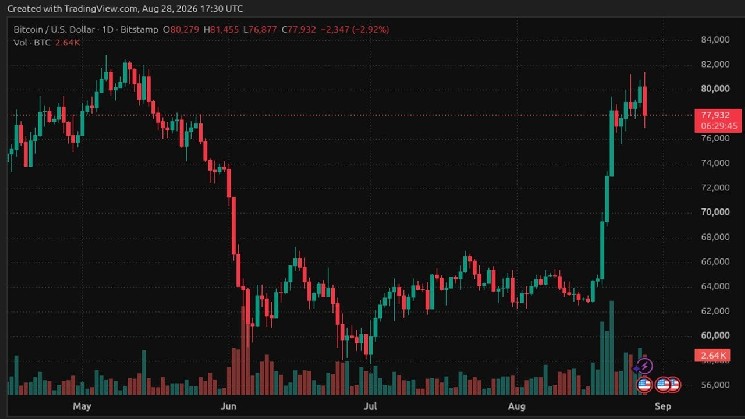
Bitcoin analyst Checkmate believes the cryptocurrency market is now in a bull phase following a likely capitulation event in June, with an 80% probability the $60,000 low marked the bottom. However, he expects a prolonged consolidation period, similar to past cycles. Key resistance levels are identified at $78,000 (short-term cost basis), $85,000 (a critical supply zone and 200-day moving average), and $95,000. Sustained price appreciation requires consistent capital inflows, with institutions expected to enter more aggressively if Bitcoin surpasses $100,000. The discussion extends to macroeconomics, where rising global bond yields signal a loss of trust in government fiscal management. Checkmate argues this reflects a broader monetary regime change, where Bitcoin and gold will serve as primary stores of value outside the traditional system, while fiat currencies like the USD act as mediums of exchange. Finally, Checkmate criticizes proposed Australian capital gains tax reforms, calling them a "wealth grab." The plan to replace a 50% discount for assets held over a year with inflation indexing based on low CPI rates would drastically increase effective tax rates, punishing savers and investors trying to overcome the country's severe housing affordability crisis. He urges public opposition to prevent such policies from spreading globally.

marsbitВчера 09:26

Conversation with Glassnode Analyst: Bitcoin Bull Market Has Restarted, Current Market Still in 'Sell on Rally' Phase

marsbitВчера 09:26

Warsh's First Conundrum: Rate Cuts, Inflation, and a Fractured Fed

Walsh's First Dilemma: Rate Cuts, Inflation, and a Divided Fed Kevin Warsh officially assumed the Fed Chairmanship on May 15th, inheriting a central bank deeply divided over inflation. Contrary to market expectations of a dovish stance due to his appointment by President Trump, Warsh's historical record shows early and consistent hawkish concerns about inflation. The Fed he leads is fractured, with three FOMC members recently dissenting against even hinting at future rate cuts. The immediate challenge is surging inflation. While the Iran-related oil shock is a temporary factor, core CPI and services inflation are accelerating, showing signs of becoming entrenched—echoing the Fed's 2022 "transitory" misstep. Warsh faces the task of building consensus within a committee where several members believe policy may not be restrictive enough, especially if the neutral interest rate (r-star) is higher than currently estimated. Politically, Warsh is caught between Trump's desire for rate cuts and the economic reality of persistent price pressures. Any move perceived as bowing to political pressure could undermine Fed independence. Market implications are significant. Long-term Treasury yields (e.g., 30-year at 5.19%) could rise further, especially if the June FOMC statement hints at possible tightening. Tech stocks face continued valuation pressure from higher rates. The key variable is progress in Iran negotiations; a breakthrough before the June meeting could temporarily ease oil-driven inflation, but stubborn services inflation would remain. All eyes are on Warsh's first post-FOMC press conference on June 17th. His wording on inflation and policy will reveal how much the market has mispriced his stance and the Fed's likely path forward.

marsbit2 дня назад 10:01

Warsh's First Conundrum: Rate Cuts, Inflation, and a Fractured Fed

marsbit2 дня назад 10:01

The Bond Market Deals a Blow to the AI Bull Market

The article "Bond Market Deals a Blow to the AI Bull Market" discusses how a recent global bond sell-off is threatening to end the AI-driven stock market rally that had been ongoing for about a month and a half. A sharp sell-off in global equity markets began last Friday, with significant declines in indices like South Korea's KOSPI and Japan's Nikkei 225. The primary suspect, according to Morgan Stanley, is the bond market. Key long-term bond yields, such as the U.S. 30-year Treasury and Japan's 10-year government bond, have surged to multi-decade highs. This breach of critical yield levels (like 5% for the 30-year U.S. Treasury) is seen as a dangerous signal that historically precedes risk asset corrections. The root cause is identified as resurgent inflation, fueled by rising oil prices due to renewed Middle East geopolitical tensions, specifically the breakdown of U.S.-Iran talks and the blockade of the Strait of Hormuz. This has led markets to drastically revise expectations for U.S. Federal Reserve policy, now pricing in a significant chance of future rate hikes instead of cuts. Higher bond yields negatively impact stocks, especially high-growth tech/AI stocks, through two main channels: 1. **Valuation Pressure:** Higher yields increase the discount rate used to value future earnings, making the present value of distant AI-related cash flows less attractive. 2. **Relative Attraction:** Safer government bonds offering ~5% yields reduce the appeal of riskier equity investments in emerging markets and tech sectors. Despite the pressure from bonds, the AI bull market has fundamental support from strong sector earnings (e.g., semiconductor companies). The current situation is described as a "tug-of-war" between bond market turbulence and AI prosperity. However, warnings exist that AI stock valuations have become excessive. For investors, the advice is to increase portfolio flexibility. Suggestions include focusing on specific AI supply chain segments (domestic computing, semiconductors, equipment) and being prepared for continued volatility. The article concludes by noting the market is at a precarious point, caught between geopolitical uncertainty and the AI revolution, requiring careful navigation.

marsbit05/19 12:26

The Bond Market Deals a Blow to the AI Bull Market

marsbit05/19 12:26

Global Long-Term Bonds Break Down: The Fiscal Illusion of the Low-Interest Era is Collapsing

Global long-term bonds are experiencing a widespread breakdown, as the fiscal illusion of the low-interest-rate era collapses. Sovereign yields are hitting multi-year highs in the US, UK, Japan, and France, signaling a market repricing driven by a common reality: unsustainable debt and deficits outpacing economic growth, compounded by renewed inflationary pressures from energy shocks. The direct trigger is the blockade of the Strait of Hormuz, which has pushed oil prices higher and reignited inflation fears. This squeezes central bank policy space, with expectations shifting from future rate cuts to potential hikes. The core "fiscal Ponzi scheme" is becoming evident—governments rely on new debt to service existing obligations, but as growth lags and borrowing costs rise, investors demand higher yields. Key developments include the US 30-year yield surpassing 5% for the first time since 2007, with tepid auction demand; Japan's 30-year yield reaching 4%, threatening its long-standing low-rate financial system; and political paralysis in the UK and France making meaningful fiscal consolidation unlikely. The marginal buyer for US debt is also shifting from foreign central banks to more price-sensitive private investors. While debt managers may adjust issuance, fundamental drivers—deteriorating fiscal paths, persistent inflation, and constrained central banks—remain. The market is conclusively repricing the end of the low-interest-rate financing model for highly indebted developed economies.

marsbit05/19 09:01

Global Long-Term Bonds Break Down: The Fiscal Illusion of the Low-Interest Era is Collapsing

marsbit05/19 09:01

The Warsh Storm Approaches

The article "The Warsh Storm Approaches" analyzes the potential market impact of Kevin Warsh becoming the new Federal Reserve Chairman, succeeding Jerome Powell. It argues that the current AI-driven stock market rally, concentrated in high-valuation tech giants, relies on a crucial premise: that long-term interest rates will eventually fall. This premise is now under threat as the 30-year Treasury yield remains persistently high, exceeding 5%, due to sticky inflation, worsening U.S. fiscal deficits, and deteriorating Treasury supply-demand dynamics. The core vulnerability is that high long-term rates pressure valuations by increasing the discount rate for future earnings. The article warns that Warsh's policy stance could intensify this pressure. Unlike Powell, Warsh is seen as more tolerant of market stress, more committed to quantitative tightening (QT/shrinking the Fed's balance sheet), and less inclined to provide implicit market support. His tenure at the Fed during the 2008 crisis shaped his skepticism about prolonged quantitative easing, believing it fuels asset bubbles without sufficiently boosting the real economy. While strong AI-driven earnings growth could theoretically offset higher rates, the narrative is currently concentrated in a few firms and hasn't yet translated into broad-based productivity gains for the wider economy. Therefore, the AI boom may not be enough to counter the valuation pressures from sustained high yields. Warsh's leadership could force the market to confront a new reality where the old supports—low long-term rates and a reliably supportive Fed—are no longer guaranteed, potentially triggering a reassessment of sky-high stock valuations.

marsbit05/19 04:58

The Warsh Storm Approaches

marsbit05/19 04:58

活动图片