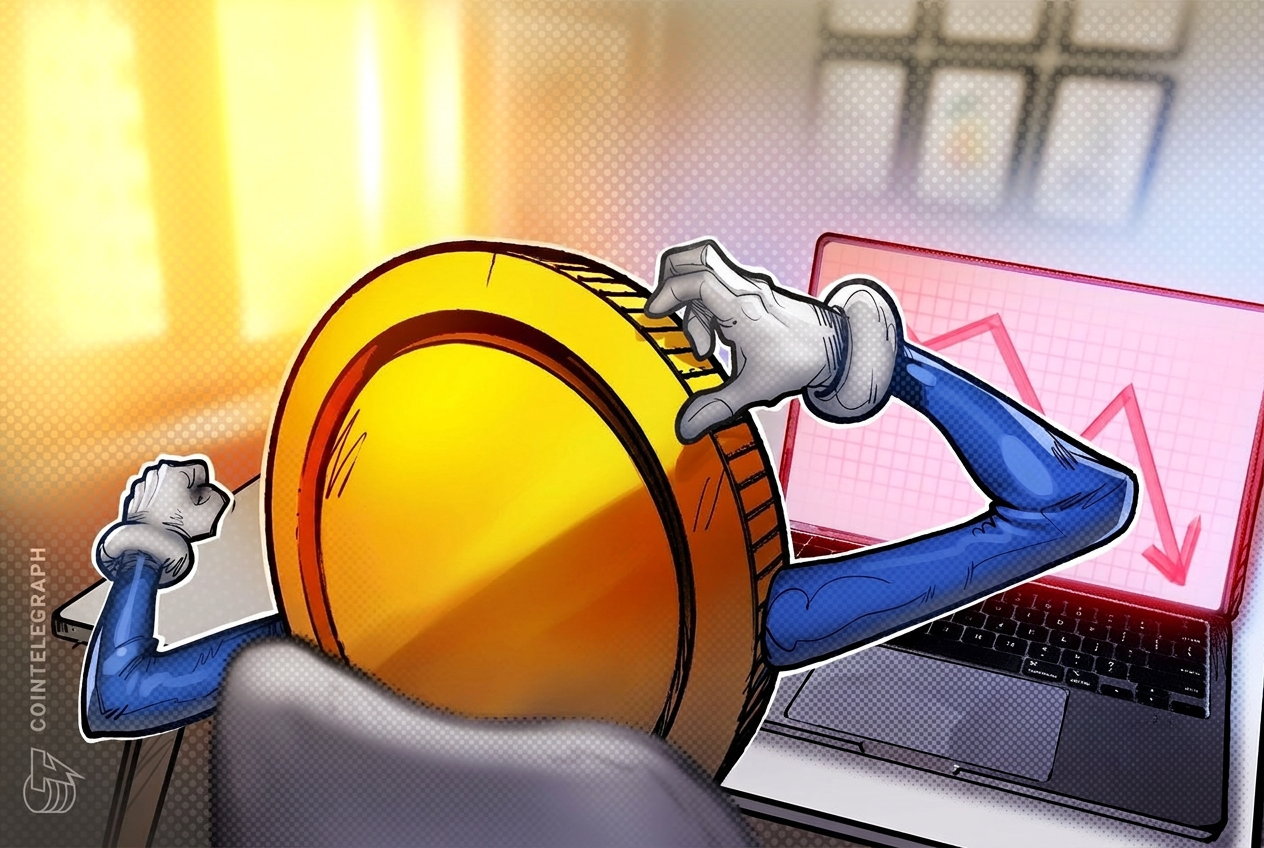
Stablecoins Are Becoming a Bank Run Risk — and Banks Know It

ccn.comОпубликовано 2026-02-01Обновлено 2026-02-01

Введение

Stablecoins, initially designed as digital dollar equivalents, are now seen as a potential risk for bank runs, prompting regulatory and market responses. In Washington, policymakers are debating legislation that could restrict features like rewards to prevent stablecoins from becoming deposit alternatives, which banks fear could drain hundreds of billions from their funding base. Meanwhile, stablecoins are increasingly used as payment infrastructure, with major firms like Visa and Stripe integrating them into settlement systems. The core conflict revolves around whether stablecoins should remain payment tools or evolve into deposit-like products, balancing innovation against financial stability concerns. Global jurisdictions like the EU and Hong Kong are already implementing regulatory frameworks, increasing pressure on the U.S. to act.

Stablecoins, digital assets designed to track the United States dollar, were supposed to be boring.

A dollar token. A digital cashier’s check. A way to move money without taking a view on the price of Bitcoin (BTC).

Now they are being treated as something else entirely: a live test of who gets to “own” dollars in motion, and whether banks can keep deposits from leaking out of the system.

That tension is showing up in two places at once.

In Washington, stablecoin policy has become a legislative traffic jam, with the White House reportedly convening senior banking and crypto executives to find a path forward on crypto market structure.

In markets, stablecoins are behaving less like a crypto niche and more like payments infrastructure, as major financial and fintech firms put stablecoin settlement and stablecoin payments into production tooling.

The fight looks technical—licensing, reserves, redemption rights, disclosure. The emotional core is not technical at all.

It is deposits.

Try Our Recommended Crypto Exchanges
Sponsored
Disclosure
We sometimes use affiliate links in our content, when clicking on those we might receive a commission at no extra cost to you. By using this website you agree to our terms and conditions and privacy policy.
"}' data-trk="67adf8d4f12aaec7e4808bf5" href="https://links.ccn.com/links?code=693291aa4a5bcb62319448b2" rel="nofollow" target="_blank">
Bitget<\/h3>"}' data-trk="67adf8d4f12aaec7e4808bf5" href="https://links.ccn.com/links?code=693291aa4a5bcb62319448b2" rel="nofollow" target="_blank">

Bitget

promotions
New user rewards up to 6,200 USDT.<\/strong>"}' data-trk="67adf8d4f12aaec7e4808bf5" href="https://links.ccn.com/links?code=693291aa4a5bcb62319448b2" rel="nofollow" target="_blank"> New user rewards up to 6,200 USDT.
Coins
88
Claim Offer
"}' data-trk="6899b9831836d97539c51aa6" href="https://links.ccn.com/links?code=693293fa4a5bcb6231949c97" rel="nofollow" target="_blank">
Bitunix<\/h3>"}' data-trk="6899b9831836d97539c51aa6" href="https://links.ccn.com/links?code=693293fa4a5bcb6231949c97" rel="nofollow" target="_blank">

Bitunix

promotions
Receive up to $100,000 worth of exclusive gifts for newcomers upon registration.<\/strong>"}' data-trk="6899b9831836d97539c51aa6" href="https://links.ccn.com/links?code=693293fa4a5bcb6231949c97" rel="nofollow" target="_blank"> Receive up to $100,000 worth of exclusive gifts for newcomers upon registration.
Coins
151
Claim Offer
"}' data-trk="68f8c175c334f42ea614a1a4" href="https://links.ccn.com/links?code=693294144a5bcb623194a054" rel="nofollow" target="_blank">
BTCC<\/h3>"}' data-trk="68f8c175c334f42ea614a1a4" href="https://links.ccn.com/links?code=693294144a5bcb623194a054" rel="nofollow" target="_blank">

BTCC

promotions
Get up to 10,055 USDT when you register, verify, and make the first deposit and the first trades.<\/strong>"}' data-trk="68f8c175c334f42ea614a1a4" href="https://links.ccn.com/links?code=693294144a5bcb623194a054" rel="nofollow" target="_blank"> Get up to 10,055 USDT when you register, verify, and make the first deposit and the first trades.
Coins
162
Claim Offer
Explore All Offers

Washington Tries To Break the Stablecoin Logjam

The immediate hook is political: Reuters reported the White House is set to meet with executives from major banks and crypto firms as lawmakers attempt to revive a market-structure bill that has bogged down amid open conflict between the two sectors.

The argument is about what stablecoins are allowed to become.

Banks have pushed for hard constraints on anything that makes a stablecoin feel like a better bank account, especially “rewards,” a loose category that can include issuer-paid interest, platform incentives, or yield passed through from third parties.

Crypto firms, by contrast, see restrictions on rewards as protectionism dressed up as stability policy.

In other words, the U.S. is trying to decide whether stablecoins stay in the payments lane, or graduate into a deposit-like product at scale.

Why “Rewards” Are a Red Line for Banks

Banks are not being subtle about the threat model.

A stablecoin that pays something—even indirectly—starts to compete with deposits on the feature most consumers actually care about: “Why should my dollars sit here instead of there?”

Deposits are not just a customer relationship. They are a core funding base. Banks use them to finance lending and to manage liquidity.

If deposits migrate into stablecoins, banks either shrink their balance sheets or pay up to keep customers, both of which can tighten credit and raise funding costs.

Standard Chartered put a number on the scenario in a Reuters-cited note: stablecoins could pull around $500 billion from U.S. bank deposits by the end of 2028, with regional banks most exposed.

The point is not that the figure is destiny. It is that the industry now has a “bank run” narrative with a plausible magnitude attached to it.

Rewards matter because they change behavior. A zero-yield token is easier to frame as a payments tool. A token with incentives starts to look like a money-market substitute that happens to settle 24/7.

A Bank Run, but in One Click

Traditional bank runs are slow until they are not. Stablecoin runs are designed to be fast from the start.

If users decide they would rather hold tokenized dollars than bank deposits, they do not need a branch, a wire, or business hours.

They can convert and move value instantly, any time of day, often inside the same app they already use to trade or pay.

That is the stability anxiety: not simply that money can leave, but that it can leave all at once, in a single interface, with almost no friction.

This is also why reserve composition and redemption mechanics keep returning to the center of policy debates.

A stablecoin’s promise is simple—“$1 in, $1 out”—but keeping that promise under stress depends on how liquid the reserves really are, and how quickly redemptions can be honored.

Research has also started to quantify spillovers.

A 2025 BIS working paper found stablecoin flows can move short-term U.S. Treasury yields, with outflows producing larger yield effects than inflows—an asymmetry that matters in a stress event.

Stablecoins Are Also Becoming a Payments Network

Stablecoins are scaling as settlement rails.

A Bitget Wallet onchain finance report said stablecoins processed roughly $33 trillion in on-chain settlement while total supply grew more than 50% to about $308 billion.

It frames the growth as a post-clarity wave, with regulatory frameworks rolling out across the U.S., EU, and Hong Kong, and it points to a shift in usage.

USDC is overtaking USDT in annual transaction volume, a sign the flow mix is trending toward institutional and B2B settlement rather than retail trading.

Even if you discount headline numbers, the direction is hard to miss: stablecoins are no longer “crypto plumbing.” They are increasingly payments plumbing.

That dual identity is why the policy fight is so sharp.

If stablecoins are a settlement network, policymakers worry about oversight, consumer protection, and illicit finance controls.

If stablecoins are also a deposit alternative, policymakers worry about bank funding, credit creation, and run dynamics.

Both can be true.

Payment Giants Are Quietly Building the Rails

The most consequential adoption stories are not always the loudest. They are the integrations that make stablecoins disappear behind familiar payment experiences.

Visa has been expanding stablecoin settlement, including a push to bring stablecoin settlement capabilities into the U.S. and a broader effort to position stablecoins inside institutional payments workflows.

Stripe, meanwhile, has been rolling out stablecoin payment capabilities, including support aimed at recurring or subscription-style payments, starting with USDC-based flows in initial implementations.

This is what scares banks in a slower, more structural way. A consumer does not need to “adopt crypto” for stablecoins to drain deposits.

They just need a wallet or a checkout flow that makes stablecoin settlement feel like a better version of what they already do.

When stablecoins become the invisible settlement layer, “crypto adoption” turns into “payments modernization,” and the center of gravity shifts.

Stablecoin Regulation Is Getting Clearer Elsewhere

The U.S. is not legislating in a vacuum.

Other jurisdictions have moved ahead with stablecoin regimes that set baselines for reserves, licensing, governance, and disclosure.

  • In the EU, the Markets in Crypto-Assets Regulation (MiCA) phased rollout made stablecoin-related rules applicable before the broader crypto service-provider framework, pushing issuers toward more formal compliance expectations.
  • In Hong Kong, the Hong Kong Monetary Authority (HKMA) describes a licensing regime for fiat-referenced stablecoin issuers under the Stablecoins Ordinance, implemented from Aug. 1, 2025.
  • Global standard setters have also been explicit. The Financial Stability Board’s high-level recommendations call for consistent regulation and oversight of global stablecoin arrangements, specifically because of the financial stability risk they can pose at scale.

That global momentum matters for U.S. politics.

Crypto firms can argue, credibly, that if the U.S. blocks product features too aggressively, activity will route around it.

Banks can argue, credibly, that if the U.S. allows deposit-like stablecoins without bank-grade oversight, it invites instability.

The Real Question: Who Earns the Spread on Digital Dollars?

Underneath the slogans is a very old fight in a very new outfit: who earns the economics of money?

Banks earn on the spread between what deposits cost them and what loans or assets return.

Stablecoin issuers earn on the return from reserves (often Treasuries) net of operational costs, and sometimes share economics with platforms that distribute the coins.

At scale, that is not a side business. It is a parallel model for capturing monetary plumbing profits.

That is why banks keep returning to the same line: stablecoins should not become deposit substitutes without deposit-like regulation.

That is also why crypto firms keep returning to their line: stablecoins are an upgrade to payments and should not be kneecapped to protect incumbents.

What To Watch Next

Three practical signals matter more than rhetoric:

  • How “rewards” gets defined. A narrow ban can be sidestepped via third-party incentives. A broad ban may push activity offshore or into less transparent structures.
  • Reserve and redemption standards. In stress, the mechanics matter more than the marketing.
  • Whether stablecoin settlement becomes normal business infrastructure. Visa and Stripe moving from pilots to repeatable tooling is not about hype—it is about habit formation in payments.

Stablecoins are not just “crypto money.” They are a redesign of how dollars move, and a contest over whether bank deposits remain the default place those dollars live.

And banks, very clearly, are acting like they know it.

Связанные с этим вопросы

QWhy are stablecoins considered a bank run risk according to the article?

AStablecoins are considered a bank run risk because they can facilitate the rapid and frictionless movement of funds out of traditional bank deposits. If users decide to hold tokenized dollars instead of bank deposits, they can convert and move value instantly, 24/7, potentially causing a large-scale, rapid withdrawal of deposits that could tighten credit and raise funding costs for banks.

QWhat is the core emotional and non-technical issue at the heart of the stablecoin policy debate in Washington?

AThe core emotional and non-technical issue is deposits. The debate is fundamentally about who gets to 'own' dollars in motion and whether banks can prevent deposits from leaking out of the traditional banking system into stablecoins.

QHow do 'rewards' for stablecoin holders pose a threat to traditional banks?

ARewards, which can include issuer-paid interest or platform incentives, make stablecoins compete directly with bank deposits on a key feature consumers care about: earning a return. This can incentivize users to move their money out of bank accounts and into stablecoins, eroding the core funding base that banks use for lending and liquidity management.

QWhat major financial companies are integrating stablecoins into their payment systems, as mentioned in the article?

AVisa and Stripe are major financial companies integrating stablecoins. Visa is expanding stablecoin settlement capabilities for institutional payments, while Stripe is rolling out stablecoin payment features, including support for recurring subscriptions, starting with USDC.

QAccording to the article, what is the estimated potential impact on U.S. bank deposits from stablecoins by 2028?

AAccording to a note from Standard Chartered cited in the article, stablecoins could pull around $500 billion from U.S. bank deposits by the end of 2028, with regional banks being the most exposed to this risk.

Похожее

Day 6 of the rsETH Incident: DeFi United Secures Approximately $100 Million in Intentional Commitments, but a $50 Million Gap Remains

On April 18, Kelp DAO’s rsETH LayerZero bridge was exploited, resulting in the unauthorized minting of 116.5k rsETH (approx. $292M). The attacker borrowed around $190M on Aave V3. The Arbitrum Security Council froze 30,766 ETH linked to the incident. DeFi United, a cross-protocol rescue initiative led by Awe, was formed to cover a total shortfall of 112.2k rsETH ($258M). As of April 24, several protocols have pledged around $100M in support, though most commitments are still under DAO voting or discussion. Key pledges include: - Golem: 1,000 ETH ($2.3M) - Aave founder Stani Kulechov: 5,000 ETH ($11.5M) - EtherFi: up to 5,000 ETH ($11.5M) - Lido: up to 2,500 stETH ($5.75M), contingent on full coverage - Mantle: proposed a $69M loan to Aave DAO under specific terms The remaining shortfall is estimated at $50M. Aave’s treasury and safety module (~$236M combined) can cover the worst-case bad debt scenario ($230M). Three potential loss distribution paths were outlined by DefiLlama’s 0xngmi: 1. Uniform 18.5% haircut for all rsETH holders: Aave bad debt ~$216M 2. Only protect Mainnet, abandon L2: bad debt up to $341M 3. Repay only pre-attack holders: technically difficult, ~$91M net loss KelpDAO has not yet announced a specific plan. The success of DeFi United depends heavily on KelpDAO’s final decision on loss allocation.

marsbit24 мин. назад

Day 6 of the rsETH Incident: DeFi United Secures Approximately $100 Million in Intentional Commitments, but a $50 Million Gap Remains

marsbit24 мин. назад

Kicked Out of PayPal, Musk Aims for a Comeback in the Crypto Market

Elon Musk's X (formerly Twitter) has launched its "Smart Cashtags" feature, generating approximately $1 billion in trading volume within days of its April 2026 pilot launch. The feature allows users to click on stock or crypto tickers (or even full Solana token contract addresses) in posts to view real-time price charts and discussions without leaving the app. Initially available to iPhone users in the US and Canada, with a partnership in Canada enabling direct trading via the Wealthsimple app. This move is part of Musk's broader "Everything App" vision, spearheaded by the upcoming X Money platform. Analysts, such as Mizuho's Dan Dolev, see this as a potential disruptor to the US payments market, even prompting a downgrade of PayPal's stock. X Money's beta offers services like 6% APY on deposits, cashback, and P2P transfers, with speculation it may later incorporate crypto trading and stablecoin settlements for faster transactions. However, the ambitious plan faces significant regulatory scrutiny. Senator Elizabeth Warren has questioned the sustainability of the high 6% yield and raised concerns over X's banking partner, Cross River Bank, which has a history of regulatory violations. Additional risks involve the "GENIUS Act," which may create loopholes for stablecoin issuance without full FDIC insurance coverage, potentially leaving users unprotected. The integration of social trading on a platform with over 500 million users could inject new liquidity and retail interest into the crypto market. Yet, it also amplifies risks like herd mentality and the blurring of lines between entertainment and financial speculation. Musk's return to finance, after his ouster from PayPal, hinges on balancing innovation with regulatory compliance.

marsbit2 ч. назад

Kicked Out of PayPal, Musk Aims for a Comeback in the Crypto Market

marsbit2 ч. назад

Торговля

Спот
Фьючерсы

Популярные статьи

Что такое $BANK

Банк ИИ: Революционный шаг в будущее банковского дела Введение В эпоху, отмеченную быстрыми темпами технологического прогресса, Банк ИИ находится на пересечении искусственного интеллекта (ИИ) и банковских услуг. Этот инновационный проект стремится переопределить финансовый ландшафт, повышая операционную эффективность, меры безопасности и качество обслуживания клиентов с помощью ИИ. Приступая к этому изучению Банка ИИ, мы углубимся в то, что включает в себя проект, его операционную динамику, его исторический контекст и значительные вехи. Что такое Банк ИИ? В своей основе Банк ИИ представляет собой преобразовательную инициативу, направленную на интеграцию искусственного интеллекта в различные банковские операции. Этот проект использует возможности ИИ для автоматизации процессов, улучшения протоколов управления рисками иEnhancing взаимодействия с клиентами через персонализированные услуги. Основные цели Банка ИИ включают: Автоматизация банковских функций: Используя технологии ИИ, Банк ИИ стремится автоматизировать рутинные задачи, снижая нагрузку на человеческие ресурсы и повышая эффективность. Улучшение управления рисками: Проект использует алгоритмы ИИ для прогнозирования и выявления рисков, тем самым укрепляя меры безопасности против мошенничества и других угроз. Персонализация банковских услуг: Банк ИИ сосредоточен на предложении индивидуально подобранных финансовых продуктов и услуг, анализируя данные и поведение клиентов. Улучшение клиентского опыта: Внедрение решений на базе ИИ, таких как чат-боты и виртуальные помощники, направлено на предоставление пользователям более человеческого взаимодействия, революционизируя способ, которым клиенты взаимодействуют с банками. С этими целями Банк ИИ позиционирует себя как ключевого игрока в сделании банковских услуг более эффективными, безопасными и ориентированными на пользователей. Кто создатель Банка ИИ? Детали, касающиеся создателя Банка ИИ, остаются неизвестными. Таким образом, ни одно конкретное лицо или организация не были идентифицированы в доступной информации. Анонимность, окружающая начало проекта, поднимает вопросы, но не умаляет его амбициозного видения и целей. Кто инвесторы Банка ИИ? Подобно создателю проекта, конкретная информация о инвесторах или поддерживающих организациях Банка ИИ не была раскрыта. Без этой информации трудно описать финансовую поддержку и институциональную поддержку, которая может продвигать проект вперед. Тем не менее, важность наличия прочной инвестиционной базы является ключевой для поддержания развития в такой инновационной сфере. Как работает Банк ИИ? Банк ИИ работает на нескольких инновационных фронтах, сосредотачиваясь на уникальных факторах, которые отличают его от традиционных банковских рамок. Ниже приведены ключевые операционные особенности: Автоматизация: Применяя алгоритмы машинного обучения, Банк ИИ автоматизирует различные ручные процессы внутри банков. Это приводит к снижению операционных затрат и позволяет работникам перераспределять свои усилия на более стратегические деятельности. Совершенное управление рисками: Интеграция ИИ в практики управления рисками обеспечивает банки инструментами для точного прогнозирования потенциальных угроз, таких как мошенничество, обеспечивая безопасность информации и активов клиентов. Индивидуализированные финансовые рекомендации: Путем непрерывного обучения на основе взаимодействия с клиентами, системы ИИ развивают тонкое понимание потребностей пользователей, позволяя им предлагать персонализированные советы по финансовым решениям. Улучшенные взаимодействия с клиентами: Используя чат-боты и виртуальных помощников на базе ИИ, Банк ИИ обеспечивает более увлекательный клиентский опыт, позволяя пользователям быстро получать ответы на свои запросы, тем самым сокращая время ожидания и повышая уровень удовлетворенности. Все вместе эти операционные особенности позиционируют Банк ИИ как пионера в банковском секторе, устанавливающего новые эталоны для предоставления услуг и операционного совершенства. Хронология Банка ИИ Понимание траектории Банка ИИ требует взгляда на его исторический контекст. Ниже представлена хронология, подчеркивающая важные вехи и события: Начало 2010-х: Концепция интеграции ИИ в банковские услуги начала привлекать внимание, когда банковские учреждения осознали потенциальные преимущества. 2018: Произошел заметный рост внедрения технологий ИИ, когда банки начали использовать инструменты ИИ, такие как чат-боты, для базового обслуживания клиентов и системы управления рисками для улучшения безопасности. 2023: Сложность ИИ продолжала развиваться, при этом генеративный ИИ был представлен для выполнения более сложных задач, таких как обработка документов и анализ инвестиций в реальном времени. Этот год стал значительным шагом вперед в возможностях, которые ИИ-технологии предоставили банкам. 2024-Настоящее состояние: На данный момент Банк ИИ находится на восходящей траектории, с продолжающимися исследованиями и разработками, которые расширяют возможности в банковских операциях. Продолжение изучения приложений ИИ намекает на захватывающие события, которые еще предстоят. Ключевые моменты о Банке ИИ Интеграция ИИ в банковское дело: Банк ИИ сосредоточен на принятии искусственного интеллекта для оптимизации банковских процессов и улучшения пользовательского опыта. Автоматизация и фокус на управлении рисками: Проект сильно акцентирует внимание на этих областях, стремясь сместить бремя рутинных задач, одновременно усиливая системы безопасности с помощью предсказательной аналитики. Персонализированные банковские решения: Используя данные клиентов, Банк ИИ предоставляет индивидуально подобранные банковские услуги, которые учитывают потребности отдельных пользователей. Обязанность по развитию: Банк ИИ остается приверженным постоянным исследовательским и развивающим усилиям, обеспечивая свою адаптируемость и постоянную актуальность по мере того, как технологии продолжают развиваться. Заключение В заключение, Банк ИИ является важным шагом вперед в банковской индустрии, использующим искусственный интеллект для изменения операционных парадигм, повышения безопасности и повышения удовлетворенности клиентов. Несмотря на пробелы в информации о создателе и инвесторах, четкие цели и функциональные механизмы Банка ИИ обеспечивают прочную основу для его постоянной эволюции. Поскольку технологии ИИ продолжают развиваться и сливаться с банковским сектором, Банк ИИ хорошо позиционирован, чтобы существенно повлиять на будущее финансовых услуг, улучшая наш подход к пониманию и взаимодействию с банковским делом.

148 просмотров всегоОпубликовано 2024.04.06Обновлено 2024.12.03

Что такое $BANK

Как купить BANK

Добро пожаловать на HTX.com! Мы сделали приобретение Lorenzo Protocol (BANK) простым и удобным. Следуйте нашему пошаговому руководству и отправляйтесь в свое крипто-путешествие.Шаг 1: Создайте аккаунт на HTXИспользуйте свой адрес электронной почты или номер телефона, чтобы зарегистрироваться и бесплатно создать аккаунт на HTX. Пройдите удобную регистрацию и откройте для себя весь функционал.Создать аккаунтШаг 2: Перейдите в Купить криптовалюту и выберите свой способ оплатыКредитная/Дебетовая Карта: Используйте свою карту Visa или Mastercard для мгновенной покупки Lorenzo Protocol (BANK).Баланс: Используйте средства с баланса вашего аккаунта HTX для простой торговли.Третьи Лица: Мы добавили популярные способы оплаты, такие как Google Pay и Apple Pay, для повышения удобства.P2P: Торгуйте напрямую с другими пользователями на HTX.Внебиржевая Торговля (OTC): Мы предлагаем индивидуальные услуги и конкурентоспособные обменные курсы для трейдеров.Шаг 3: Хранение Lorenzo Protocol (BANK)После приобретения вами Lorenzo Protocol (BANK) храните их в своем аккаунте на HTX. В качестве альтернативы вы можете отправить их куда-либо с помощью перевода в блокчейне или использовать для торговли с другими криптовалютами.Шаг 4: Торговля Lorenzo Protocol (BANK)С легкостью торгуйте Lorenzo Protocol (BANK) на спотовом рынке HTX. Просто зайдите в свой аккаунт, выберите торговую пару, совершайте сделки и следите за ними в режиме реального времени. Мы предлагаем удобный интерфейс как для начинающих, так и для опытных трейдеров.

911 просмотров всегоОпубликовано 2025.05.09Обновлено 2025.05.09

Как купить BANK

Обсуждения

Добро пожаловать в Сообщество HTX. Здесь вы сможете быть в курсе последних новостей о развитии платформы и получить доступ к профессиональной аналитической информации о рынке. Мнения пользователей о цене на BANK (BANK) представлены ниже.

活动图片