Solana sees capital repositioning on-chain – Is a new cycle forming?

ambcryptoОпубликовано 2026-03-20Обновлено 2026-03-20

Введение

Solana's market structure shows a significant shift from futures-driven trading to spot-led accumulation, indicating a potential transition in market cycles. Futures momentum weakened through 2026, with sell dominance returning, suggesting late-cycle fatigue and reduced leveraged conviction. Meanwhile, spot demand increased, with whale activity expanding between $80–$100, reflecting strategic accumulation rather than speculation. Stablecoin supply on Solana reached a new all-time high exceeding $17 billion, indicating that capital is repositioning within the ecosystem rather than exiting, strengthening its role as a settlement layer. Exchange balances continued declining, falling from over 40 million SOL in late 2024 to nearly 27 million by March 2026, signaling strong holding behavior and reduced sell pressure. This absorption of supply, combined with growing on-chain liquidity, points to a structural market reset. Leverage is exiting while stronger hands rebuild positions, setting the stage for a more stable base and potential sustained upside.

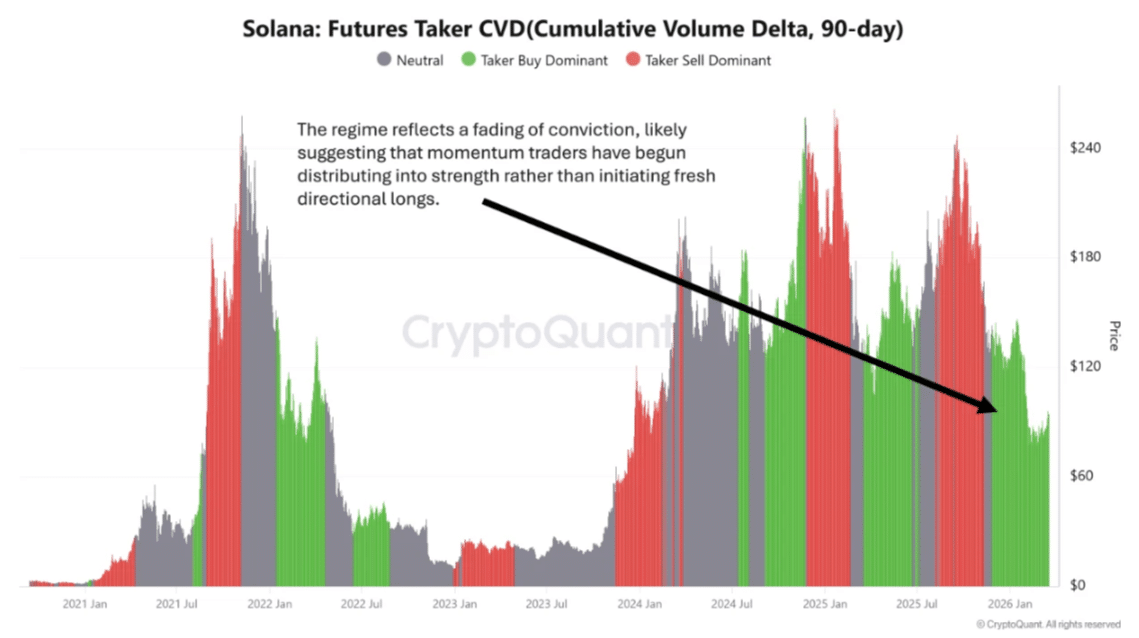
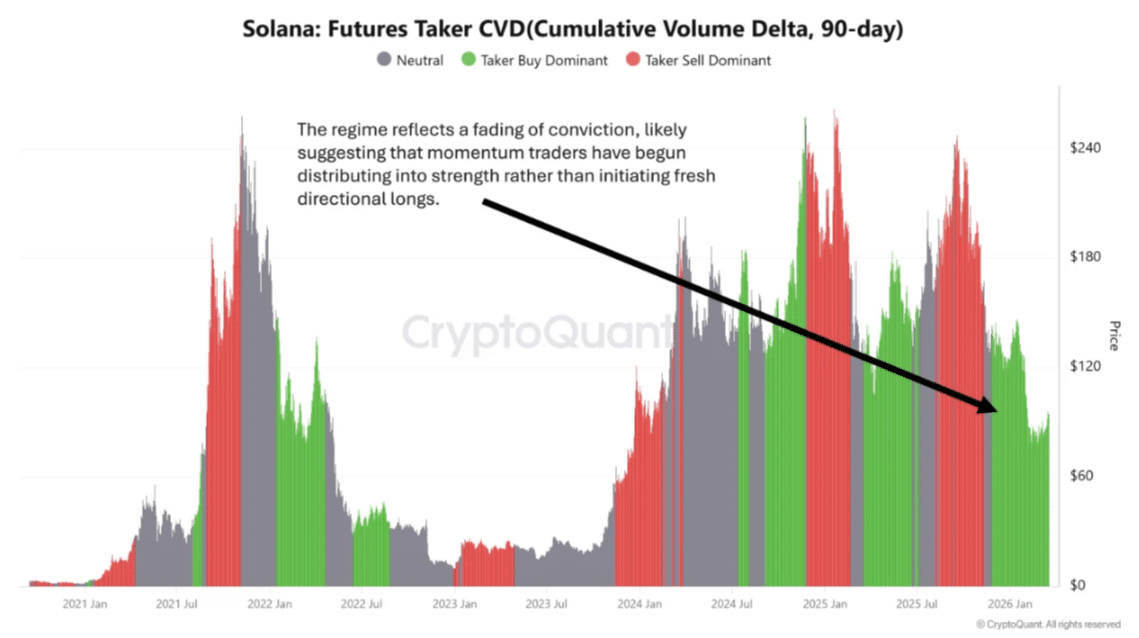
Solana’s [SOL] market structure revealed a clear shift in participant behavior, with Futures momentum weakening as Spot demand built quietly. In fact, the Futures Taker CVD showed that after strong sell dominance in 2024, activity transitioned into mixed phases through 2025.

However, in 2026, buy pressure faded while sell clusters returned – A sign that momentum traders may be distributing their strength rather than committing fresh capital. This may be evidence of late-cycle fatigue, where leveraged conviction usually declines.

Source: CryptoQuant

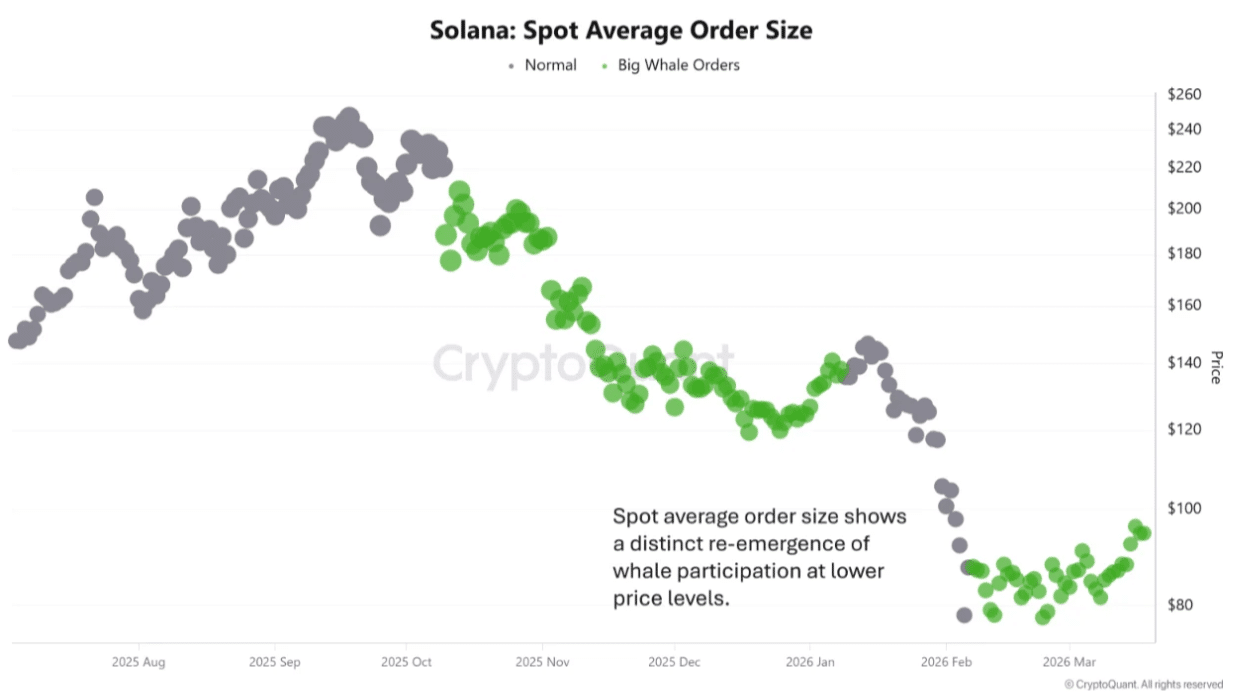
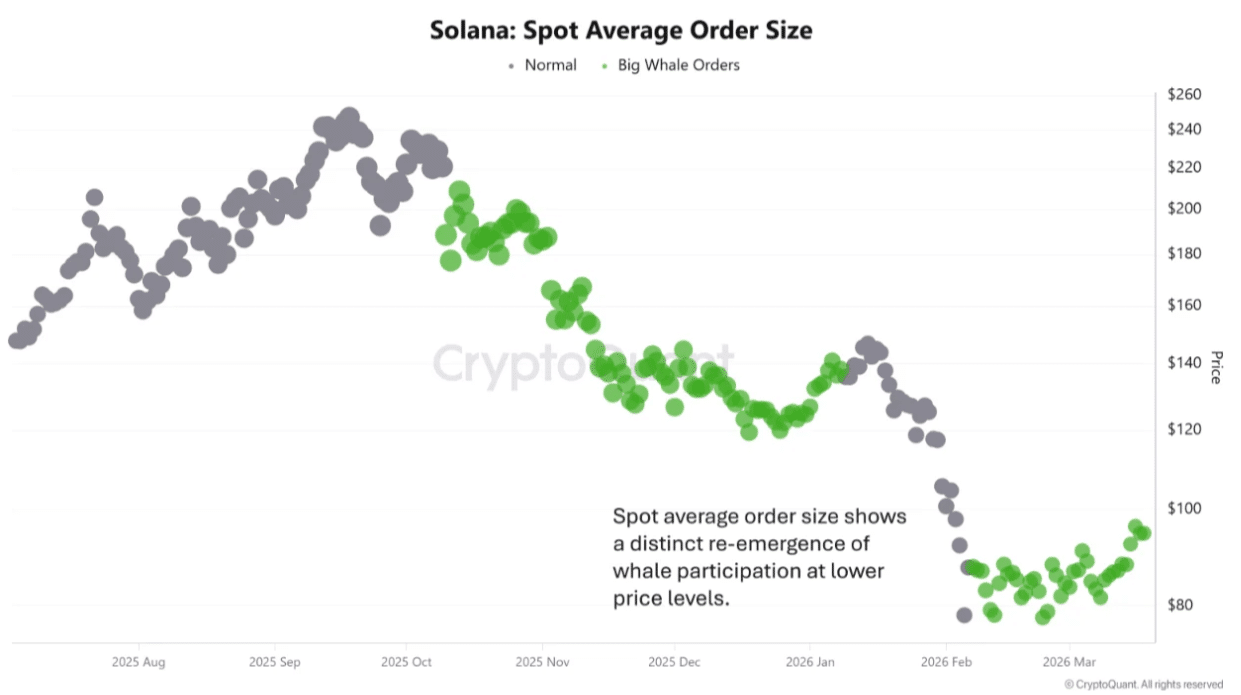
Meanwhile, Spot order sizes expanded between $80 and $100, marking the return of whale participation at lower levels.

As larger players accumulate into weakness, they absorb supply without chasing price, signaling strategic positioning rather than speculation. Such behavior usually implies confidence in long-term value while avoiding short-term volatility.

Source: CryptoQuant

On the contrary, this divergence highlighted a structural reset, one where leverage exits and stronger hands rebuild positions. This might set the stage for a more stable base before any sustained upside.

That same shift from Futures exhaustion towards Spot-driven demand began to reflect more clearly in Solana’s liquidity layer.

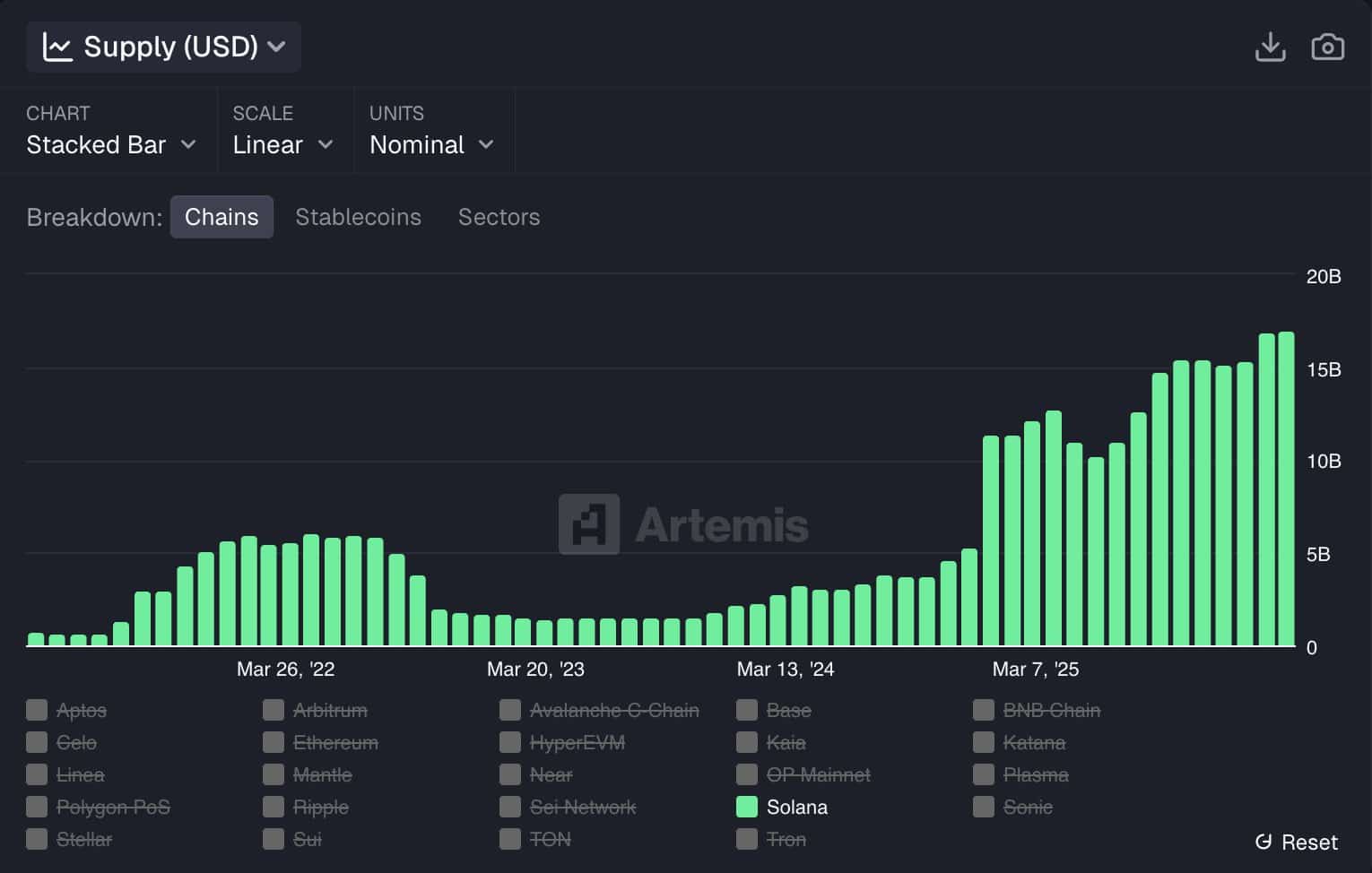
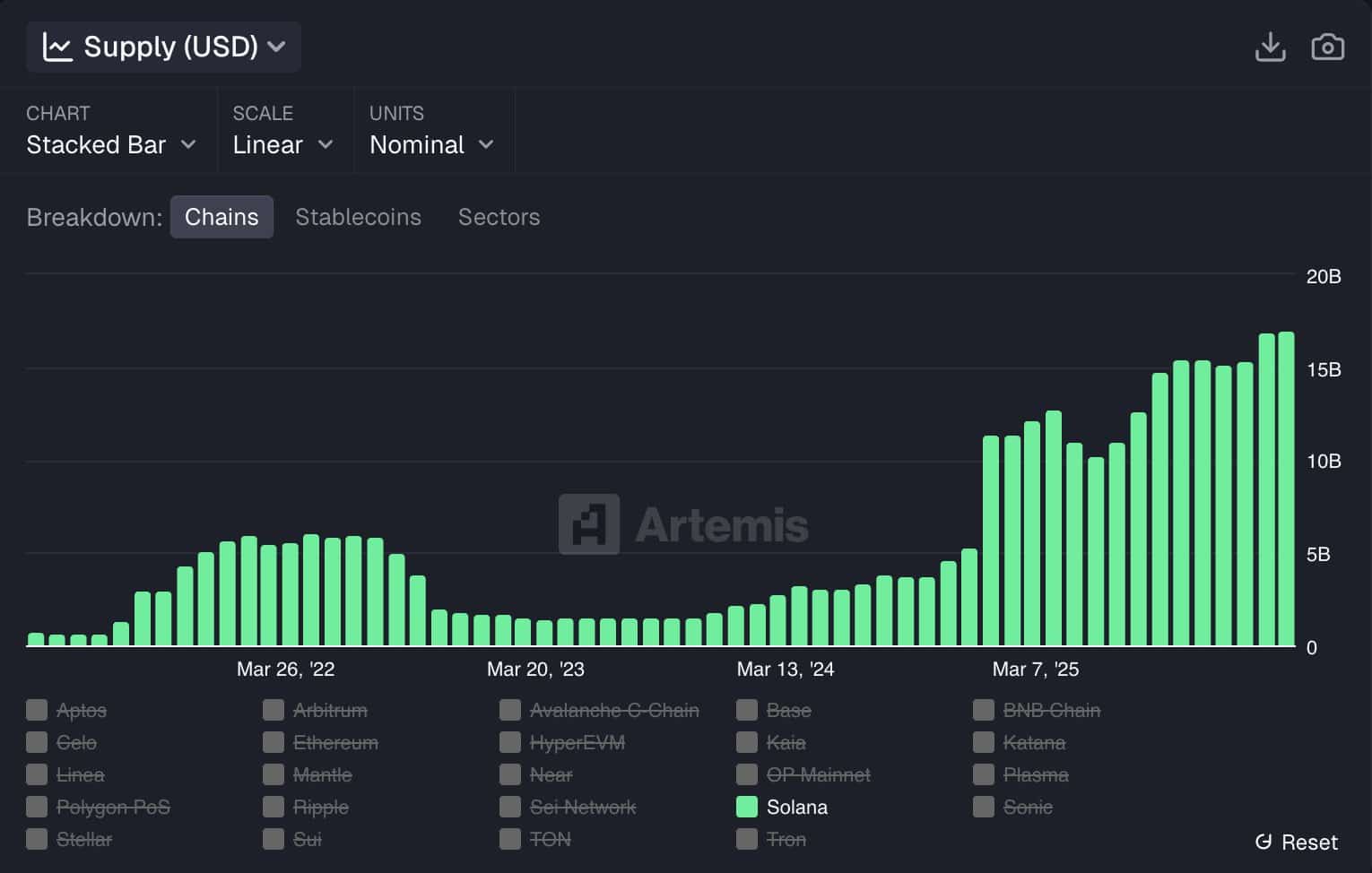
Stablecoin supply extended past $17 billion, marking a new all-time high as growth accelerated into early 2026. As capital flows into the network, such an expansion would mean that liquidity is not exiting but repositioning for deployment.

Source: Artemis

As supply pushes beyond previous ceilings, Solana strengthens its role as a settlement layer. As a result, users and institutions increasingly route capital through the network.

This shift may be evidence that participants are preparing to deploy funds across DeFi and real-world asset activity. Rather than holding idle positions, capital moves with clearer intent.

As liquidity deepens, the ecosystem gains stronger support for sustained activity. In turn, this reinforces the broader transition, where spot demand gradually replaces fading derivatives-driven momentum.

Solana supply tightens under the surface

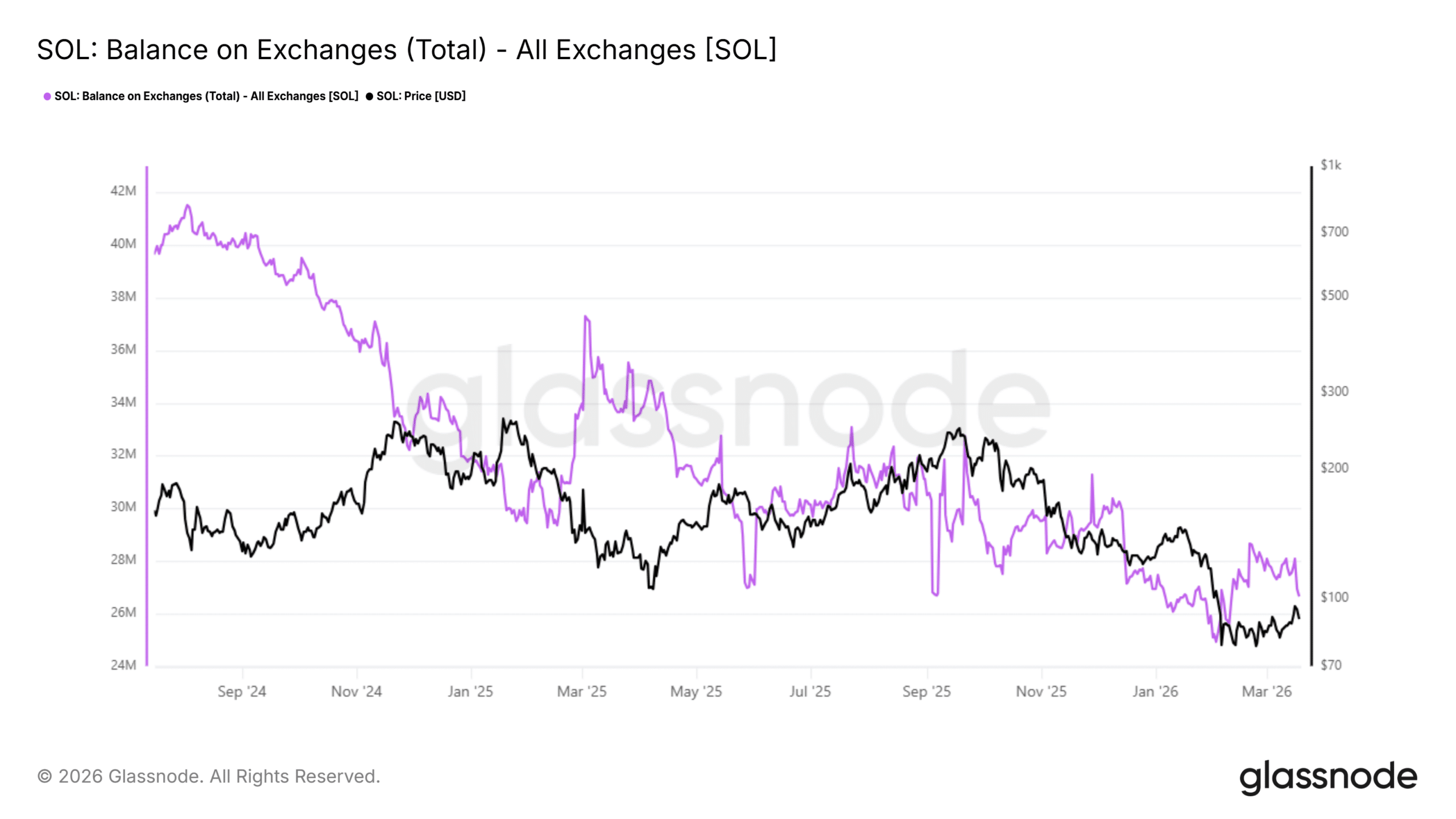
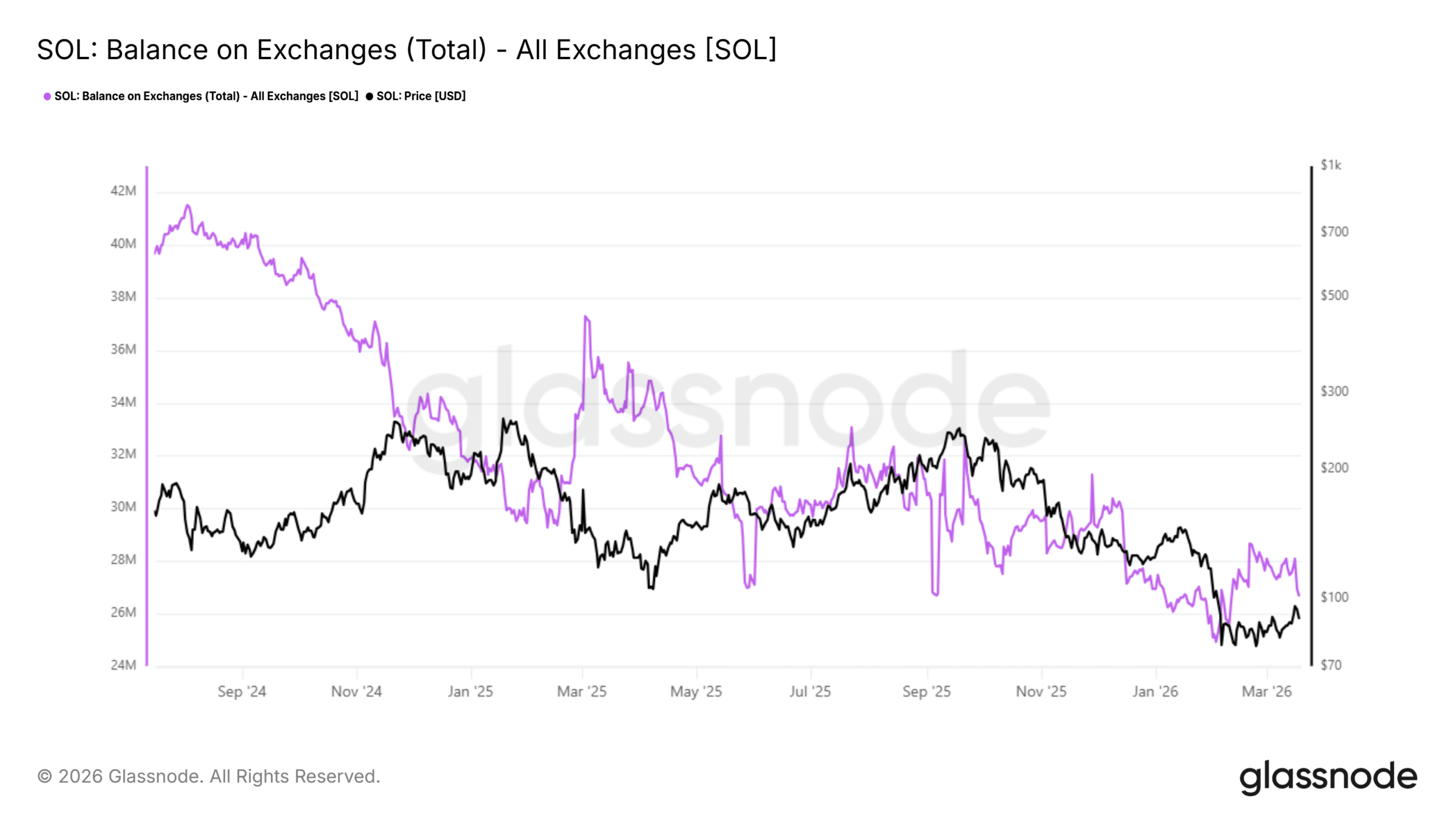
Finally, this absorption dynamic becomes clearer when viewed through Exchange Balances. They have continued to trend lower, despite recent inflows.

in fact, balances fell from above 40 million SOL in late 2024 to nearly 27 million by March 2026. Even as intermittent spikes pointed to short-term deposits.

Source: Glassnode

As these inflows fail to reverse the broader downtrend, it means incoming supply is being quickly absorbed rather than redistributed.

As liquid balances compress, the amount of readily tradable SOL shrinks, limiting sustained sell pressure. Such a shift occurs as participants move tokens into private custody or staking, signaling stronger holding behavior.

As supply tightens beneath the surface while demand absorbs available liquidity, the market structure will strengthen, reinforcing a transition towards a more stable and controlled environment.


Final Summary

  • Solana [SOL] is transitioning from Futures-driven momentum to Spot-led accumulation, as whales absorb supply and stablecoin liquidity exceeds $17 billion.
  • Solana saw tightening exchange supply alongside rising on-chain liquidity, signaling reduced sell pressure and positioning the market for sustained expansion.

Связанные с этим вопросы

QWhat shift in participant behavior did Solana's market structure reveal according to the article?

ASolana's market structure revealed a shift from Futures-driven momentum to Spot-led accumulation, with Futures momentum weakening as Spot demand built quietly.

QWhat does the expansion of Spot order sizes between $80 and $100 indicate about whale participation?

AThe expansion of Spot order sizes between $80 and $100 marks the return of whale participation at lower levels, signaling strategic positioning rather than speculation as larger players accumulate into weakness.

QHow did stablecoin supply on Solana change by early 2026, and what does it imply?

AStablecoin supply on Solana extended past $17 billion by early 2026, marking a new all-time high, which implies that liquidity is not exiting but repositioning for deployment across DeFi and real-world asset activity.

QWhat trend was observed in Solana's Exchange Balances from late 2024 to March 2026?

AExchange Balances for Solana fell from above 40 million SOL in late 2024 to nearly 27 million by March 2026, indicating that incoming supply is being quickly absorbed rather than redistributed.

QHow does the article describe the overall market structure transition for Solana?

AThe article describes Solana's market structure as transitioning towards a more stable and controlled environment, with spot demand gradually replacing fading derivatives-driven momentum, supply tightening beneath the surface, and demand absorbing available liquidity.

Похожее

$9.4 Billion: The Largest Robotics Funding This Year Has Emerged

Munich-based humanoid robotics company Neura has completed a $1.4 billion (approximately RMB 94.9 billion) Series C funding round, valuing the company at around $7 billion and positioning it among the global leaders in the sector. The investment round is notable not just for its size—reportedly the largest in robotics this year—but also for its strategic backers, which include tech giants like NVIDIA and Amazon, alongside established industrial players such as German engineering firms Bosch and Schaeffler. This mix of investors signals a significant shift in the industry's focus from technological demonstrations and general-purpose narratives toward practical, industrial deployment and commercialization. Neura's approach centers on developing humanoid robots for defined, high-value industrial tasks rather than pursuing a general-purpose model. Its early validation comes from a partnership with BMW, where its robots are being tested on actual production lines. The involvement of Bosch and Schaeffler, companies deeply embedded in global manufacturing, underscores a growing belief that humanoid robots are transitioning from labs to viable factory-floor solutions. The article highlights two converging trends driving investment: advancements in AI and large language models, which enhance robots' perception and decision-making in unstructured environments, and mounting pressure from labor shortages and rising costs in major manufacturing regions. The funding landscape is now bifurcating between companies like Figure AI, focusing on versatile general-purpose robots, and firms like Neura, targeting specific vertical industrial applications with clearer, shorter paths to ROI. While technical hurdles remain, the core challenges for widespread adoption are increasingly seen as engineering and commercial in nature: managing the high integration and customization costs for different factory environments and establishing robust, localized maintenance and service networks. The record investment in Neura, particularly from industrial capital, indicates the industry's growing confidence in moving from proving feasibility to solving the practical problems of scalability, reliability, and building sustainable business models around humanoid robots in real-world settings like automotive manufacturing and hazardous labor environments.

marsbit13 ч. назад

$9.4 Billion: The Largest Robotics Funding This Year Has Emerged

marsbit13 ч. назад

Торговля

Спот
Фьючерсы

Популярные статьи

Обсуждения

Добро пожаловать в Сообщество HTX. Здесь вы сможете быть в курсе последних новостей о развитии платформы и получить доступ к профессиональной аналитической информации о рынке. Мнения пользователей о цене на SOL (SOL) представлены ниже.

活动图片