Per Capita Profit of $85 Million, Outshining Goldman Sachs and Nvidia: The World's Most Profitable Business Isn't AI

marsbitОпубликовано 2026-02-25Обновлено 2026-02-25

Введение

An article titled "Per Capita Profit of $85 Million, Surpassing Goldman Sachs and Nvidia: The World's Most Profitable Business Isn't AI" discusses the remarkable financial performance of Tether, the company behind the USDT stablecoin. In 2024, Tether reported a net profit of $13 billion with only about 150 employees, resulting in a staggering per capita profit of approximately $85.62 million. This figure is nearly 300 times that of Goldman Sachs and 85 times that of Nvidia. Tether's highly profitable business model is described as a "stablecoin float game." Users exchange $1 for 1 USDT, and Tether uses this capital to purchase U.S. Treasury bonds, which yield over 5% annually. Since USDT pays no interest to its holders, Tether captures the entire spread. By the end of 2025, Tether's U.S. Treasury holdings reached $141 billion, making it the 17th largest holder globally. It also holds significant assets in gold and Bitcoin, which have contributed substantial additional gains. The article positions Tether as a global "shadow bank" that operates 24/7, offering a crucial service, especially in emerging markets with high inflation and capital controls. It highlights the inefficiencies of the traditional SWIFT payment system, which can take days and charge high fees, compared to USDT transfers, which are nearly instantaneous and cost very little on networks like Tron. The concept of "Pay-Fi" (Payment Finance) is introduced, where next-generation financial protocols enable value...

By | Clow

Author:白话区块链

In 2024, a company named Tether presented a performance report that left Wall Street astounded.

$13 billion in net profit, with approximately 150 employees.

Per capita profit is about $85.62 million, nearly 300 times that of Goldman Sachs and 85 times that of Nvidia.

This is not an AI unicorn, nor a top-tier hedge fund. It is merely a stablecoin issuer—the company behind USDT.

When these numbers circulated in financial circles, many people's first reaction was: How is this possible?

But if you understand Tether's business model, you'll realize that this is not only possible but almost inevitable.

01. The World's Most Profitable Business

Tether's profit logic is known in the industry as the "stablecoin float game."

The rules are simple: You give Tether $1 and receive 1 USDT in return. Tether takes your money and buys U.S. Treasury bonds.

The annualized yield of U.S. bonds has long remained above 5%, while USDT never pays any interest.

The difference in between goes entirely to Tether.

As of the end of 2025, Tether's total exposure to U.S. bonds reached $141 billion, making it the 17th largest holder of U.S. bonds globally, surpassing the scale of sovereign nations like Germany and South Korea.

U.S. bonds alone contribute over $4 billion in cash flow to Tether annually.

And this is just the first layer.

The second layer is gold and Bitcoin. Tether holds approximately $17 billion worth of gold and over 96,000 Bitcoins. The sharp rise in gold prices in 2025 brought an additional $5 billion in floating profits.

The third layer is the liquidity premium. What do those who forgo the 5% bond interest get in return? It is the ability to use digital dollars anytime in Turkey, Argentina, Nigeria, and other countries. For markets plagued by high inflation and foreign exchange controls, this liquidity is more valuable than a 5% annual return.

Tether is essentially a global "shadow bank" without branches, tellers, or downtime, specifically capturing the huge interest rate differentials left behind by the inefficiencies of the traditional financial system.

02. Breaking Through the Walls of Traditional Payments

The SWIFT system was built in the 1970s. Half a century later, its core logic remains largely unchanged: relay through correspondent banks, passing through multiple nodes one after another, taking at least 3 to 5 business days, with comprehensive fees as high as 7%.

A payment from the U.S. to Nigeria must go through layers of remitting banks, intermediary banks, and receiving banks, each taking a cut in handling fees.

Moreover, these banks have business hours. A remittance initiated on Friday night won't start "processing" until the following Monday.

In contrast, a USDT transfer can reach the recipient's wallet in less than 30 seconds on the Tron network for a fee of under $1, operating 24/7, 365 days a year without interruption.

The cost difference is particularly staggering. Traditional comprehensive fees for B2B cross-border payments range from 1.5% to 7%, while personal remittances can sometimes exceed 11%; the comprehensive cost on stablecoin networks is typically only 0.5% to 2%.

The deeper impact lies in "reach."

Hundreds of millions of adults worldwide still lack bank accounts. But with a mobile phone and internet access, they can create a crypto wallet and connect to global trade. In Africa and Latin America, USDT has become a common tool for small and medium-sized enterprises to pay international suppliers.

In 2025, a new generation of Web3 POS systems began using NFC technology to enable "tap-to-pay," bringing crypto payments to retail store counters.

This wall is being breached from all directions.

03. Pay-Fi: The Logic of Money Is Being Rewritten

Payment + Finance, this combination has a new name: Pay-Fi (Payment Finance).

Traditional payments solve the problem of "moving money from A to B." Pay-Fi aims to solve the problem of "money moving from A to B while generating interest along the way."

Protocols like Huma Finance are working on tokenizing corporate accounts receivable, providing instant financing through on-chain liquidity pools to address prepaid capital pressures in cross-border trade. As of early 2026, the cumulative transaction volume of the Huma protocol has exceeded $10 billion, and its T+0 real-time settlement capability is attracting increasing attention from traditional financial institutions.

The battle for underlying infrastructure is also underway. Ethereum L2 significantly reduces on-chain transaction costs through Rollup technology; Celestia and EigenDA further lower fees at the data storage layer, making large-scale micro-payments possible. The Tron network, with its vast USDT reserves and extremely low transfer fees, remains the world's busiest stablecoin settlement network.

The stablecoin market itself is also diversifying. USDT dominates offshore payments and emerging markets with about 59% market share; USDC wins over U.S. licensed institutions with compliance and transparency, occupying the vast majority of share in institutional-grade, compliance-first transfer/settlement scenarios. PayPal's PYUSD targets the retail end with its merchant network, and Ripple's RLUSD aims for interbank large-scale settlements.

This market is no longer dominated by a single player but is rapidly moving toward specialized division of labor.

04. The Ambition and Boundaries of Tether

Having made so much money, what does Tether plan to do with it?

Buy mining farms. In Uruguay, Paraguay, and El Salvador, Tether has invested over $2 billion to establish 15 energy and Bitcoin mining sites, aiming to become the world's largest Bitcoin miner.

Buy AI. Through channels like Northern Data Group, Tether has invested over $1 billion in AI computing infrastructure.

Buy robots. At the end of 2025, Tether invested €70 million in Italian AI robotics startup Generative Bionics; simultaneously, it is considering an investment of up to $1.15 billion in German robotics company Neura, with the goal of producing 5 million humanoid robots by 2030.

The logic behind this is not hard to understand: in an economy operated autonomously by AI agents and robots, the value exchange between them requires an instant, programmable digital currency. And USDT is already the most obvious candidate for this role.

Regulators are also adding weight to this story. In July 2025, the U.S. "GENIUS Act" was officially signed into law, opening legal channels for regulated institutions to issue stablecoins and explicitly excluding stablecoins from securities and commodities. The EU's MiCA framework was fully implemented the same year, bringing stablecoins from the "gray area" into the mainstream regulatory视野 (vision/scope).

Core Wall Street circles have also begun to enter the game. U.S. bond primary dealer Cantor Fitzgerald holds about 5% of Tether's equity, and its CEO Howard Lutnick has repeatedly publicly endorsed the authenticity of Tether's reserves. This deep binding means: Tether is no longer just a crypto project; it has quietly embedded itself into the interest network of traditional finance.

05. Summary

From a stablecoin issuer to one of the top 20 global holders of U.S. bonds, and then to an investor in robot factories—every step of Tether's expansion points in the same direction:

The definition of money is quietly shifting from the printing presses of sovereign nations to digital networks that offer higher efficiency and lower friction.

This process is not a revolution but an infiltration.

SWIFT is still operating, banks are still open, and the Fed is still adjusting interest rates. But another system is growing at an astonishing rate in the gaps between them.

For everyone involved, it might be worth asking yourself one question:

In the next decade, in which system will the money in your hands operate?

Трендовые криптовалюты

Связанные с этим вопросы

QWhat is Tether's business model and why is it so profitable?

ATether's business model, known as the 'stablecoin float game,' involves users exchanging 1 USD for 1 USDT. Tether then uses that USD to purchase U.S. Treasury bonds, which yield over 5% annually. Since Tether does not pay any interest to USDT holders, it keeps the entire spread. This, combined with investments in assets like gold and Bitcoin, results in extremely high profitability.

QHow does Tether's profitability per employee compare to major financial and tech firms like Goldman Sachs and NVIDIA?

AWith approximately 150 employees and a net profit of $13 billion, Tether's profit per employee is about $85.62 million. This is nearly 300 times the per-employee profit of Goldman Sachs and 85 times that of NVIDIA.

QWhat advantages do stablecoins like USDT offer over traditional cross-border payment systems like SWIFT?

AStablecoins like USDT offer significant advantage in speed, cost, and accessibility. A USDT transfer on the Tron network costs less than $1 and settles in about 30 seconds, operating 24/7. In contrast, SWIFT payments can take 3-5 business days and have much higher fees, ranging from 1.5% to 11%. USDT also provides financial access to the unbanked who have a mobile phone and internet connection.

QWhat is the concept of 'Pay-Fi' (Payment Finance) as described in the article?

A'Pay-Fi' refers to the combination of payment and finance that solves not just the movement of money from point A to B, but also allows that money to earn interest while in transit. Protocols like Huma Finance tokenize corporate accounts receivable to provide instant financing through on-chain liquidity pools, offering T+0 real-time settlement capabilities for cross-border trade.

QWhat are some of Tether's major investment areas with its significant profits?

ATether is investing its profits into several strategic areas: purchasing and building Bitcoin mining facilities to become a major miner, investing over $1 billion in AI computing infrastructure, and funding AI robotics companies like Generative Bionics and Neura with the goal of producing humanoid robots for a future economy where autonomous agents use digital currencies like USDT for value exchange.

Похожее

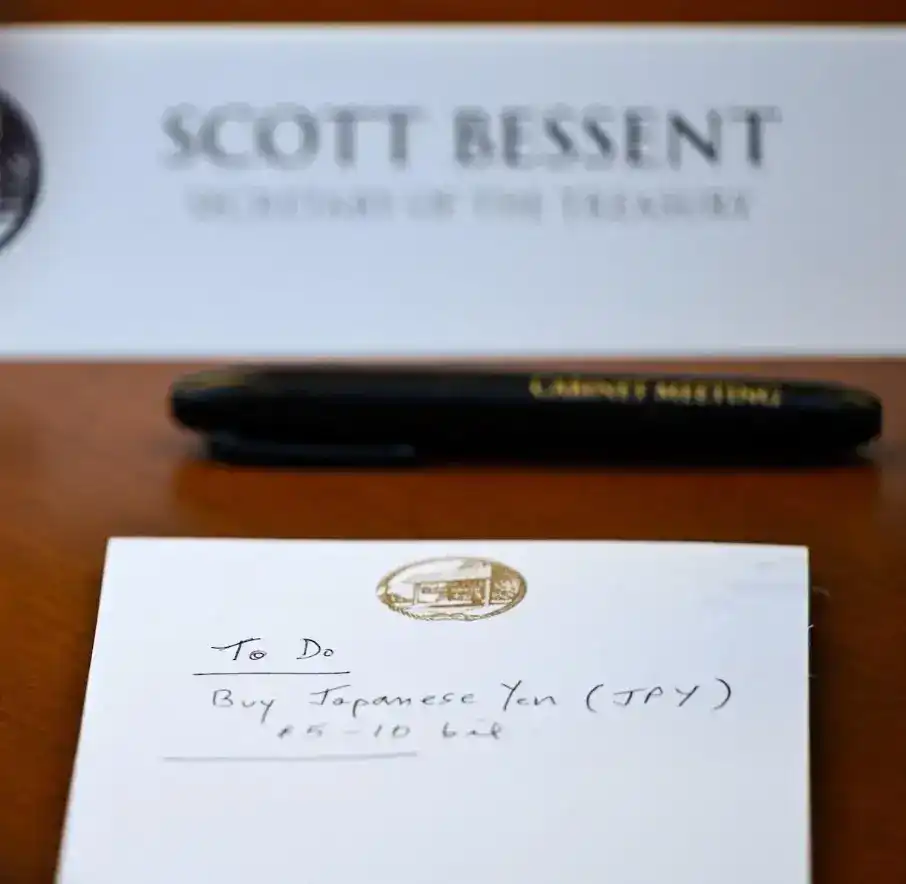
Совместное вмешательство США и Японии: новое «Соглашение Плаза», начало Бреттон-Вудской системы 2.0 и конец эры йеновых арбитражей

Мероприятие по совместной поддержке иены США и Японией, впервые за десятилетия, заставляет рынки переоценить глобальные модели движения капитала, долгое время зависевшие от дешевого финансирования в иенах. Аналитики полагают, что это может означать поворотный момент для торговли на разнице процентных ставок с использованием иены (йеновый кэрри-трейд) и привести к более глубокой перестройке глобальных финансовых потоков. Министр финансов США Бессент и президент Трамп подтвердили активное участие США. Бессент заявил о готовности к дальнейшим совместным интервенциям для коррекции «серьезной недооценки» иены. Трамп подчеркнул, что это демонстрация союзнических отношений, и ожидает финансовой выгоды для Вашингтона. Интервенция вызвала резкий рост курса иены до 157,40 за доллар. Анализ рынка указывает, что действия альянса выходят за рамки обычного управления валютным курсом. Если Японии для защиты иены придется продавать свои валютные резервы (включая казначейские облигации США), это может привести к переоценке долгосрочных доходностей американских госдолга и запустить реорганизацию глобальной ликвидности. Этот сдвиг потенциально сигнализирует о конце эры йенового кэрри-трейда, которая десятилетиями поддерживала глобальную ликвидность и низкие процентные ставки. Дополнительное давление на долгосрочные ставки создает изменение роли крупных технологических компаний, которые теперь активно выпускают облигации для финансирования инвестиций в ИИ, превращаясь из поглотителей сбережений в крупных заемщиков. Некоторые наблюдатели видят в этих событиях признаки формирования нового международного порядка в духе «Бреттон-Вудс 2.0» или нового «Соглашения Плаза». США, делая ставку на экономику предложения, стремятся к ускорению роста, в то время как Япония, возможно, стоит на пороге реструктуризации своей экономической и геополитической роли. Независимо от того, окажется ли интервенция разовой мерой или началом долгосрочной координации, она уже заставляет рынки пересматривать устоявшиеся модели глобальных капиталов.

marsbit20 мин. назад

Совместное вмешательство США и Японии: новое «Соглашение Плаза», начало Бреттон-Вудской системы 2.0 и конец эры йеновых арбитражей

marsbit20 мин. назад

Насколько высока вероятность, что TradeXYZ отделится от Hyperliquid и пойдет своим путем?

С ростом доли TradeXYZ на рынке HIP-3 Hyperliquid (свыше 90%) в сообществе растут спекуляции о возможном уходе проекта для запуска собственной торговой платформы. Анализ рассматривает «за» и «против» такого сценария. Аргументы «за» самостоятельность: TradeXYZ генерирует свыше 70% общего объема торгов и 35% открытого интереса на Hyperliquid, однако получает лишь 50% комиссий. Захват полной комиссионной выручки мог бы стать сильным финансовым стимулом для создания собственной инфраструктуры. Аргументы «против»: 1) Сложность быстрого воссоздания высокой производительности Hyperliquid; 2) Hyperliquid остается ключевым каналом привлечения пользователей для TradeXYZ; 3) Между основателями проектов существуют давние отношения взаимного доверия и уважения. Вывод: Вероятность полного отделения TradeXYZ в ближайшей перспективе низка. Такой шаг привел бы к взаимным потерям: Hyperliquid лишился бы ключевого драйвера роста и нарратива, а TradeXYZ столкнулся бы с техническими сложностями, потерей пользовательской базы и репутационными рисками. Более вероятным путем для TradeXYZ представляется переговорный процесс об условиях партнерства с Hyperliquid при сохранении текущей интеграции.

marsbit30 мин. назад

Насколько высока вероятность, что TradeXYZ отделится от Hyperliquid и пойдет своим путем?

marsbit30 мин. назад

Роботы-«Телепузики» приходят убираться домой за 200 рублей в час. Настоящий человеко-автомат

Американский стартап Tau Robotics представил услугу по уборке домов с помощью человекоподобных роботов по цене $30 в час. Роботы под именами Chelsea, Elon и Tony выполняют различные задачи: уборку кухни и ванной, регулярное обслуживание и глубокую чистку. Ключевая особенность — все действия в демонстрационных видео выполняются в реальном времени, без ускорения, что редкость для подобных демо. Однако выяснилось, что роботы в текущей версии не автономны, а управляются оператором дистанционно (так называемый «teleoperation»). Основатели объясняют этот подход как стратегический: он позволяет собирать данные в реальных домашних условиях для последующего обучения автономного ИИ, аналогично «режиму тени» в беспилотных автомобилях. В статье обсуждается сложность внедрения человекоподобных роботов в домашние условия. Автор отмечает, что, несмотря на критику «дистанционного управления», такой подход может быть практичным первым шагом для сбора данных. Также подчёркивается, что человекоподобная форма упрощает дистанционное управление, так как оператору интуитивно понятны движения, и она обладает значительной эмоциональной ценностью для пользователя. Услуга в настоящее время доступна по приглашению в Сан-Франциско.

marsbit45 мин. назад

Роботы-«Телепузики» приходят убираться домой за 200 рублей в час. Настоящий человеко-автомат

marsbit45 мин. назад

Из Кореи в США: благодаря ИИ рабочие профессии становятся всё востребованнее

Искусственный интеллект меняет структуру рынка труда, повышая спрос и зарплаты квалифицированных рабочих специальностей, в то время как традиционное высшее образование теряет привлекательность. Данные из США показывают, что доходы профессиональных училищ выросли на 11.4% в 2025 году, а число увольнений из-за внедрения ИИ достигло рекордных 38 579 в мае. Молодое поколение всё чаще выбирает рабочие профессии, считая их более стабильными в эпоху автоматизации. В США зарплаты таких специалистов, как электрики и сантехники, уже сравнялись или превзошли доходы многих офисных работников. В Корее выпускники профильных школ, например, полупроводниковой, практически гарантированно получают работу в таких компаниях, как Samsung. Дефицит кадров усугубляется массовым выходом на пенсию старшего поколения и бумом строительства инфраструктуры, в том числе для дата-центров. Крупные компании, такие как Meta и JPMorgan, инвестируют миллионы в программы обучения. Несмотря на растущий интерес, преодоление стереотипов о "непрестижности" рабочих профессий остаётся ключевой задачей для полного удовлетворения рыночного спроса.

marsbit1 ч. назад

Из Кореи в США: благодаря ИИ рабочие профессии становятся всё востребованнее

marsbit1 ч. назад

От TPU к самосовершенствующимся агентам: как Джефф Дин видит следующий шаг в развитии ИИ

В статье на основе выступления Джеффа Дина на YC Startup School обсуждается эволюция ИИ от больших моделей к системам с долгосрочными агентами. Дин подчеркивает, что следующий этап ИИ — не просто более умные модели, а создание систем, способных к продолжительной автономной работе, самообучению и автоматизированным экспериментам. Ключевые темы включают смещение фокуса с размера моделей на организацию интеллекта, важность контекстной инженерии, аппаратной эффективности (особенно для вывода), а также возможности для стартапов в нишевых областях, где большие модели слабы. Он отмечает, что по мере удешевления генерации кода возрастает ценность четких спецификаций, правильной постановки задач и "вкуса" в выборе направлений. В итоге, главным становится не ответ модели, а создание надежных систем, способных выполнять сложные, многошаговые задачи.

marsbit1 ч. назад

От TPU к самосовершенствующимся агентам: как Джефф Дин видит следующий шаг в развитии ИИ

marsbit1 ч. назад

Торговля

Спот

Популярные статьи

Неделя обучения по популярным токенам (2): 2026 может стать годом приложений реального времени, сектор AI продолжает оставаться в тренде

2025 год — год институциональных инвесторов, в будущем он будет доминировать в приложениях реального времени.

1.9k просмотров всегоОпубликовано 2025.12.16Обновлено 2025.12.16

Неделя обучения по популярным токенам (2): 2026 может стать годом приложений реального времени, сектор AI продолжает оставаться в тренде

Обсуждения

Добро пожаловать в Сообщество HTX. Здесь вы сможете быть в курсе последних новостей о развитии платформы и получить доступ к профессиональной аналитической информации о рынке. Мнения пользователей о цене на AI (AI) представлены ниже.

活动图片