MIT Researcher Proposes New Path To Make Bitcoin Quantum-Safe

bitcoinistОпубликовано 2026-04-21Обновлено 2026-04-21

Введение

MIT Digital Currency Initiative director Neha Narula proposes a practical, staged approach to make Bitcoin quantum-safe. She argues that Bitcoin should immediately implement low-risk defenses through a soft fork, rather than waiting for full consensus on more complex issues. Her recommended solution involves deploying a post-quantum output type like P2MR (BIP 360) along with a new quantum-resistant signature opcode. This would allow users to securely migrate their funds to quantum-resistant addresses, provided they avoid address exposure. While this doesn’t resolve all challenges—such as how to handle inactive or lost coins—Narula emphasizes that immediate action reduces risk and provides time to gather data before a cryptographically relevant quantum computer emerges. She dismisses alternative proposals as impractical for broad use and acknowledges tradeoffs, such as reduced privacy efficiency, but insists progress shouldn’t be delayed by unresolved governance debates.

MIT Digital Currency Initiative director Neha Narula has laid out a proposed roadmap for making Bitcoin resilient to a future cryptographically relevant quantum computer, arguing the network should prioritize a practical, low-risk path that lets users secure their coins now rather than waiting for consensus on harder questions such as how to handle unmoved coins.

In a post published April 20, Narula said Bitcoin does not need “100% of the answers immediately” before taking meaningful action. Instead, she argued for a staged approach: deploy a post-quantum-safe output type and signature scheme through a soft fork, coordinate wallet and application support around it, and push users toward migration well before any true quantum emergency arrives.

Bitcoin Needs Low-Risk Quantum Defenses Now

Her core thesis is straightforward. “We should make the low-harm, low-risk, high-benefit, safety-critical mitigations NOW, and save the high-harm, high-risk mitigations for LATER, when we know with more certainty a CRQC is close,” she wrote, using CRQC to refer to a cryptographically relevant quantum computer.

The proposal Narula favors centers on P2MR, described in BIP 360, combined with a new post-quantum signature opcode and cryptographic agility. In her framing, that combination would allow Bitcoin users to move funds into an output type that remains safe against a quantum attacker, provided they do not reveal a non-post-quantum public key through address reuse or similar behavior.

“If this is done, it gives Bitcoin users the ability to move their coins to a safe output type immediately, having confidence their coins are safe even if a powerful CRQC appears, without worrying about future softforks,” she wrote. “The best candidate for this I have seen so far is P2MR (BIP 360) in conjunction with a new PQ signature opcode and cryptographic agility.”

Narula’s case is not that this solves everything. It does not. She draws a clear distinction between protecting individual users who migrate early and protecting Bitcoin as a system if a large share of coins remains vulnerable. That unresolved portion, which she labels X, is central to the longer-term debate. If only a negligible amount of bitcoin remains exposed, she suggests the network could likely absorb the risk. If the number is large, the situation could become far more destabilizing.

“At the very least I’d say it depends on exact numbers,” she wrote. “If only 0.0001% of coins are insecure, I think Bitcoin will be fine. If 20% of coins are insecure, I think things would probably get pretty chaotic if a CRQC would appear.”

Still, Narula argues that uncertainty over X should not delay the first step. A migration path would generate real on-chain data about adoption and give Bitcoin time to reduce the vulnerable share before the network is forced into more contentious decisions. In her telling, the difficult debate over whether old, inactive or lost coins should eventually be frozen can wait.

“Most importantly, we do not have to decide what to do with people who are unlikely to show up to do anything at all (Satoshi’s coins) right now in order to make progress,” she wrote. “Eventually, if a CRQC seems close, we will have to make a decision one way or the other... But resolving that conversation is not needed to make useful, meaningful progress.”

Narula also pushed back on ideas she sees as distractions or inferior near-term solutions. She dismissed the notion that research proof-of-concept approaches, such as manually constructing post-quantum verification in script or relying on expensive escape-hatch mechanisms, should anchor Bitcoin’s main response. Those ideas may be technically possible, she said, but not operationally suitable for broad deployment.

She also acknowledged the tradeoffs. P2MR would reduce one of Taproot’s efficient privacy properties by eliminating the key spend path, and it depends on wallets handling address reuse correctly. She flagged those as real downsides, but not enough to outweigh the benefit of giving users a way to protect funds without waiting for a second, more politically fraught soft fork.

The roadmap Narula sketched leaves Bitcoin’s hardest governance questions unresolved. That is the point. Her argument is that the network should stop treating perfect alignment as a prerequisite for obvious preparation.

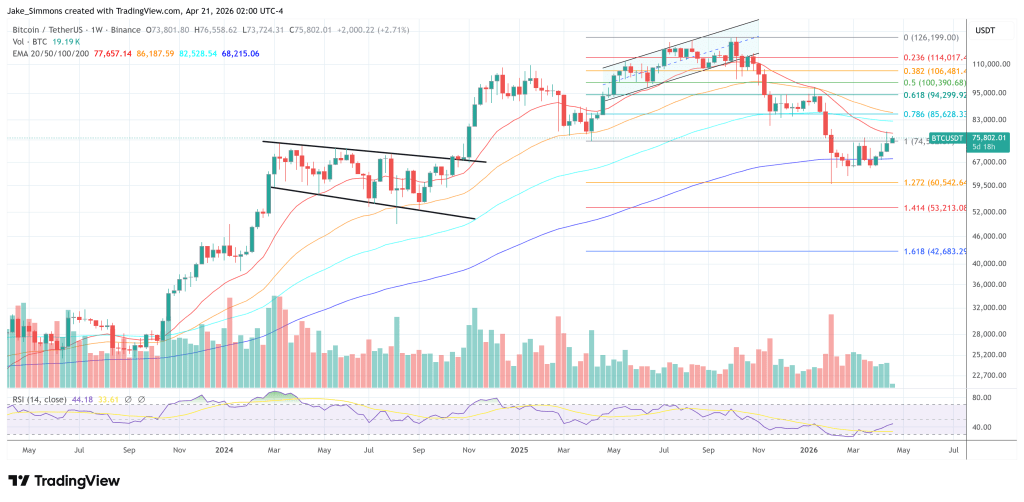
At press time, Bitcoin traded at $75,802.

Bitcoin must close above the 1.0 Fib, 1-week chart | Source: BTCUSDT on TradingView.com

Связанные с этим вопросы

QWhat is the core thesis of Neha Narula's proposal for making Bitcoin quantum-safe?

ANeha Narula's core thesis is that Bitcoin should implement low-risk, high-benefit quantum safety mitigations immediately, such as deploying a post-quantum-safe output type through a soft fork, rather than waiting for consensus on more complex and risky solutions.

QWhat specific solution does Narula favor for initial quantum resistance, and which BIP does it relate to?

ANarula favors the P2MR (Pay to Multi-Root) solution described in BIP 360, combined with a new post-quantum signature opcode and cryptographic agility, to allow users to move funds to a quantum-safe output type.

QAccording to Narula, why should the uncertainty over unmoved coins (labeled 'X') not delay initial action?

ANarula argues that uncertainty over unmoved coins should not delay initial action because implementing a migration path now generates on-chain data about adoption and reduces the vulnerable share of coins, buying time before more contentious decisions must be made.

QWhat are two tradeoffs or downsides that Narula acknowledges with the P2MR approach?

ANarula acknowledges that P2MR would reduce one of Taproot's efficient privacy properties by eliminating the key spend path, and it depends on wallets correctly handling address reuse to maintain security.

QWhat does Narula dismiss as inferior or distracting near-term solutions for Bitcoin's quantum resistance?

ANarula dismisses research proof-of-concept approaches, such as manually constructing post-quantum verification in script or relying on expensive escape-hatch mechanisms, as technically possible but not operationally suitable for broad deployment.

Похожее

The AI Stock Genius Who Made 60x Bets $7.7 Billion on Nvidia Topping Out

An AI-focused hedge fund named Situational Awareness LP, known for its 60x returns, has taken a significant bearish stance on semiconductor stocks in Q1 2026. Its 13F filing reveals a massive 148% quarterly increase in nominal exposure to $13.677 billion, with over 60% of the new exposure directed towards put options on major chip players. Key bearish bets include $2.04 billion in puts on the VanEck Semiconductor ETF (SMH) and $1.56 billion on NVIDIA, alongside positions against Broadcom, Oracle, AMD, and others. The fund simultaneously increased its long equity holdings in AI infrastructure and compute providers like CoreWeave and Bitcoin mining companies repurposing for compute. The core thesis behind this positioning is a shift in the primary constraint for AI expansion. The fund argues that while GPU supply was the critical bottleneck in previous years, the new limiting factors for large-scale AI cluster deployment are physical infrastructure: electrical grid access (with multi-year backlogs in the US), power availability, land, and data center construction timelines. The fund is not betting against AI's success but rather hedging against potential valuation corrections in semiconductor stocks whose prices may have run ahead, while directly investing in the downstream physical bottlenecks—power and data center capacity—it believes will capture value next. This move translates a previously theoretical narrative about infrastructure constraints into a concrete, high-conviction portfolio structure.

链捕手2 ч. назад

The AI Stock Genius Who Made 60x Bets $7.7 Billion on Nvidia Topping Out

链捕手2 ч. назад

Торговля

Спот
Фьючерсы

Популярные статьи

Тест по Bitcoin Биткоина

HTX Learn: Изучите Bitcoin halving и Заработаете Токены USDT

3.0k просмотров всегоОпубликовано 2024.04.16Обновлено 2024.04.16

Тест по Bitcoin  Биткоина

Что такое $BITCOIN

ЦИФРОВОЕ ЗОЛОТО ($BITCOIN): Комплексный анализ Введение в ЦИФРОВОЕ ЗОЛОТО ($BITCOIN) ЦИФРОВОЕ ЗОЛОТО ($BITCOIN) — это проект на основе блокчейна, работающий в сети Solana, который стремится объединить характеристики традиционных драгоценных металлов с инновациями децентрализованных технологий. Хотя он носит имя Биткойн, часто называемого “цифровым золотом” из-за его восприятия как средства хранения ценности, ЦИФРОВОЕ ЗОЛОТО является отдельным токеном, предназначенным для создания уникальной экосистемы в ландшафте Web3. Его цель — позиционировать себя как жизнеспособный альтернативный цифровой актив, хотя детали его применения и функциональности все еще развиваются. Что такое ЦИФРОВОЕ ЗОЛОТО ($BITCOIN)? ЦИФРОВОЕ ЗОЛОТО ($BITCOIN) — это токен криптовалюты, специально разработанный для использования в блокчейне Solana. В отличие от Биткойна, который выполняет широко признанную роль хранения ценности, этот токен, похоже, сосредоточен на более широких приложениях и характеристиках. Примечательные аспекты включают: Инфраструктура блокчейна: Токен построен на блокчейне Solana, известном своей способностью обрабатывать высокоскоростные и недорогие транзакции. Динамика предложения: ЦИФРОВОЕ ЗОЛОТО имеет максимальное предложение, ограниченное 100 квадриллионами токенов (100P $BITCOIN), хотя детали о его обращающемся предложении в настоящее время не раскрыты. Утилита: Хотя точные функциональные возможности не описаны, есть указания на то, что токен может быть использован для различных приложений, потенциально связанных с децентрализованными приложениями (dApps) или стратегиями токенизации активов. Кто создатель ЦИФРОВОГО ЗОЛОТА ($BITCOIN)? На данный момент личность создателей и команды разработчиков, стоящих за ЦИФРОВЫМ ЗОЛОТОМ ($BITCOIN), остается неизвестной. Эта ситуация типична для многих инновационных проектов в области блокчейна, особенно тех, которые связаны с децентрализованными финансами и феноменом мем-криптовалют. Хотя такая анонимность может способствовать культуре, ориентированной на сообщество, она усиливает опасения по поводу управления и ответственности. Кто инвесторы ЦИФРОВОГО ЗОЛОТА ($BITCOIN)? Доступная информация указывает на то, что у ЦИФРОВОГО ЗОЛОТА ($BITCOIN) нет известных институциональных спонсоров или значительных венчурных капиталовложений. Проект, похоже, функционирует по модели пирингового взаимодействия, сосредоточенной на поддержке и принятии сообществом, а не на традиционных путях финансирования. Его активность и ликвидность в основном сосредоточены на децентрализованных биржах (DEX), таких как PumpSwap, а не на устоявшихся централизованных торговых платформах, что еще больше подчеркивает его подход, ориентированный на grassroots. Как работает ЦИФРОВОЕ ЗОЛОТО ($BITCOIN) Операционные механизмы ЦИФРОВОГО ЗОЛОТА ($BITCOIN) можно подробно описать на основе его дизайна блокчейна и характеристик сети: Механизм консенсуса: Используя уникальный механизм доказательства истории (PoH) Solana в сочетании с моделью доказательства доли (PoS), проект обеспечивает эффективную валидацию транзакций, что способствует высокой производительности сети. Токеномика: Хотя конкретные дефляционные механизмы не были подробно описаны, большое максимальное предложение токенов подразумевает, что оно может быть предназначено для микротранзакций или нишевых случаев использования, которые еще предстоит определить. Интероперабельность: Существует потенциал для интеграции с более широкой экосистемой Solana, включая различные платформы децентрализованных финансов (DeFi). Однако детали относительно конкретных интеграций остаются неуточненными. Хронология ключевых событий Вот хронология, которая подчеркивает значимые вехи, касающиеся ЦИФРОВОГО ЗОЛОТА ($BITCOIN): 2023: Первоначальное развертывание токена происходит в блокчейне Solana, отмеченное его адресом контракта. 2024: ЦИФРОВОЕ ЗОЛОТО приобретает видимость, когда оно становится доступным для торговли на децентрализованных биржах, таких как PumpSwap, позволяя пользователям обменивать его на SOL. 2025: Проект наблюдает спорадическую торговую активность и потенциальный интерес к инициативам, возглавляемым сообществом, хотя на данный момент не зафиксировано никаких значительных партнерств или технических достижений. Критический анализ Сильные стороны Масштабируемость: Основная инфраструктура Solana поддерживает высокие объемы транзакций, что может повысить полезность $BITCOIN в различных сценариях транзакций. Доступность: Потенциально низкая цена торговли за токен может привлечь розничных инвесторов, способствуя более широкому участию благодаря возможностям дробного владения. Риски Отсутствие прозрачности: Отсутствие публично известных спонсоров, разработчиков или процесса аудита может вызвать скептицизм относительно устойчивости и надежности проекта. Волатильность рынка: Торговая активность сильно зависит от спекулятивного поведения, что может привести к значительной волатильности цен и неопределенности для инвесторов. Заключение ЦИФРОВОЕ ЗОЛОТО ($BITCOIN) является интригующим, но неоднозначным проектом в быстро развивающейся экосистеме Solana. Хотя он пытается использовать нарратив “цифрового золота”, его отход от установленной роли Биткойна как средства хранения ценности подчеркивает необходимость более четкого различения его предполагаемой утилиты и структуры управления. Будущее принятие и усвоение, вероятно, будут зависеть от решения текущей непрозрачности и более четкого определения его операционных и экономических стратегий. Примечание: Этот отчет охватывает синтезированную информацию, доступную на октябрь 2023 года, и с тех пор могут произойти события.

99 просмотров всегоОпубликовано 2025.05.13Обновлено 2025.05.13

Что такое $BITCOIN

Fractal Bitcoin: масштабирование Биткоина с помощью рекурсивной системы

Fractal Bitcoin — масштабное Layer-1-решнение, созданное на базе кода Биткоина, позволяющего достигать бесконечного масштабирования с помощью рекурсивного подхода.

2.3k просмотров всегоОпубликовано 2025.06.30Обновлено 2025.06.30

Fractal Bitcoin: масштабирование Биткоина с помощью рекурсивной системы

Обсуждения

Добро пожаловать в Сообщество HTX. Здесь вы сможете быть в курсе последних новостей о развитии платформы и получить доступ к профессиональной аналитической информации о рынке. Мнения пользователей о цене на BTC (BTC) представлены ниже.

活动图片