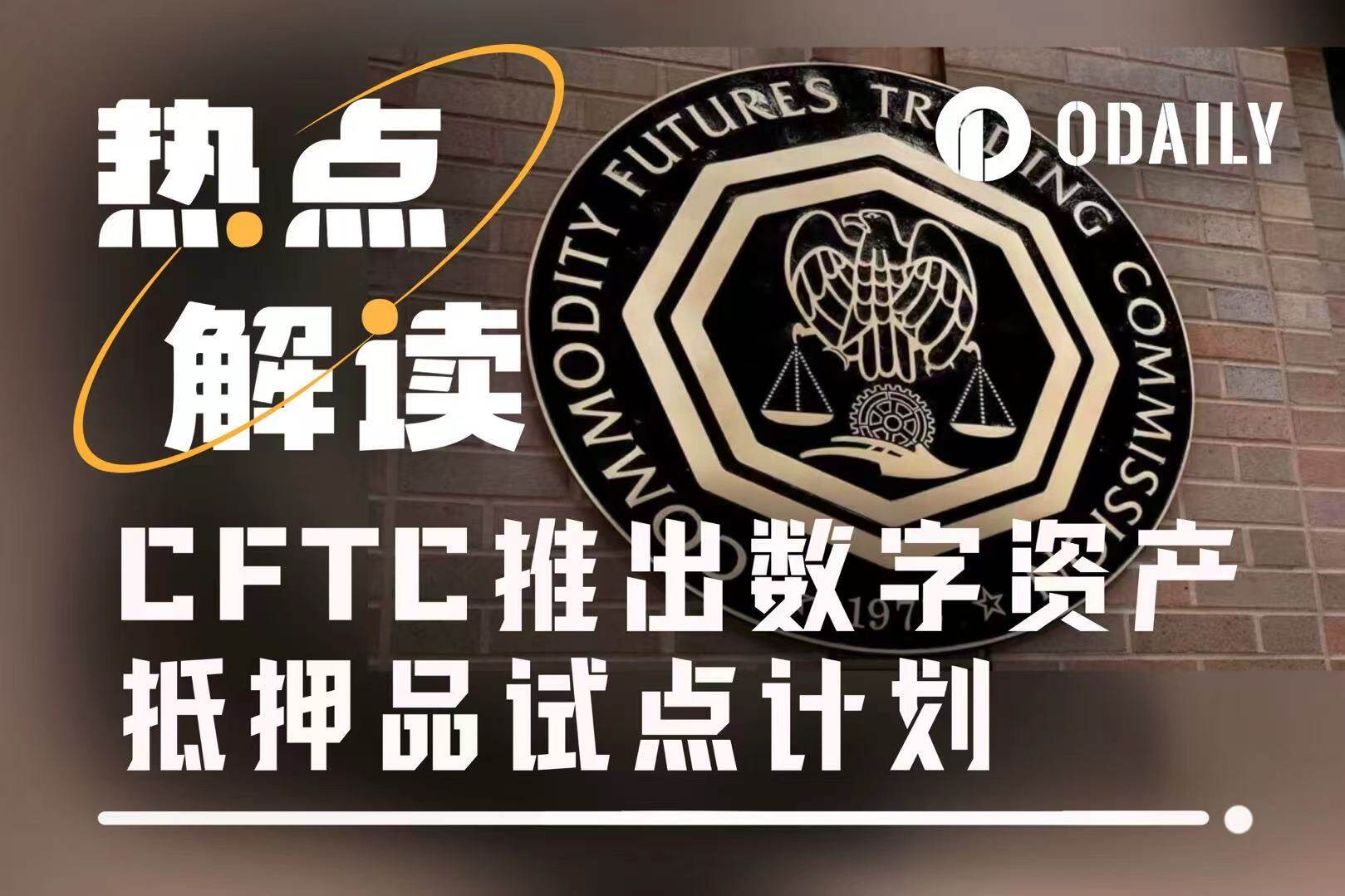
Interpreting the True Turning Point of Crypto Regulation: BTC, ETH, and USDC Gain Access to the U.S. Derivatives Market

Odaily星球日报Опубликовано 2025-12-09Обновлено 2025-12-09

Введение

The U.S. Commodity Futures Trading Commission (CFTC), under Acting Chair Caroline D. Pham, has launched a Digital Asset Collateral Pilot Program. This initiative allows regulated derivatives market participants to use Bitcoin (BTC), Ethereum (ETH), and the stablecoin USDC as compliant margin. The program is a significant regulatory shift, marking the first time digital assets are formally recognized as collateral in mainstream U.S. finance. Key details of the pilot include: - **Participants:** Licensed Futures Commission Merchants (FCMs) are the eligible entities. - **Assets:** Initially limited to BTC, ETH, and USDC for a three-month period, with strict weekly reporting requirements to the CFTC. - **Safeguards:** Stringent rules are in place, including holding assets in segregated accounts, conservative haircuts to mitigate volatility risk, and immediate reporting of any issues. - **Framework:** The CFTC also issued new guidance for tokenized collateral and provided "No-Action Relief" to give institutions regulatory clarity for operating within the rules. Industry leaders from Coinbase, Crypto.com, Circle, and Ripple hailed the move. They see it as a milestone that unlocks capital efficiency, reduces settlement risk, legitimizes stablecoins for payments, and paves the way for 24/7 trading, ultimately signaling deeper integration between crypto and traditional finance. While the pilot's immediate impact on retail investors is limited, it is a major long-term signal...

Original | Odaily Planet Daily (@OdailyChina)

Author | Asher (@Asher_ 0210)

This morning, acting Chairman of the U.S. Commodity Futures Trading Commission (CFTC), Caroline D. Pham, announced the launch of a Digital Asset Collateral Pilot Program, allowing digital assets such as BTC, ETH, and USDC to be used as compliant margin in U.S. regulated derivatives markets, and issued regulatory guidance on tokenized collateral, while simultaneously repealing outdated rules that had become ineffective following the enactment of the GENIUS Act. Additionally, Caroline D. Pham stated: "As I have said before, embracing responsible innovation ensures that U.S. markets remain world-leading and drive U.S. economic growth, as market participants can deploy capital more safely to achieve greater investment returns."

Crypto Assets Officially Enter the Derivatives Market with a Compliant Identity

The Digital Asset Collateral Pilot Program launched by the CFTC is essentially a policy opening where U.S. regulators are proactively "clearing the way." In the past, in U.S. regulated derivatives markets, margin could only exist in the form of traditional assets like cash, Treasury bonds, commercial paper, etc., with crypto assets being excluded. The launch of the pilot program means regulators have, for the first time, explicitly acknowledged that digital assets can participate in mainstream financial transactions as collateral. The specific details of the program are interpreted as follows:

Applicable Entities: Futures Commission Merchants (FCMs)

The pilot targets licensed Futures Commission Merchants, who are core participants in the derivatives market, responsible for custoding client funds, providing margin management, and clearing channels.

Permissible Assets: BTC, ETH, USDC

For the initial three months, the digital asset collateral acceptable by FCMs (Futures Commission Merchants) is limited to BTC, ETH, and USDC, and they must report position sizes to the CFTC weekly on a per-account basis. The regulator clearly stated that this move adheres to a "technology-neutral" principle, focusing on risk attributes rather than asset labels.

Extremely Stringent Regulatory Requirements

To ensure the stability of the traditional financial system, the CFTC has issued highly prudent requirements, including:

  • Digital assets must be held in segregated accounts and cannot be commingled with institutional proprietary funds;
  • FCMs must report position changes to the CFTC weekly;
  • Major issues must be reported immediately;
  • The CFTC will apply the most conservative haircut to digital assets to hedge against price volatility risk.

In other words, the regulator is not simply granting permission but is establishing a controllable, auditable, and traceable institutional framework.

Repealing Old Rules, Introducing New Guidance

Alongside the launch of the Digital Asset Collateral Pilot Program, the CFTC announced the repeal of the 2020 Staff Advisory 20-34—this old rule was no longer suitable for the current market after the passage of the GENIUS Act. The CFTC also issued new regulatory guidelines for "tokenized collateral," providing an institutional foundation for the future on-chain representation of traditional assets like "tokenized Treasuries, tokenized funds."

Shift in Regulatory Attitude: Providing "No-Action Relief"

For FCMs wishing to pilot digital asset margin, the CFTC has provided "No-Action Relief," offering regulatory clarity to institutions and requiring them to maintain robust risk controls. This is equivalent to the CFTC clearly telling institutions: "Operate within the rule framework, and we will not impose additional enforcement risks." For traditional institutions looking to enter the crypto space, this is a crucial "confidence booster."

Industry Leaders' Perspectives

Coinbase: Confirming Industry Consensus, Driving a Payment Revolution

Coinbase Chief Legal Officer Paul Grewal posted on X: "The CFTC's launch of the Digital Asset Collateral Pilot Program confirms a long-standing consensus in the crypto industry: stablecoins and digital assets can make payments faster, cheaper, and reduce risk." Paul Grewal pointed out that this pilot aligns with the original intent of Congress when it passed the GENIUS Act, paving the way for stablecoins to serve as key settlement tools, enabling faster, lower-cost cross-border payments. Coinbase Chief Policy Officer Faryar Shirzad added that this move will significantly enhance the utility of digital assets, attracting more institutional investors into regulated markets. Simultaneously, the potential of stablecoins as settlement tools will be fully unleashed,有望实现有望实现有望实现有望实现有望实现有望实现有望实现有望实现有望实现有望实现有望实现有望实现有望实现有望实现有望实现有望实现有望实现有望实现有望实现有望实现有望实现有望实现有望实现有望实现有望实现有望实现有望实现有望实现有望实现有望实现有望实现有望实现有望实现有望实现有望实现有望实现有望实现有望实现有望实现有望实现有望实现有望实现有望实现有望实现有望实现有望实现有望实现有望实现有望实现有望实现有望实现有望实现有望实现有望实现有望实现有望实现有望实现有望实现有望实现有望实现有望实现有望实现有望实现有望实现有望实现有望实现有望实现有望实现有望实现有望实现有望实现有望实现有望实现有望实现有望实现有望实现有望实现有望实现有望实现有望实现有望实现有望实现有望实现有望实现有望实现有望实现有望实现有望实现有望实现有望实现有望实现有望实现有望实现有望实现有望实现有望实现有望实现有望实现有望实现有望实现有望实现有望实现有望实现有望实现有望实现有望实现有望实现有望实现有望实现有望实现有望实现有望实现有望实现有望实现有望实现有望实现有望实现有望实现有望实现有望实现有望实现有望实现有望实现有望实现有望实现有望实现有望实现有望实现有望实现有望实现有望实现有望实现有望实现有望实现有望实现有望实现有望实现有望实现有望实现有望实现有望实现有望实现有望实现有望实现有望实现有望实现有望实现有望实现有望实现有望实现有望实现有望实现有望实现有望实现有望实现有望实现有望实现有望实现有望实现有望实现有望实现有望实现有望实现有望实现有望实现有望实现有望实现有望实现有望实现有望实现有望实现有望实现有望实现有望实现有望实现有望实现有望实现有望实现有望实现有望实现有望实现有望实现有望实现有望实现有望实现有望实现有望实现有望实现有望实现有望实现有望实现有望实现有望实现有望实现有望实现有望实现有望实现有望实现有望实现有望实现有望实现有望实现有望实现有望实现有望实现有望实现有望实现有望实现有望实现有望实现有望实现有望实现有望实现有望实现有望实现有望实现有望实现有望实现有望实现有望实现有望实现有望实现有望实现有望实现有望实现有望实现有望实现有望实现有望实现有望实现有望实现有望实现有望实现有望实现有望实现有望实现有望实现有望实现有望实现有望实现有望实现有望实现有望实现有望实现有望实现有望实现有望实现有望实现有望实现有望实现有望实现有望实现有望实现有望实现有望实现有望实现有望实现有望实现有望实现有望实现有望实现有望实现有望实现有望实现有望实现有望实现有望实现有望实现有望实现有望实现有望实现有望实现有望实现有望实现有望实现有望实现有望实现有望实现有望实现有望实现有望实现有望实现有望实现有望实现有望实现有望实现有望实现有望实现有望实现有望实现有望实现有望实现有望实现有望实现有望实现有望实现有望实现有望实现有望实现有望实现有望实现有望实现有望实现有望实现有望实现有望实现有望实现有望实现有望实现有望实现有望实现有望实现有望实现有望实现有望实现有望实现有望实现有望实现有望实现有望实现有望实现有望实现有望实现有望实现有望实现有望实现有望实现有望实现有望实现有望实现有望实现有望实现有望实现有望实现有望实现有望实现有望实现有望实现有望实现有望实现有望实现有望实现有望实现有望实现有望实现有望实现有望实现有望实现有望实现有望实现有望实现有望实现有望实现有望实现有望实现有望实现有望实现有望实现有望实现有望实现有望实现有望实现有望实现有望实现有望实现有望实现有望实现有望实现有望实现有望实现有望实现有望实现有望实现有望实现有望实现有望实现有望实现有望实现有望实现有望实现有望实现有望实现有望实现有望实现有望实现有望实现有望实现有望实现有望实现有望实现有望实现有望实现有望实现有望实现有望实现有望实现有望实现有望实现有望实现有望实现有望实现有望实现有望实现有望实现有望实现有望实现有望实现有望实现有望实现有望实现有望实现有望实现有望实现有望实现有望实现有望实现有望实现有望实现有望实现有望实现有望实现有望实现有望实现有望实现有望实现有望实现有望实现有望实现有望实现有望实现有望实现有望实现有望实现有望实现有望实现有望实现有望实现有望实现有望实现有望实现有望实现有望实现有望实现有望实现有望实现有望实现有望实现有望实现有望实现有望实现有望实现有望实现有望实现有望实现有望实现有望实现有望实现有望实现有望实现有望实现有望实现有望实现有望实现有望实现有望实现有望实现有望实现有望实现有望实现有望实现有望实现有望实现有望实现有望实现有望实现有望实现有望实现有望实现有望实现有望实现有望实现有望实现有望实现有望实现有望实现有望实现有望实现有望实现有望实现有望实现有望实现有望实现有望实现有望实现有望实现有望实现有望实现有望实现有望实现有望实现有望实现有望实现有望实现有望实现有望实现有望实现有望实现有望实现有望实现有望实现有望实现有望实现有望实现有望实现有望实现有望实现有望实现有望实现有望实现有望实现有望实现有望实现有望实现有望实现有望实现有望实现有望实现有望实现有望实现有望实现有望实现有望实现有望实现有望实现有望实现有望实现有望实现有望实现有望实现有望实现有望实现有望实现有望实现有望实现有望实现有望实现有望实现有望实现有望实现有望实现有望实现有望实现有望实现有望实现有望实现有望实现有望实现有望实现有望实现有望实现有望实现有望实现有望实现有望实现有望实现有望实现有望实现有望实现有望实现有望实现有望实现有望实现有望实现有望实现有望实现有望实现有望实现有望实现有望实现有望实现有望实现有望实现有望实现有望实现有望实现有望实现有望实现有望实现有望实现有望实现有望实现有望实现有望实现有望实现有望实现有望实现有望实现有望实现有望实现有望实现有望实现有望实现有望实现有望实现有望实现有望实现有望实现有望实现有望实现有望实现有望实现有望实现有望实现有望实现有望实现有望实现有望实现有望实现有望实现有望实现有望实现有望实现有望实现有望实现有望实现有望实现有望实现有望实现有望实现有望实现有望实现有望实现有望实现有望实现有望实现有望实现有望实现有望实现有望实现有望实现有望实现有望实现有望实现有望实现有望实现有望实现有望实现有望实现有望实现有望极有可能实现faster, lower-cost cross-border payments.

Crypto.com: Ushering in the Era of 24/7 Trading in the U.S. Market, a Milestone for Crypto Assets Moving into Mainstream Finance

Crypto.com CEO Kris Marszalek posted on X: "This announcement will make the reality of true 24/7 trading in the U.S. a reality, promoting the deep integration of crypto assets with mainstream finance." He emphasized that the use of tokenized collateral will reduce settlement friction, enhance liquidity, and set a benchmark for global markets. This is not just a technological advancement but also a regulatory "green channel" for innovation.

Circle: Reducing Settlement Risk, Embracing Real-Time Clearing

Circle President Heath Tarbert commented: "This is an 'unlocking moment' for the crypto market, allowing institutions to efficiently manage risk while maintaining asset exposure. These changes will significantly reduce settlement risk and friction in derivatives trading by enabling near real-time margin calls." Additionally, Heath Tarbert specifically mentioned that USDC's qualification as eligible collateral will further solidify the stablecoin's core role in traditional finance.

Ripple: Unlocking Capital Efficiency, the U.S. Regains Leadership

Ripple stated in its response that this pilot "finally provides institutions with the long-awaited unlocking of capital efficiency," strengthening the U.S.'s global leadership at a critical moment. It also noted that allowing BTC, ETH, and USDC to be used directly as margin will reduce the friction of institutions needing to convert crypto assets to cash, driving trillions of dollars into regulated derivatives markets. This marks a strategic shift from "offshore uncertainty" to "onshore compliance."

Overall, while the Digital Asset Collateral Pilot Program is a short-term test (lasting three months), its stringent reporting and risk control mechanisms (such as weekly position disclosures, maximum haircuts) ensure a safety foundation while paving the way for future expansion. Its impact on retail investors is limited in the short term, but in the long run, it is indeed an important signal of institutional-grade recognition.

The True Turning Point of U.S. Crypto Regulation

The CFTC's Digital Asset Collateral Pilot not only means that BTC, ETH, and USDC can be used as compliant margin but also marks the first time digital assets have entered the core U.S. financial market with an institutionalized identity. Futures and swaps markets are the most important capital hubs globally. When crypto assets can be collateralized and used in these markets, they leap from "speculative assets" to regulated financial instruments. Institutional investors gain a clear compliance path, and market liquidity and capital efficiency improve accordingly.

The inclusion of the stablecoin USDC is particularly symbolic. It is officially recognized as a digitized载体 of the U.S. dollar capable of supporting financial transactions, not only consolidating the dollar's core position in on-chain payments and settlements but also paving the way for stablecoins to serve as critical financial infrastructure. This means U.S. regulation is beginning to shift from "restriction" to "institutionalized guidance," providing a clear framework for the development of tokenized finance, including core requirements for custody, segregation, valuation, and risk management, laying the foundation for the future on-chain representation of tokenized Treasuries, funds, and money market instruments.

In the short term, this pilot has limited impact on retail investors, as its strict reporting and risk management mechanisms ensure market safety. However, in the long term, it is an important signal of institutional recognition, meaning more capital will enter the crypto market through regulated channels, the settlement function of stablecoins will be fully unleashed, and derivatives liquidity and market efficiency are expected to improve significantly. More importantly, this pilot reflects a structural shift in U.S. regulation: crypto assets are no longer just objects of speculation but are institutionalized assets that can be incorporated into the mainstream financial system.

If crypto ETFs meant "crypto assets becoming assets," then the CFTC's launch of the Digital Asset Collateral Pilot marks the moment "crypto assets officially enter the U.S. financial system." In the future, more assets will be tokenized, institutions will use on-chain assets as collateral, and the U.S. dollar will circulate on-chain via stablecoins. This is not just a short-term policy but heralds a new cycle of deep integration between crypto and mainstream finance.

Связанные с этим вопросы

QWhat is the significance of the CFTC's Digital Asset Collateral Pilot Program announced by Acting Chairman Caroline D. Pham?

AThe program is a significant policy shift that allows digital assets like BTC, ETH, and USDC to be used as compliant collateral in regulated U.S. derivatives markets for the first time. It marks a move from restriction to institutional guidance, providing a clear regulatory framework and a 'green channel' for innovation, integrating crypto into the core financial system.

QWhich specific entities are eligible to participate in the new pilot program, and what are their roles?

AThe eligible participants are licensed Futures Commission Merchants (FCMs). They are core participants in the derivatives market responsible for custoding client funds, providing margin management, and clearing channels.

QWhat are the three digital assets initially approved for use as collateral, and what is the reporting requirement for FCMs?

AThe initially approved digital assets are Bitcoin (BTC), Ethereum (ETH), and USD Coin (USDC). FCMs are required to report their holdings of these assets to the CFTC on a weekly basis.

QHow did industry leaders from companies like Coinbase and Circle react to the CFTC's announcement?

AIndustry leaders hailed it as a pivotal 'unlock moment.' Coinbase's CLO stated it confirms that stablecoins enable faster, cheaper payments. Circle's President said it reduces settlement risk and embraces real-time clearing, solidifying stablecoins' core role in traditional finance.

QWhat does the inclusion of the stablecoin USDC in this program symbolize for the future of finance?

AThe inclusion of USDC symbolically marks its official recognition as a digitized dollar vehicle for financial transactions. It paves the way for stablecoins to become critical financial infrastructure and lays the foundation for the future tokenization of assets like treasury bonds and funds.

Похожее

Торговля

Спот
Фьючерсы

Популярные статьи

Тест по Bitcoin Биткоина

HTX Learn: Изучите Bitcoin halving и Заработаете Токены USDT

3.0k просмотров всегоОпубликовано 2024.04.16Обновлено 2024.04.16

Тест по Bitcoin  Биткоина

Что такое $BITCOIN

ЦИФРОВОЕ ЗОЛОТО ($BITCOIN): Комплексный анализ Введение в ЦИФРОВОЕ ЗОЛОТО ($BITCOIN) ЦИФРОВОЕ ЗОЛОТО ($BITCOIN) — это проект на основе блокчейна, работающий в сети Solana, который стремится объединить характеристики традиционных драгоценных металлов с инновациями децентрализованных технологий. Хотя он носит имя Биткойн, часто называемого “цифровым золотом” из-за его восприятия как средства хранения ценности, ЦИФРОВОЕ ЗОЛОТО является отдельным токеном, предназначенным для создания уникальной экосистемы в ландшафте Web3. Его цель — позиционировать себя как жизнеспособный альтернативный цифровой актив, хотя детали его применения и функциональности все еще развиваются. Что такое ЦИФРОВОЕ ЗОЛОТО ($BITCOIN)? ЦИФРОВОЕ ЗОЛОТО ($BITCOIN) — это токен криптовалюты, специально разработанный для использования в блокчейне Solana. В отличие от Биткойна, который выполняет широко признанную роль хранения ценности, этот токен, похоже, сосредоточен на более широких приложениях и характеристиках. Примечательные аспекты включают: Инфраструктура блокчейна: Токен построен на блокчейне Solana, известном своей способностью обрабатывать высокоскоростные и недорогие транзакции. Динамика предложения: ЦИФРОВОЕ ЗОЛОТО имеет максимальное предложение, ограниченное 100 квадриллионами токенов (100P $BITCOIN), хотя детали о его обращающемся предложении в настоящее время не раскрыты. Утилита: Хотя точные функциональные возможности не описаны, есть указания на то, что токен может быть использован для различных приложений, потенциально связанных с децентрализованными приложениями (dApps) или стратегиями токенизации активов. Кто создатель ЦИФРОВОГО ЗОЛОТА ($BITCOIN)? На данный момент личность создателей и команды разработчиков, стоящих за ЦИФРОВЫМ ЗОЛОТОМ ($BITCOIN), остается неизвестной. Эта ситуация типична для многих инновационных проектов в области блокчейна, особенно тех, которые связаны с децентрализованными финансами и феноменом мем-криптовалют. Хотя такая анонимность может способствовать культуре, ориентированной на сообщество, она усиливает опасения по поводу управления и ответственности. Кто инвесторы ЦИФРОВОГО ЗОЛОТА ($BITCOIN)? Доступная информация указывает на то, что у ЦИФРОВОГО ЗОЛОТА ($BITCOIN) нет известных институциональных спонсоров или значительных венчурных капиталовложений. Проект, похоже, функционирует по модели пирингового взаимодействия, сосредоточенной на поддержке и принятии сообществом, а не на традиционных путях финансирования. Его активность и ликвидность в основном сосредоточены на децентрализованных биржах (DEX), таких как PumpSwap, а не на устоявшихся централизованных торговых платформах, что еще больше подчеркивает его подход, ориентированный на grassroots. Как работает ЦИФРОВОЕ ЗОЛОТО ($BITCOIN) Операционные механизмы ЦИФРОВОГО ЗОЛОТА ($BITCOIN) можно подробно описать на основе его дизайна блокчейна и характеристик сети: Механизм консенсуса: Используя уникальный механизм доказательства истории (PoH) Solana в сочетании с моделью доказательства доли (PoS), проект обеспечивает эффективную валидацию транзакций, что способствует высокой производительности сети. Токеномика: Хотя конкретные дефляционные механизмы не были подробно описаны, большое максимальное предложение токенов подразумевает, что оно может быть предназначено для микротранзакций или нишевых случаев использования, которые еще предстоит определить. Интероперабельность: Существует потенциал для интеграции с более широкой экосистемой Solana, включая различные платформы децентрализованных финансов (DeFi). Однако детали относительно конкретных интеграций остаются неуточненными. Хронология ключевых событий Вот хронология, которая подчеркивает значимые вехи, касающиеся ЦИФРОВОГО ЗОЛОТА ($BITCOIN): 2023: Первоначальное развертывание токена происходит в блокчейне Solana, отмеченное его адресом контракта. 2024: ЦИФРОВОЕ ЗОЛОТО приобретает видимость, когда оно становится доступным для торговли на децентрализованных биржах, таких как PumpSwap, позволяя пользователям обменивать его на SOL. 2025: Проект наблюдает спорадическую торговую активность и потенциальный интерес к инициативам, возглавляемым сообществом, хотя на данный момент не зафиксировано никаких значительных партнерств или технических достижений. Критический анализ Сильные стороны Масштабируемость: Основная инфраструктура Solana поддерживает высокие объемы транзакций, что может повысить полезность $BITCOIN в различных сценариях транзакций. Доступность: Потенциально низкая цена торговли за токен может привлечь розничных инвесторов, способствуя более широкому участию благодаря возможностям дробного владения. Риски Отсутствие прозрачности: Отсутствие публично известных спонсоров, разработчиков или процесса аудита может вызвать скептицизм относительно устойчивости и надежности проекта. Волатильность рынка: Торговая активность сильно зависит от спекулятивного поведения, что может привести к значительной волатильности цен и неопределенности для инвесторов. Заключение ЦИФРОВОЕ ЗОЛОТО ($BITCOIN) является интригующим, но неоднозначным проектом в быстро развивающейся экосистеме Solana. Хотя он пытается использовать нарратив “цифрового золота”, его отход от установленной роли Биткойна как средства хранения ценности подчеркивает необходимость более четкого различения его предполагаемой утилиты и структуры управления. Будущее принятие и усвоение, вероятно, будут зависеть от решения текущей непрозрачности и более четкого определения его операционных и экономических стратегий. Примечание: Этот отчет охватывает синтезированную информацию, доступную на октябрь 2023 года, и с тех пор могут произойти события.

99 просмотров всегоОпубликовано 2025.05.13Обновлено 2025.05.13

Что такое $BITCOIN

Fractal Bitcoin: масштабирование Биткоина с помощью рекурсивной системы

Fractal Bitcoin — масштабное Layer-1-решнение, созданное на базе кода Биткоина, позволяющего достигать бесконечного масштабирования с помощью рекурсивного подхода.

2.2k просмотров всегоОпубликовано 2025.06.30Обновлено 2025.06.30

Fractal Bitcoin: масштабирование Биткоина с помощью рекурсивной системы

Обсуждения

Добро пожаловать в Сообщество HTX. Здесь вы сможете быть в курсе последних новостей о развитии платформы и получить доступ к профессиональной аналитической информации о рынке. Мнения пользователей о цене на BTC (BTC) представлены ниже.

活动图片