Автор: Кэти,白话区块链
3 января 2026 года, ранним утром, американские силы специального назначения в ходе военной операции под кодовым названием «Абсолютная решимость» арестовали президента Венесуэлы Николаса Мадуро в Каракасе.
Это событие вызвало большой вопрос в криптосообществе: действительно ли у режима Мадуро были те самые «теневые резервы», о которых ходили слухи?
Согласно отчету исследовательского агентства Whale Hunting и данным из множества источников, на рынке циркулирует ошеломляющий слух: режим Мадуро, возможно, владеет от 600 до 660 тысячами биткоинов. Если этот слух подтвердится, то по рыночным ценам начала 2026 года их общая стоимость составит от 600 до 670 миллиардов долларов.
Что это значит?
Компания MicroStrategy (ныне переименованная в Strategy), известная как «кит биткоина», по состоянию на январь 2026 года владела более чем 670 тысячами BTC на сумму около 613 миллиардов долларов. Если слухи о Венесуэле верны, её запасы будут сопоставимы с крупнейшим корпоративным владельцем и составят около 3% от общего предложения биткоина (21 миллион монет).
Но вопрос в том: существуют ли эти богатства на самом деле? И если да, то где они спрятаны?
В криптомире есть железное правило: «Not your keys, not your coins» (Нет приватного ключа — нет и монет).
01 Как возник слух?
Чтобы понять, откуда взялся слух о «600 тысячах BTC», нам нужно сначала понять, какими теоретически путями режим Мадуро мог накапливать биткоины. Важно подчеркнуть: следующий анализ основан на открытых отчетах и разведывательных оценках, а не на установленных фактах.
Путь первый: Афера с нефтяной монетой Petro — прокладывая путь к криптовалютности
В феврале 2018 года, под тяжестью американских санкций, Мадуро объявил о выпуске первой в мире «национальной криптовалюты» — нефтяной монеты (Petro). Правительство заявило, что в первый день было привлечено 735 миллионов долларов, а общая цель финансирования составляла 6 миллиардов долларов.
Но многочисленные расследования показали, что это ICO с самого начала имело серьезные проблемы.
Сначала заявлялось, что Petro основана на Ethereum, потом — на NEM, а в конечном итоге она, казалось, работала на несуществующем приватном блокчейне. Правительство утверждало, что Petro обеспечена 5,3 миллиардами баррелей нефти с месторождения Аякучо, но полевые исследования показали, что инфраструктура там разрушена и никакой добычи не ведется.
Так называемое «финансирование», скорее всего, было просто перекладыванием активов внутри режима из левого кармана в правый.
Но хотя Petro провалилась, она оставила после себя ключевой побочный продукт: Sunacrip (Национальное управление по надзору за криптоактивами). Этот орган получил полномочия регулировать всю криптоактивность, выдавать лицензии на майнинг и даже напрямую управлять национальным пулом. Это был не регулятор, а национальный центр отмывания денег.
В январе 2024 года Мадуро официально закрыл Petro. Это был не провал, а стратегический поворот — переход от «эмитента» к «держателю», полный разворот в сторону действительно ликвидных биткоина и USDT.
Путь второй: Скандал PDVSA-Crypto — 210 миллиардов долларов исчезли
По рыночным слухам, основным источником резервов биткоина режима Мадуро могло быть перенаправление доходов от экспорта нефти государственной нефтяной компании PDVSA.
В 2019 году США ввели всеобъемлющие санкции против PDVSA, отрезав её от глобальной банковской системы. Чтобы выжить, PDVSA запустила стратегию «контрблокировки»:
Темный флот: Использование танкеров с выключенными транспондерами для перевозки нефти на азиатские «чайные нефтеперерабатывающие заводы» (небольшие частные НПЗ).
Сеть посредников: Скрытие происхождения нефти через shell-компании, зарегистрированные в ОАЭ, России и других странах. У этих посредников часто не было опыта в нефтеторговле, их единственной квалификацией были личные связи с ключевыми фигурами режима.
Криптовалютные расчеты: Поскольку невозможно было получать долларовые переводы, посредникам指示или платить за нефть в USDT (Tether).
В марте 2023 года в Венесуэле разразился потрясший nation скандал «PDVSA-Crypto». Внутренний аудит правительства показал, что в период с 2020 по 2023 год около 210 миллиардов долларов дебиторской задолженности от экспорта нефти исчезли.
Куда ушли эти деньги? Это до сих пор загадка.
Некоторые аналитики разведки предполагают, что часть из них могла через криптовалюты вернуться в кошельки, контролируемые режимом. Сообщается, что Sunacrip создала автоматизированный механизм «трамплина»:
- Получение: Посредники переводят USDT на промежуточные кошельки, контролируемые Sunacrip
- Отмывание: Запутывание цепочки средств через микшеры, такие как Tornado Cash
- Обмен: Конвертация USDT в биткоины через OTC-столы в России или Восточной Европе
- Хранение: Биткоины переводятся на холодные кошельки, сгенерированные оффлайн, приватные ключи от которых хранятся на самом высоком уровне режима
Авторами этой системы были Тарек Эль Айссами (бывший министр нефти) и Алекс Сааб («финансовый дипломат» режима). Эль Айссами, ушедший в отставку в марте 2023 года, был арестован в апреле 2024 года по обвинению в коррупции, ему предъявлены обвинения в государственной измене, отмывании денег и другие. Активы, которые он контролировал, вероятно, были конфискованы семьей Мадуро.
А Сааб в декабре 2023 года в рамках обмена заключенными вернулся в Венесуэлу, обменяв 10 американских заключенных на этого финансового архитектора, что показало его незаменимость в глазах Мадуро — эта важность, скорее всего, проистекала из его контроля над финансовыми артериями.
Путь третий: Военный майнинг — «государственная вычислительная мощность» конфискованного оборудования
Помимо нефтяных доходов, существует теория, что венесуэльский режим мог напрямую производить биткоины, контролируя «средства производства».
В Венесуэле одна из самых дешевых электроэнергий в мире, в основном обеспечиваемая плотиной Гури. Это делает майнинг биткоинов чрезвычайно прибыльным. Правительство Мадуро через военно-коммерческое подразделение — CAMIMPEG (Военная компания горнодобывающей, нефтяной и газовой промышленности) — монополизировало это преимущество.
CAMIMPEG создала «Центр производства цифровых активов Боливарианской армии», эти военные майнинг-фермы пользовались привилегиями:
- Гарантированное электроснабжение: В условиях nationwide частых отключений электроэнергии военные фермы имели приоритетное право на питание
- Безопасность: Охранялись тяжело вооруженной Национальной гвардией
- Нулевая стоимость эксплуатации: Поскольку электроэнергия фактически бесплатна (госсубсидии), предельные издержки близки к нулю
Но откуда взялось оборудование для военных ферм? Большая часть — изъята у частных майнеров.
С 2020 года Sunacrip совместно с военными провела серию рейдов на частные майнинг-фермы:
- 2020: Национальная гвардия конфисковала 315 ASIC-майнеров Antminer S9 в штате Боливар
- 2023: Рейд на штаб-квартиру банды «Поезд Арагуа» в тюрьме Токорон, изъятие большого количества майнеров и оружия
- 2024: В Маракае за одну операцию конфисковано более 2300 Antminer S19J Pro
По оценкам источников разведки, в период с 2020 по 2025 год правительство, возможно, получило десятки тысяч майнеров путем конфискации частных ферм и объектов банд. Это оборудование не было уничтожено, а было передислоцировано на объекты, контролируемые CAMIMPEG.
С учетом известных тысяч высокопроизводительных майнеров и продукции государственных ферм, эта «армия зомби» за последние несколько лет могла произвести десятки тысяч биткоинов.
02 Источники данных слуха о «600 тысячах BTC» и сомнения
Ключевой вопрос: Насколько эта цифра可信ма?
На основе отчетов разведки Chainalysis, TRM Labs и исследовательского агентства «Whale Hunting» на рынке циркулируют оценочные цифры от 600 до 660 тысяч BTC. Но необходимо подчеркнуть:
Эта цифра исходит только из источников разведки, а не из проверенных данных блокчейна
Нет никаких публичных доказательств в цепи блоков, подтверждающих эту цифру
В отчете Whale Hunting четко указано: «Эта оценка основана на HUMINT (агентурной разведке) и не подтверждена анализом блокчейна»
Тем не менее, в отчете все же приводится гипотетический анализ состава:
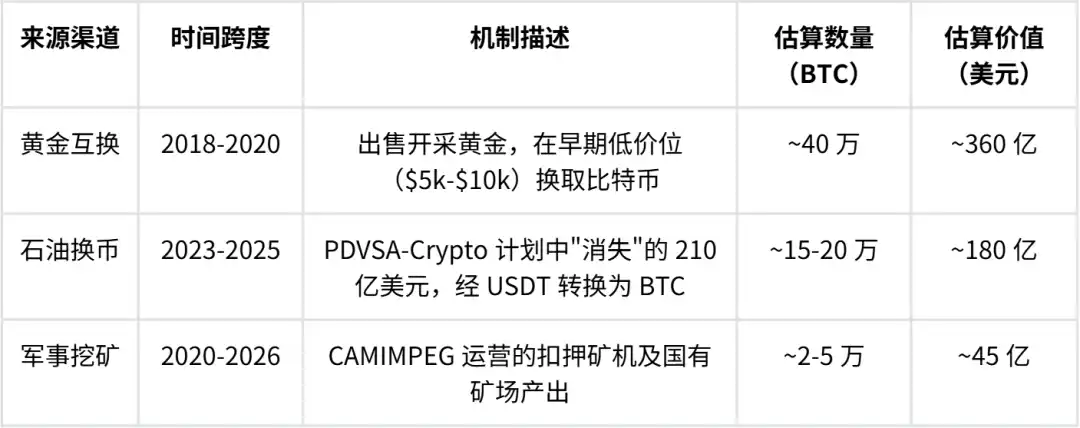
Логичен ли этот слух?
Точка зрения сторонников:
Сравнение с MicroStrategy: MicroStrategy (ныне Strategy) по состоянию на январь 2026 года владеет более чем 670 тысячами BTC. Суверенное государство теоретически способно достичь аналогичного масштаба.
Финансовая основа: У PDVSA в 2020-2023 годах пропало 210 миллиардов долларов. Если 50% из них были конвертированы в биткоины, по средним ценам того времени можно было бы купить 300-400 тысяч BTC.
Точка зрения скептиков:
- Нехватка доказательств в цепи: Если 600 тысяч BTC реально существуют, должны были бы найтись следы в блокчейне, но до сих пор никто не может указать конкретные адреса.
- Слишком круглая цифра: Цифра 600 тысяч больше похожа на оценку, а не на фактическую статистику, возможно, она сильно завышена.
- Сомнительные мотивы: Этот слух может использоваться в политических целях или для накачки рынка.
Вывод: При отсутствии убедительных доказательств в блокчейне это остается неподтвержденным слухом.
03 Если слух окажется правдой: У кого будут приватные ключи?
Предположим, эти «теневые резервы» действительно существуют. Тогда даже арест Мадуро не означает, что США смогут их контролировать.
Перед ФБР встанет первоначальная задача: как доказать существование этих биткоинов и найти приватные ключи?
Кто может владеть ключами?
Если этот актив реально существует, аналитики разведки предполагают, что вряд ли он управлялся единым аккаунтом, более вероятно использование мультиподписи (Multisig) или разделения приватного ключа (Sharding).
Теоретическими держателями приватных ключей могут быть:
- Алекс Сааб: Будучи финансовым архитектором режима, Сааб не только знал полную картину движения средств, но, вероятно, владел ключевыми мнемоническими фразами, необходимыми для восстановления кошелька, или знал физическое местонахождение аппаратных кошельков. Его возвращение в Венесуэлу в результате обмена заключенными в декабре 2023 года (10 американских заключенных за этого финансового гения) показало его незаменимость для режима.
- Николасито (сын Мадуро): Сын Мадуро, упомянутый в обвинительном заключении. Он был глубоко вовлечен в незаконную добычу золота и повседневные операции режима, мог хранить резервную копию части семейных приватных ключей.
- Силия Флорес (первая леди): Известная как «первая боевичка», имела очень высокий статус в ядре режима. Она могла контролировать физический доступ к части холодных кошельков.
- Технократический слой: Бывшие технические сотрудники Sunacrip могли отвечать за поддержку технической инфраструктуры мультиподписи, и хотя они, возможно, не знали полный приватный ключ, их сотрудничество было бы crucial для восстановления доступа к кошельку.
Предполагаемая криптоархитектура
Наиболее вероятная архитектура — схема подписи M-of-N (например, 3/5 или 5/7). Это означает, что для использования средств необходимо собрать подписи 3 из 5 ключевых фигур.
Если Мадуро, Флорес и Сааб будут под контролем США, теоретически Америка может заставить их сотрудничать для разблокировки средств. Но реальность гораздо сложнее:
- Географическая分散ность: Холодные кошельки могут быть分散ленно хранятся в бункерах Каракаса, российских сейфах или кубинских safe houses.
- Система «Мертвая рука»: Нельзя исключать, что система имеет某种 механизм автоматического срабатывания. Если в течение длительного времени не производится определенное действие (например, потеря связи с Мадуро), средства могут быть автоматически переведены на невосстанавливаемые адреса или отправлены другим союзникам.
- Идеологическое сопротивление: Даже перед лицом пожизненного заключения ключевые фигуры, владеющие ключами, могут отказаться сотрудничать. Для них это не только богатство, но и последнее оружие в борьбе против «американского империализма».
04 Влияние на рынок: Сам слух — это неопределенность
Даже если этот слух не подтвержден, он сам по себе стал «дамокловым мечом», нависшим над крипторынком. 600 тысяч биткоинов эквивалентны 3% от общего предложения BTC. Если они реально существуют, это окажет огромное влияние.
Три возможных сценария
Сценарий первый: Слух ложный
Если после тщательного расследования ФБР и компаний, анализирующих блокчейн,最终 докажут, что этих «теневых резервов» не существует или они сильно переоценены, рынок, возможно, вздохнет с облегчением. Это означает отсутствие потенциального давления продаж, что нейтрально или слегка позитивно для цены.
Сценарий второй: Слух истинен и ФБР контролирует актив
Если этот актив реально существует и США успешно его конфискуют, согласно практике, эти биткоины попадут в程序 судебного замораживания, возможно, на несколько лет, и не смогут двигаться. Это фактически заблокирует огромный объем предложения, уменьшит оборот на рынке, что будет способствовать росту цены.
Это похоже на ситуацию с конфискацией биткоинов «Шелкового пути» ФБР в 2013 году. Тогда около 170 тысяч BTC были заморожены и в конечном итоге проданы партиями с аукциона. Но во время заморозки эти монеты фактически вышли из обращения, объективно уменьшив рыночное давление продаж.
Сценарий третий: Слух истинен, но ключи утеряны
Это самый опасный сценарий. Если этот актив реально существует, но приватные ключи не под контролем США, остатки режима в бегах могут попытаться продать биткоины на OTC-рынках, чтобы получить средства для побега, что вызовет панические продажи.
Когда немецкое правительство в 2024 году продало всего 50 тысяч BTC, это вызвало кратковременные сильные колебания рынка. Давление продаж в 600 тысяч будет катастрофическим.
05 Резюме
Арест Мадуро действительно приоткрыл завесу над использованием криптовалют венесуэльским режимом для обхода санкций.
От провального эксперимента с Petro до скандала PDVSA-Crypto на 210 миллиардов долларов и милитаризованных майнинг-объектов — все это подтвержденные факты. Но слухи о «теневых резервах в 600 тысяч BTC» до сих пор не имеют твердых доказательств.
Что мы можем подтвердить: Венесуэла действительно использовала криптовалюты для обхода санкций, у PDVSA действительно пропало 210 миллиардов долларов, и режим действительно конфисковал большое количество майнеров.
Но что мы не можем подтвердить: Действительно ли было накоплено 600 тысяч BTC, (если существуют) у кого приватные ключи, попадут ли эти биткоины на рынок.
Это действительно ставит острый вопрос: когда децентрализованные технологии используются для обхода санкций, как найти баланс между свободой и порядком?
Но пока не появится больше доказательств, «теневые резервы в 600 миллиардов долларов» остаются всего лишь неподтвержденным слухом.