BTC Falls Back to $10,000?! Bloomberg Senior Expert Gives the Most Pessimistic Prediction

比推Опубликовано 2025-12-15Обновлено 2025-12-15

Введение

Bitcoin has retreated below $90,000, extending a 30%+ decline from its October all-time high. The broader crypto market is under pressure, with most top assets in the red. Bloomberg Intelligence senior commodity strategist Mike McGlone issued a stark warning, predicting Bitcoin could fall to $10,000 by 2026. He argues that global markets are approaching an inflationary-to-deflationary inflection point, where risk assets like Bitcoin—viewed as highly speculative and dependent on liquidity—could face severe repricing. McGlone cites three factors: extreme wealth reversion to the mean, Bitcoin's high valuation relative to gold, and systemic oversupply of speculative crypto assets. While not all analysts agree, institutions like Standard Chartered have also lowered mid-term Bitcoin price targets. The market's direction is now tied to macro conditions, with key central bank decisions and economic data releases expected to shape the trajectory of risk assets in 2026.

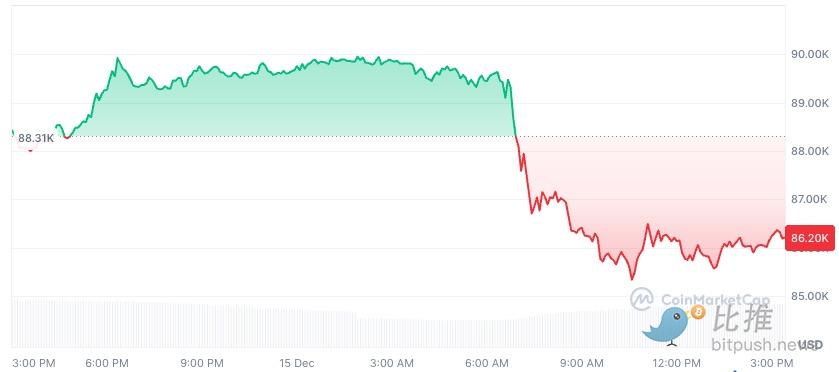
Over the past weekend, the crypto market did not see a sentiment recovery. After several days of narrow-range fluctuations, Bitcoin came under significant pressure from Sunday evening to Monday U.S. stock market hours, falling below the $90,000 mark, with the intraday low once touching around $86,000. ETH dropped 3.4% to $2,980; BNB fell 2.1%; XRP declined 4%; SOL decreased 1.5%, retreating to around $126. Among the top ten cryptocurrencies by market cap, only TRX recorded a slight increase of less than 1%, while the rest were in a correction phase.

From a time perspective, this is not an isolated adjustment. Since hitting a new all-time high in mid-October, Bitcoin has accumulated a pullback of over 30%, with each rebound appearing brief and hesitant. Although ETF funds have not seen systematic outflows, marginal inflows have significantly slowed, making it difficult to provide the "sentiment foundation" for the market as before. The crypto market is transitioning from one-sided optimism to a more complex and patience-testing phase.

Against this backdrop, Mike McGlone, Senior Commodity Strategist at Bloomberg Intelligence, released a latest report, placing Bitcoin's current trend within a broader macro and cyclical framework and presenting a highly unsettling judgment: Bitcoin is very likely to fall back to $10,000 by 2026. This is not alarmist but a potential outcome under a deflationary cycle.

The reason this view has sparked significant controversy is not just because the number itself is "too low," but because McGlone does not treat Bitcoin as an independent crypto asset. Instead, he reexamines it within the long-term coordinate system of "global risk assets—liquidity—wealth regression."

What Comes After Inflation? McGlone Focuses Not on Crypto but on the Cycle Inflection Point

To understand McGlone's judgment, the key is not how he views the crypto industry but how he interprets the next phase of the macro environment.

In his latest views, McGlone repeatedly emphasizes a concept: Inflation/Deflation Inflection. In his view, global markets are near such a critical juncture. As inflation peaks in major economies and growth momentum slows, asset pricing logic is shifting from "fighting inflation" to "coping with deflationary pressures."

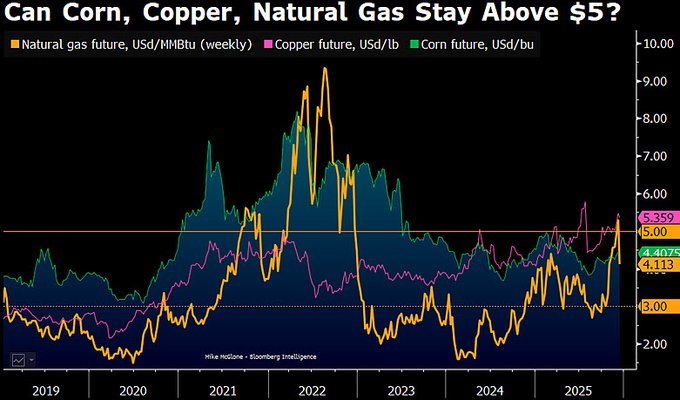
He points out that by around 2026, commodity prices may fluctuate around a key axis—the "inflation-deflation dividing line" for core commodities like natural gas, corn, and copper could settle near $5. Among these, only copper, which has real industrial demand support, might still stand above this axis by the end of 2025.

McGlone notes: When liquidity recedes, the market will重新区分 "real demand" and "financialization premium." In his framework, Bitcoin is not "digital gold" but an asset highly correlated with risk appetite and speculative cycles. When the inflation narrative recedes and macro liquidity tightens, Bitcoin tends to reflect this change earlier and more sharply.

In McGlone's view, his logic is not based on a single technical level but the叠加 of three long-term paths.

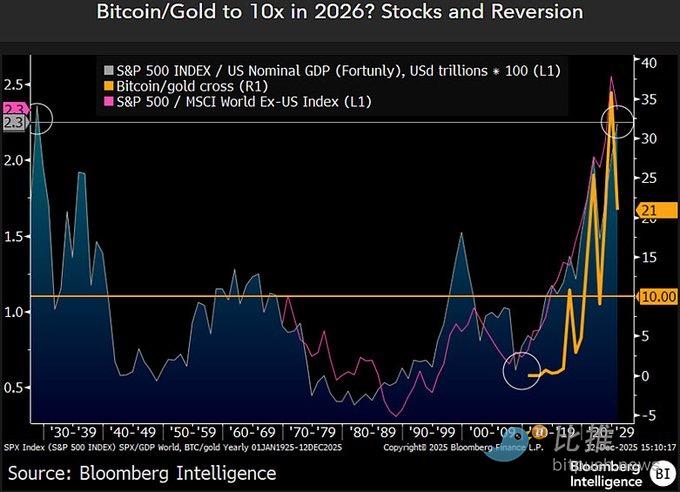
First, mean reversion after extreme wealth creation. McGlone has long emphasized that Bitcoin is one of the most extreme wealth amplifiers of the past decade-plus of loose global monetary conditions. When asset price growth long outstrips real economy and cash flow growth, the regression is not gentle but violent. Historically, whether it was the 1929 U.S. stock market or the 2000 tech bubble, the commonality of the top phase was: the market repeatedly sought a "new paradigm" at highs, and the eventual adjustment幅度, in hindsight, often far exceeded the most pessimistic expectations at the time.

Second, the relative pricing relationship between Bitcoin and gold. McGlone特别强调 the Bitcoin/Gold ratio. This ratio was about 10x at the end of 2022, then expanded rapidly driven by the bull market, reaching over 30x at one point in 2025. But this year, the ratio has fallen about 40%, dropping to around 21x. In his view, if deflationary pressures persist and gold remains firm due to safe-haven demand, it is not an激进假设 for the ratio to further return to historical ranges.

Third, systemic issues in the supply environment of speculative assets. Although Bitcoin itself has a clear total supply cap, McGlone has多次指出 that what the market is truly trading is not Bitcoin's "uniqueness" but the risk premium of the entire crypto ecosystem. When millions of tokens, projects, and narratives compete for the same risk budget, in a deflationary cycle, the entire sector tends to be uniformly discounted, and Bitcoin can hardly完全脱离 this revaluation process.

It should be noted that Mike McGlone is not a bull/bear spokesperson for the crypto market. As a senior commodity strategist at Bloomberg, he has long studied the cyclical relationships between crude oil, precious metals, agricultural products, interest rates, and risk assets. His predictions are not always precisely timed, but their value lies in: he often raises structural contrarian questions when market sentiment is most consensus-driven.

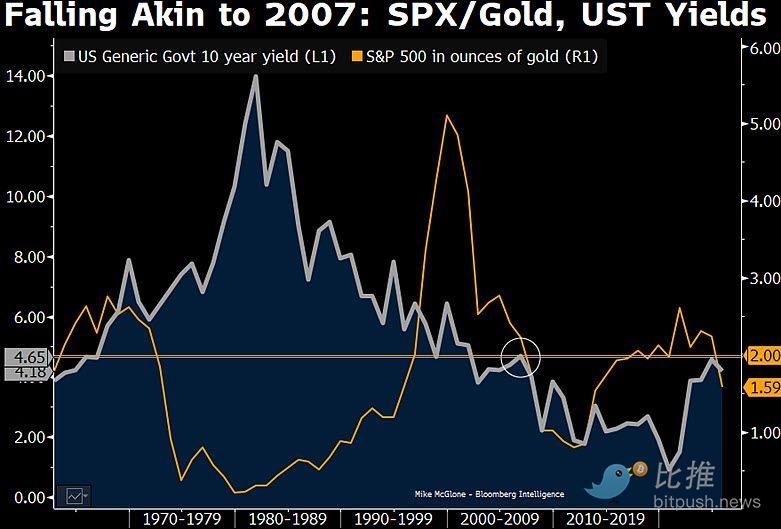
In his latest remarks, he also主动复盘 his "errors," including underestimating the timing of gold breaking through $2,000 and misjudging the节奏 of U.S. Treasury yields and U.S. stocks. But in his view, these deviations反复印证 one point: the market is most prone to illusions about trends before cycle inflection points.

Other Voices: Divergence Is Widening

Of course, McGlone's judgment is not market consensus. In fact, mainstream institutions' attitudes show clear分化.

Traditional financial institutions like Standard Chartered have recently significantly lowered their medium-to-long-term target prices for Bitcoin, reducing the 2025 expectation from $200,000 to about $100,000 and adjusting the 2026 imagination from $300,000 to around $150,000. In other words, institutions no longer assume that ETFs and corporate allocations will provide marginal buying at any price range持续.

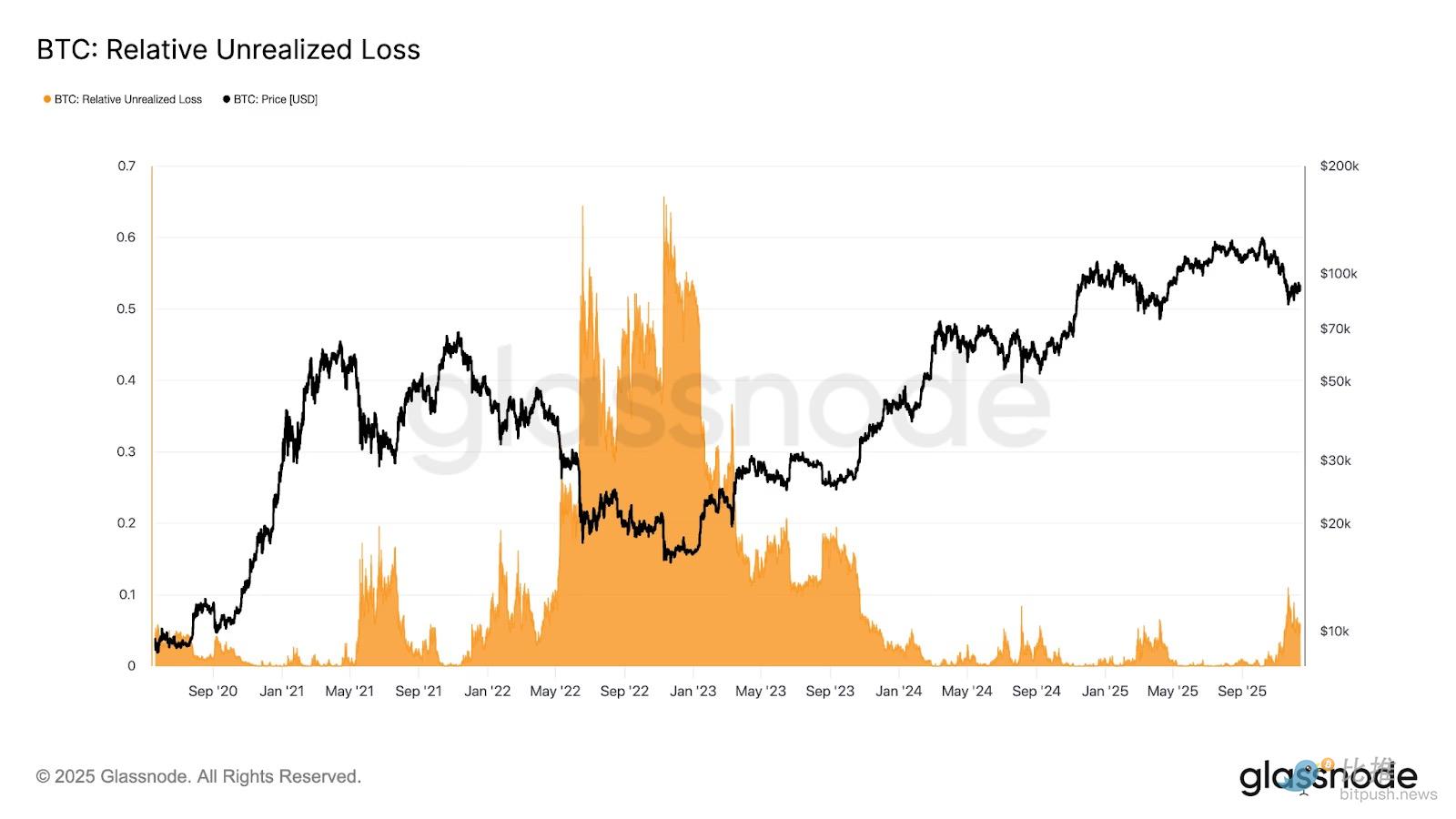
Glassnode's research points out that Bitcoin's current consolidation range between $80,000 and $90,000 has put pressure on the market, with intensity comparable to the end of January 2022. The current market's relative unrealized losses have approached 10% of market cap. Analysts further explain that such market dynamics reflect a state of "liquidity-constrained, sensitive to macro shocks" but not yet reaching the level of a typical bear market彻底抛售 (panic selling).

More quantitative and structure-focused 10x Research gives a more direct conclusion: they believe Bitcoin has entered the early stages of a bear market, with on-chain indicators, fund flows, and market structure all indicating that the downward cycle has not yet reached its end.

From a broader time dimension, the current uncertainty surrounding Bitcoin is no longer just an issue of the crypto market itself but is firmly embedded in the global macro cycle. The coming week is seen by many strategists as the most critical macro window of the year-end—the European Central Bank, Bank of England, and Bank of Japan will相继 announce interest rate decisions, while the U.S. will迎来 a series of delayed employment and inflation data, providing a belated "reality check" for the market.

The Fed's signal at the December 10 FOMC meeting was unusual: not only did it cut rates by 25 basis points, but there were also three dissenting votes, and Powell直言 that job growth in previous months might have been overestimated. This week's密集出炉 macro data will reshape the market's core expectations for 2026—whether the Fed can continue to cut rates or will have to press pause for a longer period. For risk assets, this answer may be more important than any single asset's bull-bear debate.

Author: Seed.eth


Twitter:https://twitter.com/BitpushNewsCN

Bitpush TG Discussion Group:https://t.me/BitPushCommunity

Bitpush TG Subscription: https://t.me/bitpush

Original link:https://www.bitpush.news/articles/7595927

Связанные с этим вопросы

QWhat is the most pessimistic price prediction for Bitcoin in 2026, as mentioned in the article, and who made it?

AThe most pessimistic prediction is that Bitcoin could fall back to $10,000 in 2026, made by Mike McGlone, a senior commodity strategist at Bloomberg Intelligence.

QAccording to Mike McGlone, what major macroeconomic shift is the global market approaching that could impact Bitcoin's price?

AMcGlone believes the global market is approaching an 'Inflation / Deflation Inflection' point, where the pricing logic for assets is shifting from 'fighting inflation' to 'dealing with deflationary pressures'.

QWhat key ratio does McGlone use to analyze Bitcoin's relative pricing, and what was its peak and current value?

AMcGlone uses the Bitcoin/Gold ratio. It peaked at over 30 times in 2025 and has since fallen approximately 40% to around 21 times.

QBesides McGlone prediction, which major financial institution significantly lowered its Bitcoin price target for 2025 and 2026?

AStandard Chartered significantly lowered its Bitcoin price target, reducing its 2025 forecast from $200,000 to around $100,000 and its 2026 forecast from $300,000 to about $150,000.

QWhat did the research firm 10x Research conclude about the current state of the Bitcoin market based on on-chain metrics and market structure?

A10x Research concluded that Bitcoin has entered the early stages of a bear market, with on-chain indicators, fund flows, and market structure all indicating that the downward cycle is not yet over.

Похожее

Торговля

Спот
Фьючерсы

Популярные статьи

Тест по Bitcoin Биткоина

HTX Learn: Изучите Bitcoin halving и Заработаете Токены USDT

3.0k просмотров всегоОпубликовано 2024.04.16Обновлено 2024.04.16

Тест по Bitcoin  Биткоина

Что такое $BITCOIN

ЦИФРОВОЕ ЗОЛОТО ($BITCOIN): Комплексный анализ Введение в ЦИФРОВОЕ ЗОЛОТО ($BITCOIN) ЦИФРОВОЕ ЗОЛОТО ($BITCOIN) — это проект на основе блокчейна, работающий в сети Solana, который стремится объединить характеристики традиционных драгоценных металлов с инновациями децентрализованных технологий. Хотя он носит имя Биткойн, часто называемого “цифровым золотом” из-за его восприятия как средства хранения ценности, ЦИФРОВОЕ ЗОЛОТО является отдельным токеном, предназначенным для создания уникальной экосистемы в ландшафте Web3. Его цель — позиционировать себя как жизнеспособный альтернативный цифровой актив, хотя детали его применения и функциональности все еще развиваются. Что такое ЦИФРОВОЕ ЗОЛОТО ($BITCOIN)? ЦИФРОВОЕ ЗОЛОТО ($BITCOIN) — это токен криптовалюты, специально разработанный для использования в блокчейне Solana. В отличие от Биткойна, который выполняет широко признанную роль хранения ценности, этот токен, похоже, сосредоточен на более широких приложениях и характеристиках. Примечательные аспекты включают: Инфраструктура блокчейна: Токен построен на блокчейне Solana, известном своей способностью обрабатывать высокоскоростные и недорогие транзакции. Динамика предложения: ЦИФРОВОЕ ЗОЛОТО имеет максимальное предложение, ограниченное 100 квадриллионами токенов (100P $BITCOIN), хотя детали о его обращающемся предложении в настоящее время не раскрыты. Утилита: Хотя точные функциональные возможности не описаны, есть указания на то, что токен может быть использован для различных приложений, потенциально связанных с децентрализованными приложениями (dApps) или стратегиями токенизации активов. Кто создатель ЦИФРОВОГО ЗОЛОТА ($BITCOIN)? На данный момент личность создателей и команды разработчиков, стоящих за ЦИФРОВЫМ ЗОЛОТОМ ($BITCOIN), остается неизвестной. Эта ситуация типична для многих инновационных проектов в области блокчейна, особенно тех, которые связаны с децентрализованными финансами и феноменом мем-криптовалют. Хотя такая анонимность может способствовать культуре, ориентированной на сообщество, она усиливает опасения по поводу управления и ответственности. Кто инвесторы ЦИФРОВОГО ЗОЛОТА ($BITCOIN)? Доступная информация указывает на то, что у ЦИФРОВОГО ЗОЛОТА ($BITCOIN) нет известных институциональных спонсоров или значительных венчурных капиталовложений. Проект, похоже, функционирует по модели пирингового взаимодействия, сосредоточенной на поддержке и принятии сообществом, а не на традиционных путях финансирования. Его активность и ликвидность в основном сосредоточены на децентрализованных биржах (DEX), таких как PumpSwap, а не на устоявшихся централизованных торговых платформах, что еще больше подчеркивает его подход, ориентированный на grassroots. Как работает ЦИФРОВОЕ ЗОЛОТО ($BITCOIN) Операционные механизмы ЦИФРОВОГО ЗОЛОТА ($BITCOIN) можно подробно описать на основе его дизайна блокчейна и характеристик сети: Механизм консенсуса: Используя уникальный механизм доказательства истории (PoH) Solana в сочетании с моделью доказательства доли (PoS), проект обеспечивает эффективную валидацию транзакций, что способствует высокой производительности сети. Токеномика: Хотя конкретные дефляционные механизмы не были подробно описаны, большое максимальное предложение токенов подразумевает, что оно может быть предназначено для микротранзакций или нишевых случаев использования, которые еще предстоит определить. Интероперабельность: Существует потенциал для интеграции с более широкой экосистемой Solana, включая различные платформы децентрализованных финансов (DeFi). Однако детали относительно конкретных интеграций остаются неуточненными. Хронология ключевых событий Вот хронология, которая подчеркивает значимые вехи, касающиеся ЦИФРОВОГО ЗОЛОТА ($BITCOIN): 2023: Первоначальное развертывание токена происходит в блокчейне Solana, отмеченное его адресом контракта. 2024: ЦИФРОВОЕ ЗОЛОТО приобретает видимость, когда оно становится доступным для торговли на децентрализованных биржах, таких как PumpSwap, позволяя пользователям обменивать его на SOL. 2025: Проект наблюдает спорадическую торговую активность и потенциальный интерес к инициативам, возглавляемым сообществом, хотя на данный момент не зафиксировано никаких значительных партнерств или технических достижений. Критический анализ Сильные стороны Масштабируемость: Основная инфраструктура Solana поддерживает высокие объемы транзакций, что может повысить полезность $BITCOIN в различных сценариях транзакций. Доступность: Потенциально низкая цена торговли за токен может привлечь розничных инвесторов, способствуя более широкому участию благодаря возможностям дробного владения. Риски Отсутствие прозрачности: Отсутствие публично известных спонсоров, разработчиков или процесса аудита может вызвать скептицизм относительно устойчивости и надежности проекта. Волатильность рынка: Торговая активность сильно зависит от спекулятивного поведения, что может привести к значительной волатильности цен и неопределенности для инвесторов. Заключение ЦИФРОВОЕ ЗОЛОТО ($BITCOIN) является интригующим, но неоднозначным проектом в быстро развивающейся экосистеме Solana. Хотя он пытается использовать нарратив “цифрового золота”, его отход от установленной роли Биткойна как средства хранения ценности подчеркивает необходимость более четкого различения его предполагаемой утилиты и структуры управления. Будущее принятие и усвоение, вероятно, будут зависеть от решения текущей непрозрачности и более четкого определения его операционных и экономических стратегий. Примечание: Этот отчет охватывает синтезированную информацию, доступную на октябрь 2023 года, и с тех пор могут произойти события.

99 просмотров всегоОпубликовано 2025.05.13Обновлено 2025.05.13

Что такое $BITCOIN

Fractal Bitcoin: масштабирование Биткоина с помощью рекурсивной системы

Fractal Bitcoin — масштабное Layer-1-решнение, созданное на базе кода Биткоина, позволяющего достигать бесконечного масштабирования с помощью рекурсивного подхода.

2.2k просмотров всегоОпубликовано 2025.06.30Обновлено 2025.06.30

Fractal Bitcoin: масштабирование Биткоина с помощью рекурсивной системы

Обсуждения

Добро пожаловать в Сообщество HTX. Здесь вы сможете быть в курсе последних новостей о развитии платформы и получить доступ к профессиональной аналитической информации о рынке. Мнения пользователей о цене на BTC (BTC) представлены ниже.

活动图片