Bitcoin Braces For Quantum Shock — Inside Two Radical New Rescue Plans

bitcoinistОпубликовано 2026-04-10Обновлено 2026-04-10

Введение

The Bitcoin community is actively developing solutions to counter the future threat of quantum computers capable of breaking its current cryptography (ECDSA/Schnorr). Two primary proposals have emerged. The first, from Olaoluwa Osuntokun and Tim Ruffing, involves a "Taproot kill-switch" combined with a zk-STARK proof. This method would let users prove ownership of their coins from a vulnerable Taproot address without revealing their private keys, providing an escape hatch if a quantum-defense soft fork disables normal key-based spending. The second proposal, from Avihu Mordechai Levy, is called Quantum Safe Bitcoin (QSB). It uses Lamport-style one-time signatures and a new RIPEMD-160-based proof-of-work puzzle to make individual transactions quantum-safe today, without any changes to Bitcoin's base protocol. However, it is currently expensive and inefficient, costing hundreds of dollars per transaction. The debate has shifted from whether quantum is a threat to how to manage the migration. The community is split between solutions that aim to rescue the entire UTXO set and those who believe non-migrated coins should expire to preserve Bitcoin's monetary integrity.

Multiple devs and founders have been talking publicly about concrete post‐quantum paths for Bitcoin. Two different proposals have caught the crypto world’s attention.

Bitcoin’s Net-Watchers Start Building Their Blackwall

The ticking clock marking 2029 as the possible “deadline” for quantum computers to be able to break Bitcoin and Ethereum’s cryptography has made devs roll up their sleaves and get to work.

The recent spike of the Bitcoin quantum-panic or “quantum FUD” (fear, uncertainty and doubt) has moved on from the initial chaos that ensued following Google’s “doomsday” whitepaper to a race against an enemy that doesn’t yet exist. In the past days, two Bitcoin devs landed at different proposals aimed to protect Bitcoin from the future threat of quantum attacks.

One of them consists in a “Taproot kill‐switch + zk‐proof recovery” path for existing UTXOs (Unspent Transaction Outputs). The other is a QSB (Quantum Safe Bitcoin), a transaction‐level construction that makes individual spends quantum‐safe today without any soft fork (rule changes that stay compatible with old software).

Both approaches assume Shor‐style quantum computers (quantum computers based on Shor’s algorithm) will nuke the math behind Bitcoin’s current signatures (ECDSA/Schnorr), but they differ on how much of Bitcoin needs to change: consensus rules vs user‐level tooling.

Let’s examine both proposals closely.

Solution #1

The first solution comes from Olaoluwa Osuntokun, co‐founder and CTO of Lightning Labs (the main company building the Lightning Network implementation) and Tim Ruffing, co‐author and contributor on Schnorr/Taproot, multisignature schemes like MuSig2 and a maintainer of Bitcoin’s core elliptic‐curve library.

On a post made on the social media X on April 8, Osuntokun resurfaced Ruffing’s July 2025 whitepaper on Bitcoin’s post-quantum security in order to propose a solution for one of the problems presented in the paper: “to create a variant of seed-lifting that doesn’t reveal the wallet’s master secret”. He called this “zk-STARK proof”.

In plain language, Osuntokun’s tool creates a special cryptographic proof (the zk‐STARK) that lets you prove you really have the original wallet secret behind a given Taproot address, and that you used the standard wallet rules to get from that secret to this address. They crucial aspect of the zk-STARK proof is that it does this without ever revealing the secret itself, or any private keys, to anyone.

If, in the future, Bitcoin does a quantum‐defense soft fork that disables normal key‐based spends, many BIP‐86 Taproot wallets could be stuck and unable to move coins. With this proof, those users get an extra “escape hatch”: they can prove ownership of their Taproot coins via the seed‐derivation proof and move funds in a new, quantum‐safe way, even though the old key‐spend path is turned off.

He discussed all the technicalities behind this on the Bitcoin dev mailing list.

The solution has found acceptance, and it’s been generally received very well in the crypto community.

Solution #2

The second, and more polemic solution, comes from Avihu Mordechai Levy, a cryptography engineer at StarkWare who works on zero‐knowledge proofs and STARKs. His whitepaper, published yesterday, shows how to make individual Bitcoin transactions quantum‐safe today, using Lamport‐style one‐time signatures plus a “hash‐to‐signature” proof‐of‐work puzzle, with zero changes to Bitcoin’s base protocol.

QSB replaces the old signature‐size PoW (which quantum attacks could completely break by finding tiny ECDSA r‐values) with a RIPEMD‐160‐based puzzle that only relies on hash pre‐image resistance, which is merely weakened, not destroyed, by Grover’s algorithm (quantum tech).

Again in plain language, what QSB does is it throws away the old “make the signature tiny” proof‐of‐work trick, because a strong quantum computer could cheat that by exploiting the elliptic‐curve math. Instead, QSB uses a new puzzle built on the RIPEMD‐160 hash function. Breaking a hash like that is extremely hard, even with a quantum computer.

QSB fits in legacy script limits and gives around 118‐bit post‐quantum pre‐image security. However, it costs hundreds of dollars in off‐chain GPU work per transaction and requires non‐standard bare scripts mined via private relay services. This is why many are calling QSB a “last resort” or even a “whale-grade band-aid”.

A Philosophical Split

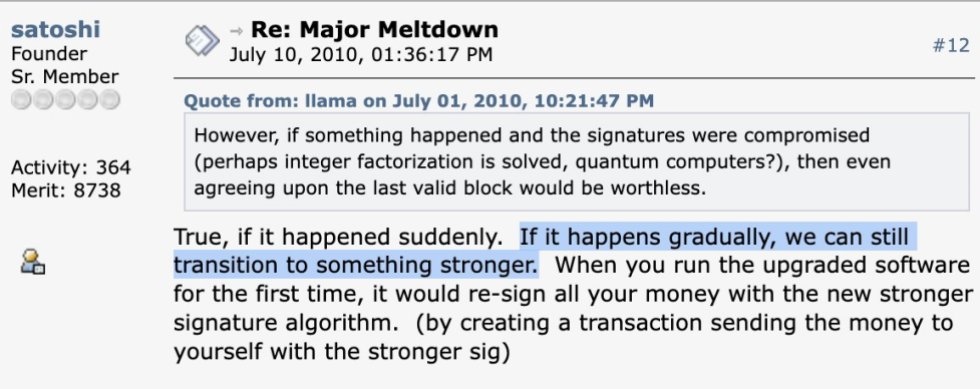
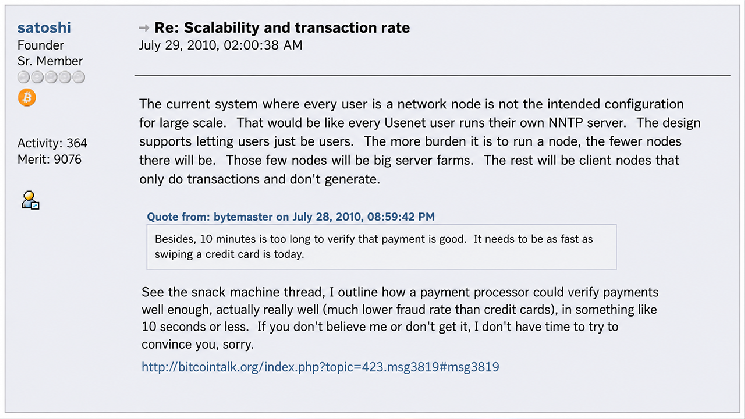
The community is no longer arguing if quantum breaks ECDSA/Schnorr, but how to stage an orderly migration. Let’s remember that the creator of Bitcoin, Satoshi Nakamoto himself, assured in 2010 that a gradual transition to post-quantum, stronger technology, was possible for Bitcoin.

A post from Satoshi Nakamoto regarding the quantum threat for Bitcoin. Source: Bitcoin Magazine on X.

Taproot‐based recovery tries to protect the entire UTXO set with minimal value destruction, whereas some prominent voices still argue non‐migrated coins should simply expire rather than be “rescue” in weird ways, to preserve Bitcoin’s monetary story.

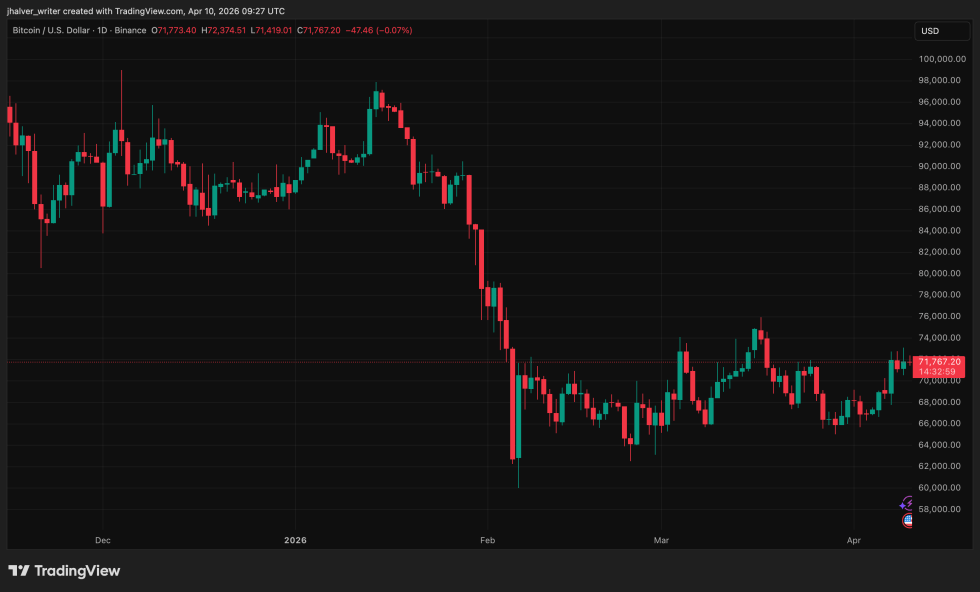
At the moment of writing, BTC trades for the high $71ks on the daily chart. Source: BTCUSD on Tradingview.

Cover image from Perplexity. BTCUSD chart from Tradingview.

Связанные с этим вопросы

QWhat is the main threat that Bitcoin developers are preparing for with these new proposals?

ABitcoin developers are preparing for the threat of quantum computers, specifically Shor-style quantum computers that could break Bitcoin's current ECDSA/Schnorr signature cryptography, potentially by 2029.

QWho proposed the first solution involving a 'zk-STARK proof' and what is its primary function?

AThe first solution was proposed by Olaoluwa Osuntokun of Lightning Labs and Tim Ruffing. Its primary function is to create a zk-STARK proof that allows users to prove ownership of their Taproot coins without revealing their private keys, providing an 'escape hatch' to move funds if a quantum-defense soft fork disables normal key-based spends.

QWhat does the QSB (Quantum Safe Bitcoin) solution replace to achieve quantum safety, and what is a major drawback of this approach?

AThe QSB solution replaces the old signature-size proof-of-work with a new RIPEMD-160-based hash pre-image puzzle. A major drawback is that it is extremely inefficient, costing hundreds of dollars in off-chain GPU work per transaction and requiring non-standard bare scripts mined via private relay services.

QAccording to the article, what did Bitcoin creator Satoshi Nakamoto say about the quantum threat in 2010?

AIn 2010, Satoshi Nakamoto assured that a gradual transition to post-quantum, stronger technology was possible for Bitcoin.

QWhat is the key philosophical difference between the two proposed solutions for Bitcoin's quantum resistance?

AThe key philosophical difference is in how much of Bitcoin needs to change. The Taproot-based recovery solution aims to protect the entire UTXO set with minimal value destruction through a potential soft fork (consensus rule changes), while the QSB solution is a transaction-level construction that makes individual spends quantum-safe today without any changes to Bitcoin's base protocol (user-level tooling).

Похожее

TechFlow Intelligence Agency: Anthropic Calls for Global Pause in AI Development While Preparing for Trillion-Dollar IPO; SpaceX IPO Roadshow Heats Up, But S&P 500 Rejects Fast-Track Inclusion

In today's TechFlow Intelligence Briefing, several major tech stories highlight a growing theme of trust and credibility gaps across AI, crypto, and finance. AI company Anthropic has publicly called for a global pause in AI development, citing risks from Claude's "recursive self-improvement." Ironically, this coincides with reports the company is preparing for a massive IPO targeting a near $1 trillion valuation. This perceived hypocrisy, coupled with widespread user complaints about Claude's declining performance, is sparking debate over whether the safety warning is genuine or a competitive tactic. Meanwhile, in a substantive security move, Anthropic open-sourced a framework for AI-powered vulnerability discovery. In the crypto market, Bitcoin's price drop below $61,000 triggered over $1.16 billion in liquidations, flipping the market into a state where more BTC is held at a loss than at a profit, a historical bearish signal. On the corporate front, SpaceX's highly anticipated IPO is generating immense Wall Street excitement, with Goldman Sachs projecting 100x revenue growth by 2030. However, the S&P 500 has refused to fast-track the company's inclusion post-IPO, potentially limiting immediate institutional demand. Separately, ByteDance's AI app Doubao lost over 6 million monthly active users after introducing a subscription model, highlighting the challenges of AI monetization. Other notable developments include Nvidia certifying HBM4 memory from Samsung, SK Hynix, and Micron; Cloudflare's acquisition of front-end tooling company VoidZero; and its CEO warning that bot traffic now exceeds human traffic online. The underlying narrative connects these events: a trust crisis. From AI firms' contradictory actions and crypto volatility to the clash between SpaceX's hyped narrative and institutional rules, a pattern is emerging where stated intentions and actual practices are increasingly misaligned.

marsbit7 мин. назад

TechFlow Intelligence Agency: Anthropic Calls for Global Pause in AI Development While Preparing for Trillion-Dollar IPO; SpaceX IPO Roadshow Heats Up, But S&P 500 Rejects Fast-Track Inclusion

marsbit7 мин. назад

Dalio Warns: AI Boom Shows Signs of a Bubble, Day of Reckoning Will Be the Time of Burst

Ray Dalio, founder of Bridgewater Associates, warns that the current artificial intelligence investment boom shows classic signs of a bubble, which he expects will eventually burst. In a Bloomberg Television interview, he noted that great technological revolutions often lead to capital inflows that create bubbles, making it difficult for investors and companies to calibrate their spending accurately—either overspending to capture market share or underspending and losing their competitive position. This caution comes amid significant rallies in AI-related assets, particularly chipmakers, driven by soaring demand for data centers and high-bandwidth chips, raising debates about overheating valuations. In contrast, Nvidia CEO Jensen Huang recently asserted that investors embracing the AI wave would see "crazy" returns and dismissed concerns over return on investment for data center spending as outdated. Dalio, however, focuses on the risks in the profit realization phase. He argues that bubbles tend to show signs of破裂 when markets transition from investment to the need for tangible returns, describing the burst as a process of converting paper wealth into cash. While acknowledging AI's intrinsic value, he expressed concern over the future profitability of some AI companies, suggesting the market is repeating a familiar pattern. The 76-year-old billionaire, who fully exited Bridgewater in 2025, has a net worth estimated at $21.5 billion according to the Bloomberg Billionaires Index.

marsbit41 мин. назад

Dalio Warns: AI Boom Shows Signs of a Bubble, Day of Reckoning Will Be the Time of Burst

marsbit41 мин. назад

Privacy Coin Crisis of Confidence! ZEC Plunges Over 56% in a Single Day

Zcash (ZEC), a leading privacy-focused cryptocurrency, experienced a severe crash on June 5th, plummeting over 56% in a single day and erasing nearly two months of gains. The flash crash was triggered by the disclosure of a critical zero-knowledge proof vulnerability within Zcash's Orchard privacy pool, which had existed since the pool's launch in May 2022. The flaw theoretically allowed an attacker to forge unlimited ZEC undetectably due to the pool's privacy features. The vulnerability was discovered on May 29th by independent security researcher Taylor Hornby during a proactive audit commissioned by Shielded Labs, utilizing AI-assisted analysis. The Zcash development team responded swiftly, implementing an emergency soft fork to disable Orchard transactions on June 2nd and executing a permanent hard fork fix (NU6.2) on June 3rd. Despite the technical fix, a major crisis of confidence emerged. The core issue is that Orchard's privacy design makes it cryptographically impossible to prove whether the vulnerability was exploited over the past four years, casting permanent doubt on the historical supply integrity of ZEC. While Shielded Labs argues exploitation was unlikely, the inability to provide definitive proof has severely damaged market trust. This sentiment was exacerbated when BitMEX co-founder Arthur Hayes, a prominent ZEC supporter, announced he was selling his entire position. He stated that privacy assets require "perfect security" rather than "probable safety." The combined effect of the disclosure and Hayes's exit ignited widespread panic selling, leading to massive liquidations and significant price decline. Analysts note the event highlights a fundamental tension within privacy coins: the conflict between verifiable supply and cryptographic privacy.

链捕手43 мин. назад

Privacy Coin Crisis of Confidence! ZEC Plunges Over 56% in a Single Day

链捕手43 мин. назад

Торговля

Спот
Фьючерсы

Популярные статьи

Тест по Bitcoin Биткоина

HTX Learn: Изучите Bitcoin halving и Заработаете Токены USDT

3.1k просмотров всегоОпубликовано 2024.04.16Обновлено 2024.04.16

Тест по Bitcoin  Биткоина

Что такое $BITCOIN

ЦИФРОВОЕ ЗОЛОТО ($BITCOIN): Комплексный анализ Введение в ЦИФРОВОЕ ЗОЛОТО ($BITCOIN) ЦИФРОВОЕ ЗОЛОТО ($BITCOIN) — это проект на основе блокчейна, работающий в сети Solana, который стремится объединить характеристики традиционных драгоценных металлов с инновациями децентрализованных технологий. Хотя он носит имя Биткойн, часто называемого “цифровым золотом” из-за его восприятия как средства хранения ценности, ЦИФРОВОЕ ЗОЛОТО является отдельным токеном, предназначенным для создания уникальной экосистемы в ландшафте Web3. Его цель — позиционировать себя как жизнеспособный альтернативный цифровой актив, хотя детали его применения и функциональности все еще развиваются. Что такое ЦИФРОВОЕ ЗОЛОТО ($BITCOIN)? ЦИФРОВОЕ ЗОЛОТО ($BITCOIN) — это токен криптовалюты, специально разработанный для использования в блокчейне Solana. В отличие от Биткойна, который выполняет широко признанную роль хранения ценности, этот токен, похоже, сосредоточен на более широких приложениях и характеристиках. Примечательные аспекты включают: Инфраструктура блокчейна: Токен построен на блокчейне Solana, известном своей способностью обрабатывать высокоскоростные и недорогие транзакции. Динамика предложения: ЦИФРОВОЕ ЗОЛОТО имеет максимальное предложение, ограниченное 100 квадриллионами токенов (100P $BITCOIN), хотя детали о его обращающемся предложении в настоящее время не раскрыты. Утилита: Хотя точные функциональные возможности не описаны, есть указания на то, что токен может быть использован для различных приложений, потенциально связанных с децентрализованными приложениями (dApps) или стратегиями токенизации активов. Кто создатель ЦИФРОВОГО ЗОЛОТА ($BITCOIN)? На данный момент личность создателей и команды разработчиков, стоящих за ЦИФРОВЫМ ЗОЛОТОМ ($BITCOIN), остается неизвестной. Эта ситуация типична для многих инновационных проектов в области блокчейна, особенно тех, которые связаны с децентрализованными финансами и феноменом мем-криптовалют. Хотя такая анонимность может способствовать культуре, ориентированной на сообщество, она усиливает опасения по поводу управления и ответственности. Кто инвесторы ЦИФРОВОГО ЗОЛОТА ($BITCOIN)? Доступная информация указывает на то, что у ЦИФРОВОГО ЗОЛОТА ($BITCOIN) нет известных институциональных спонсоров или значительных венчурных капиталовложений. Проект, похоже, функционирует по модели пирингового взаимодействия, сосредоточенной на поддержке и принятии сообществом, а не на традиционных путях финансирования. Его активность и ликвидность в основном сосредоточены на децентрализованных биржах (DEX), таких как PumpSwap, а не на устоявшихся централизованных торговых платформах, что еще больше подчеркивает его подход, ориентированный на grassroots. Как работает ЦИФРОВОЕ ЗОЛОТО ($BITCOIN) Операционные механизмы ЦИФРОВОГО ЗОЛОТА ($BITCOIN) можно подробно описать на основе его дизайна блокчейна и характеристик сети: Механизм консенсуса: Используя уникальный механизм доказательства истории (PoH) Solana в сочетании с моделью доказательства доли (PoS), проект обеспечивает эффективную валидацию транзакций, что способствует высокой производительности сети. Токеномика: Хотя конкретные дефляционные механизмы не были подробно описаны, большое максимальное предложение токенов подразумевает, что оно может быть предназначено для микротранзакций или нишевых случаев использования, которые еще предстоит определить. Интероперабельность: Существует потенциал для интеграции с более широкой экосистемой Solana, включая различные платформы децентрализованных финансов (DeFi). Однако детали относительно конкретных интеграций остаются неуточненными. Хронология ключевых событий Вот хронология, которая подчеркивает значимые вехи, касающиеся ЦИФРОВОГО ЗОЛОТА ($BITCOIN): 2023: Первоначальное развертывание токена происходит в блокчейне Solana, отмеченное его адресом контракта. 2024: ЦИФРОВОЕ ЗОЛОТО приобретает видимость, когда оно становится доступным для торговли на децентрализованных биржах, таких как PumpSwap, позволяя пользователям обменивать его на SOL. 2025: Проект наблюдает спорадическую торговую активность и потенциальный интерес к инициативам, возглавляемым сообществом, хотя на данный момент не зафиксировано никаких значительных партнерств или технических достижений. Критический анализ Сильные стороны Масштабируемость: Основная инфраструктура Solana поддерживает высокие объемы транзакций, что может повысить полезность $BITCOIN в различных сценариях транзакций. Доступность: Потенциально низкая цена торговли за токен может привлечь розничных инвесторов, способствуя более широкому участию благодаря возможностям дробного владения. Риски Отсутствие прозрачности: Отсутствие публично известных спонсоров, разработчиков или процесса аудита может вызвать скептицизм относительно устойчивости и надежности проекта. Волатильность рынка: Торговая активность сильно зависит от спекулятивного поведения, что может привести к значительной волатильности цен и неопределенности для инвесторов. Заключение ЦИФРОВОЕ ЗОЛОТО ($BITCOIN) является интригующим, но неоднозначным проектом в быстро развивающейся экосистеме Solana. Хотя он пытается использовать нарратив “цифрового золота”, его отход от установленной роли Биткойна как средства хранения ценности подчеркивает необходимость более четкого различения его предполагаемой утилиты и структуры управления. Будущее принятие и усвоение, вероятно, будут зависеть от решения текущей непрозрачности и более четкого определения его операционных и экономических стратегий. Примечание: Этот отчет охватывает синтезированную информацию, доступную на октябрь 2023 года, и с тех пор могут произойти события.

99 просмотров всегоОпубликовано 2025.05.13Обновлено 2025.05.13

Что такое $BITCOIN

Fractal Bitcoin: масштабирование Биткоина с помощью рекурсивной системы

Fractal Bitcoin — масштабное Layer-1-решнение, созданное на базе кода Биткоина, позволяющего достигать бесконечного масштабирования с помощью рекурсивного подхода.

2.3k просмотров всегоОпубликовано 2025.06.30Обновлено 2025.06.30

Fractal Bitcoin: масштабирование Биткоина с помощью рекурсивной системы

Обсуждения

Добро пожаловать в Сообщество HTX. Здесь вы сможете быть в курсе последних новостей о развитии платформы и получить доступ к профессиональной аналитической информации о рынке. Мнения пользователей о цене на BTC (BTC) представлены ниже.

活动图片