Bhutan Offloads $22M in Bitcoin as Mining Costs Surge: Institutional Eyes Shift to High-Yield L2s

bitcoinistОпубликовано 2026-02-05Обновлено 2026-02-05

Введение

Bhutan's sovereign wealth fund, Druk Holding & Investments, sold 367 BTC ($22M) on Binance, signaling mining sector stress due to rising operational costs and compressed hash prices. This sell-off highlights the profitability squeeze for miners, even state-backed entities. Meanwhile, institutional capital is rotating into high-yield Bitcoin Layer 2 solutions like Bitcoin Hyper ($HYPER), which leverages Solana's Virtual Machine for scalability and programmable smart contracts. $HYPER has raised over $31M in its presale, with significant whale accumulation, and offers 68% staking rewards, positioning it as a hedge against Bitcoin's volatility and mining inefficiencies.

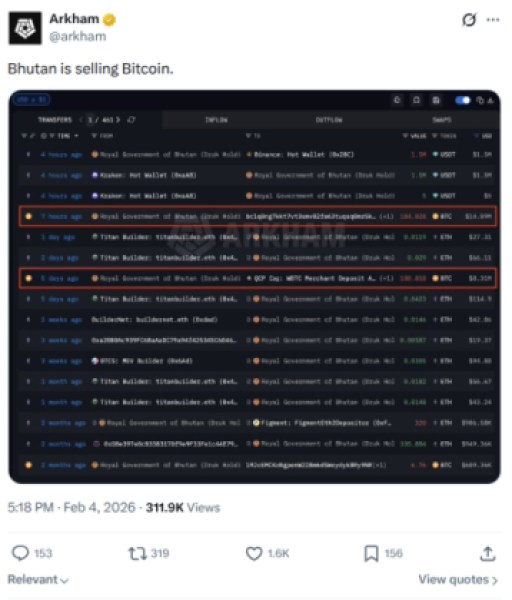
Sovereign volatility is back. On-chain data confirms that a wallet linked to the Royal Government of Bhutan, managed by Druk Holding & Investments, recently deposited 367 $BTC to Binance. That movement, valued at approximately $22M, isn’t an isolated event. It’s a symptom of a brutal squeeze in the mining sector.

With Bitcoin’s hash price compressing and operational expenditures (OpEx) for industrial miners climbing, even state-backed entities are liquidating reserves to keep their balance sheets healthy.

The market reaction? Mixed. While a $22M sell wall is absorbable in today’s high-volume environment, the signal is undeniably bearish for short-term Layer 1 price action. It highlights the growing tension between network security costs and miner profitability.

But smart money rarely sits on its hands. As capital rotates out of stagnant spot positions, sophisticated investors are hunting for yield in the emerging Bitcoin Layer 2 ecosystem, a sector designed to solve the scalability issues currently choking the main chain.

This rotation is visible in the flows toward infrastructure projects, unlocking Bitcoin’s dormant capital. Leading the pack is Bitcoin Hyper ($HYPER), a protocol using the Solana Virtual Machine (SVM) to bring high-speed execution to the Bitcoin network.

Bitcoin Hyper ($HYPER) Brings SVM Speeds To The Oldest Blockchain

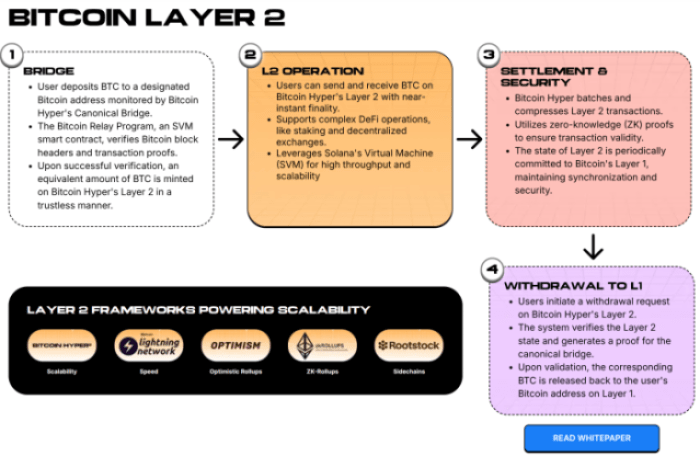
Bitcoin has a utility problem. While it remains the pristine collateral of the crypto world, let’s be honest, it’s sluggish. Transactions crawl, fees spike during congestion, and programmable smart contracts are virtually non-existent on the main chain. Bitcoin Hyper ($HYPER) tackles this by grafting the Solana Virtual Machine (SVM) directly onto the network as a Layer 2 solution.

This architecture allows Bitcoin Hyper to process transactions with Solana-grade speeds while anchoring security to Bitcoin’s Layer 1. For developers, this opens the door to building DeFi apps, NFT platforms, and gaming dApps using Rust, all within the Bitcoin ecosystem.

Bitcoin Hyper uses a decentralized Canonical Bridge to ensure trustless $BTC transfers, effectively turning static Bitcoin into a productive asset.

That matters for adoption. By modifying SPL-compatible tokens for L2 execution, Bitcoin Hyper creates a high-speed payment and DeFi environment that Bitcoin has historically lacked. The protocol operates on a modular framework: Bitcoin L1 handles settlement, while the SVM L2 handles real-time execution.

This separation of concerns allows a single trusted sequencer to manage throughput without compromising the underlying security guarantees of the Bitcoin network.

LEARN MORE ON THE OFFICIAL $HYPER PRESALE PAGE

Whales Accumulate As Smart Money Front-Runs The L2 Narrative

While sovereign miners like Bhutan sell to cover costs, a different class of investor is aggressively accumulating early-stage infrastructure. The data surrounding the Bitcoin Hyper presale suggests serious institutional confidence. According to official figures, the project has already raised over $31M.


This liquidity injection isn’t just retail money. Etherscan records show that whales are also in on the action, with one wallet scooping up $500K’s worth of $HYPER. This data point, large singular buys rather than thousands of micro-transactions, indicates that high-net-worth individuals are positioning themselves before the token hits public exchanges.

With the current token price sitting at $0.0136751 and staking rewards at 68%, these entities are securing positions at a valuation that anticipates major future utility. Our experts also predict $HYPER doing well, possibly making it to $0.32 by the end of 2026. If that happens and you’d invested today, it’s an ROI of 2240%

The incentive structure supports the long game, too. Bitcoin Hyper offers high APY staking immediately after the Token Generation Event (TGE). Notably, the protocol enforces a 7-day vesting period for presale stakers. This mechanism (often overlooked by retail flippers) is designed to prevent immediate post-launch dumping, stabilizing the price floor while rewarding those who participate in governance.

For investors watching Bhutan sell L1 assets, rotating into a yield-bearing L2 represents a hedge against mining-induced volatility.

GET YOUR $HYPER ON ITS OFFICIAL PRESALE PAGE

This article is for informational purposes only and does not constitute financial advice. Cryptocurrencies are high-risk assets. The mention of specific dates, such as January 15, 2026, reflects data provided by the project source. Always conduct your own due diligence before investing.

Связанные с этим вопросы

QWhy did the Royal Government of Bhutan deposit 367 BTC to Binance, according to the article?

AThe Royal Government of Bhutan, managed by Druk Holding & Investments, deposited the Bitcoin to liquidate reserves due to a brutal squeeze in the mining sector, where rising operational expenditures (OpEx) and a compressing hash price are putting pressure on miners' profitability, forcing even state-backed entities to sell to maintain healthy balance sheets.

QWhat is Bitcoin Hyper ($HYPER) and how does it aim to solve Bitcoin's utility problem?

ABitcoin Hyper ($HYPER) is a Layer 2 protocol that grafts the Solana Virtual Machine (SVM) onto the Bitcoin network. It aims to solve Bitcoin's sluggish transaction speeds, high fees, and lack of programmable smart contracts by enabling high-speed execution for DeFi apps, NFT platforms, and gaming dApps using Rust, all while anchoring security to Bitcoin's Layer 1.

QWhat evidence does the article provide to suggest institutional confidence in the Bitcoin Hyper ($HYPER) project?

AThe article states that the project has raised over $31M in its presale and cites Etherscan records showing large singular buys, such as one wallet acquiring $500K worth of $HYPER, indicating accumulation by high-net-worth individuals and whales rather than retail micro-transactions.

QWhat is the predicted price for $HYPER by the end of 2026 according to the 'experts' mentioned in the article, and what potential ROI does that represent?

AThe experts predict that $HYPER could reach $0.32 by the end of 2026. With the current presale price at $0.0136751, this represents a potential return on investment (ROI) of 2240%.

QWhat mechanism does Bitcoin Hyper use to prevent immediate post-launch dumping and stabilize the price floor after its Token Generation Event (TGE)?

ABitcoin Hyper enforces a 7-day vesting period for presale stakers. This mechanism is designed to prevent immediate selling (dumping) after the launch, thereby stabilizing the price floor and rewarding participants who are involved in long-term governance.

Похожее

Google and Amazon Simultaneously Invest Heavily in a Competitor: The Most Absurd Business Logic of the AI Era Is Becoming Reality

In a span of four days, Amazon announced an additional $25 billion investment, and Google pledged up to $40 billion—both direct competitors pouring over $65 billion into the same AI startup, Anthropic. Rather than a typical venture capital move, this signals the latest escalation in the cloud wars. The core of the deal is not equity but compute pre-orders: Anthropic must spend the majority of these funds on AWS and Google Cloud services and chips, effectively locking in massive future compute consumption. This reflects a shift in cloud market dynamics—enterprises now choose cloud providers based on which hosts the best AI models, not just price or stability. With OpenAI deeply tied to Microsoft, Anthropic’s Claude has become the only viable strategic asset for Google and Amazon to remain competitive. Anthropic’s annualized revenue has surged to $30 billion, and it is expanding into verticals like biotech, positioning itself as a cross-industry AI infrastructure layer. However, this funding comes with constraints: Anthropic’s independence is challenged as it balances two rival investors, its safety-first narrative faces pressure from regulatory scrutiny, and its path to IPO introduces new financial pressures. Globally, this accelerates a "tri-polar" closed-loop structure in AI infrastructure, with Microsoft-OpenAI, Google-Anthropic, and Amazon-Anthropic forming exclusive model-cloud alliances. In contrast, China’s landscape differs—investments like Alibaba and Tencent backing open-source model firm DeepSeek reflect a more decoupled approach, though closed-source models from major cloud providers still dominate. The $65 billion bet is ultimately about securing a seat at the table in an AI-defined future—where missing the model layer means losing the cloud war.

marsbit2 ч. назад

Google and Amazon Simultaneously Invest Heavily in a Competitor: The Most Absurd Business Logic of the AI Era Is Becoming Reality

marsbit2 ч. назад

Computing Power Constrained, Why Did DeepSeek-V4 Open Source?

DeepSeek-V4 has been released as a preview open-source model, featuring 1 million tokens of context length as a baseline capability—previously a premium feature locked behind enterprise paywalls by major overseas AI firms. The official announcement, however, openly acknowledges computational constraints, particularly limited service throughput for the high-end DeepSeek-V4-Pro version due to restricted high-end computing power. Rather than competing on pure scale, DeepSeek adopts a pragmatic approach that balances algorithmic innovation with hardware realities in China’s AI ecosystem. The V4-Pro model uses a highly sparse architecture with 1.6T total parameters but only activates 49B during inference. It performs strongly in agentic coding, knowledge-intensive tasks, and STEM reasoning, competing closely with top-tier closed models like Gemini Pro 3.1 and Claude Opus 4.6 in certain scenarios. A key strategic product is the Flash edition, with 284B total parameters but only 13B activated—making it cost-effective and accessible for mid- and low-tier hardware, including domestic AI chips from Huawei (Ascend), Cambricon, and Hygon. This design supports broader adoption across developers and SMEs while stimulating China's domestic semiconductor ecosystem. Despite facing talent outflow and intense competition in user traffic—with rivals like Doubao and Qianwen leading in monthly active users—DeepSeek has maintained technical momentum. The release also comes amid reports of a new funding round targeting a valuation exceeding $10 billion, potentially setting a new record in China’s LLM sector. Ultimately, DeepSeek-V4 represents a shift toward open yet realistic infrastructure development in the constrained compute landscape of Chinese AI, emphasizing engineering efficiency and domestic hardware compatibility over pure model scale.

marsbit3 ч. назад

Computing Power Constrained, Why Did DeepSeek-V4 Open Source?

marsbit3 ч. назад

Торговля

Спот
Фьючерсы

Популярные статьи

Тест по Bitcoin Биткоина

HTX Learn: Изучите Bitcoin halving и Заработаете Токены USDT

3.0k просмотров всегоОпубликовано 2024.04.16Обновлено 2024.04.16

Тест по Bitcoin  Биткоина

Что такое $BITCOIN

ЦИФРОВОЕ ЗОЛОТО ($BITCOIN): Комплексный анализ Введение в ЦИФРОВОЕ ЗОЛОТО ($BITCOIN) ЦИФРОВОЕ ЗОЛОТО ($BITCOIN) — это проект на основе блокчейна, работающий в сети Solana, который стремится объединить характеристики традиционных драгоценных металлов с инновациями децентрализованных технологий. Хотя он носит имя Биткойн, часто называемого “цифровым золотом” из-за его восприятия как средства хранения ценности, ЦИФРОВОЕ ЗОЛОТО является отдельным токеном, предназначенным для создания уникальной экосистемы в ландшафте Web3. Его цель — позиционировать себя как жизнеспособный альтернативный цифровой актив, хотя детали его применения и функциональности все еще развиваются. Что такое ЦИФРОВОЕ ЗОЛОТО ($BITCOIN)? ЦИФРОВОЕ ЗОЛОТО ($BITCOIN) — это токен криптовалюты, специально разработанный для использования в блокчейне Solana. В отличие от Биткойна, который выполняет широко признанную роль хранения ценности, этот токен, похоже, сосредоточен на более широких приложениях и характеристиках. Примечательные аспекты включают: Инфраструктура блокчейна: Токен построен на блокчейне Solana, известном своей способностью обрабатывать высокоскоростные и недорогие транзакции. Динамика предложения: ЦИФРОВОЕ ЗОЛОТО имеет максимальное предложение, ограниченное 100 квадриллионами токенов (100P $BITCOIN), хотя детали о его обращающемся предложении в настоящее время не раскрыты. Утилита: Хотя точные функциональные возможности не описаны, есть указания на то, что токен может быть использован для различных приложений, потенциально связанных с децентрализованными приложениями (dApps) или стратегиями токенизации активов. Кто создатель ЦИФРОВОГО ЗОЛОТА ($BITCOIN)? На данный момент личность создателей и команды разработчиков, стоящих за ЦИФРОВЫМ ЗОЛОТОМ ($BITCOIN), остается неизвестной. Эта ситуация типична для многих инновационных проектов в области блокчейна, особенно тех, которые связаны с децентрализованными финансами и феноменом мем-криптовалют. Хотя такая анонимность может способствовать культуре, ориентированной на сообщество, она усиливает опасения по поводу управления и ответственности. Кто инвесторы ЦИФРОВОГО ЗОЛОТА ($BITCOIN)? Доступная информация указывает на то, что у ЦИФРОВОГО ЗОЛОТА ($BITCOIN) нет известных институциональных спонсоров или значительных венчурных капиталовложений. Проект, похоже, функционирует по модели пирингового взаимодействия, сосредоточенной на поддержке и принятии сообществом, а не на традиционных путях финансирования. Его активность и ликвидность в основном сосредоточены на децентрализованных биржах (DEX), таких как PumpSwap, а не на устоявшихся централизованных торговых платформах, что еще больше подчеркивает его подход, ориентированный на grassroots. Как работает ЦИФРОВОЕ ЗОЛОТО ($BITCOIN) Операционные механизмы ЦИФРОВОГО ЗОЛОТА ($BITCOIN) можно подробно описать на основе его дизайна блокчейна и характеристик сети: Механизм консенсуса: Используя уникальный механизм доказательства истории (PoH) Solana в сочетании с моделью доказательства доли (PoS), проект обеспечивает эффективную валидацию транзакций, что способствует высокой производительности сети. Токеномика: Хотя конкретные дефляционные механизмы не были подробно описаны, большое максимальное предложение токенов подразумевает, что оно может быть предназначено для микротранзакций или нишевых случаев использования, которые еще предстоит определить. Интероперабельность: Существует потенциал для интеграции с более широкой экосистемой Solana, включая различные платформы децентрализованных финансов (DeFi). Однако детали относительно конкретных интеграций остаются неуточненными. Хронология ключевых событий Вот хронология, которая подчеркивает значимые вехи, касающиеся ЦИФРОВОГО ЗОЛОТА ($BITCOIN): 2023: Первоначальное развертывание токена происходит в блокчейне Solana, отмеченное его адресом контракта. 2024: ЦИФРОВОЕ ЗОЛОТО приобретает видимость, когда оно становится доступным для торговли на децентрализованных биржах, таких как PumpSwap, позволяя пользователям обменивать его на SOL. 2025: Проект наблюдает спорадическую торговую активность и потенциальный интерес к инициативам, возглавляемым сообществом, хотя на данный момент не зафиксировано никаких значительных партнерств или технических достижений. Критический анализ Сильные стороны Масштабируемость: Основная инфраструктура Solana поддерживает высокие объемы транзакций, что может повысить полезность $BITCOIN в различных сценариях транзакций. Доступность: Потенциально низкая цена торговли за токен может привлечь розничных инвесторов, способствуя более широкому участию благодаря возможностям дробного владения. Риски Отсутствие прозрачности: Отсутствие публично известных спонсоров, разработчиков или процесса аудита может вызвать скептицизм относительно устойчивости и надежности проекта. Волатильность рынка: Торговая активность сильно зависит от спекулятивного поведения, что может привести к значительной волатильности цен и неопределенности для инвесторов. Заключение ЦИФРОВОЕ ЗОЛОТО ($BITCOIN) является интригующим, но неоднозначным проектом в быстро развивающейся экосистеме Solana. Хотя он пытается использовать нарратив “цифрового золота”, его отход от установленной роли Биткойна как средства хранения ценности подчеркивает необходимость более четкого различения его предполагаемой утилиты и структуры управления. Будущее принятие и усвоение, вероятно, будут зависеть от решения текущей непрозрачности и более четкого определения его операционных и экономических стратегий. Примечание: Этот отчет охватывает синтезированную информацию, доступную на октябрь 2023 года, и с тех пор могут произойти события.

99 просмотров всегоОпубликовано 2025.05.13Обновлено 2025.05.13

Что такое $BITCOIN

Fractal Bitcoin: масштабирование Биткоина с помощью рекурсивной системы

Fractal Bitcoin — масштабное Layer-1-решнение, созданное на базе кода Биткоина, позволяющего достигать бесконечного масштабирования с помощью рекурсивного подхода.

2.2k просмотров всегоОпубликовано 2025.06.30Обновлено 2025.06.30

Fractal Bitcoin: масштабирование Биткоина с помощью рекурсивной системы

Обсуждения

Добро пожаловать в Сообщество HTX. Здесь вы сможете быть в курсе последних новостей о развитии платформы и получить доступ к профессиональной аналитической информации о рынке. Мнения пользователей о цене на BTC (BTC) представлены ниже.

活动图片