Автор | Odaily Планета Дэйли(@OdailyChina)
Автор | Венсер(@wenser 2010)
В сентябре прошлого года спор вокруг нативного стейблкоина Hyperliquid, USDH, стал в свое время фокусом внимания всей индустрии; а теперь этот стейблкоин, на который когда-то возлагали большие надежды, внезапно встретил свой "момент ухода со сцены".
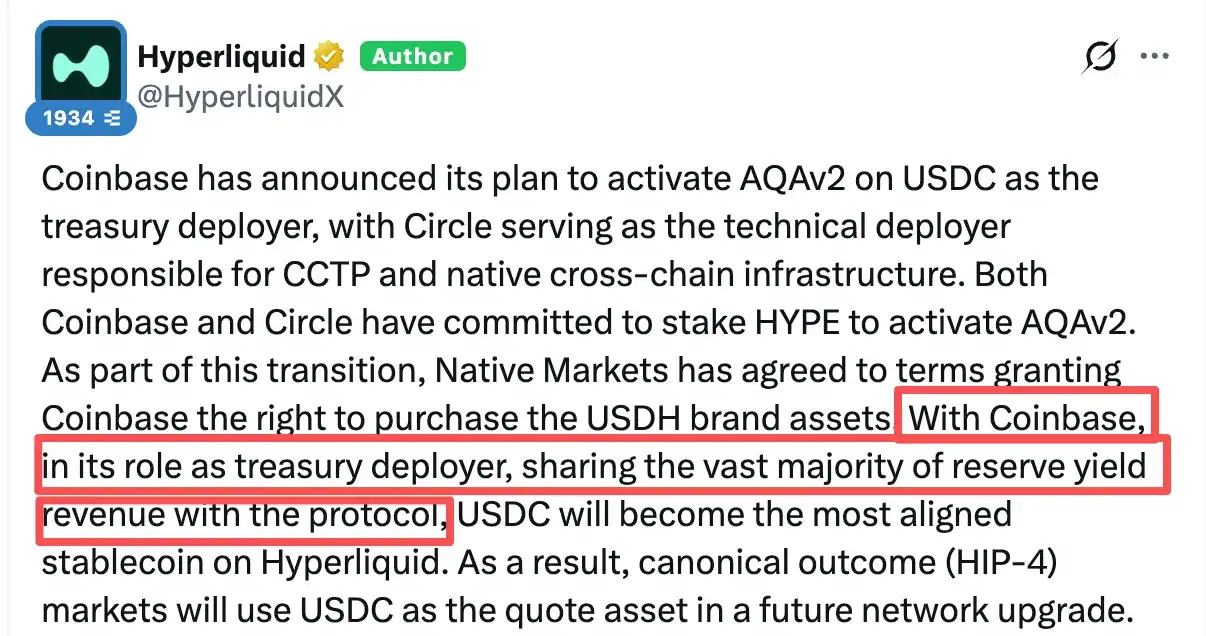
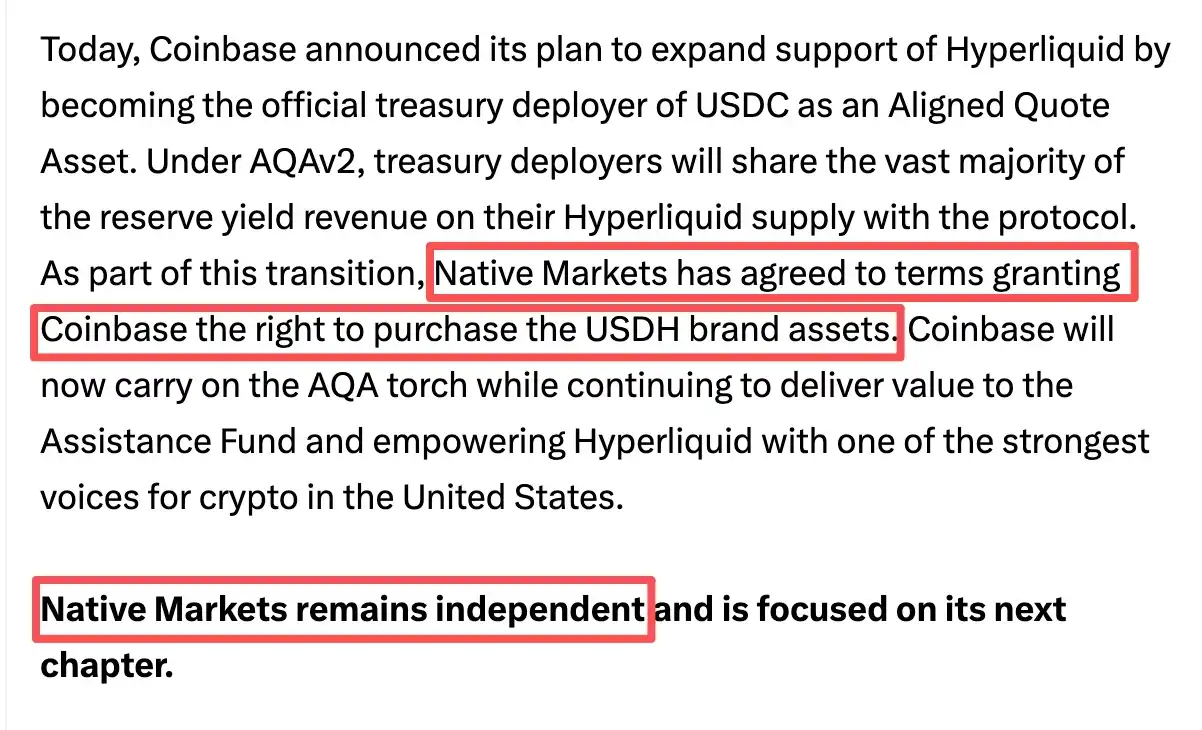
Прошлой ночью Coinbase объявила, что станет официальным распорядителем казначейства USDC на Hyperliquid, а эмитент нативного стейблкоина USDH, Native Markets, предоставил Coinbase права на покупку активов бренда USDH. В дальнейшем рынок USDH будет постепенно закрываться, в течение этого периода пользователи по-прежнему смогут без комиссии обменивать USDH на USDC или фиатные деньги.
Таким образом, некогда громко известный USDH стал активом, перешедшим под контроль Coinbase, а USDC официально утвержден в качестве основного стейблкоина и расчетного актива Hyperliquid. Odaily Планета Дэйли в данной статье кратко проанализирует обстоятельства этого дела и его последствия.
Закат USDH, расцвет USDC: экономический расчет за 50 миллиардов долларов
Это большое шоу "битвы за стейблкоин в экосистеме Hyperliquid" в конечном итоге завершилось беспроигрышной ситуацией для всех трех сторон: Coinbase&Circle, Hyperliquid и эмитента USDH, Native Markets.
Coinbase тем самым еще больше укрепила связи с экосистемой Hyperliquid; Hyperliquid получила львиную долю доходов от резервов стейблкоина USDC внутри экосистемы; а Native Markets, как окончательный победитель некогда существовавшего USDH, получил свою выгоду в форме "продажи активов бренда USDH".
Coinbase&Circle: интеграция в ончейн-экономику Hyperliquid, продолжение инвестиций в HYPE
В настоящее время объем USDC на Hyperliquid составляет около 51,64 млрд долларов, что в 2 раза больше, чем годом ранее.
Как официальный партнер по USDC и сторона, участвующая в распределении доходов, Coinbase, несомненно, предприняла этот шаг, чтобы глубоко интегрироваться с экосистемой Hyperliquid.
Кроме того, согласно информации официального объявления Hyperliquid, Coinbase (распорядитель средств) и Circle (отвечающая за техническое развертывание инфраструктуры CCTP и нативных кросс-чейн решений) обязались стейкать HYPE для активации AQAv2 (Aligned Quote Asset v2, то есть согласованного расчетного актива).
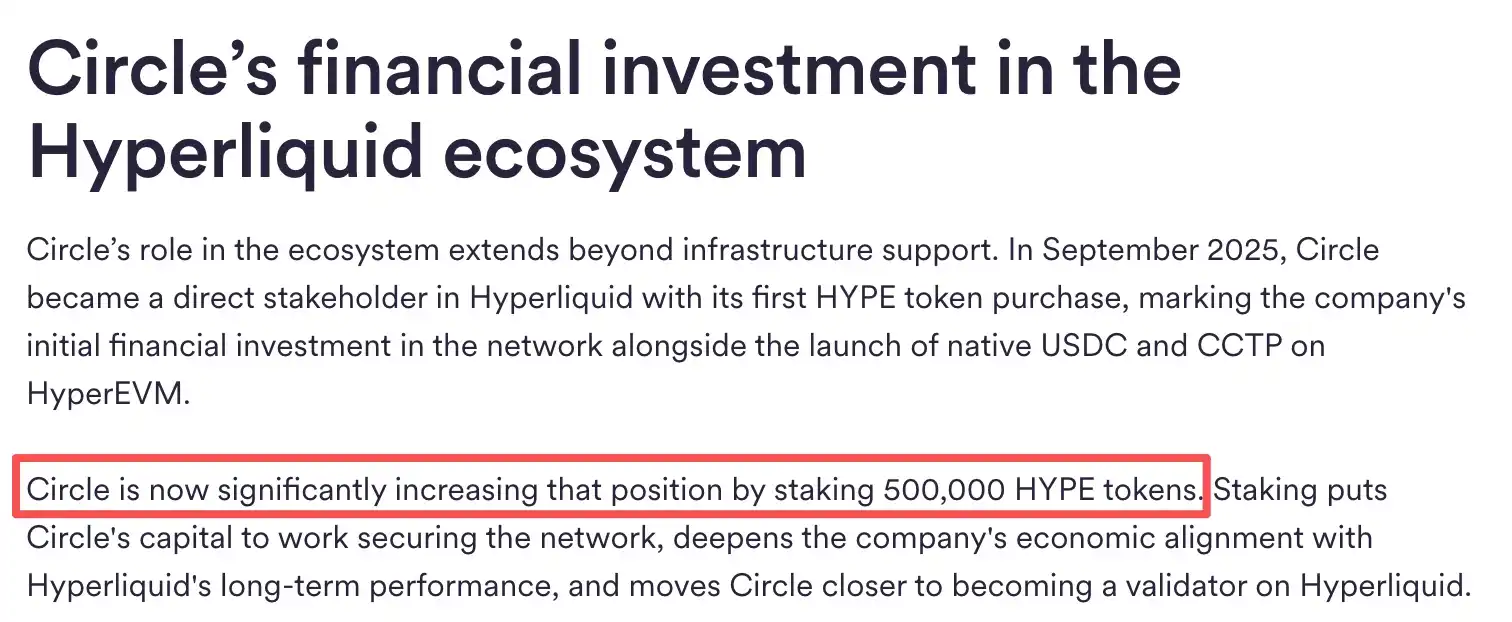
Стоит отметить, что в сентябре прошлого года Circle уже купила токены HYPE, и в настоящее время объем ее стейкинга токенов HYPE увеличился примерно до 500 000 штук.
Hyperliquid: получает большую часть дохода от резервов USDC, пользуется преимуществами статуса союзника Coinbase
Что касается главного победителя этого сотрудничества, то им, несомненно, стал Hyperliquid как основа экосистемы.
Согласно официальному сообщению, в дальнейшем Coinbase будет делиться большей частью (vast majority) дохода от резервов с протоколом Hyperliquid. Хотя конкретные пропорции распределения пока не объявлены, но если исходить из предыдущего механизма распределения доходов USDH, Hyperliquid фактически будет получать около 90% дохода от резервов.
По расчетам членов сообщества Hyperliquid, при объеме в 47 миллиардов долларов и доходности от процентов в 3,8%, этот доход составляет примерно 1,6 миллиарда долларов; другими словами, это соответствует ежедневному выкупу токенов HYPE на сумму 440 тысяч долларов.
Более того, с принятием закона CLARITY в комитете по банковскому делу Сената США, глубокая интеграция Hyperliquid с Coinbase также означает, что HYPE и Hyperliquid получили определенную поддержку на уровне американского регулирования.
Native Markets: историческая миссия USDH выполнена
Будучи эмитентом нативного стейблкоина Hyperliquid USDH, Native Markets, казалось бы, является самым разочарованным участником этого "события перехода под контроль", но, судя по их официальному сообщению, их исход также можно считать "уходом по завершении миссии".
С одной стороны, USDH послужил примером и образцом для раздела доходов от USDC между Coinbase и протоколом Hyperliquid; с другой стороны, Coinbase, по-видимому, напрямую приобрела активы бренда, связанные с USDH, и стейблкоин USDH, выпущенный командой Native Markets, можно считать "проданным Coinbase", благодаря чему команда, наоборот, получила определенную экономическую выгоду.
В дальнейшем Native Markets также заявила, что сохранит независимость и будет искать возможности для развития в других направлениях.
После ухода USDH, в ситуации беспроигрышной для трех сторон, пострадать могут только пользователи USDH
Конечно, уход Native Markets со сцены также не был встречен однозначным "одобрением", пользователи сообщества Hyperliquid также выразили недовольство по поводу их заявлений о том, что они "сели за стол переговоров".
Некоторые считают, что уход USDH означает полный откат от децентрализованной эпохи;
Другие указывают, что изначально при голосовании за эмитента стейблкоина USDH следовало выбрать Paxos, по крайней мере, они думали о пользователях и росте стейблкоина, а те, кто голосовал за Native Markets, делали это просто из-за выбора стороны и внутренних интересов. В конечном итоге пользователи ничего не получили. Эти заявления также нашли поддержку и одобрение у многих.
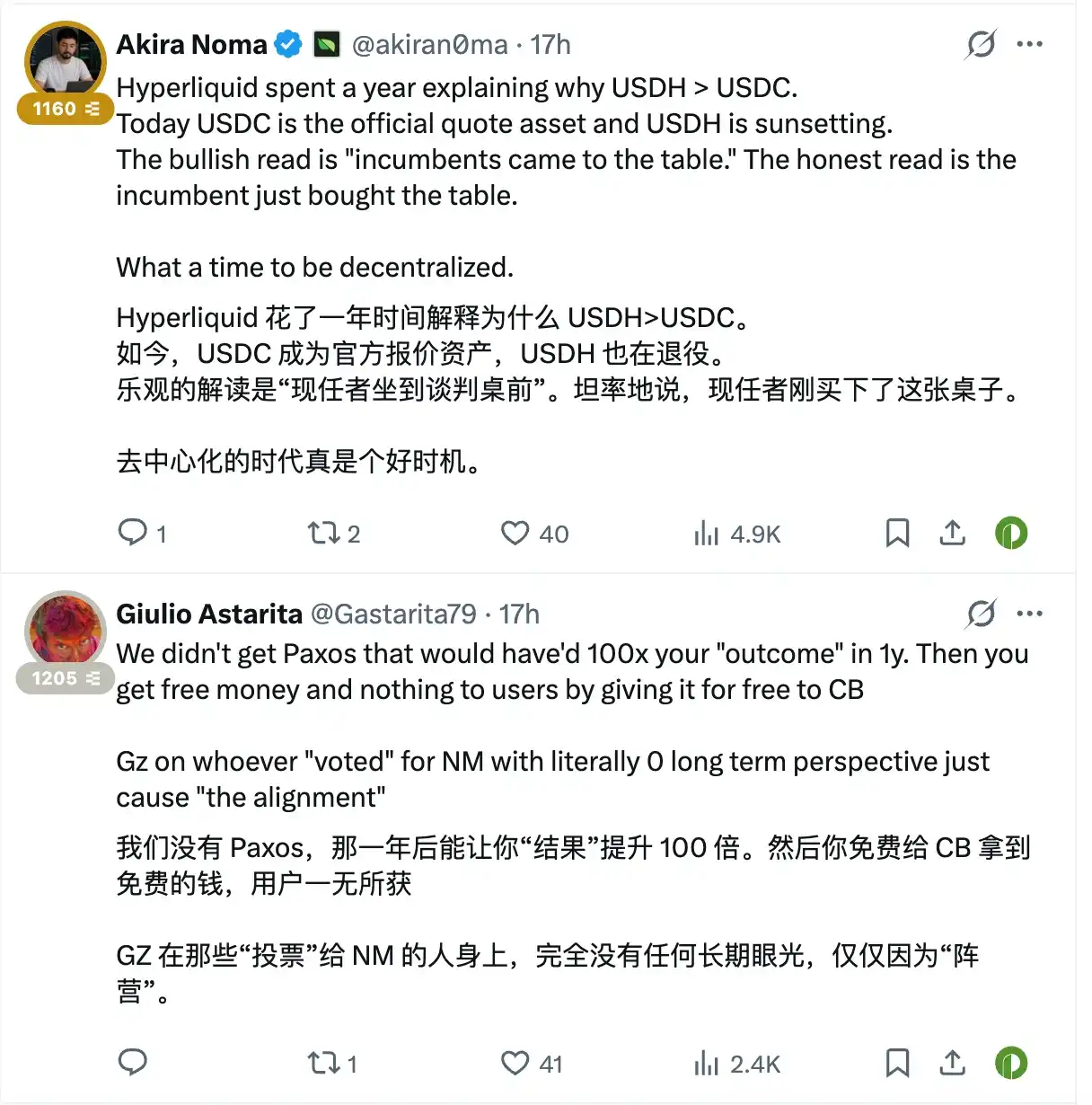
Так год назад закончилось это шоу под названиями "преследование любви могущественным боссом" и "сопротивление гигантам".
Просто теперь, глядя на сцену "рукопожатия и примирения" между Hyperliquid, Coinbase и Circle, становится немного грустно и слегка иронично.
Оказывается, все это было просто вопросом распределения интересов, а не тех лозунгов "ради сообщества" и "ради Hyperliquid", которые когда-то громко провозглашались.
Рекомендуем к прочтению
Стейблкоин Hyperliquid USDH стал "лакомым кусочком для индустрии", гиганты развязали войну за права дистрибуции
Голосование по USDH в процессе: "готовый сценарий", "преследование любви могущественным боссом", "уход в отставку на волне успеха" сменяют друг друга