В предыдущих бычьих циклах Биткойна пиковые цены часто сопровождались сигналами перегрева. Однако в текущем бычьем рынке произошли заметные изменения — многие проверенные временем индикаторы не спешат сигнализировать о достижении пика, в то время как цена Биткойна с 6 октября, после обновления исторического максимума, продолжает снижаться, что также способствует медвежьим настроениям по многим индикаторам.
Далее мы рассмотрим 10 классических индикаторов, оценим их особенности и ограничения, а также выявим внутренние изменения на рынке Биткойна и всего криптовалютного пространства.
1. Индикатор пика Pi Cycle: Достигнут ли циклический максимум?
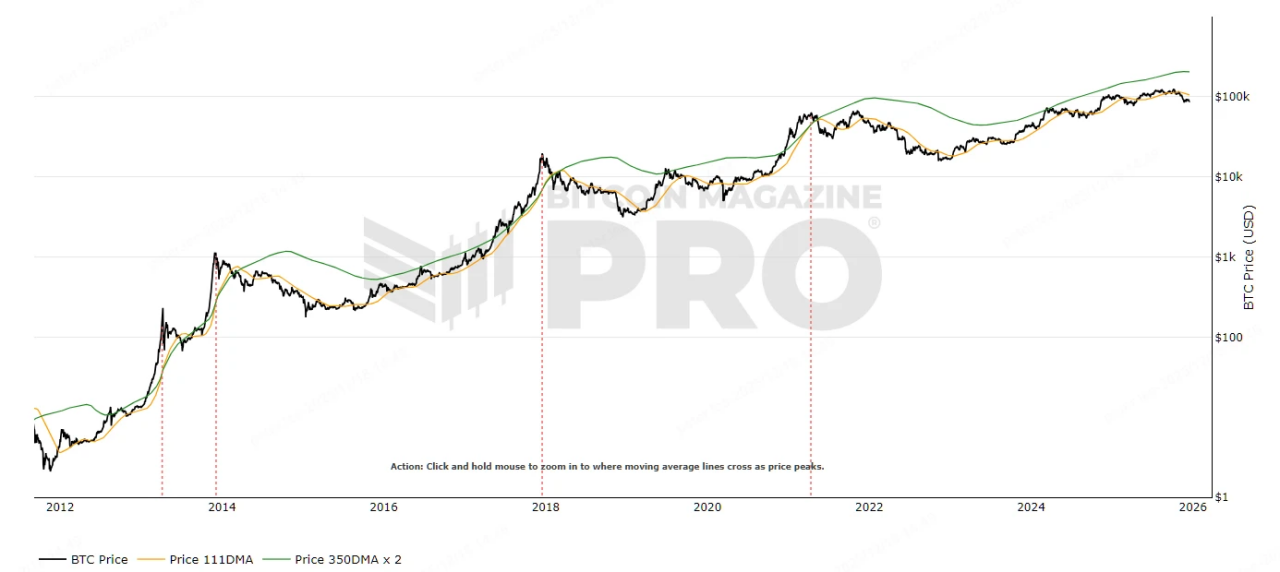
Индикатор Pi Cycle — это классический инструмент для определения пиковых цен Биткойна с использованием 111-дневной скользящей средней (111DMA) и 350-дневной скользящей средней, умноженной на 2 (350DMA x 2).
Обычно, когда краткосрочная линия пересекает долгосрочную сверху вниз, это часто сигнализирует о рыночном пике, поскольку указывает на слишком быстрое повышение цены, оторванное от фундаментальных основ.
Исторически индикатор Pi Cycle Top показывал пересечение перед каждым бычьим пиком:
Пик 2017 года: 111DMA пересекла 350DMA x 2, что ознаменовало последующий крах пузыря;
Двойной пик 2021 года: после аналогичного пересечения появился первый пик, и рынок быстро скорректировался;
В текущий момент (IV квартал 2025 года), как показано на графике ниже, линии еще не пересеклись.
Источник: https://www.bitcoinmagazinepro.com/charts/pi-cycle-top-indicator
2. Множитель Пуэлла (Puell Multiple): Является ли прибыль майнеров чрезмерной?
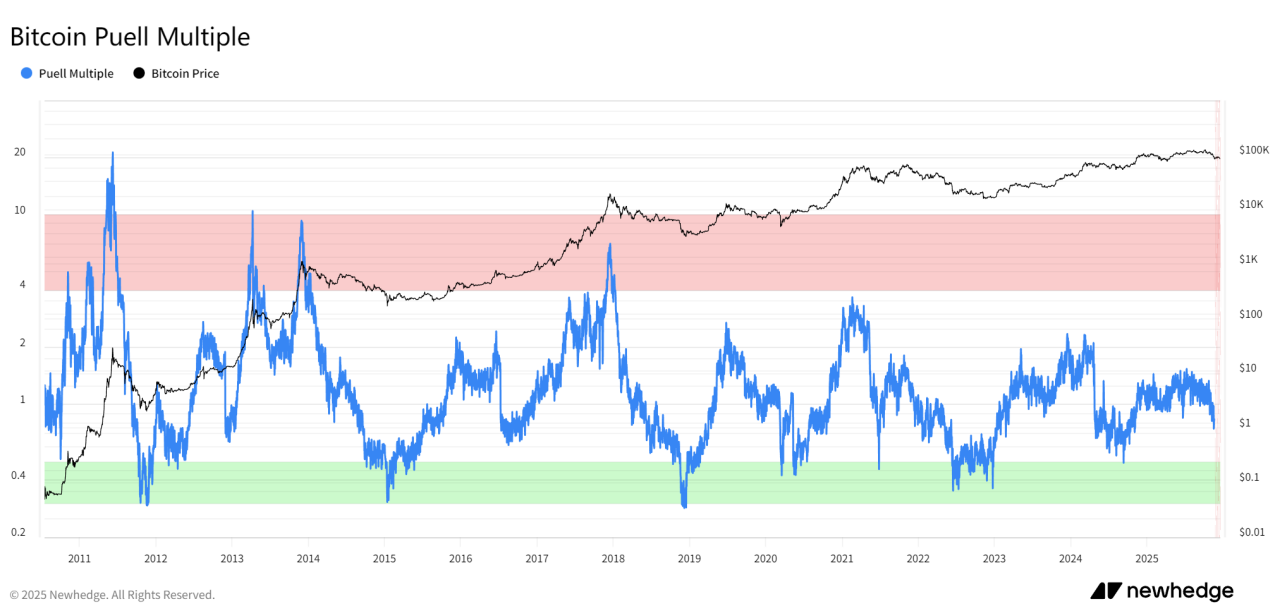
Множитель Пуэлла измеряет отношение ежедневного дохода майнеров к 365-дневной скользящей средней и используется для оценки уровня прибыльности майнеров и рыночных циклов.
Его принцип основан на поведении майнеров: при слишком высоком коэффициенте майнеры получают значительную прибыль, что может увеличить давление продаж и сформировать пик; слишком низкий коэффициент указывает на капитуляцию майнеров и предвещает дно. Другими словами, высокий множитель Пуэлла отражает, что майнеры «слишком много зарабатывают», и накапливается давление предложения.
Исторически множитель Пуэлла также демонстрировал экстремальные всплески перед каждым бычьим пиком:
Пик 2017 года: превысил 7, что является историческим максимумом;
Двойной пик 2021 года: превысил 3, после чего последовал обвал;
В текущий момент (IV квартал 2025 года) множитель Пуэлла находится в диапазоне 1~2, что указывает на умеренное давление со стороны майнеров.
Источник: https://newhedge.io/bitcoin/puell-multiple
3. Радужная диаграмма Биткойна (Bitcoin Rainbow Chart): Вошла ли цена в зону продаж?
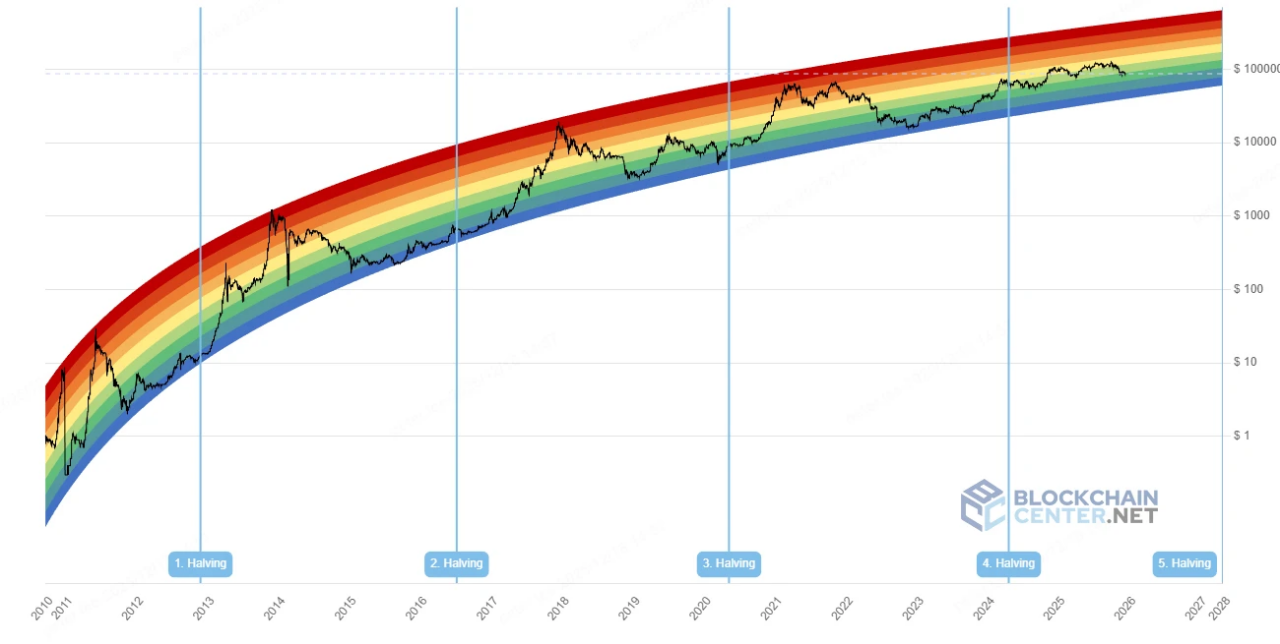
Радужная диаграмма Биткойна использует логарифмическую кривую роста с наложением радужных полос для оценки долгосрочных уровней оценки Биткойна.
Её принцип заключается в отображении цены на цветовые зоны: синяя зона указывает на недооцененность (покупка), красная зона — на переоцененность (продажа). Полосы основаны на исторической кривой роста и помогают определить экстремальные настроения рынка.
Исторически радужная диаграмма Биткойна показывала вход в красную зону перед каждым бычьим пиком:
Пик 2017 года: темно-красная зона, пик пузыря;
Двойной пик 2021 года: оранжево-красная зона, за которой последовала коррекция;
В текущий момент (IV квартал 2025 года) цена находится в желто-оранжевом диапазоне, еще не достигнув красной зоны пузыря. Мы также видели, что многие аналитики скорректировали этот индикатор, но как бы его ни настраивали, на данный момент цена действительно не достигла красной зоны пузыря по историческим меркам.
Источник: https://www.blockchaincenter.net/en/bitcoin-rainbow-chart/
4. Множитель 2-летней скользящей средней (2-Year MA Multiplier): Достиг ли множитель пика?
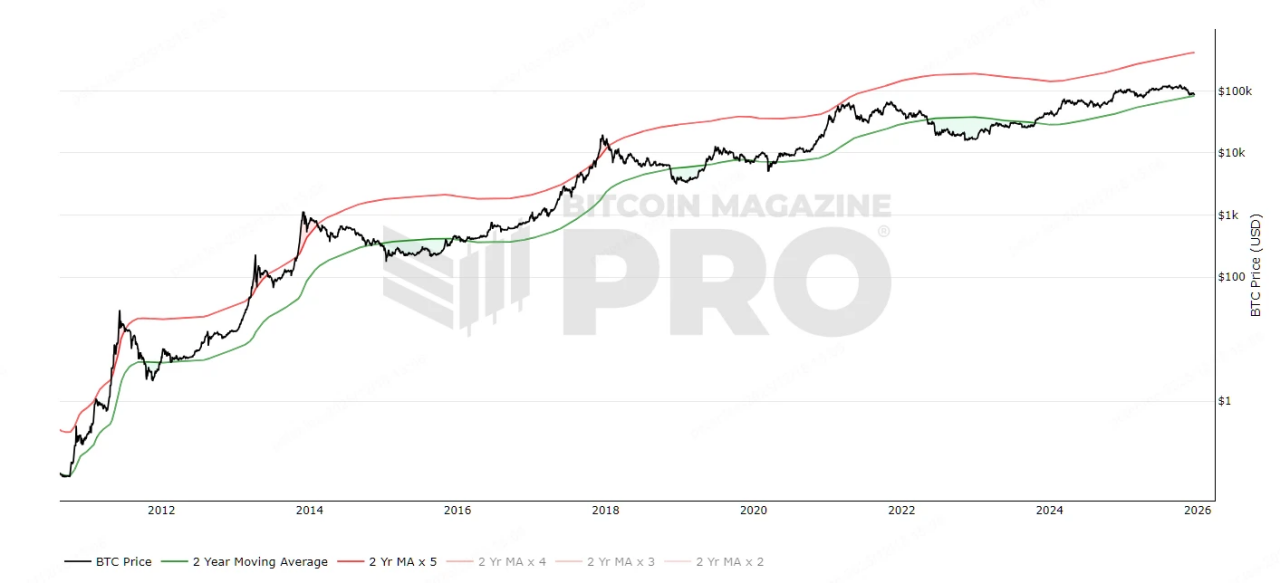
Множитель 2-летней скользящей средней (также известный как множитель золотого сечения) использует 2-летнюю скользящую среднюю, умноженную на коэффициент Фибоначчи, для идентификации зон сопротивления цены.
Его принцип сочетает золотое сечение (1.6) и последовательность Фибоначчи для оценки множителя цены относительно долгосрочного среднего: высокий множитель указывает на перегрев и предвещает коррекцию. Другими словами, высокий множитель означает, что цена «слишком далеко отошла от долгосрочного тренда», и риски накапливаются.
Исторически множитель 2-летней скользящей средней показывал экстремальные значения перед каждым бычьим пиком:
Пик 2017 года: индикатор отличался от цены в 10 раз, цена достигла пика через 1 месяц после превышения 2 Yr MA *5;
Двойной пик 2021 года: превысил 5 раз, цена коснулась 2 Yr MA *5 и затем достигла первого пика;
В текущий момент (IV квартал 2025 года) множитель находится в диапазоне 2~3, еще не войдя в зону высоких множителей.
Источник: https://www.bitcoinmagazinepro.com/charts/bitcoin-investor-tool/
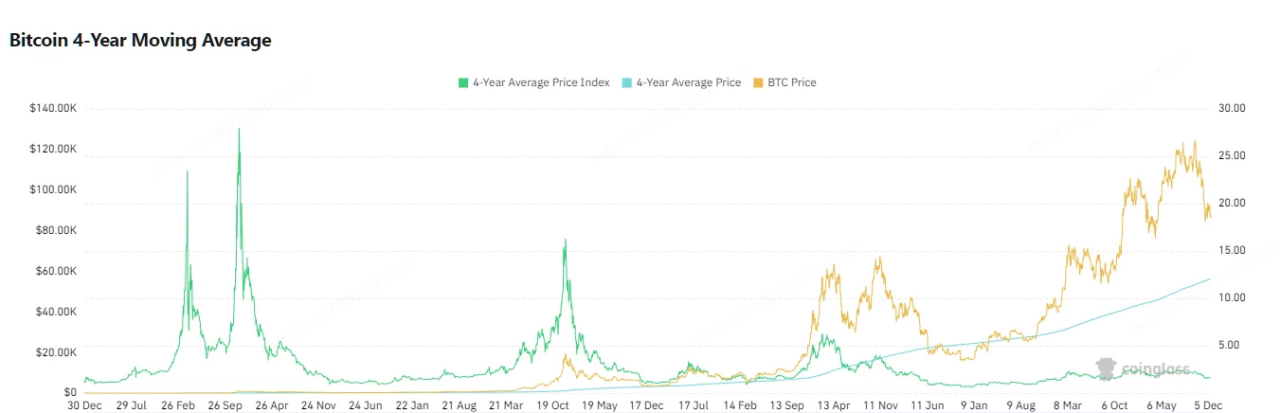
5. 4-летняя скользящая средняя Биткойна: Значительно ли цена превышает долгосрочную скользящую среднюю?
4-летняя скользящая средняя Биткойна вычисляет 4-летнее среднее значение цены для оценки макротренда Биткойна.
Её принцип сглаживает циклические колебания: значительное превышение цены над средней указывает на перегрев; близость к средней указывает на равновесие. Другими словами, большое отклонение означает «циклический пузырь» и накопление рисков.
Исторически 4-летняя скользящая средняя Биткойна показывала экстремальные отклонения цены перед каждым бычьим пиком:
Пик 2017 года: индикатор достиг 16;
Двойной пик 2021 года: при первом пике достиг 6, после чего последовал обвал;
В текущий момент (IV квартал 2025 года) цена достигла максимума в 2.3, демонстрируя особенность уменьшающихся пиков.
Источник: https://www.coinglass.com/pro/i/four-year-moving-average
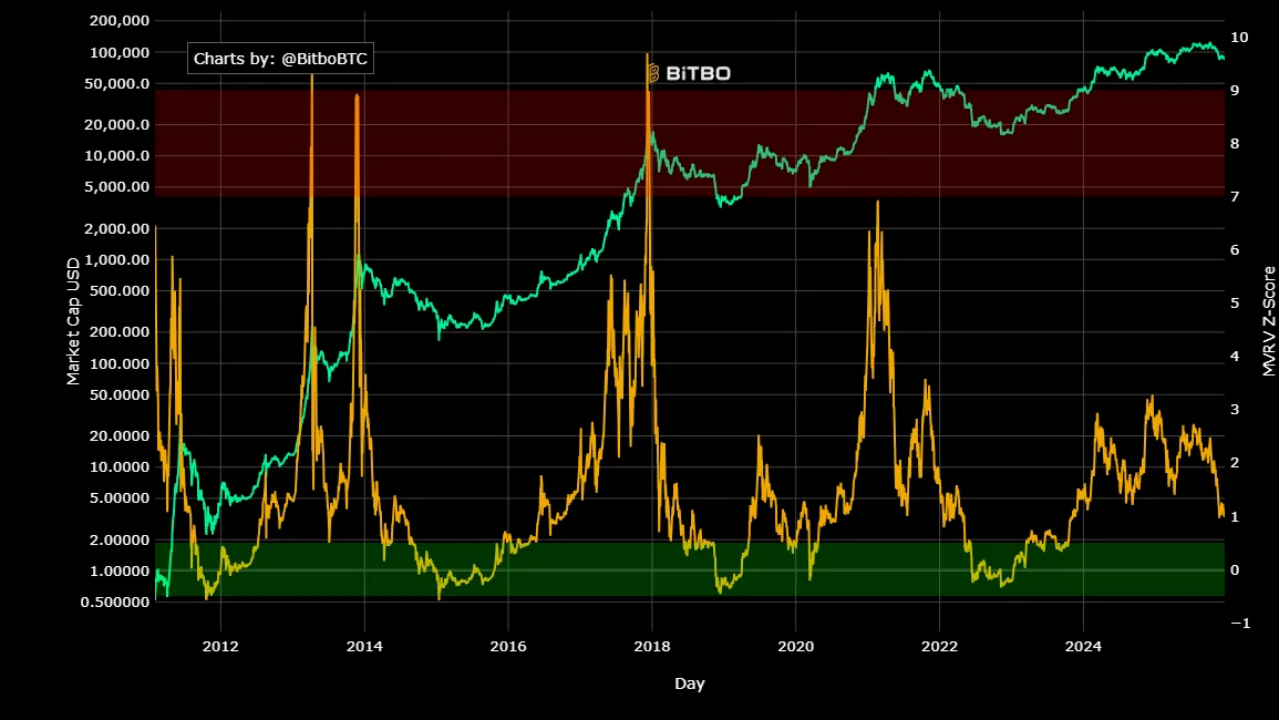
6. Z-Скор MVRV Биткойна: Вошла ли оценка в зону?
Z-Скор MVRV — это классический ончейн-индикатор для определения, является ли оценка Биткойна «отклоненной от его реальной стоимости».
Его принцип заключается в сравнении текущей рыночной капитализации Биткойна с «реализованной капитализацией» (т.е. общей стоимостью всех монет при приобретении), а затем вычислении степени отклонения в стандартных отклонениях. Другими словами: чем выше Z-Скор, тем больше людей находятся в состоянии бумажной прибыли, рынок «слишком прибыльный», и риски начинают накапливаться.
Исторически Z-Скор MVRV демонстрировал экстремальные всплески перед каждым бычьим пиком:
Пик 2017 года: приблизился к 10, что является историческим экстремумом;
Двойной пик 2021 года: при первом пике превысил 7, после чего рынок рухнул;
В текущий момент (IV квартал 2025 года) Z-Скор находится в диапазоне 2~4, оценка остается нейтральной.
Источник: https://charts.bitbo.io/mvrv-z-score
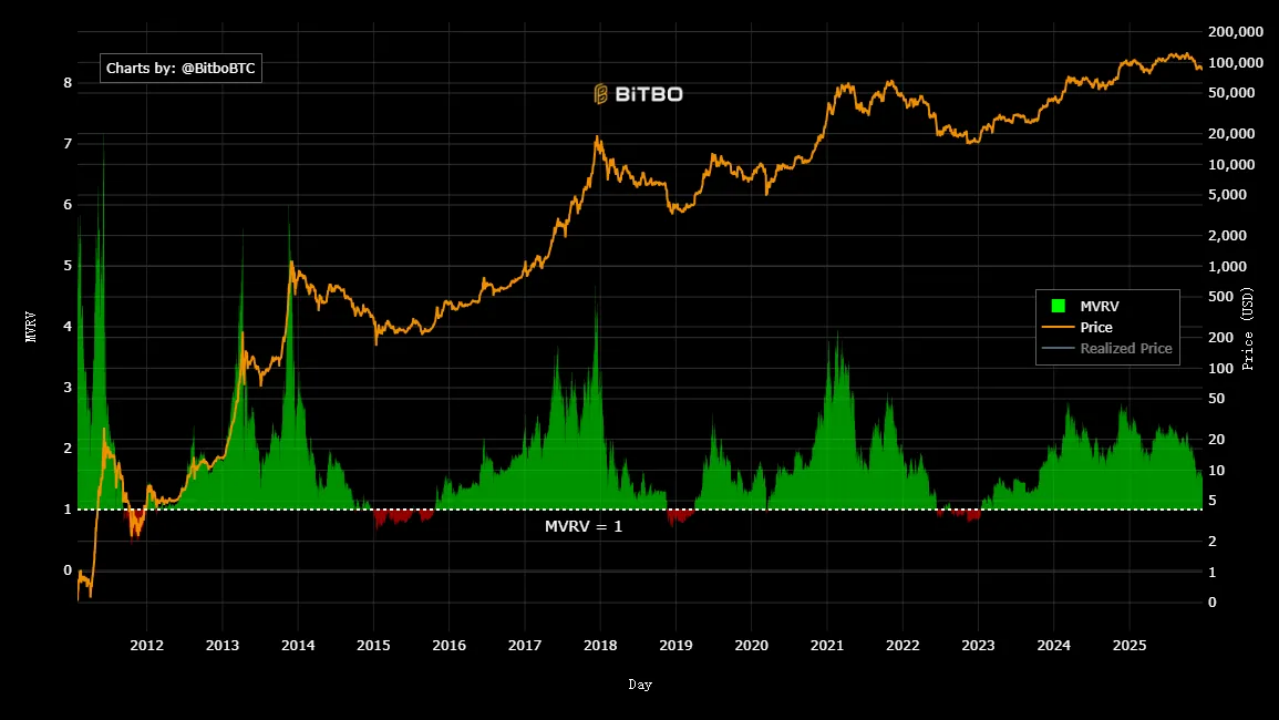
Стоит отметить, что MVRV Rate на основе MVRV добавляет статистический анализ, измеряя стандартное отклонение между текущим MVRV и его историческим средним значением. Такая стандартизация помогает определить, когда Биткойн торгуется выше или ниже «справедливой стоимости». Однако, как показано на графике ниже, пиковые значения этого показателя в каждом бычьем пике также демонстрируют особенность уменьшения, и даже появилось расхождение между ценой и пиком, что значительно усложняет использование этого индикатора для прогнозирования пиков.
Источник: https://charts.bitbo.io/mvrv
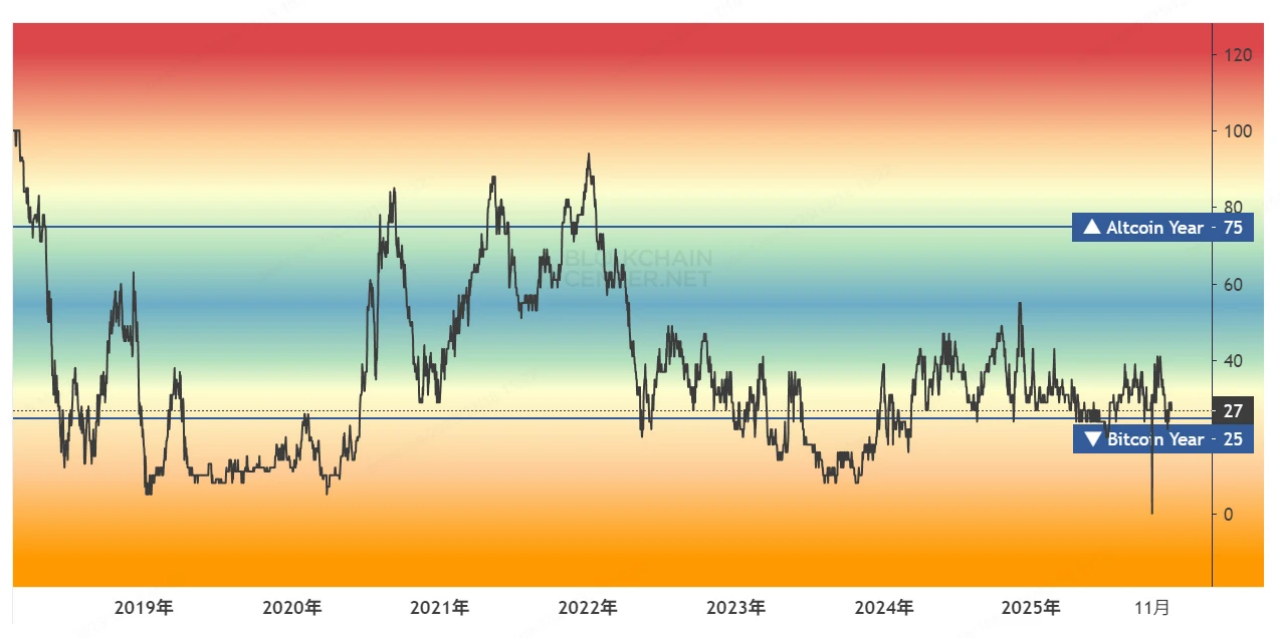
7. Индекс сезона альткойнов (Altcoin Season Index): Начался ли сезон альткойнов?
Индекс сезона альткойнов отслеживает производительность топ-100 альткойнов относительно Биткойна, оценивая, наступил ли «альткойн-сезон».
Его принцип основан на относительной эффективности: индекс выше 75 указывает на начало сезона альткойнов, что часто происходит после пика BTC, когда капитал перетекает из BTC в альткойны. Другими словами, высокий индекс означает ослабление доминирования BTC и накопление рисков分散 (диверсификации) рынка.
Исторически каждый бычий пик завершался狂欢 (масштабным празднеством) сезона альткойнов как сигналом окончания:
Пик 2017 года: превысил 90, всплеск сезона альткойнов;
Двойной пик 2021 года: превысил 80, после чего BTC скорректировался;
В текущий момент (IV квартал 2025 года) индекс находится в диапазоне 30~40, сектор альткойнов表现低迷 (показывает вялые результаты). На самом деле, с начала этого бычьего рынка BTC этот индикатор никогда не достигал 60, что, возможно, связано с недостаточной ликвидностью и чрезмерным выпуском новых монет.
Источник: https://www.blockchaincenter.net/en/altcoin-season-index
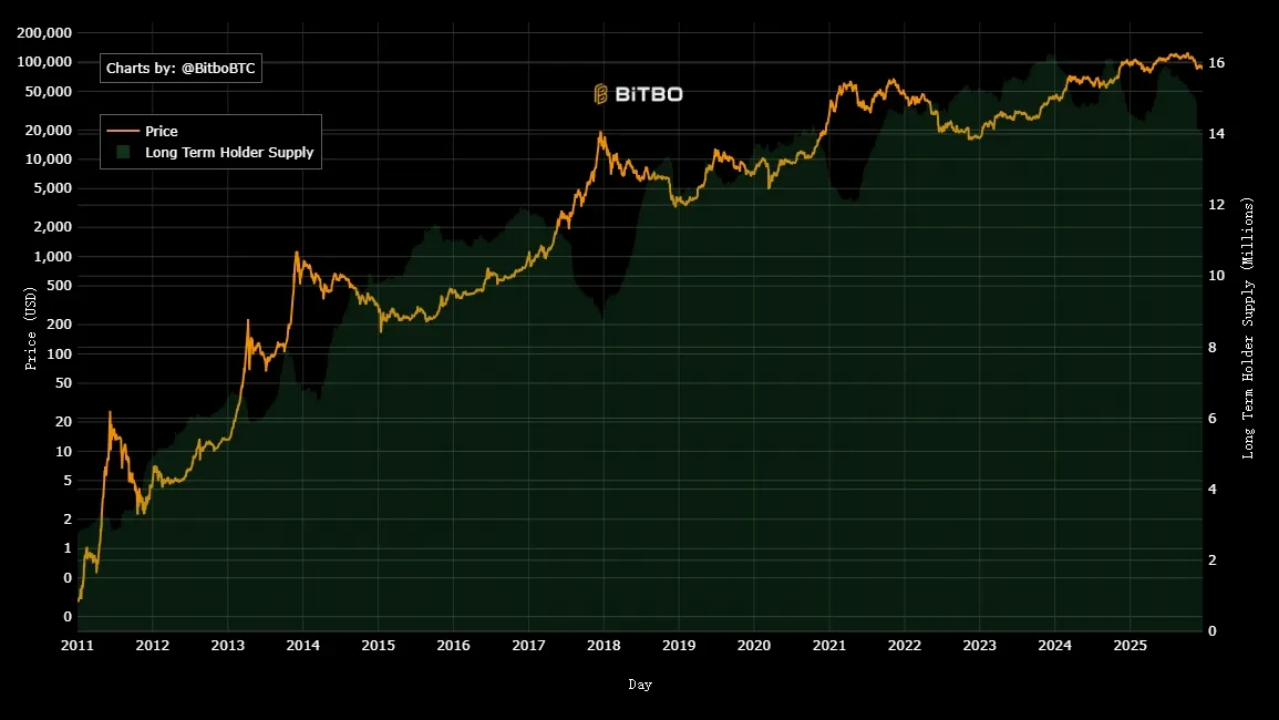
8. Предложение долгосрочных держателей Биткойна (LTH): Сокращается ли предложение долгосрочных держателей?
Предложение долгосрочных держателей Биткойна (LTH) отслеживает объем предложения Биткойнов, удерживаемых более 155 дней, отражая поведение HODLеров.
Его принцип заключается в наблюдении за изменениями предложения: на пиках LTH часто продают, фиксируя прибыль; на дне накапливают. Другими словами, сокращение предложения LTH означает уход «умных денег» и высокие риски.
Исторически LTH также показывало значительное сокращение перед каждым бычьим пиком:
Пик 2017 года: период продаж длился год, достигнув пика продаж к моменту пика цены;
Двойной пик 2021 года: первый пик сопровождался持续抛售达半年 (постоянными продажами в течение полугода), но объем накопления перед вторым пиком достиг исторического максимума;
В текущий момент (IV квартал 2025 года) медленные продажи продолжаются уже полгода, но пик в октябре не соответствует историческому опыту.
Источник: https://charts.bitbo.io/long-term-holder-supply
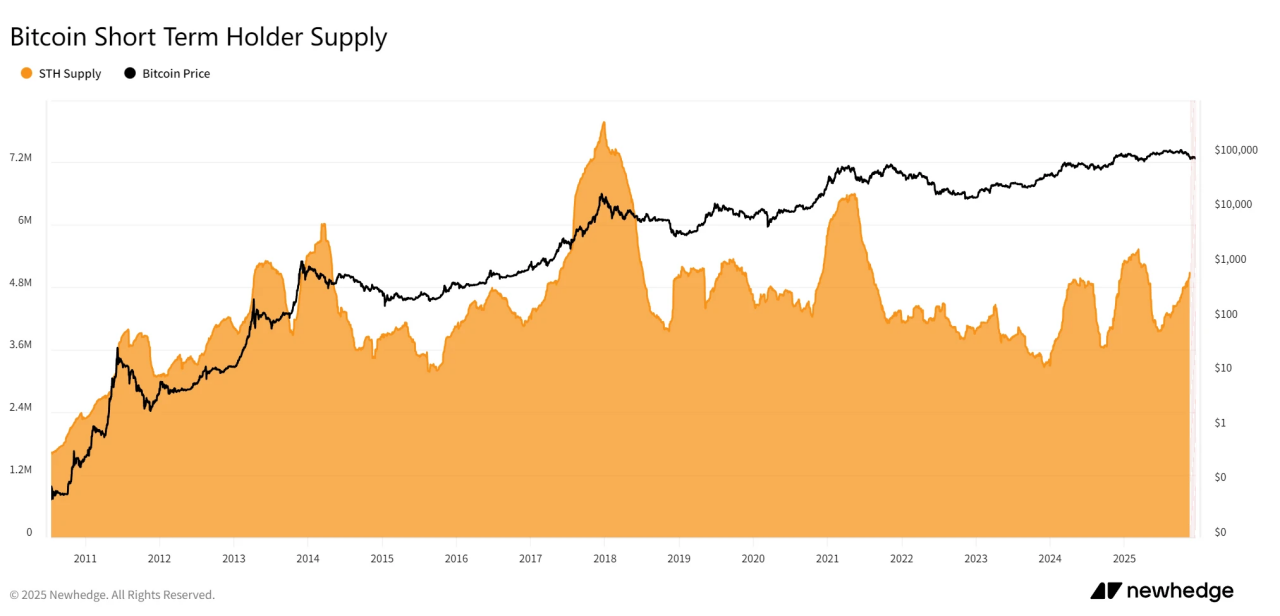
9. Предложение краткосрочных держателей Биткойна (STH): Резко ли возрастает предложение краткосрочных держателей?
Предложение краткосрочных держателей Биткойна (STH) отслеживает долю Биткойнов, удерживаемых менее 155 дней, оценивая спекуляции новичков.
Его принцип捕捉 (улавливает) приток новых средств: высокая доля указывает на распространение спекуляций и часто предвещает пик; низкая доля указывает на зрелость рынка. Другими словами, высокий STH означает «слишком много новичков», и пузырь легко лопнет.
Исторически STH показывало резкий рост перед каждым бычьим пиком:
Пик 2017 года: почти 8 млн BTC, пик спекуляций;
Двойной пик 2021 года: при первом пике почти 6.5 млн BTC, продажи при втором абсолютном пике не достигли пикового значения;
В текущий момент STH продолжает расти, приближаясь к 5.5 млн BTC, но пик цены пришелся на 6 октября, и, в отличие от двух предыдущих бычьих рынков, время пика STH и пика цены уже не так близко совпадают.
Источник: https://newhedge.io/bitcoin/short-term-holder-supply
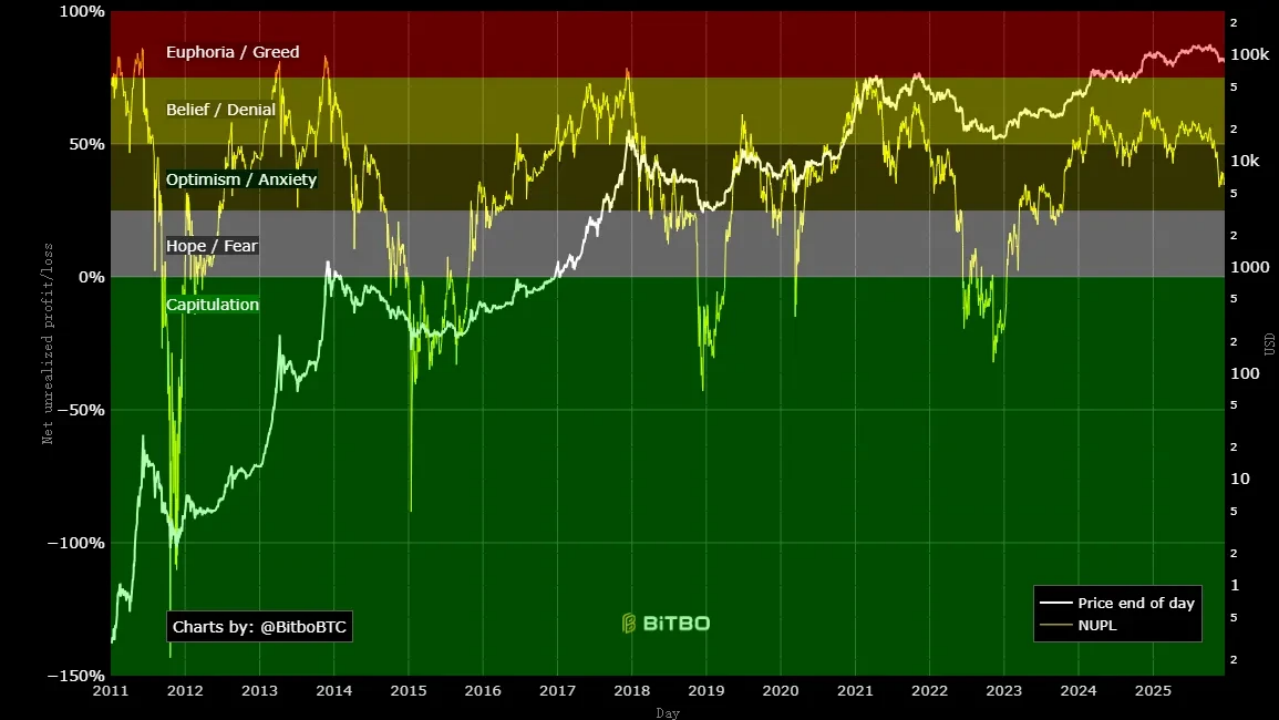
10. Нереализованная прибыль/убыток Биткойна (NUPL): Вошли ли нереализованные прибыли/убытки в зону жадности?
Биткойн NUPL измеряет коэффициент нереализованной прибыли/убытка по всей сети, оценивая настроения рынка.
Его принцип: вычисление рыночной капитализации за вычетом реализованной капитализации, деленное на рыночную капитализацию: значение выше 0.75 указывает на жадность (сигнал пика); ниже 0 указывает на страх (сигнал дна). Другими словами, высокий NUPL означает, что «все в бумажной прибыли», и риск продаж высок.
Исторически Биткойн NUPL показывал экстремально высокие значения перед каждым бычьим пиком:
Пик 2017 года: превысил 0.8, что является историческим экстремумом;
Двойной пик 2021 года: превысил 0.7, после чего последовал обвал;
В текущий момент (IV квартал 2025 года) NUPL достиг максимума 0.64 в начале марта 2024 года, после чего持续震荡 (продолжал колебаться) и сейчас упал до 0.34.
Источник: https://charts.bitbo.io/net-unrealized-profit-loss
Заключение: Текущий бычий рынок Биткойна демонстрирует структурные изменения
Судя по вышеуказанным индикаторам, текущее движение рынка Биткойна не полностью соответствует экстремальным проявлениям на пиках предыдущих бычьих рынков. Исторические пики часто сопровождались одновременным перегревом множества индикаторов, таких как высокий Z-Скор, высокий множитель Пуэлла и вход NUPL в зону жадности, сопровождаемые продажами LTH и резким ростом STH, но в настоящее время表现 этих индикаторов十分温和 (очень умеренные).
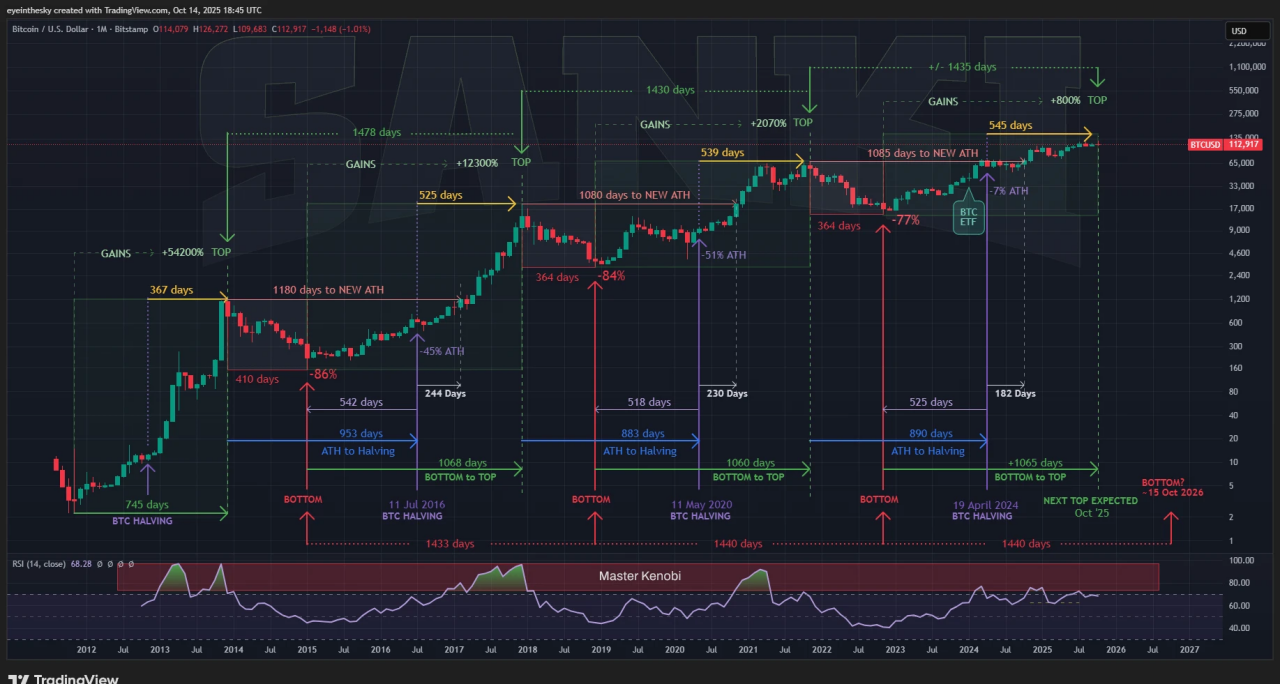
Это не означает, что текущая цена Биткойна еще не достигла пика; эти индикаторы основаны на пространственных критериях, а приведенная ниже схема, предсказывающая пик цены на основе 3-летнего временного цикла,似乎说明 (кажется, указывает на то), что Биткойн уже достиг пика.
Источник: https://x.com/btc_MasterPlan/status/1978180632410042828/photo/1
Конечно, анализируя вышеуказанные индикаторы, мы также обнаружили, что эти инструменты, основанные на линейном движении цены, уже показывают сигналы ослабления при прогнозировании пиковых зон, демонстрируя особенность предельного уменьшения. Например, пиковые значения MVRV в бычьих пиках 2017, 2021 и 2025 годов составили 10, 7 и 3 соответственно. Очевидно, мы уже не можем ожидать, что MVRV достигнет 7 в этом бычьем рынке, и также нелегко надежно предсказать по MVRV значение, соответствующее пику этого бычьего рынка.
Другими словами, хотя эти индикаторы указывают на то, что рынок находится в нейтральном или умеренном диапазоне, они не подтверждают, что бычий рынок все еще продолжается или что медвежий рынок уже наступил, а скорее свидетельствуют о том, что рост рынка Биткойна в настоящее время стал более постепенным, а не взрывным. Это может быть связано с:
• Во-первых, введение Биткойн-ETF привлекло значительный долгосрочный капитал, стабилизировав динамику предложения, что контрастирует с formation пузырей,主导 (доминируемых) розницей в прошлом, и замедлило скорость перегрева.
• Во-вторых, изменения глобальной ликвидности в 2025 году (снижение ставок ФРС ПРОТИВ повышения ставок Банком Японии) и геополитические изменения反复扰动 (постоянно нарушают) цену BTC, а спокойные изменения各类指标 (различных индикаторов) как раз показывают, что рынок стал более зрелым.
В总而言之 (суммируя), независимо от того, является ли текущий максимум от 6 октября пиком этого бычьего рынка, мы должны признать, что волатильность цены Биткойна, возможно, вышла за рамки прошлых исторических框架和经验 (рамок и опыта). Кажется, происходит структурная трансформация из «циклического актива» в «主流储备 (мейнстримный резервный актив)». Стоит напомнить, что инвесторам, возможно, потребуется调整阈值 (скорректировать пороги) этих индикаторов или использовать их в combination (сочетании) друг с другом, чтобы лучше применять их для инвестиционных решений.
О нас
WEEX Labs — это исследовательское подразделение биржи WEEX唯客, занимающееся отслеживанием и анализом криптовалют, технологии блокчейн и emerging (новых) рыночных тенденций, а также предоставляющее профессиональные оценки.
Команда придерживается принципов объективного, независимого и всестороннего анализа, стремясь с помощью строгих методов исследования и передового анализа данных изучить передовые тенденции и инвестиционные возможности, предоставить отрасли всесторонние, строгие и четкие выводы, а также обеспечить всестороннее руководство для Web3-стартапов и инвесторов в области строительства и инвестиций.
Отказ от ответственности
Мнения, выраженные в данной статье, приведены только в информационных целях и не构成 (не являются) одобрением каких-либо обсуждаемых продуктов или услуг, а также не构成 (не являются) инвестиционными, финансовыми или торговыми рекомендациями. Перед принятием финансовых решений читателям следует проконсультироваться с квалифицированными специалистами. Обратите внимание, что WEEX Labs может ограничивать или запрещать все или часть услуг для пользователей из ограниченных регионов.