All about Peter Schiff’s latest jab at Bitcoin, Strategy, and Michael Saylor

ambcryptoОпубликовано 2026-04-09Обновлено 2026-04-09

Введение

Peter Schiff, a prominent Bitcoin critic, renewed his attacks on BTC and Michael Saylor's strategy, predicting a 92% decline to $10,000 by 2026. He dismissed Bitcoin’s value compared to traditional assets like gold and silver. His comments followed MicroStrategy’s Q1 2026 report of $14.5 billion in unrealized losses as Bitcoin fell 23%, its worst quarterly start since 2018. Despite this, MicroStrategy purchased 89,602 BTC, increasing its holdings to 766,970 BTC. On-chain metrics, including the Bitcoin SOPR hovering near 1 and a negative MVRV ratio, suggest the market is at breakeven and may be entering an accumulation phase, potentially indicating a trend reversal.

Peter Schiff, the forever Bitcoin [BTC] critic, never misses a chance to take a jab at Bitcoin. In a fresh attack, he once again took a shot at the world’s leading cryptocurrency.

Poking Bitcoin investors, the exec recently noted that if Bitcoin ends 2026 at $10,000, “it will still be the best-performing asset over ten years.”

In his post, Schiff also slammed Michael Saylor’s Strategy and said,

I’m sure @Saylor will rely on that to keep pumping Bitcoin and issuing more shares of $MSTR to buy it. But a 92% decline will make it the worst-performing investment for most HODLers.

Schiff’s unshaken belief on traditional asset classes

Despite Bitcoin standing strong against Schiff’s favourite gold and silver in times of uncertainty, he has still dismissed the idea that Bitcoin holds any value against traditional assets.

In fact, on various occassions, Schiff has urged investors to ‘buy silver’ and gold despite a hike in investor sentiment towards Bitcoin.

Strategy’s records billions in losses in Q1 2026

Schiff’s latest remarks came on the heels of Strategy recording unrealized losses of $14.5 billion, as reported by the Wall Street Journal (WSJ).

This massive loss was faced by the firm in Q1 2026 as the value of Bitcoin, which was once trading above $87,000 on 01 January, dropped to around $66,000 by 31 March.

In addition to this observation, WSJ noted,

Bitcoin fell 23% in the first quarter, its worst start to the year since the first three months of 2018, when the digital currency plunged more than 50%.

The shares of Strategy also faced a loss of about 16% in the first quarter of 2026. At press time too, MSTR was trading at $123.72 after a drop of 3.11% in the last 24 hours.

Strategy’s Bitcoin buying spree and more

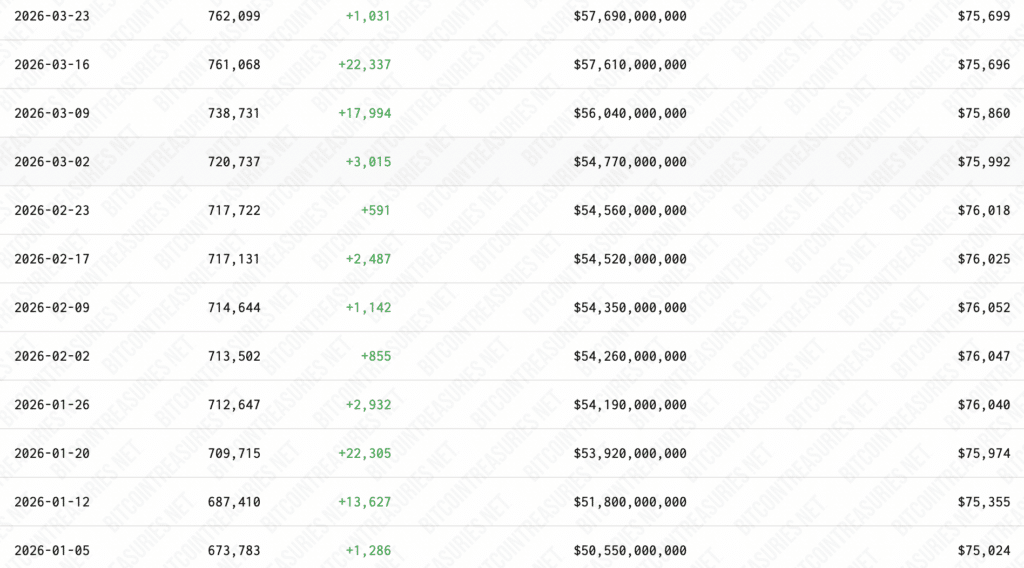
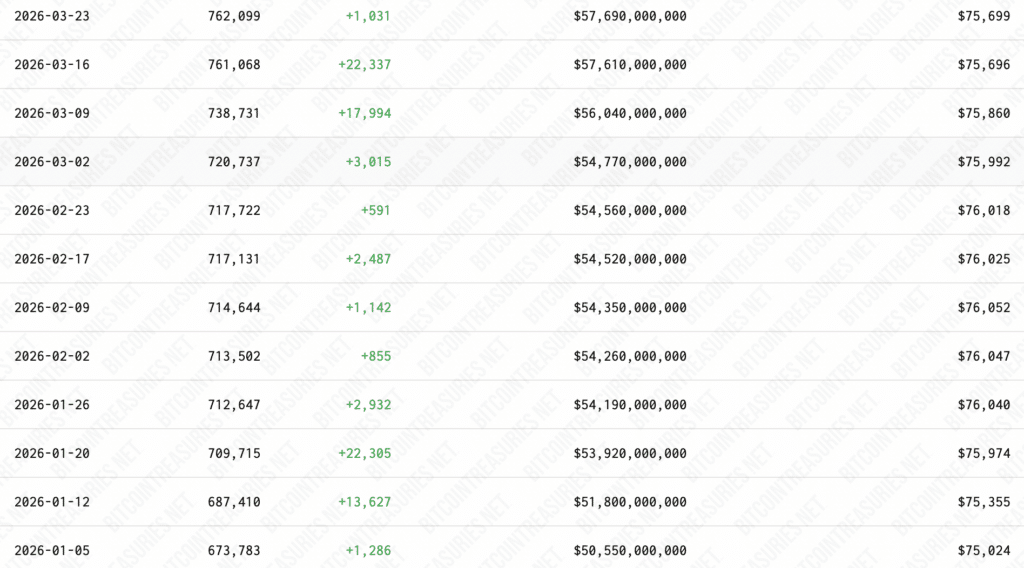
And yet, despite everything, Q1 2026 for Strategy did not pass by without any Bitcoin purchases. In fact, Strategy made 12 purchases in 3 months totaling 89,602 BTC.

Source: BitcoinTreasuries.Net

In fact, its total Bitcoin stash stood at 766,970 BTC worth $55 billion at press time.

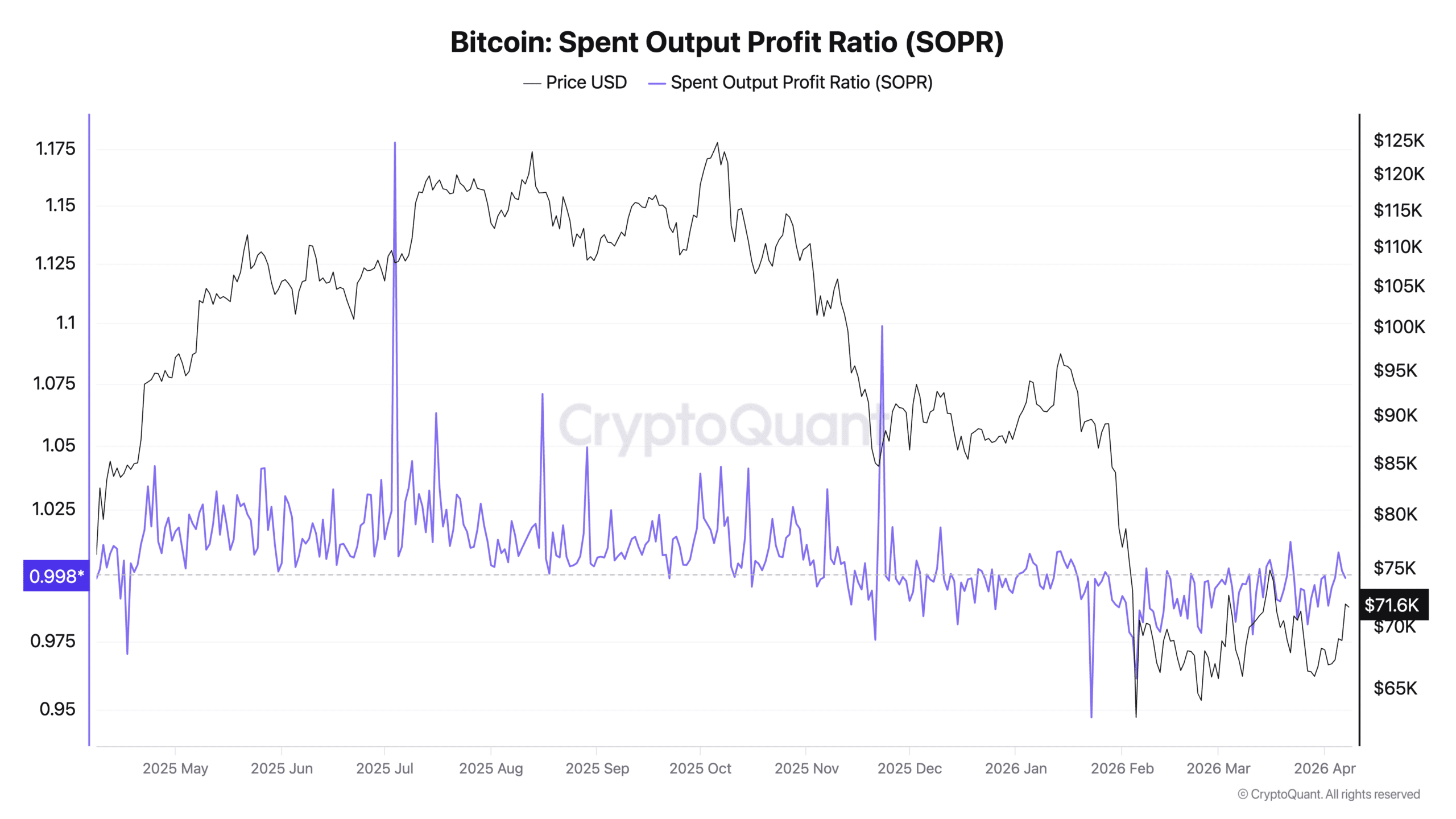
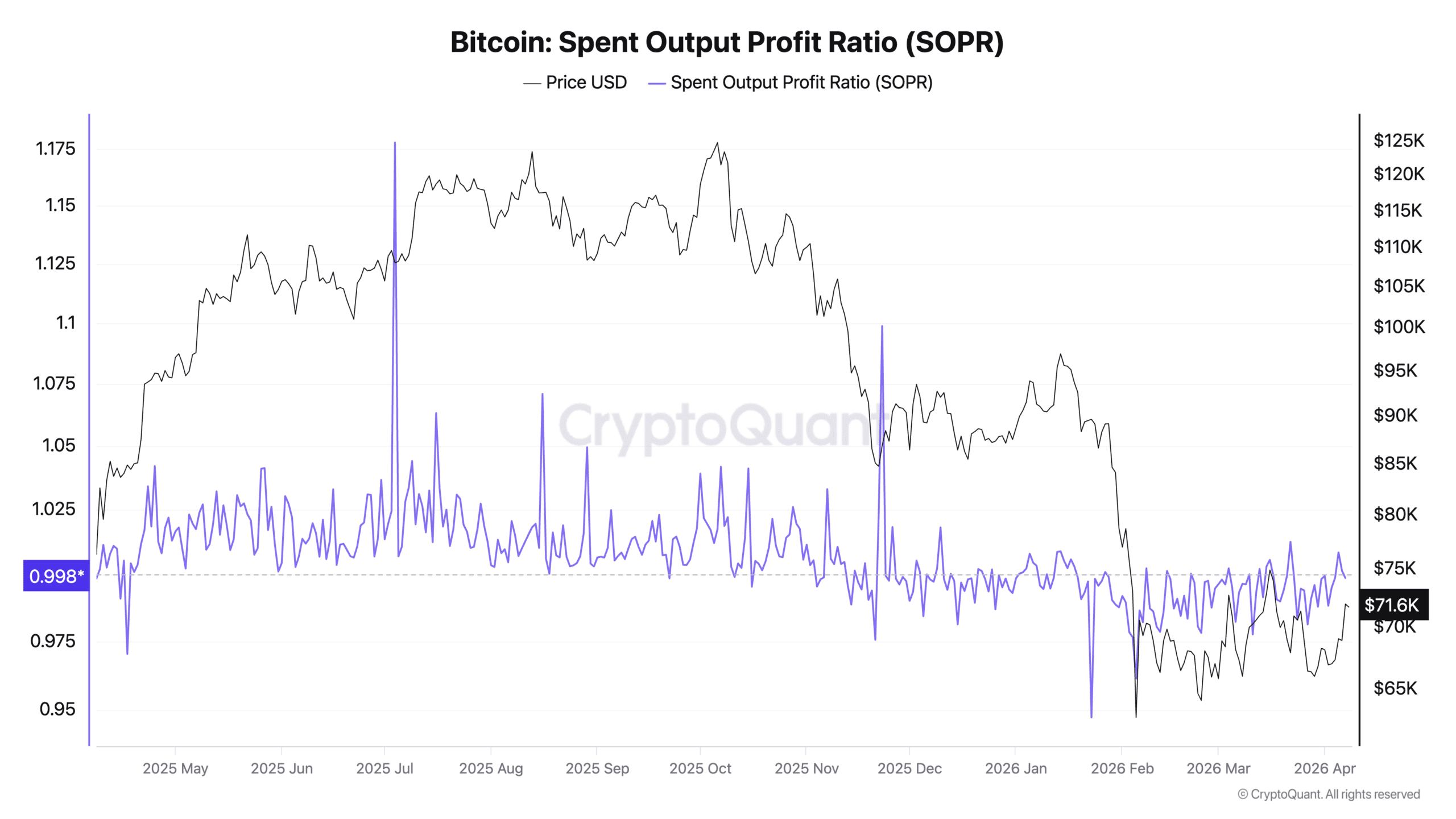
In the meantime, the Bitcoin SOPR ratio was hovering just below level 1 – A sign that the market may be at the breakeven zone.

Source: CryptoQuant

Simply put, in such cases, sellers are no longer realising strong profits and naturally, the market may be gearing up for the next direction.

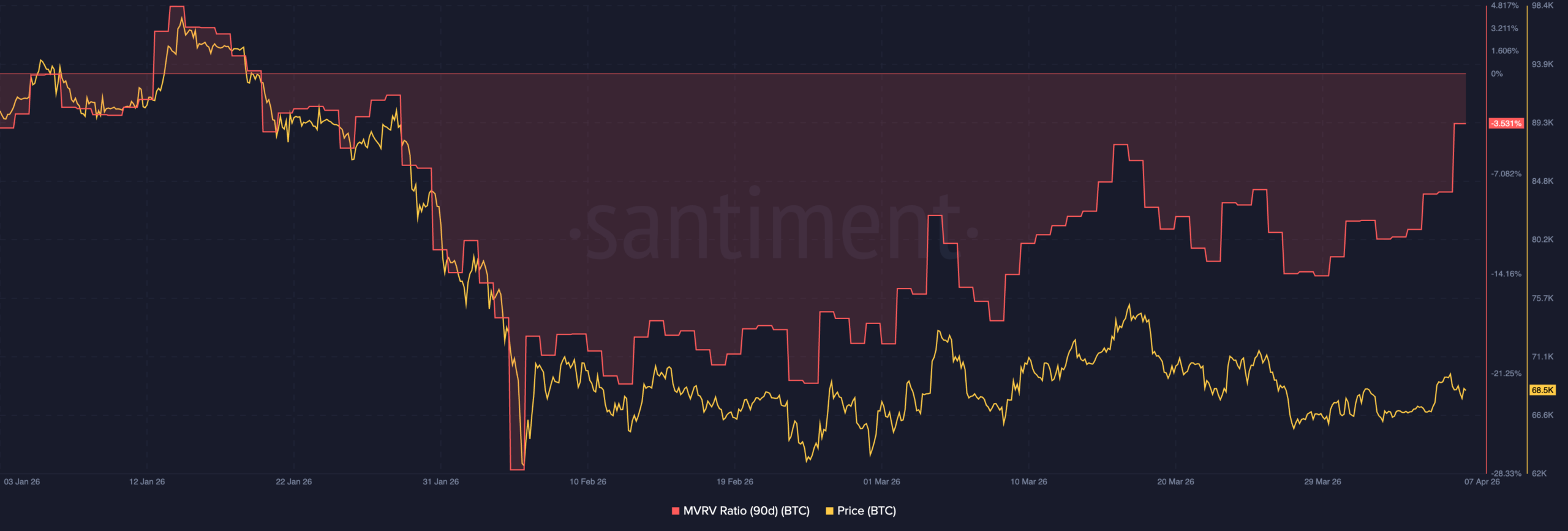
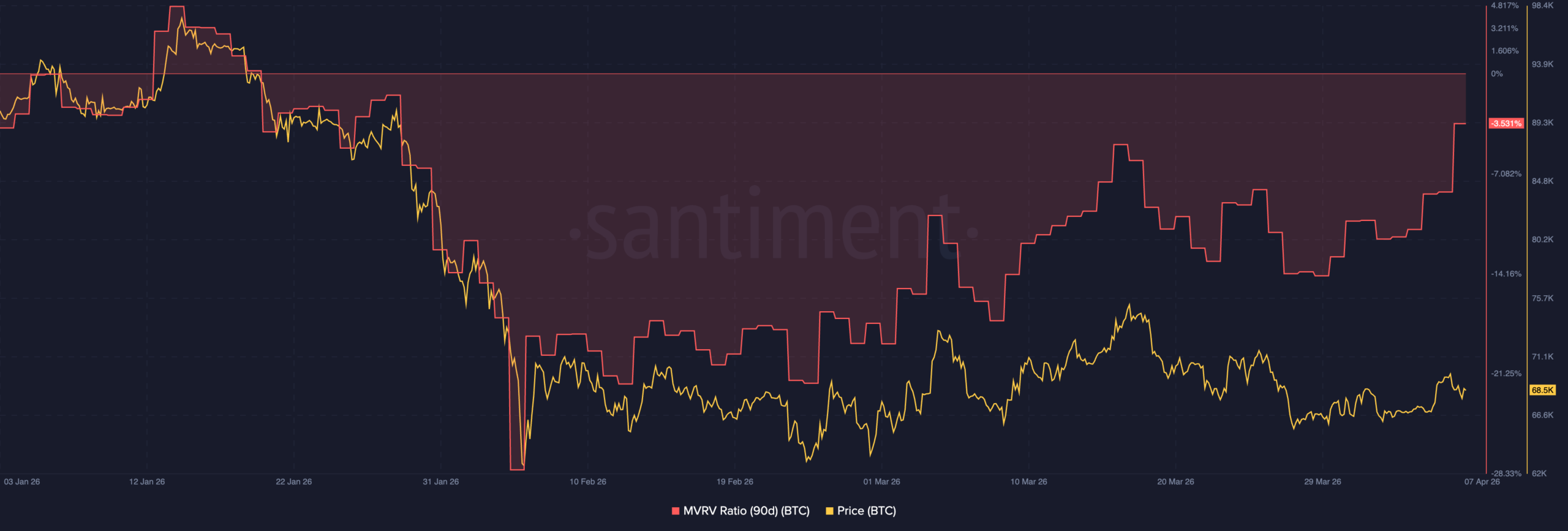
Finally, the Bitcoin MVRV ratio further confirmed this sentiment as the ratio was negative – Evidence of a potential accumulation phase. Until the ratio goes above 0, Bitcoin will be walking a tightrope.

Source: Santiment

Final Summary

  • Peter Schiff took another jab at Bitcoin and Michael Saylor, calling for a 92% decline by year’s end.
  • Bitcoin’s price recovery, along with on-chain metrics hinting at selling exhaustion, suggested that a trend reversal might be around the corner.

Связанные с этим вопросы

QWhat was Peter Schiff's latest criticism of Bitcoin and Michael Saylor's strategy?

APeter Schiff predicted that if Bitcoin ends 2026 at $10,000, it would still be considered the best-performing asset over ten years, but a 92% decline would make it the worst-performing investment for most HODLers. He also criticized Michael Saylor's strategy of continuing to pump Bitcoin and issuing more shares of MSTR to buy it.

QHow did MicroStrategy perform in Q1 2026 regarding Bitcoin investments?

AMicroStrategy recorded unrealized losses of $14.5 billion in Q1 2026 as Bitcoin's price dropped from over $87,000 in January to around $66,000 by March. Despite this, the company made 12 purchases totaling 89,602 BTC during the quarter.

QWhat is Peter Schiff's stance on traditional asset classes compared to Bitcoin?

APeter Schiff maintains an unshaken belief in traditional asset classes like gold and silver, dismissing the idea that Bitcoin holds any value against them. He has repeatedly urged investors to buy silver and gold despite increasing sentiment towards Bitcoin.

QWhat on-chain metrics suggested a potential trend reversal for Bitcoin?

AThe Bitcoin SOPR ratio was hovering just below level 1, indicating the market might be at the breakeven zone with sellers no longer realizing strong profits. Additionally, the negative MVRV ratio suggested a potential accumulation phase, hinting at a possible trend reversal.

QHow much Bitcoin does MicroStrategy hold as of the press time mentioned in the article?

AAs of press time, MicroStrategy's total Bitcoin stash stood at 766,970 BTC, worth $55 billion.

Похожее

The Value Distribution of Stablecoins

**Summary: The Value Distribution of Stablecoins** The article argues that stablecoins are evolving from mere trading tools into broader channels for dollar access. It divides the stablecoin ecosystem into four layers to analyze how value is distributed: 1. **Issuance Layer:** Mints stablecoins, holds reserve assets, and captures the spread between reserve yield and user costs (e.g., Tether, Circle). This layer currently earns the largest profit margin. 2. **Infrastructure Layer:** Connects stablecoins to the traditional financial system, handling fiat on/off-ramps, banking integration, compliance (KYC/AML), and asset management (e.g., Bridge, BVNK). This is the "unglamorous" but critical work, building the essential bridges between crypto and real-world finance. 3. **Acquiring/Distribution Layer:** Integrates stablecoins into merchant systems, manages payment flows, and provides enterprise financial software (e.g., Stripe, Coinbase). They act as the access point for businesses. 4. **Application Layer:** The end-users and businesses that ultimately use stablecoins for payments, settlements, or as a store of value. They benefit from convenience but have little pricing power. The core thesis is that while the issuance layer currently dominates profits, the often-overlooked **infrastructure layer holds significant long-term potential**. The real challenge and barrier to mass adoption is not the on-chain transfer of stablecoins (which is simple), but the complex "last mile" integration into existing business workflows, banking systems, and regulatory frameworks across different countries. Companies in this layer are currently in a "land grab" phase, investing heavily to build networks, secure bank partnerships, and establish compliance pathways. While their position is currently pressured by the profitable issuers above and distribution platforms below, the article suggests that if stablecoins become a default financial rail for businesses, the infrastructure providers who have done the hard work of integration will ultimately gain strong pricing power and become entrenched, essential players.

marsbit6 ч. назад

The Value Distribution of Stablecoins

marsbit6 ч. назад

The Value Distribution of Stablecoins

The Value Distribution of Stablecoins The article argues that stablecoins are evolving from a mere trading tool into a broad "dollar channel." It analyzes the industry's value chain through four layers: 1. **Issuance Layer (e.g., Tether, Circle):** The top layer that mints stablecoins, holds reserve assets, and captures the thickest interest rate spread. 2. **Infrastructure Layer (e.g., Bridge, BVNK):** Connects stablecoins to the traditional financial system, handling critical but complex "dirty work" like fiat on/off-ramps, banking integration, compliance (KYC/AML), and cross-border settlement. 3. **Acquiring/Distribution Layer (e.g., Stripe, Coinbase):** Embeds stablecoins into merchant systems, manages payment flows, and integrates with enterprise software. 4. **Application Layer:** End-users and businesses that ultimately use stablecoins for payments, settlement, or storing value. The author posits that while the issuance layer currently captures the most profit, the most overlooked and potentially critical layer is infrastructure. The core challenge for stablecoin adoption isn't the on-chain transfer (which is simple), but bridging the gap between blockchain and the real-world financial system. This involves solving practical problems for businesses: fiat conversion, reconciliation, tax handling, and user onboarding. Infrastructure companies are currently in a difficult "land-grab" phase—building networks, securing banking relationships, and achieving compliance country-by-country. They face pressure from both the profitable issuance layer above and distribution platforms below. However, the author suggests this layer is building a crucial moat. Once stablecoins become a default business rail, the infrastructure players who have done the hard work of integration may gain significant, durable value and pricing power.

链捕手6 ч. назад

The Value Distribution of Stablecoins

链捕手6 ч. назад

Торговля

Спот
Фьючерсы

Популярные статьи

Как купить S

Добро пожаловать на HTX.com! Мы сделали приобретение Sonic (S) простым и удобным. Следуйте нашему пошаговому руководству и отправляйтесь в свое крипто-путешествие.Шаг 1: Создайте аккаунт на HTXИспользуйте свой адрес электронной почты или номер телефона, чтобы зарегистрироваться и бесплатно создать аккаунт на HTX. Пройдите удобную регистрацию и откройте для себя весь функционал.Создать аккаунтШаг 2: Перейдите в Купить криптовалюту и выберите свой способ оплатыКредитная/Дебетовая Карта: Используйте свою карту Visa или Mastercard для мгновенной покупки Sonic (S).Баланс: Используйте средства с баланса вашего аккаунта HTX для простой торговли.Третьи Лица: Мы добавили популярные способы оплаты, такие как Google Pay и Apple Pay, для повышения удобства.P2P: Торгуйте напрямую с другими пользователями на HTX.Внебиржевая Торговля (OTC): Мы предлагаем индивидуальные услуги и конкурентоспособные обменные курсы для трейдеров.Шаг 3: Хранение Sonic (S)После приобретения вами Sonic (S) храните их в своем аккаунте на HTX. В качестве альтернативы вы можете отправить их куда-либо с помощью перевода в блокчейне или использовать для торговли с другими криптовалютами.Шаг 4: Торговля Sonic (S)С легкостью торгуйте Sonic (S) на спотовом рынке HTX. Просто зайдите в свой аккаунт, выберите торговую пару, совершайте сделки и следите за ними в режиме реального времени. Мы предлагаем удобный интерфейс как для начинающих, так и для опытных трейдеров.

1.5k просмотров всегоОпубликовано 2025.01.15Обновлено 2026.06.02

Как купить S

Sonic: Обновления под руководством Андре Кронье – новая звезда Layer-1 на фоне спада рынка

Он решает проблемы масштабируемости, совместимости между блокчейнами и стимулов для разработчиков с помощью технологических инноваций.

2.3k просмотров всегоОпубликовано 2025.04.09Обновлено 2025.04.09

Sonic: Обновления под руководством Андре Кронье – новая звезда Layer-1 на фоне спада рынка

HTX Learn: Пройдите обучение по "Sonic" и разделите 1000 USDT

HTX Learn — ваш проводник в мир перспективных проектов, и мы запускаем специальное мероприятие "Учитесь и Зарабатывайте", посвящённое этим проектам. Наше новое направление .

1.8k просмотров всегоОпубликовано 2025.04.10Обновлено 2025.04.10

HTX Learn: Пройдите обучение по "Sonic" и разделите 1000 USDT

Обсуждения

Добро пожаловать в Сообщество HTX. Здесь вы сможете быть в курсе последних новостей о развитии платформы и получить доступ к профессиональной аналитической информации о рынке. Мнения пользователей о цене на S (S) представлены ниже.

活动图片