Dalio: The Global Economy Is 'Perilous' in the Next Two Years, Don't Rush to Exit AI Due to High Valuations

深潮Опубликовано 2025-12-09Обновлено 2025-12-09

Введение

Bridgewater founder Ray Dalio warns that the global economy faces a precarious situation over the next one to two years due to a combination of high debt levels, domestic political conflicts, and geopolitical tensions. He notes stress in areas including private equity, venture capital, and debt refinancing. Despite identifying an AI bubble similar to the 2000 tech bubble, Dalio advises against exiting investments solely due to high prices. Instead, he emphasizes watching for concrete signals of a bubble burst, typically triggered by monetary tightening or forced asset sales. He also highlights growing financial stress in venture capital, private equity, and commercial real estate due to rising refinancing costs. Simultaneously, Dalio points to the Middle East, particularly the UAE and Saudi Arabia, as emerging global AI hubs. He compares the region’s dynamism to Silicon Valley, citing large-scale investments in AI infrastructure, talent inflow, and strong sovereign wealth support. Major projects like Google Cloud’s $10 billion deal in Saudi Arabia and the “Stargate” data center initiative in the UAE reflect the region’s strategic transformation into what Dalio calls a “Silicon Valley for capitalists.”

Author: Bao Yilong

Source: Wall Street News

Bridgewater founder Ray Dalio warned that the global economy will face a dangerous situation in the next one to two years, but he advised investors not to rush to exit artificial intelligence investments just because of high valuations, but to focus on substantive signals of a bubble burst.

In an interview with CNBC on Monday, Dalio said that due to the combined effects of three major cycles—debt, political conflict, and geopolitics—cracks have already appeared in multiple areas of the market, including private equity, venture capital, and debt that is being refinanced.

Dalio pointed out that the global debt burden has begun to exert pressure in parts of the market, and governments are unable to either raise taxes or cut benefits, leaving them in fiscal distress. This structural contradiction is exacerbating domestic political polarization, and the rise of left-wing and right-wing populism means irreconcilable differences.

As the 2026 U.S. midterm elections approach, Dalio expects political conflicts to intensify further. The high-interest-rate environment and the concentration of market leadership are further exacerbating this fragility.

Investment Strategy in a Bubble

Dalio believes the current bubble is similar to the 2000 tech bubble but not as severe as the 1929 one.

While acknowledging that the AI industry has entered bubble territory, Dalio emphasized that investors should not rush to exit just because of soaring valuations. He stated that historically, all bubbles have occurred during periods of dramatic technological change, and the key is to identify the signals of a bubble burst.

He pointed out that the catalyst for a bubble burst usually comes from monetary tightening or forced asset sales to meet debt obligations.

Recently, several market participants have issued warnings about the AI bubble, including OpenAI CEO Sam Altman, who also hinted at signs of a bubble. Investor Michael Burry, who accurately predicted the 2008 subprime mortgage crisis, expects the AI market bubble to collapse within the next two years.

Dalio specifically reminded attention to the pressures in venture capital, private equity, and commercial real estate, where low-cost debt is facing the dilemma of being refinanced at higher interest rates.

The Middle East Rises as the 'Silicon Valley for Capitalists'

While warning of risks, Dalio compared the rise of some Middle Eastern countries to Silicon Valley, saying that the region is rapidly becoming one of the world's most influential AI centers.

He stated that the UAE and its neighboring countries are combining large capital pools with an influx of global talent, attracting investment managers and AI innovators. Dalio said:

There is a kind of vitality here, just like in San Francisco, and the atmosphere around AI and technology is very similar.

He described the UAE as a "paradise in a turbulent world," praising its leadership, stability, quality of life, and ambition to build a globally competitive financial ecosystem.

The UAE and Saudi Arabia have launched projects worth tens of billions of dollars this year to build cloud computing, data centers, and other AI infrastructure, supported by sovereign wealth capital and global technology partners.

A $10 billion agreement announced this year between Google Cloud and the Saudi Public Investment Fund aims to create a "global AI center" in the country. Earlier this year, OpenAI, Oracle, NVIDIA, and Cisco teamed up to build a large "Stargate" data center campus in the UAE.

Dalio believes that the transformation in the Gulf region is the result of deliberate national strategies and long-term planning. He pointed out:

What they are doing is cultivating talent. This region is becoming the Silicon Valley for capitalists. Now capital is flowing in, talent is flowing in.


Связанные с этим вопросы

QWhat are the three major cycles that Ray Dalio believes are creating a dangerous global economic situation in the next one to two years?

AThe three major cycles are debt, internal political conflict, and geopolitical conflict.

QAccording to Dalio, what should investors not do simply because AI valuations are high, and what should they focus on instead?

AInvestors should not rush to exit their AI investments simply because valuations are high. Instead, they should focus on identifying the substantive signals of a bubble bursting.

QWhat two catalysts does Dalio identify that typically cause a market bubble to burst?

AThe two catalysts are monetary tightening and forced selling of assets to meet debt obligations.

QWhich region does Ray Dalio compare to a 'Silicon Valley for capitalists' and why?

ADalio compares the Middle East, specifically the UAE and its neighbors, to a 'Silicon Valley for capitalists' because it is combining a large pool of capital with an influx of global talent to become a major hub for AI and investment management.

QWhat specific areas of the market does Dalio highlight as being under particular strain due to the high-interest rate environment?

ADalio highlights that venture capital, private equity, and commercial real estate are under particular strain as the low-cost debt in these areas is facing the challenge of refinancing at much higher rates.

Похожее

When Hyperliquid Takes Away Solana's "Internet Capital Markets" Script

The article discusses how Solana's vision of becoming the "Internet Capital Markets" is being challenged, primarily by the rise of Hyperliquid. While Solana positioned itself as a high-performance blockchain for tokenizing all global assets, its native token SOL has significantly underperformed, and its core narrative faces pressure. Hyperliquid, initially a perpetual contracts platform, has evolved into a specialized Layer 1 financial network. Its focused, trading-optimized design is attracting users and capital, suggesting a vertical L1 may be better suited for a core capital market than a general-purpose chain like Solana. This external competition was compounded by an internal $200M+ exploit on Solana's key derivatives protocol, Drift, creating a strategic vacuum. In response, Solana founder Anatoly Yakovenko heavily promoted the Phoenix protocol as a decentralized, composable alternative. However, Phoenix's trading volume remains far behind leading platforms. Solana supporters also launched critiques against Hyperliquid's decentralization, citing its limited validators and closed-source code. Critics countered that Solana's own decentralization metrics have weakened, and the foundation's overt backing of Phoenix caused friction with other ecosystem builders. The piece concludes that Solana risks losing the "Internet Capital Markets" race if it cannot regain dominance in derivatives, potentially remaining a meme coin hub rather than achieving its grand ambition of hosting all global assets.

marsbit17 мин. назад

When Hyperliquid Takes Away Solana's "Internet Capital Markets" Script

marsbit17 мин. назад

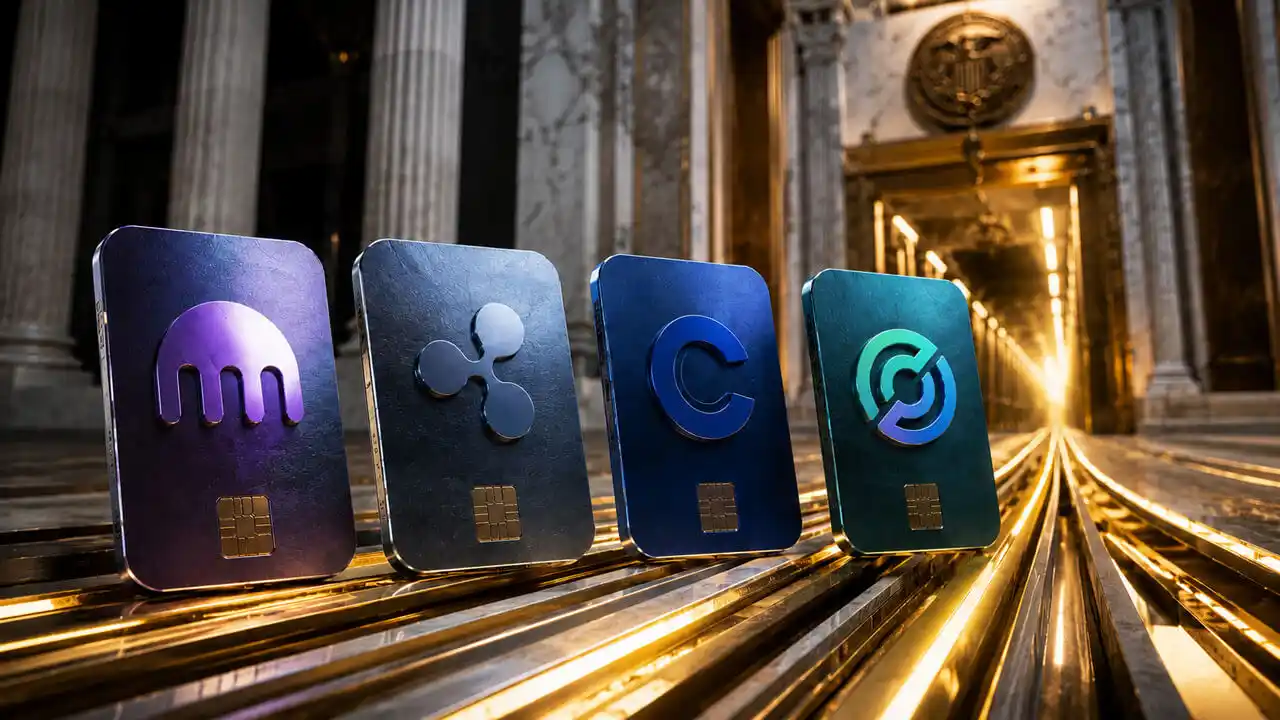
Trump Signs Executive Order, Kraken, Coinbase and Others May Gain Access to Fed Payment Channels

President Trump has signed an executive order, "Incorporating Financial Technology Innovation into the Regulatory Framework," pressuring the Federal Reserve to reassess its rules on granting non-bank financial companies—including crypto and fintech firms—access to its payment systems, specifically master accounts that connect to the Fedwire settlement system. Currently, such accounts are primarily reserved for depository institutions. The order mandates a review to determine if broader access is permissible and to establish an application process. This move, supported by figures like Senator Cynthia Lummis, aims to reduce barriers to innovation and lower public payment costs by fostering fairer competition. It does not grant immediate access but could pave the way for companies like Kraken, Coinbase, Ripple, and Circle to reduce reliance on intermediary banks, lowering costs and speeding up settlements. A key precedent is the Kansas City Fed granting Kraken's parent company a restricted master account in March, offering limited payment services without interest or credit privileges. This model is seen as a potential template for allowing controlled access while mitigating systemic risk. Other firms like Anchorage, Paxos, and BitGo, which hold specialized banking charters, are also well-positioned to apply. The banking industry, represented by the American Bankers Association, opposes easing access, arguing any institution handling bank-like payments must meet the same stringent regulatory, consumer protection, and risk-management standards as traditional banks. Their core concerns include potential systemic risks, compliance gaps in areas like anti-money laundering, and the diversion of liquidity from the traditional banking system. The outcome of the Fed's review will be crucial in determining whether and how crypto and fintech firms can integrate more directly into the core U.S. financial infrastructure, balancing innovation with financial stability.

marsbit17 мин. назад

Trump Signs Executive Order, Kraken, Coinbase and Others May Gain Access to Fed Payment Channels

marsbit17 мин. назад

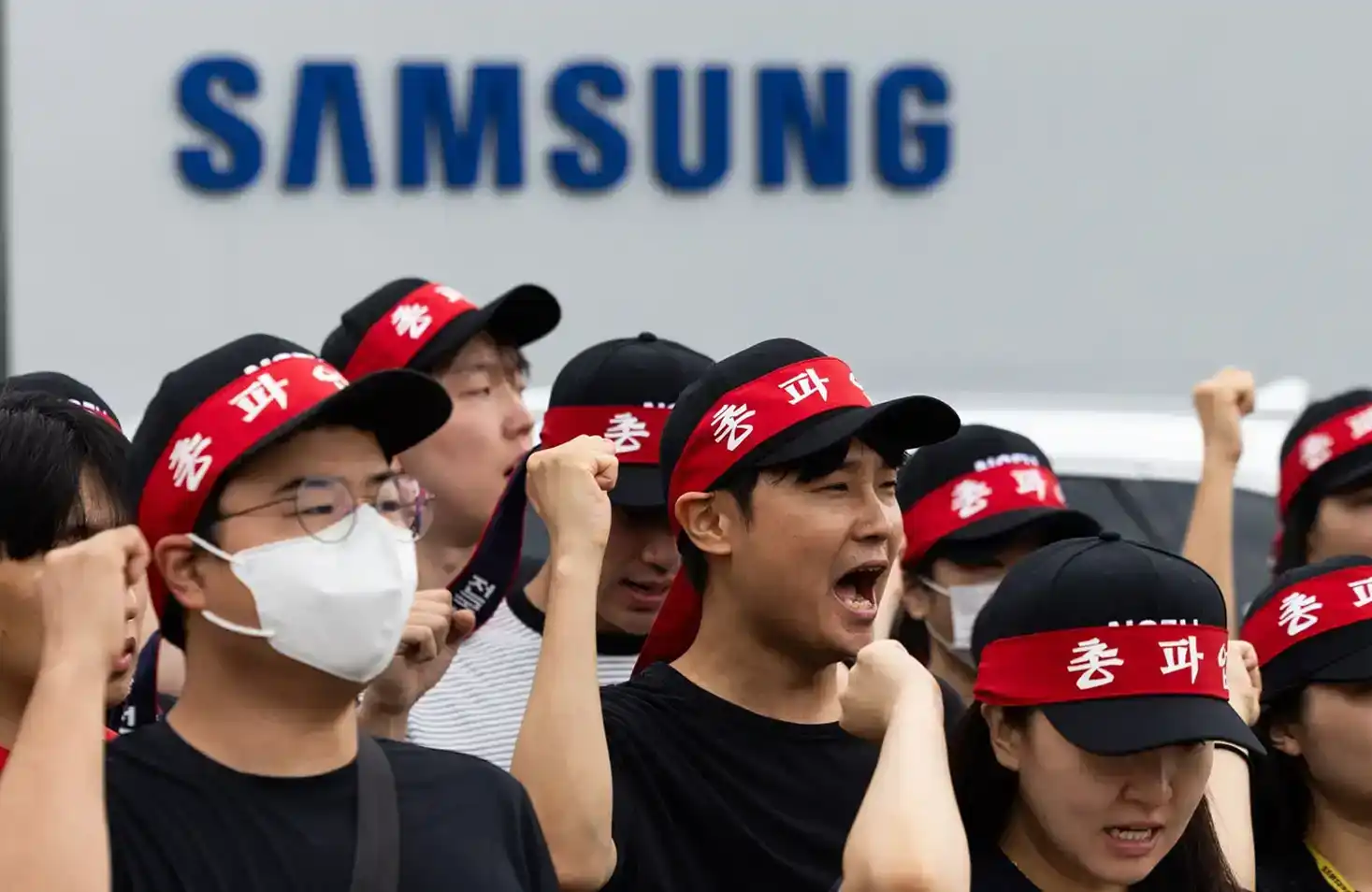
The First Large-Scale Strike in the AI Era Comes from the Factories That Build AI

The article describes a potential large-scale strike at Samsung Electronics, narrowly averted in May 2026 after a temporary agreement. The strike, planned by the company's union, would have been the first major labor action in the AI era targeting a core AI supply chain player. Samsung, alongside SK Hynix, produces roughly two-thirds of the world's memory chips, critical components for AI training and data centers like HBM. An 18-day strike could have disrupted global supply, affecting prices and production for tech companies and cloud providers. For South Korea, where semiconductors constitute about 35% of exports and Samsung represents a quarter of the stock market's value, such an action threatens national economic stability. The union's demands include a 7% base wage increase and, crucially, a clear, substantial profit-sharing model. They want 15% of annual operating profit as an employee bonus pool and the removal of the existing cap (about 50% of annual salary). This frustration is amplified by seeing rival SK Hynix successfully negotiate a deal granting employees 10% of operating profit as bonuses, with reports suggesting some workers could receive bonuses equivalent to hundreds of thousands of dollars. The conflict stems from deeper issues in South Korea's chaebol (conglomerate) system, where rapid national industrialization often prioritized corporate growth over labor rights. Samsung long maintained a "no union" policy until a 2020 apology from its leader. The article argues this strike highlights a fundamental tension in the AI age: as technology advances and corporate profits soar—often driven by AI—the workers who build the infrastructure are demanding a fair share and dignity, rejecting the notion that they are mere expendable components in a machine that "must not stop." The piece concludes that the true test of the AI era isn't just computational power, but whether the people who build the future can secure a stable and valued place within it.

marsbit58 мин. назад

The First Large-Scale Strike in the AI Era Comes from the Factories That Build AI

marsbit58 мин. назад

Ripple’s Fed Master Account Bid Gains Momentum After Trump Order

President Donald Trump has signed an executive order directing financial regulators and the Federal Reserve to review expanding fintech and crypto firms' access to core payment infrastructure. This order significantly advances the industry's push for direct Fed connectivity, a central issue for Ripple. The company has been seeking a Federal Reserve master account as part of its strategy for its RLUSD stablecoin, which would allow it to hold reserves directly with the central bank and access its payment rails. The order, titled "Integrating Financial Technology Innovation into Regulatory Frameworks," mandates a Fed review within 120 days on allowing access for entities like uninsured depository institutions and non-bank financial companies, including those in digital assets. This creates a formal policy timeline for resolving whether crypto payment firms must rely on traditional bank intermediaries. Ripple's application for a national bank charter and a master account is part of this broader landscape. The issue gained precedent when Kraken Financial received a limited-purpose master account, while Custodia Bank's application was denied after a legal battle. The Fed has also proposed a more restricted "payment account" option. Trump's order does not guarantee approval for Ripple but forces a high-level examination of the regulatory barriers, bringing the company's long-running effort to the forefront of Washington's financial policy agenda.

bitcoinist1 ч. назад

Ripple’s Fed Master Account Bid Gains Momentum After Trump Order

bitcoinist1 ч. назад

Торговля

Спот
Фьючерсы

Популярные статьи

Как купить T

Добро пожаловать на HTX.com! Мы сделали приобретение Threshold Network Token (T) простым и удобным. Следуйте нашему пошаговому руководству и отправляйтесь в свое крипто-путешествие.Шаг 1: Создайте аккаунт на HTXИспользуйте свой адрес электронной почты или номер телефона, чтобы зарегистрироваться и бесплатно создать аккаунт на HTX. Пройдите удобную регистрацию и откройте для себя весь функционал.Создать аккаунтШаг 2: Перейдите в Купить криптовалюту и выберите свой способ оплатыКредитная/Дебетовая Карта: Используйте свою карту Visa или Mastercard для мгновенной покупки Threshold Network Token (T).Баланс: Используйте средства с баланса вашего аккаунта HTX для простой торговли.Третьи Лица: Мы добавили популярные способы оплаты, такие как Google Pay и Apple Pay, для повышения удобства.P2P: Торгуйте напрямую с другими пользователями на HTX.Внебиржевая Торговля (OTC): Мы предлагаем индивидуальные услуги и конкурентоспособные обменные курсы для трейдеров.Шаг 3: Хранение Threshold Network Token (T)После приобретения вами Threshold Network Token (T) храните их в своем аккаунте на HTX. В качестве альтернативы вы можете отправить их куда-либо с помощью перевода в блокчейне или использовать для торговли с другими криптовалютами.Шаг 4: Торговля Threshold Network Token (T)С легкостью торгуйте Threshold Network Token (T) на спотовом рынке HTX. Просто зайдите в свой аккаунт, выберите торговую пару, совершайте сделки и следите за ними в режиме реального времени. Мы предлагаем удобный интерфейс как для начинающих, так и для опытных трейдеров.

792 просмотров всегоОпубликовано 2024.03.29Обновлено 2025.03.21

Как купить T

Обсуждения

Добро пожаловать в Сообщество HTX. Здесь вы сможете быть в курсе последних новостей о развитии платформы и получить доступ к профессиональной аналитической информации о рынке. Мнения пользователей о цене на T (T) представлены ниже.

活动图片