AI Trading Cools, South Korean Stocks Plunge 1.8%, Spot Gold Rises 1%, Bitcoin Dives

华尔街日报Опубликовано 2026-06-04Обновлено 2026-06-04

Введение

A sell-off in AI-related stocks, triggered by Broadcom's disappointing earnings forecast, sent shockwaves through global markets. South Korea's KOSPI led Asia's decline, plunging 1.8% as the risks from concentrated chip stock gains and surging leveraged investments came to the fore. The tech-heavy Nasdaq 100 futures fell 0.5% following Broadcom's 14% after-hours plunge, which signaled a slower-than-expected transition to AI clients. This pullback extended Wall Street's weakness, halting the S&P 500's nine-day rally amid hawkish Fed signals and renewed Middle East tensions. South Korean authorities convened an emergency meeting, pledging "immediate measures" against market volatility and warning of record-high stock margin debt. The adjustment rippled across assets: Bitcoin fell to around $64,000, its lowest since February, while safe-haven gold rose 1% on bargain hunting. Oil prices dipped on Middle East ceasefire news. Market analysts noted the sell-off was driven by profit-taking after massive gains, particularly in chip stocks like Samsung and SK Hynix, which now dominate the KOSPI. Wall Street banks are divided on Korea's outlook, with Goldman Sachs raising its target while Citigroup and others warn of overvaluation and a potential bubble. Bridgewater's Ray Dalio noted that great technological shifts often create bubbles. Meanwhile, Fed officials' hints at potential future rate hikes added to the cautious mood ahead of key U.S. jobs data.

Broadcom's disappointing earnings outlook triggered a rapid cooling of the global artificial intelligence (AI) trade. South Korea's KOSPI led the decline in the Asia-Pacific market on Thursday, abruptly pushing the accumulated bubble risks from highly concentrated chip stocks and rapidly expanding leveraged funds to the forefront.

Nasdaq 100 index futures slipped 0.5%, after Broadcom plunged 14% in after-hours trading. Its latest earnings outlook fell far short of investor expectations and signaled a slower-than-expected transition progress towards AI customers. UBS Group's AI Winners Basket Index fell 1.4% on Wednesday, ending a four-day winning streak. The Asian decline extended Wall Street's weak performance on Wednesday—the S&P 500's nine-day rally came to a halt, pressured by a combination of hawkish signals from Fed officials and renewed U.S.-Iran tensions, further suppressing risk appetite.

According to a Wall Street Journal article, South Korean Finance Minister Koo Yun-cheol held a joint meeting with central bank governor Shin Hyun-song, Financial Services Commission chairman Lee Eog-weon, and Financial Supervisory Service governor Lee Chan-jin. They pledged to take "immediate measures" if necessary to respond to sharp volatility in the foreign exchange market. At the same time, officials warned about stock margin loan balances hitting a nearly 20-year high, highlighting authorities' high concern for market stability.

This adjustment affected global assets: Bitcoin slid to around $64,000, its lowest level since February this year; gold rose about 1% as bargain-hunting buying flowed in; Brent crude oil ended a three-day rally on news of an Israel-Lebanon ceasefire agreement, falling about 1% to around $97 per barrel; European stocks were mixed, with investors cautiously awaiting Friday's U.S. non-farm payrolls data.

  • European stocks opened mixed, with the Euro Stoxx 50 up 0.13%, the UK's FTSE 100 down 0.12%, France's CAC 40 up 0.10%, and Germany's DAX up 0.20%.
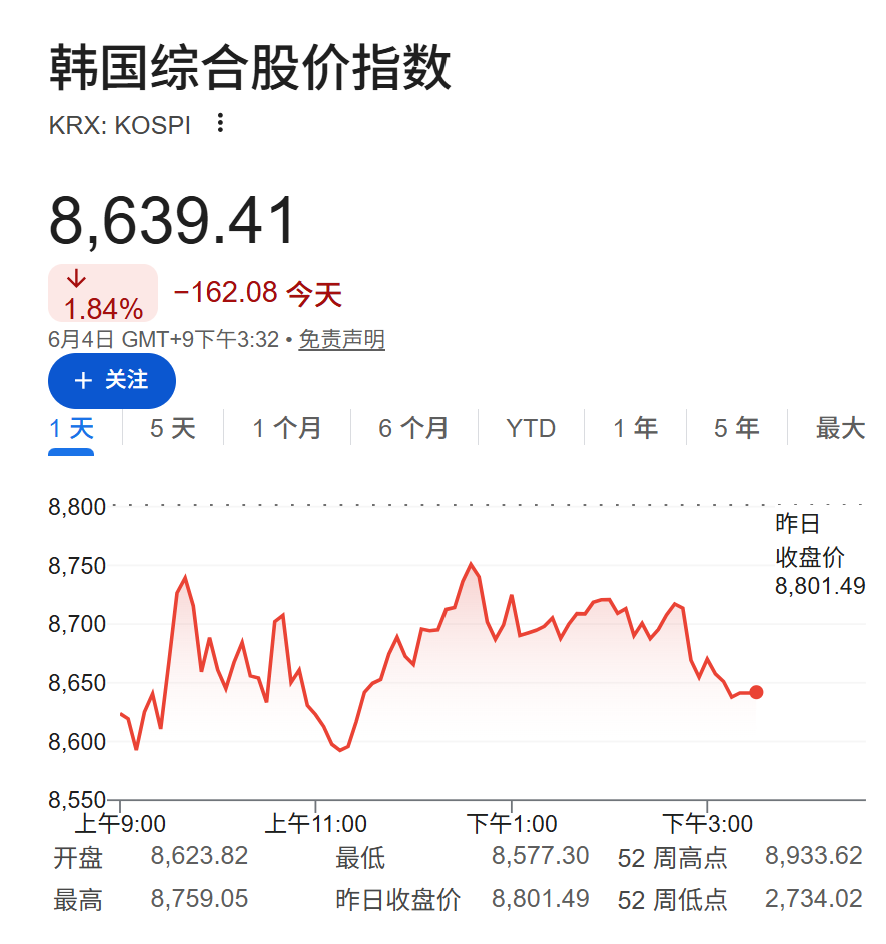
  • Japan's Nikkei 225 closed down 1.4% at 67,470.69 points. The Topix index closed down 1.1% at 3,951.85 points. South Korea's KOSPI closed down 1.8% at 8,639.41 points.
  • The U.S. Dollar Spot Index was little changed.
  • The yen rose 0.1% to 159.86 per dollar.
  • The yield on the 10-year U.S. Treasury note fell two basis points to 4.48%.
  • The yield on the 10-year Japanese government bond rose 3 basis points to 2.670%.
  • WTI crude oil fell 0.8% to $95.27 per barrel.
  • Spot gold rose 1% to $4,479.64 per ounce.
  • Bitcoin fell 0.9% to $64,312.09.

Nasdaq 100 index futures slipped 0.5%, after Broadcom plunged 14% in after-hours trading, as its latest earnings outlook fell short of investor expectations. Broadcom also signaled that its transition towards AI customers was progressing slower than expected, though the direction is correct, it faces excessively high market expectations. UBS Group's AI Winners Basket Index fell 1.4% on Wednesday, ending a four-day winning streak.
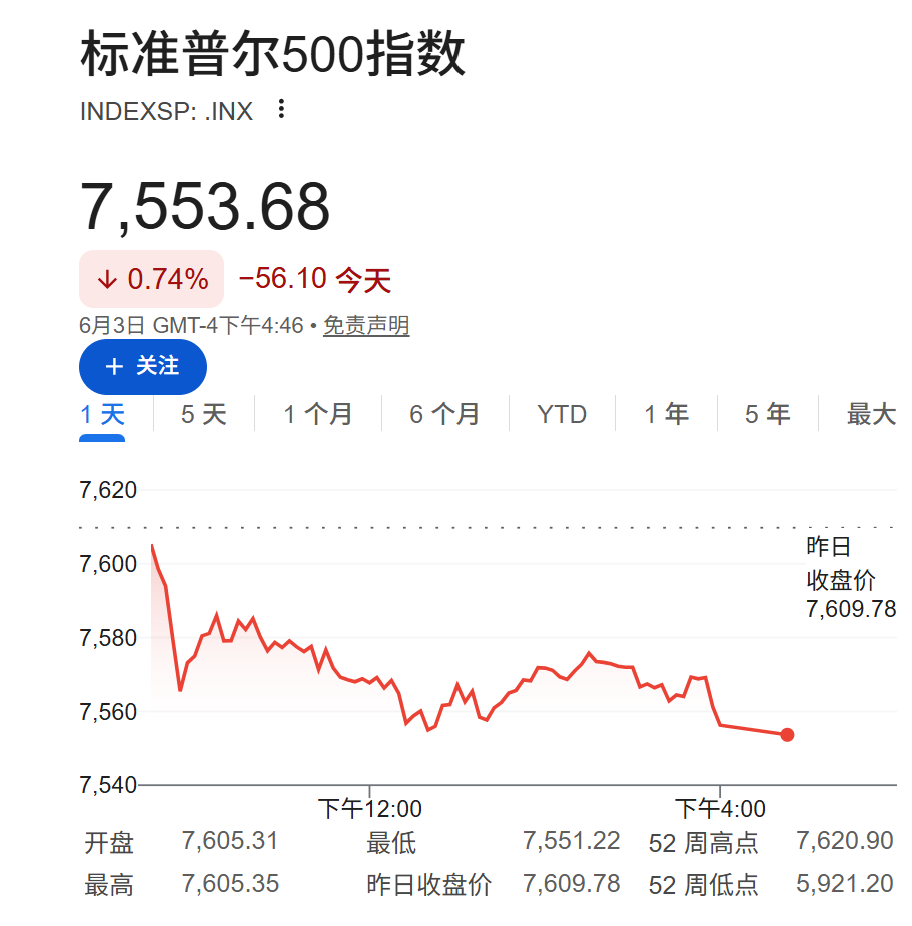
The Asian decline extended Wall Street's weak performance on Wednesday—the S&P 500's nine-day rally ended abruptly, as renewed U.S.-Iran conflict weighed on market risk sentiment. European stocks also faced downward pressure, with Bitcoin sliding to around $64,000, its lowest level since February this year. News of an Israel-Lebanon ceasefire agreement brought some local relief, leading Brent crude oil to end its three-day rally and fall about 1% to around $97 per barrel; gold rose 0.6% to around $4,460 per ounce as bargain-hunting buying flowed in.

Billy Leung, an investment strategist at Global X Management, said, "Chip stocks had rallied sharply before the earnings reports were released. Investors holding significant paper gains don't need much reason to take profits."

South Korea's KOSPI opened with a dive on Thursday, becoming one of the worst-performing major indices in the Asia-Pacific region. Although the KOSPI is still up over 100% year-to-date and has gained over 200% since June 2025, ranking first among major global stock indices, the nearly 2% drop on the day still drew high-level attention from authorities.
According to Yonhap News Agency, Koo Yun-cheol stated after the meeting that the government is maintaining high vigilance to prevent external uncertainties from turning into widespread market panic. "(The government) will take immediate measures if necessary to respond to excessive market volatility," he added. Attending officials believe the recent market volatility is closely related to the ongoing conflict in the Middle East and continuous net selling by foreign investors in the stock market. South Korea's Ministry of Finance stated in a declaration, "The recent rapid rise in the Korean stock market has led to temporary rebalancing by foreign investors, with profit-taking activities intensifying market volatility."

While officials emphasized the robustness of South Korea's economic fundamentals—May exports surged 53.2% year-on-year, and the total stock market capitalization has risen to the sixth largest globally—they also warned that the rise in stock margin loan scale could pose potential risks to the economy and will closely monitor related developments to protect investor interests.

The stellar performance of the KOSPI masks severe divergence among its components. Among the 835 constituent stocks, only 373 have risen this year, less than half; Samsung Electronics and SK Hynix have surged about 200% and 250% year-to-date, respectively, each with market capitalization exceeding $1 trillion, together accounting for over 40% of the KOSPI's weighting, while the remaining over 800 stocks contribute less than 30% to the index's gain.

Accompanying the highly concentrated rally is a sharp expansion of leveraged speculative funds. Data from South Korea's Financial Supervisory Service shows that as of Q1 2026, the margin loan balance at the top ten securities firms has approached 36 trillion won, nearly doubling from a year ago, hitting a nearly 20-year high; investors aged 50 and above account for as high as 62.3% of this, with the loan balance for the over-60 group surging from about 3 trillion won to over 8 trillion won within a year. In Q1 2026, the number of new securities accounts opened by individuals under 18 in South Korea increased nearly tenfold compared to the same period last year.

Data from the Korea Exchange shows that the total number of circuit breaker triggers in the main board market this year has risen to the highest level since the 2008 financial crisis—a total of 20 "sidecar" program trading suspension orders have been issued this year, only 6 less than the 26 issued in all of 2008. According to the rules, program trading is suspended for 5 minutes when the KOSPI 200 futures index fluctuates by 5% or more for at least 1 minute.

Faced with the KOSPI's rapid rise, major Wall Street institutions have shown clear divergence in their stances. Goldman Sachs raised its KOSPI target from 9,000 points to 12,000 points, stating in a report that the rally in AI chipmaker stocks may continue, but warning that correction risks are rising; strategists including Timothy Moe, the bank's chief Asia-Pacific equity strategist, wrote in the report, "We prefer North Asia, where earnings growth is the strongest."

Citi warned that South Korean stock valuations are at high levels among major global markets, coupled with institutional risks in labor relations, which could dampen long-term foreign investment allocation interest. It believes the current rally is more driven by short-term sentiment. The global chief investment officer at Standard Chartered Bank pointed out that going long on South Korea has become a "highly crowded trade" and has downgraded the semiconductor sector from "overweight" to "neutral," believing a short-term correction is entirely reasonable.

Billionaire and Bridgewater Associates founder Ray Dalio said in a Bloomberg TV interview on Wednesday, "All great technological transformations create bubbles." Rob Marshall Lee, emerging markets investor and founding partner & chief investment officer at Cusana Capital, was more blunt: "The Korean market is a huge bubble." He pointed out that most Korean companies have extremely low return on equity, and the AI era will not bring fundamental change; he warned that when the cycle reverses, the profit margins of related companies could plummet from 70% to negative. "Short-term, I wouldn't short; but looking five years out, you'd likely lose a lot of money," he said.

Hawkish remarks from Fed officials simultaneously cooled market sentiment. Dallas Fed President Lorie Logan said policymakers may need to raise interest rates later this year to bring inflation back to target; New York Fed President John Williams told Yahoo Finance that the interest rate outlook remains uncertain.

According to Bloomberg, recent data showed U.S. companies added the most new jobs since January 2025, indicating hiring momentum remains strong despite rising energy costs. If Friday's non-farm payrolls data confirms this, market expectations for Fed rate hikes will strengthen further. The yield on the 10-year U.S. Treasury note fell slightly by 2 basis points to 4.48% on Thursday, after rising significantly earlier due to high oil prices and labor market resilience. Investors on Thursday will also receive the weekly initial jobless claims data to further gauge the direction of the job market.

Fawad Razaqzada, an analyst at Forex.com, said, "If U.S. economic data continues to positively exceed expectations, investors may express a more hawkish Fed expectation by betting on a stronger U.S. dollar, especially against low-yield or zero-yield assets like the yen and gold." Meanwhile, according to Bloomberg citing informed sources, Bank of Japan officials are considering raising the benchmark interest rate by 25 basis points this month and assessing the possibility of further hikes within the year, driving the yen to strengthen against the dollar on Thursday.

Связанные с этим вопросы

QWhat was the immediate trigger for the global AI trade cooling and the subsequent market sell-off?

AThe immediate trigger was Broadcom's disappointing earnings outlook, which fell significantly below investor expectations and signaled a slower-than-anticipated transition to AI customers. This caused its stock to plunge 14% in after-hours trading and triggered a broader sell-off in AI and chip-related stocks.

QWhy did the South Korean KOSPI index fall significantly, and what specific market risks did this highlight?

AThe KOSPI fell 1.8% due to the global tech/AI sell-off and domestic factors. It highlighted the risks of a highly concentrated and leveraged market bubble. Specifically, the index's performance was driven almost entirely by massive gains in two chip giants (Samsung and SK Hynix), while over 800 other components contributed little. Concurrently, margin loan balances hit a near 20-year high, indicating speculative, debt-fueled investment, particularly among older retail investors.

QHow did the market movements described affect major global assets like gold, oil, and Bitcoin?

AThe risk-off sentiment led to a flight to safety, boosting gold, which rose 1%. Oil (Brent crude) fell about 1% on news of an Israel-Lebanon ceasefire. Bitcoin, often viewed as a risk asset, dropped to around $64,000, its lowest level since February, as speculative capital fled.

QWhat were the contrasting views of major Wall Street institutions (e.g., Goldman Sachs, Citigroup) on the South Korean market rally?

AThere was significant divergence. Goldman Sachs was optimistic, raising its KOSPI target to 12,000 and believing the AI chip rally could continue, albeit with rising correction risks. In contrast, Citigroup warned that high valuations and structural labor risks could deter long-term foreign investment, viewing the rally as driven by short-term sentiment.

QWhat key factors are currently influencing U.S. monetary policy expectations and currency markets according to the article?

ATwo main factors are at play: 1) Strong U.S. economic data, especially a resilient labor market (e.g., strong private payrolls), which could compel the Federal Reserve to maintain or even consider future rate hikes, as hinted by officials like Lorie Logan. 2) High energy prices putting upward pressure on inflation. This is strengthening expectations for a hawkish Fed, which could support the U.S. dollar, particularly against low-yield currencies like the Japanese Yen.

Похожее

STRC Breaks Below $95: Why Does It Continue to Depeg? Is There Default Risk?

"STRC Falls Below $95: Why the Persistent Depegging and Is There Default Risk?" The article discusses the recent decline in the price of STRC, a perpetual preferred stock issued by Strategy (MSTR) designed to trade around a $100 par value. As of publication, STRC traded at $94.65, raising market concerns. STRC is described as a high-yield cash flow product, offering an 11.50% annual dividend paid monthly. Its "preferred" status grants it priority over common stock for dividends and in liquidation. Key reasons cited for the price depegging include: 1. **Bitcoin's Price Drop:** MSTR's assets are heavily tied to Bitcoin (BTC), which fell over 21% from its recent high, pressuring all Strategy-related products. 2. **Competitive Pressure:** Rival Strive Asset Management's similar product, SATA, offers daily dividends and has maintained its $100 par value with a ~13% yield. In response, Strategy has proposed changing STRC's dividend frequency from monthly to bi-weekly, pending shareholder vote. 3. **Technical Selling:** A break below $100 may have triggered algorithmic selling and stop-losses, exacerbating the decline. Regarding default risk, the analysis suggests it is currently low. Strategy founder Michael Saylor confirmed the June 2026 dividend rate remains at 11.50% with no cuts or suspensions. The company's massive reserve of 843,706 BTC provides a significant backstop for its obligations. Industry opinions are mixed. Some analysts view the BTC holdings as reliable support for dividends, while critics like Peter Schiff warn of potential dividend cuts leading to price crashes and lawsuits. Others highlight inflation risk and the company's ability to reduce dividends without a formal default. In summary, STRC's drop is attributed to BTC volatility, competition, and technical factors. While immediate default risk appears contained, the product faces challenges from market conditions and competitive dynamics.

marsbit1 ч. назад

STRC Breaks Below $95: Why Does It Continue to Depeg? Is There Default Risk?

marsbit1 ч. назад

Seeking Alpha's Hot Article: Why Might the U.S. Stock Market Crash in June?

In a recent Seeking Alpha article, financial professor and analyst Damir Tokic argues that the US stock market may be poised for a significant crash in June 2026. The core thesis centers on a "mega-bubble" in equities, particularly within the technology sector, which has driven the S&P 500 to near-record valuations, with a Shiller P/E ratio exceeding 40—a level comparable to the 2000 dot-com bubble. Tokic identifies two primary catalysts for a potential collapse. First, he points to unsustainable market exuberance fueled by what he terms the "Trump Stimulus"—massive AI capital expenditure by tech giants, which he believes is politically driven and cannot last. Second, and more urgently, he highlights the escalating Iran war as a critical threat. The ongoing closure of the Strait of Hormuz has created a severe global energy supply crunch. Strategic petroleum reserves are projected to hit critically low operational levels by June, potentially causing oil prices to spike above $200 per barrel and triggering a severe, supply-driven inflationary shock. This scenario, Tokic warns, would force the Federal Reserve's hand. Despite currently maintaining a dovish bias, the Fed would likely be compelled to officially pivot to a hawkish stance at its June FOMC meeting to combat soaring inflation and bond yields. He contends that such a shift—or even a failure to act, which would destroy Fed credibility—could be the trigger that punctures the market bubble. The resulting downturn, he concludes, could rival the bear markets of 2000 and 2008, advising investors to prepare for a major correction.

marsbit1 ч. назад

Seeking Alpha's Hot Article: Why Might the U.S. Stock Market Crash in June?

marsbit1 ч. назад

Торговля

Спот
Фьючерсы

Популярные статьи

Тест по Bitcoin Биткоина

HTX Learn: Изучите Bitcoin halving и Заработаете Токены USDT

3.1k просмотров всегоОпубликовано 2024.04.16Обновлено 2024.04.16

Тест по Bitcoin  Биткоина

Что такое $BITCOIN

ЦИФРОВОЕ ЗОЛОТО ($BITCOIN): Комплексный анализ Введение в ЦИФРОВОЕ ЗОЛОТО ($BITCOIN) ЦИФРОВОЕ ЗОЛОТО ($BITCOIN) — это проект на основе блокчейна, работающий в сети Solana, который стремится объединить характеристики традиционных драгоценных металлов с инновациями децентрализованных технологий. Хотя он носит имя Биткойн, часто называемого “цифровым золотом” из-за его восприятия как средства хранения ценности, ЦИФРОВОЕ ЗОЛОТО является отдельным токеном, предназначенным для создания уникальной экосистемы в ландшафте Web3. Его цель — позиционировать себя как жизнеспособный альтернативный цифровой актив, хотя детали его применения и функциональности все еще развиваются. Что такое ЦИФРОВОЕ ЗОЛОТО ($BITCOIN)? ЦИФРОВОЕ ЗОЛОТО ($BITCOIN) — это токен криптовалюты, специально разработанный для использования в блокчейне Solana. В отличие от Биткойна, который выполняет широко признанную роль хранения ценности, этот токен, похоже, сосредоточен на более широких приложениях и характеристиках. Примечательные аспекты включают: Инфраструктура блокчейна: Токен построен на блокчейне Solana, известном своей способностью обрабатывать высокоскоростные и недорогие транзакции. Динамика предложения: ЦИФРОВОЕ ЗОЛОТО имеет максимальное предложение, ограниченное 100 квадриллионами токенов (100P $BITCOIN), хотя детали о его обращающемся предложении в настоящее время не раскрыты. Утилита: Хотя точные функциональные возможности не описаны, есть указания на то, что токен может быть использован для различных приложений, потенциально связанных с децентрализованными приложениями (dApps) или стратегиями токенизации активов. Кто создатель ЦИФРОВОГО ЗОЛОТА ($BITCOIN)? На данный момент личность создателей и команды разработчиков, стоящих за ЦИФРОВЫМ ЗОЛОТОМ ($BITCOIN), остается неизвестной. Эта ситуация типична для многих инновационных проектов в области блокчейна, особенно тех, которые связаны с децентрализованными финансами и феноменом мем-криптовалют. Хотя такая анонимность может способствовать культуре, ориентированной на сообщество, она усиливает опасения по поводу управления и ответственности. Кто инвесторы ЦИФРОВОГО ЗОЛОТА ($BITCOIN)? Доступная информация указывает на то, что у ЦИФРОВОГО ЗОЛОТА ($BITCOIN) нет известных институциональных спонсоров или значительных венчурных капиталовложений. Проект, похоже, функционирует по модели пирингового взаимодействия, сосредоточенной на поддержке и принятии сообществом, а не на традиционных путях финансирования. Его активность и ликвидность в основном сосредоточены на децентрализованных биржах (DEX), таких как PumpSwap, а не на устоявшихся централизованных торговых платформах, что еще больше подчеркивает его подход, ориентированный на grassroots. Как работает ЦИФРОВОЕ ЗОЛОТО ($BITCOIN) Операционные механизмы ЦИФРОВОГО ЗОЛОТА ($BITCOIN) можно подробно описать на основе его дизайна блокчейна и характеристик сети: Механизм консенсуса: Используя уникальный механизм доказательства истории (PoH) Solana в сочетании с моделью доказательства доли (PoS), проект обеспечивает эффективную валидацию транзакций, что способствует высокой производительности сети. Токеномика: Хотя конкретные дефляционные механизмы не были подробно описаны, большое максимальное предложение токенов подразумевает, что оно может быть предназначено для микротранзакций или нишевых случаев использования, которые еще предстоит определить. Интероперабельность: Существует потенциал для интеграции с более широкой экосистемой Solana, включая различные платформы децентрализованных финансов (DeFi). Однако детали относительно конкретных интеграций остаются неуточненными. Хронология ключевых событий Вот хронология, которая подчеркивает значимые вехи, касающиеся ЦИФРОВОГО ЗОЛОТА ($BITCOIN): 2023: Первоначальное развертывание токена происходит в блокчейне Solana, отмеченное его адресом контракта. 2024: ЦИФРОВОЕ ЗОЛОТО приобретает видимость, когда оно становится доступным для торговли на децентрализованных биржах, таких как PumpSwap, позволяя пользователям обменивать его на SOL. 2025: Проект наблюдает спорадическую торговую активность и потенциальный интерес к инициативам, возглавляемым сообществом, хотя на данный момент не зафиксировано никаких значительных партнерств или технических достижений. Критический анализ Сильные стороны Масштабируемость: Основная инфраструктура Solana поддерживает высокие объемы транзакций, что может повысить полезность $BITCOIN в различных сценариях транзакций. Доступность: Потенциально низкая цена торговли за токен может привлечь розничных инвесторов, способствуя более широкому участию благодаря возможностям дробного владения. Риски Отсутствие прозрачности: Отсутствие публично известных спонсоров, разработчиков или процесса аудита может вызвать скептицизм относительно устойчивости и надежности проекта. Волатильность рынка: Торговая активность сильно зависит от спекулятивного поведения, что может привести к значительной волатильности цен и неопределенности для инвесторов. Заключение ЦИФРОВОЕ ЗОЛОТО ($BITCOIN) является интригующим, но неоднозначным проектом в быстро развивающейся экосистеме Solana. Хотя он пытается использовать нарратив “цифрового золота”, его отход от установленной роли Биткойна как средства хранения ценности подчеркивает необходимость более четкого различения его предполагаемой утилиты и структуры управления. Будущее принятие и усвоение, вероятно, будут зависеть от решения текущей непрозрачности и более четкого определения его операционных и экономических стратегий. Примечание: Этот отчет охватывает синтезированную информацию, доступную на октябрь 2023 года, и с тех пор могут произойти события.

99 просмотров всегоОпубликовано 2025.05.13Обновлено 2025.05.13

Что такое $BITCOIN

Fractal Bitcoin: масштабирование Биткоина с помощью рекурсивной системы

Fractal Bitcoin — масштабное Layer-1-решнение, созданное на базе кода Биткоина, позволяющего достигать бесконечного масштабирования с помощью рекурсивного подхода.

2.3k просмотров всегоОпубликовано 2025.06.30Обновлено 2025.06.30

Fractal Bitcoin: масштабирование Биткоина с помощью рекурсивной системы

Обсуждения

Добро пожаловать в Сообщество HTX. Здесь вы сможете быть в курсе последних новостей о развитии платформы и получить доступ к профессиональной аналитической информации о рынке. Мнения пользователей о цене на BTC (BTC) представлены ниже.

活动图片