Seeking Alpha's Hot Article: Why Might the U.S. Stock Market Crash in June?

marsbitОпубликовано 2026-06-04Обновлено 2026-06-04

Введение

In a recent Seeking Alpha article, financial professor and analyst Damir Tokic argues that the US stock market may be poised for a significant crash in June 2026. The core thesis centers on a "mega-bubble" in equities, particularly within the technology sector, which has driven the S&P 500 to near-record valuations, with a Shiller P/E ratio exceeding 40—a level comparable to the 2000 dot-com bubble. Tokic identifies two primary catalysts for a potential collapse. First, he points to unsustainable market exuberance fueled by what he terms the "Trump Stimulus"—massive AI capital expenditure by tech giants, which he believes is politically driven and cannot last. Second, and more urgently, he highlights the escalating Iran war as a critical threat. The ongoing closure of the Strait of Hormuz has created a severe global energy supply crunch. Strategic petroleum reserves are projected to hit critically low operational levels by June, potentially causing oil prices to spike above $200 per barrel and triggering a severe, supply-driven inflationary shock. This scenario, Tokic warns, would force the Federal Reserve's hand. Despite currently maintaining a dovish bias, the Fed would likely be compelled to officially pivot to a hawkish stance at its June FOMC meeting to combat soaring inflation and bond yields. He contends that such a shift—or even a failure to act, which would destroy Fed credibility—could be the trigger that punctures the market bubble. The resulting downturn, he con...

Author: Damir Tokic, Finance Professor, Seeking Alpha Analyst

Led by technology stocks, the S&P 500 is approaching its highest historical valuation, signaling the formation of a massive bubble. Simultaneously, the war in Iran is highly likely to trigger an inflationary shock, leading to a surge in oil prices and higher U.S. Treasury yields. The escalating situation seems to be increasing the probability of this pessimistic prediction becoming a reality. Despite the Fed maintaining a dovish official bias for now, the market has already begun pricing in rate hikes. Therefore, the Fed's official shift to a hawkish stance in June could very well serve as the catalyst that pricks this bubble.

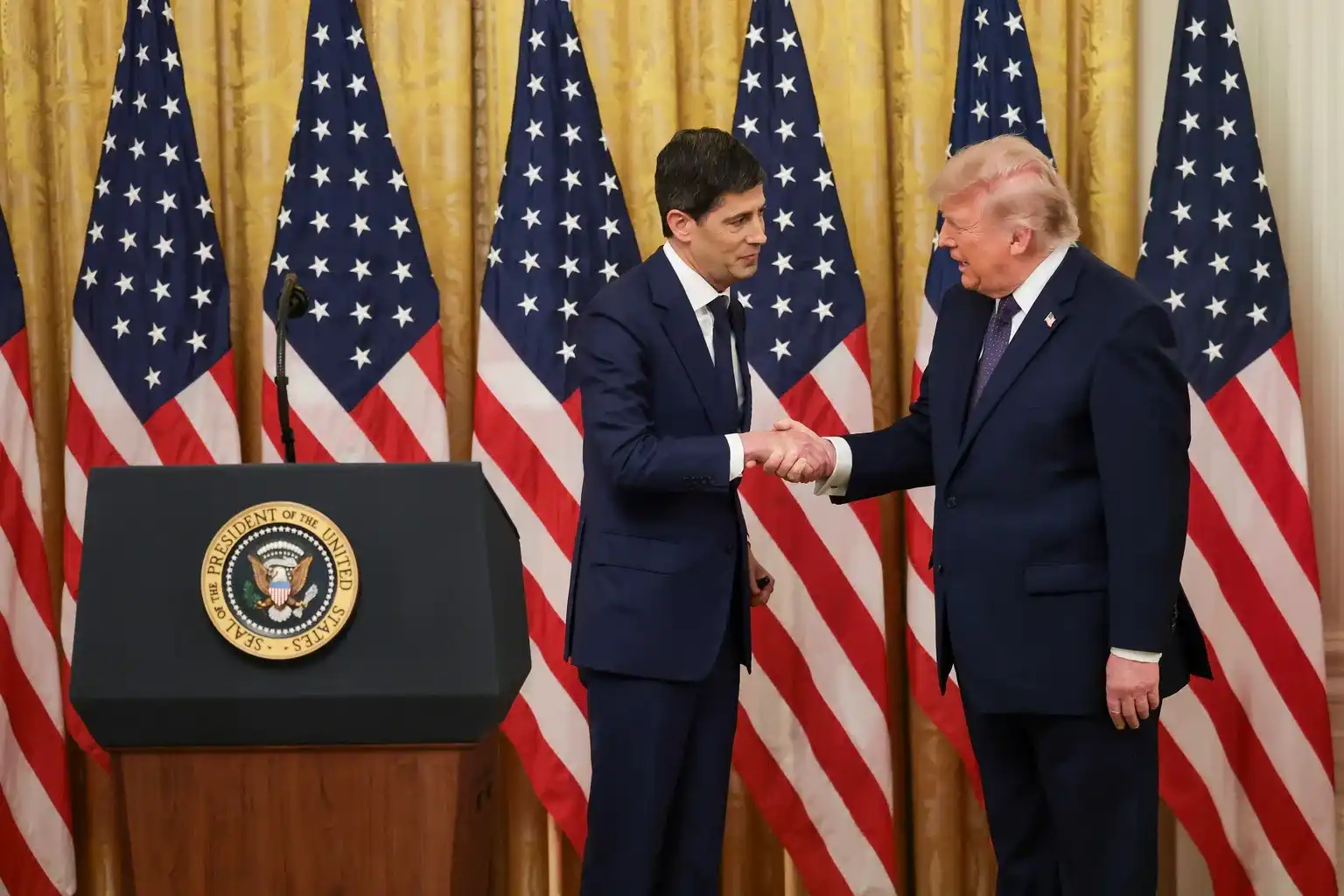
President Trump attending the swearing-in ceremony for the new Federal Reserve Chair

Does the Ceasefire Only Benefit Tech Stocks?

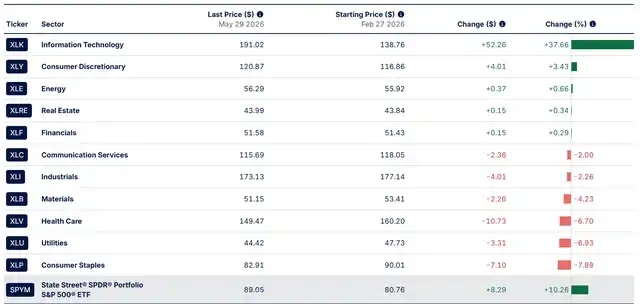
The following shows the performance of the S&P 500 Index (SPY) over the past three months since the outbreak of the Iran war:

  • Since February 27, the S&P 500 has risen by 10%.

  • The Technology sector (XLK) has gained over 37%.

  • The second-best performer is the Consumer Discretionary sector (XLY), which rose only 3%. It's important to note that Amazon (AMZN) constitutes 27% of XLY's weighting, and its stock price has increased by 28%; Tesla (TSLA) constitutes 20% of XLY's weighting, and its stock price has risen by 8%. Both companies are essentially tech firms and members of the "Magnificent 7" (Mag 7).

So, what is the core issue now? Did the ceasefire in the Iran war provide an absolute benefit only to the tech sector, especially semiconductors (SMH)?

In my view, the answer is no. The market has blindly assumed the war is over. More importantly, it assumed we could escape an inflationary shock and the demand-destroying recession that would follow. Therefore, this became a green light for speculators to go on a rampage, re-inflating the bubble.

However, it must be pointed out that the current bubble is not like the 2000 dot-com bubble. That bubble was driven entirely by expectations and the uncontrolled expansion of P/E multiples. The 2026 bubble is much worse! It is built on "backward-looking" realized profits and the naive expectation that these profits will continue indefinitely. Specifically, the mega-cap companies have poured $770 billion into AI capital expenditures. Clearly, these profits are concentrated in the primary beneficiaries of this spending, mainly semiconductor companies like Micron Technology (MU).

However, the Shiller P/E (CAPE) ratios for 2000 and 2026 are almost neck and neck, both remaining above 40x. This means the severity of the 2026 bubble is already on par with that of 2000.

But, the profits of the tech giants cannot be sustained indefinitely. AI capital expenditure growth is likely to slow and eventually decline. When will this tipping point occur?

In my opinion, this $770 billion in AI capital expenditure can be traced back to that meeting between tech executives and President Trump early in his second term. At that meeting, President Trump, sitting next to Mark Zuckerberg, asked him how much Meta planned to spend on AI capex. Zuckerberg replied, "Sorry, I'm not prepared... I'm not sure which number you want."

Therefore, I believe that this $770 billion AI capital expenditure is essentially a 'Trump stimulus' imposed on the private sector, and it is unsustainable. If Democrats win the upcoming midterm elections, this trend is likely to reverse.

Thus, the market's euphoric reaction after the Iran war ceasefire is just part of the 'Trump stimulus' and likely represents a final blow-off rally. The question now is, where is the peak of this surge, and what will trigger the crash?

SPY Sector Performance (Data Source: SSGA.COM)

Iran War Escalation and Inflationary Shock

Now let's shift our focus back to the Iran war. This is a crucial variable because it has a high potential to trigger a classic systemic shock that could completely pop the bubble.

A classic bubble burst typically follows this trajectory: 1) Inflation accelerates, 2) The Fed raises interest rates, 3) A recession triggers a bear market.

Let's first examine inflation. Inflation can be demand-driven or supply-driven.

Demand-driven inflation is initially favorable for the market because businesses have pricing power, often accompanied by an "overheating" economy where companies initially see revenue and profit growth. The Fed then curbs demand by raising rates, but this ultimately leads to higher unemployment and a recession.

In contrast, supply-driven inflation is significantly negative for the market from the outset because businesses lose pricing power—this often occurs in a weak or stagflationary economic environment. The Fed is forced to raise rates even as the economy is weak, inevitably leading to a deeper recession.

The Iran war is triggering a destructive supply-side inflation because it is causing a global energy shortage, as well as food shortages due to fertilizer shortages and many other derivative product and chemical shortages.

Fundamentally, Iran has closed the Strait of Hormuz, and this closure has persisted for three months. During these three months, the global economy has been tapping strategic petroleum reserves to fill the lost oil gap. These reserves are expected to reach critical operational levels in June.

If Iran does not immediately reopen the Strait of Hormuz, the global economy will face its most severe energy shock ever. Due to the very real physical shortage, crude oil prices could surge to over $200 per barrel until demand is completely destroyed, leading prices to fall back down. The destruction of demand directly corresponds to a recession.

This is precisely why Trump is acutely aware of the severity of the situation. For the past two months, he has been trying to negotiate with Iran to reopen the Strait of Hormuz but to no avail.

Currently, reaching a deal with Iran seems almost impossible for three reasons:

  • First, Iran wants to retain control of the Strait of Hormuz even after reopening it, which crosses a U.S. red line;

  • Second, Iran refuses to negotiate on the nuclear issue and most likely does not want any nuclear deal, which is another U.S. red line;

  • Third, even if Trump compromises on Iran's terms to reopen the strait and reaches some deal, Israel would likely block it, as Israel sees a nuclear-armed Iran as an existential threat.

So, what is the actual situation on the ground now?

My take is that Trump's likelihood of striking a last-minute deal with Iran to prevent an inflationary shock is becoming increasingly higher.

However, Israel absolutely does not approve of such a deal. Because part of an Iran deal would involve a ceasefire on all fronts, including Lebanon. Israel could outright veto this deal by directly attacking Lebanon. For Israel, this is also an existential issue, given the very real threat posed by its neighbor, Hezbollah.

Currently, we are facing a potential for major escalation.

Reports indicate Iran has now severed all contact with the U.S., meaning all negotiations have stalled. Not only that, but Iran has also completely blockaded the Strait of Hormuz and is threatening to further close the Bab al-Mandab Strait. If this happens, over 30% of the world's energy supply would simply vanish—a true disaster.

Although Trump claims he has spoken with both Israel and Hezbollah, and even suggests negotiations with Iran are still ongoing—and just these statements have been enough to push tech stocks to new all-time highs—there has been no official confirmation of these claims to date.

The June Crash

Therefore, the probability of a crash erupting in June is becoming increasingly high. Global oil inventories will hit critical levels in June. Once they fall below that line, crude oil (CL1:COM) prices will skyrocket due to a real supply shortage, and it will become very difficult to "talk down" prices with mere words.

The consequence will be that bond yields will also soar as inflation expectations rise and fiscal concerns drive real rates higher. Moreover, when inflation spikes, trying to 'jawbone' the bond market sell-off will become futile.

Most crucially, the Federal Reserve will have to respond at its June FOMC meeting. This could very well be the final trigger that pops the bubble. Specifically, the Fed's official stance in its Summary of Economic Projections (SEP) still signals that the next move will be a rate cut, maintaining a dovish policy bias.

However, the federal funds futures market has already priced in a tightening bias. Currently, the market is pricing in over a 50% probability of one rate hike by December 2026, and potentially even two hikes.

The Fed will then be forced to align with market expectations, making an official hawkish shift at the June meeting. This alone could burst the bubble instantly. Furthermore, even if the Fed insists on maintaining a dovish bias, as it would completely lose market credibility, the 10-year Treasury yield could skyrocket, triggering an even greater systemic shock.

Investment Implications

The S&P 500's Shiller P/E ratio is approaching a new all-time high, well above 40x, forming a mega-bubble. An inflationary shock triggered by the Iran war could pop it at any moment, and the Fed's official pivot to hawkishness in June might be the fatal bullet. Investors should prepare for a major pullback, potentially as severe as the bear markets of 2000 and 2008. Remember, all bubbles eventually burst.

Связанные с этим вопросы

QAccording to the author, why might the US stock market crash in June 2026?

AThe author posits a potential June 2026 crash due to a convergence of factors: a massive bubble in US equities, particularly in tech, driven by the 'Trump stimulus' of forced AI capital expenditure; an imminent inflationary supply shock as global strategic oil reserves hit critical levels due to the Iran war's closure of the Strait of Hormuz; and the Federal Reserve's likely official pivot to a hawkish stance at its June FOMC meeting in response, which could be the trigger that pops the bubble.

QHow does the 2026 stock market bubble differ from the 2000 dot-com bubble, as described in the article?

AThe 2026 bubble is described as worse than the 2000 bubble. While both have similarly high Shiller P/E ratios above 40, the 2000 bubble was driven by speculation and multiple expansion on future expectations. In contrast, the 2026 bubble is built on 'backward-looking' realized profits from an unsustainable $770 billion AI capital expenditure boom, which the author characterizes as a 'Trump stimulus' plan forced onto private companies. The market naively expects these extraordinary profits to continue indefinitely.

QWhat is the primary risk associated with the Iran war that could trigger a market crash?

AThe primary risk is a severe, supply-driven inflationary shock. The prolonged closure of the Strait of Hormuz by Iran is depleting global strategic oil reserves, which are projected to reach a critical operational level in June. This could cause a physical shortage, potentially sending crude oil prices soaring above $200 per barrel. Such a supply shock would force the Fed to hike rates into a weakening economy, leading to a deep recession and bursting the stock market bubble.

QWhat role does the Federal Reserve play in the author's crash scenario?

AThe Federal Reserve is seen as the potential catalyst or 'trigger' for the crash. Currently, the Fed maintains an officially dovish bias. However, the market has already priced in a tightening shift. The author argues that the Fed will be forced to officially pivot hawkish at its June FOMC meeting in response to spiking inflation and bond yields from the Iran war crisis. This official shift could instantly pop the bubble. Even if the Fed remains dovish, it would lose all credibility, causing Treasury yields to surge and triggering a systemic crisis.

QWhat does the author suggest is the nature of the $770 billion AI capital expenditure, and why is it seen as unsustainable?

AThe author characterizes the $770 billion AI capital expenditure as an unsustainable 'Trump stimulus plan' imposed on private companies, originating from a meeting early in Trump's second term. He suggests this spending is politically driven and not based on organic, sustainable business demand. The article implies that a potential Democratic victory in the upcoming midterm elections could reverse this trend, leading to a slowdown and eventual decline in AI capital spending, undermining the profits propping up the tech bubble.

Похожее

STRC Breaks Below $95: Why Does It Continue to Depeg? Is There Default Risk?

"STRC Falls Below $95: Why the Persistent Depegging and Is There Default Risk?" The article discusses the recent decline in the price of STRC, a perpetual preferred stock issued by Strategy (MSTR) designed to trade around a $100 par value. As of publication, STRC traded at $94.65, raising market concerns. STRC is described as a high-yield cash flow product, offering an 11.50% annual dividend paid monthly. Its "preferred" status grants it priority over common stock for dividends and in liquidation. Key reasons cited for the price depegging include: 1. **Bitcoin's Price Drop:** MSTR's assets are heavily tied to Bitcoin (BTC), which fell over 21% from its recent high, pressuring all Strategy-related products. 2. **Competitive Pressure:** Rival Strive Asset Management's similar product, SATA, offers daily dividends and has maintained its $100 par value with a ~13% yield. In response, Strategy has proposed changing STRC's dividend frequency from monthly to bi-weekly, pending shareholder vote. 3. **Technical Selling:** A break below $100 may have triggered algorithmic selling and stop-losses, exacerbating the decline. Regarding default risk, the analysis suggests it is currently low. Strategy founder Michael Saylor confirmed the June 2026 dividend rate remains at 11.50% with no cuts or suspensions. The company's massive reserve of 843,706 BTC provides a significant backstop for its obligations. Industry opinions are mixed. Some analysts view the BTC holdings as reliable support for dividends, while critics like Peter Schiff warn of potential dividend cuts leading to price crashes and lawsuits. Others highlight inflation risk and the company's ability to reduce dividends without a formal default. In summary, STRC's drop is attributed to BTC volatility, competition, and technical factors. While immediate default risk appears contained, the product faces challenges from market conditions and competitive dynamics.

marsbit42 мин. назад

STRC Breaks Below $95: Why Does It Continue to Depeg? Is There Default Risk?

marsbit42 мин. назад

AI Trading Cools, South Korean Stocks Plunge 1.8%, Spot Gold Rises 1%, Bitcoin Dives

A sell-off in AI-related stocks, triggered by Broadcom's disappointing earnings forecast, sent shockwaves through global markets. South Korea's KOSPI led Asia's decline, plunging 1.8% as the risks from concentrated chip stock gains and surging leveraged investments came to the fore. The tech-heavy Nasdaq 100 futures fell 0.5% following Broadcom's 14% after-hours plunge, which signaled a slower-than-expected transition to AI clients. This pullback extended Wall Street's weakness, halting the S&P 500's nine-day rally amid hawkish Fed signals and renewed Middle East tensions. South Korean authorities convened an emergency meeting, pledging "immediate measures" against market volatility and warning of record-high stock margin debt. The adjustment rippled across assets: Bitcoin fell to around $64,000, its lowest since February, while safe-haven gold rose 1% on bargain hunting. Oil prices dipped on Middle East ceasefire news. Market analysts noted the sell-off was driven by profit-taking after massive gains, particularly in chip stocks like Samsung and SK Hynix, which now dominate the KOSPI. Wall Street banks are divided on Korea's outlook, with Goldman Sachs raising its target while Citigroup and others warn of overvaluation and a potential bubble. Bridgewater's Ray Dalio noted that great technological shifts often create bubbles. Meanwhile, Fed officials' hints at potential future rate hikes added to the cautious mood ahead of key U.S. jobs data.

华尔街日报1 ч. назад

AI Trading Cools, South Korean Stocks Plunge 1.8%, Spot Gold Rises 1%, Bitcoin Dives

华尔街日报1 ч. назад

AI PC Battle: Bet on the Toll Booth, Not the Camp

**Title:** The AI PC Battle: Don't Bet on Sides, Bet on the Tollbooth **Summary:** The AI PC competition is moving beyond simple "x86 vs. Arm" narratives. The core investment thesis should focus on identifying which players can sustain margins, cash flow, and pricing power throughout the upgrade cycle, rather than backing a particular architecture. The opportunity is analyzed in three layers: 1. **The Advanced Foundry Tollbooth:** TSMC is positioned to collect "tolls" regardless of which chip designer wins, due to its dominant ~70% share in advanced semiconductor manufacturing, which is essential for high-end AI PC chips. 2. **Compute & Platform Spillover:** AMD represents an offensive in the x86 CPU+GPU space, while NVIDIA leverages its GPU and CUDA software stack dominance. Both benefit from the demand for increased local AI compute. 3. **Architecture Diffusion & Turnaround Plays:** ARM and Intel offer potential for significant upside (elasticity), but investments here require stricter discipline due to higher execution risks and competitive challenges. The industry is transitioning from concept to shipment validation. While short-term forecasts for AI PC adoption have been revised down slightly due to tariffs and procurement delays, the long-term trend towards AI becoming a standard PC feature remains intact. The key driver for upgrade cycles will be whether compelling enterprise applications (e.g., privacy-sensitive computing, low-latency inference) emerge beyond consumer-focused features like meeting summarization. Investment strategy should prioritize companies with platform-level advantages and recurring revenue streams. TSMC offers high certainty as the foundational tollbooth. AMD presents a strong offensive play within the established ecosystem. ARM and Intel are higher-risk, higher-potential-reward turnaround bets. The report cautions against chasing short-term hype and emphasizes a disciplined, long-term approach focused on buying ecosystem strength and cash-flow certainty after market enthusiasm subsides. **Key Risks:** Underwhelming AI PC applications slowing upgrade cycles; slow improvement in Windows on Arm compatibility; macro/tariff impacts on PC demand; potential advanced node supply-demand mismatches affecting TSMC; high overall AI sector valuations making stocks vulnerable to a risk-off shift in markets.

marsbit1 ч. назад

AI PC Battle: Bet on the Toll Booth, Not the Camp

marsbit1 ч. назад

Торговля

Спот
Фьючерсы

Популярные статьи

Как купить S

Добро пожаловать на HTX.com! Мы сделали приобретение Sonic (S) простым и удобным. Следуйте нашему пошаговому руководству и отправляйтесь в свое крипто-путешествие.Шаг 1: Создайте аккаунт на HTXИспользуйте свой адрес электронной почты или номер телефона, чтобы зарегистрироваться и бесплатно создать аккаунт на HTX. Пройдите удобную регистрацию и откройте для себя весь функционал.Создать аккаунтШаг 2: Перейдите в Купить криптовалюту и выберите свой способ оплатыКредитная/Дебетовая Карта: Используйте свою карту Visa или Mastercard для мгновенной покупки Sonic (S).Баланс: Используйте средства с баланса вашего аккаунта HTX для простой торговли.Третьи Лица: Мы добавили популярные способы оплаты, такие как Google Pay и Apple Pay, для повышения удобства.P2P: Торгуйте напрямую с другими пользователями на HTX.Внебиржевая Торговля (OTC): Мы предлагаем индивидуальные услуги и конкурентоспособные обменные курсы для трейдеров.Шаг 3: Хранение Sonic (S)После приобретения вами Sonic (S) храните их в своем аккаунте на HTX. В качестве альтернативы вы можете отправить их куда-либо с помощью перевода в блокчейне или использовать для торговли с другими криптовалютами.Шаг 4: Торговля Sonic (S)С легкостью торгуйте Sonic (S) на спотовом рынке HTX. Просто зайдите в свой аккаунт, выберите торговую пару, совершайте сделки и следите за ними в режиме реального времени. Мы предлагаем удобный интерфейс как для начинающих, так и для опытных трейдеров.

1.4k просмотров всегоОпубликовано 2025.01.15Обновлено 2026.06.02

Как купить S

Sonic: Обновления под руководством Андре Кронье – новая звезда Layer-1 на фоне спада рынка

Он решает проблемы масштабируемости, совместимости между блокчейнами и стимулов для разработчиков с помощью технологических инноваций.

2.3k просмотров всегоОпубликовано 2025.04.09Обновлено 2025.04.09

Sonic: Обновления под руководством Андре Кронье – новая звезда Layer-1 на фоне спада рынка

HTX Learn: Пройдите обучение по "Sonic" и разделите 1000 USDT

HTX Learn — ваш проводник в мир перспективных проектов, и мы запускаем специальное мероприятие "Учитесь и Зарабатывайте", посвящённое этим проектам. Наше новое направление .

1.8k просмотров всегоОпубликовано 2025.04.10Обновлено 2025.04.10

HTX Learn: Пройдите обучение по "Sonic" и разделите 1000 USDT

Обсуждения

Добро пожаловать в Сообщество HTX. Здесь вы сможете быть в курсе последних новостей о развитии платформы и получить доступ к профессиональной аналитической информации о рынке. Мнения пользователей о цене на S (S) представлены ниже.

活动图片