Technological Self-Reliance in China: A War from Lithography Machines to ABF Films

marsbitОпубликовано 2026-08-17Обновлено 2026-08-17

Введение

"China's Tech Independence: A Battle from Lithography Machines to ABF Film" In August 2026, Japan's Ajinomoto announced a 30% supply cut of ABF film to Chinese mainland clients, causing industry-wide shock and fears of price hikes and shortages in the semiconductor supply chain. That same year, Chinese company Lotus Holdings, known for its MSG business, acquired a small domestic ABF film startup for 103 million yuan, aiming to change this passive situation. ABF film is a core insulating material for advanced CPU, GPU, and AI chip packages. Ajinomoto, originally a food flavoring company, has monopolized over 95% of the global ABF film market for nearly 30 years, deriving its technology from byproducts of monosodium glutamate production. With AI chips consuming 5-10 times more ABF film than traditional chips, the supply-demand gap is widening. Ajinomoto's supply cut to China, where domestic ABF film production accounts for less than 5%, directly threatens the production of domestic high-end AI chips and their substrates. This incident highlights a crucial but often overlooked truth: the vulnerabilities in China's quest for technological self-reliance extend beyond headline areas like lithography machines to critical but seemingly minor components—insulating films, photoresists, electronic specialty gases, etc. The article frames China's tech independence as a multi-front war. While major breakthroughs have been achieved in chip design (e.g., Huawei's HiSilicon), foundry (e....

In early August 2026, Ajinomoto of Japan notified customers in mainland China of a 30% cut in ABF film supply, immediately shaking the industry. The news quickly spread to the downstream semiconductor sector, triggering panic over price hikes and supply shortages.

Just this past April, a Chinese company called Lotus Holding, originally known for selling monosodium glutamate, formally spent 103 million yuan to acquire an ABF film startup with annual revenue of only 6.5 million yuan, attempting to change this passive situation for China's industry.

The former is a monosodium glutamate company; the latter is also a monosodium glutamate company. As the "chokehold" blade slid from lithography machines down to an inconspicuous thin film, the battle for China's technological self-reliance had already reached the most minute, most critical points.

In the tech wars of previous years, the "choke points" were a clear list of battlefields: lithography machines, EUV technology, high-end EDA, advanced process chips...

But Rome wasn't built in a day, and the reality of the industry is far more brutal. A "chokehold" was never about a few isolated technological points, but a densely woven network. On this network, cutting off any inconspicuous node could suffocate the entire industrial chain:

A layer of insulating film, a can of photoresist, a bottle of electronic special gas, a type of packaging chemical, a piece of high-purity sputtering target. Each one seems insignificant on its own, but together they form the lifeblood of every process from chip design to packaging and testing.

The story of Ajinomoto is the most absurd and profound footnote to this network.

01

ABF film is the core insulating material for the IC substrates of high-end CPUs, GPUs, and AI computing chips; without it, the substrate is almost scrap. ABF film originated from a highly insulating resin that Ajinomoto accidentally discovered in a monosodium glutamate byproduct in the 1970s. Intel first adopted it in 1996, mass production began in 1999, and since then, Ajinomoto has monopolized this market for nearly 30 years through patent barriers, process accumulation, and partnerships with major clients.

To this day, Ajinomoto holds 95% of the global ABF film market share, with profit margins exceeding 50%. No overseas competitor can offer a large-scale alternative. A monosodium glutamate company, using a film grown from sodium glutamate, has put a chokehold on the necks of global AI chips.

The AI boom is tightening this noose even further. Traditional PC chip ABF substrates require only 4–6 layers, while high-end AI chips need 8–16 layers. The ABF film consumption per AI chip is 5–10 times that of traditional chips. On the supply side, Ajinomoto's monthly capacity of 2 million square meters is already at full production. New capacity will only start up in 2028, with a third factory slated for 2032.

Thus, a supply-demand gap has opened: a 10% shortfall in the second half of 2026, 21% in 2027, 42% in 2028. Ajinomoto's choice? To cut 30% of supply to mainland China. That is to say, at the most critical moment of global AI competition, Japan's Ajinomoto chose to target mainland China.

Domestic ABF film localization in mainland China stands at less than 5%. Ajinomoto's move is nearly a decapitation strike.

One could say this blow landed on the production lines of substrate manufacturers like Shennan Circuit, Xingsen Technology, and Shenghong Technology, and also on the packaging and shipments of domestic high-end AI chips. It tells everyone a truth ignored for too long: the weaknesses in self-reliance and controllability lie not only in lithography machines but also in the "last layer of film."

It is against such a backdrop that Lotus Holding, a monosodium glutamate company, taking up the banner of self-reliance to break through in ABF film, appears so romantic and courageous to the outside world.

If we broaden our perspective, the Ajinomoto incident is just one local battle in the grand chess game of China's technological self-reliance. Over the past six years, in the adversity of repeated blockades, Chinese technology has launched counterattacks on almost all "chokehold" battlefields.

In chip design, Huawei has been the standard-bearer of this counterattack. After the Entity List in 2019, HiSilicon did not die. Instead, it ushered in the return of Kirin chips—using DUV lithography machines for multiple exposure, an "extreme operation," to produce advanced process chips despite the ban on EUV lithography machines. Simultaneously, it advanced the Ascend series of AI chips to a level comparable to NVIDIA's high-end products. Domestic CPUs (Hygon, Phytium, Loongson) and AI chips (Ascend, Cambricon) have been deployed on a large scale in the IT application innovation and intelligent computing sectors.

In wafer manufacturing, SMIC, unable to obtain EUV equipment, independently developed its "N+1" process and achieved small-scale mass production of advanced nodes. It has massively expanded mature node (28nm and above) capacity, enabling localized production of automotive-grade and industrial chips. The quality of domestic chips is moving from "can make" to "can use."

In memory chips, the fight has been the most hardcore turnaround. YMTC independently developed its Xtacking architecture, mass-producing 294-layer 3D NAND, once surpassing Samsung and SK Hynix in layer count. Its global market share briefly reached 13%, even prompting Samsung to initiate talks about cross-licensing patents. CXMT's DRAM ranks fourth globally. Chinese memory went from being "choked" to partially overtaking in just a few years.

The common point across these battlefields is "breakthroughs forced by being choked." Having no way back instead forced the entire industry chain to place collective bets. But precisely in the gaps of these grand battlefields, there are still countless small but vital "Ajinomoto-style" pressure points—and that is exactly where companies like Lotus Holding step in to fulfill their mission.

02

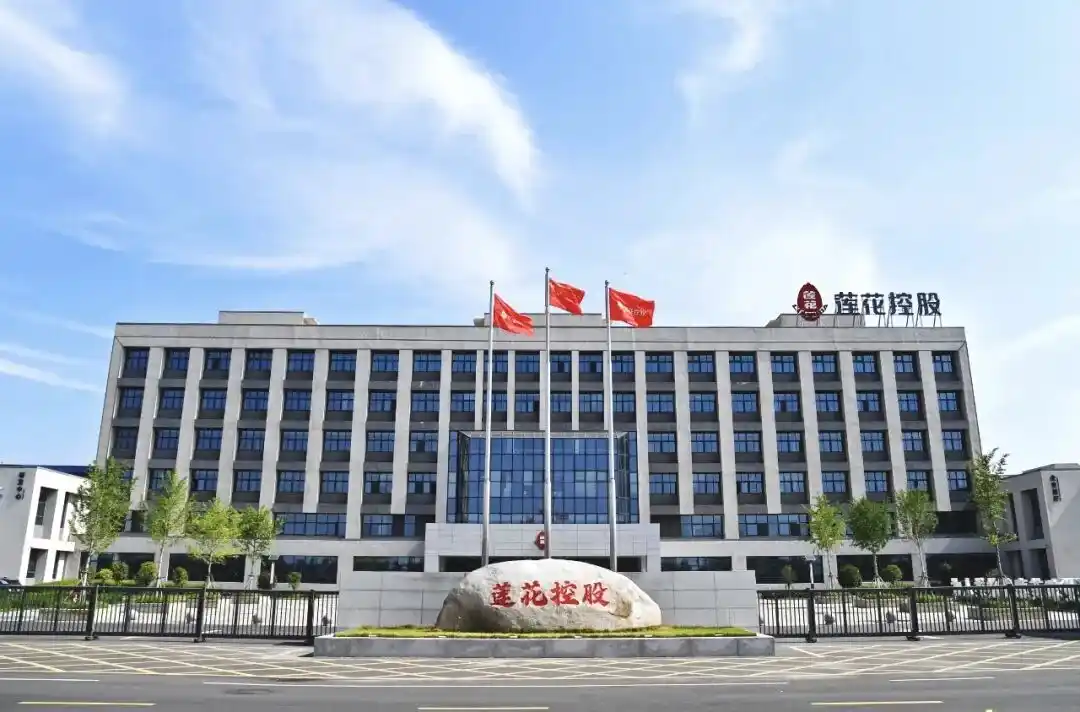
Who is Lotus Holding? It is "Lotus Monosodium Glutamate," that seemingly long-dormant national brand.

In April 2026, Lotus Holding's subsidiary, Lotus Tech & Innovation, acquired approximately 51% of Shenzhen Nufis New Material Technology Co., Ltd. for about 103 million yuan through a public listing, officially entering the ABF film sector.

Nufis is a company specializing in build-up films (similar to ABF film) for semiconductor packaging substrates. It holds patents, has certifications from global leading clients, boasts 67% revenue growth, and is collaborating with Zhejiang University on NBF film R&D. It is one of the few core players in the domestic ABF field that has reached the threshold of mass production.

The market immediately labeled this transaction—"China's Ajinomoto."

Lotus Holding's acquisition of Nufis bought a "ticket"—entry qualification into a market monopolized for 30 years with a localization rate under 5%. Whether the ticket is worth it depends on whether one can walk in, but without buying it, one remains forever outside the door.

The real value of Lotus Holding lies not in whether it can replace Ajinomoto now, but in what it reveals about a profound shift occurring in China's pursuit of technological self-reliance: it is no longer just the solitary struggle of giants like Huawei and SMIC, but a collective, industry-wide wager from giants down to "monosodium glutamate factories."
03

The story of Ajinomoto and Lotus Holding is merely a replay of a scene that has repeated itself over the past six decades.

Almost every leap forward in Chinese technology has been forced by blockades. After the 2019 Entity List, Kirin chips staged a comeback against all odds. After the lithography machine embargo, DUV multiple exposure opened an alternative path. After memory chips were besieged, YMTC instead achieved a 294-layer breakthrough. The more severely a segment is "choked," the faster and more resolutely China breaks through.

The logic behind this is no mystery: blockades cut off retreat routes, forcing companies to completely abandon any notion of "relying on overseas" and compelling them to unite with upstream and downstream partners to meticulously hone technology. China's unique advantage lies in possessing the world's most complete industrial chain, the largest application market, and the dual drivers of the "whole-nation system + market vitality." Combined, these three mean that localization of any single link can quickly find fertile ground where it can "land, scale, and iterate."

Ajinomoto's supply cut will cause short-term pain for China's substrate and chip manufacturers. But in the long run, it is highly likely to become, like the Entity List of the past, the trigger that catalyzes the next "Kirin" or "YMTC"—only this time, what is forced out is not a chip, but a film.

Chokeholds are never applied in a single day, and breaking them is never achieved with a single acquisition. But every time a monosodium glutamate factory dares to dive into the deep waters of chip materials, every time 103 million yuan in "small money" starts flowing to vital pressure points like the "last layer of film," at least one thing becomes clear: China's pursuit of technological self-reliance and controllability has shifted from a desperate assault by a few to a collective march by the entire industry.

From lithography machines to ABF film, this war has no smoke, yet it determines national destiny. The true quality of China's technological self-reliance is not determined by how brightly a single point like the Kirin chip shines, but by how many Ajinomoto-style nodes on that "chokehold network" are filled in one by one.

Lotus Holding's 103 million yuan cannot buy the present reality of a "Chinese Ajinomoto," but it may buy a ticket to that future. The direction is right, but the road is long; the real test is not the acquisition itself, but whether it can wait with the patience of ten years—not a three-year gamble—for the domestic breakthrough of that film.

And the answer lies in the next leg of China's journey toward technological self-reliance—a path of thorns with no finish line, and one that absolutely must not stop.

This article is from the WeChat public account "Delinshe" (ID: delinshe), author: Delin Baoyu

Трендовые криптовалюты

Связанные с этим вопросы

QAccording to the article, what is ABF film, and why is it a critical material in the semiconductor industry?

AABF film is a high-insulating resin material that serves as the core insulating layer in the IC substrates for high-end CPUs, GPUs, and AI computing chips. Without it, these substrates would be virtually non-functional. Its criticality stems from its near-total market monopoly by Ajinomoto, which holds over 95% of the global supply, creating a significant supply chain vulnerability.

QWhat action did Ajinomoto take regarding ABF film supply to China in August 2026, and what was its potential impact?

AIn August 2026, Ajinomoto notified customers in mainland China of a 30% cut in its ABF film supply. This move, given China's domestic ABF film substitution rate of less than 5%, posed a severe threat of price hikes and supply shortages, potentially disrupting production for domestic substrate manufacturers and the packaging of high-end domestic AI chips.

QWhat strategic acquisition did Lotus Holdings make in April 2026, and what is its significance in the context of China's tech self-reliance?

AIn April 2026, Lotus Holdings acquired a 51% stake in Shenzhen Nuofeis New Material Technology for approximately 103 million RMB. This acquisition represents an entry into the ABF film sector. Its significance lies in symbolizing that the pursuit of technological self-reliance is expanding from major tech giants to a broader collective effort across the entire industry, targeting even the most niche and critical supply chain 'chokepoints'.

QHow does the article describe the pattern of China's technological breakthroughs in key areas like chips and memory over the past six years?

AThe article describes China's breakthroughs in areas like chip design (e.g., Huawei's HiSilicon), wafer manufacturing (e.g., SMIC), and memory chips (e.g., YMTC, CXMT) as being largely 'forced by blockades.' The lack of alternatives due to foreign sanctions pushed domestic companies to collaborate across the supply chain, invest heavily in R&D, and leverage China's complete industrial ecosystem, large market, and combined state-market dynamics to achieve rapid and determined progress.

QWhat is the broader conclusion the article draws about China's path to technological self-reliance from the Ajinomoto and Lotus Holdings case?

AThe article concludes that China's path to technological self-reliance has evolved from isolated, heroic struggles by a few major companies into a comprehensive, industry-wide collective march. The real test of success is not just achieving headline breakthroughs like advanced chips, but systematically filling all the minor yet critical 'chokepoints' across the entire supply chain network, a long and arduous process that requires sustained patience and investment.

Похожее

NEAR AI внедрила независимую проверку

NEAR AI Cloud интегрировала сервис Intel Trust Authority для обеспечения независимой проверки конфиденциальных ИИ-вычислений. Клиенты теперь могут получать подписанный Intel токен аттестации, подтверждающий выполнение задач в защищенной среде Intel TDX. Эта среда изолирует ИИ-задачи в зашифрованных виртуальных машинах, делая память недоступной для операционной системы хоста, гипервизора и оператора инфраструктуры. Новая интеграция добавляет к существующей проверке со стороны NEAR AI внешнюю проверку от Intel Trust Authority. Данный сервис проверяет криптографические подписи, сверяет параметры среды с эталонными значениями и применяет политики безопасности, выпуская в итоге подписанный JWT-токен. Этот токен может использоваться другими системами для контроля доступа к защищенным ресурсам, например, при запросе конфиденциальных данных или ключей шифрования, а также служить независимым подтверждением безопасности для соблюдения нормативных требований. Среди пользователей платформы NEAR AI Cloud — Brave, Venice AI, Abound, правительство Бермудских островов, OpenMind и Corbits.

cryptonews.ru30 мин. назад

NEAR AI внедрила независимую проверку

cryptonews.ru30 мин. назад

Zebec интегрировала USX для получения дохода

Zebec Network, платформа для платежей и выплаты зарплат на блокчейне, объявила о партнерстве с институциональным протоколом доходности Solstice Finance на Solana. В рамках интеграции стейблкоин $USX от Solstice будет добавлен в платежную инфраструктуру Zebec. Это позволит компаниям получать доход на средства, которые обычно заранее резервируются для будущих выплат сотрудникам, но до дня зарплаты лежат без движения. При этом сам процесс выплат через Zebec для сотрудников останется неизменным. Пользователи также смогут получать $USX напрямую на дебетовую карту Zebec, использовать токен для оплаты покупок (по курсу 1 $USX = 1 доллар США) или выводить средства на криптокошелек. Стейблкоин $USX обеспечен хеджированными позициями в BTC, ETH, SOL, других стейблкоинах и токенизированных казначейских облигациях.

cryptonews.ru31 мин. назад

Zebec интегрировала USX для получения дохода

cryptonews.ru31 мин. назад

Проложит ли ФРС путь для биткоина? Goldman Sachs делает важное заявление о ФРС и BTC!

Ведущая криптовалюта Bitcoin торгуется в боковом диапазоне, и инвесторы сейчас сосредоточены на макроэкономических событиях, которые могут определить её дальнейшее направление. Главный экономист Goldman Sachs Ян Хациус дал свою оценку перспективам политики Федеральной резервной системы (ФРС). Он заявил, что вероятность повышения процентных ставок в сентябре очень низка из-за слабых экономических данных и замедления инфляции в США. Это может создать более благоприятные условия для рискованных активов, включая биткоин, за счёт улучшения рыночной ликвидности и настроений инвесторов. Хациус отмечает, что рынки, вероятно, всё ещё переоценивают жёсткость будущей траектории ставок ФРС. Согласно данным CME FedWatch, рынки оценивают вероятность повышения ставки в сентябре примерно в 30,6%, в то время как шансы на сохранение текущего уровня составляют около 69,4%. Таким образом, снижение ожиданий дальнейшего ужесточения монетарной политики может оказать положительное влияние на биткоин.

cryptonews.ru1 ч. назад

Проложит ли ФРС путь для биткоина? Goldman Sachs делает важное заявление о ФРС и BTC!

cryptonews.ru1 ч. назад

Tiger Research: Насколько далеко может зайти ончейн слой расчетов для иностранной валюты?

Tiger Research: насколько далеко может зайти ончейн-уровень для расчетов по форексу? Статья исследует потенциал блокчейн-технологии для решения проблем валютных расчетов, особенно для стран с развивающимися рынками, таких как страны Латинской Америки. Основное внимание уделяется проекту KiiChain, который позиционируется как ончейн-уровень для обмена стейблкоинами и токенизированными реальными активами (RWA). **Проблема:** Традиционные кросс-бордерные платежи неэффективны из-за разных часов работы банков, регуляторных барьеров и низкой ликвидности нерезервных валют, что приводит к задержкам и высоким издержкам. **Решение KiiChain:** Архитектура проекта состоит из четырех ключевых компонентов: 1. **KiiChain App (AQN):** Объединяет поиск лучшего курса через запрос котировок (RFQ) с мгновенным ончейн-расчетом, решая проблему задержек, но не создавая ликвидность. 2. **RWA Protocol:** Токенизация активов (по стандарту ERC-3643) для обеспечения доверия через программируемые права, заменяя традиционные банковские гарантии, но все еще полагаясь на регулируемых эмитентов. 3. **Kii Oracle:** Децентрализованный оракул, агрегирующий данные о ценах для повышения прозрачности, но не способный устранить фундаментальную проблему недостаточной ликвидности на исходных рынках. 4. **KiiChain Pay:** API-шлюз для ввода/вывода фиата и обмена, который в основном объединяет существующих регулируемых провайдеров, не устраняя их ограничений (KYC, часы работы). Только децентрализованный обмен (DEX swap) полностью уходит от традиционной банковской системы. **Вывод:** KiiChain не устраняет посредников, а создает единый ончейн-слой для их взаимодействия без географических и временных границ. Это оптимизирует инфраструктуру расчетов, сокращая время и трение, особенно для конвертации между цифровыми активами. Однако ключевые узкие места (ввод/вывод фиата) и проблема глубины ликвидности остаются зависимыми от внешних партнеров и регуляторной среды. Ценность проекта следует измерять степенью оптимизации, а не революционностью. Успех будет определяться реальным исполнением и привлечением партнеров по ликвидности, а не только технологической архитектурой.

marsbit1 ч. назад

Tiger Research: Насколько далеко может зайти ончейн слой расчетов для иностранной валюты?

marsbit1 ч. назад

Торговля

Спот

Популярные статьи

Как купить WAR

Добро пожаловать на HTX.com! Мы сделали приобретение WAR (WAR) простым и удобным. Следуйте нашему пошаговому руководству и отправляйтесь в свое крипто-путешествие.Шаг 1: Создайте аккаунт на HTXИспользуйте свой адрес электронной почты или номер телефона, чтобы зарегистрироваться и бесплатно создать аккаунт на HTX. Пройдите удобную регистрацию и откройте для себя весь функционал.Создать аккаунтШаг 2: Перейдите в Купить криптовалюту и выберите свой способ оплатыКредитная/Дебетовая Карта: Используйте свою карту Visa или Mastercard для мгновенной покупки WAR (WAR).Баланс: Используйте средства с баланса вашего аккаунта HTX для простой торговли.Третьи Лица: Мы добавили популярные способы оплаты, такие как Google Pay и Apple Pay, для повышения удобства.P2P: Торгуйте напрямую с другими пользователями на HTX.Внебиржевая Торговля (OTC): Мы предлагаем индивидуальные услуги и конкурентоспособные обменные курсы для трейдеров.Шаг 3: Хранение WAR (WAR)После приобретения вами WAR (WAR) храните их в своем аккаунте на HTX. В качестве альтернативы вы можете отправить их куда-либо с помощью перевода в блокчейне или использовать для торговли с другими криптовалютами.Шаг 4: Торговля WAR (WAR)С легкостью торгуйте WAR (WAR) на спотовом рынке HTX. Просто зайдите в свой аккаунт, выберите торговую пару, совершайте сделки и следите за ними в режиме реального времени. Мы предлагаем удобный интерфейс как для начинающих, так и для опытных трейдеров.

559 просмотров всегоОпубликовано 2024.12.11Обновлено 2026.06.02

Как купить WAR

Обсуждения

Добро пожаловать в Сообщество HTX. Здесь вы сможете быть в курсе последних новостей о развитии платформы и получить доступ к профессиональной аналитической информации о рынке. Мнения пользователей о цене на WAR (WAR) представлены ниже.

活动图片