ENS Has Quietly Completed a 'Self-Revolution'

marsbitОпубликовано 2026-08-12Обновлено 2026-08-12

Введение

On August 11th, the ENS DAO officially voted into effect the "Next Era of ENS DAO" proposal. This move by the crucial Ethereum domain name protocol establishes a legal entity, the ENS Foundation, to represent it in the real world—a long-missing piece after nearly a decade of operation. The proposal, initially introduced in June, sparked significant community debate. Critics feared it amounted to the DAO dissolving itself and handing over its treasury. The final version, however, represents a compromise, carefully balancing control. The DAO retains governance over its substantial ENS token holdings and its operational wallet. A $65 million endowment is delegated to the Foundation's Board but protected by a 9-day timelock and a Security Council veto. The DAO also holds ultimate power to appoint and remove Board members. The Foundation's role is to handle tasks the DAO is ill-suited for, such as legal representation, trademark enforcement, and engagement with traditional internet governance bodies like ICANN. This allows ENS Labs, the core development company, to focus on engineering, like the upcoming ENSv2. The five-member Foundation Board includes independent directors with provisions to manage conflicts of interest, particularly regarding funding to ENS Labs. This governance restructuring aims to create a clearer separation of duties: the DAO safeguards protocol neutrality, the Foundation handles real-world operations and diplomacy, and ENS Labs focuses on development. I...

Original author: Eric, Foresight News

At 8:00 PM Beijing time on August 11th, the ENS DAO formally voted to pass and execute the "Next Era of ENS DAO" proposal. After nearly a decade of operation, this most important domain name protocol on Ethereum has finally filled in a long-missing piece of the puzzle: a legal entity capable of representing it in the real world.

The story begins in June of this year. On June 19th, ENS Foundation Director Katherine Wu published a proposal on the governance forum, with the core idea being to delegate the DAO's daily operations, grant management, and long-term treasury strategy to a tangible, operational ENS Foundation.

This idea immediately ignited a firestorm within the community. Rotki founder Lefteris Karapetsas bluntly stated on X that this proposal essentially equated to the DAO dissolving itself and handing over a treasury worth nearly $500 million to the Foundation, even criticizing founder Nick Johnson for delegating half of his voting power to himself. An L2BEAT researcher, in anger, even started building an alternative domain name solution with no owner and no possibility of being rugged. At the peak of the debate, proposal author Katherine Wu posted a lengthy clarification but closed the comments section, which only attracted more skepticism.

The community's concerns were not unfounded. When that wave of DAOs was established in 2021, they all believed token-weighted governance could solve everything. However, after several years, problems such as voter fatigue, lack of accountability for grant recipients, and high coordination costs have plagued ENS just the same. Nick Johnson's response was frank: he stated that the DAO almost solely cared about how to spend the money in the treasury, and the low delegation rate precisely illustrated how difficult it is to maintain DAO security using token voting. In other words, this wasn't a question of whether to be decentralized, but rather what form of governance, like a DAO, is actually suitable for what tasks.

The final passed version showed significant concessions compared to the initial draft in June, which is precisely what makes this proposal worth examining in detail.

First, the approximately 54.6 million ENS tokens held by the DAO, representing 54.6% of the total supply, remain untouched, continuing to be controlled by token holders through on-chain mechanisms. The sole exception is a one-time transfer of 1 million ENS tokens, designated specifically for future employee compensation at the Foundation, which cannot participate in voting, be delegated, or lent/staked until they are vested.

Second, the operational wallet containing approximately $16 million in Ethereum and stablecoins also stays put, remaining under DAO control. The initial idea to also delegate the operational wallet to the Foundation was scrapped.

Third, although the roughly $65 million endowment fund is placed under the management of the Foundation's Board of Directors, every transaction is subject to a 9-day timelock, during which the Security Council can directly veto any unauthorized transaction. Before publishing its first annual budget, the Foundation can withdraw a maximum of $500,000 from the endowment fund for setup costs. Thereafter, annual expenditures are capped by the published budget and are subject to annual audits and quarterly grant reports.

In essence, the final solution splits the "keys to the treasury" into several parts: the Foundation holds one, the timelock holds one, the Security Council holds one, and DAO token holders always retain the master key, including the power to appoint and remove Directors. The removal process is also clearly defined: submitting a petition requires supporting evidence, the Board has a response window, there is a 30-day period between petition and vote, and impeached Directors can publicly present a written defense.

So what exactly will the Foundation do? The answer: things the DAO cannot do, and ENS Labs should not do.

ENS operates on-chain, but the rules of the domain name world are formulated in the meeting rooms of traditional institutions like ICANN, IETF, and W3C. A DAO lacks legal personhood; it cannot sign agreements, hire full-time employees, push for formal recognition of the ".ens" top-level domain at ICANN, nor initiate trademark enforcement against phishing websites impersonating ENS. Over the years, this work was either left undone or shouldered incidentally by ENS Labs, which is essentially an engineering company in Singapore, never intended to be the protocol's institutional representative.

The new Foundation's Board will have five seats. The Executive Director is Alexander Urbelis, who is also the General Counsel and Chief Information Security Officer at ENS Labs and previously served as CISO for the NFL. The Founder seat belongs to Nick Johnson. The three independent directors are: Kartik Talwar, Partner at A.Capital and co-founder of ETHGlobal; Brett Sun, co-founder of Prelude; and Anthony Leutenegger, CEO of Aragon. Independent directors receive an annual compensation of 40,000 USDC, which, if declined, is donated to a non-profit project of their designation. Conflict of interest clauses are detailed; decisions involving grants to ENS Labs require majority approval from independent directors, with the Founder seat automatically recusing itself from such votes.

For ENS Labs, this is also a form of unbinding. It can refocus its energy on product and engineering, concentrating on advancing ENSv2. In February this year, Labs made a rather decisive move by abandoning the plan to build its own L2 network, Namechain, and instead deploying ENSv2 directly on the Ethereum mainnet, citing Ethereum's own scaling having reduced registration gas costs by about 99%.

With the governance structure clarified, the true trinity of protocol, foundation, and development company, each fulfilling its distinct role, can finally take shape.

The impact of this proposal clearly extends beyond ENS. Over the past few years, the Web3 industry has witnessed numerous failures in DAO governance—either endless deliberation without decisions or domination by whales and professional governance players. The answer provided by ENS is to acknowledge the boundaries of token voting, letting it return to what it does best—guarding the protocol's neutrality—while delegating operations to a professional entity with budget constraints, audits, and a removal mechanism. The number of votes may decrease, but the weight of each vote will be heavier.

Of course, skepticism will not vanish. Handing administrative control of $65 million to a five-person board is, in essence, trading some design complexity for execution efficiency. The timelock and Security Council are technical fuses, but the real test lies in the first budget, the first grants, and the first appearance at an ICANN meeting after the inaugural board takes office. ENS aims to prove that critical internet infrastructure can be both credibly neutral and have someone to represent it at real-world negotiation tables. The outcome of this experiment will serve as a reference point for the entire DAO industry in the coming years.

Трендовые криптовалюты

Связанные с этим вопросы

QWhat was the core proposal that sparked controversy in the ENS DAO community in June, and what was the primary concern raised against it?

AThe core proposal, introduced by ENS Foundation board member Katherine Wu, was to hand over the DAO's daily operations, grant management, and long-term funding strategy to a formalized ENS Foundation entity. The primary concern raised, notably by Rotki founder Lefteris Karapetsas, was that this essentially meant the DAO was dissolving itself and ceding control of its nearly $500 million treasury to the foundation, raising fears of centralization and misappropriation.

QHow does the final, approved version of the ENS DAO proposal address concerns about treasury control compared to the initial draft?

AThe final version makes significant concessions on treasury control. The DAO retains full control over its 54.6 million ENS tokens (54.6% of supply) on-chain. The operational wallet holding ~$16M in crypto also stays under DAO control, unlike the initial draft. A ~$65M endowment fund is managed by the Foundation board but with a 9-day timelock on all transactions, during which a Security Council can veto any unauthorized moves. Spending from the endowment is also capped and subject to annual budgets, audits, and quarterly reporting.

QAccording to the article, what specific real-world tasks is the new ENS Foundation designed to handle that the DAO and ENS Labs could not effectively do?

AThe ENS Foundation is designed to handle legal and institutional tasks requiring a formal legal entity. This includes engaging with traditional bodies like ICANN, IETF, and W3C to push for official recognition of the '.ens' top-level domain, enforcing trademark rights against phishing sites impersonating ENS, signing agreements, and hiring full-time staff for such advocacy and operational roles.

QWhat is the composition of the new ENS Foundation's board of directors, and what measures are in place to manage potential conflicts of interest?

AThe board has five seats: Executive Director Alexander Urbelis, Founder Nick Johnson, and three independent directors (Kartik Talwar, Brett Sun, Anthony Leutenegger). To manage conflicts of interest, decisions involving grants to ENS Labs require majority approval from the independent directors, with the founder's seat automatically recusing itself from such votes.

QBeyond ENS itself, what broader significance does the article attribute to the passing of this governance proposal for the Web3/DAO industry?

AThe article suggests the proposal's broader significance is providing a potential model for addressing common DAO governance failures like inefficiency and capture by whales. ENS's answer is to acknowledge the limits of pure token voting for operations, reserving it for safeguarding protocol neutrality, while delegating execution to a professional, accountable entity with checks and balances (budgets, audits, removal mechanisms). The outcome of this experiment could serve as a reference point for the entire DAO industry in the coming years.

Похожее

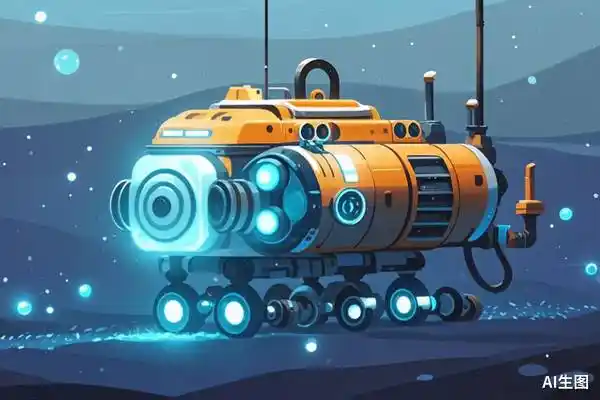
Глубоководные роботы на подъёме: самый амбициозный раунд A

Китайская компания Deepsea Zhiren («Глубоководный интеллект») привлекла более 5 миллиардов юаней в рамках раунда финансирования серии А. В число инвесторов вошли ведущие венчурные фонды, такие как光合创投, 达晨财智, 纪源资本, 毅达资本, а также государственные фонды (中保投资, 中电科投资) и энергетический фонд TotalEnergies под управлением Cathay Capital. Это событие стало важным сигналом рынка, подтверждающим долгосрочный потенциал сектора глубоководных технологий. Компания, основанная в 2023 году ветераном отрасли Ма Имином, специализируется на разработке и коммерциализации тяжелых рабочих дистанционно управляемых подводных аппаратов (ROV) для экстремальных глубин. В отличие от многих локальных игроков, Deepsea Zhiren с самого начала фокусируется на создании полной системы проектирования, поставки и сервиса, соответствующей строгим международным стандартам. Компания самостоятельно разрабатывает ключевые компоненты, включая навигацию, системы управления и интеллектуальные алгоритмы. Портфель продуктов компании включает аппараты для разных глубин: «Taurus» (1000 м), «Phoenix» (3000 м), «Singularity» (6000 м), а также автономные подводные аппараты (AUV). Важным прорывом стал экспортный контракт на поставку робота «Phoenix 600» телекоммуникационной компании ОАЭ, что знаменует первый коммерческий экспорт китайских глубоководных роботов. Клиентами компании также стали международные подрядчики в сфере нефтегаза, связи и ветроэнергетики. В будущем Deepsea Zhiren планирует революционизировать отрасль с помощью проекта DeepMatrix — системы автономных роботов, постоянно размещенных на морском дне и управляемых ИИ-мозгом SEAgent. Эта система позволит отказаться от дорогих судов поддержки и операторов, значительно снизив стоимость разработки глубоководных месторождений нефти, газа и полезных ископаемых. Развитие глубоководных технологий, поддержанное государственной стратегией, становится ключевым элементом обеспечения энергетической и ресурсной безопасности Китая.

marsbit21 мин. назад

Глубоководные роботы на подъёме: самый амбициозный раунд A

marsbit21 мин. назад

1confirmation: 5 потребительских крипто-направлений, которые стоит пересмотреть

Автор 1confirmation выделяет пять ранее неудачных, но потенциально перспективных направлений для потребительских криптоприложений, которые сегодня могут получить второй шанс благодаря созревшей инфраструктуре и изменившемуся поведению пользователей. 1. **Интернет-нативные активы.** Вместо токенизации реальных активов (RWA) большая возможность может заключаться в создании принципиально новых, уникальных крипто-нативных активов, не имеющих аналогов в физическом мире, которые могли бы захватывать культурные моменты и внимание в интернете. 2. **X-to-Earn.** Идея заработка криптовалюты за выполнение определенных действий (как в STEPN или Axie Infinity) не ошибочна сама по себе. Проблема прошлых моделей — в неустойчивой экономике с бесконечной эмиссией торгуемых токенов. Будущее может лежать в том, что большинство людей получит первую криптовалюту именно через заработок, а не покупку, если будут понятны долгосрочная ценность и причина удержания этих активов. 3. **Метавселенная.** Несмотря на провал предыдущей волны (Decentraland, The Sandbox, Meta), сама идея, что люди хотят проводить время вместе в цифровых пространствах, не устарела. Ошибка была в попытке слепо копировать реальный мир. Следующее поколение онлайн-взаимодействий должно предложить по-настоящему уникальные цифровые форматы. 4. **DAO.** Хотя многие DAO существуют, они не реализовали свой изначальный потенциал. Возможно, ключ не в усложнённых механизмах управления, а в простом коллективном действии: объединении интернет-сообщества для финансирования общей цели — будь то покупка исторического артефакта (как ConstitutionDAO), поддержка проекта или чего-то ещё, что невозможно в одиночку. 5. **«Человек как рынок» (SocialFi).** Многочисленные неудачи в этой сфере (Friend.tech, BitClout и др.) показывают, что модели, превращающие самого создателя в торгуемый актив, нежизнеспособны. Однако спрос на рынки, связанные с личностью (как в случае с мемкоинами или ставками), остаётся. Задача — найти способ создать такой рынок, не делая человека объектом торговли против его воли. Вывод: следующее прорывное потребительское приложение, вероятно, будет основано на одной из этих «старых» идей, но реализовано в правильное время и с учётом прошлых ошибок.

marsbit25 мин. назад

1confirmation: 5 потребительских крипто-направлений, которые стоит пересмотреть

marsbit25 мин. назад

Подборка популярных взаимодействий | predict.fun запускает специальное мероприятие по Dota 2; Ранний доступ к whitelist Soar (13 августа)

**热门互动项目概览 (2024年8月13日)** **1. Predict.fun — Рынок прогнозов на BNB Chain** Проект запустил специальное мероприятие для чемпионата по Dota 2 The International. Пользователи могут делать ставки на исход матчей в групповом этапе (с 13 августа) и плей-офф. Общий призовой фонд составляет 100 000 USDT и 5 миллионов очков PP. Для участия необходимо зарегистрироваться на сайте, зайти в раздел «DOTA TI», выбрать команду и заблокировать минимальную долю в 20 единиц до начала матча. Награды распределяются по итогам группового этапа и финальной стадии. **2. CheomaYield — Протокол доходности для стейблкоинов** Этот протокол построен на GIWA Chain (L2 от Upbit). В настоящее время доступен в тестовой сети. Пользователи могут получить тестовые токены GIWA через кран, а затем на сайте CheomaYield получить 10 000 тестовых USDC для взаимодействия с платформой и получения очков. Проект представил модель токена CHEOMA с фиксированным предложением в 100 миллионов. **3. Soar — Платформа для торговли pre-IPO акциями** Платформа позволяет обычным пользователям получать ранний доступ к акциям перспективных частных компаний (таких как OpenAI, SpaceX, Stripe) до их IPO. В настоящее время открыта регистрация в лист ожидания (Early Whitelist), для чего на сайте необходимо указать свой email. *(Краткое описание трех проектов, представленных в статье, с акцентом на текущие активности и возможности для участия.)*

Odaily星球日报26 мин. назад

Подборка популярных взаимодействий | predict.fun запускает специальное мероприятие по Dota 2; Ранний доступ к whitelist Soar (13 августа)

Odaily星球日报26 мин. назад

Торговля

Спот

Популярные статьи

Как купить ENS

Добро пожаловать на HTX.com! Мы сделали приобретение Ethereum Name Service (ENS) простым и удобным. Следуйте нашему пошаговому руководству и отправляйтесь в свое крипто-путешествие.Шаг 1: Создайте аккаунт на HTXИспользуйте свой адрес электронной почты или номер телефона, чтобы зарегистрироваться и бесплатно создать аккаунт на HTX. Пройдите удобную регистрацию и откройте для себя весь функционал.Создать аккаунтШаг 2: Перейдите в Купить криптовалюту и выберите свой способ оплатыКредитная/Дебетовая Карта: Используйте свою карту Visa или Mastercard для мгновенной покупки Ethereum Name Service (ENS).Баланс: Используйте средства с баланса вашего аккаунта HTX для простой торговли.Третьи Лица: Мы добавили популярные способы оплаты, такие как Google Pay и Apple Pay, для повышения удобства.P2P: Торгуйте напрямую с другими пользователями на HTX.Внебиржевая Торговля (OTC): Мы предлагаем индивидуальные услуги и конкурентоспособные обменные курсы для трейдеров.Шаг 3: Хранение Ethereum Name Service (ENS)После приобретения вами Ethereum Name Service (ENS) храните их в своем аккаунте на HTX. В качестве альтернативы вы можете отправить их куда-либо с помощью перевода в блокчейне или использовать для торговли с другими криптовалютами.Шаг 4: Торговля Ethereum Name Service (ENS)С легкостью торгуйте Ethereum Name Service (ENS) на спотовом рынке HTX. Просто зайдите в свой аккаунт, выберите торговую пару, совершайте сделки и следите за ними в режиме реального времени. Мы предлагаем удобный интерфейс как для начинающих, так и для опытных трейдеров.

539 просмотров всегоОпубликовано 2024.03.29Обновлено 2026.06.02

Как купить ENS

Обсуждения

Добро пожаловать в Сообщество HTX. Здесь вы сможете быть в курсе последних новостей о развитии платформы и получить доступ к профессиональной аналитической информации о рынке. Мнения пользователей о цене на ENS (ENS) представлены ниже.

活动图片