Author: Suanli Zhixin
On Monday, July 6, 2026, the stock price of Bitcoin mining company TeraWulf (NASDAQ: WULF) gapped up sharply at the open, surging 15% in pre-market trading.
What ignited the market was a 20-year lease.
AI giant Anthropic, which is building large models and constantly competing with OpenAI, went and signed a lease agreement with TeraWulf.
This lease has two key numbers.
- First is the duration: a full 20 years.
- Second is the scale: 401 megawatts (MW) of IT load capacity.
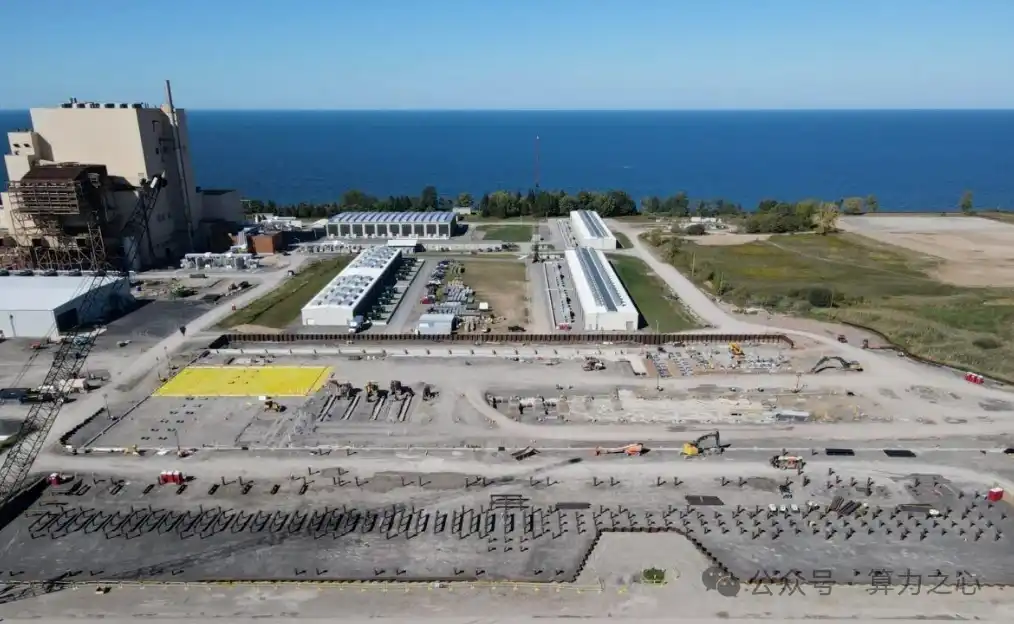
The location is set at a campus called "Justified Data" in Kentucky.
This 20-year contract is expected to bring TeraWulf $19 billion in contracted revenue, equivalent to roughly $1 billion in annual income for the next 20 years.
Locking in its cash flow expectations for the next two decades with a super-long-term contract from an AI giant is the direct reason for TeraWulf's stock price taking off.
I. Signing a Long-Term Deal While Selling Assets
On the same day it announced the $19 billion deal, TeraWulf also sold an asset.
They sold their 50.1% stake in the Abernathy joint venture project in Texas for approximately $530 million, at a premium, to an investment consortium led by Fluidstack.
This Texas project was just established in 2025, with a planned capacity of 168 megawatts, originally also intended for building AI data centers.
On one hand, they are locking down a top-tier client like Anthropic; on the other, they are cashing out of a joint venture project.
These two moves appear opposite but share the same logic:
The Texas project is a joint venture, requiring profit and decision-making power to be shared.
But the Kentucky project is wholly owned by TeraWulf, and it directly secures Anthropic as a client.
TeraWulf's CEO, Paul Prager, has publicly stated that the core strategy is to own and operate infrastructure, directly controlling the long-term development of the campus.
So their thinking is clear: sell the joint venture project at a premium, get cash back, then invest it all into their 100%-owned Kentucky territory, focusing on serving Anthropic, the client willing to pay $19 billion.
Combining these two operations, TeraWulf shifts its strategic focus from being a Bitcoin miner to specializing as a premier AI data center operator.
II. Not Selling Compute, Just Renting Land: The Miner's Ace in the Hole
Actually, TeraWulf isn't the first to pivot from Bitcoin mining to making money from AI.
Industry veterans like IREN, Core Scientific, Hut 8, etc., are all transitioning.
Miners transitioning mainly follow two models:
One is like IREN, which buys GPUs to build its own AI cloud and directly rents it to major clients like Microsoft.
The other is like TeraWulf, which only rents out space and power, with clients bringing their own servers.
TeraWulf chose to be the "big landlord," providing only the AI-standard physical space and power, not managing the servers.
Currently, the AI industry faces shortages on both ends: chips and power are tight.
But power is the harder long-term bottleneck, as large model training is extremely power-hungry. The U.S. grid cannot be expanded significantly in the short term, with transformer lead times of three to five years, and 30% to 50% of 2026 data center projects expected to be delayed until 2028.
Therefore, AI giants are signing long-term build-to-suit leases everywhere, essentially competing for the physical spots with power and land.
This is precisely the biggest ace up the sleeve of Bitcoin miners.
They secured ready access to power and land years ago for mining, having already navigated the cumbersome grid approval processes.
Anthropic signing this $19 billion, 20-year lease is fundamentally about locking down the ready-made land and power that TeraWulf holds in Kentucky.
Prime locations and good grid capacity, if not locked down now, will only become more expensive and scarcer later.
III. The $19 Billion Deal Has an 18-Month Gap in Between
While the $19 billion in long-term revenue is undoubtedly attractive, the contract hides a hard time gap.
The first delivery for this Kentucky campus isn't until the second half of 2027, with full operation expected by early 2028.
But it's July 2026 now.
This means that for at least the next year, TeraWulf cannot generate substantial operating revenue from this contract.
However, during the construction phase, every step—site preparation, data center design, grid connection negotiations, cooling installation—requires investment.
That's why they were in a hurry to sell the Texas joint venture. That transaction, with a total consideration of about $530 million, allows them to recoup approximately $450 million of investment.
After all, upfront infrastructure is a money-burning black hole.
On the other hand, the true value of this 20-year lease is tied to Anthropic's own financial health.
Anthropic is a top AI company, but large model development itself is a cash-burning elimination race.
A 20-year lease demands that the tenant possess extremely strong long-term viability.
Public information does not break down the profit margins and cost structure of this $19 billion deal.
And today's market euphoria is buying into an expectation of future realization.
The name TeraWulf was probably chosen with the idea of a "trillion-level wolf" in mind.
But now, it seems more like a real estate wolf.
No more mining. Now it collects rent.
In the wave of miners transitioning to AI, the most valuable asset has become very clear.
At the end of compute anxiety, the core competition has returned to the most traditional business: securing a piece of land and connecting it to power.