Buy an NFT First to Get a Ticket? The Largest World Cup Ticket Slump in History

marsbitОпубликовано 2026-06-11Обновлено 2026-06-11

Введение

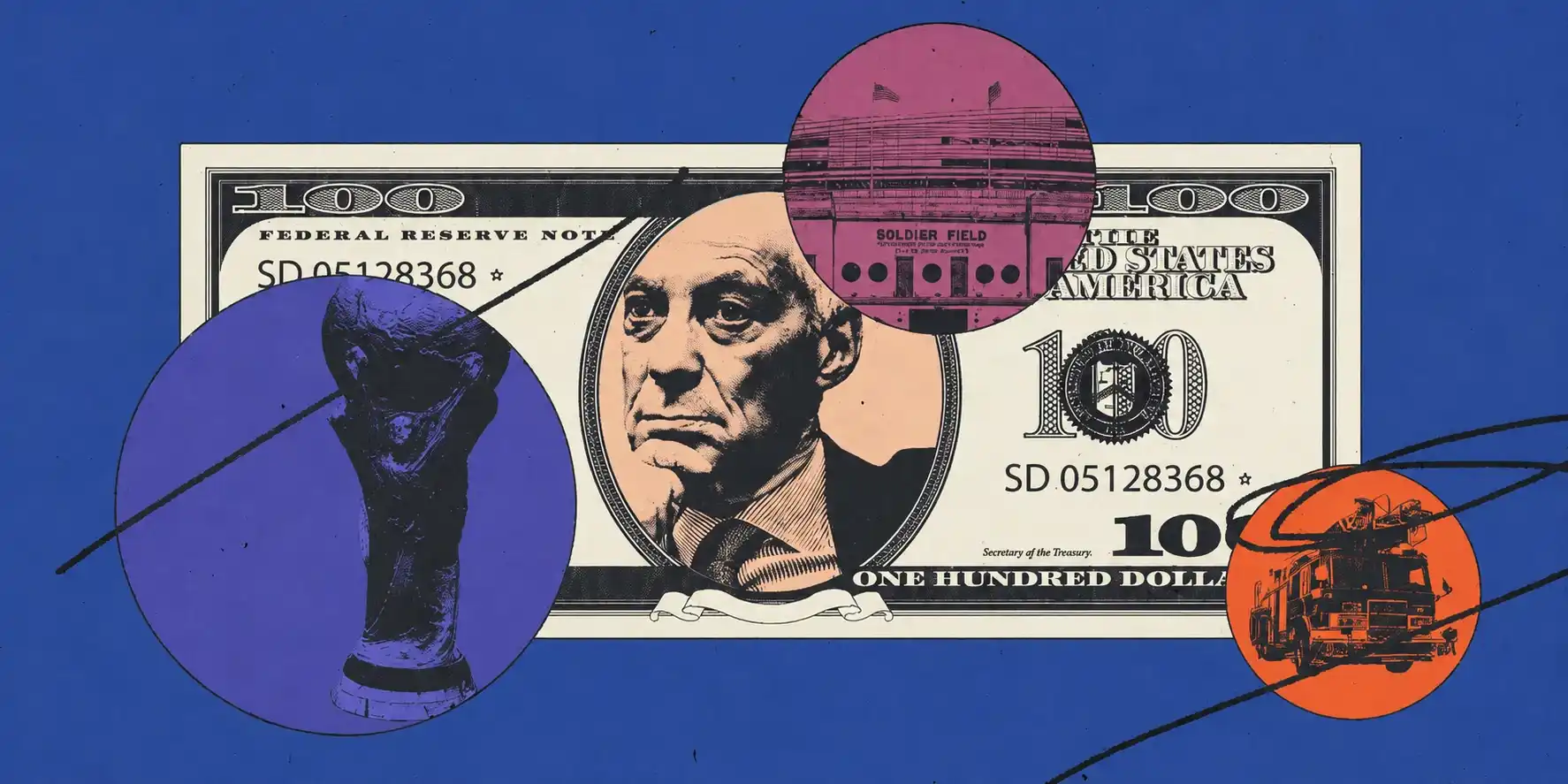
"Ticketing Woes for 2026 World Cup: NFT 'Right-to-Buy' and High Prices Dampen Sales" Despite anticipation for the 2026 FIFA World Cup, with 48 teams and 104 matches across North America, the tournament faces significant unsold tickets, with approximately 180,000 group-stage tickets still available for resale just before kick-off. This unexpected shortfall is attributed to FIFA's controversial new ticketing strategy, which includes an NFT-based "Right-to-Buy" (RTB) system and opaque, dynamic pricing. FIFA introduced RTBs as digital collectibles (NFTs) sold on its FIFA Collect platform. An RTB grants the holder only the right to purchase a ticket for a specific match later, not the ticket itself. This two-step process, criticized for selling "scarcity" first, saw RTBs priced from tens to hundreds of dollars, generating millions in revenue for FIFA. With many tickets remaining available on official channels, the value of these prepaid purchase rights is now being questioned. Compounding the issue are ticket prices, reported to be 2 to 4 times higher than the 2022 Qatar World Cup, and up to 7 times more for marquee matches. FIFA employed dynamic pricing, common in U.S. sports, but lacked transparency on seat availability and exact locations during sales, frustrating global fans facing high travel costs. This has drawn scrutiny from regulators in New York and New Jersey. FIFA's official resale platform also drew criticism for imposing high fees—roughly 10% on sellers and 17% o...

Author: Zen, PANews

The long-awaited 2026 FIFA World Cup will officially kick off in Mexico City at 3:00 AM Beijing Time on June 12.

Dubbed an unprecedented super event, this World Cup will feature 48 teams playing a total of 104 matches across venues in the United States, Canada, and Mexico. Barring any unforeseen circumstances, this is poised to become the World Cup with the highest commercial revenue in history.

However, on the eve of the opening ceremony, this tournament is facing a dilemma of unsold tickets. According to the Financial Times, with the opening match just around the corner, there are still approximately 180,000 group stage tickets available for resale. For a top-tier event long regarded as a global spectacle, this contrast is strikingly stark.

This is not because the World Cup itself has lost its global appeal. In fact, the betting industry is touting this World Cup as the "biggest betting opportunity" in history. As of June 11, the amount staked on the event contract for the World Cup winner on the prediction market Polymarket has approached $20 billion. Such a massive influx of capital before the tournament even begins clearly indicates its immense popularity.

Therefore, the issue of "difficult ticket sales" lies more with FIFA's ticketing mechanisms, also exposing the side effects of FIFA's radical commercialization experiment with the ticketing system for this World Cup.

FIFA's Ticketing "Shenanigans": Buy a "Digital Collectible" First for a Ticket

One of the most controversial ticketing arrangements for this World Cup is FIFA's sale of so-called "Right-To-Buy" (RTB) through the FIFA Collect platform.

Unlike traditional ticketing products, RTB is a type of "digital right" or "digital collectible" designed around the eligibility to obtain World Cup tickets, issued and traded via the FIFA Collect digital collectibles platform. The issued digital collectibles are essentially NFTs. The FIFA Collect platform originally ran on the Algorand blockchain and migrated to FIFA's self-built FIFA Blockchain (based on Avalanche technology) in May 2025.

According to the official explanation from FIFA Collect, holding an RTB only grants fans the opportunity to purchase tickets for a specific match during a designated window. Each RTB specifies how many tickets the holder can purchase in the future, and for which match or event, but it does not include the actual ticket itself.

This mechanism splits the ticket-buying process into two steps: first, selling scarcity, and then selling the actual ticket. However, when fans purchase an RTB, they often do not know the final seating area, the full ticket price, and cannot fully assess the future value of this "priority right."

In terms of pricing, RTBs do not have a fixed price; they vary based on the importance of the corresponding match, the number of tickets that can be purchased, and market supply and demand. Previously on the FIFA Collect platform, prices for RTBs for different matches ranged from tens to hundreds of dollars, with some RTBs for popular matches or those including multiple ticket purchase rights fetching even higher prices on the secondary market.

According to reports from the UK sports business media SportsPro, FIFA had already generated revenue in the tens of millions of dollars from these RTB sales.

When tickets are highly scarce and prices are not fully known, such a design encouraging fans to pay upfront might make some sense. However, the awkwardness of RTBs becomes apparent when a significant number of tickets remain available for sale on the official platform. If tickets aren't as hard to get as imagined, the rationale for spending hundreds of dollars upfront for a "ticket purchase qualification" is called into question.

Not Just Expensive, But Also Opaque and Constantly Changing Prices

This tournament's main matches are concentrated in the US market, which is already the world's most mature and expensive market for live sports entertainment. Events like the NFL, NBA, and MLB have long employed business models featuring high ticket prices, luxury boxes, dynamic pricing, and secondary markets. Naturally, upon entering this market, FIFA aimed to align World Cup pricing with these standards.

FIFA has adopted a dynamic or variable pricing model for this World Cup, meaning ticket prices can be continuously adjusted based on demand, inventory, and sales phases. Early on, officials emphasized that some group stage tickets started at $60, but this low-price tier was limited. More prevalent were ticket prices far exceeding fan expectations; for instance, tickets for some popular group stage matches easily cost hundreds or even thousands of dollars, while prices for knockout stages and the final were exorbitantly high.

Reportedly, the actual ticket cost for this World Cup is about 2 to 4 times that of the previous Qatar World Cup, with popular matches, the opening match, and the final reaching 4 to 7 times higher. The problem lies in the fact that the World Cup is not an ordinary commercial league. Its audience isn't just local high-income sports consumers, but ordinary fans from all over the world. Many, in order to support their national teams, need to travel across continents, book flights and hotels in advance, and incur other costs like local transportation. For these fans, ticket prices are only a part of the total cost, but they have become the most uncontrollable part.

What further frustrates fans is the lack of transparency. Complaints from European fan organizations and consumer groups to FIFA stated that FIFA did not adequately disclose from the outset how many tickets remained in each price tier or specific seat locations. Some fans even had to pay high fees without being able to fully confirm seat views and locations during purchase. This information asymmetry severely amplifies the feeling of being "manipulated."

Currently, FIFA's ticketing mechanisms have not only sparked commercial controversy but have also attracted public regulatory scrutiny. Relevant departments in the US states of New York and New Jersey have also launched investigations into the World Cup ticketing, focusing on seat information, ticketing promotions, and potential issues of so-called "artificial scarcity."

Official Resale Platform Amplifies Price Anxiety

FIFA specifically launched an official resale platform for this World Cup. In theory, this was to allow fans to buy and sell tickets in a secure environment, reducing fraud and black-market transactions. However, while this platform improved transaction security, it did not enhance the ticket-buying experience for fans.

The European Fans' Association and the European Consumer Organization criticized FIFA for charging fees to both buyers and sellers on the official resale platform, allowing FIFA to continue profiting from subsequent transactions after the initial ticket sale. According to ticketing rules cited by the Financial Times, on FIFA's official resale platform, sellers pay a service fee of approximately 10% when listing a ticket, while buyers must pay an additional fee of about 17% in commissions and related surcharges.

This means that if a ticket is resold through the official platform, the combined fees borne by both parties amount to nearly 27% of the ticket's face value. This allows FIFA to not only enjoy high ticket revenue in the primary market but also continue capturing fees from the secondary resale market.

And as of now, the FIFA official site is still selling tens of thousands of group stage tickets. For scalpers and speculators who hoped to profit from reselling at higher prices after hoarding tickets at high prices, even listing at the original price would result in an actual loss after deducting platform fees.

Of course, the 180,000 tickets available for resale won't actually lead to a large number of empty seats at this World Cup. FIFA President Gianni Infantino stated at a pre-opening press conference that the tournament has sold over 6 million tickets and claimed that demand exceeded expectations by "10 times or more." Popular matches, host nation matches, knockout stages, and the final will still attract enormous attention. As the tournament begins, emotions rise, and teams' progression becomes clearer, some of the inventory may also be absorbed.

But the significance of this controversy lies in its reminder that even if overall World Cup sales remain strong, this tournament has proven that fans' passion does not equate to an unlimited willingness to pay; there is still a boundary for ticket prices and ticketing mechanisms that should not be easily crossed. The World Cup's global influence does not mean FIFA can endlessly squeeze this emotional premium.


Связанные с этим вопросы

QWhat is the main reason for the ticket sales difficulties faced by the 2026 FIFA World Cup according to the article?

AThe main reason is FIFA's aggressive commercial experiment with its ticketing system, particularly the introduction of the 'Right-To-Buy' (RTB) digital collectibles (NFTs), which require fans to purchase a digital asset first for the *chance* to buy a ticket later. This multi-step, non-transparent process, coupled with high and dynamic ticket pricing, has created frustration and reduced accessibility.

QWhat is an RTB (Right-To-Buy) and how does it function in the FIFA Collect platform?

AAn RTB is a digital collectible or NFT sold on the FIFA Collect platform. It represents a right or eligibility for the holder to purchase a ticket for a specific match during a designated sales window. Crucially, the RTB itself is not a ticket; it is a separate purchase that grants the holder the opportunity to later buy the actual ticket at an unspecified seat and often unknown final price.

QHow has the pricing structure of the 2026 World Cup tickets been criticized?

AThe pricing has been criticized for being significantly higher than previous tournaments (2-4 times more expensive, up to 4-7 times for key matches), using dynamic pricing that causes prices to fluctuate, and lacking transparency. Fans often cannot see exact seat locations or know how many tickets are available at each price tier before committing to a high purchase cost.

QWhat issue does the article highlight regarding FIFA's official ticket resale platform?

AThe article criticizes the platform for charging high fees on both the seller (around 10%) and the buyer (around 17%), meaning nearly 27% of a ticket's face value goes to FIFA in a resale transaction. This allows FIFA to profit repeatedly from the same ticket and has contributed to losses for speculators trying to resell tickets, as the fees cut into their potential profits.

QWhat broader lesson does the article suggest the 2026 World Cup ticketing controversy demonstrates?

AIt demonstrates that even for a massively popular global event like the World Cup, there is a limit to how much fans are willing to pay and how much their emotional investment can be commercially exploited. High prices and complex, non-transparent ticketing mechanisms can lead to public backlash and regulatory scrutiny, showing that fan enthusiasm does not equal unlimited purchasing power.

Похожее

The Foundation of SpaceX's Trillion-Dollar Valuation: Who is Dividing Up Musk's Annual Tens of Billions in Capital Expenditure?

SpaceX's trillion-dollar valuation is built on its three core businesses: Starlink (profitable, 60% of revenue), rockets (driving down launch costs), and AI (a major investment area). This creates a financial cycle: Starlink funds rocket development, which enables low-cost launches for AI hardware, generating future revenue. This cycle fuels annual capital expenditures of tens of billions, flowing to a vast supply chain. Suppliers are categorized by their replaceability. The first group includes irreplaceable players like NVIDIA (GPU/CUDA ecosystem), Eutelsat (critical radio spectrum), Filtronic (specialized amplifiers), Materion (strategic beryllium), and STMicroelectronics (antenna chips). The second group consists of hard-to-replace suppliers due to high switching costs, such as Honeywell (flight control), Carpenter Technology (specialty alloys), Hexcel (carbon fiber), Broadcom (data exchange), and Linde (industrial gases). The third group comprises high-volume, cost-critical suppliers for mass-produced items like Starlink terminals. Key names include Wistron NeWeb (primary manufacturer) and several A-share companies like Shenzhen Sunway (connectors), Pies New Materials (forgings), Western Superconducting (alloys), and Yingliu (castings). Other niche players include Trimble (timing), Astronics (power distribution), and CTS (thermal management). The article argues that investing in these suppliers, rather than SpaceX stock directly, offers an alternative opportunity. The rationale is threefold: procurement is just beginning to scale, SpaceX's IPO brings new transparency to its supply chain, and the situation mirrors early stages of past "super terminal" ecosystems like Apple or Tesla. While risks exist (commodity cycles, geopolitical factors, technology shifts), the core thesis is that SpaceX's massive, ongoing procurement will translate into reliable revenue for its key suppliers, regardless of its own stock price volatility.

marsbit25 мин. назад

The Foundation of SpaceX's Trillion-Dollar Valuation: Who is Dividing Up Musk's Annual Tens of Billions in Capital Expenditure?

marsbit25 мин. назад

SpaceX's Trillion-Dollar Valuation Base: Who's Sharing in Musk's Annual Tens of Billions in Capital Expenditure?

**Title: The Foundation of SpaceX's Trillion-Dollar Valuation: Who Benefits from Musk's Annual $100 Billion Capital Expenditure?** This article argues that investors seeking to benefit from SpaceX's growth might find greater opportunities in its supply chain rather than directly investing in the company itself, drawing parallels to historical successes with Apple, Tesla, and NVIDIA suppliers. **SpaceX's Business Model & Cash Flow:** SpaceX generates revenue from three main areas: 1. **Starlink:** Its profitable core, earning $11.3B in 2023 (60% of revenue), funding other ventures. 2. **Rockets (Falcon/Starship):** Requires $3B+ in annual R&D but achieves the world's lowest launch costs. 3. **AI:** Currently unprofitable (-$6B+ in 2023), investing heavily in ground-based supercomputers (220,000 GPUs) and future orbital data centers. The cycle is: Starlink profits → fund cheaper rockets → low-cost launches deploy AI hardware → AI compute rentals generate future revenue. This cycle drives annual procurement spending of tens of billions of dollars. **The Supply Chain Beneficiaries:** Suppliers are categorized by their replaceability: **1. Nearly Irreplaceable (High Barriers to Entry):** * **NVIDIA:** Powers the Colossus supercomputer; its CUDA ecosystem creates immense switching costs. * **Eutelsat (SATS):** Controls critical radio spectrum for satellite communications; holds a ~3% stake in SpaceX. * **Filtronic (FTC):** Supplies millimeter-wave signal amplifiers for Starlink satellites; SpaceX constitutes 83% of its revenue. * **Materion (MTRN):** Global leader in beryllium production, a strategic material used in Starship structures. * **STMicroelectronics (STM):** Supplies phased-array antenna chips for Starlink satellites. **2. Replaceable, but Switching Cost is Prohibitively High:** * **Honeywell (HON):** Provides flight control and inertial navigation systems with decades of certification. * **Carpenter Technology (CRS):** Manufactures ultra-pure specialty steel alloys for Raptor engines. * **Hexcel (HXL):** Supplies custom carbon fiber composites developed over a decade with SpaceX. * **Broadcom (AVGO):** Manages high-speed data switching. * **Linde Group:** Supplies industrial gases (liquid oxygen/nitrogen) from facilities built near SpaceX launch sites. **3. High-Volume, Cost-Critical Manufacturing:** Focuses on mass-producing components like Starlink user terminals (target: 30 million units). * **Key Players:** Wistron NeWeb (6285, primary terminal manufacturer), several Chinese A-share companies (e.g., Sunway Communication, PAX New Materials, Western Metal Materials, Yingliu Co.), and smaller US firms like Trimble (TRMB, timing systems). **Why Now?** Three factors make the supply chain opportunity timely: 1. **Volume Ramp-Up:** SpaceX plans 100 launches in 2026, aims for 30 million Starlink terminals, and will deploy AI data centers, meaning procurement will accelerate. 2. **Increased Transparency:** The IPO provides public financial data, allowing investors to track supplier order growth. 3. **Historical Precedent:** The current phase is likened to Tesla's early mass-production stage (circa 2018), suggesting a long growth runway for suppliers. **Conclusion:** The article posits that while investing in SpaceX stock is betting on Elon Musk's ambitious vision at a high valuation, investing in its established suppliers is a bet on the tangible, recurring revenue from its massive procurement budget, which is largely decoupled from day-to-day stock price volatility.

链捕手29 мин. назад

SpaceX's Trillion-Dollar Valuation Base: Who's Sharing in Musk's Annual Tens of Billions in Capital Expenditure?

链捕手29 мин. назад

The U.S. Government Blocked the Anthropic Model. It Wasn't About 'Jailbreaking' at All.

Last Friday, the U.S. Commerce Department issued an enforcement letter that forced Anthropic to take its two most advanced AI models, Fable 5 and Mythos 5, offline. The stated reason was unspecified national security concerns, initially linked to potential "jailbreaks" of the models' safeguards. However, new details suggest the action stemmed more from a deteriorating relationship between the Trump administration and Anthropic, rather than a genuine technical threat. According to reports, the government cited a little-known export control regulation, compelling Anthropic to block access for all non-U.S. persons, including its own international employees. The company complied, shutting down the models without a court order or specific technical details from the government. Cybersecurity expert Katie Moussouris revealed she was privately shown a research paper detailing a potential safeguard bypass in Fable 5. She argued the described method was minor and did not warrant an export ban, stating that attempts to "fix" it would only weaken the model's defensive capabilities. Moussouris and other experts have since called for the order to be revoked, warning it dangerously removes advanced cybersecurity tools from U.S. defenders. Analysts like Justin Hendrix suggest the move appears retaliatory and sets a dangerous precedent, signaling that the U.S. government can unilaterally shut down a tech company's products. The incident has raised concerns about the reliability of American AI and the potential for political interference in the tech industry, serving as a warning to the broader sector.

marsbit32 мин. назад

The U.S. Government Blocked the Anthropic Model. It Wasn't About 'Jailbreaking' at All.

marsbit32 мин. назад

Ray Dalio: AI Bull Market Continues to Soar, Should Investors Go All In or Cash Out and Leave the Field?

In his latest notes, Ray Dalio addresses a critical question for investors amid the AI-driven stock market surge: how should one allocate assets during a transformative technological revolution? Dalio emphasizes that technological advancement does not automatically make related stocks attractive. Historical tech cycles—marked by excitement, crowding, volatility, and eventual shakeouts—show that even long-term winners like Microsoft and Apple experienced severe drawdowns. Today's AI sector faces similar uncertainties: overinvestment, intensifying competition, geopolitical tensions (e.g., Taiwan's chip supply), tax policy shifts, anti-AI sentiment, and potential disruption from future technologies like quantum computing. Dalio's core argument focuses on the highly concentrated market structure, where a few tech giants dominate major indices. He warns investors against unknowingly holding concentrated, correlated exposures. Instead of chasing a handful of AI leaders, he advocates for a robust, diversified portfolio of 15 or more high-quality, uncorrelated investments, risk-balanced to match an investor's volatility tolerance. Mathematically, such diversification significantly improves the risk-return ratio—for example, holding 15 uncorrelated assets can boost the ratio by over four times compared to a single concentrated bet. Dalio cautions that future equity returns appear low, with his bubble indicator suggesting real returns could be negative over the next 5-10 years. He stresses that knowing what you don't know is as important as knowing what you do. In an environment of high uncertainty and concentration, avoiding large, concentrated bets on AI stocks is prudent. The optimal strategy is disciplined diversification—the "holy grail" of investing—to navigate this technologically driven cycle with lower risk and comparable or better returns.

marsbit36 мин. назад

Ray Dalio: AI Bull Market Continues to Soar, Should Investors Go All In or Cash Out and Leave the Field?

marsbit36 мин. назад

Торговля

Спот
Фьючерсы

Популярные статьи

Тест по Altura NFT

HTX Learn: Изучите Altura NFT и Заработаете Токены USDT

2.1k просмотров всегоОпубликовано 2024.06.11Обновлено 2024.06.12

Тест по Altura NFT

GoMining: Упрощенный Майнинг Биткоина С Помощью NFT

GoMining редкий случай, когда гигант майнинга уделяет внимание доступности майнинговой индустрии для индивидуальных инвесторов и энтузиастов.

2.3k просмотров всегоОпубликовано 2024.07.15Обновлено 2024.07.15

GoMining: Упрощенный Майнинг Биткоина С Помощью NFT

Что такое AINFT

EternaFi Agents и $AINFT: Комплексный анализ инфраструктуры NFT на базе ИИ в экосистеме Web3 Пересечение искусственного интеллекта (ИИ) и технологии блокчейн быстро развивается, создавая инновационные платформы, которые переопределяют модели собственности и экономического участия. EternaFi Agents, вместе со своим родным токеном $AINFT, является примером революционного подхода к токенизации инфраструктур ИИ с помощью невзаимозаменяемых токенов (NFT). Запущенный в июле 2025 года командой разработчиков из Nova Club, EternaFi объединяет достижения ИИ с децентрализованными финансовыми механизмами блокчейна, представляя уникальную инвестиционную возможность для участников экосистемы web3. Эта статья направлена на предоставление глубокого анализа EternaFi Agents, охватывающего его основные компоненты, функциональность и значимость в крипто-ландшафте. Введение и обзор проекта EternaFi Agents является ярким примером того, как технология блокчейн может демократизировать доступ к передовым возможностям ИИ. Проект стремится изменить парадигму собственности на ИИ, диверсифицируя экономическое участие и делая сложные ИИ-системы доступными для более широкой группы заинтересованных сторон. В своей основе проект токенизирует собственную крупную языковую модель (LLM), разработанную Nova Club, позволяя держателям NFT получать долевое участие в экономической эффективности модели. Используя NFT, представляющие доли в LLM, EternaFi Agents способствует модели, в которой заинтересованные стороны не только участвуют в потреблении ИИ-услуг, но и наслаждаются разделением экономических вознаграждений, генерируемых платформой. Этот трансформационный подход позволяет разработать устойчивые модели доходов для ИИ-услуг, одновременно способствуя широкому вовлечению сообщества и обеспечивая прозрачное управление. Что такое EternaFi Agents? EternaFi Agents представляет собой проект инфраструктуры AI-NFT, который стремится объединить возможности ИИ с технологией блокчейн в согласованной экосистеме. Основной особенностью этого проекта является создание NFT, которые служат финансовыми инструментами, представляющими доли собственности в собственных ИИ-инфраструктурах Nova Club. Каждый NFT символизирует прямое участие в экономической эффективности базовой ИИ-системы, предоставляя выгодную возможность для инвесторов. Проект работает на блокчейне Base, известном своей масштабируемостью и эффективностью, что обеспечивает управляемые транзакционные расходы и облегчает бесшовный операционный опыт. Одной из примечательных особенностей является механизм распределения доходов, в рамках которого держатели NFT могут получать части дохода от подписок, генерируемых ИИ-услугами, предоставляемыми на платформе. Этот инновационный подход устанавливает связь между успехом ИИ-услуг и экономическими дивидендами, распределяемыми среди держателей, тем самым обеспечивая согласование интересов в сообществе. Кто является создателем EternaFi Agents? Творческой силой за EternaFi Agents является Nova Club, команда разработчиков, базирующаяся в Сингапуре, обладающая опытом в объединении ИИ и технологии блокчейн. Их предыдущий опыт в разработке ИИ и анализе криптовалют придает проекту доверие, внося широкий спектр экспертизы в создание EternaFi Agents. Миссия Nova Club сосредоточена на демократизации доступа к передовым технологиям ИИ, одновременно создавая устойчивые экономические модели, которые приносят пользу пользователям и разработчикам. Их приверженность прозрачности, управлению сообществом и инновациям отражается в дизайне и реализации платформы EternaFi, стремящейся создать уникальную экосистему, способствующую положительному взаимодействию и созданию долгосрочной ценности. Кто являются инвесторами EternaFi Agents? Конкретные детали относительно инвесторов или инвестиционных организаций, поддерживающих EternaFi Agents, не доступны для публики. Однако EternaFi приняла инклюзивный подход к финансированию своего развития через продажу NFT широкой публике, позволяя разнообразным участникам инвестировать в экосистему. Архитектура проекта обеспечивает ответственное финансирование основной инфраструктуры, позволяя членам сообщества участвовать в собственности и экономических доходах, генерируемых ИИ-услугами. Эта модель подчеркивает вовлеченность сообщества, согласуя интересы инвесторов и разработчиков проекта, создавая совместную среду, в которой долгосрочное участие поощряется. Как работает EternaFi Agents? EternaFi Agents функционирует через многоаспектную экосистему, где NFT служат основным средством представления собственности в рамках проекта. Каждый держатель NFT имеет право на долю от ежемесячного дохода от подписок, произведенного базовой платформой на базе ИИ, тем самым позиционируя владение NFT как выгодный инвестиционный инструмент. Механизм генерации дохода Основным источником генерации дохода для платформы EternaFi являются подписные сборы, связанные с предоставляемыми ИИ-услугами. Пользователи могут получать доступ к различным уровням услуг, начиная от базовых инструментов рыночного анализа до комплексных решений для торговли с помощью ИИ. Эти услуги монетизируются и формируют основу для механизма распределения доходов, который распределяет прибыль среди держателей NFT через автоматизированные смарт-контракты. Инновационной особенностью экосистемы EternaFi является механизм распределения доходов, который работает прозрачно, обеспечивая распределение вознаграждений на основе проверяемых метрик работы платформы ИИ. Это создает прямую связь между эффективностью ИИ-услуг и доходами, доступными для инвесторов сообщества, устанавливая устойчивую экономическую модель. Механизмы стекинга и вестинга Участники EternaFi могут участвовать в стекинге своих NFT, чтобы разблокировать дополнительные экономические преимущества. График вестинга разработан для поощрения долгосрочной приверженности среди участников, вознаграждая тех, кто демонстрирует постоянную поддержку проекта. Это обеспечивает надежное согласование интересов и способствует чувству вовлеченности сообщества, необходимому для достижения долгосрочных целей проекта. Прозрачное управление EternaFi Agents принимает децентрализованное управление, позволяя держателям NFT активно участвовать в принятии решений относительно развития платформы и ее будущих направлений. Управляющая структура включает механизмы голосования сообщества, предоставляя держателям NFT возможность влиять на важные решения и способствуя совместному подходу к росту проекта. Хронология EternaFi Agents Разработка EternaFi Agents демонстрирует систематический подход к созданию устойчивой ИИ-инфраструктуры, одновременно удовлетворяя потребности участников сообщества. Ниже представлена хронология важных этапов в истории проекта: Июль 2025: Запуск EternaFi Agents, включая публичную продажу NFT и развертывание токена $AINFT на блокчейне Base. 4 квартал 2025: Создание рыночной инфраструктуры, включая ликвидные пулы и запуск панелей стекинга для держателей NFT. 2026: Начало программ вовлечения сообщества, расширение возможностей ИИ и интеграция с кросс-цепочными технологиями. 4 квартал 2026: Реализация системы распределения дивидендов, позволяющая держателям NFT получать экономические выгоды от своих инвестиций. Эти вехи подчеркивают акцент на создании функциональной и participative экосистемы, обеспечивая непрерывную эволюцию для удовлетворения рыночных потребностей. Технологическая инфраструктура и интеграция блокчейна EternaFi Agents основан на передовой технологической платформе, объединяющей системы ИИ с возможностями блокчейна. Работая на блокчейне Base, проект использует преимущества масштабируемости и низких транзакционных расходов. Основная архитектура смарт-контрактов управляет владением NFT, распределением доходов и функциями управления сообществом, обеспечивая эффективность и прозрачность. Разработка системы ИИ Собственная крупная языковая модель, лежащая в основе EternaFi Agents, была разработана независимо и предназначена для удовлетворения потребностей в приложениях, генерирующих доход, без зависимости от внешних собственных фреймворков. Это начинание отражает приверженность созданию универсальной и адаптируемой ИИ-инфраструктуры, способной предоставлять значимые услуги пользователям, тем самым генерируя экономическую ценность для инвесторов. Меры безопасности Надежность инфраструктуры безопасности EternaFi имеет первостепенное значение. Регулярные аудиты и строгие меры безопасности обеспечивают целостность систем ИИ и механизмов блокчейна, защищая от потенциальных уязвимостей и укрепляя доверие среди участников. Заключение EternaFi Agents знаменует собой знаковую инновацию в области искусственного интеллекта и технологии блокчейн, открывая возможности для общественной собственности и экономического участия в передовых возможностях ИИ. Комплексная стратегия проекта по токенизации ИИ-инфраструктуры через NFT устанавливает прецедент для будущих децентрализованных экосистем. Согласуя техническую сложность с экономическими моделями, ориентированными на пользователя, EternaFi не только способствует вовлечению, но и создает устойчивую структуру распределения доходов для участников сообщества. Значимость EternaFi выходит далеко за рамки его операционного успеха, так как он демонстрирует, как блокчейн может демократизировать передовые технологии ИИ, прокладывая путь для будущих начинаний в этом пересечении. Эволюция EternaFi Agents может ознаменовать новую эру разработки ИИ, характеризующуюся управлением, основанным на участниках, устойчивыми экономическими моделями и прозрачной верификацией, в конечном итоге способствуя более широкой демократизации ИИ и доступности технологий в различных отраслях.

872 просмотров всегоОпубликовано 2025.08.14Обновлено 2025.08.14

Что такое AINFT

Обсуждения

Добро пожаловать в Сообщество HTX. Здесь вы сможете быть в курсе последних новостей о развитии платформы и получить доступ к профессиональной аналитической информации о рынке. Мнения пользователей о цене на NFT (NFT) представлены ниже.

活动图片