XRP News: Ripple Partnerships And Developments You May Have Missed

bitcoinistОпубликовано 2025-10-22Обновлено 2025-10-22

Введение

In the latest XRP news, Ripple is reportedly partnering with Stellar as both firms look to revolutionize the payments industry....

Trusted Editorial content, reviewed by leading industry experts and seasoned editors. Ad Disclosure

In the latest XRP news, Ripple is reportedly partnering with Stellar as both firms look to revolutionize the payments industry. This came as crypto pundit ProfRippl highlighted the link between both firms through the International Rescue Committee (IRC). 

Ripple Reportedly Working With Stellar

In an X post, ProfRippl revealed that Ripple and Stellar are working together. This came as the crypto pundit highlighted the IRC’s links to both crypto firms, indicating that this was what led to the partnership between Ripple and Stellar. Notably, Ripple and IRC had partnered to explore using the crypto firm’s payment services for humanitarian donations. 

Meanwhile, Stellar had once mentioned how IRC distributed cash assistance to Ukraine through its ‘aid assist’. ProfRippl then raised the possibility of other IRC’s partners adopting Ripple and Stellar’s payment services for cross-border transactions. IRC has partnered with organizations such as the Bloomberg Foundation, Google, and the Citi Foundation, among others. 

Meanwhile, ProfRippl also tried to draw a connection between Ripple and former U.K. Prime Minister Tony Blair, who reportedly has close ties with IRC’s CEO David Miliband. Based on this, the crypto pundit suggested that Ripple’s technology could easily be adopted as countries move to integrate cryptocurrencies into their payment infrastructure. 

Meanwhile, in another X post, the crypto pundit highlighted how Ripple and Stellar complement each other rather than being direct competitors. ProfRippl noted that Ripple’s XRP Ledger ensures high-assurance cross-ledger settlement while Stellar enables multi-currency routing and inclusive tokenization. 

ProfRipple further referenced articles that described Ripple and Stellar as layered architectures that serve different but complementary functions. It is worth noting that Stellar’s Jed McCaleb was one of those who created the XRP Ledger alongside Ripple’s CTO David Schwartz and Arthur Britto. 

Like Ripple, Stellar also provides cross-border payment services using its native token XLM. Meanwhile, Ripple uses XRP to power its payment services, with the altcoin serving as a bridge currency between the sender and receiver. 

Fed’s Waller Provides Major Boost For Ripple 

In another recent development, Federal Reserve Governor Chris Waller provided a major boost for Ripple, stating that the Fed staff were exploring a ‘payment account’ to support payments innovation. The payment account will give stablecoin issuers like Ripple access to the Fed’s payment rails, making their operations more efficient. 

Notably, Ripple has already filed for a Fed master account, though there is no timeline for approval. However, Waller revealed that the payment account will have a streamlined review timeline, meaning Ripple may not need to wait for approval of the Fed master account before accessing the Fed’s payment rails. This comes as the crypto firm continues to expand its services, including its relationship partnership with South Africa’s Absa to provide digital asset custody services. 

XRP
XRP trading at $2.40 on the 1D chart | Source: XRPUSDT on Tradingview.com
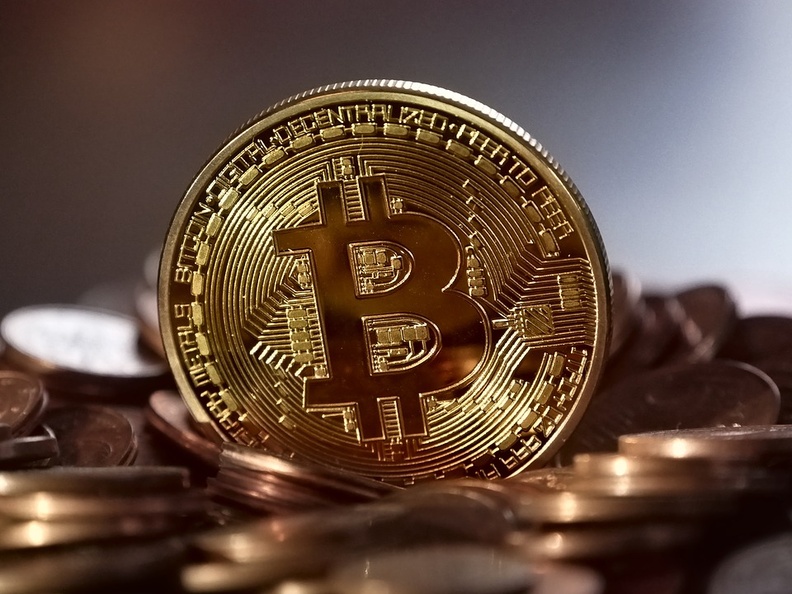
Featured image from Peakpx, chart from Tradingview.com
Editorial Process for bitcoinist is centered on delivering thoroughly researched, accurate, and unbiased content. We uphold strict sourcing standards, and each page undergoes diligent review by our team of top technology experts and seasoned editors. This process ensures the integrity, relevance, and value of our content for our readers.

Scott Matherson is a leading crypto writer at Bitcoinist, who possesses a sharp analytical mind and a deep understanding of the digital currency landscape. Scott has earned a reputation for delivering thought-provoking and well-researched articles that resonate with both newcomers and seasoned crypto enthusiasts. Outside of his writing, Scott is passionate about promoting crypto literacy and often works to educate the public on the potential of blockchain.

Похожее

Bitroot Public Chain Invited to Attend Tencent Cloud Singapore AI Conference, Discussing the Future Alongside Solana

On May 19, Bitroot, an emerging Layer 1 blockchain, participated in the Tencent Cloud AI Summit in Singapore alongside key industry players like Solana Foundation. The event explored the intersection of AI infrastructure, enterprise applications, AI Agents, and Web3. Bitroot's invitation, despite being pre-mainnet, highlights industry interest in its focus on high-performance, AI-native architecture tailored for future AI Agent execution and verifiable on-chain automation. Bitroot CEO Juan Jose emphasized that AI competition is shifting from model performance to data, real-world application scenarios, and trust infrastructure. He argued that for AI Agents to evolve from assistants to autonomous executors managing transactions and assets, they require low-latency, low-cost, and high-throughput blockchain environments. Bitroot aims to address this through its EVM-compatible design, optimistic parallel execution, and a consensus mechanism targeting high scalability. Currently in its Testnet 5.0 phase, Bitroot reports metrics like over 50,000 peak TPS and sub-0.3 second average block time. Its narrative positions it within a growing landscape where next-generation Layer 1s like Monad and Aptos also compete on performance, while Bitroot differentiates by integrating AI computational capabilities natively across its stack. The summit underscored that the fusion of AI and Web3 is moving from concept to infrastructure competition, where networks balancing performance, security, and verifiability will be crucial for enabling scalable AI-driven applications.

marsbit54 мин. назад

Bitroot Public Chain Invited to Attend Tencent Cloud Singapore AI Conference, Discussing the Future Alongside Solana

marsbit54 мин. назад

Hedge Fund Q1 Interpretation: Everyone Is Selling Software, Buying Chips

Hedge Funds and Mutual Funds Aligned in Q1: Dumping Software, Buying Chips A clear consensus emerged among major U.S. hedge funds and mutual funds in Q1: they were simultaneously selling software stocks and pouring capital into the semiconductor sector. This aggressive rotation pushed semiconductor exposure in hedge fund long portfolios to a record high. Hedge funds delivered a 7% return year-to-date, while only 30% of large-cap active mutual funds outperformed their benchmarks. The average short interest for S&P 500 constituents rose to 3% of market cap, the highest since 2011. Within technology, the structural shift was stark. Hedge funds' semiconductor weighting hit an all-time high, while software fell to its lowest since 2019. Excluding Microsoft, mutual funds' relative overexposure to semis vs. software was the largest since 2012. Microsoft was among the most net-sold stocks by both groups. Hedge funds net purchased semiconductor names like LRCX and AMAT. Strategies diverged on leverage and cash. Hedge funds increased their net exposure to near a one-year high after an initial cut. Mutual funds raised their cash allocation, though it remains historically low at 1.4%. Sector alignment was high in Industrials (both overweight) but divergent in Tech: hedge funds increased their Tech net tilt by a record 853 basis points, while mutual funds reduced theirs. Clear splits also appeared in Financials and Consumer Discretionary. Four stocks appeared on both Goldman's hedge fund VIP and mutual fund overweight lists: BA, MA, MRVL, and V. This "shared favorites" basket has returned 10% YTD, outperforming the equal-weight S&P 500. Notably, all "Magnificent Seven" stocks are on the hedge fund VIP list but are uniformly underweighted by mutual funds.

marsbit1 ч. назад

Hedge Fund Q1 Interpretation: Everyone Is Selling Software, Buying Chips

marsbit1 ч. назад

The Evolution Path of Physical Bitcoin

The Evolution of Physical Bitcoin Bitcoin's digital nature is its core strength, enabling self-custody and rapid global transfers. However, its intangibility also hinders mainstream adoption. For over a decade, creators have attempted to materialize Bitcoin while preserving its cash-like properties, yielding notable results. Casascius Coins, launched in 2011, were the first and most iconic physical Bitcoin. Creator Mike Caldwell generated private keys offline, printed them on coins, and sealed them with tamper-evident holograms. This model relied on user trust in the centralized issuer. Production ceased in 2013 due to regulatory pressure from FinCEN. RavenBit Coins emerged in 2014 aiming to decentralize minting by letting users generate and apply their own keys. However, this led to trust issues with numerous untrusted minters and insecure key generation methods. In 2016, Coinkite introduced Opendimes—a breakthrough in bearer asset technology. These USB-shaped devices generate and store keys internally. Funds can be received by checking the public key, but spending requires physically breaking the device to extract the private key. While innovative and open-source, its cost (~$20) and form factor limit its use for small, everyday transactions. Satochip's Satodime, a card-shaped device using similar secure chip technology, followed. It supports NFC interaction and comes in various forms. While potentially cheaper in bulk (~13€), it remains a high-security hardware wallet, not a low-cost cash substitute. A fundamental cost barrier exists. For physical Bitcoin to achieve widespread commercial use, hardware costs must drop below $1 to match the production cost of fiat banknotes. Current secure chips capable of running Bitcoin's cryptographic algorithms (like secp256k1) are too expensive. Chips like NXP's NTAG X DNA (~$3) show cost-reduction potential but lack native Bitcoin curve support. Projects like OfflineCash embed chips in banknote-like paper, but face challenges with durability, the need for custom Bitcoin-enabled chips, and the inherent requirement for users to verify balances online—which conflicts with Bitcoin's trustless ideal. Coinkite's Tapsigner, a ~$20 card with a proprietary Bitcoin NFC chip, is seen as a more practical step forward. It functions as a reloadable hardware wallet for contactless payments, solving the "change" problem and focusing on real-world retail integration, a direction also pursued by companies like Cash App and Square. In summary, the journey to physical Bitcoin has progressed from trusted centralized mints (Casascius) to user-generated keys (RavenBit) and finally to self-contained secure hardware (Opendimes, Satodime, Tapsigner). The core challenge remains developing a sufficiently low-cost, durable, and truly trustless physical bearer asset that can function like cash in daily transactions. Current solutions are either too expensive or introduce new trust assumptions, keeping the ideal of ubiquitous physical Bitcoin just out of reach for now.

marsbit1 ч. назад

The Evolution Path of Physical Bitcoin

marsbit1 ч. назад

Торговля

Спот
Фьючерсы

Популярные статьи

Что такое XRP 2.0

XRP 2.0: Новая грань в мире криптовалют Введение в XRP 2.0 В постоянно развивающейся сфере криптовалют появляются новые проекты, стремящиеся к вниманию и внедрению. Один из таких многообещающих проектов - это XRP 2.0, новая криптовалюта, созданная для использования передовых технологий блокчейна и надежных методов шифрования. Хотя название вызывает ассоциации с XRP от Ripple, важно отметить, что XRP 2.0 функционирует независимо, сосредоточив внимание на повышении безопасности сделок, конфиденциальности и масштабируемости. Поскольку цифровая финансовая среда все больше принимает децентрализованные решения, XRP 2.0 намерена внести значимый вклад в web3 и общее расширение криптопроектов. Что такое XRP 2.0? XRP 2.0 в своей основе - это проект криптовалюты, цель которого - создать безопасную и децентрализованную экосистему цифровой валюты. Его базовая технология интегрирует сложные принципы блокчейна с современными методами шифрования. Основная цель XRP 2.0 - утвердиться как надежная и эффективная платформа, позволяющая быстро осуществлять транзакции с приоритетом на улучшенную защиту конфиденциальности для своих пользователей. Проект рекламируется как решение многих недостатков, с которыми сталкиваются существующие криптовалюты, предлагая систему, способную обрабатывать более высокий объем транзакций с улучшенной скоростью и конфиденциальностью. Эта универсальность позиционирует XRP 2.0 как значимого конкурента на рынке, переполненном различными цифровыми валютами. Кто создатель XRP 2.0? Идентичность создателя XRP 2.0 была обозначена как «Уилбур». Однако исчерпывающие данные о Уилбуре или связанном с ним проекте остаются неясными. Анонимность многих создателей криптовалют не является редким явлением в этой отрасли и часто применяется для сохранения определенной степени конфиденциальности и безопасности. Кто инвесторы XRP 2.0? <pна данный момент конкретная информация о инвестиционных фондах или организациях, поддерживающих xrp 2.0, не доступна публично. в секторе криптовалют поддержка репутабельными инвесторами может существенно повлиять на кредитоспособность и успех проекта, однако прозрачность в отношении финансовых спонсоров 2.0 еще была установлена. Как работает XRP 2.0? XRP 2.0 выделяется использованием сочетания технологий блокчейна и продвинутых алгоритмов шифрования, что обеспечивает безопасные и децентрализованные транзакции. Его инновационная структура включает уникальные функции, разработанные для повышения вовлеченности пользователей и расширения функциональности за пределами традиционных транзакций с криптовалютами. Среди этих функций XRP 2.0 интегрирует возможности с искусственным интеллектом, такие как текст в изображение и текст в речь. Эти дополнения разработаны для улучшения интерактивной работы пользователей, способствуя более широкому применению в различных секторах. Соединяя технологические достижения с дизайном, ориентированным на пользователя, XRP 2.0 стремится привлечь внимание разнообразных индивидуумов и предприятий, стремящихся интегрировать решения с криптовалютой в свои бизнес-процессы. Хронология XRP 2.0 Для понимания XRP 2.0 необходимо рассмотреть ключевые события, которые определили его путь до сих пор: 23 июля 2023 года: XRP 2.0 представлен как новый проект криптовалюты, стремящийся революционизировать возможности безопасных и децентрализованных транзакций в области блокчейна. 8 сентября 2023 года: Запуск другого проекта, XRP20, который представляет собой токен ERC-20 на блокчейне Ethereum и не имеет отношения к XRP 2.0. 13 ноября 2023 года: XRP Ledger подвергается значительному обновлению с выпуском программного обеспечения серверов rippled версии 2.0.0. Важно отметить, что это развитие не связано с проектом криптовалюты XRP 2.0. Ключевые моменты о XRP 2.0 Чтобы выделить суть XRP 2.0, возникают несколько критически важных факторов: Уникальные особенности: Включение таких функций, как основанные на ИИ текст в изображение и текст в речь, дополнительно разнообразит потенциальные приложения XRP 2.0. Технология блокчейна: Структура использует современные механизмы блокчейна и протоколы шифрования, обеспечивая безопасную и децентрализованную среду для транзакций. Масштабируемость и конфиденциальность: XRP 2.0 придает приоритет повышенным мерам защиты конфиденциальности в процессах транзакций и масштабируемости, необходимой для привлечения растущей базы пользователей. Нет связи с Ripple: Важно отметить, что, несмотря на свое название, XRP 2.0 не имеет никаких отношений или сотрудничества с XRP от Ripple, что отличает его операционные рамки и цели в экосистеме криптовалют. Заключение XRP 2.0 представляет собой амбициозное начинание в сфере криптовалют, стремясь предложить сочетание безопасности, конфиденциальности и эффективности в цифровых транзакциях. Интегрируя сложные технологии и удобные функции, проект стремится расширить горизонты того, что может достичь криптовалюта в современной цифровой экономике. Хотя анонимность его создателя и отсутствие раскрытых инвесторов могут вызвать вопросы у некоторых, акцент XRP 2.0 на передовых функциональных возможностях и децентрализации увеличивает его привлекательность на фоне все более переполненного крипто-рынка. Поскольку мир криптовалют продолжает развиваться, XRP 2.0 может еще стать ключевым игроком в расширении безопасных и масштабируемых блокчейн-решений.

198 просмотров всегоОпубликовано 2024.04.05Обновлено 2024.12.03

Что такое XRP 2.0

Неделя обучения по популярным токенам 13: запуск основной сети HIP-4 ожидается в середине 2026 года на фоне смещения фокуса рынка к масштабируемому внедрению ключевых криптоактивов, включая XRP

HIP-4 представит децентрализованные рынки прогнозов без разрешений, бинарные (исходные) контракты и опционы 0DTE.

1.2k просмотров всегоОпубликовано 2026.04.22Обновлено 2026.04.22

Неделя обучения по популярным токенам 13: запуск основной сети HIP-4 ожидается в середине 2026 года на фоне смещения фокуса рынка к масштабируемому внедрению ключевых криптоактивов, включая XRP

Обсуждения

Добро пожаловать в Сообщество HTX. Здесь вы сможете быть в курсе последних новостей о развитии платформы и получить доступ к профессиональной аналитической информации о рынке. Мнения пользователей о цене на XRP (XRP) представлены ниже.

活动图片