币圈现 “神仙护盘”:SOL 主力一早上 10 次异动、RWA 板块要爆?ETH 却尴尬卡壳

金色财经Опубликовано 2025-09-04Обновлено 2025-09-04

大盘稍微震一下,不少主流币的庄家就想 “溜号”,唯独 SOL 的主力跟 “小区保安 24 小时巡逻” 似的,在 210 美元压力位硬扛,一早上搞了 10 次资金异动!这操作不仅专业,还全是真金白银砸进去护盘,要是持有关 SOL,不得跟吃了定心丸似的?今天咱就把主流币、新热点、小币种的瓜全唠透,谁能冲,谁得等,一目了然~

主流币:SOL 主力 “秀肌肉”,BTC/ETH 却在 “磨洋工”

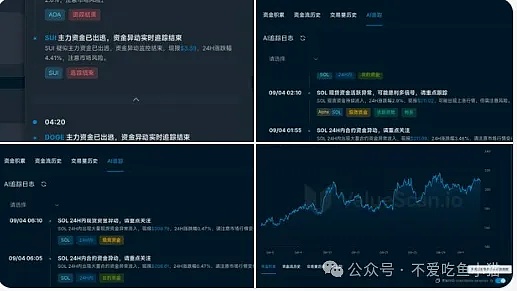
先说说最让人安心的 #SOL:这货最近的主力简直是 “币圈劳模”!别人的庄一遇震荡就想跑,SOL 的庄倒好,在 210 美元压力位主动护盘,一早上 10 次资金异动 —— 一会儿拉一下稳住价格,一会儿接盘防止下跌,跟 “生怕自家孩子摔着” 似的。
图片

这俩信号得记牢:一是主力够专业,知道关键位不能丢;二是真敢砸钱,不是画饼忽悠散户。持 SOL 的兄弟可以稍微放宽心,这种有主力硬扛的币,比那些 “庄跑了留散户站岗” 的靠谱多了~

再看 BTC 和 ETH 这俩 “老大哥”,就有点 “不给力” 了:

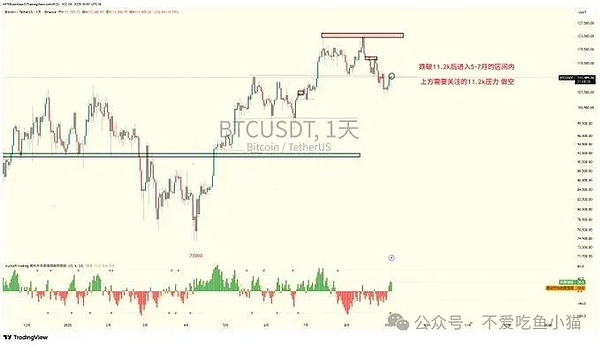
#BTC:昨晚冲到 11.2k 上方,结果又被打压下来,说白了还是 “恐慌资金在折腾”,没真正的增量资金进场。
Image

目前看,大概率要回调到 10.8k-11k 附近,没强势利好的话,还是震荡行情,别指望一下子飞起来;

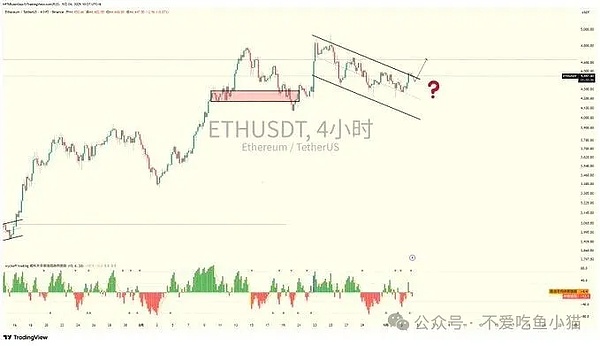
#ETH:现在尴尬得像 “社恐上台发言”—— 明明突破了 4450 的阻力位,结果没动力接着涨,最高只到 4490 就被打下来,现在卡在 4450 晃悠。
Image

按这节奏,大概率会在 4400-4450 盘整几天,先吸引一波做空的进场,然后再试着往上拉。重点盯 4400 这个支撑,不破就还有涨的希望,破了就得往 4280 甚至 4110 走,到时候可别硬扛~

RWA 板块要 “炸”?Ondo 上线 100 + 代币化美股,24 小时能买苹果英伟达!

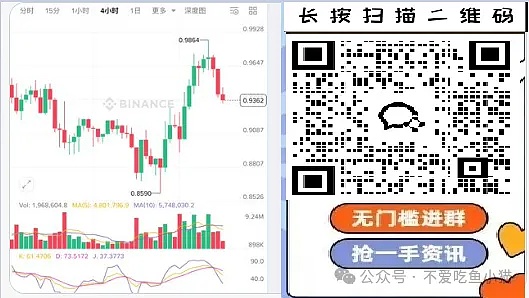
最近新热点里,#RWA(实物资产代币化)板块简直是 “黑马选手”!9 月 3 日 Ondo Global Markets 刚在以太坊上线,直接放出大招:提供 100 多种代币化美股和 ETF,像苹果、英伟达这些热门股,现在在链上就能买,还支持 24/7 交易 —— 再也不用等美股开盘,半夜想加仓也能操作,这不爽翻了?

而且 #Ondo 的目标很明确:TVL(锁仓量)要干到 10 亿美元!更给力的是,整个 RWA 板块本周已经涨了 6%,Ondo 自己带头领涨,这架势像 “刚开学就冲年级第一” 的学霸。要是想布局新板块,RWA 可以多盯盯,毕竟能把美股和 crypto 打通,这玩法还是挺新鲜的~
图片

小币种盘点:DOGE 踩稳底部,PENGU 待拉升,这些币别乱冲!

主流币和新热点说完,再聊聊大家关心的小币种,谁有机会,谁得等,咱一一说清:

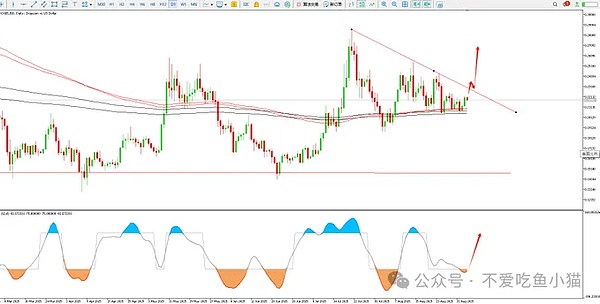
$DOGE(#狗狗币):日线云图已经踩稳底部了,接下来大概率要往上走。关键盯 0.23 美元这个压力位 —— 这是条下跌趋势线,突破了就能打开上涨空间,突破不了还得磨几天,老 DOGE 玩家耐心等就行;
Image

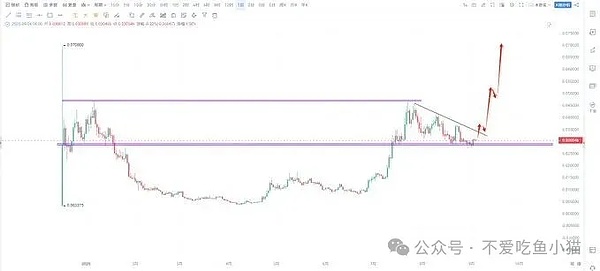
$PENGU(#企鹅币):刚突破趋势线,还做了一波 “串联调整”(说白了就是洗盘),现在调整差不多了,接下来很可能有新一波拉升,想小资金试水的可以多留意;
Image

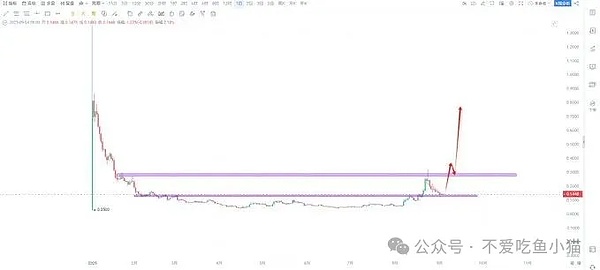
$BIO(#科学平台币):属于本轮新起来的 “科学板块”,刚突破底部筑底走势,还回踩了强支撑。虽然这板块整体赚钱效应一般,但龙头币咋都不会太差,还有板块里的 meme 币也能顺便看看;
Image

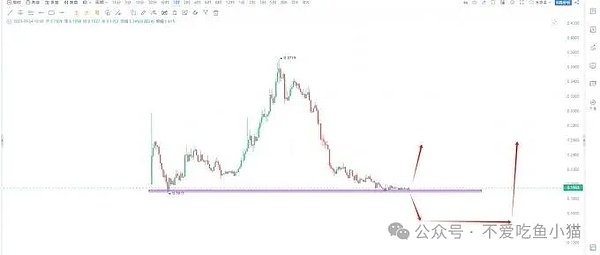
$DOLO(#AI新币):刚上新的 AI 相关币种,现在到了强支撑位,也调整几天了。有两种可能:要么 BTC 走强带它一起涨,要么跌破支撑再去中间位置筑底。现在布局像 “猜盲盒”,不如等它走明白再动,别着急冲;
Image

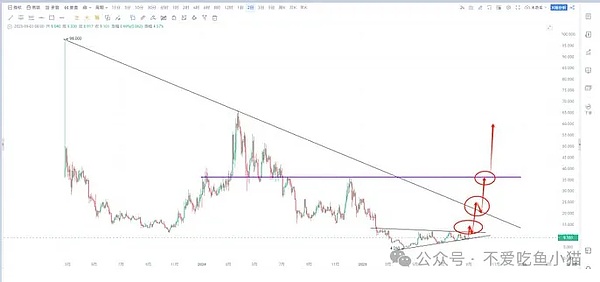
$SSV:跟多数山寨币一样,走了个 “三角收敛” 形态 —— 这种形态一旦突破,拉升力度会很足,但得先突破 3 圈关键压力位,一步一步来,别指望一口吃成胖子;
图片

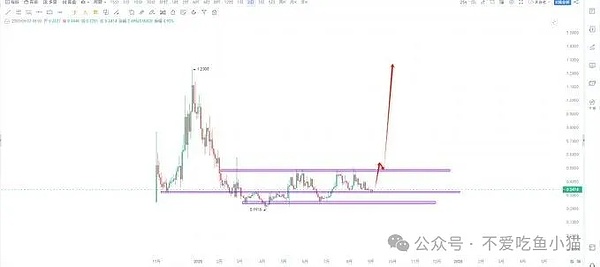
$COW:这币的支撑阻力走得比 “尺子量的还准”,刚上线的时候就挺看好,现在洗盘也洗得差不多了,后市大概率还有好表现,耐心等它启动就行~
Image

最后给个实在建议:别乱追,盯紧 “硬逻辑”!

总结下来,现在行情的重点就三个:

主流币盯 SOL 的 210 支撑、ETH 的 4400 支撑,破了就减仓,没破就等;

新热点看 RWA 板块的 Ondo,要是 TVL 能往 10 亿冲,还能接着涨;

小币种别乱梭哈,DOGE、PENGU、COW 这些有明确信号的可以小资金试,DOLO 这种没走明白的先观望。

币圈最忌 “跟风乱买”,有主力护盘、有新玩法、有明确形态的币,才值得多花心思。你们觉得 SOL 这波护盘能撑多久?RWA 会不会成下一个爆点?点赞的兄弟这波都能踩对节奏~

Похожее

The Evolution Path of Physical Bitcoin

The Evolution of Physical Bitcoin Bitcoin's digital nature is its core strength, enabling self-custody and rapid global transfers. However, its intangibility also hinders mainstream adoption. For over a decade, creators have attempted to materialize Bitcoin while preserving its cash-like properties, yielding notable results. Casascius Coins, launched in 2011, were the first and most iconic physical Bitcoin. Creator Mike Caldwell generated private keys offline, printed them on coins, and sealed them with tamper-evident holograms. This model relied on user trust in the centralized issuer. Production ceased in 2013 due to regulatory pressure from FinCEN. RavenBit Coins emerged in 2014 aiming to decentralize minting by letting users generate and apply their own keys. However, this led to trust issues with numerous untrusted minters and insecure key generation methods. In 2016, Coinkite introduced Opendimes—a breakthrough in bearer asset technology. These USB-shaped devices generate and store keys internally. Funds can be received by checking the public key, but spending requires physically breaking the device to extract the private key. While innovative and open-source, its cost (~$20) and form factor limit its use for small, everyday transactions. Satochip's Satodime, a card-shaped device using similar secure chip technology, followed. It supports NFC interaction and comes in various forms. While potentially cheaper in bulk (~13€), it remains a high-security hardware wallet, not a low-cost cash substitute. A fundamental cost barrier exists. For physical Bitcoin to achieve widespread commercial use, hardware costs must drop below $1 to match the production cost of fiat banknotes. Current secure chips capable of running Bitcoin's cryptographic algorithms (like secp256k1) are too expensive. Chips like NXP's NTAG X DNA (~$3) show cost-reduction potential but lack native Bitcoin curve support. Projects like OfflineCash embed chips in banknote-like paper, but face challenges with durability, the need for custom Bitcoin-enabled chips, and the inherent requirement for users to verify balances online—which conflicts with Bitcoin's trustless ideal. Coinkite's Tapsigner, a ~$20 card with a proprietary Bitcoin NFC chip, is seen as a more practical step forward. It functions as a reloadable hardware wallet for contactless payments, solving the "change" problem and focusing on real-world retail integration, a direction also pursued by companies like Cash App and Square. In summary, the journey to physical Bitcoin has progressed from trusted centralized mints (Casascius) to user-generated keys (RavenBit) and finally to self-contained secure hardware (Opendimes, Satodime, Tapsigner). The core challenge remains developing a sufficiently low-cost, durable, and truly trustless physical bearer asset that can function like cash in daily transactions. Current solutions are either too expensive or introduce new trust assumptions, keeping the ideal of ubiquitous physical Bitcoin just out of reach for now.

marsbit10 мин. назад

The Evolution Path of Physical Bitcoin

marsbit10 мин. назад

Samsung Relies on Technology Cycles, SK Hynix on HBM, How Did Micron Win a Trillion-Dollar Market Cap?

Micron Technology, the third-largest memory chip maker alongside Samsung and SK Hynix, recently saw its market cap surpass $1 trillion. Founded in 1978 in Boise, Idaho, Micron survived brutal industry cycles while American peers and Japan's memory sector faltered. Its survival is attributed to a dual strategy: leveraging political and legal avenues for critical breathing room, coupled with relentless manufacturing cost control. Historically, Micron sought U.S. government intervention three times. In 1985, it filed an anti-dumping complaint against Japanese firms, leading to the U.S.-Japan Semiconductor Agreement. Ironically, this created an opening for Samsung, which later became its toughest competitor. In 2002, Micron turned "whistleblower" in a DRAM price-fixing investigation, escaping penalties while rivals were fined. In 2017, it sued China's Fujian Jinhua, contributing to its placement on a U.S. entity list, stifling a nascent competitor. However, a major strategic misstep occurred in 2013 with the acquisition of bankrupt Japanese firm Elpida. Integrating Elpida's mobile-DRAM-focused technology diverted resources, causing Micron to miss the critical early decade of development for High Bandwidth Memory (HBM)—the high-performance memory essential for AI chips like NVIDIA GPUs. By the time AI demand exploded in 2022, SK Hynix, which launched the first HBM in 2013, held about 85% of the HBM3 market, leaving Micron with roughly 3%. Micron now faces a triple squeeze. In the high-end HBM market, it lags significantly behind SK Hynix and Samsung. In the mid-to-low end DRAM market, it faces aggressive price competition from China's CXMT. Furthermore, a 2023 Chinese cybersecurity ban on its products slashed its revenue from China, a once-core market, from over 10% to just 7.1% by FY2025, causing it to exit China's data center server business. Beneath its political maneuvering lies Micron's core strength: exceptional manufacturing efficiency and cost control. Decades of engineering have yielded DRAM chips with a smaller cell area than rivals, meaning more chips per wafer and lower unit costs. This efficiency, not subsidies, has allowed it to withstand price wars. While political leverage bought time, Micron is now paying a "time debt" in the HBM race. It is racing to ramp up HBM3E production and develop HBM4, but catching up to competitors who started a decade earlier is a monumental challenge. Its future hinges on whether its expertise in cost control and political strategy can compensate for the lost time in a technology race where early-mover advantage is decisive.

链捕手44 мин. назад

Samsung Relies on Technology Cycles, SK Hynix on HBM, How Did Micron Win a Trillion-Dollar Market Cap?

链捕手44 мин. назад

New AMD Paper Overturns Conventional Wisdom: FP4 Training Instability's Cause Is Not Insufficient Randomness

AMD's new research challenges the conventional understanding of FP4 training instability. While reducing precision from FP8 to FP4 promises doubled computational throughput and is supported by new hardware like NVIDIA Blackwell and AMD MI350 series, training large language models natively with FP4 has been notoriously unstable, often attributed to insufficient stochasticity. The paper "Pretraining large language models with MXFP4 on Native FP4 Hardware" demonstrates successful end-to-end FP4 pre-training of Llama 3.1-8B on AMD MI355X GPUs using the MXFP4 format, achieving a 9-10% overall speedup over FP8. Crucially, it identifies the root cause of instability: not randomness, but the accumulation of *structural micro-scaling errors* along the sensitive weight gradient (Wgrad) path. Through controlled experiments, researchers found that quantizing the Wgrad operation to FP4 caused significant convergence degradation. Counterintuitively, common stochasticity-based mitigation techniques like stochastic rounding and randomized Hadamard transforms worsened performance. In contrast, applying a *deterministic* Hadamard transform successfully stabilized training by ensuring consistent error patterns, reducing the extra token cost from 26-27% to just 8-9%. This work has significant implications: 1) It provides a clear diagnostic for low-precision training instability, steering focus towards structural errors. 2) It pushes FP4 from a primarily inference-focused format into the realm of viable training. 3) It leverages the open OCP Microscaling (MX) standard, promoting cross-vendor compatibility. The research marks a critical step towards more economical large model training by further pushing the boundaries of low-precision computation.

marsbit1 ч. назад

New AMD Paper Overturns Conventional Wisdom: FP4 Training Instability's Cause Is Not Insufficient Randomness

marsbit1 ч. назад

Торговля

Спот
Фьючерсы

Популярные статьи

Manyu: восходящая мем-звезда на Ethereum, готовая открыть новую эру культуры Shiba

Manyu - это мемтокен на Ethereum, который приносит децентрализованную культурную и развлекательную ценность через вирусное влияние в соцсетях и вовлечённость сообщества.

1.9k просмотров всегоОпубликовано 2025.11.27Обновлено 2025.11.27

Manyu: восходящая мем-звезда на Ethereum, готовая открыть новую эру культуры Shiba

Неделя обучения по популярным токенам 14: Glamsterdam — самое ожидаемое обновление Ethereum в 2026 году

Ordinals/Runes по-прежнему стимулируют доходы от комиссий за блоки и активность разработчиков, рассматриваются как отправная точка «нативной эмиссии активов» в сети.

1.4k просмотров всегоОпубликовано 2026.04.29Обновлено 2026.04.29

Неделя обучения по популярным токенам 14: Glamsterdam — самое ожидаемое обновление Ethereum в 2026 году

Обсуждения

Добро пожаловать в Сообщество HTX. Здесь вы сможете быть в курсе последних новостей о развитии платформы и получить доступ к профессиональной аналитической информации о рынке. Мнения пользователей о цене на ETH (ETH) представлены ниже.

活动图片