14 Years After Incubating Coinbase, YC Finally Decides to Issue Investment Funds in USDC

marsbitОпубликовано 2026-02-05Обновлено 2026-02-05

Введение

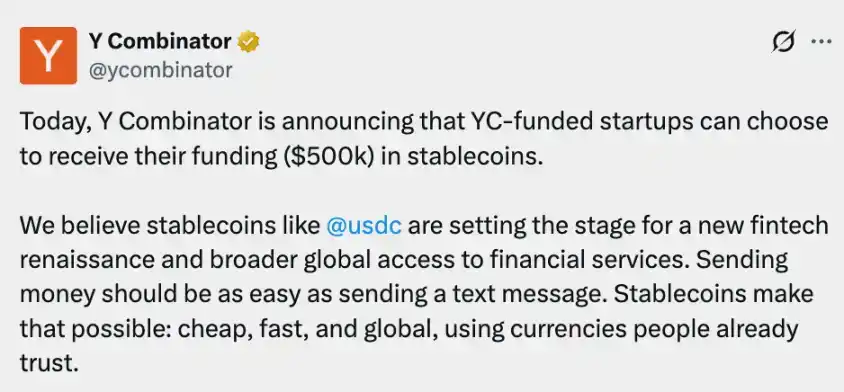
Y Combinator (YC), the renowned startup accelerator behind companies like Airbnb, Stripe, and Coinbase, announced on February 3 that, starting from the Spring 2026 batch, it will offer its startups the option to receive their $500,000 investment in USDC stablecoin. This marks the first time YC has officially introduced a stablecoin payment method for its investments. The decision follows the U.S. GENIUS Act passed in July 2025, which established a federal regulatory framework for stablecoins, requiring 1:1 reserve backing and granting holders redemption rights. This regulatory clarity has removed a major barrier to institutional adoption of cryptocurrencies. YC's move is significant because it signals a shift from being a crypto investor to an active participant using stablecoins in its core operations. Benefits include near-instant, low-cost transactions, especially beneficial for international startups in regions like India and Latin America, where traditional banking can be slow and expensive. YC specifically selected USDC due to its U.S.-based issuer, Circle, and regulatory compliance. The accelerator will support USDC on Ethereum, Base, and Solana blockchains. While crypto-native VCs have used stablecoins before, YC’s standardized integration into its process for all startups—not just crypto projects—represents a major step for mainstream venture capital. This shift reflects broader trends: 90% of financial institutions are integrating stablecoins, which saw $46 tril...

Y Combinator (YC), the "premier startup incubator" that successfully nurtured Airbnb, Stripe, and Coinbase, announced on February 3 that starting from the Spring 2026 batch, funded startups can choose to receive their $500,000 investment in the form of the USDC stablecoin. This marks the first time YC has officially announced the option to invest using stablecoins.

From Spectator to Participant

When YC invested in Coinbase in 2012, Bitcoin's price was only between $5 and $13. Over the next 14 years, although YC invested in nearly 100 crypto companies, the investment funds were still transferred via traditional bank wires.

A key reason for YC's change is the passage of the U.S. "GENIUS Act" in July 2025. This act established a federal regulatory framework for stablecoins, requiring 1:1 reserve backing and granting holders redemption rights. The arrival of regulatory clarity removed the biggest obstacle for top-tier institutions to adopt cryptocurrency. Just 7 months later, YC announced the stablecoin payment option.

The true significance of this move lies in YC "using" stablecoins itself. When an institution is willing to migrate its core business processes to new technology, it is a true vote of confidence. From investor to user, from spectator to participant, YC has completed a thorough role transformation over 14 years.

Why Choose Stablecoins?

The benefits of using stablecoins for investment first lie in efficiency. Consider an Indian startup receiving a $500,000 investment from YC: if using a traditional wire transfer, it might cost thousands of dollars in fees and take 3 to 7 days; if using USDC, the cost is nearly zero, and the funds arrive in 1 second.

Furthermore, YC's decision is based on a practical assessment: the new generation of entrepreneurs is already "Crypto Native." YC's statement pointed out that the practical application of stablecoins is growing among its portfolio companies, especially in markets like India and Latin America.

Startups including Aspora and DolarApp are already using stablecoins to help customers transfer and store funds more efficiently in regions where traditional banking infrastructure is limited or costly. To align with this trend, YC specifically emphasized support for stablecoins on the Ethereum, Base, and Solana public blockchains, allowing global entrepreneurs to choose the payment path that best suits them.

Why Choose USDC?

Keen observers have noted that YC did not vaguely refer to using stablecoins in general but specifically named USDC. Although USDC's market capitalization is smaller than USDT's, it is issued by Circle, a US-based company regulated by the Federal Reserve and state authorities. As a benchmark for Silicon Valley venture capital, YC must ensure every dollar complies with U.S. regulatory requirements.

And let's not forget, YC invested in Coinbase back in 2012. Coinbase is one of the co-founders of USDC. Moreover, Nemil Dalal, the YC partner overseeing crypto initiatives, was previously a Product Director at Coinbase. This "kinship" relationship might also naturally lead YC to trust and support the USDC ecosystem more.

VC's "Nokia Moment"

Actually, using stablecoins is not new in the crypto VC circle; firms like Paradigm or a16z Crypto have long been using them on a "case-by-case" basis. But YC's breakthrough lies in this: it is the "godfather of mainstream VC," and over 90% of its investments are in AI, enterprise services, or consumer goods, not cryptocurrency companies.

Previously, VCs used stablecoins often as a "last resort" when founders couldn't open dollar accounts; now, YC proactively includes this option in the standard contract template for every founder. Whether you're working on large models or biomedicine, if you want, you can directly receive USDC. This process-oriented, standardized move signals that the venture capital industry is facing its own "Nokia moment"—traditional transfer models are being outcompeted.

Will Other VCs Follow Suit?

Currently, top Silicon Valley VCs' attitudes towards crypto are diverging. a16z crypto represents the "radical faction," having raised $15 billion in early 2026 to focus on AI and crypto; YC represents the "pragmatic faction," entering through payments, not radical but extremely steady.

More traditional VCs might still be watching and waiting, but history provides a clear reference. Traditional financial institutions typically take 3 to 5 years to move from skepticism to embrace: both Goldman Sachs and JPMorgan Chase went from calling it "fraud" to launching related services.

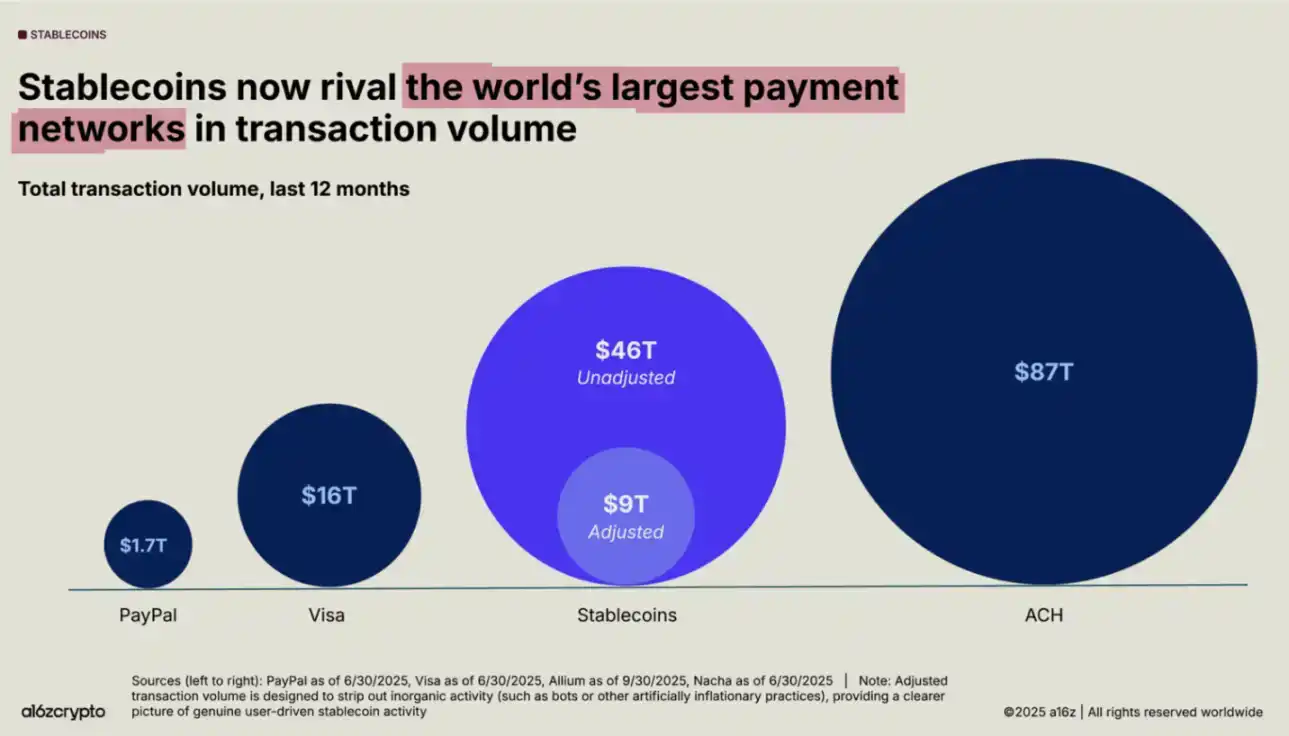
According to an a16z report, currently 90% of financial institutions are integrating stablecoins. Stablecoin transaction volume reached $46 trillion in 2025, nearly three times that of Visa. Market forecasts predict the stablecoin circulating supply will exceed $1 trillion in 2026. Behind these numbers is an irreversible trend. YC's decision might just be a node in the stablecoin wave.

What Kind of Entrepreneurs Is YC Looking For?

Currently, applications for YC's Spring 2026 batch are open. The program will run from April to June in San Francisco. The application deadline is February 10 at 12:00 PM Pacific Time. Applications submitted before the deadline will receive results by March 13.

In September 2025, YC launched the "Fintech 3.0" initiative in collaboration with Base and Coinbase Ventures, highlighting a desire to fund on-chain startup projects in the following areas: stablecoin applications, tokenization and trading (new credit markets, on-chain capital formation, new trading interfaces), and Apps and Agents (including social, financial, collaborative, gaming, etc.).

14 years ago, YC investing in Coinbase was betting on the future; 14 years later, YC using USDC is becoming the future.

Связанные с этим вопросы

QWhat major change did Y Combinator announce regarding its investment distribution method starting in Spring 2026?

AY Combinator announced that starting in the Spring 2026 batch, the startups it funds will have the option to receive their $500,000 investment in the form of the USDC stablecoin.

QWhat was a key legislative event in the US that helped pave the way for YC's decision to use stablecoins?

AThe key event was the passing of the 'GENIUS Act' in July 2025, which established a federal regulatory framework for stablecoins, requiring 1:1 reserve backing and granting holders redemption rights.

QWhat are the three specific blockchain networks that YC will support for stablecoin transfers?

AYC will support stablecoin transfers on the Ethereum, Base, and Solana blockchain networks.

QWhy did Y Combinator specifically choose USDC over other stablecoins like USDT for its investment disbursements?

AYC chose USDC because it is issued by Circle, a US-based company regulated by the Federal Reserve and state authorities, ensuring compliance with US regulations. Additionally, YC has historical ties to Coinbase, a co-founder of USDC.

QAccording to the article, how does the transaction volume of stablecoins in 2025 compare to that of Visa?

AIn 2025, stablecoin transaction volume reached $46 trillion, which is nearly three times the transaction volume of Visa.

Похожее

Unveiling the 'White-haired Stock God' Serenity: A Spiritual Remedy for Anxious Retail Investors

The article details the rise of Serenity, dubbed the "White-Haired Stock God," whose social media posts have recently caused significant volatility in China's A-share market. Previously gaining fame in international retail investor communities, Serenity is known for his "Chokepoint Investment" strategy targeting small monopolies in the AI supply chain, reportedly achieving returns over 3612% this year. His influence stems from his background as a former AI research scientist, detailed analysis, and a massive following on X, where his subscriber count has surpassed Elon Musk's. In early June, Serenity's Chinese-language posts mentioning A-shares like LeaderDrive (Lide Xiebo), Easun, and Innolight triggered immediate 20% surges in their stock prices. He later clarified that some recommendations were crowdsourced from followers and claimed he did not hold positions in these stocks, stating his actions were "just for fun" to offer a foreign perspective on Chinese markets. This activity drew scrutiny from Chinese financial media, which warned of potential "pump-and-dump" schemes and legal risks. While anonymous, clues suggest Serenity is likely a Chinese-speaking individual living in Japan. He maintains his anonymity due to past harassment but enjoys substantial monthly income from his paid subscriptions. The article posits that Serenity embodies the market's current appetite for a charismatic, successful figure during the AI bull run, serving as an "outward projection" of bullish sentiment. It concludes by noting the cyclical nature of such market icons, warning that the same crowds that elevate them often seek scapegoats when trends reverse.

Odaily星球日报3 мин. назад

Unveiling the 'White-haired Stock God' Serenity: A Spiritual Remedy for Anxious Retail Investors

Odaily星球日报3 мин. назад

Unveiling the 'White-Haired Stock God' Serenity: The Mental Elixir for Anxious Retail Investors

The anonymous stock influencer known as "White-Haired Stock God" Serenity has ignited a frenzy in the A-share market. From June 5-9, Serenity's posts on platform X mentioning A-shares like LeaderDrive, Easun, and Innolight triggered sharp price surges, with some stocks hitting 20% daily limits. Serenity, who claims a 3612% personal return this year, gained fame internationally using a "chokepoint investment" strategy focused on small, monopolistic AI supply chain companies. With over 810k X followers, his influence rivals top analysts. His recent foray into Chinese stocks, which he claims is "for fun" to offer a "foreign perspective," has drawn scrutiny. While Serenity denies holding positions in these A-shares and states his posts are not recommendations, his actions have caused significant market volatility. He monetizes through a $1/month subscription, earning an estimated $54k monthly. Facing accusations of market manipulation, he maintains he promotes "information democracy." Community analysis suggests Serenity is likely an English-speaking Chinese national living in Japan, based on his posting patterns and shared personal details. He maintains anonymity due to past harassment. Ultimately, Serenity is seen by many as a manifestation of the current AI bull market's euphoria—a mysterious, seemingly successful figure who fulfills the market's desire for a "stock god," though such personas often face intense scrutiny when market sentiment shifts.

marsbit4 мин. назад

Unveiling the 'White-Haired Stock God' Serenity: The Mental Elixir for Anxious Retail Investors

marsbit4 мин. назад

Korean Youth, Making a 'Last Stand' in an Epic Bull Market

South Korea is experiencing an unprecedented stock market boom in the first half of 2026, with the KOSPI index doubling in six months, driven primarily by tech giants Samsung Electronics and SK Hynix. This "epic bull run," tied to the semiconductor cycle, has sparked a nationwide frenzy for stock trading. The country, with a population of just over 50 million, now has over 105 million securities accounts. The article, from the perspective of a Chinese national living in Seoul, explores how this speculative fever reflects deeper societal anxieties among Korean youth. Facing stagnant wages, high costs of living, housing pressures, and rigid social stratification, many young people see the volatile market as a "last chance" to alter their predetermined life trajectories and escape financial precarity. Stories include a young office worker investing her meager savings, a couple delaying marriage due to financial pressures, and a seasoned trader navigating exclusive social circles where market information is currency. However, the boom also exposes and exacerbates existing inequalities. While some achieve windfalls, others face devastating losses, with borrowing to invest reaching record highs. The narrative contrasts the illusion of equal opportunity with the harsh reality that the ability to absorb risk is unevenly distributed. Ultimately, the market frenzy is portrayed not as a solution, but as a symptom of a generation's struggle against a system offering limited upward mobility, where daily life is a precarious balance of bills, debts, and societal expectations.

marsbit31 мин. назад

Korean Youth, Making a 'Last Stand' in an Epic Bull Market

marsbit31 мин. назад

Young South Koreans, Making a 'Last-Ditch Effort' in an Epic Bull Market

This article explores how an unprecedented stock market boom in South Korea during the first half of 2026, driven by the semiconductor industry, is transforming the lives of ordinary people, particularly the youth. The KOSPI index doubled in six months, fueled by giants Samsung and SK Hynix, leading to a frenzy of retail investing. With over 105 million stock accounts in a population of just over 50 million, a sense of "FOMO" (fear of missing out) is pervasive. Through the perspective of Li Yuning, a Chinese woman living in Seoul, the piece follows several young Koreans who see the market as a last chance to escape stifling economic pressures, high housing costs, and narrow social mobility. Individuals like Minji, a low-paid office worker, and Junho, saving for marriage, invest their limited savings, while experienced traders like Suhu navigate exclusive social circles. The narrative reveals that this speculative fever stems less from greed and more from deep-seated anxiety about being left behind in a society with growing wealth inequality and rigid class structures. However, the boom also exposes stark social divides. It exacerbates wealth gaps, as those with family support or existing capital fare better. The pressure to succeed is immense, with stories of devastating losses leading to personal tragedy. Ultimately, the article suggests the牛市 acts as a pressure valve and a temporary illusion of opportunity in a system where traditional paths to advancement seem increasingly closed, leaving young people to gamble on the market as a final, desperate bid for a better future.

链捕手37 мин. назад

Young South Koreans, Making a 'Last-Ditch Effort' in an Epic Bull Market

链捕手37 мин. назад

Торговля

Спот
Фьючерсы

Популярные статьи

Как купить USDC

Добро пожаловать на HTX.com! Мы сделали приобретение USD Coin (USDC) простым и удобным. Следуйте нашему пошаговому руководству и отправляйтесь в свое крипто-путешествие.Шаг 1: Создайте аккаунт на HTXИспользуйте свой адрес электронной почты или номер телефона, чтобы зарегистрироваться и бесплатно создать аккаунт на HTX. Пройдите удобную регистрацию и откройте для себя весь функционал.Создать аккаунтШаг 2: Перейдите в Купить криптовалюту и выберите свой способ оплатыКредитная/Дебетовая Карта: Используйте свою карту Visa или Mastercard для мгновенной покупки USD Coin (USDC).Баланс: Используйте средства с баланса вашего аккаунта HTX для простой торговли.Третьи Лица: Мы добавили популярные способы оплаты, такие как Google Pay и Apple Pay, для повышения удобства.P2P: Торгуйте напрямую с другими пользователями на HTX.Внебиржевая Торговля (OTC): Мы предлагаем индивидуальные услуги и конкурентоспособные обменные курсы для трейдеров.Шаг 3: Хранение USD Coin (USDC)После приобретения вами USD Coin (USDC) храните их в своем аккаунте на HTX. В качестве альтернативы вы можете отправить их куда-либо с помощью перевода в блокчейне или использовать для торговли с другими криптовалютами.Шаг 4: Торговля USD Coin (USDC)С легкостью торгуйте USD Coin (USDC) на спотовом рынке HTX. Просто зайдите в свой аккаунт, выберите торговую пару, совершайте сделки и следите за ними в режиме реального времени. Мы предлагаем удобный интерфейс как для начинающих, так и для опытных трейдеров.

968 просмотров всегоОпубликовано 2024.04.18Обновлено 2026.06.02

Как купить USDC

Что такое $USDC

Классический USDC: Полный обзор Введение в Классический USDC В быстро развивающемся мире рынка криптовалют стейблкоины стали важной частью, особенно в обеспечении стабильности на фоне волатильности, которая характеризует цифровые активы. Один из таких проектов - Классический USDC, инициатива цифровой валюты, которая нацелена на предоставление стабильного и надежного средства обмена. Поддерживая привязку 1:1 к доллару США, Классический USDC стремится предложить пользователям надежный цифровой актив, пригодный для различных применений в экосистемах web3 и криптовалют. Что такое Классический USDC? Классический USDC по своей сути является стейблкоином, который представляет собой тип криптовалюты, предназначенной для минимизации ценовой волатильности, обычно наблюдаемой на рынке цифровых активов. В частности, Классический USDC стремится близко отражать стоимость доллара США, обеспечивая пользователям возможность использовать эту цифровую валюту для транзакций, сбережений и других финансовых операций без страха перед внезапными колебаниями цен, которые могут беспокоить многие криптовалюты. Основная цель Классического USDC - предоставить надежный и доверенный цифровой аналог доллара США, разработанный для бесшовной интеграции в широкий спектр приложений web3, платформ децентрализованных финансов (DeFi) и других финансовых систем, связанных с криптовалютой. Создавая стабильную цифровую валюту, Классический USDC стремится облегчить повседневную торговлю, сделать технологии блокчейна более удобными для пользователей и способствовать принятию криптовалют для массового использования. Создатель Классического USDC Личность создателя или команды разработчиков Классического USDC остается в значительной степени неизвестной, и отсутствие прозрачности создало определенную степень неопределенности относительно происхождения проекта. В то время как многие криптовалютные инициативы открыто представляют своих основателей и команды разработчиков, Классический USDC не предоставляет четкой информации о своих создателях, что ставит под угрозу доверие потенциальных пользователей или инвесторов, оценивающих надежность и состоятельность проекта. Инвесторы Классического USDC Помимо неопределенности относительно его создателей, Классический USDC также не имеет конкретной информации о своих инвесторах. Финансовая поддержка проекта может часто придавать ему авторитет и стабилизировать его операционную деятельность; однако отсутствие задокументированных инвестиционных фондов или организаций, поддерживающих Классический USDC, вызывает вопросы о его структуре финансирования. Эта неопределенность может потенциально подорвать доверие заинтересованных сторон к проекту. Как работает Классический USDC? Операционные механизмы Классического USDC во многом зависят от его резервной системы, которая является основополагающей для любого стейблкоина. Классический USDC обязуется поддерживать резерв активов, который напрямую соответствует стоимости цифровой валюты в обращении. В частности, за каждые выпущенные токены Классического USDC сохраняется эквивалентная сумма резервных активов, будь то наличные или эквиваленты близкие к наличным. Эта стратегия нацелена на поддержание стоимости Классического USDC, предлагая пользователям уверенность в том, что они могут в любой момент обменять свои токены на доллары США. Эта резервная структура направлена на повышение стабильности и надежности Классического USDC, позиционируя его как безопасную альтернативу на рынке криптовалют. Обеспечивая постоянную корреляцию стоимости Классического USDC с долларом США, проект стремится вызывать доверие среди пользователей, которые могут быть насторожены по поводу более широких рыночных динамик. Хронология Классического USDC История Классического USDC отмечена несколькими ключевыми вехами, отражающими его путешествие и эволюцию в экосистеме криптовалют: 2021: Отмечено начало Классического USDC, введение нового варианта цифровой валюты, разработанного для стабильности. В этом году появились первые записи о деятельности токена, и были установлены его первоначальные уровни цен. 2024: Классический USDC начинает испытывать значительные колебания цен, поскольку крипторынок в целом сталкивается с различными тенденциями и настроениями пользователей. Появляются прогнозы относительно его будущего потенциала, указывающие на сильный интерес со стороны наблюдателей и аналитиков рынка, которые предвидят возможности для роста. Будущие прогнозы Эксперты предполагают, что Классический USDC может достичь более высоких уровней принятия и стабильности в ближайшие годы, с потенциальными дальнейшими разработками, ожидаемыми около 2025 и 2026 года. Однако к этим прогнозам следует подходить с осторожным оптимизмом, поскольку рынок криптовалют по своей природе непредсказуем, и различные внешние факторы могут повлиять на траекторию Классического USDC. Ключевые моменты о Классическом USDC Стабильность: Основное предложение Классического USDC заключается в предоставлении цифровой валюты, параллельной стоимости доллара США, тем самым обеспечивая стабильность на часто волатильном рынке. Резервная система: Обязательство проекта поддерживать резерв активов для обеспечения своей стоимости подчеркивает его надежность и операционную устойчивость. Интеграция в Web3 и крипто: Классический USDC разработан для облегчения интеграции в различные приложения, стремясь улучшить пользовательский опыт и расширить принятие криптовалюты в повседневных транзакциях. Потенциал будущего роста: Несмотря на то что он еще только начинает, Классический USDC имеет перспективные направления для роста по мере увеличения осведомленности и использования стейблкоинов в контексте web3 и криптовалют. Заключение Классический USDC представляет собой заметную инициативу стейблкоина в сфере криптовалют, стремясь предоставить пользователям надежную цифровую валюту, которая воплощает стабильность доллара США. Несмотря на неопределенности относительно его создателей и финансовой поддержки, основополагающие принципы Классического USDC - сосредотачивающиеся на обеспеченных резервами гарантиях - стремятся позиционировать его как надежный вариант для индивидуумов и бизнеса, ориентированных на цифровую экономику. С учетом будущего, аналитики рынка с нетерпением ожидают, как Классический USDC будет эволюционировать в ответ на изменяющуюся динамику рынка криптовалют, потенциально устанавливая себя в качестве значительного игрока в области стейблкоинов.

57 просмотров всегоОпубликовано 2024.05.01Обновлено 2024.12.03

Что такое $USDC

HTX Learn: Изучите "Layer3" и Разделите 6000 USDC

Участники, которые изучат обучающий курс и пройдут тест, получат шанс выиграть потрясающие призы.

3.2k просмотров всегоОпубликовано 2024.12.11Обновлено 2024.12.12

HTX Learn: Изучите "Layer3" и Разделите 6000 USDC

Обсуждения

Добро пожаловать в Сообщество HTX. Здесь вы сможете быть в курсе последних новостей о развитии платформы и получить доступ к профессиональной аналитической информации о рынке. Мнения пользователей о цене на USDC (USDC) представлены ниже.

活动图片