# Voting Related Articles

HTX News Center provides the latest articles and in-depth analysis on "Voting", covering market trends, project updates, tech developments, and regulatory policies in the crypto industry.

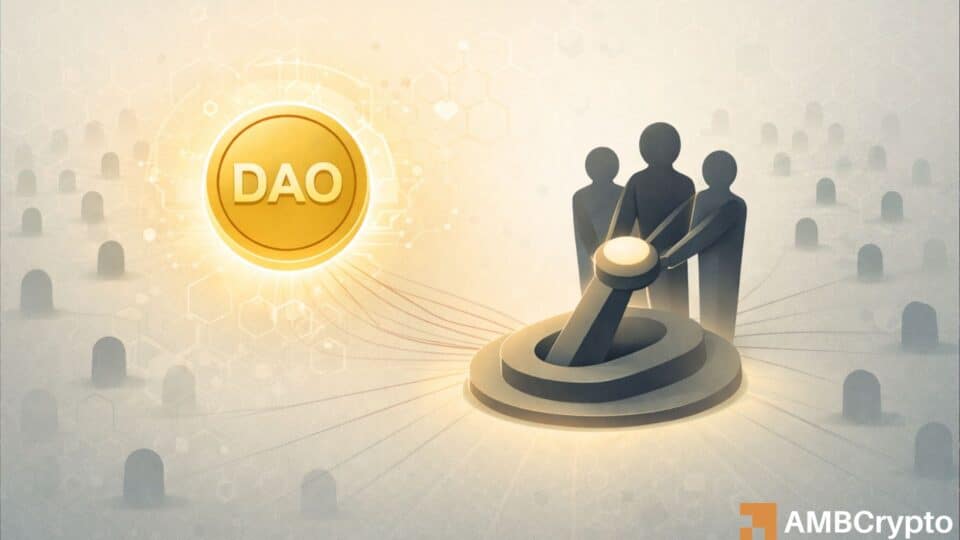
Gnosis DAO Faces Massive Treasury Redemption Proposal, "Treasury Raiders" Return

A group of activist investors, often labeled as "treasury raiders," have submitted proposal GIP-150 to Gnosis DAO, calling for a one-time, voluntary, and proportional treasury redemption. The proposal would allow participating GNO holders to claim a share of the over $220 million in DAO reserves. Proponents argue this addresses the persistent and widening discount of GNO's market price relative to the treasury's net asset value. Despite recent DAO funding to Gnosis Ltd., the discount has increased. The current vote, closing May 12th, shows 65% opposition among early votes. The redemption would value each eligible token around $170, a ~30% premium to the current $131 market price. GNO held by Gnosis Ltd. is excluded. DeFi community reactions are mixed. Some commentators acknowledge the "risk-free value" (RFV) arbitrage logic but criticize the proposal as a short-term cash grab lacking legitimacy, as Gnosis never promised treasury backing for the token price. Others oppose it due to Gnosis's contributions to ecosystem infrastructure (Safe, CoW Swap, etc.). Founder Sebastian Bürgel lamented the targeting of respected builders. Aragon's team, previously targeted in similar RFV campaigns, called for better mechanisms to align incentives. This follows a pattern of 2023 RFV-style actions against projects like Rook and Aragon. Recently, Beefy Finance implemented a buyback to preempt such pressure. The proposal's author, Wismerhill, expressed past admiration for Gnosis but now sees this vote as a test of whether holders prioritize short-term arbitrage or long-term ecosystem value.

marsbit05/08 10:16

Gnosis DAO Faces Massive Treasury Redemption Proposal, "Treasury Raiders" Return

marsbit05/08 10:16

You Bet on the News, the Pros Read the Rules: The True Cognitive Gap in Losing Money on Polymarket

The article explains that the key to profiting on Polymarket, a prediction market platform, lies not just predicting real-world events correctly, but in meticulously understanding the specific rules that govern how each market will be resolved. It illustrates this with examples, such as a market on Venezuela's 2026 leader, where the official rules defining "officially holds" the office overruled the intuitive answer of who was in practical control. Other examples include debates over the definition of a "token" or what constitutes an "agreement." The core argument is that a "reality vs. rules" gap creates pricing discrepancies that savvy traders ("车头" or "whales") exploit. The platform has a formal dispute resolution process managed by UMA token holders to settle ambiguous outcomes. This process involves proposal submission, a challenge window, a discussion period, and a final vote. However, the article highlights a critical flaw in this system compared to a traditional court: the lack of separation between the arbiters (UMA voters) and the interested parties (traders with financial stakes in the outcome). This conflict of interest undermines the discussion phase, leads to herd mentality, and results in opaque final decisions without explanatory rulings. Consequently, the system lacks a body of precedent, making it difficult for users to learn from past disputes. The ultimate takeaway is that success on Polymarket requires a lawyer-like scrutiny of the rules to identify and capitalize on the cognitive gap between how events appear and how they are contractually defined for settlement.

marsbit04/21 03:08

You Bet on the News, the Pros Read the Rules: The True Cognitive Gap in Losing Money on Polymarket

marsbit04/21 03:08

Why Do You Always Lose Money on Polymarket? Because You're Betting on News, While the Pros Read the Rules

Why do you always lose money on Polymarket? Because you bet on news, while the pros study the rules. This article explains how top traders ("che tou") profit by meticulously analyzing market rules, not just predicting events. Polymarket, a prediction market platform, often sees disputes over event outcomes due to ambiguous rule wording. For instance, a market asking "Who will be the leader of Venezuela by the end of 2026?" was misinterpreted by many who bet on Delcy Rodríguez, assuming she held power. However, the rules specified "officially holds" as the formally appointed, sworn-in individual. Since Nicolás Maduro was still recognized as president officially, he won the market—even being in prison. To resolve such disputes, Polymarket uses a decentralized arbitration system via UMA protocol. The process involves: 1. Proposal: Anyone can propose a market outcome by staking 750 USDC, earning 5 USDC if unchallenged. 2. Dispute: A 2-hour window allows challenges with a 750 USDC stake; successful challengers earn 250 USDC. 3. Discussion: A 48-hour period on UMA Discord for evidence and debate. 4. Voting: UMA token holders vote in two 24-hour phases (blind then public). Outcomes require >65% consensus and 5M tokens voted; otherwise, four re-votes occur before Polymarket intervention. 5. Settlement: Results are final and automatic. Unlike traditional courts, Polymarket’s system lacks separation between arbitrators and stakeholders—voters often hold market positions, creating conflicts of interest. This leads to herd mentality in discussions and non-transparent outcomes without explanatory rulings, preventing precedent formation. Thus, success on Polymarket hinges on deep rule interpretation, not just event prediction, exploiting gaps between reality and contractual wording.

marsbit04/20 11:58

Why Do You Always Lose Money on Polymarket? Because You're Betting on News, While the Pros Read the Rules

marsbit04/20 11:58

活动图片