# Strategy Related Articles

HTX News Center provides the latest articles and in-depth analysis on "Strategy", covering market trends, project updates, tech developments, and regulatory policies in the crypto industry.

The Truth of Trading: A Numbers Game of Patterns and Probabilities

The Truth of Trading: A Numbers Game of Patterns and Probability Most traders fail not due to a lack of methods or information, but because they misunderstand the nature of trading. Mark Douglas, in "Trading in the Zone," redefines the market as a probabilistic environment where an edge only materializes over a sufficiently long period. Trading is not about prediction or seeking certainty; it is a numbers game of pattern recognition. A valid trading pattern does not guarantee that any single trade will be profitable. It merely indicates a historical probability of success. Each individual trade outcome is random, but the overall probability distribution over many trades is not. Traders must evaluate performance like a casino: focus on long-term expectation and repeated execution, not single wins or losses. Accepting that "anything can happen" is liberating. It removes the emotional sting from losses, enables disciplined stop-loss execution, and eliminates hesitation. The ideal "flow state" is not excitement but emotional neutrality—executing the plan without attachment to outcomes or need to be right. Ultimately, traders cannot control results, but they can control their execution. Success comes from emotional detachment and consistent repetition. When traders stop trying to prove themselves right and let the probabilities work over time, they align with the true nature of the market: a numbers game based on pattern recognition and disciplined repetition.

深潮12/26 02:45

The Truth of Trading: A Numbers Game of Patterns and Probabilities

深潮12/26 02:45

Matrixport Market Watch: Repricing After High-Level Correction, Crypto Market Enters New Stage of Stock Game

Global markets are experiencing a period of high-level volatility and a delicate balance. While expectations of interest rate cuts and weakening macroeconomic data provide some support for risk assets, geopolitical uncertainties are causing a distinct "resistance to the upside, sensitivity to the downside" risk sentiment. This has shifted capital allocation strategies from growth-seeking to a focus on defense and certainty, exemplified by gold's strong performance. The cryptocurrency market is undergoing a typical high-level correction and repricing phase. Bitcoin, after approaching ~$126k, has corrected and is now consolidating with high volatility between $85k and $95k. On-chain data indicates selling pressure from long-term holders is easing, but new buying remains cautious, characterized more by buying the dip than aggressive chasing. Leverage in futures markets has been significantly cleared, with open interest falling to safer levels, reducing the risk of a cascading liquidation event. The basis for BTC futures even briefly turned negative, signaling cooled optimism. In options markets, implied volatility has declined from its peaks, indicating a return to more normalized, calmer pricing, though some downside protection is still being sought. The performance of crypto-related stocks reflects a market returning to rationality from euphoria. Premiums for Digital Asset Trusts have compressed significantly. Valuations for mining companies are diverging, now more dependent on operational efficiency. Exchanges and platforms retain a compliance premium, but future valuations will rely on the actual execution of their institutional businesses. In summary, the crypto market is in a "healthy存量博弈" (stock game) phase of rebalancing after a high-level pullback. In this environment, trend traders may need patience. Strategies to consider include volatility-selling products for yield, using Accumulators for gradual long positioning, or employing Decumulators/Covered Calls for hedging or gradual selling. This period of calm repricing often sets the stage for the next cycle.

marsbit12/25 09:34

Matrixport Market Watch: Repricing After High-Level Correction, Crypto Market Enters New Stage of Stock Game

marsbit12/25 09:34

Why Is America Embracing Crypto? The Answer May Lie in Its $37 Trillion Debt

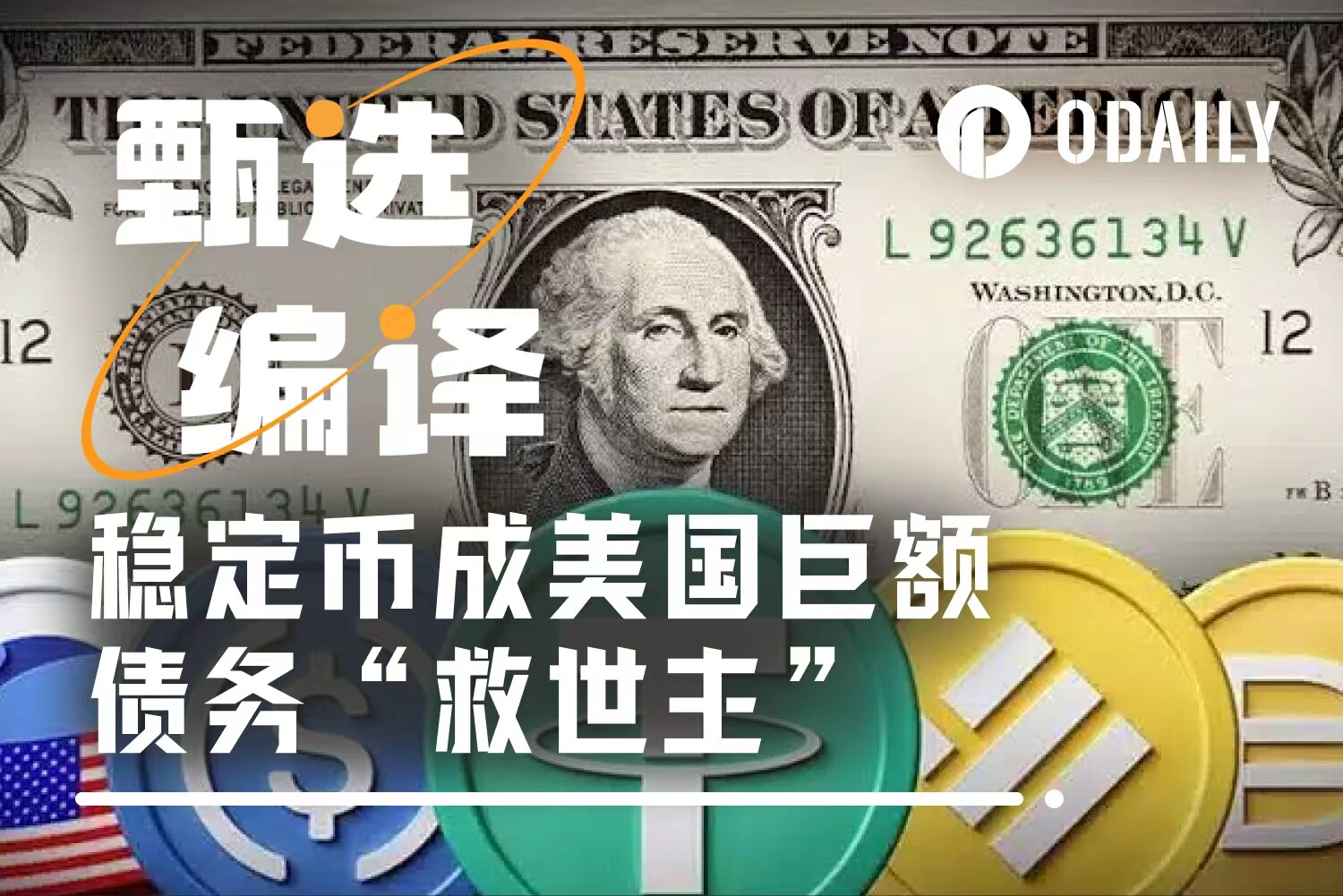
The article explores the claim by a senior Russian advisor that the U.S. is planning to use cryptocurrencies and stablecoins to devalue its $37 trillion national debt by shifting it into a "crypto cloud," effectively forcing the burden onto the global economy. This strategy, while seemingly extreme, aligns with historical U.S. practices of debt dilution through inflation and monetary expansion. Stablecoins, backed by U.S. Treasury assets, could allow the U.S. to export inflation globally by distributing dollar-denominated debt to international holders. When the dollar inflates, the loss in purchasing power is shared by all stablecoin users, not just U.S. citizens. This system offers the control of a central bank digital currency (CBDC) without the political baggage. However, trust remains a critical issue: stablecoin reserves cannot be fully independently verified, and the U.S. could unilaterally change rules, as it did when decoupling the dollar from gold in 1971. While a direct government-led Bitcoin acquisition strategy (as suggested by figures like Michael Saylor) is unlikely, the U.S. may instead leverage private sector entities to accumulate crypto assets discreetly, later integrating them into national strategy. The article concludes that some form of crypto-assisted debt dilution is plausible, if not inevitable, given the scale of U.S. debt and its historical approach to monetary policy.

Odaily星球日报12/24 10:39

Why Is America Embracing Crypto? The Answer May Lie in Its $37 Trillion Debt

Odaily星球日报12/24 10:39

Huobi HTX Contract Head Fully Deciphers: What Huobi Contracts Did Right in 2025 and Where They Are Headed

Huobi HTX Derivatives Head Decodes 2025 Success and Future Roadmap In 2025, Huobi HTX's derivatives business achieved 2-3x user growth, driven by robust risk management and continuous product upgrades. Key initiatives included the launch of Copy Trading 4.0—a system-level redesign emphasizing user-friendliness, transparency, and safety. The update integrated copy trading with the main contract interface, introduced smart copy modes, and enhanced risk controls with isolated funds and synchronized leverage settings. The growth was attributed to long-term user trust built on Huobi HTX’s 12-year foundation in security and risk control, which withstood multiple market volatilities without major incidents. Liquidity for major and semi-major coins doubled, though improvements are planned for long-tail assets. The Unified Margin system, launched in May, boosted API trading speed by 4x and attracted high-frequency traders. Financial products like Savings (Yu Bao) improved capital efficiency, with plans to increase yields by 2-3x in 2026. AI-driven trading tools and strategy integrations are also prioritized. Looking ahead, Huobi HTX will focus on refining products, optimizing liquidity, enhancing capital efficiency, and deepening risk management. A key shift will involve empowering users with more active risk control tools, promoting transparent and manageable trading decisions. The goal is to enable sustainable participation in high-volatility crypto markets through safer, smarter, and more rational trading frameworks.

深潮12/24 07:57

Huobi HTX Contract Head Fully Deciphers: What Huobi Contracts Did Right in 2025 and Where They Are Headed

深潮12/24 07:57

活动图片