# Speculation Related Articles

HTX News Center provides the latest articles and in-depth analysis on "Speculation", covering market trends, project updates, tech developments, and regulatory policies in the crypto industry.

The Ansem Airdrop Brings Back the Celebrity Endorsement Effect: When the Market Is Stagnant, Smart Money Watches KOLs' Tweets

In the recent crypto bear market, a narrative-driven surge has emerged within the Solana meme coin sector, highlighted by the explosive performance of $ANSEM (The Black Bull). The token, associated with prominent trader Ansem, soared nearly 19,878% in a week following his announcement of a community airdrop funded by his creator fees from Pump.fun. This move, emphasizing social engagement over traditional on-chain metrics, distributed millions of tokens to hundreds of wallets, though distribution appeared concentrated with a few wallets receiving substantial portions. The event signals a resurgence of influencer-driven market movements. Similarly, BitMEX co-founder Arthur Hayes boosted tokens like $CARDS and $SYN through public endorsements and analysis, leading to significant price rallies. These cases underscore a current market dynamic: with major narratives stagnant and limited new capital, attention and "smart money" are increasingly focused on signals from key opinion leaders (KOLs) to identify asymmetric opportunities, despite the inherent risks of speculation and potential market manipulation. The landscape suggests that while old strategies for evaluating such pumps remain relevant, the reduced competition for attention may make these localized trends critical for participants seeking alpha in a sideways market.

marsbit07/01 00:56

The Ansem Airdrop Brings Back the Celebrity Endorsement Effect: When the Market Is Stagnant, Smart Money Watches KOLs' Tweets

marsbit07/01 00:56

One Year After the Crash of Crypto Treasury Companies, Copycats Are Already Making a Comeback

One year after the collapse of digital asset treasury (DAT) companies, which wiped out up to 99% for early investors, the scheme has returned in a new guise. Recently, Triller Group announced it would become a "SpaceX treasury company," causing its market cap to surge. This follows the rebranding of another firm, LGHL, now targeting a token called HYPE. The original model, popularized by MicroStrategy (MSTR) and its "Bitcoin yield" narrative, saw companies trading at massive premiums to their underlying crypto holdings. However, most followers like TwentyOne, Metaplanet, and Nakamoto have crashed 80-95%+ from their peaks, erasing nearly all value for late investors. The author argues these structures have no fundamental reason to trade at premiums when low-fee Bitcoin ETFs or direct ownership exist. The cycle persists due to speculative demand driven by FOMO, gamification, and a belief the system is rigged, met by insiders and promoters who profit from the pump-and-dump dynamics. Drawing a parallel to the 1637 Tulip Mania, the piece concludes that such frenzies are not a bug but a recurring product of markets, where greater fools provide demand and insiders supply the schemes. Despite holding Bitcoin personally, the author condemns this specific packaging of assets into leveraged corporate vehicles marketed as innovation, a cycle seemingly unstoppable until a major crash.

marsbit06/29 03:42

One Year After the Crash of Crypto Treasury Companies, Copycats Are Already Making a Comeback

marsbit06/29 03:42

Farewell to Speculation: The Graham Moment of the Crypto Industry

"Farewell to Speculation: The Graham Moment for the Crypto Industry" The article draws a parallel between today's cryptocurrency market and the speculative, unregulated US stock market of the 1920s. That era lacked mandatory corporate disclosure, enabling rampant manipulation and turning stocks into gambling tools. The 1929 crash led to foundational reforms: the Securities Acts of 1933/34 mandated transparent, audited financial reporting, and Benjamin Graham's "Security Analysis" provided a framework for fundamental valuation. Together, they created modern investing, requiring both reliable data and a methodology to value assets. Similarly, the crypto market is currently driven by narratives and speculation. However, it possesses a key advantage: unlike 1920s corporations, blockchain protocols have inherently transparent, on-chain data for revenue, treasury, and activity. The core obstacle is not transparency, but the lack of legal claim to that value. Due to regulatory uncertainty (primarily the Howey Test), most tokens are deliberately stripped of economic rights like profit-sharing to avoid being classified as securities. This creates a paradox where protocols generate revenue, but token holders have no right to it. The turning point, argues the author, is imminent US legislation. The already-passed GENIUS Act provides a framework for stablecoins. The crucial CLARITY Act, currently in advanced legislative stages, aims to clearly categorize digital assets and define their regulatory treatment (SEC vs. CFTC). This would allow developers to legally design tokens with enforceable economic rights, such as profit distribution. If passed, this would enable a shift from speculation to fundamental investment. Analysis would focus on protocol revenue sustainability, network effects, valuation multiples, and the specific rights encoded in a token's contract—mirroring traditional equity analysis. The article notes significant legislative hurdles and timelines (1-3 years for rulemaking post-passage), but emphasizes the direction is set. A deeper challenge remains: building decentralized, legally enforceable governance and ownership structures to protect token holder rights, akin to corporate law. This will be a core development focus. The transformation applies mainly to revenue-generating protocol tokens, not to assets like Bitcoin (digital gold). The article concludes that the industry's question has evolved from "can tokens create value?" to "who gets to allocate that value?". Solving the latter, as in the 1920s, will mark crypto's transition to a legitimate asset class for fundamental investment.

Foresight News06/23 08:16

Farewell to Speculation: The Graham Moment of the Crypto Industry

Foresight News06/23 08:16

Beyond the Stadium: The Profitable Games Surrounding the World Cup

"Beyond the Pitch: The Profit Game Around the World Cup" The FIFA World Cup transcends being a sporting spectacle, evolving into a massive global arena for speculation and profit-seeking. The 2026 tournament has amplified this dynamic, creating a multi-layered ecosystem of financial opportunism alongside the football. **Prediction markets** have surged into the mainstream. Platforms like Polymarket and Kalshi saw trading volumes for World Cup contracts soar, attracting new users with their financial trading model and high-profile, chain-based wealth stories that overshadow traditional sports betting in terms of growth and narrative. However, **traditional sportsbooks** remain the dominant force, leveraging established user habits, legal markets, and comprehensive product offerings to handle the vast majority of speculative wagers, with projections suggesting record-breaking betting volumes. Capital markets also react. **"Concept stocks"** in countries like South Korea and Japan experience volatile price swings based on team performance and anticipated fan spending on items like chicken, beer, and viewing parties, effectively becoming a stock market reflecting fan sentiment. The **ticket resale market** has become a sophisticated arena for arbitrage. Prices fluctuate wildly based on team draws and star power, with sellers sometimes listing tickets they don't yet own in a practice akin to short-selling, while FIFA's own "Right to Buy" tokens add another layer of speculative trading. **Collectibles and merchandise** offer another avenue. Panini sticker albums, with their inherent scarcity and nostalgic value, can become high-value collectibles. Limited-edition or locally themed jerseys command significant premiums on secondary markets, and even counterfeit vendors profit from fans' desire for affordable match-day identity. The **cryptocurrency** space has seen a frenzy of speculative, unauthorized World Cup-themed meme coins on chains like Solana. These tokens, often exploiting team names and player imagery, experience extreme pump-and-dump cycles, creating stories of massive gains for a few early entrants and steep losses for many others. Finally, an entire industry thrives on **providing information and tools** to other speculators. Developers create platforms like SeatSidekick to track ticket inventory and prices, while paid Telegram groups and subscriptions sell betting tips and predictions, monetizing the widespread desire for an informational edge. In essence, the World Cup has become a compressed, global laboratory for speculation. While the games determine champions on the field, a parallel, complex network of financial transactions—spanning prediction contracts, bets, stocks, tickets, collectibles, crypto, and information services—settles its own scores in the global market.

marsbit06/21 03:43

Beyond the Stadium: The Profitable Games Surrounding the World Cup

marsbit06/21 03:43

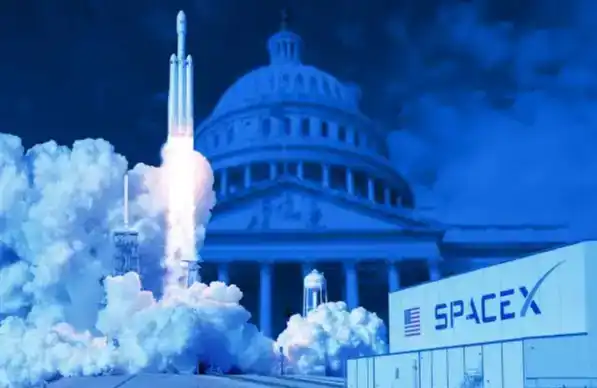
The More It Rises, the More Dangerous? The Systemic Risks Behind SpaceX's Soaring Valuation

Summary: The article raises concerns about the systemic risks posed by SpaceX's skyrocketing valuation, arguing that modern market mechanics, rather than fundamentals, are driving its price discovery. Following SpaceX's market capitalization surpassing $3 trillion in after-hours trading, the author contends that the market is no longer functioning properly. The core issue is not SpaceX's business prospects but the unhealthy market structure surrounding it. With limited float and the imminent launch of options trading, the stage is set for a potential "gamma squeeze"—a feedback loop where market makers hedging call options are forced to buy shares, pushing the price higher and attracting more speculative momentum traders. This mechanism, seen previously with Tesla and meme stocks, can decouple valuation from financial reality. The danger escalates as extreme valuations force passive funds, ETFs, pensions, and major indices to hold the stock. If SpaceX grows large enough—hypothetically reaching $5 or even $10 trillion—its performance would increasingly dictate broader market indices, embedding systemic risk. The author warns that when price appreciation itself becomes the primary bullish thesis, the market transforms from a capital allocation mechanism into a self-reinforcing speculative machine, endangering the retirement savings of ordinary investors tied to passive strategies. The piece questions whether such a system can still perform its fundamental role of price discovery.

marsbit06/17 03:53

The More It Rises, the More Dangerous? The Systemic Risks Behind SpaceX's Soaring Valuation

marsbit06/17 03:53

活动图片