# Sovereignty Related Articles

HTX News Center provides the latest articles and in-depth analysis on "Sovereignty", covering market trends, project updates, tech developments, and regulatory policies in the crypto industry.

MegaETH Co-founder: The 48 Hours Escaping Dubai Made Me Rethink the Entire Crypto World

MegaETH co-founder shares a personal reflection after fleeing Dubai amid regional tensions, using the experience to critique the current state of the crypto industry. Witnessing missile defense systems in action provided a new perspective on technology’s dual role: it amplifies civilization’s trajectory, acting as a lever rather than a fundamental upgrade. In healthy cycles, tech enhances productivity and collaboration, as early internet forums did. In decline, it becomes a weapon of attention or control. The author argues crypto was meant to be a parallel system—a way to rearchitect finance with fewer borders, lower collaboration costs, and flexible exit mechanisms. Instead, the pursuit of legitimacy led to integration with traditional power structures, sidelining foundational ideals like undercollateralized loans, pension structures, and cross-border savings. Stablecoins, while functional, often just repackage sovereign currency rather than create independent monetary systems. The author calls for honesty: backend integration isn’t reinvention. The disappointment in crypto stems not from price volatility, but from misaligned priorities—choosing attention and valuation over structurally meaningful, albeit “boring,” innovations. The conclusion urges the community to reclaim its agency: build tools for real sovereignty, not amplification of insecurity. Avoid cowardice, sharpen the blade, and forge a parallel system through verification and conviction. QED.

marsbit03/03 04:58

MegaETH Co-founder: The 48 Hours Escaping Dubai Made Me Rethink the Entire Crypto World

marsbit03/03 04:58

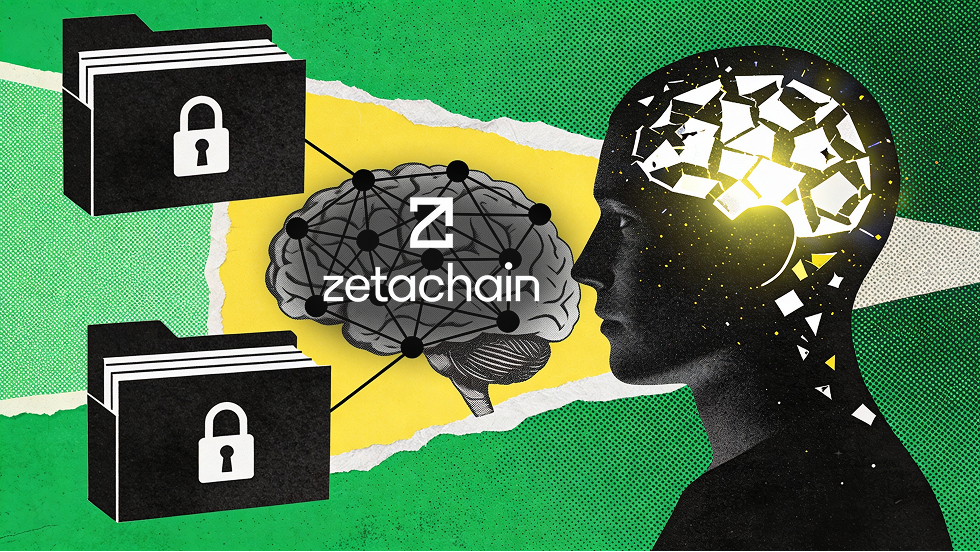
Interview with ZetaChain Lead Jessie Zhang: Reclaiming Humanity's Right to Think Between Decentralization and AI

Interview with Jessie Zhang, Head of Incubation and Investment at ZetaChain, discussing the intersection of decentralization and AI, and the importance of reclaiming human cognitive sovereignty. ZetaChain, initially known for cross-chain interoperability, evolved in 2025 from building foundational infrastructure to focusing on real-world applications, connecting major blockchains like Bitcoin, Ethereum, and Solana. The team began exploring how blockchain could address growing concerns around AI, particularly data privacy and centralized control. Jessie highlights the risks of AI-driven "cognitive centralization," where user data—including intentions, emotions, and preferences—is concentrated in few platforms, threatening individual autonomy. Examples like OpenAI retaining deleted user chats and past incidents of algorithmic manipulation (e.g., Facebook influencing elections) underscore the urgency. ZetaChain’s response is Anuma, a private AI platform built as a "personal memory layer." Anuma acts as a privacy-first AI管家 (butler) that manages user data locally, allowing interaction with models like ChatGPT or Claude without surrendering personal information. It ensures data sovereignty, prevents context fragmentation across AI tools, and safeguards independent thinking. Jessie emphasizes that privacy is an architectural imperative, not just a feature, and that blockchain’s trustless, ownership-based model is critical for AI ethics. Anuma, while built on ZetaChain, targets mainstream users with seamless Web2-like体验, reflecting ZetaChain’s vision: invisible infrastructure delivering tangible value. The core message: AI should enhance human capability without compromising cognitive autonomy. In an era of intelligent systems, preserving the right to think independently is both a technological and moral necessity.

marsbit02/06 05:53

Interview with ZetaChain Lead Jessie Zhang: Reclaiming Humanity's Right to Think Between Decentralization and AI

marsbit02/06 05:53

When Migration Becomes the Norm: Why 'Your Own EVM Chain' Is Becoming Standard

In the past year, the industry's real "voting" has shifted from governance forums to deployment scripts, migration plans, and budgets. Projects are choosing ecosystems through action, not words—migrating mainnets, prioritizing tool stacks, and betting on networks with stronger market effects. A prime example is Noble, a leading stablecoin infrastructure in Cosmos, which moved to its own EVM L1, signaling that the main battleground for stablecoins and app distribution remains in EVM ecosystem due to its mature developer tools, wallet/dApp ecosystem, and concentrated liquidity. The trend toward "having your own EVM chain" is becoming standard. While EVM offers clear advantages in assets, integrations, and tools, generic chains come with constraints like fee volatility, congestion, and shared sequencing. Application chains/rollups allow teams to internalize these constraints—tailoring block times, execution models, and infrastructure to their business needs, and aligning transaction revenue with growth incentives. Rollup-as-a-Service (RaaS) platforms like Caldera are reducing the high costs and complexity of building and maintaining chains, turning "chain-as-a-product" into a replicable strategy. They focus not just on deployment but also on solving interoperability challenges—e.g., via Caldera's Metalayer, which standardizes cross-chain bridging and integration to reduce friction for users and developers. As migration to EVM continues, the focus shifts from "which chain to choose" to "how to control growth." Owned EVM chains/rollups offer more stable fees, better performance, and tighter integration of incentives and revenue. With RaaS lowering build costs and interoperability layers reducing cross-chain friction, having a dedicated execution environment is becoming a scalable, standard solution for projects aiming to master their own growth.

marsbit02/05 08:39

When Migration Becomes the Norm: Why 'Your Own EVM Chain' Is Becoming Standard

marsbit02/05 08:39

X Personally Terminates InfoFi Incentive Model, The Era of 'Mouth Farming' Comes to an End

X, the platform formerly known as Twitter, has officially terminated the API access for InfoFi applications that reward users for posting, effectively ending the "post-to-earn" model. This decisive move, announced by X product lead Nikita Bier, targets what the company identifies as a primary source of AI-generated spam and low-quality replies flooding the platform. The policy shift immediately impacted several prominent InfoFi projects. Tokens like KAITO and COOKIE experienced significant double-digit price drops. Projects such as Cookie DAO's Snaps platform have ceased operations, while Kaito has shut down its Yaps incentive program and is pivoting to a new, more traditional creator marketing model called Kaito Studio. X's core objection was not to the content itself, but to the fundamental structure of external, unpermissioned incentives directly driving platform engagement. This model was seen as compromising content quality and, crucially, undermining X's sovereignty over its own content ecosystem and user experience. The platform emphasized that it does not need the revenue generated from these API fees. The event signals a major recalibration, forcing InfoFi projects to either retreat to a pure data/tooling role or completely reinvent their business models to align with platform policies. The era of easily farming rewards for social media posts ("嘴撸时代") is over, as content control is firmly reclaimed by the platform itself.

Odaily星球日报01/16 04:35

X Personally Terminates InfoFi Incentive Model, The Era of 'Mouth Farming' Comes to an End

Odaily星球日报01/16 04:35

活动图片